
- Stone12
- Reports2
-marquise-green-jade-9.9300-cts-k22831-1.jpg?d=200x200&v=20260326113427)
-marquise-green-jade-9.9300-cts-k22831-lifestyleimage-1.jpg?d=200x200&v=20260326105159)
-marquise-green-jade-9.9300-cts-k22831-lifestyleimage-2.jpg?d=200x200&v=20260326105159)
-marquise-green-jade-9.9300-cts-k22831-lifestyleimage-3.jpg?d=200x200&v=20260326105200)


-marquise-green-jade-9.9300-cts-k22831-1.jpg?d=750x750&s=ngc&v=20260326113427)
-marquise-green-jade-9.9300-cts-k22831-lifestyleimage-1.jpg?d=750x750&s=ngc&v=20260326105159)
-marquise-green-jade-9.9300-cts-k22831-lifestyleimage-2.jpg?d=750x750&s=ngc&v=20260326105159)
-marquise-green-jade-9.9300-cts-k22831-lifestyleimage-3.jpg?d=750x750&s=ngc&v=20260326105200)

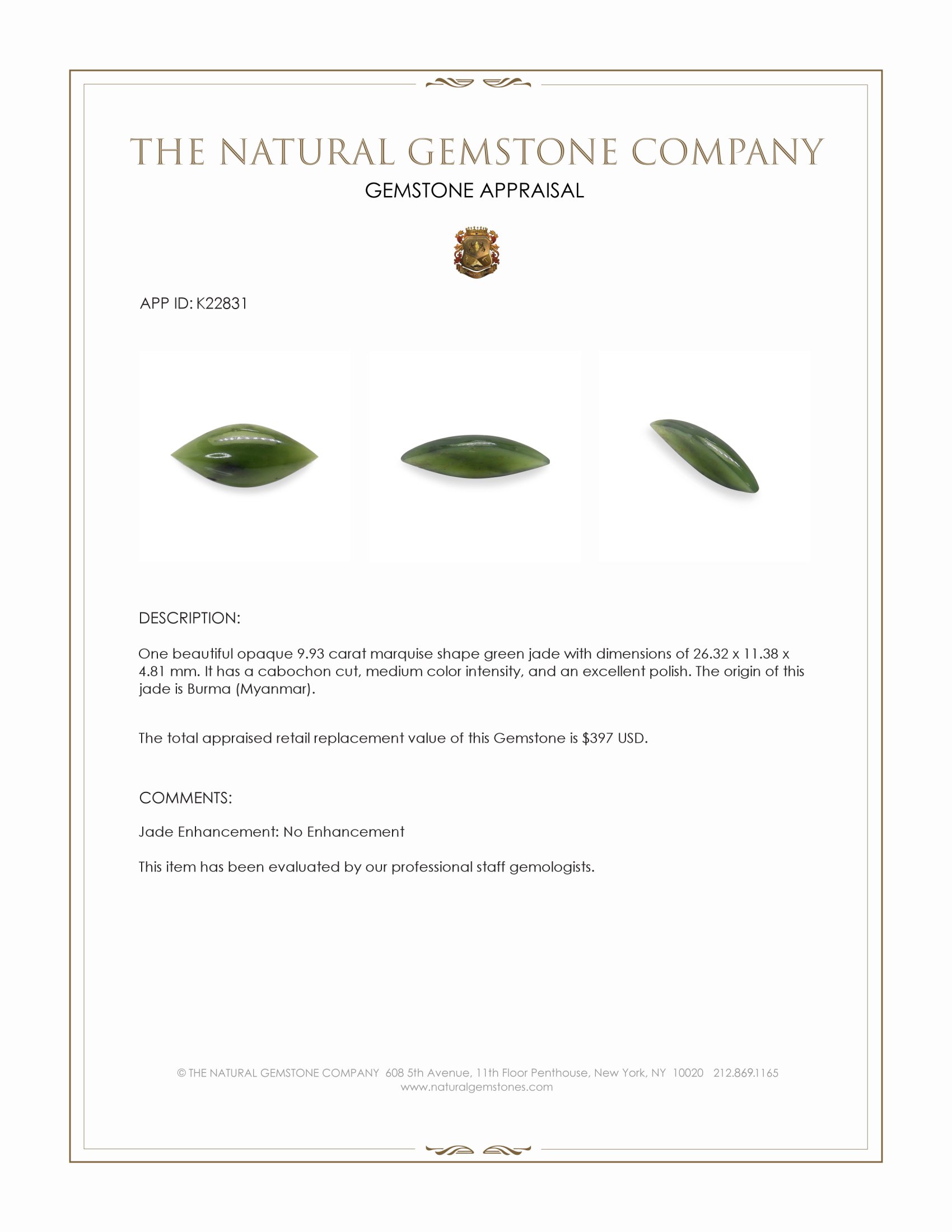
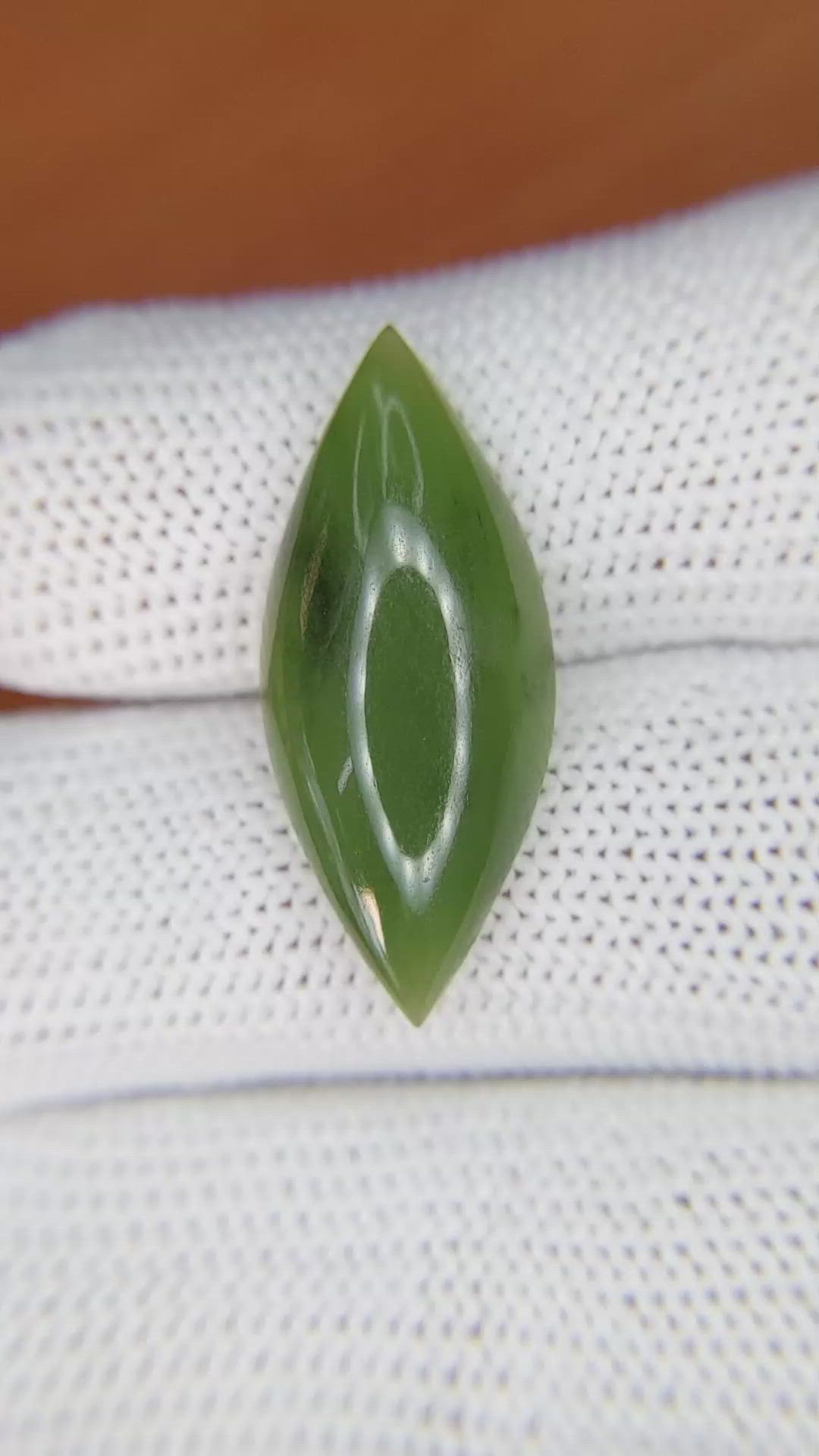
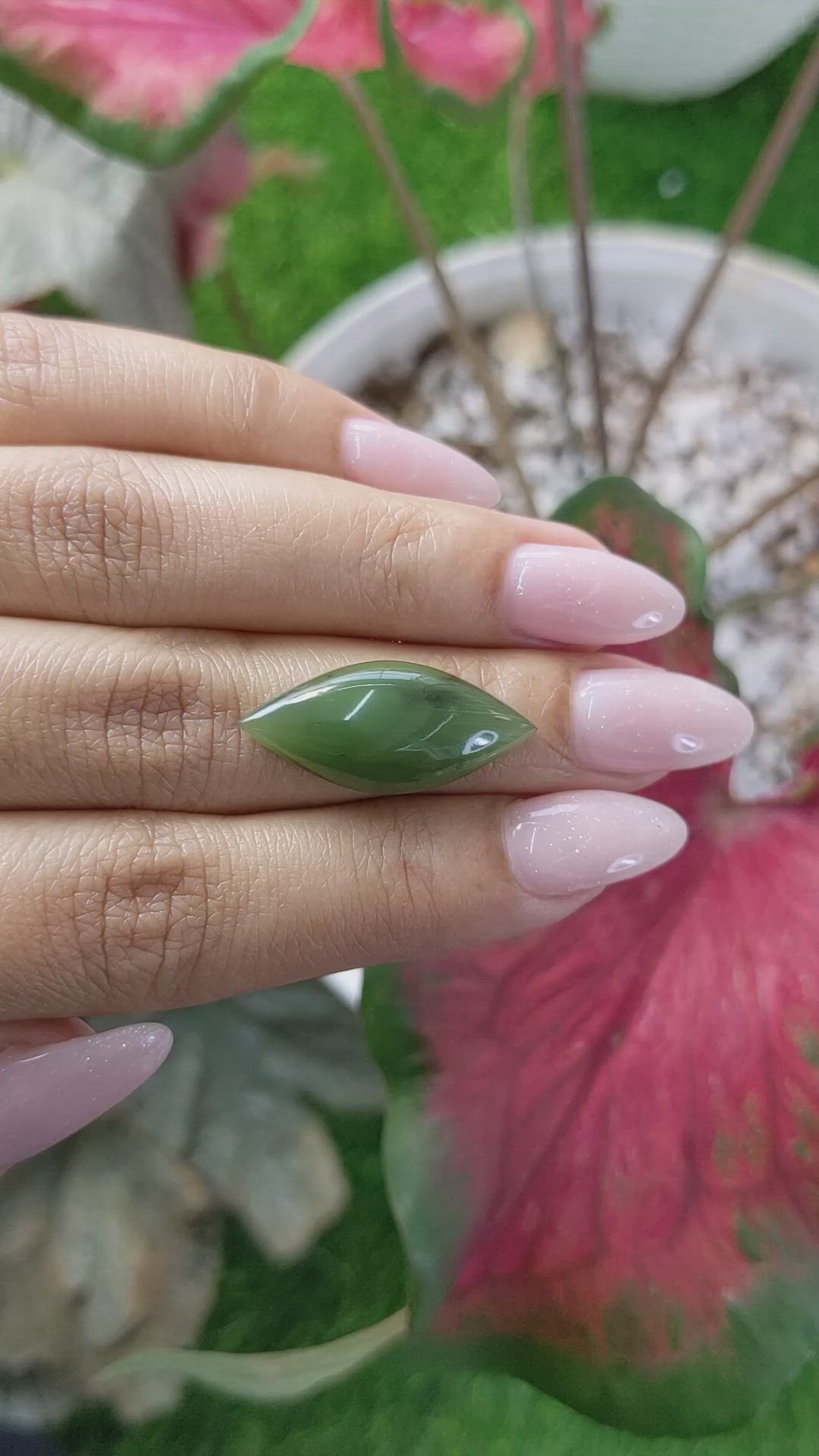
9.93 Ct. Green Cabochon Jade from Burma (Myanmar)
This loose stone is available to ship now
Item ID: | K22831 |
|---|---|
Dimensions (MM): help | Length: 26.32 Width: 11.38 Height: 4.81 |
Weight: | 9.93 Ct. |
Color: help | Green |
Color intensity: help | Medium |
Clarity: help | Not Applicable |
Shape: help | Marquise |
Cut: | Cabochon |
Cutting style: | Cabochon |
Enhancements: help | No Enhancement |
Origin: help | Burma (Myanmar) |
Per carat price: help | $40 |
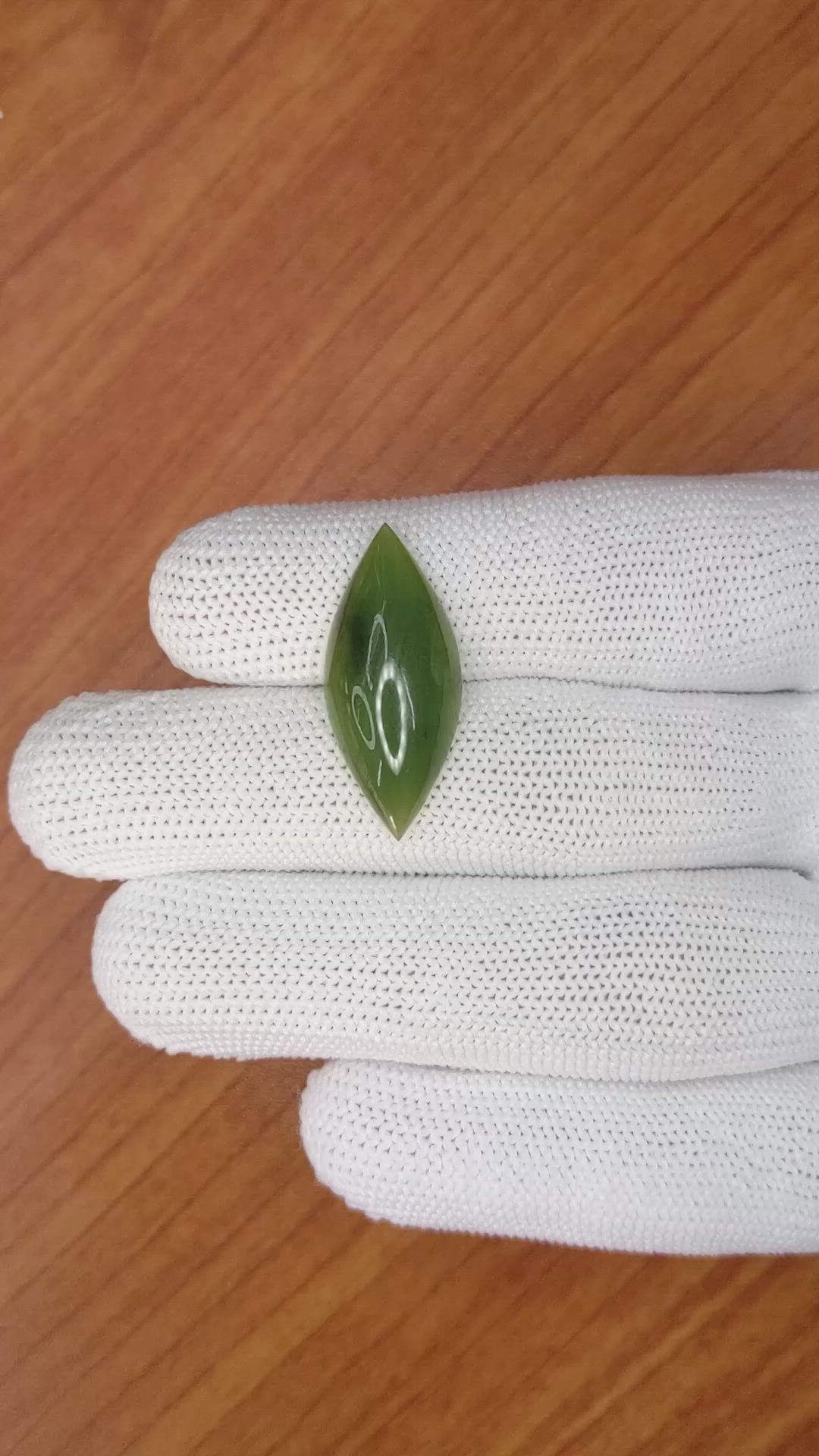
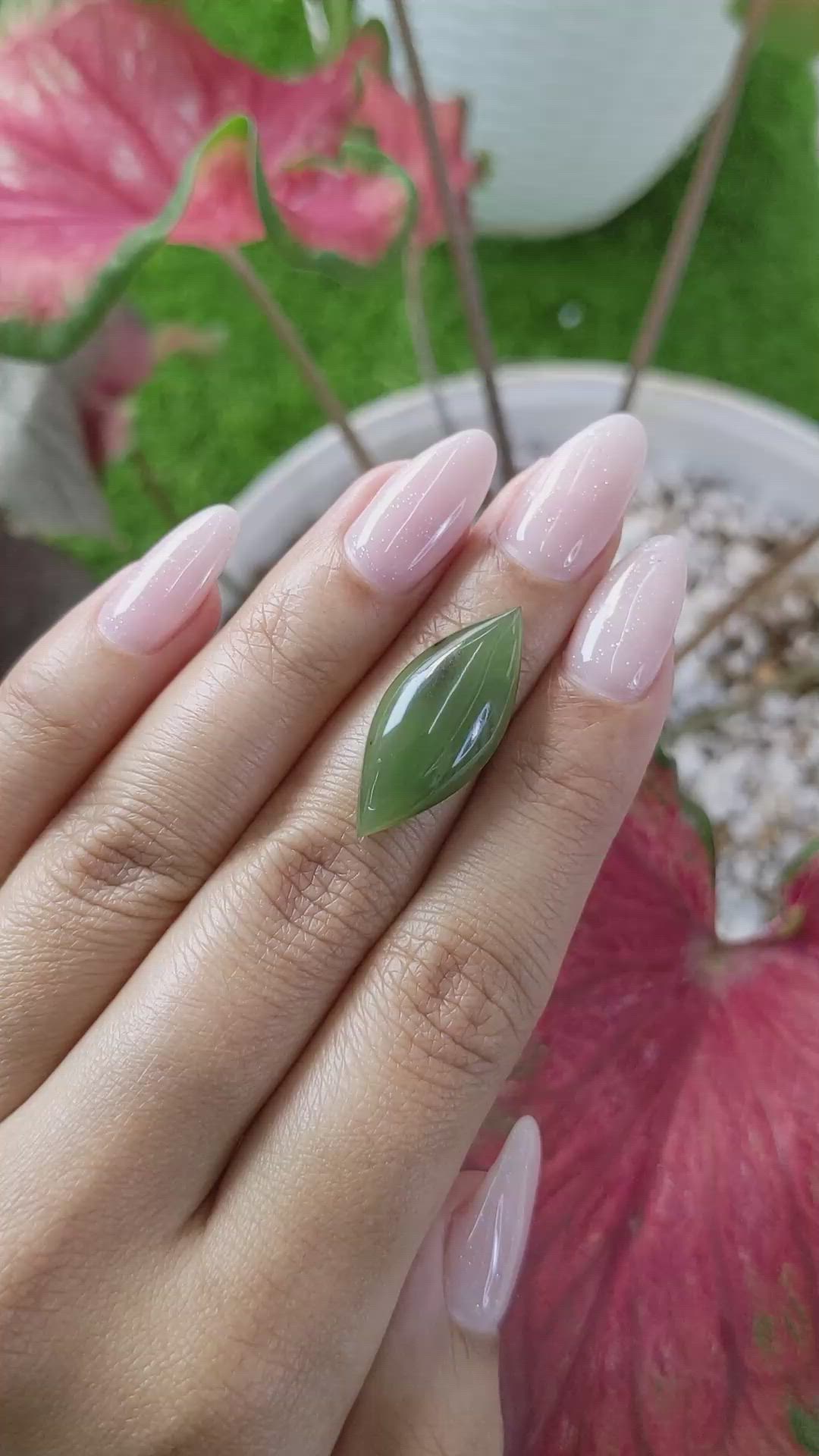
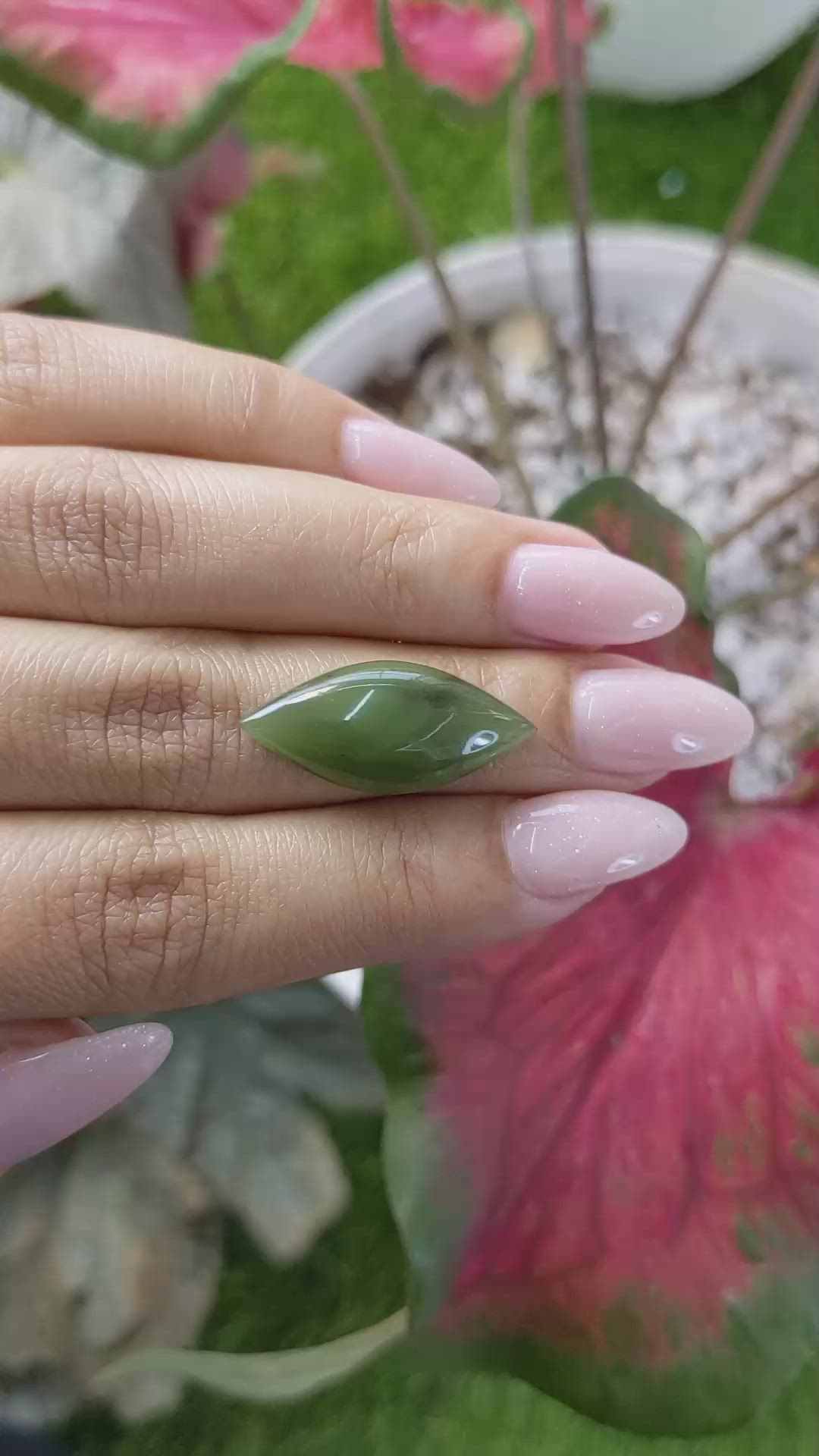
This listing describes a single, untreated green jade oval marquise cabochon provided by The Natural Gemstone Company. The specimen weighs 9.93 carats and measures 26.32 by 11.38 by 4.81 millimeters. The cutting style is a traditional cabochon with a marquise outline, resulting in a smooth, domed profile and gently tapered ends. Color is of medium intensity within the green range, presenting a consistently saturated appearance across the surfaces photographed. The piece is opaque rather than translucent, and it reports an excellent polish with no surface abrasions or significant cutting irregularities visible. Enhancement testing indicates no treatments or stabilizing polymers have been applied, and origin documentation attributes the material to Burma Myanmar.
Optically, this jade exhibits the characteristic surface-oriented reflectivity typical of well-polished opaque jade cabochons. Light interaction is dominated by surface reflection and a soft, even sheen across the dome rather than by internal light transmission. The excellent polish produces a clean specular highlight along the crown that follows the curvature of the marquise form, permitting a crisp delineation of the stone’s silhouette in direct illumination. Compared with more translucent jade varieties, which permit subsurface scattering and an internal glow, this opaque example emphasizes surface luster and tonal uniformity. No chatoyancy asterism or other directional phenomena are present, and the visual behavior remains largely consistent under variable incident angles, reflecting light evenly rather than producing pronounced flashes or faceted brilliancy.
When compared to other gemstones commonly found in the same green color family or category, the reflective qualities of this Burmese cabochon are distinct in several ways. Faceted green gems such as emerald, tsavorite, and chrome diopside exhibit light return through faceted planes that create fire and scintillation; by contrast, the marquise cabochon form directs attention to a smooth, continuous sheen that reads as tactile and satin-like. Within the jade grouping, differences are often governed by translucency and polish; higher-grade translucent jadeite typically displays a more vitreous or "glassy" luster with an internal radiance that appears to emanate from within the stone, whereas nephrite commonly reads as slightly more waxy or silky. This specimen, being opaque and well-polished, presents a surface sheen closer to the waxy-to-semi-vitreous end of the continuum, but with a controlled, mirror-like quality attributable to the cut and polish quality. Compared to dyed or polymer-treated jades, which can show unnaturally uniform color saturation and an overly glossy, sometimes plasticky surface sheen, this untreated example retains a natural depth and subtle variation in tone without any indications of enhancement under visual inspection.
Practical considerations for use and setting follow from its dimensions, cut, and optical character. The marquise cabochon silhouette is suitable for bezel settings that protect the thin ends and emphasize the stone’s length, or for a low-profile setting that accommodates the domed crown while preserving the clean line of the silhouette. The relatively shallow height of 4.81 millimeters supports comfortable mounting in rings, pendants, or brooches without excessive bulk. From a durability standpoint, jade is known for its toughness and resistance to breakage relative to many other gem materials, and while individual hardness may vary between jadeite and nephrite typically ranging around mid-range Mohs values, routine care should avoid harsh chemicals and prolonged thermal shock. The absence of enhancements simplifies conservation and valuation considerations, as the color and polish are intrinsic properties rather than the result of treatments.
In summary, this 9.93 carat marquise cabochon from Burma offered by The Natural Gemstone Company represents an example of opaque green jade with a medium color intensity and an excellent surface finish. Its optical profile emphasizes a refined surface luster rather than internal translucency, aligning it with cabochon-cut jade traditions and distinguishing it from both more translucent jadeite and faceted green gemstones in terms of light behavior. The untreated nature of the material, precise dimensions, and polished execution make the piece suitable for settings that prioritize a smooth, continuous visual plane and protective mountings that respect the marquise outline.


