
- Pair16
- Reports4



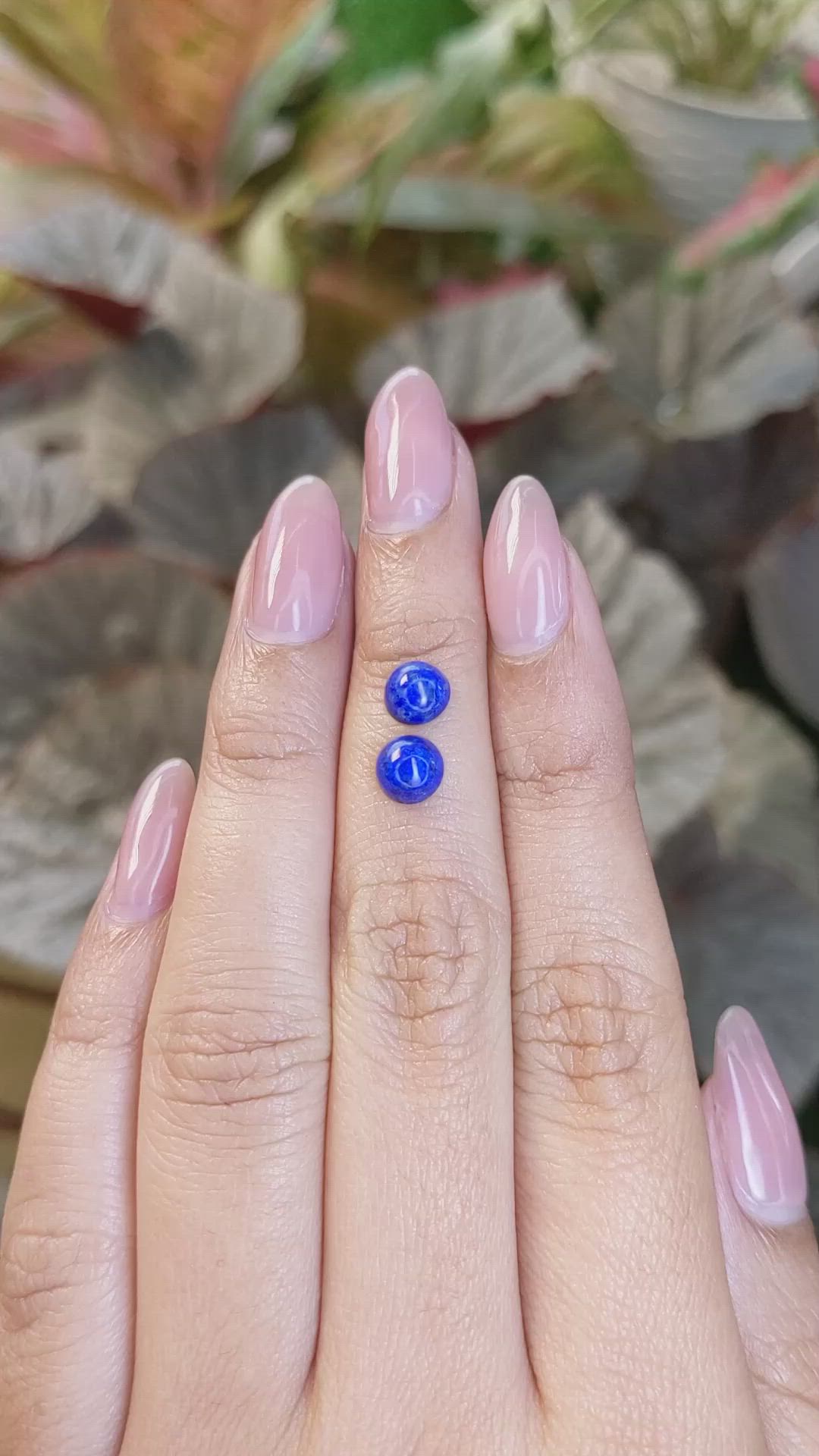
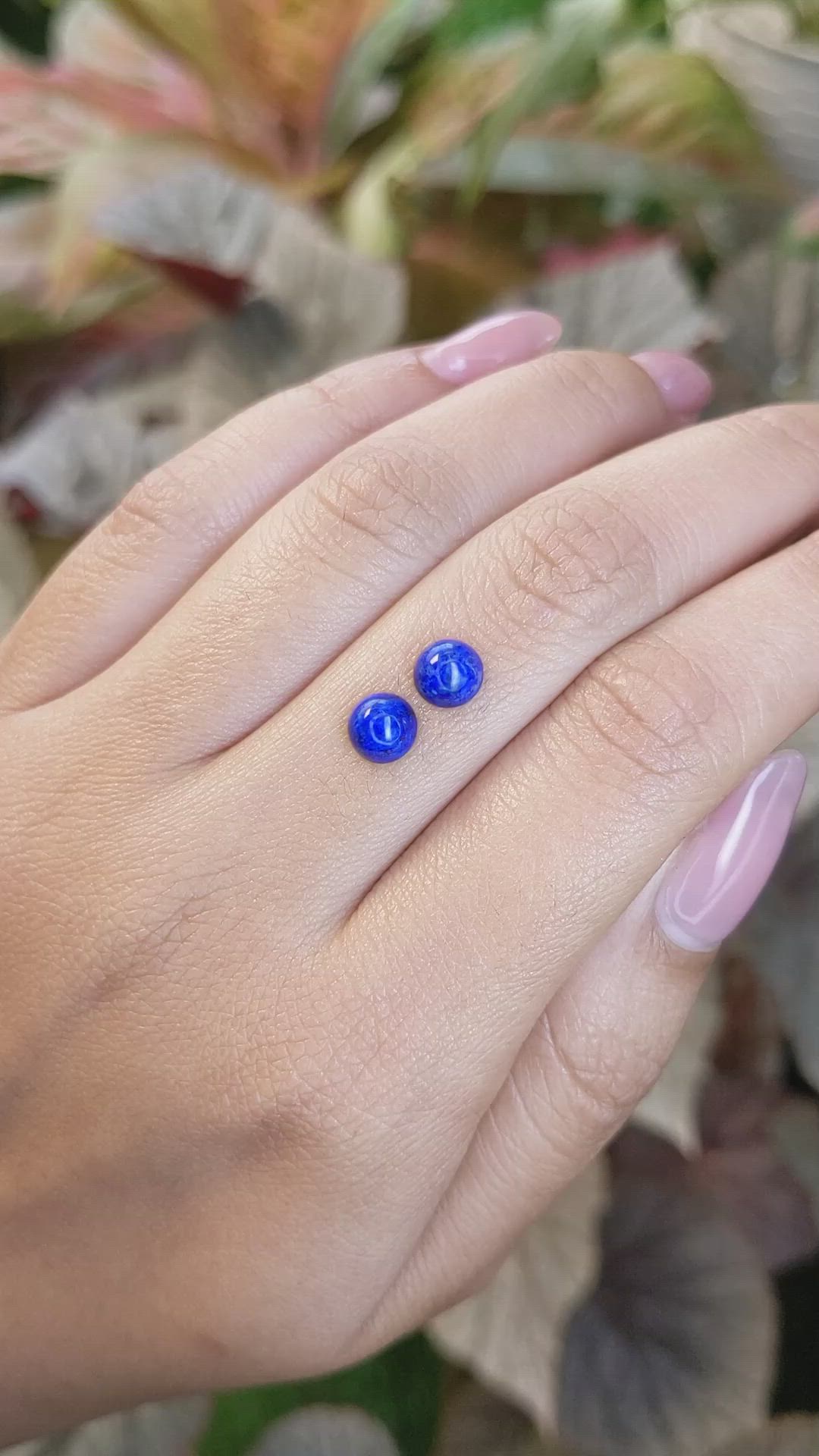
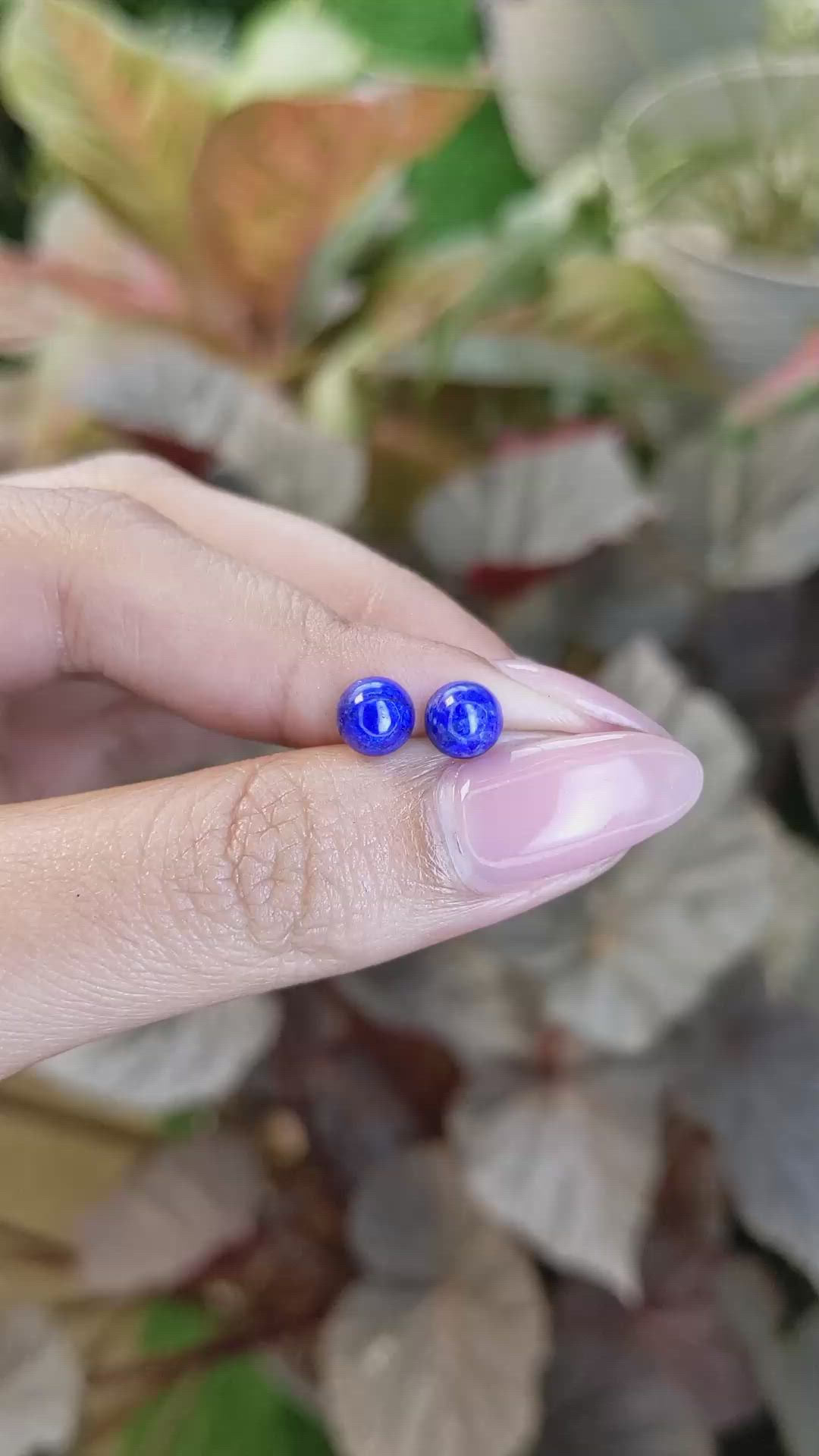




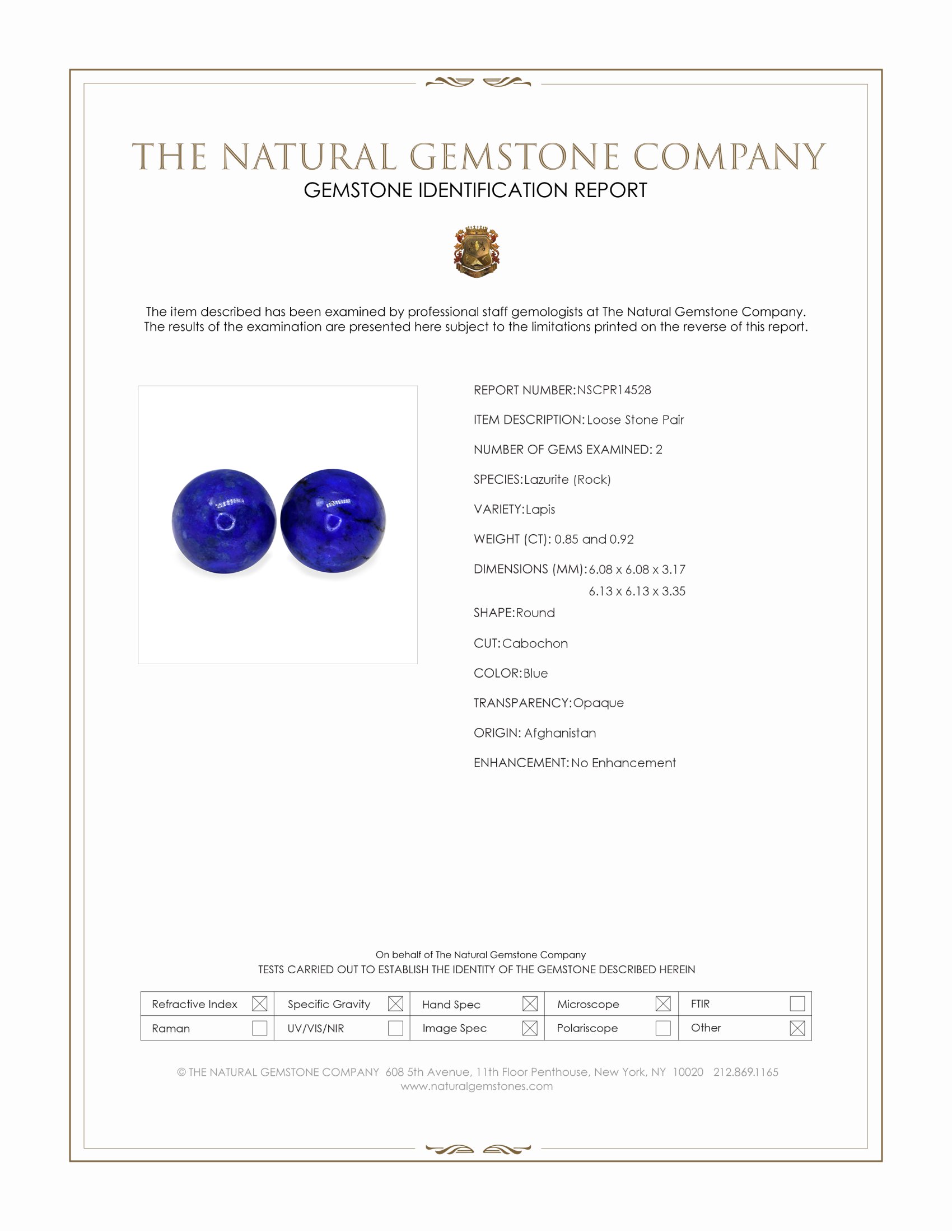

1.77 Ct.Tw.Total Carat Weight Cabochon Lapis Pair from Afghanistan
This pair of stones is available to ship now
Stone type: | Lapis | Lapis |
|---|---|---|
Item ID: | PR14528 | PR14528 |
Dimensions (MM): help | Length: 6.08 Width: 6.08 Height: 3.17 | Length: 6.13 Width: 6.13 Height: 3.35 |
Weight: | 0.85 Ct. | 0.92 Ct. |
Color: help | Blue | Blue |
Color intensity: help | N/A | N/A |
Clarity: help | Not Applicable | Not Applicable |
Shape: help | Round | Round |
Cut: | Cabochon | Cabochon |
Cutting style: | Cabochon | Cabochon |
Enhancements: help | No Enhancement | No Enhancement |
Origin: help | Afghanistan | Afghanistan |
Per carat price: help | $20 | $20 |
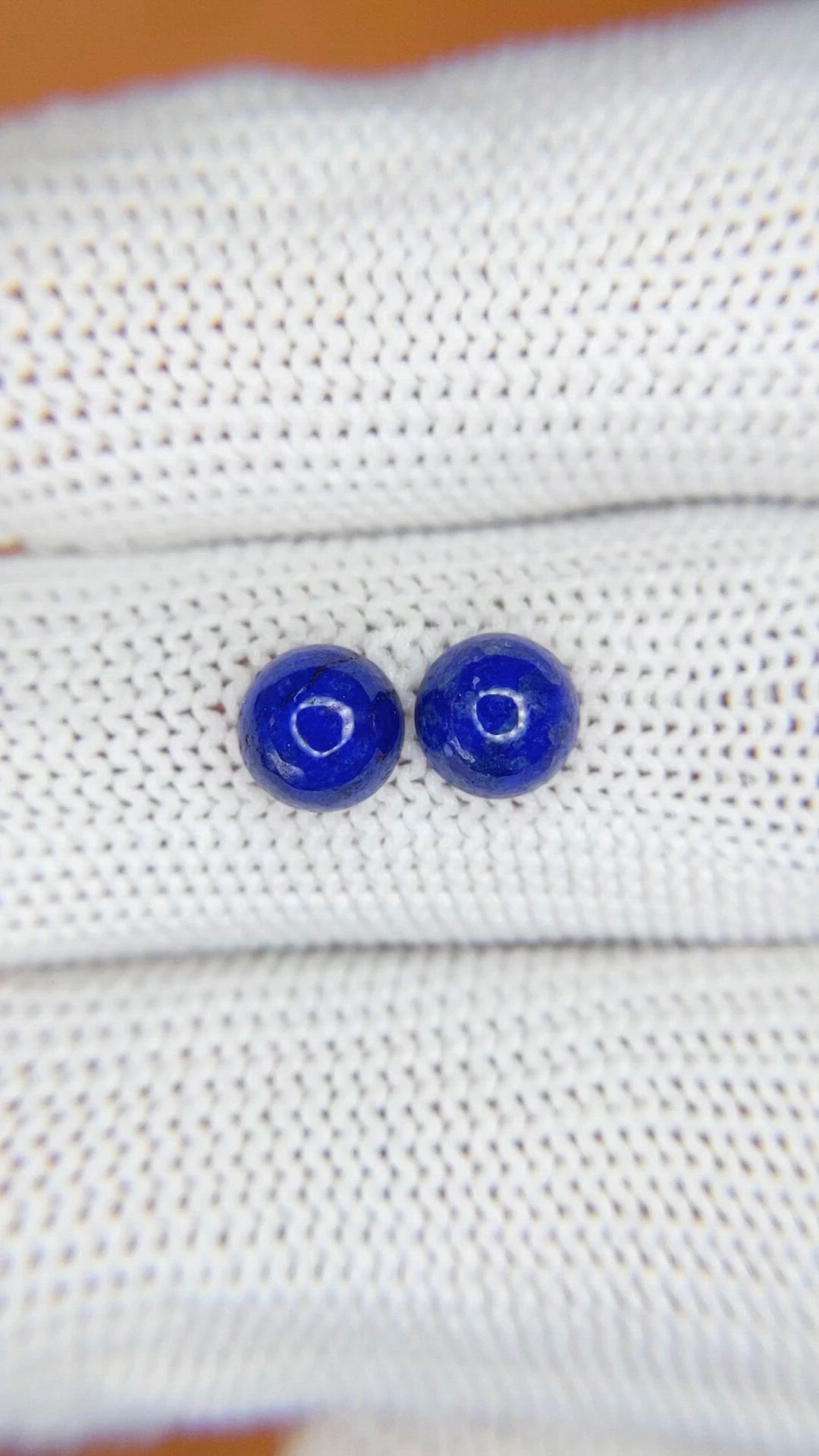
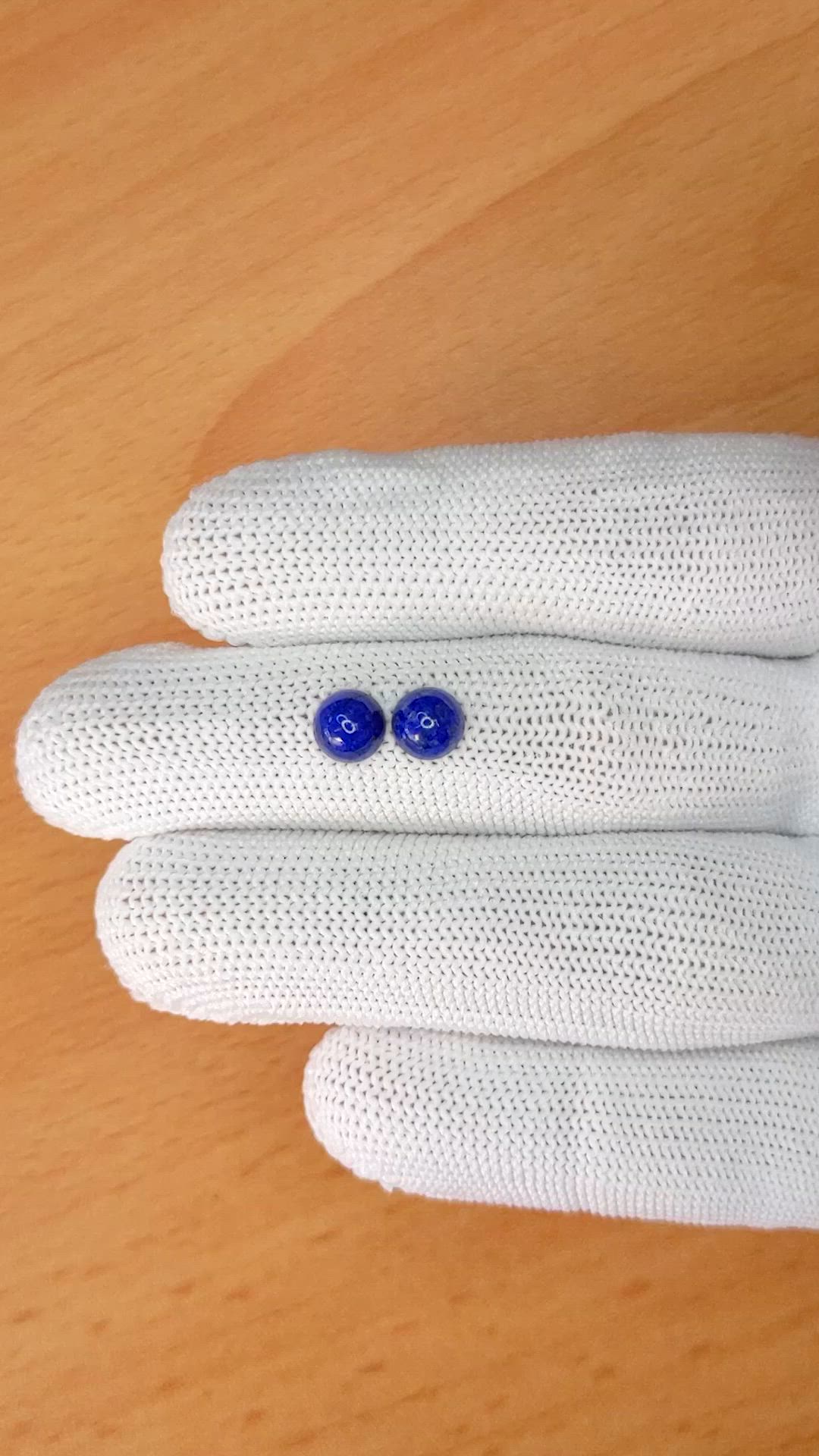
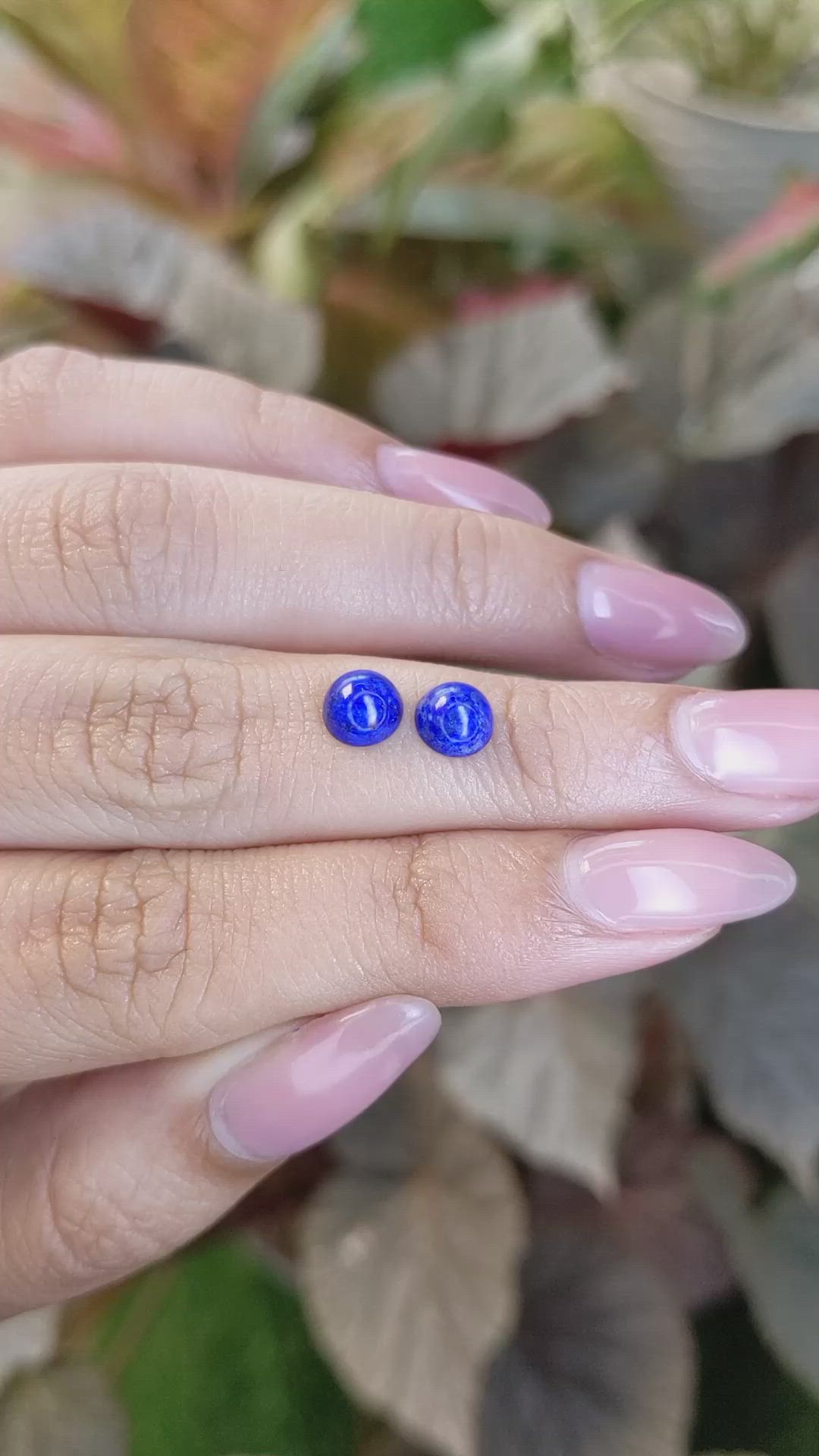
This pair of round lapis cabochons presents a studied balance of natural character and precise lapidary execution. The two stones weigh 0.85 carats and 0.92 carats respectively, and measure 6.08 x 6.08 x 3.17 mm and 6.13 x 6.13 x 3.35 mm. Both are cut as classical cabochons, with fully domed crowns and well defined girdles, and are completely opaque as expected for high quality lapis. The polish is excellent, providing a smooth, even surface that emphasizes the stone body color and minimizes surface diffusion of light. There has been no enhancement to these stones, and their provenance is Afghanistan, a region renowned for some of the finest lapis deposits in the world. The Natural Gemstone Company is presenting this matched pair for clients who require material that is both historically authentic and technically consistent for use in precision jewelry work.
The cabochon cutting style used on these pieces follows traditional proportions that optimize the interaction between the stone mass and incident light. With diameters slightly over 6 mm and heights in the low 3 mm range, the doming ratio sits in a zone that maintains visual depth without making the stones appear top heavy in jewelry mountings. The round outline is concentric and well centered, a result of careful preforming and repeated laps on progressively finer abrasives. Edge transition from crown to girdle is clean, without flat spots, ensuring reliable bezel seating for settings that depend on continuous metal contact. The lapidary process emphasized minimal removal of material to preserve carat weight, combined with final polishing on felt with aluminum oxide to achieve the even satiny luster characteristic of high grade polished lapis.
From a material science perspective these lapis specimens exhibit the classical attributes of quality Afghan lapis, with a strong, saturated body color and an even texture. Color intensity is not pre graded here, listed as n a per the supplied specification, however visually the stones display a concentrated blue that reads as deep and consistent across the cabochon surfaces. The opacity prevents light transmission, so the perceived color is entirely a function of the surface finish and the internal distribution of the blue chromophores within lazurite. Inclusions typical to lapis, such as fine pyrite dispersion or limited calcite veining, are not prominent on these top surfaces, allowing for a clean field of blue when viewed face up. The excellent polish enhances the tactile quality, producing a smooth reflectance that complements the stone material without introducing distracting glare.
The narrative of formation for these lapis pieces is written in million year timescales, in environments where limestone underwent regional and contact metamorphism to produce marble hosts rich in silica and sulfur. In such geologic settings, hydrothermal fluids and metamorphic reactions mobilized elements that combined to form the mineral lazurite, the primary carrier of the intense blue color. Concurrently, iron sulfide phases such as pyrite crystallized in microscopic dispersions, and calcite could recrystallize as veinlets or intergrowths. Over geological time the marble masses were uplifted and exposed by tectonic processes, with Afghanistan s complex orogeny delivering both the metamorphic heat and the structural deformation necessary to isolate rich pockets of lapis material. The stones offered here are fragments of that deep time, hand collected and matched to retain coherence in color and structure for a finished pair suitable for matched jewelry applications.
In practical terms these two cabochons are ready for exacting design work, particularly for matched applications such as earrings or paired accents in a pendant ensemble. The small variance in carat weight and marginal difference in height are within tolerances commonly accommodated by skilled setters, with the round form lending itself to straightforward bezel work or precision prong designs that cradle the domed crown. Given the opaqueness and cabochon profile, settings that provide a seated bezel will best protect the stones while presenting a continuous field of blue. Care is simple, use soft cloth cleaning and avoid ultrasonic cleaners due to the natural cleavage tendencies and potential for surface microfractures in associated minerals. The Natural Gemstone Company stands behind the no enhancement claim, and offers these matched Afghan lapis cabochons to clients who value geological authenticity, meticulous lapidary practice, and consistency for fine jewelry production.


