
- Pair16
- Reports4


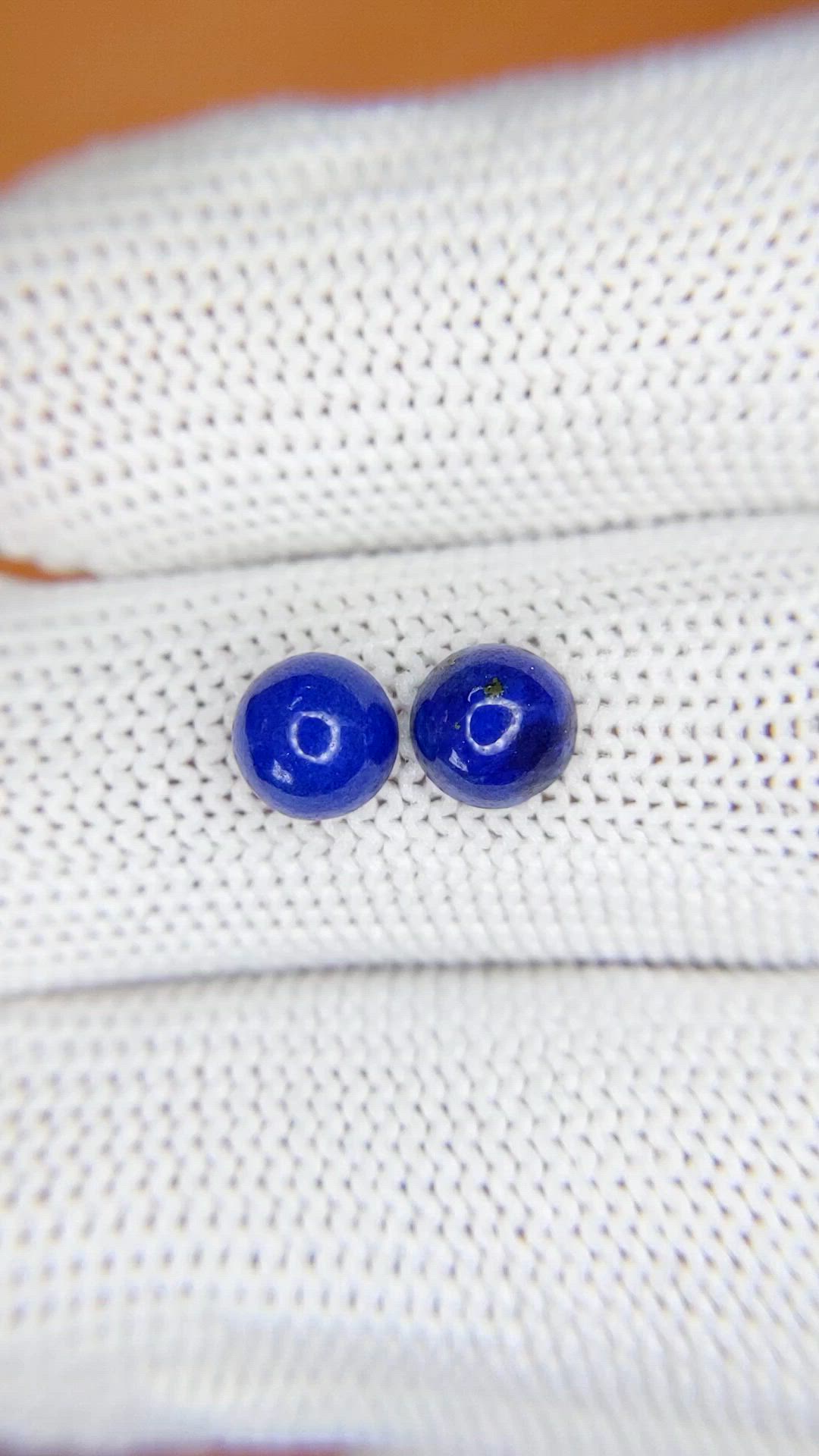
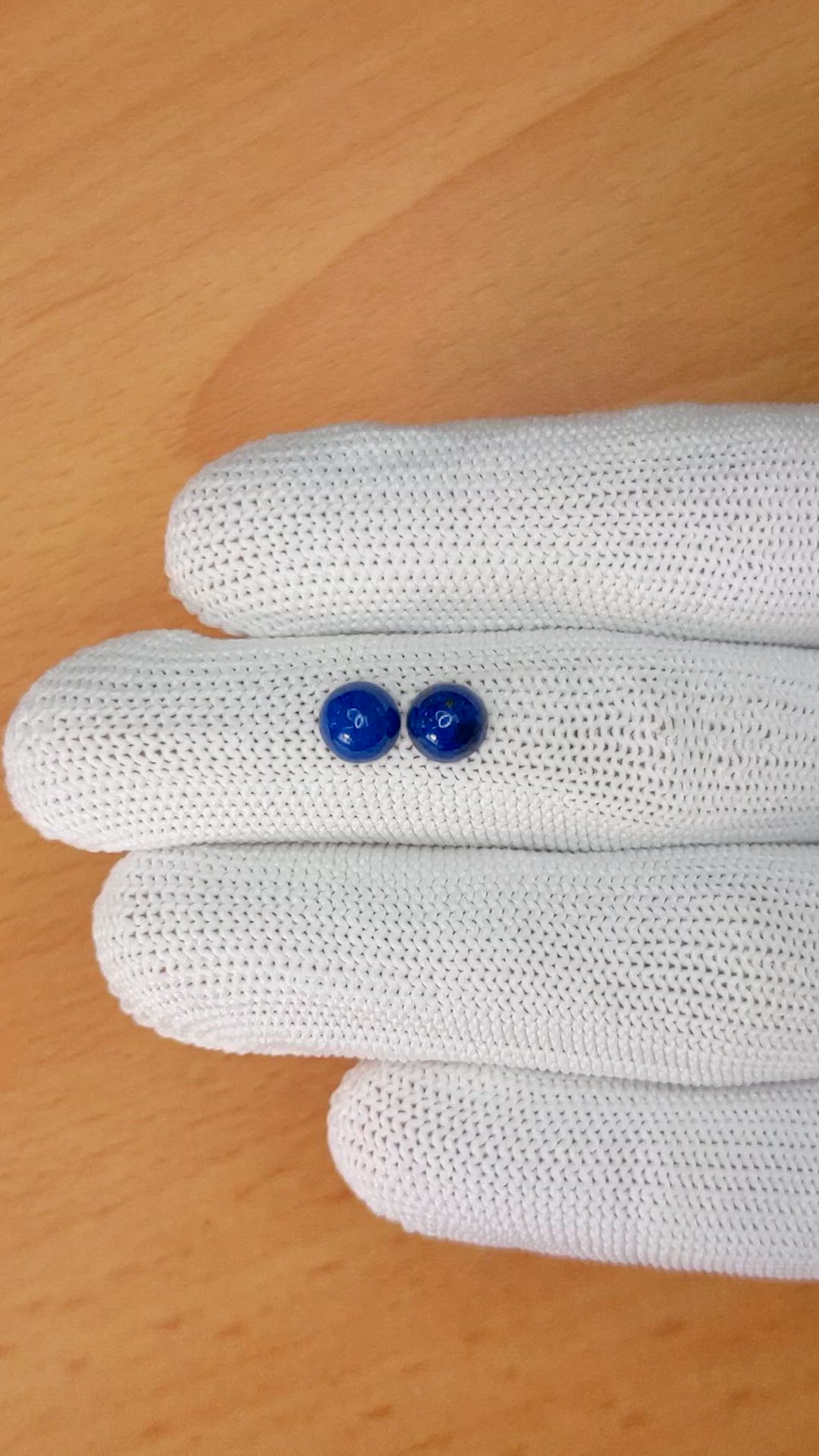
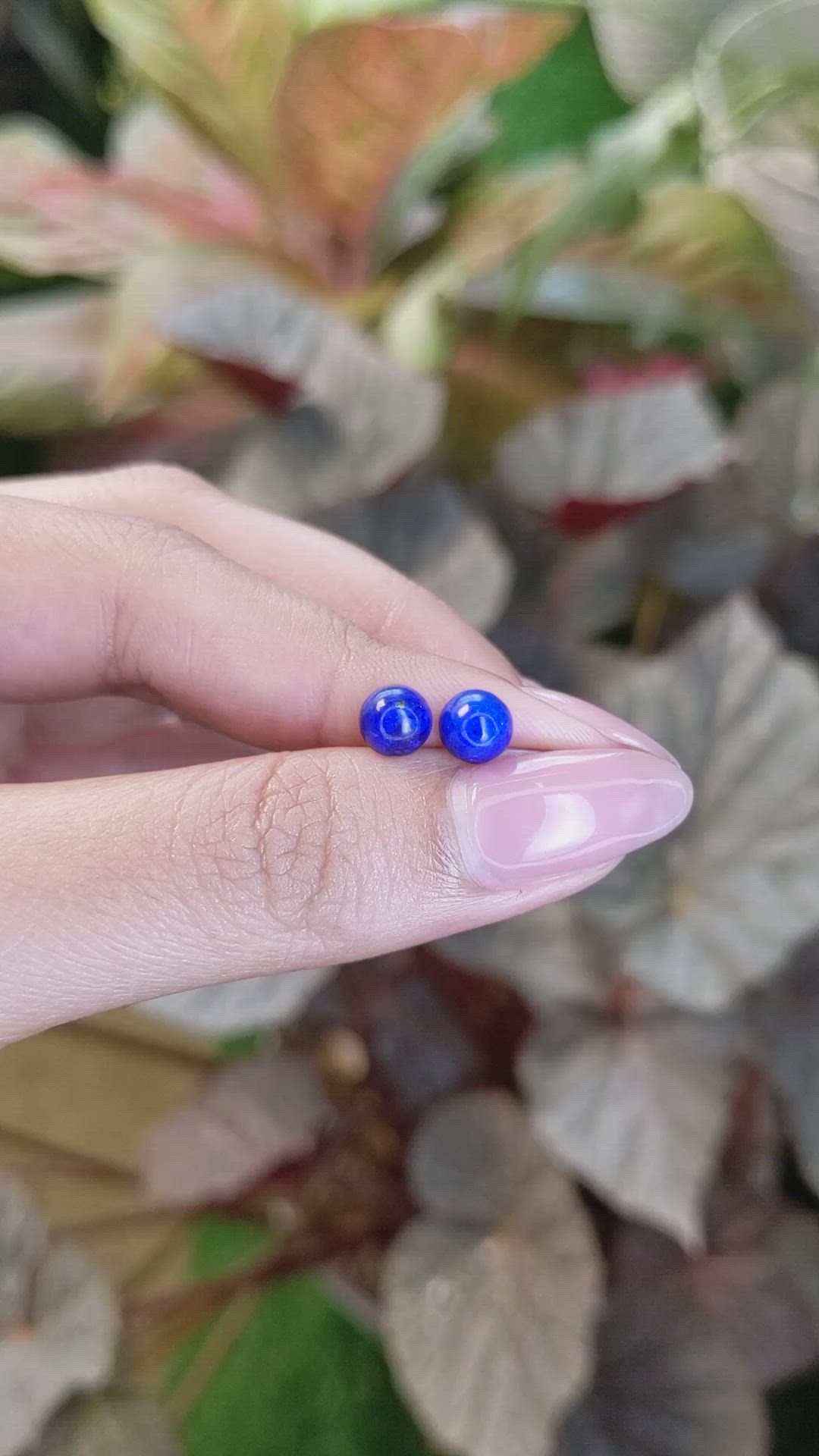
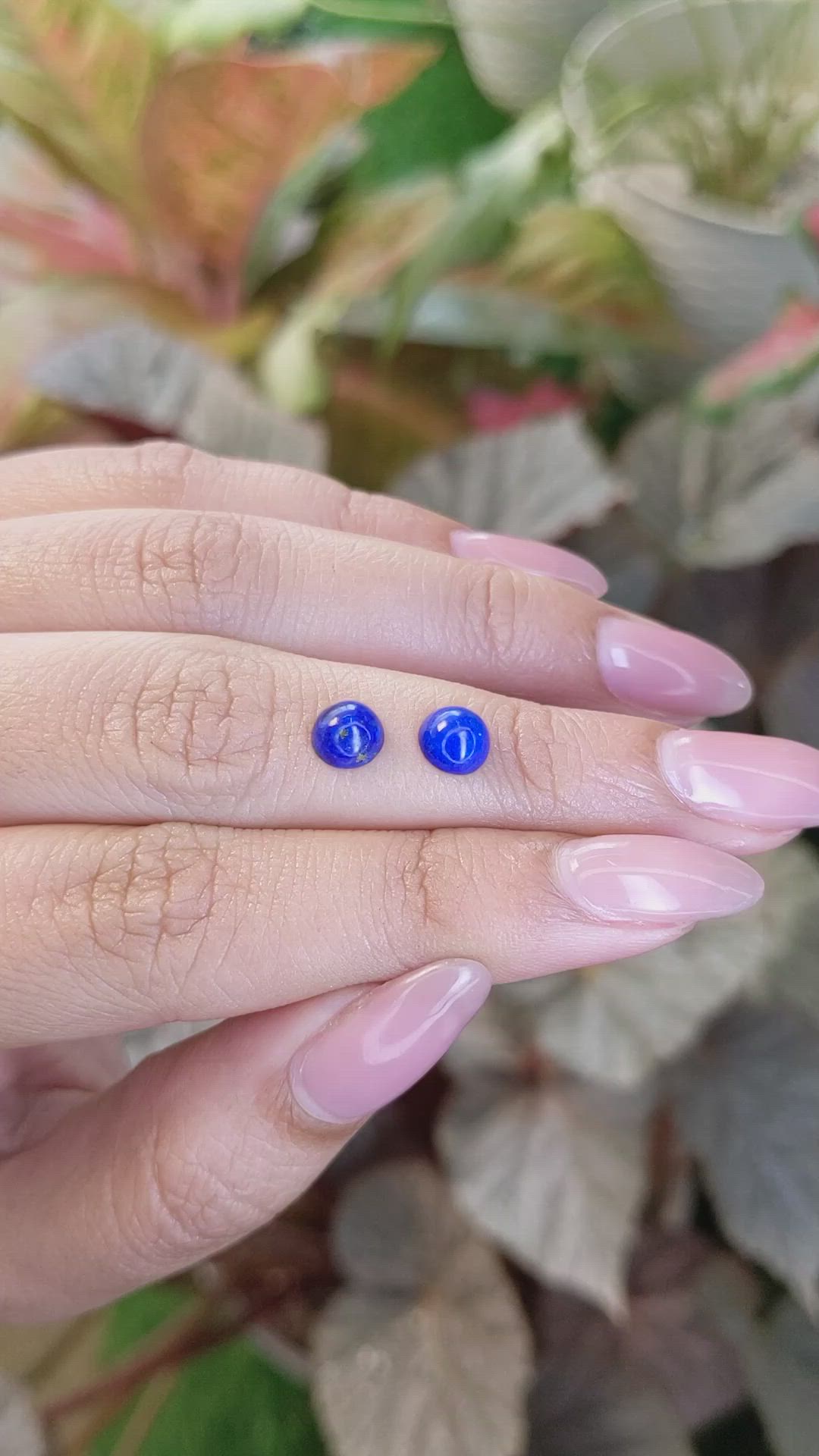
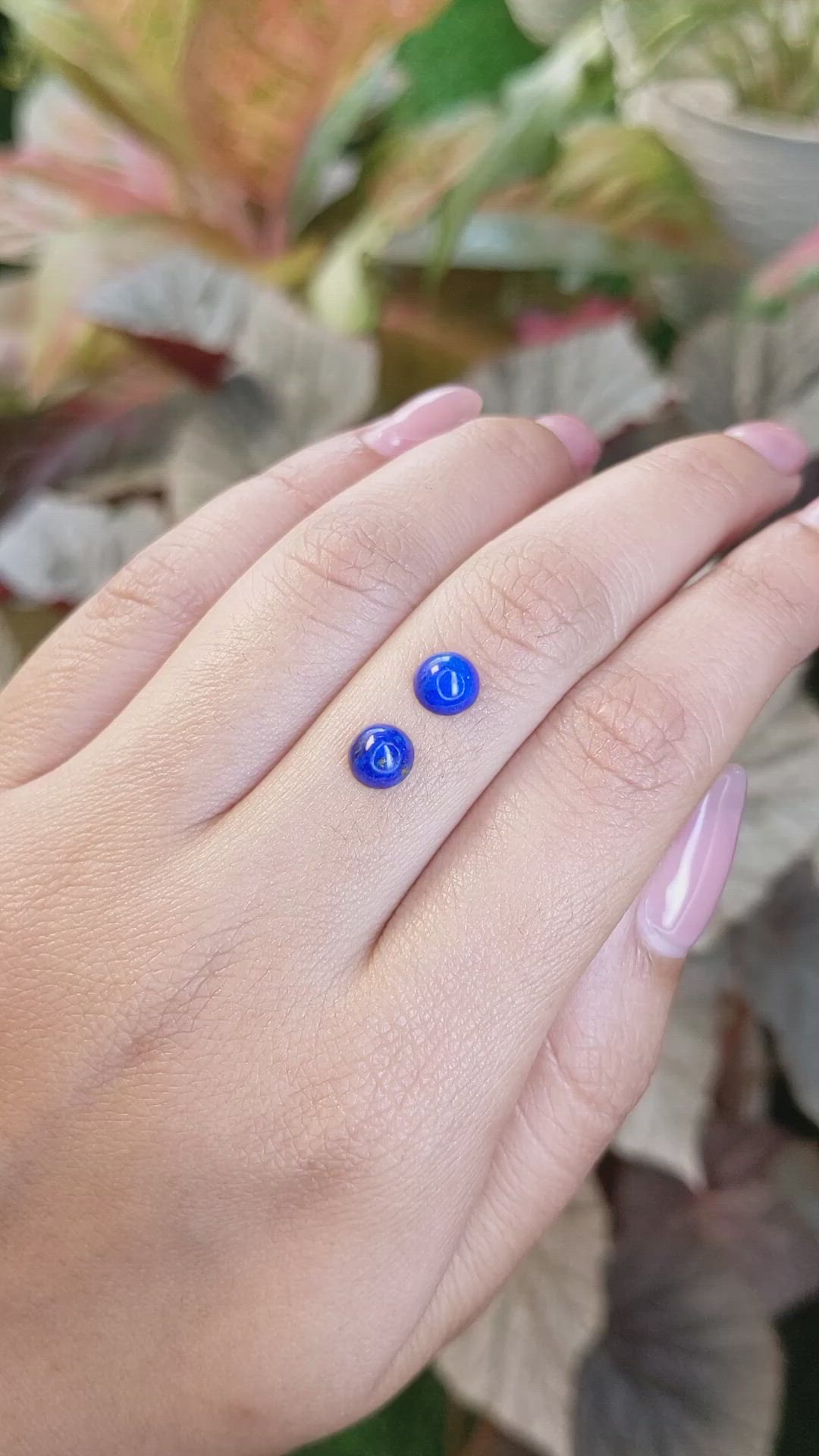
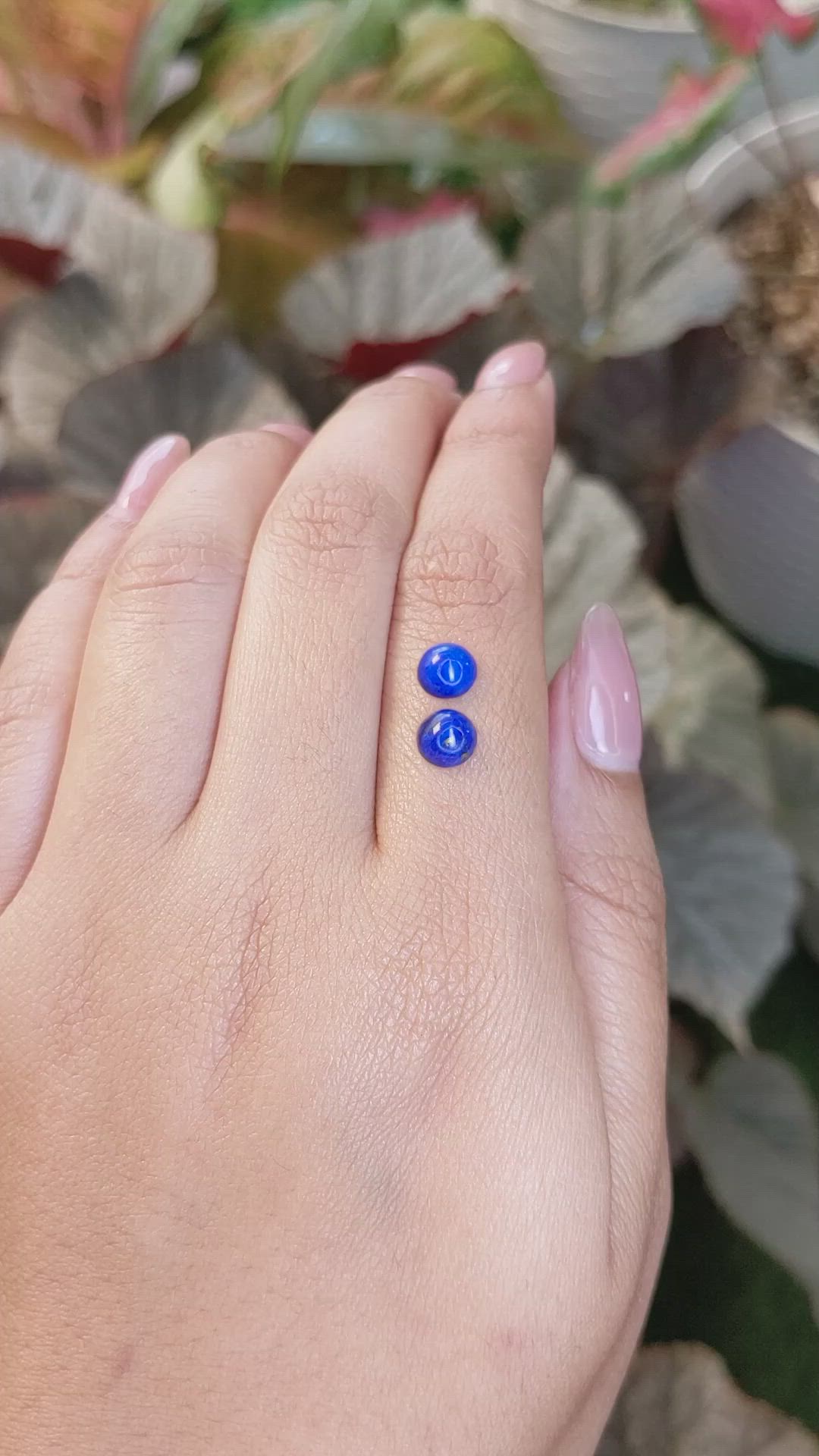




1.80 Ct.Tw.Total Carat Weight Cabochon Lapis Pair from Afghanistan
This pair of stones is available to ship now
Stone type: | Lapis | Lapis |
|---|---|---|
Item ID: | PR14518 | PR14518 |
Dimensions (MM): help | Length: 6.19 Width: 6.2 Height: 3.32 | Length: 6.1 Width: 6.08 Height: 3.15 |
Weight: | 0.92 Ct. | 0.88 Ct. |
Color: help | Blue | Blue |
Color intensity: help | N/A | N/A |
Clarity: help | Not Applicable | Not Applicable |
Shape: help | Round | Round |
Cut: | Cabochon | Cabochon |
Cutting style: | Cabochon | Cabochon |
Enhancements: help | No Enhancement | No Enhancement |
Origin: help | Afghanistan | Afghanistan |
Per carat price: help | $20 | $20 |
From the rugged mountains of Afghanistan to the quiet precision of the lapidary bench, these two round blue lapiss carry a story that is as old as human admiration for the deep blue stone itself. Born in a landscape where ancient veins of mineral have been prized for millennia, these gems began life as nodules in limestone, bearing within them the concentrated blues that have been used by artists and kings. Miners in remote valleys brought these stones to light by patient hand, separating them from host rock, and in that first rough stage the promise of color and pattern was already visible. The cultural resonance of Afghan lapiss is profound, it has been ground into pigment for masterworks and prized in jewelry across civilizations, and that history still informs the way each piece is chosen and treated. When you hold this pair you are holding a fragment of that long human story, a story preserved and presented to you by a team that understands every step of the journey from mine to masterpiece.
The two gems in this matched pair weigh 0.92 carats and 0.88 carats respectively, and each is fashioned into a round cabochon, with dimensions that speak to careful planning and consistent execution, 6.19 x 6.20 x 3.32 mm for the heavier stone, and 6.10 x 6.08 x 3.15 mm for its companion. They are opaque by nature, a quality that defines their look and presence, and the cutting style is Cabochon, chosen to celebrate the stone core rather than fragmenting it with facets. Color intensity is noted as n a to reflect the natural, ungraded richness of each piece, and importantly there has been no enhancement of any kind, so what you see is the stone in its authentic state. The polish is excellent, and that final surface treatment turns the domed cabochon into a luminous window, a finish that emphasizes smooth reflection and tactile presence. Each lapiss was evaluated as a partner in a matched set, ensuring harmony in size, tone, and surface sheen so that when they are set together they read as a deliberate pair, balanced and elegant.
The cabochon cut is central to how these stones interact with light, and understanding that relationship explains why a domed, unfaceted face can be so compelling. Rather than producing a play of tiny internal reflections like a faceted gem, a well executed cabochon presents a broad curved surface that collects ambient light and returns it as a soft, consistent glow. The dome height relative to the diameter, which in these stones is proportioned to their dimensions, governs the way light is scattered and absorbed across the blue body, creating depth and a luminous saturation that makes the blue feel alive. For opaque lapiss, internal structure and mineral inclusions are part of the visual language, and the cabochon magnifies those internal characters in a way that is pleasing and immediate. Where fine pyrite or calcite inclusions occur, the smooth dome allows those elements to catch light like distant stars in a night sky, they do not flash like a faceted stone, they shimmer and settle, adding a subtle, ancient quality to the surface. The excellent polish is the final alchemy in this sequence, removing microscopic surface roughness so that reflection is pure and even, the light skims each dome and reveals color without interruption. This is why the cabochon cut is not a compromise but a celebration for stones like these, it optimizes their inherent properties, creating a radiant presence that draws attention through depth and hue rather than glitter.
When you receive this pair you are receiving a set that is ready to be set in a variety of designs where uniformity and harmony matter, matched earrings, a pendant and a companion stud, or a bespoke creation that plays to their matched dimensions and consistent polish. The round cabochon shape lends itself to bezel and halo settings where the smooth dome is framed and protected, allowing light to play across the surface without exposing edges to wear, and the modest carat weights make them comfortable to wear while still being visually significant. Because these lapiss are untreated and of known Afghan origin, their provenance carries both ethical and cultural value, we at The Natural Gemstone Company are committed to sourcing from responsible channels, we can share details about locality and handling as part of our promise of transparency. If you choose to set these stones, consider warm metals that enhance the deep blue, and a setting that allows both front and edge visibility so the round shape and polished dome can be fully appreciated. For those who cherish natural beauty and historical resonance, this pair embodies the quiet power of a stone that has been valued for generations, offered with the assurance of careful selection, skilled cutting, and an honest presentation that honors where it came from and how it was made.


