
- Pair15
- Reports3

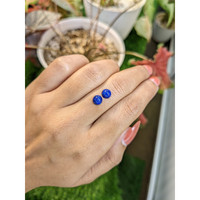


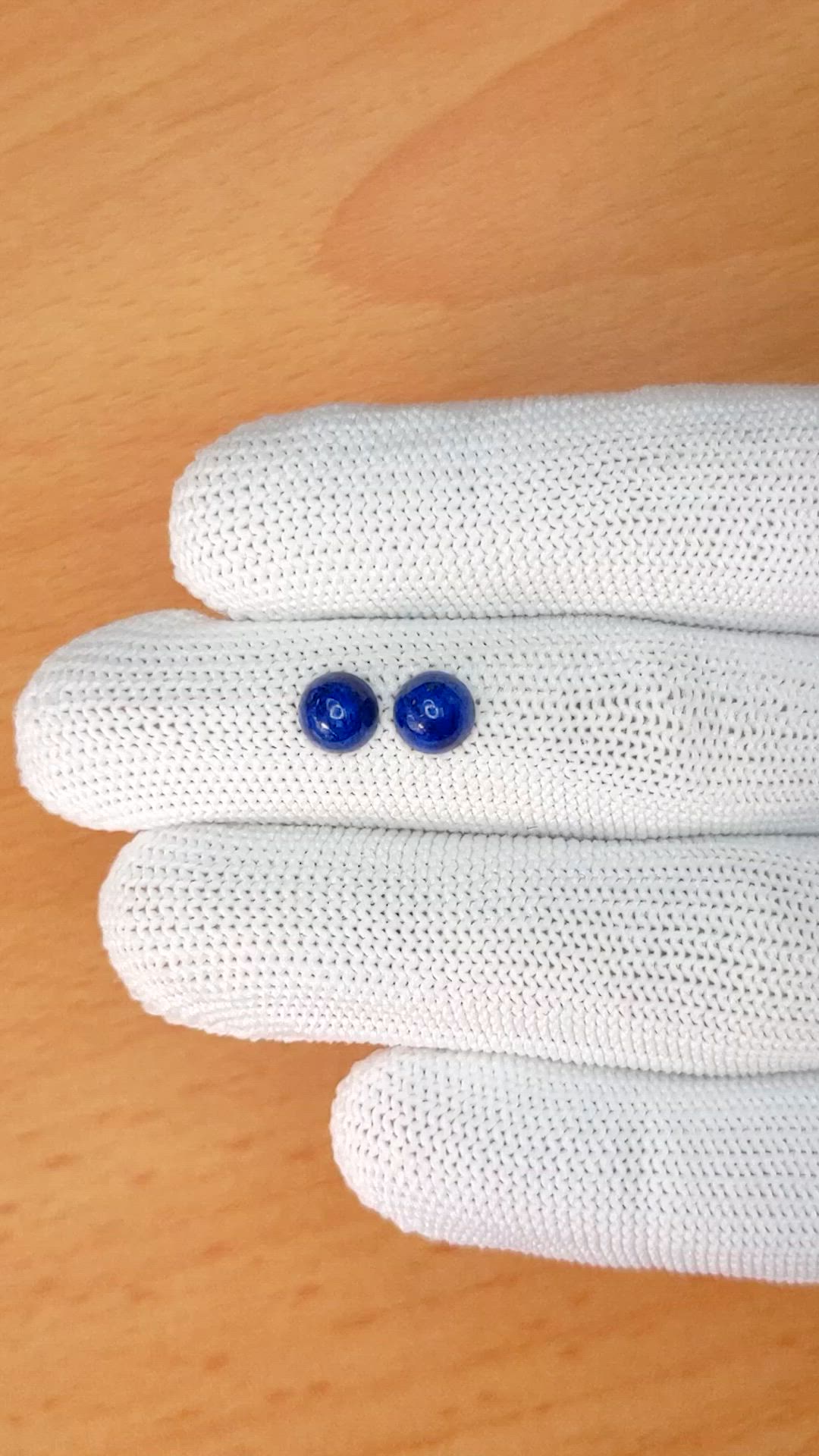
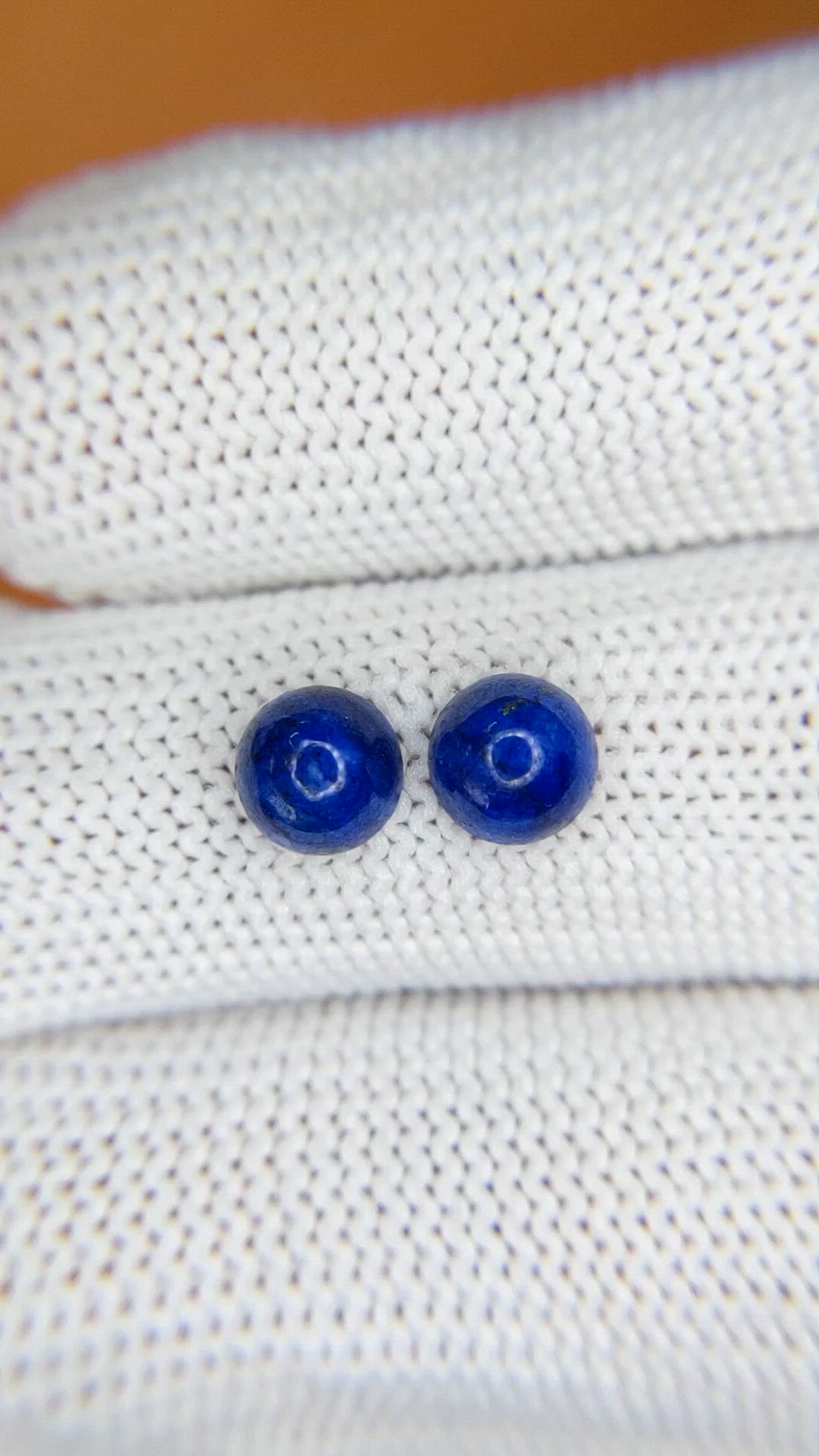
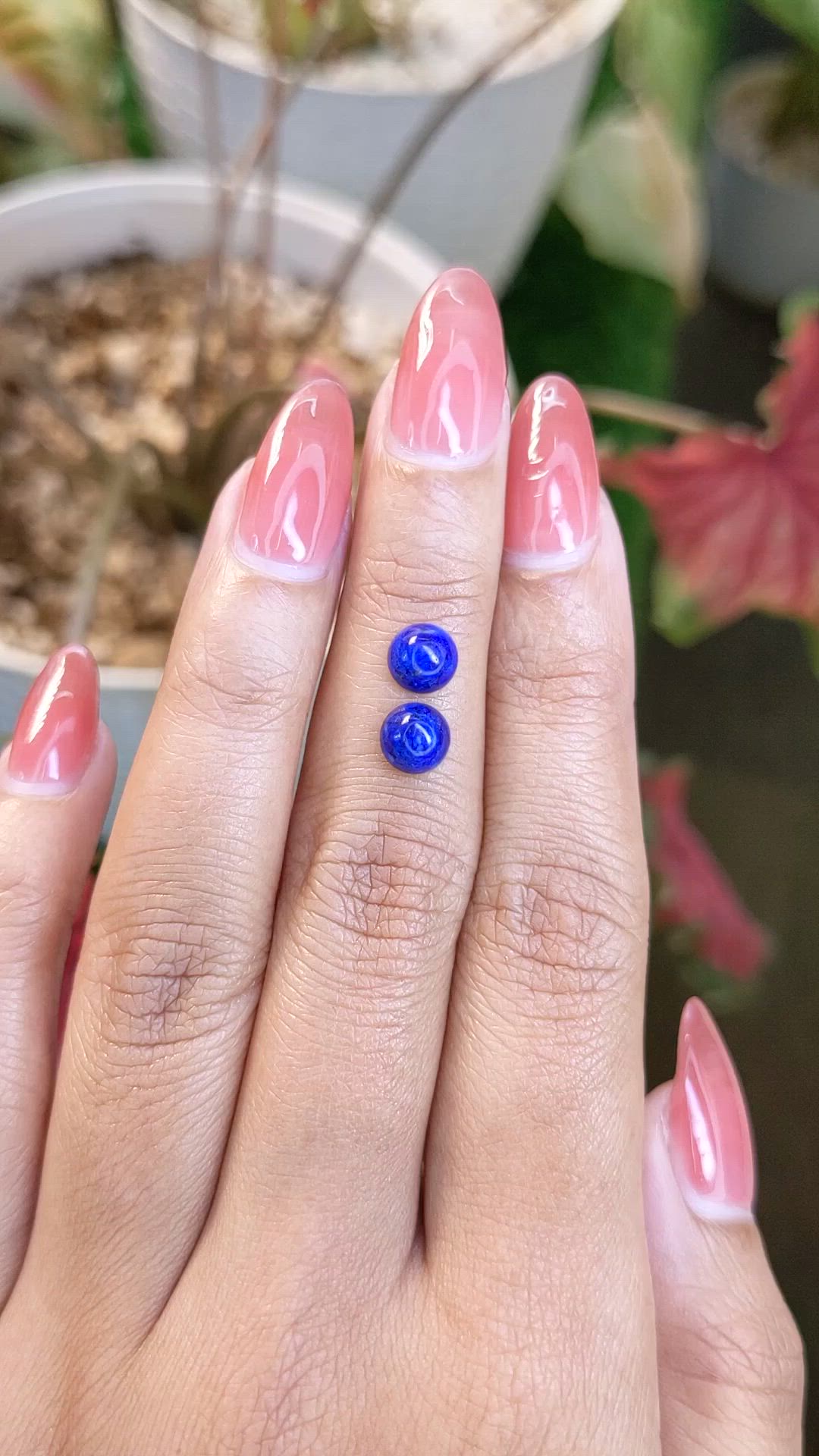
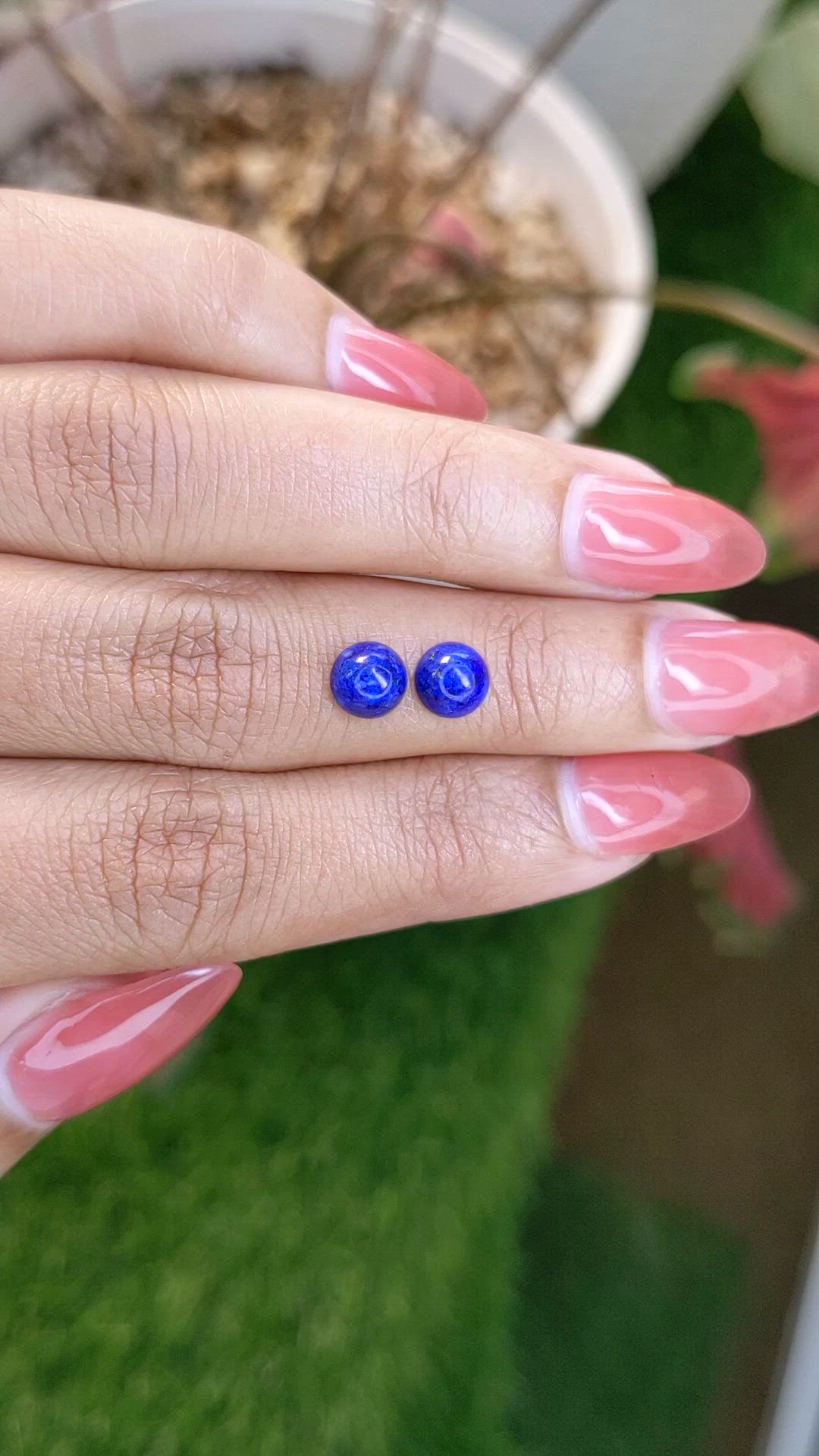
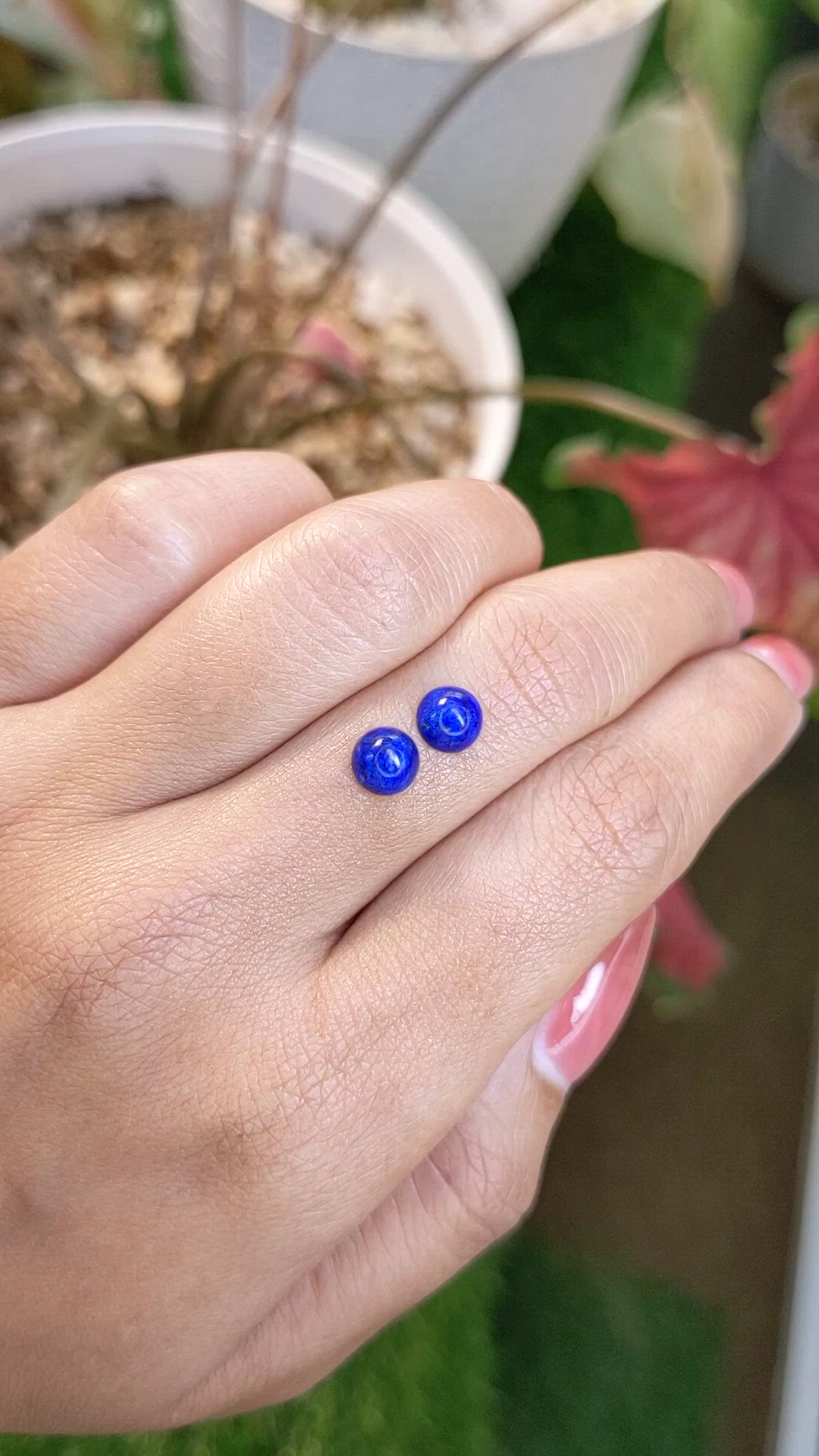
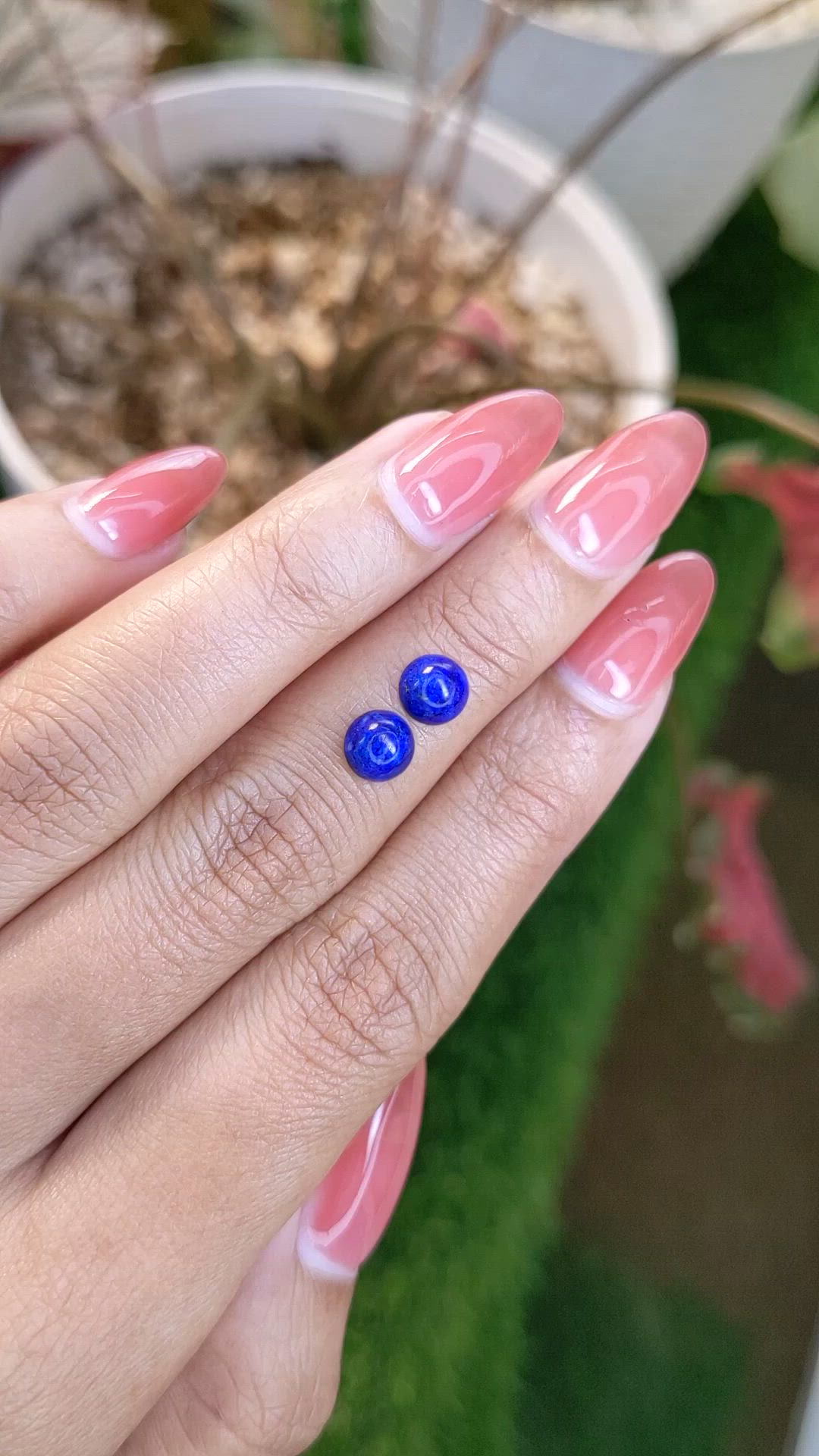



1.84 Ct.Tw.Total Carat Weight Cabochon Lapis Pair from Afghanistan
This pair of stones is available to ship now
Stone type: | Lapis | Lapis |
|---|---|---|
Item ID: | PR14504 | PR14504 |
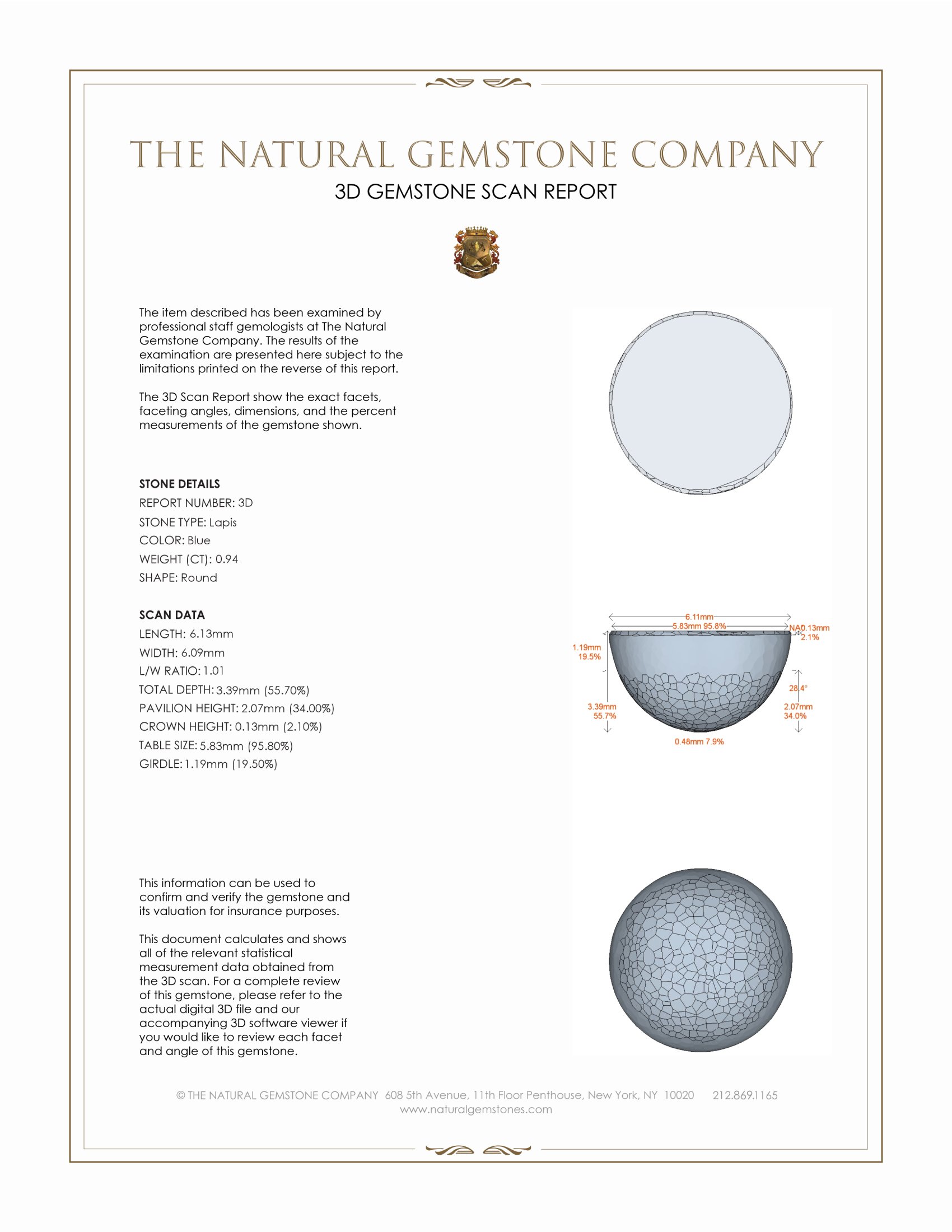
Dimensions (MM): help | Length: 6.13 Width: 6.09 Height: 3.39 | Length: 6.09 Width: 6.08 Height: 3.37 |
Weight: | 0.94 Ct. | 0.90 Ct. |
Color: help | Blue | Blue |
Color intensity: help | N/A | N/A |
Clarity: help | Not Applicable | Not Applicable |
Shape: help | Round | Round |
Cut: | Cabochon | Cabochon |
Cutting style: | Cabochon | Cabochon |
Enhancements: help | No Enhancement | No Enhancement |
Origin: help | Afghanistan | Afghanistan |
Per carat price: help | $20 | $20 |
This pair of lapis lazuli cabochons presents as a classic example of natural Afghan lapis, weighing 0.94 carats and 0.90 carats respectively, with round profiles and dimensions of 6.13 x 6.09 x 3.39 mm and 6.09 x 6.08 x 3.37 mm, each cut to a smooth cabochon form and finished with an excellent polish. The stones are opaque, untreated, and have received no enhancements, which is a significant factor for discerning collectors and connoisseurs who prioritize natural provenance and original material stability. The cabochon cutting style is particularly appropriate for lapis, as it maximizes the perception of color saturation and surface luster, providing a velvety face that reads as deep blue at normal viewing distances. Because lapis is evaluated differently than transparent gemstones, traditional clarity grades do not apply in the same way, and instead the most critical quality indicators are uniformity of color, absence of conspicuous calcite veining, and the overall surface finish, all of which are evident in this matched pair. At these small but meaningful carat weights these stones are ideal for delicate settings such as stud earrings, small pendants, or as accent stones in bespoke designs, and their near identical dimensions make them exceptional candidates for matched jewelry that requires symmetry and balance.
The origin of these cabochons is Afghanistan, a region renowned for producing some of the finest lapis lazuli in the world, and this provenance contributes materially to their desirability and market value. Afghan lapis, historically sourced from the Badakhshan region, has long been associated with the most saturated and consistent blue tones, and collectors often pay a premium for documented origin from these classic deposits. Because these pieces are natural and untreated, they hold value for buyers who understand the premium placed on unenhanced material, and they also offer the reassurance of long term color stability provided they are cared for properly. From a practical standpoint lapis has a Mohs hardness of approximately 5 to 5.5, which places it in a category that requires mindful settings and daily wear considerations, but it remains entirely suitable for fine jewelry when set to protect the girdle and pavilion. For care avoid exposure to strong acids or household chemicals, do not use steam or ultrasonic cleaners, and clean with a soft cloth and mild soap when necessary, steps that will preserve the polish and color for generations.
In terms of grading and evaluation, lapis is assessed primarily on color saturation, uniformity, and the nature of any inclusions or matrix material, rather than transparency or facet related brilliance. Uniform, deep blue color without prominent white calcite streaks is the most sought after characteristic, and moderate fine pyrite flecking can be seen as desirable because it adds a subtle metallic sparkle that emphasizes the stone character, but excessive pyrite can detract from a smooth field of blue. These particular cabochons exhibit the qualities typical of higher grade lapis in that they present as rich opaque blue faces with excellent surface polish, and they are free from obvious surface pits or harsh irregularities that would impact setting or aesthetic harmony. The small variation in weight and dimensions is negligible for matched pairs, with a difference of only 0.04 carats and measurements differing by at most 0.04 mm, which speaks to careful selection and cutting to achieve visual parity. For the educated buyer the combination of Afghan origin, untreated material, cabochon execution, and precise matching delivers both aesthetic pleasure and collector confidence, and these attributes are factors that underlie both intrinsic and investment value.
Beyond the technical attributes there is a romantic provenance woven into the deep blue of these stones that can enhance the emotional value of any piece they inhabit, a narrative that resonates with those who prefer objects with history and meaning. Historically lapis has been associated with the heavens and with royalty, used by ancient artisans to create ultramarine pigment for sacred art, and worn by nobles as a symbol of wisdom and truth, and this pair of cabochons carries that lineage, evoking the image of moonlit caravans crossing mountainous passes where miners first found the stone. Imagine a promise exchanged beneath a night sky mirrored by the saturated blue of these stones, a small pair of tokens given as a binding pledge, their opaque depths reflecting steady devotion rather than fleeting brilliance. The Natural Gemstone Company offers these matched lapis cabochons not just as materials for design, but as the centerpiece for stories that unfold over time, objects that create continuity between past craftsmanship and present intention. For clients seeking a piece that combines geological authenticity, measured connoisseurship, and a quietly romantic narrative, these Afghan lapis cabochons are an excellent choice, and we are available to advise on mounting options that will maximize both longevity and emotional resonance.


