
- Pair16
- Reports4


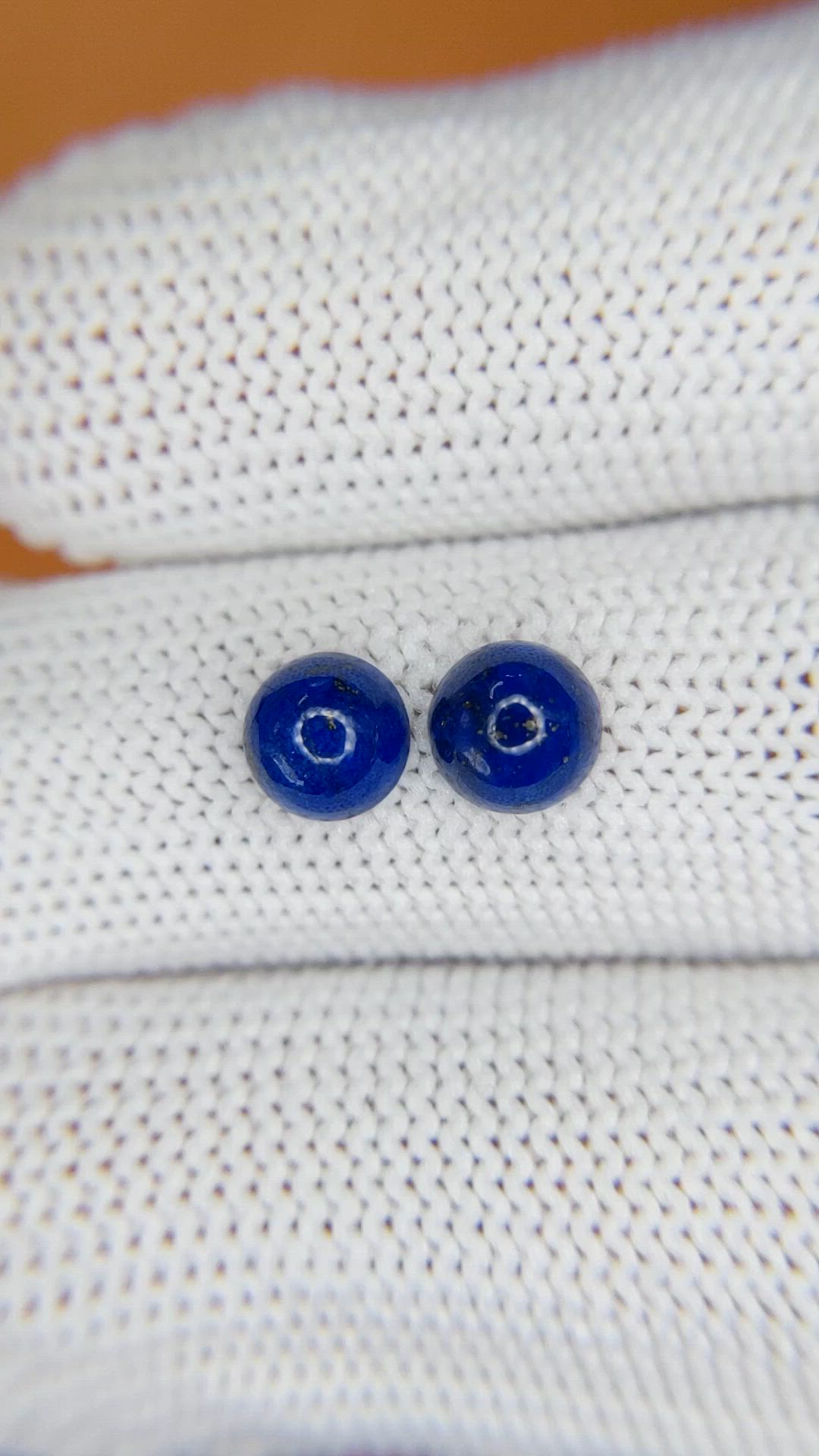
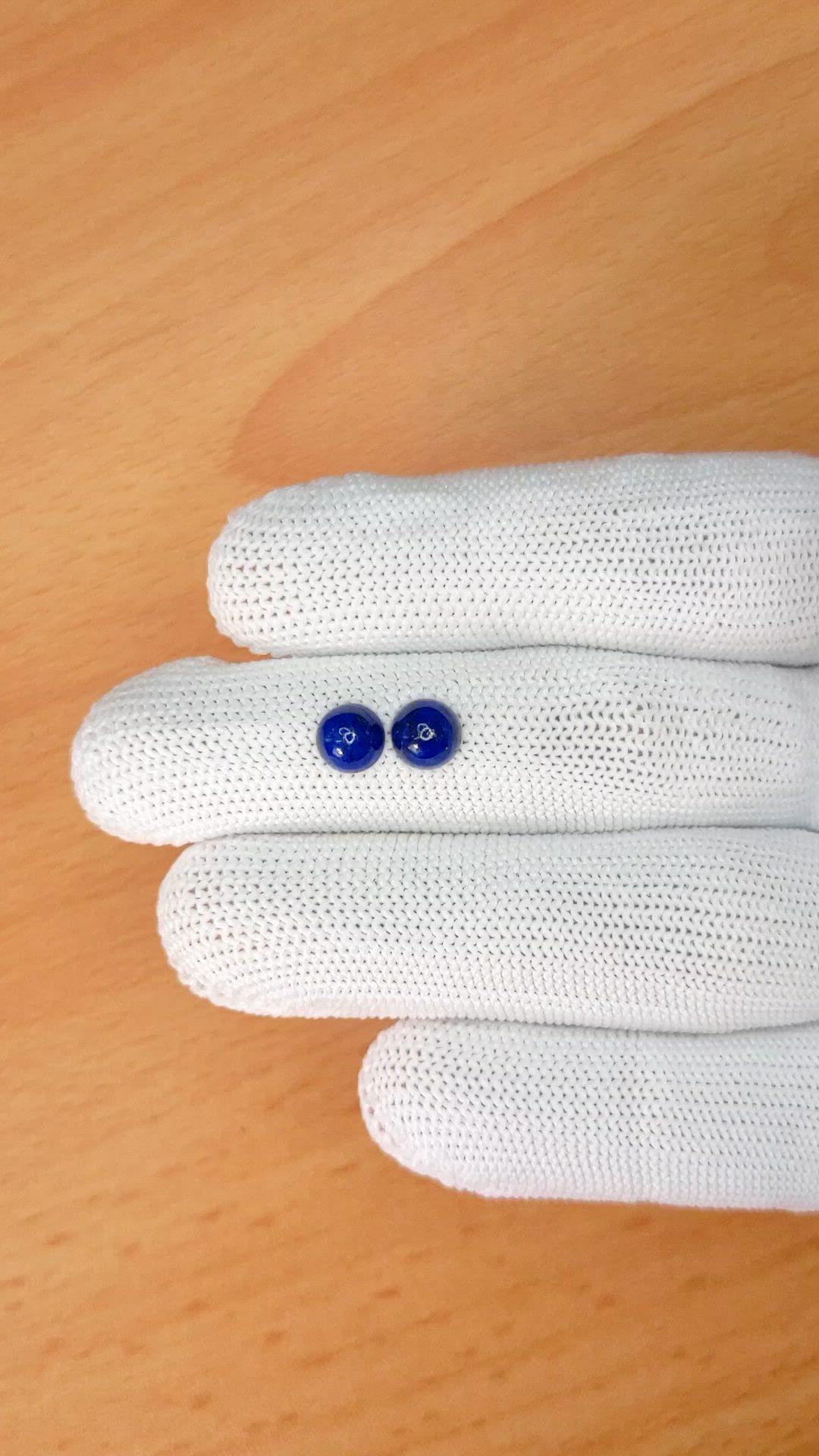
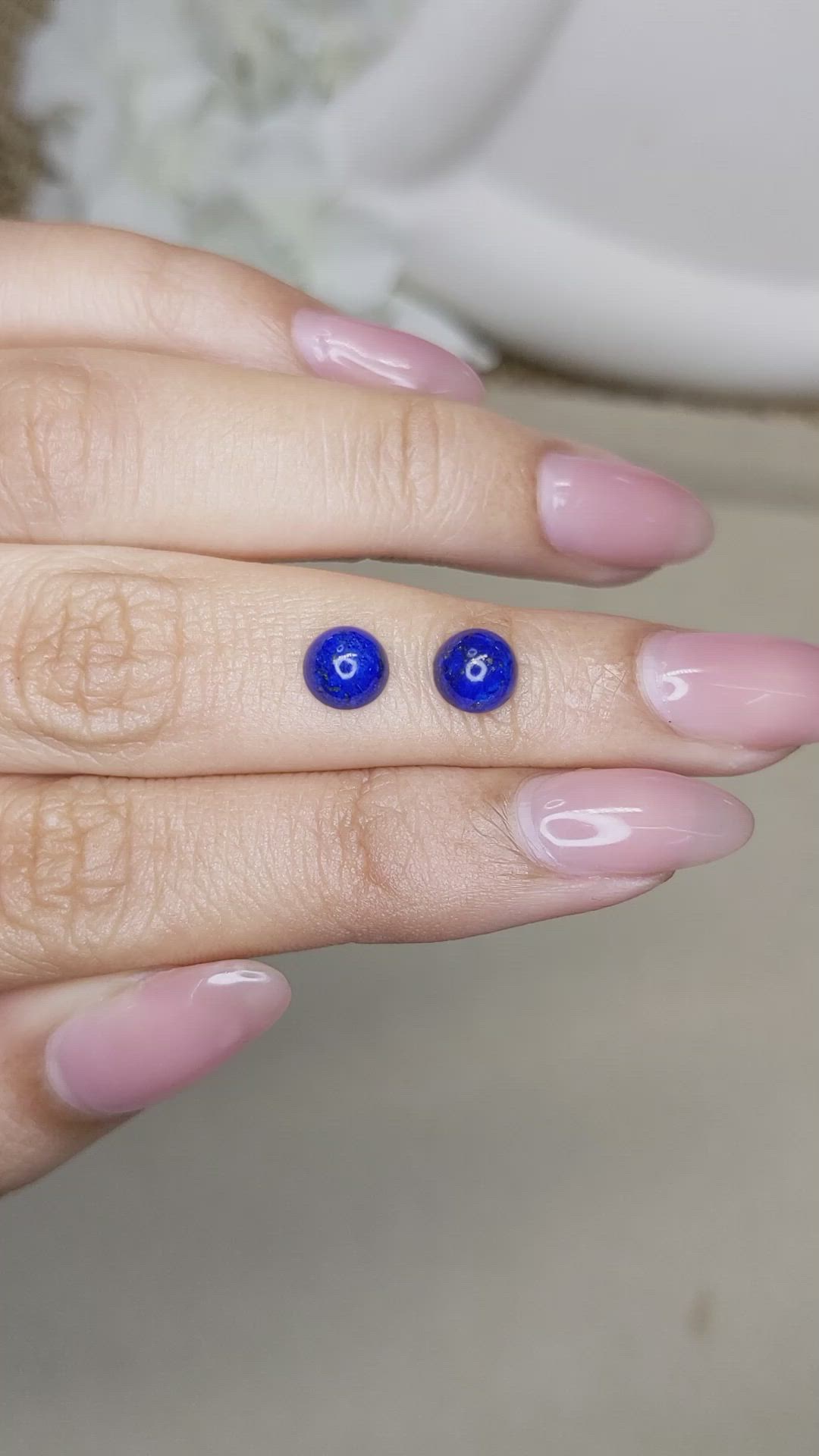
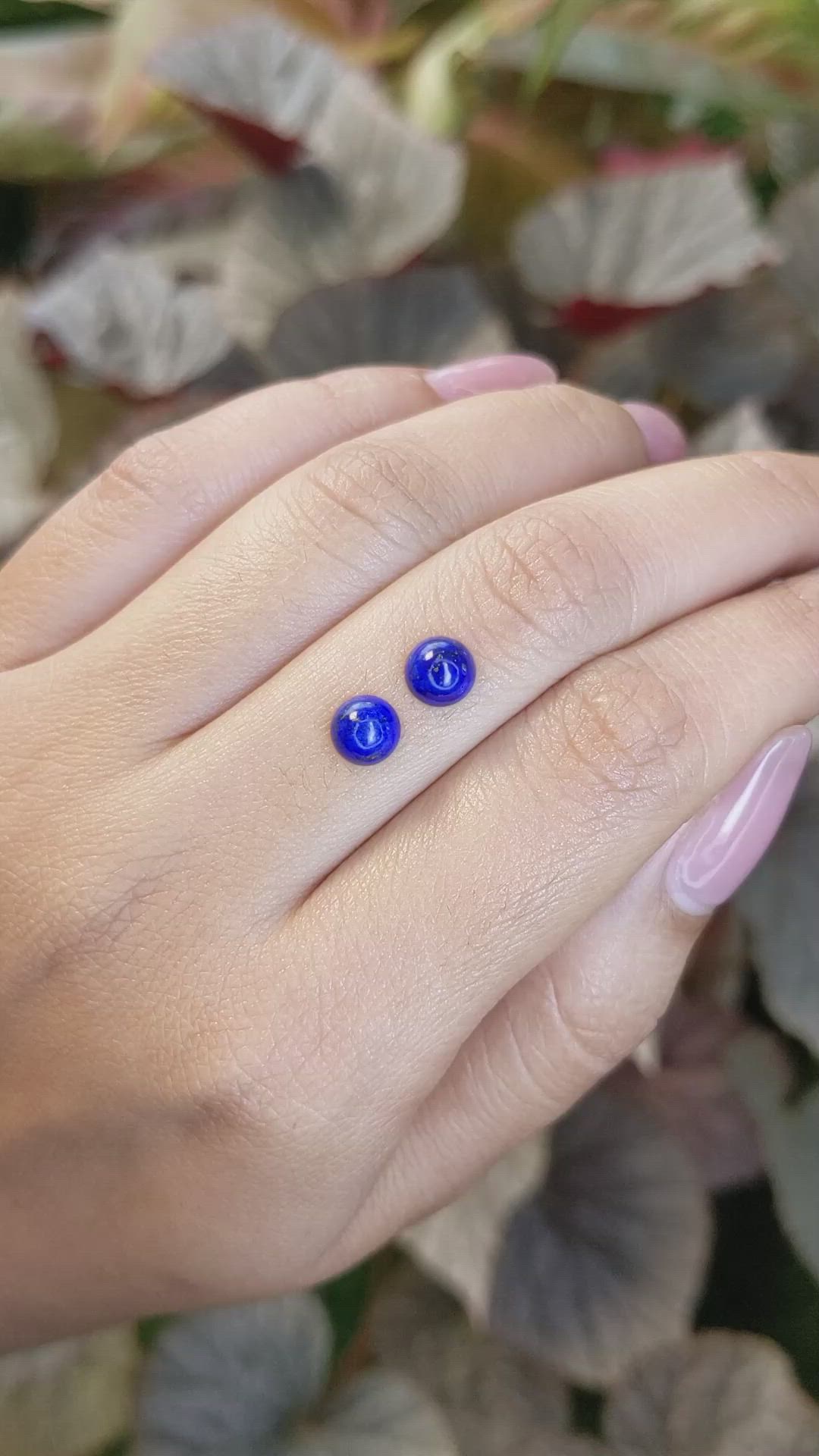
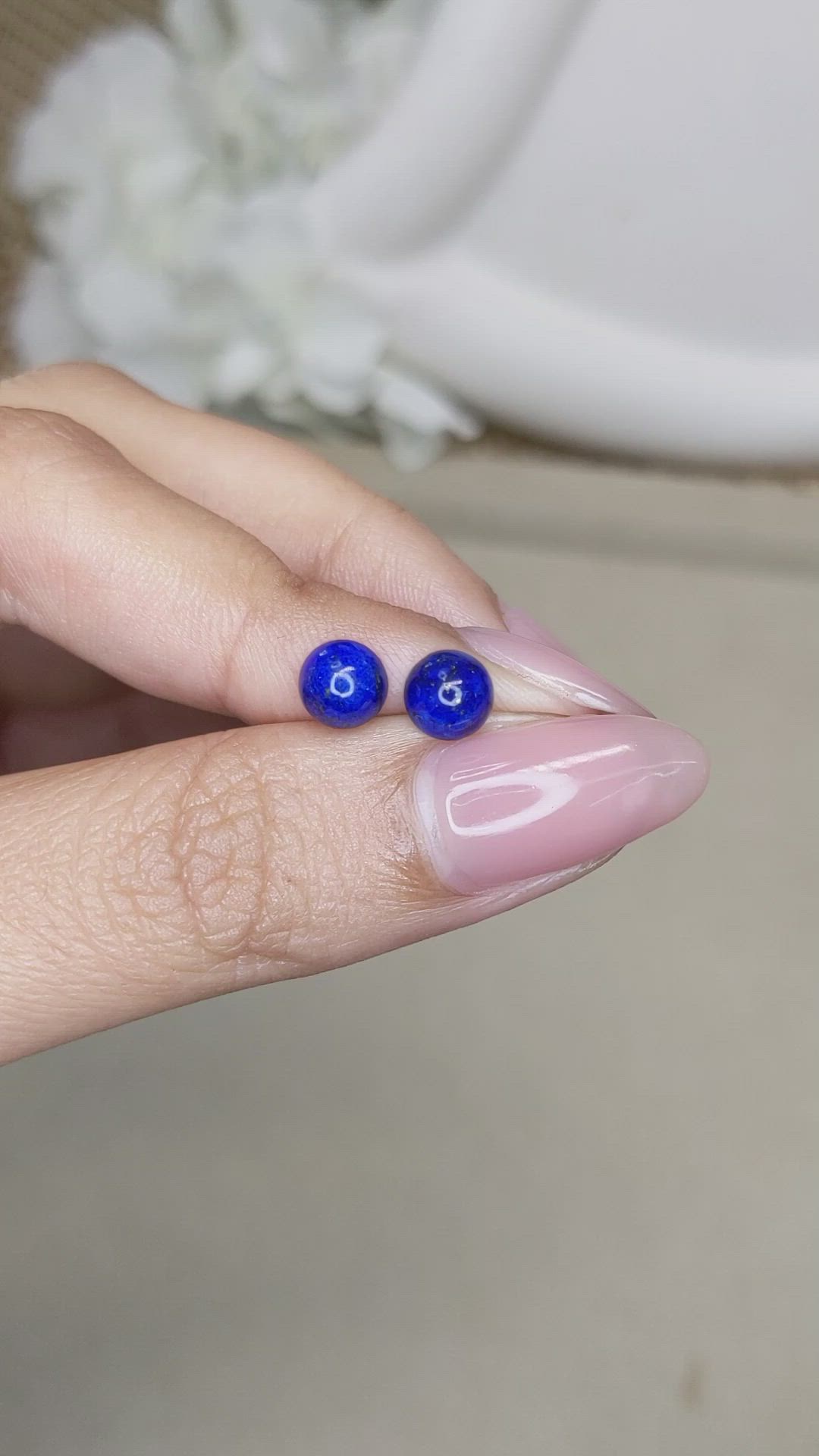
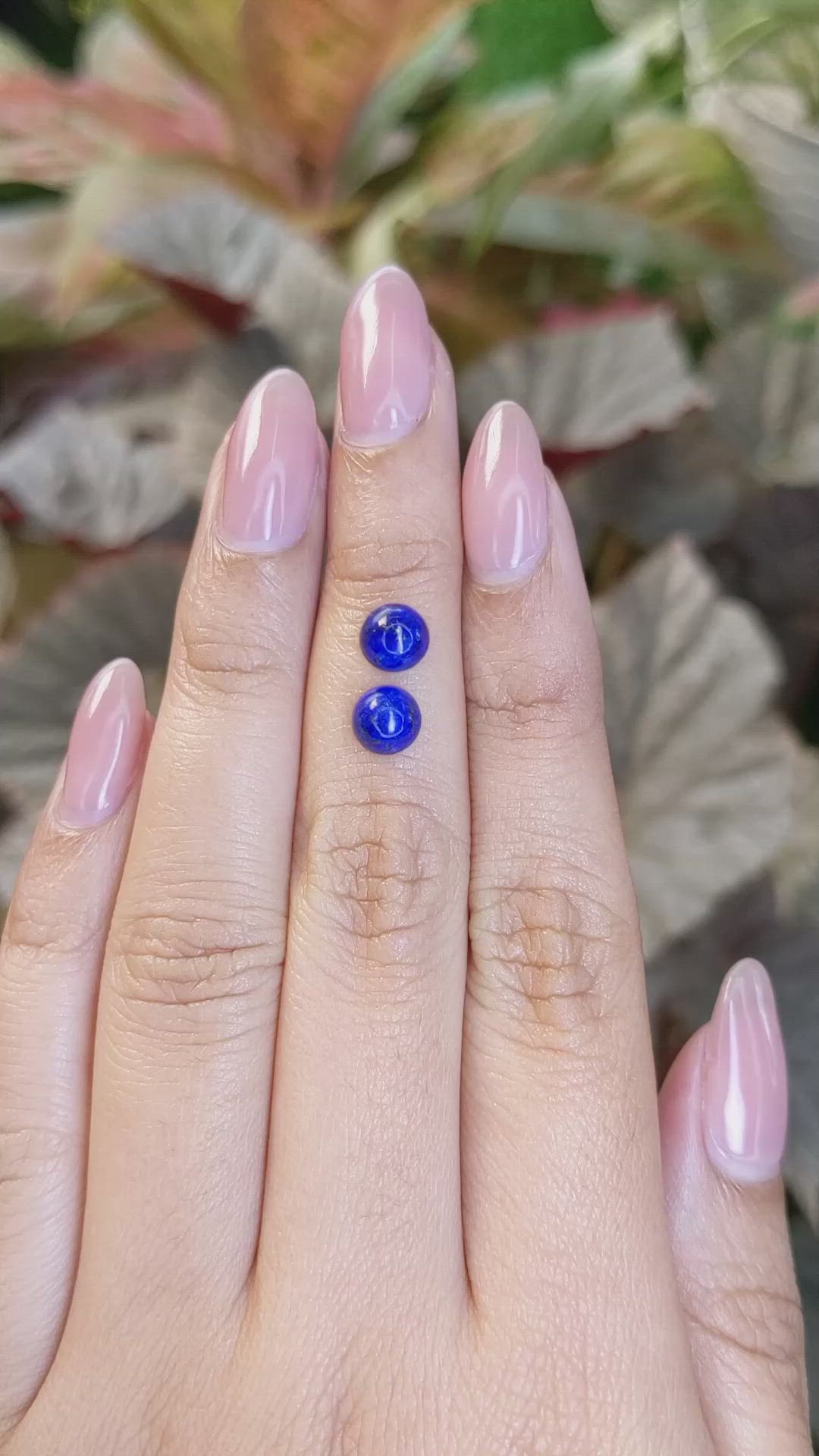




1.86 Ct.Tw.Total Carat Weight Cabochon Lapis Pair from Afghanistan
This pair of stones is available to ship now
Stone type: | Lapis | Lapis |
|---|---|---|
Item ID: | PR14532 | PR14532 |
Dimensions (MM): help | Length: 6.19 Width: 6.2 Height: 3.41 | Length: 6.12 Width: 6.1 Height: 3.24 |
Weight: | 0.99 Ct. | 0.87 Ct. |
Color: help | Blue | Blue |
Color intensity: help | N/A | N/A |
Clarity: help | Not Applicable | Not Applicable |
Shape: help | Round | Round |
Cut: | Cabochon | Cabochon |
Cutting style: | Cabochon | Cabochon |
Enhancements: help | No Enhancement | No Enhancement |
Origin: help | Afghanistan | Afghanistan |
Per carat price: help | $20 | $20 |
This pair of natural lapis presents as two round cabochons, weighing 0.99 carats and 0.87 carats respectively, each displaying an opaque, true blue appearance with an excellent polish. The larger stone measures 6.19 by 6.20 by 3.41 millimeters, the smaller measures 6.12 by 6.10 by 3.24 millimeters, and both are cut as domed cabochons to emphasize color saturation and surface luster. The cutting style is cabochon, the color intensity is recorded as not applicable due to the uniform opaque character, and there has been no enhancement of these stones. The combination of tight size matching, uniform dome profiles, and superior polish produces a coherent visual pair that is ready for use as matched earrings or for paired accents in a bespoke design.
The provenance of these lapis stones is Afghanistan, a region that has supplied some of the most historically and gemologically significant lapis in the world. Afghan lapis is closely associated with the ancient Sar e Sang mines in Badakhshan, which have produced high quality material for many centuries, contributing to its recognition as a premier source. Geologically, the material from this region tends to exhibit stable, deep blue color with fine, evenly distributed matrix and occasional fine flecks of pyrite, characteristics that collectors and makers value for both aesthetic and identification reasons. Origin influences value because it ties a specimen to a documented geological source with a known history of producing consistent, collectible material. In addition, Afghan lapis is subject to constrained production and irregular supply, factors that support its market value for those seeking provenance along with color quality. The fact that these cabochons are untreated further reinforces their appeal, because natural, unenhanced material from a classic source maintains both integrity and desirability among connoisseurs.
From a practical and design perspective these stones offer attributes suitable for fine jewelry where color and surface treatment are pivotal. The cabochon cut and domed geometry emphasize the deep, even blue and the excellent polish enhances visual depth, making them particularly well suited for earring pairs, small pendants, or as matched accent stones in a larger composition. Their modest carat weights and near identical dimensions facilitate symmetrical settings, and their opaque character reduces the need for complex light management in mounting. For those concerned with care and longevity, lapis is best set in protective mounts that minimize exposure to acids and abrasive cleaning, and routine maintenance should be conducted with gentle cleaning agents. The Natural Gemstone Company documents the origin and the untreated status of these gems upon request, and can provide further details regarding matching tolerances and recommended setting options to assist designers and clients in integrating these stones into finished pieces.


