
- Pair16
- Reports4
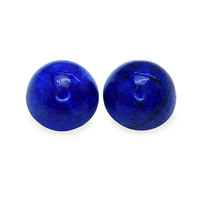


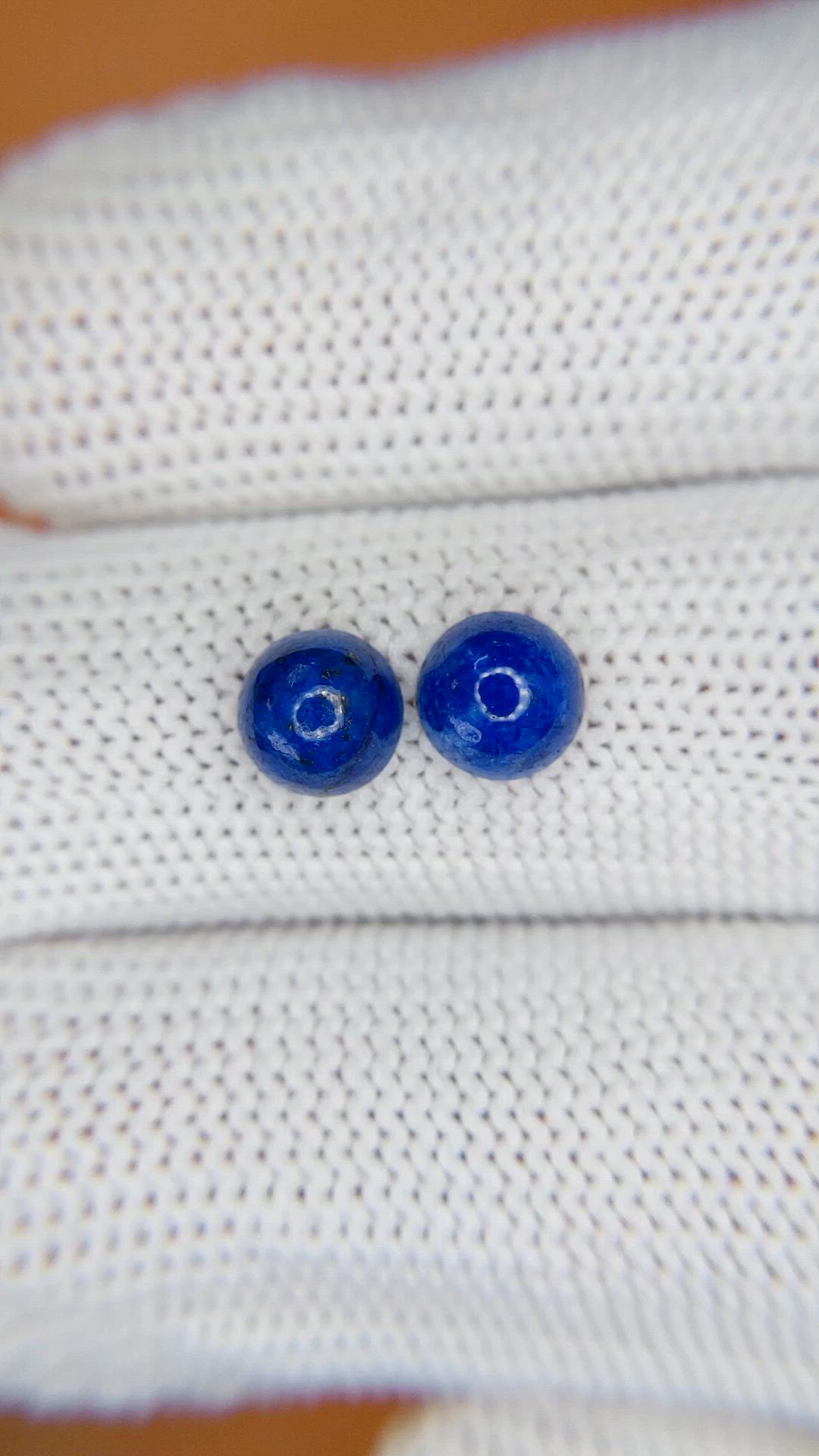
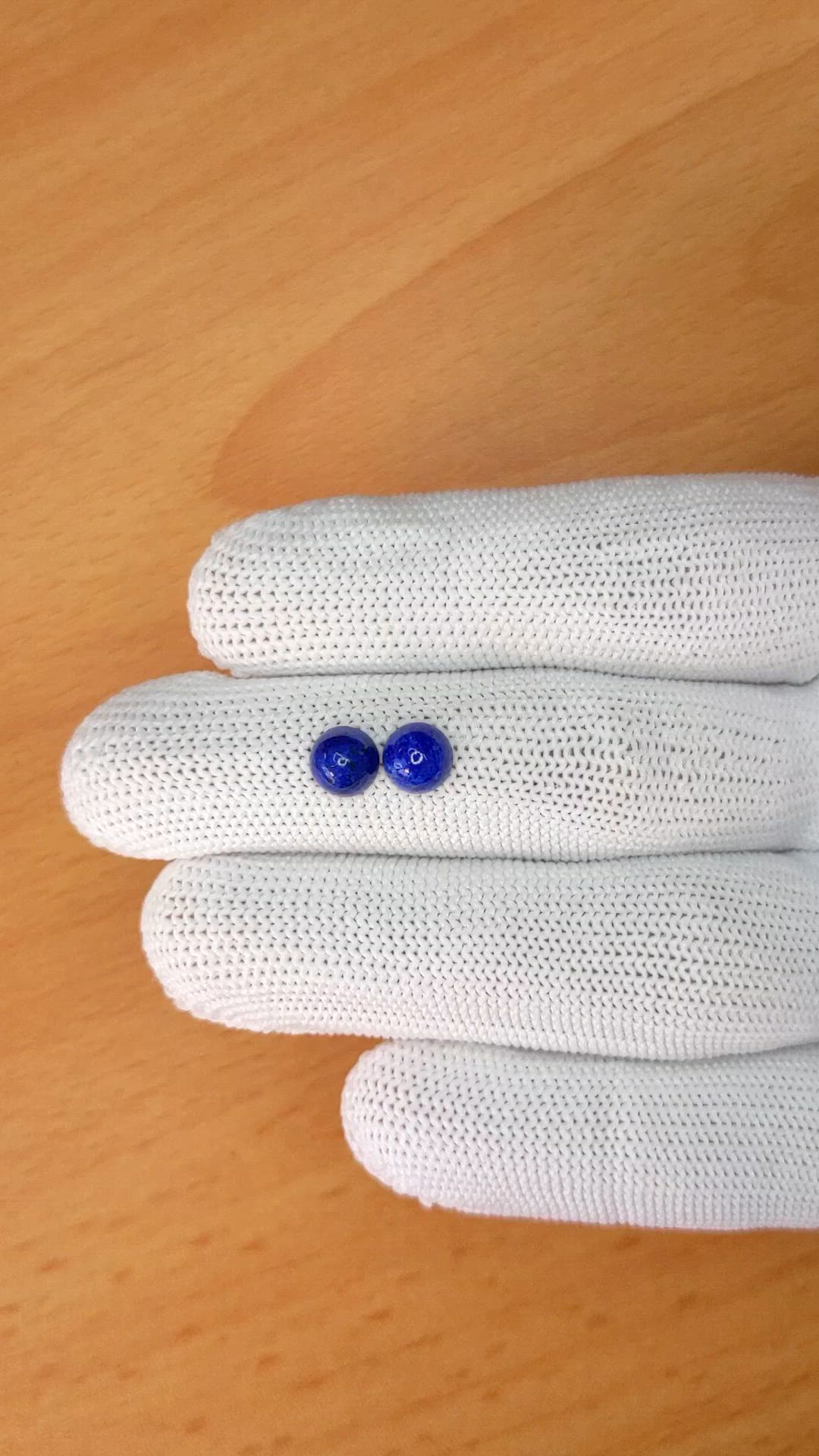
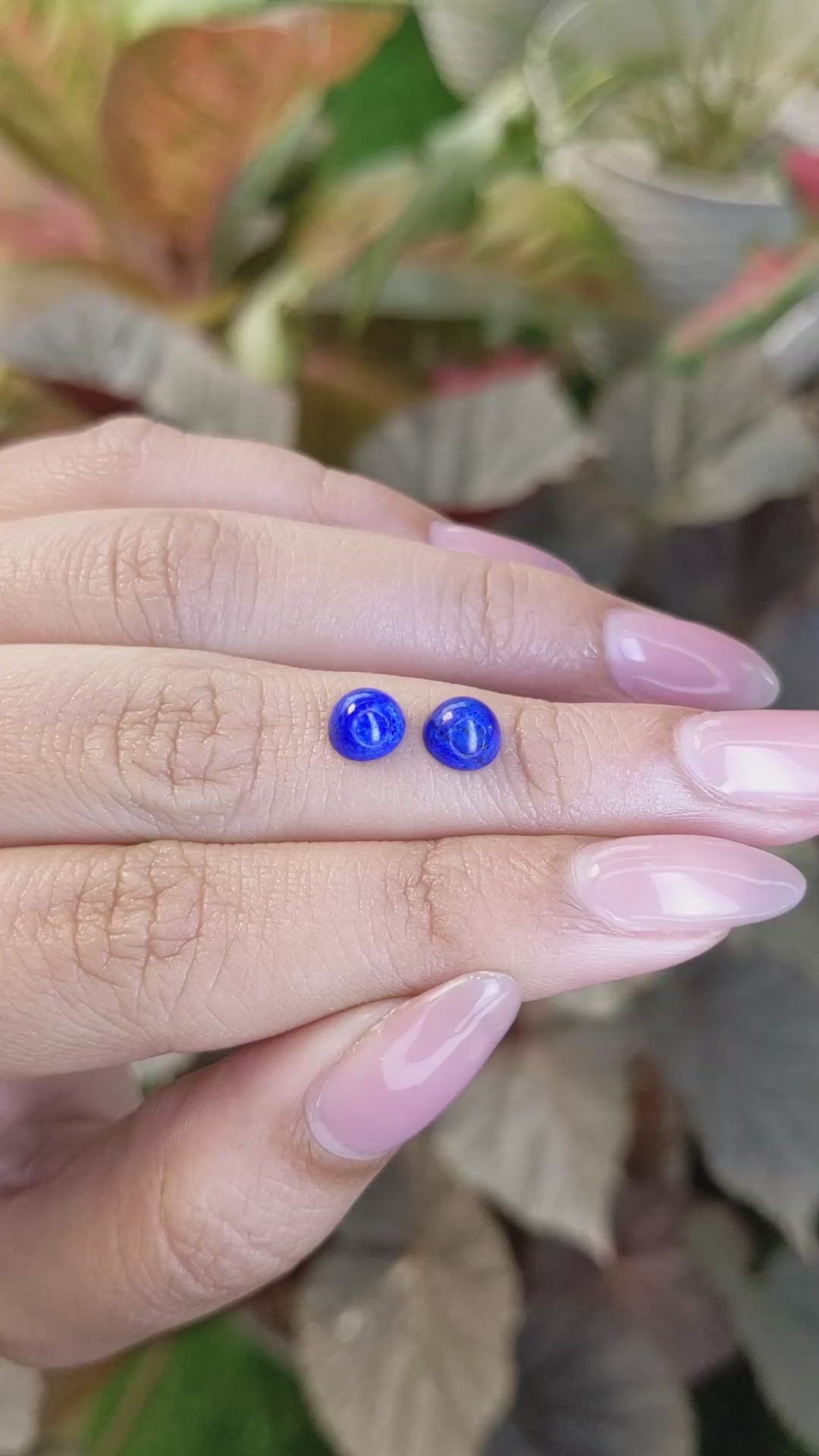
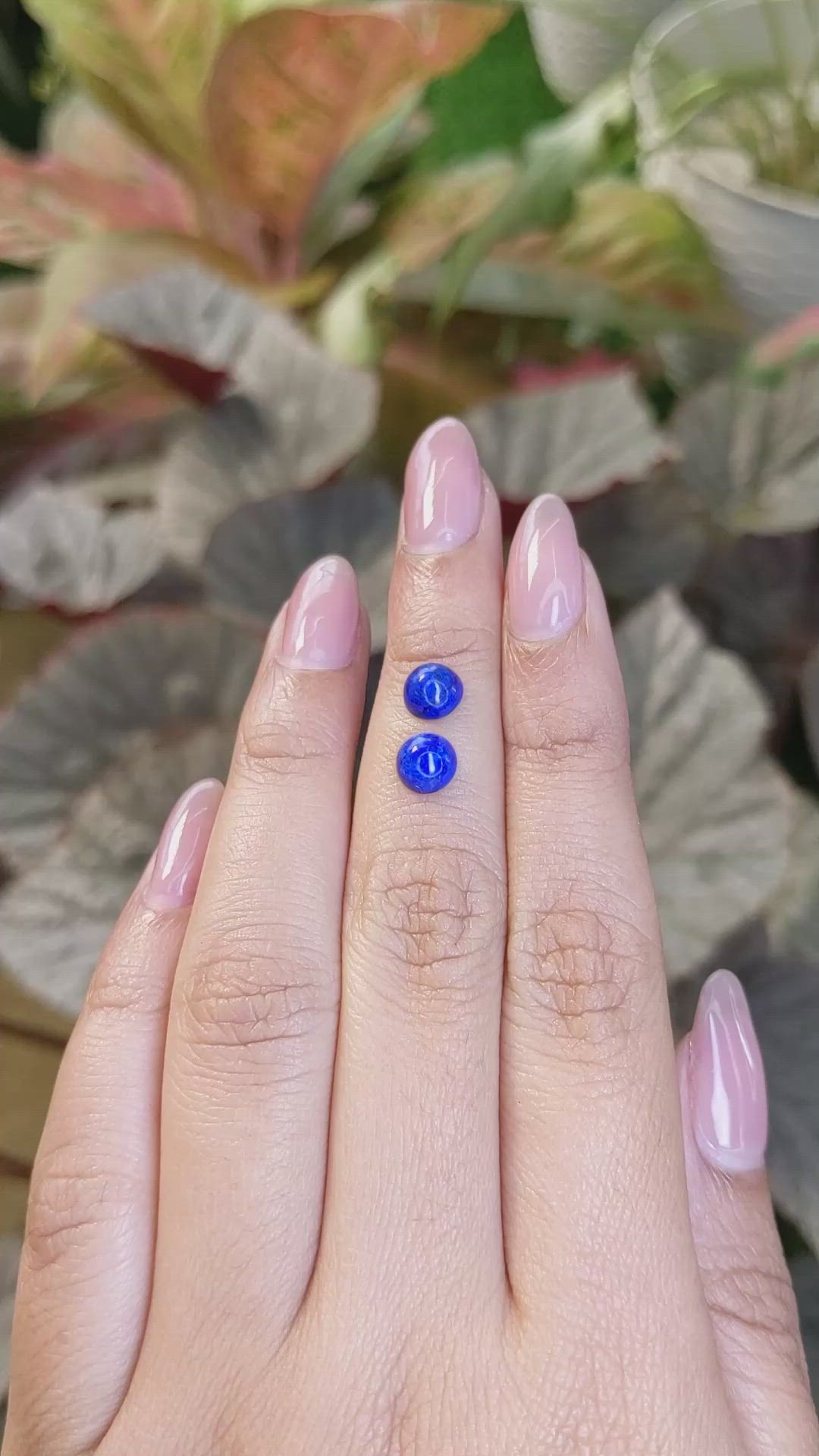
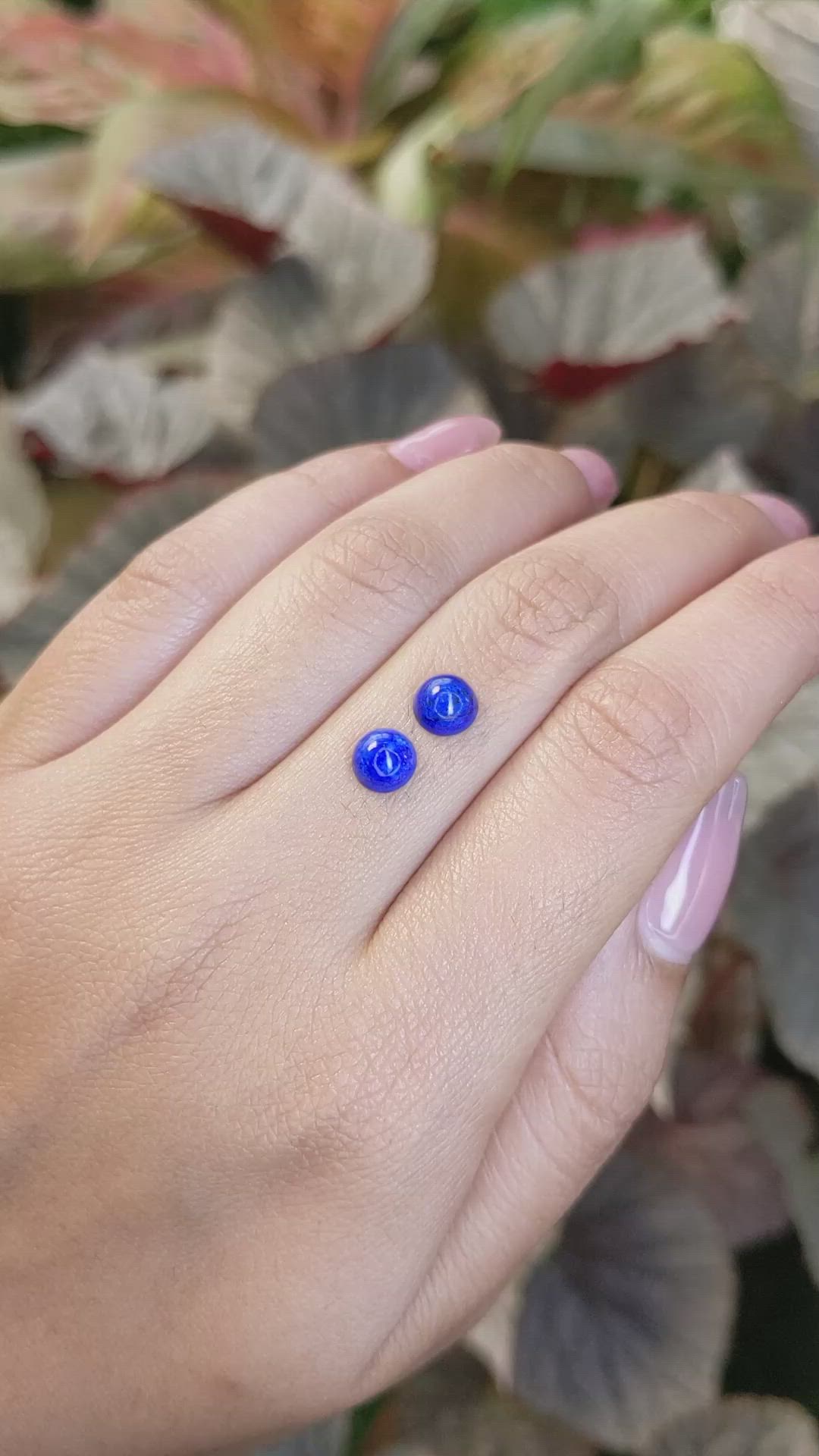
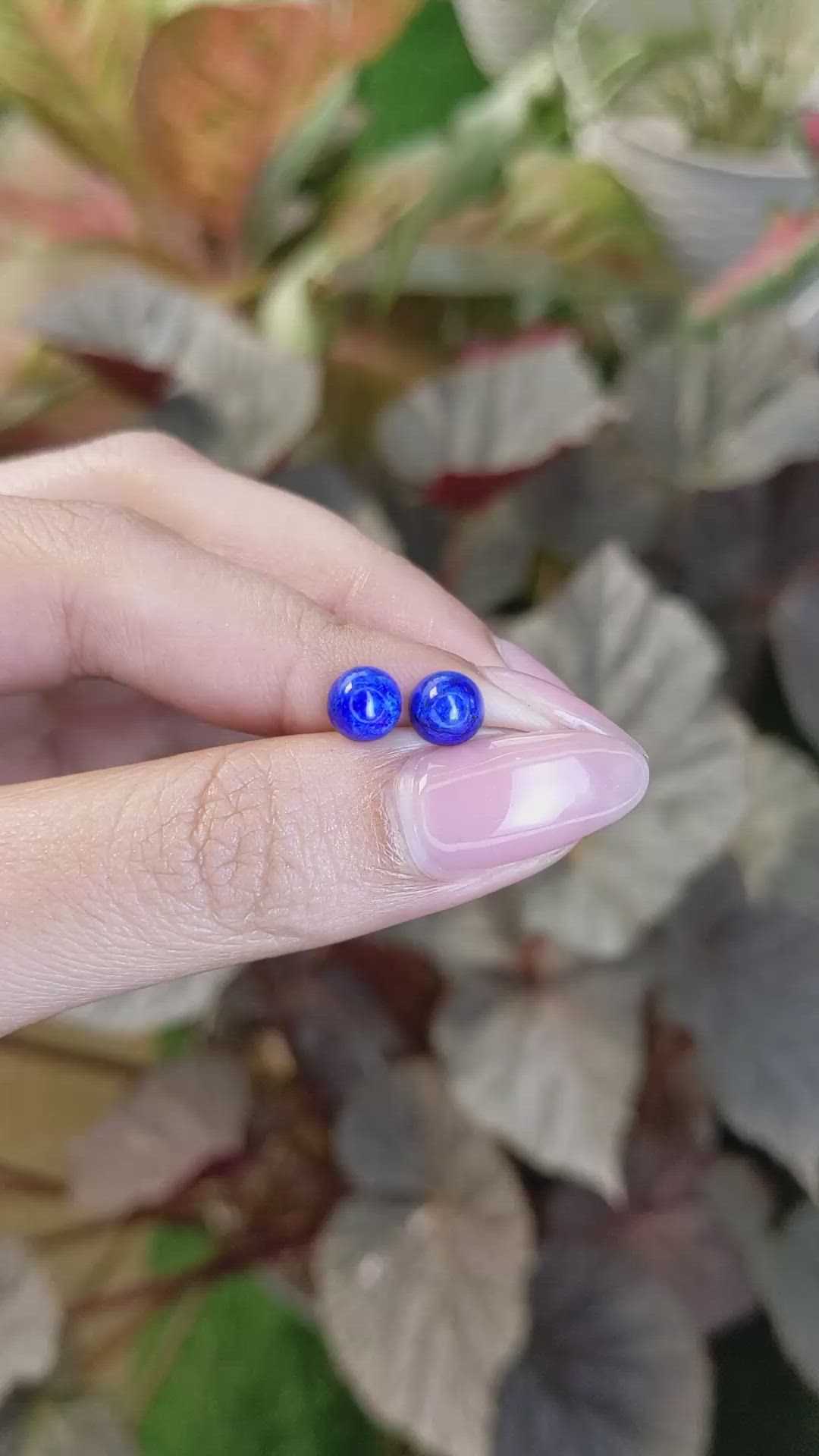


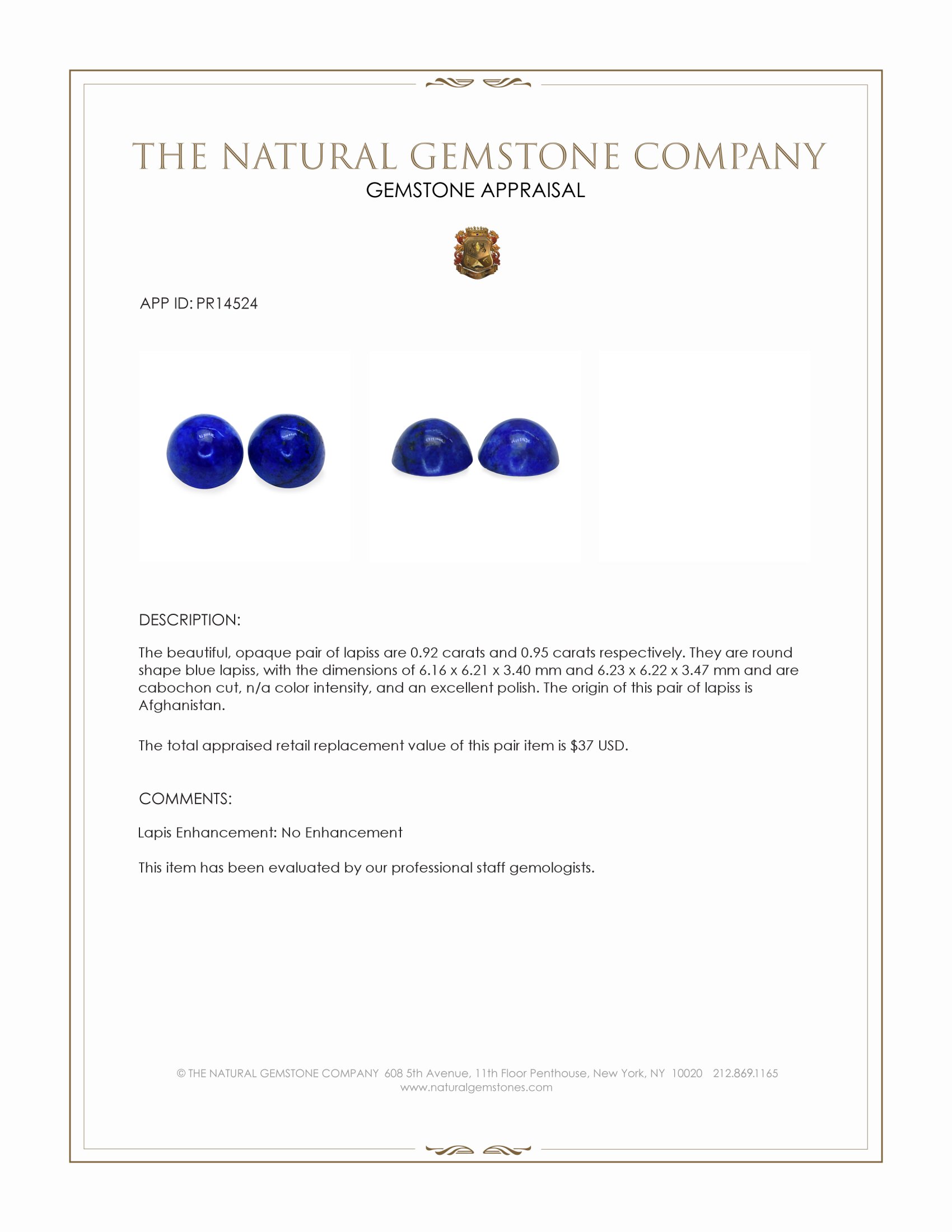
1.87 Ct.Tw.Total Carat Weight Cabochon Lapis Pair from Afghanistan
This pair of stones is available to ship now
Stone type: | Lapis | Lapis |
|---|---|---|
Item ID: | PR14524 | PR14524 |
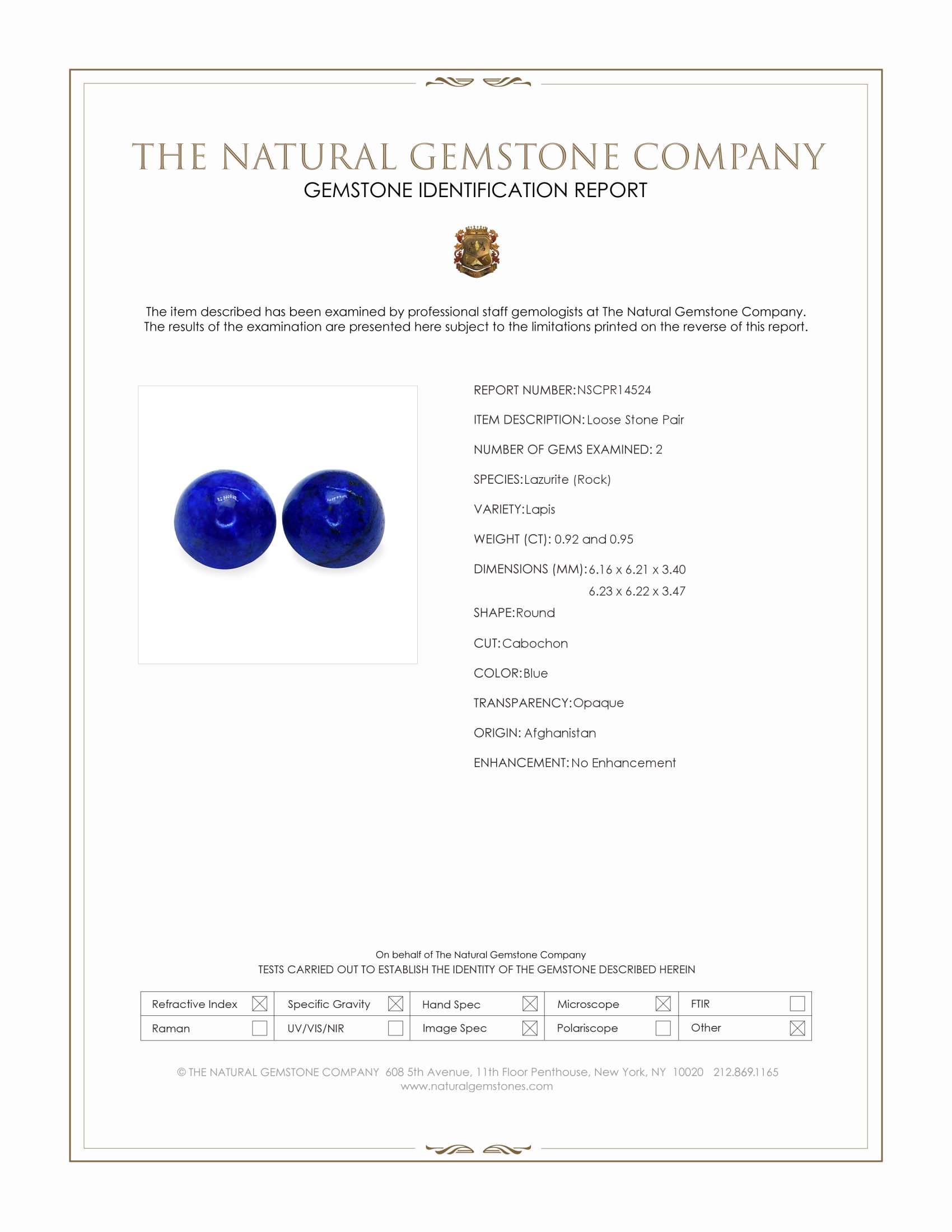
Dimensions (MM): help | Length: 6.16 Width: 6.21 Height: 3.4 | Length: 6.23 Width: 6.22 Height: 3.47 |
Weight: | 0.92 Ct. | 0.95 Ct. |
Color: help | Blue | Blue |
Color intensity: help | N/A | N/A |
Clarity: help | Not Applicable | Not Applicable |
Shape: help | Round | Round |
Cut: | Cabochon | Cabochon |
Cutting style: | Cabochon | Cabochon |
Enhancements: help | No Enhancement | No Enhancement |
Origin: help | Afghanistan | Afghanistan |
Per carat price: help | $20 | $20 |
This pair of lapiss presents as a matching set of opaque, round cabochons, offered with precise measurements and documented provenance. The stones weigh 0.92 carats and 0.95 carats respectively, and their measured dimensions are 6.16 x 6.21 x 3.40 mm, and 6.23 x 6.22 x 3.47 mm. Both are cut in the cabochon style, with a smooth, domed face and a well-defined girdle, and they exhibit an excellent polish across their surfaces. The color is described as blue lapiss, and no artificial enhancement has been applied to alter tone or appearance. These attributes are recorded to assist in identification and to provide an accurate baseline for designers and gemologists when assessing the material for use in matched settings.
The cabochon cutting style used for these pieces emphasizes surface luster, color distribution, and the interaction between light and internal characteristics, rather than faceting for brilliance. The domed profile yields a soft, even reflection across the surface, and the excellent polish ensures that the tactile qualities and visual continuity are preserved when set into jewelry. The dimensions indicate a close match in both diameter and depth, which facilitates pairing for earrings, a pendant set, or other matched applications. The weight balance between 0.92 carats and 0.95 carats is consistent with careful selection and cutting, and the overall presentation underscores a focus on symmetry and finish.
Inclusions within lapiss are not considered flaws in the traditional sense, but rather intrinsic features that serve as natural fingerprints. The specimens from this pair display the types of inclusions commonly associated with material from Afghanistan, notably fine metallic flecks and occasional lighter matrix areas. Metallic inclusions often appear as brassy, reflective specks, and these are typically pyrite, which provides a distinct visual contrast against the blue bodycolor. Lighter, chalky streaks and spots are generally calcite, which can appear as pale veins or mottled patches. Under magnification these inclusions present stable, identifiable patterns that are valuable to gemological assessment, and they contribute to the unique aesthetic of each stone. Because inclusions are formed during the stone s natural growth, their presence confirms a natural origin and assists in distinguishing untreated material from synthetic or heavily modified alternatives.
Provenance and treatment history are essential components of responsible gemstone description, and these lapiss are sourced from Afghanistan, a region noted for supplying classic blue material. The stones have not undergone enhancement, and their recorded attributes include cabochon cutting style, excellent polish, and the precise measurements given. From a practical perspective, the presence of pyrite and calcite should be considered when planning settings and care, as calcite may be softer than the host matrix and pyrite will exhibit a metallic luster that reflects light differently than the opaque body. For routine care, gentle cleaning and avoidance of harsh chemicals are advisable to preserve surface polish and natural inclusions. The Natural Gemstone Company documents these details to support accurate appraisal, secure matching in finished pieces, and to provide a clear factual account for designers, jewelers, and collectors who value both the material s physical characteristics and its natural history.


