
- Stone9
- Reports3


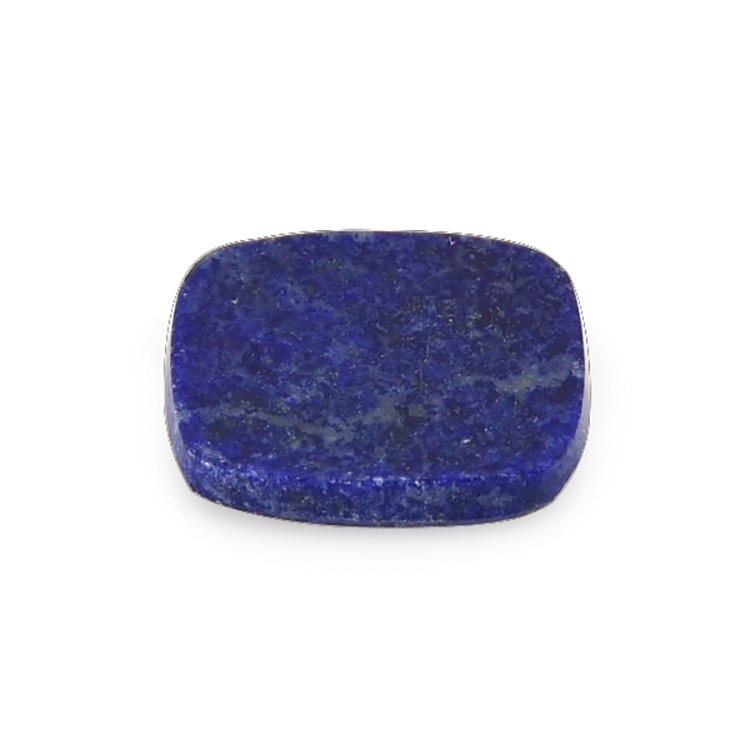


3.61 Ct. Lapis from Afghanistan
This loose stone is available to ship now
Item ID: | K2782 |
|---|---|
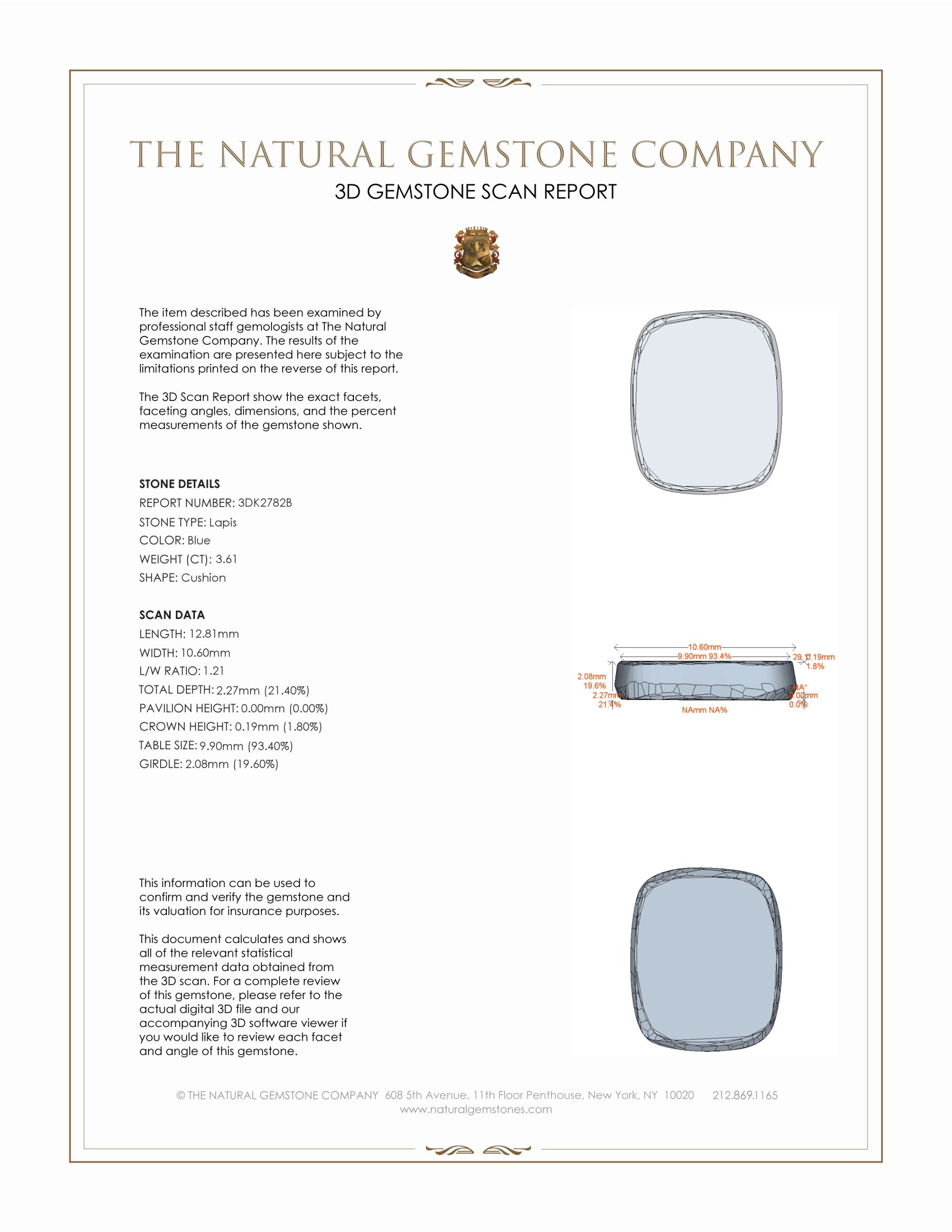
Dimensions (MM): help | Length: 12.81 Width: 10.6 Height: 2.27 |
Weight: | 3.61 Ct. |
Color: help | Blue |
Color intensity: help | Intense |
Clarity: help | Not Applicable |
Shape: help | Cushion |
Cut: | Tablet |
Cutting style: | Tablet |
Enhancements: help | No Enhancement |
Origin: help | Afghanistan |
Per carat price: help | $8 |
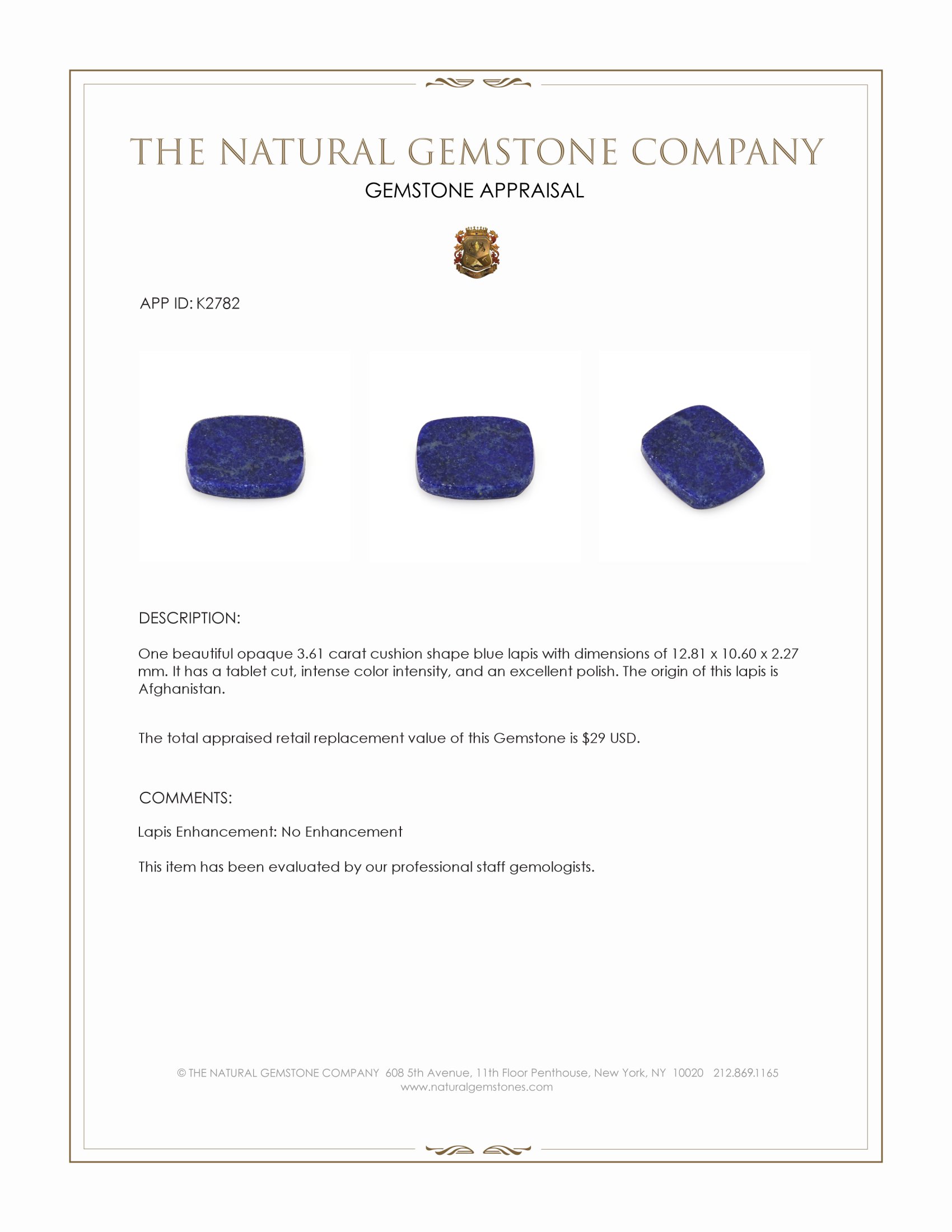
This cushion shape blue lapis offered by The Natural Gemstone Company is a fine example of natural Afghan lapis, weighing 3.61 carats, with measurements of 12.81 x 10.60 x 2.27 mm. The tablet cut presents the stone in a low profile that emphasizes surface color and texture, and the excellent polish allows the deep ultramarine to read uniformly across the face. This specimen is opaque, as is characteristic of lapis lazuli, and shows intense color intensity without indications of dye or stabilization, the enhancement status being none. Origin matters greatly for lapis, and Afghan lapis from the Badakhshan region is historically and commercially the benchmark, prized for its saturated blue lent by the mineral lazurite. When assessing quality in lapis, an educated buyer will prioritize color, texture, and the balance of accessory minerals, and this piece scores strongly on all three, offering a dense, even blue with restrained accessory patterning that supports a premium appearance.
From a gemological perspective, lapis differs from transparent gems in the way we grade and value it, and clarity for lapis means assessing the uniformity of color and the presence of calcite and pyrite. Calcite appears as white veining which can soften the blue, and excessive calcite lowers value, while pyrite shows as metallic flecks that when present in moderation can add a pleasing starry contrast. This piece exhibits a fine, even distribution of deep blue with only subtle textural variations, indicating minimal intrusive calcite and a controlled expression of accessory minerals. The tablet cut and cushion outline maximize surface area, so the intense color is perceived even at a modest depth, which is important since lapis is opaque and color is the primary determinant of desirability. The polish is excellent, creating a smooth reflective surface that enhances the visual impact without relying on transparency, and because this stone is untreated, its color and surface quality are authentic and fully natural, which is increasingly valued by collectors and designers who prioritize provenance and integrity.
In historical context, lapis occupies a unique place among famous gemstones, and comparing it to such pieces helps to clarify its special value. Unlike the transparent royal sapphires and famous diamonds that are celebrated for brilliance and fire, lapis is celebrated for its rich body color and cultural resonance. The ultramarine derived from high quality Afghan lapis was once more precious than gold in Renaissance Europe, and it was the pigment used by masters to paint robes of the most important figures in sacred and courtly paintings. Ancient Egyptian artisans inlaid lapis into the funerary mask of Tutankhamun, and in that context lapis functioned as a symbol of sky and divinity, a role not replicated by transparent gems. Where the Star of India and Kashmir sapphires are legendary for optical phenomena and clarity, a stone like this Afghan lapis is significant for its direct connection to ancient trade routes and artistic traditions, and for buyers who appreciate cultural and historical narratives, the provenance from Afghanistan imparts an authenticity and a lineage that many transparent gems cannot match.
For the practical collector or jeweler, this 3.61 carat tablet cut cushion lapis is versatile and compelling. The dimensions make it suitable for a statement ring with a low bezel setting, a bold pendant, cufflinks, or as an accent in a mixed metal bespoke piece where the deep blue can play against warm gold tones. Lapis has a Mohs hardness of approximately 5 to 5.5, so it benefits from protective settings and thoughtful wear, avoiding exposure to acids, strong detergents, and ultrasonic cleaners, and polishing and routine care should be performed by a lapidary familiar with softer ornamental stones. Because this example is natural and untreated, it is also a strong candidate for collectors who emphasize natural state and traceable origin when building a lapidary assortment. At The Natural Gemstone Company we document origin and treatment status to support informed purchasing, and we advise buyers to consider certification for higher value pieces, particularly when provenance enhances historical or investment appeal. This lapis offers a direct, tactile connection to the ancient deposits of Badakhshan, and for a buyer who values color authenticity, cultural significance, and quality cutting and finish, it represents an attractive and durable choice.


