
- Stone9
- Reports3
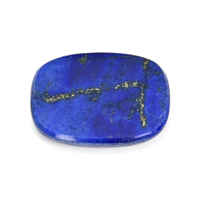






4.50 Ct. Lapis from Afghanistan
This loose stone is available to ship now
Item ID: | K2745 |
|---|---|
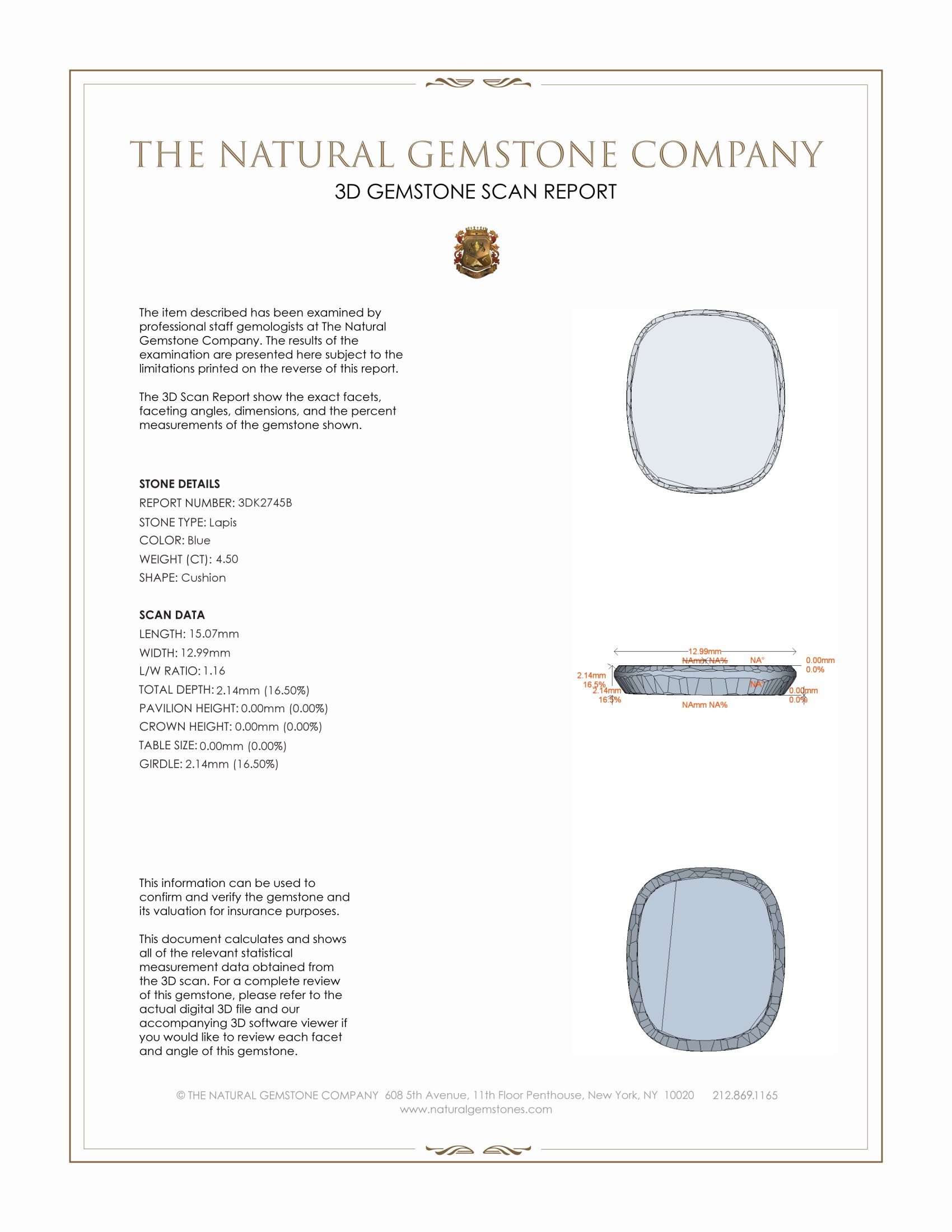
Dimensions (MM): help | Length: 15.07 Width: 12.99 Height: 2.14 |
Weight: | 4.50 Ct. |
Color: help | Blue |
Color intensity: help | N/A |
Clarity: help | Not Applicable |
Shape: help | Cushion |
Cut: | Tablet |
Cutting style: | Tablet |
Enhancements: help | No Enhancement |
Origin: help | Afghanistan |
Per carat price: help | $12 |
This specimen is a 4.50 carat, cushion shaped, opaque blue lapis, presented in a tablet cut with dimensions of 15.07 x 12.99 x 2.14 mm. The cutting style is tablet, with an excellent polish that enhances surface luster and overall visual appeal. The material is natural lapis lazuli from Afghanistan, certified as untreated, with enhancement recorded as no enhancement. Color intensity is listed as n a, and the stone displays a vivid blue field accented by fine pyrite speckling and linear pyrite veins that are visible in the included images. The profile is relatively flat in keeping with the tablet cut, offering stable dimensions for setting in a variety of mounting styles, while the cushion outline provides a classic, restrained geometry suited to both contemporary and traditional settings.
The tablet cut and excellent polish are well suited to lapis, a stone that is typically appreciated for its color and inclusions rather than for faceted brilliance. The flat tablet surface allows the inherent blue ground and metallic pyrite accents to read clearly to the eye, producing a strong visual contrast that is prized by connoisseurs. While a formal color intensity grade is recorded as n a, the empirical appearance is of a saturated, rich blue with even color distribution across the table, and minimal calcite veining that would otherwise soften the color. The cushion silhouette moderates the tablet profile, creating balanced proportions, and the millimeter dimensions indicate a substantial face up area for a 4.50 carat weight. The no enhancement designation confirms that the color and appearance are wholly natural, a characteristic that materially affects both aesthetic and market standing.
From an investment perspective, several factors support potential appreciation over time, while also identifying the prudent caveats that a responsible approach requires. Provenance from Afghanistan is significant, as historically Afghanistan has produced some of the finest lapis material available, and top grade Afghan lapis commands a premium in both retail and collector markets. The absence of enhancement increases desirability, because untreated material is scarcer than material that has been dyed or otherwise improved. The size and appearance of this piece are relevant, because larger stones with uniform deep blue color and attractive pyrite distribution are less common than smaller or more heavily veined examples. Market drivers for value include supply constraints at source, continued collector interest in natural and artisanal gemstones, and the sustained demand for lapis in both bespoke jewellery and decorative arts. It is important to note that gemstone markets are subject to cycles, and appreciation cannot be guaranteed. A prudent investor will consider quality, documentation, and liquidity when evaluating potential future value.
To preserve intrinsic and resale value, careful stewardship and appropriate documentation are recommended. Avoid exposure to harsh chemicals, ultrasonic cleaners, and prolonged direct sunlight, as these conditions can alter polish and surface appearance. Store the stone separately from harder gemstones to prevent abrasion, and maintain high resolution photographs and a record of purchase or certification. A laboratory report or appraisal that documents weight, dimensions, cut, origin, and the no enhancement status will materially improve marketability and buyer confidence. The Natural Gemstone Company can assist with independent certification recommendations and with guidance on appropriate channels for consignment or resale. When considered together, the combination of Afghan origin, untreated status, notable face up size, and polished tablet presentation positions this lapis as a considered acquisition for collectors and discerning buyers who seek material with both aesthetic merit and potential for long term appreciation.


