
- Stone11
- Reports3


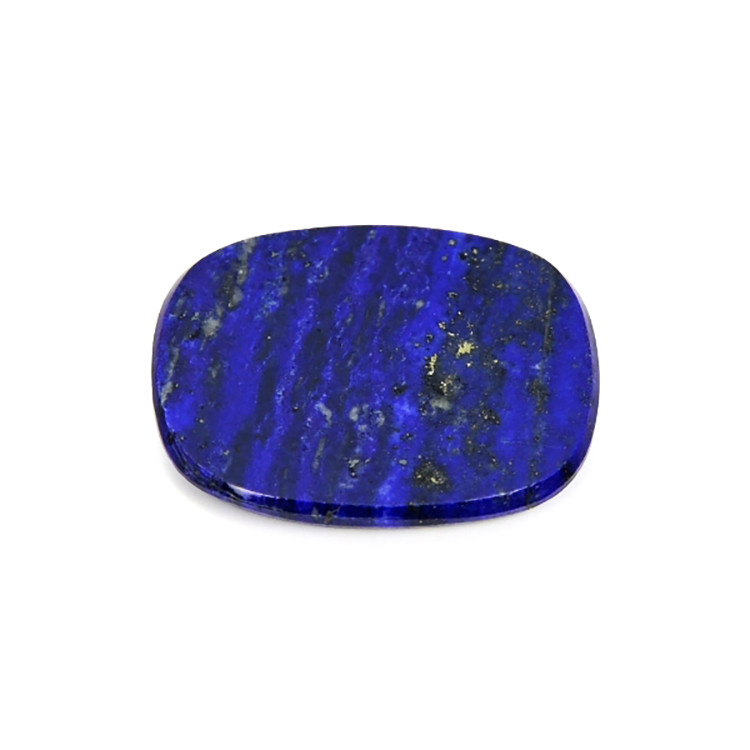


5.93 Ct. Lapis from Afghanistan
This loose stone is available to ship now
Item ID: | K2764 |
|---|---|
Dimensions (MM): help | Length: 17.22 Width: 14.87 Height: 2.07 |
Weight: | 5.93 Ct. |
Color: help | Blue |
Color intensity: help | N/A |
Clarity: help | Not Applicable |
Shape: help | Cushion |
Cut: | Tablet |
Cutting style: | Tablet |
Enhancements: help | No Enhancement |
Origin: help | Afghanistan |
Per carat price: help | $12 |
This exquisite cushion shaped blue lapis presented by The Natural Gemstone Company is a finely balanced example of classic lapis character, weighing 5.93 carats, and measuring 17.22 x 14.87 x 2.07 mm. The cutting style is tablet, a shallow, low profile cut that preserves the stone's surface color and pattern while allowing for broad, even planes of polish. The stone is opaque, with an excellent polish that brings a glassy surface sheen to the richly colored material. Enhancement is listed as no enhancement, confirming that this piece is entirely natural and untreated, and the origin is Afghanistan, a source long regarded for producing some of the world s most desirable lapis specimens. The cushion outline combined with the tablet cut makes this lapis especially versatile for modern cabochon settings, flat inlay work, and artisan jewelry where the surface pattern and color take precedence over transparency or faceting brilliance.
From a gemological standpoint this lapis is valued for its color uniformity, surface finish, and natural inclusions that authenticate its origin and formation. True lapis is dominated by the mineral lazurite, and Afghan material frequently exhibits the intense deep blue that collectors describe as ultramarine or royal blue, tones that are highly prized for their depth and saturation. The description lists color intensity as n a, however visually this example displays a consistently deep blue field with fine to moderate pyrite inclusions that register as metallic golden specks and streaks. These pyrite inclusions are not defects in the context of lapis, they are diagnostic and add visual interest, creating contrast against the blue matrix. Calcite, when present, can introduce white mottling which lowers value, and this piece shows minimal light colored matrix, which is favorable. Lapis has a Mohs hardness around 5 to 5.5, so while it is durable enough for many types of jewelry it benefits from protective settings that reduce abrasion and impact.
In terms of reflective qualities and surface behavior this lapis differs markedly from transparent, faceted gems and even from other opaque blue stones in its category. Lapis s primary appeal is chroma and textured surface contrast rather than light return, its luster ranges from subvitreous to slightly resinous on well polished surfaces. The excellent polish on this tablet cut lapis produces a smooth surface sheen that deepens the perceived color depth, and the embedded pyrite creates small metallic flashes that animate the surface when viewed at different angles. Compared to sodalite, another deep blue opaque mineral, lapis generally has a richer, more saturated blue and more frequent pyrite sparkle, whereas sodalite tends toward a more velvety, matte appearance with less metallic contrast. Azurite can show more pronounced luster and occasionally a vitreous sparkle on fresh surfaces, but azurite is softer and more prone to deterioration. Turquoise typically presents a waxy or subvitreous luster with matrix patterning that differs in color contrast, and many commercial turquoise pieces are stabilized which alters their surface reflectivity. Against faceted sapphires and other transparent blue stones, lapis lacks brilliance and fire, as its refractive index and opacity do not allow for light return through facets, nevertheless lapis offers a compositional beauty and a surface interplay of color and metallic inclusions that faceted gems do not possess.
For the educated buyer this specimen represents a compelling combination of provenance, natural condition, and lapidary quality, factors that directly influence long term desirability and value. Afghan lapis from historic deposits remains highly sought after, collectors and designers prize material that is natural and unenhanced, and the listing of no enhancement confirms authenticity that supports premium pricing. The tablet cut and cushion shape preserve the stone s broad color planes, while the excellent polish maximizes surface saturation and pyrite highlights, making this piece particularly well suited to bespoke rings, statement pendants, or museum quality inlay work. Care considerations are straightforward, avoid prolonged exposure to harsh chemicals, aggressive ultrasonic cleaning, and extreme heat, and consider bezel or recessed settings that protect the edges and face from abrasion. At The Natural Gemstone Company we place emphasis on verified origin and accurate description, and this 5.93 carat Afghan lapis offers a genuine, untreated, and attractively finished example of what connoisseurs seek in natural lapis. If you are creating a design that prioritizes deep, stable blue color and distinctive surface character, this tablet cut cushion lapis is an excellent choice.


