
- Stone14
- Reports2
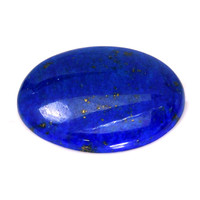
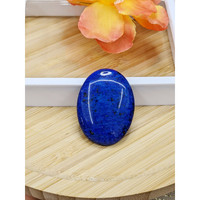
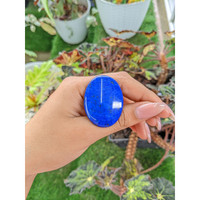
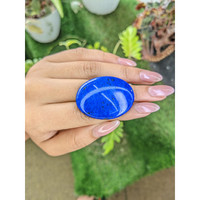
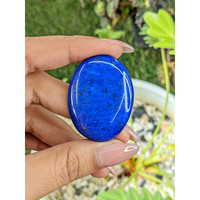
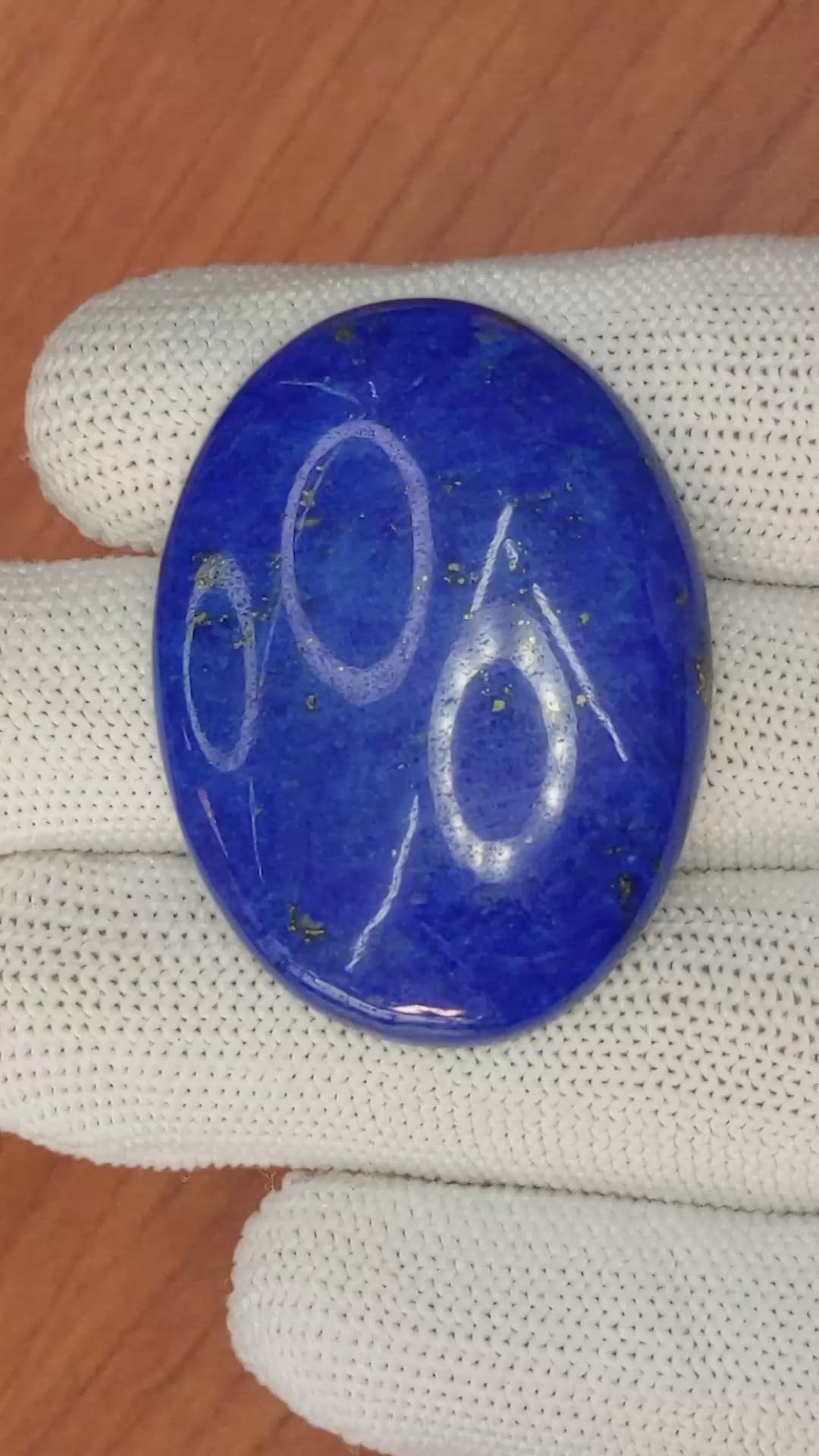
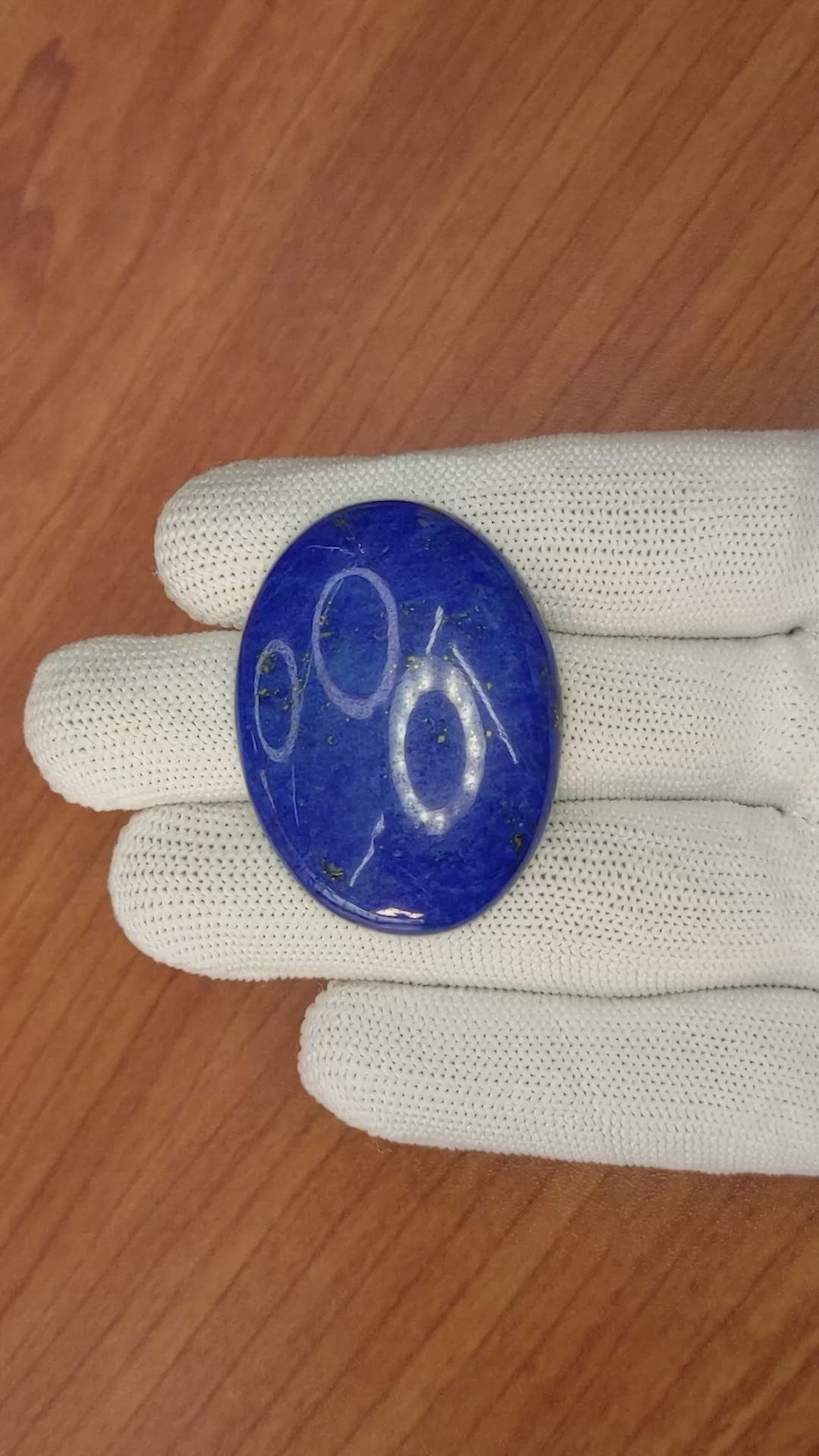
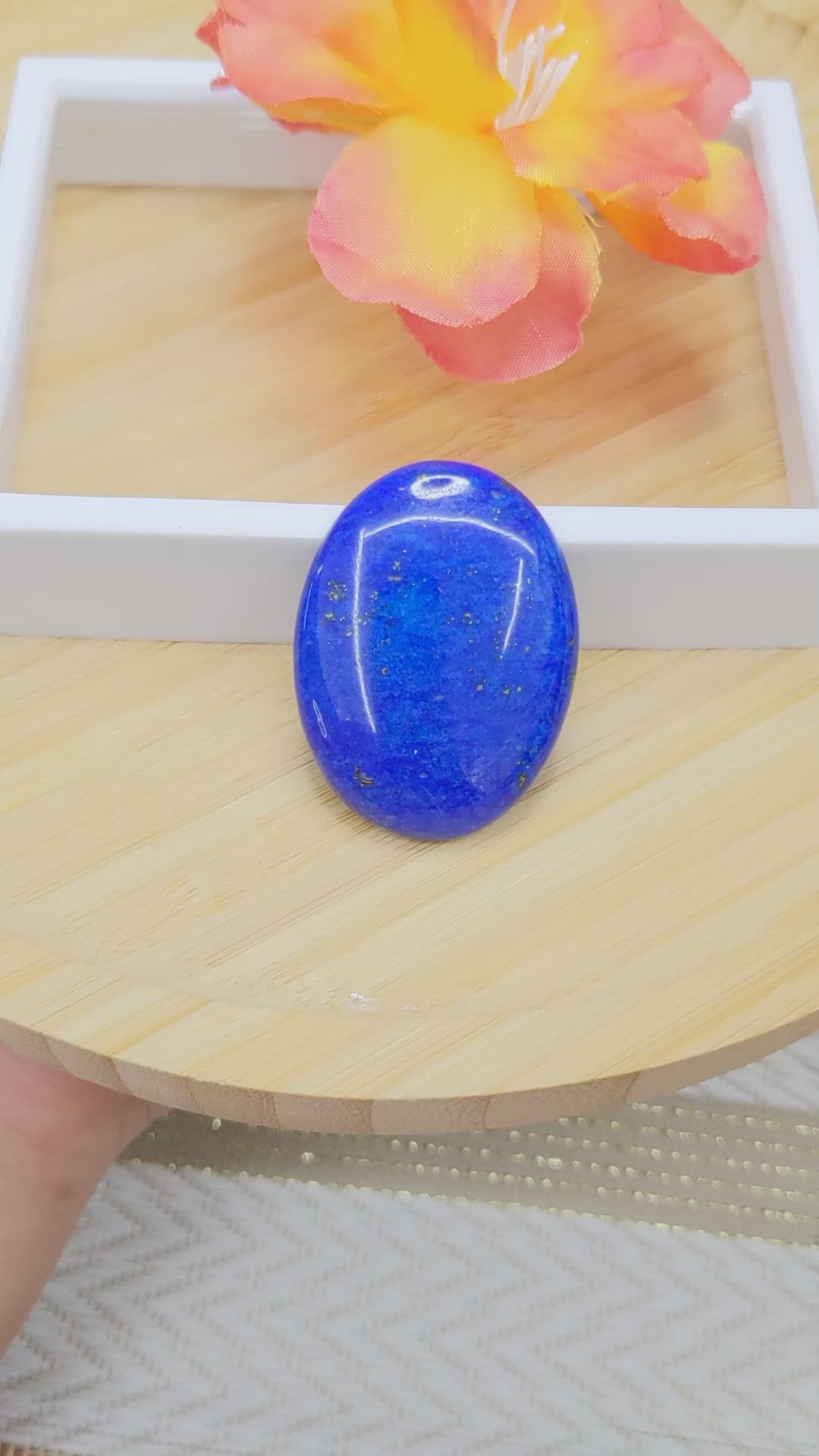
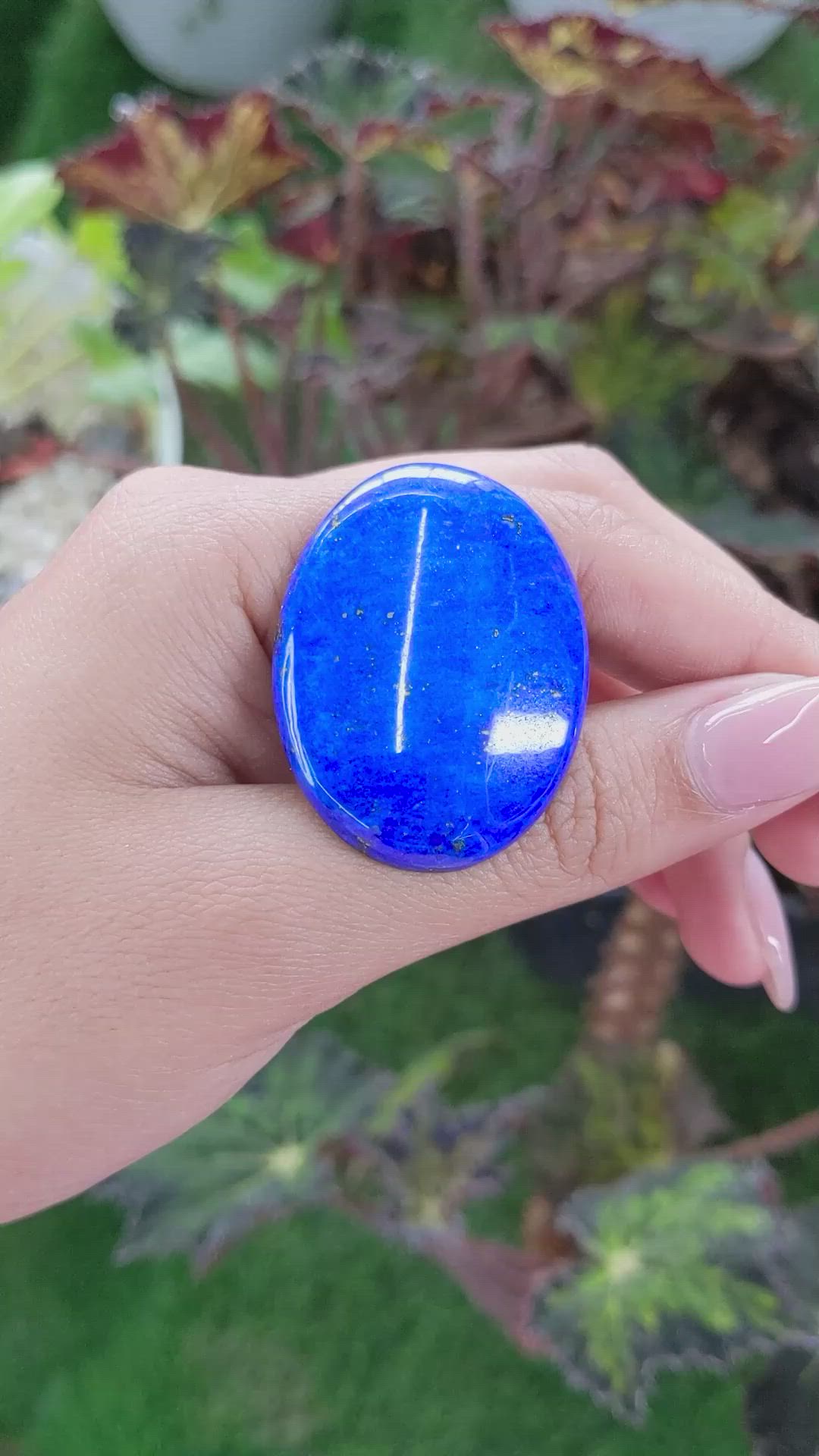
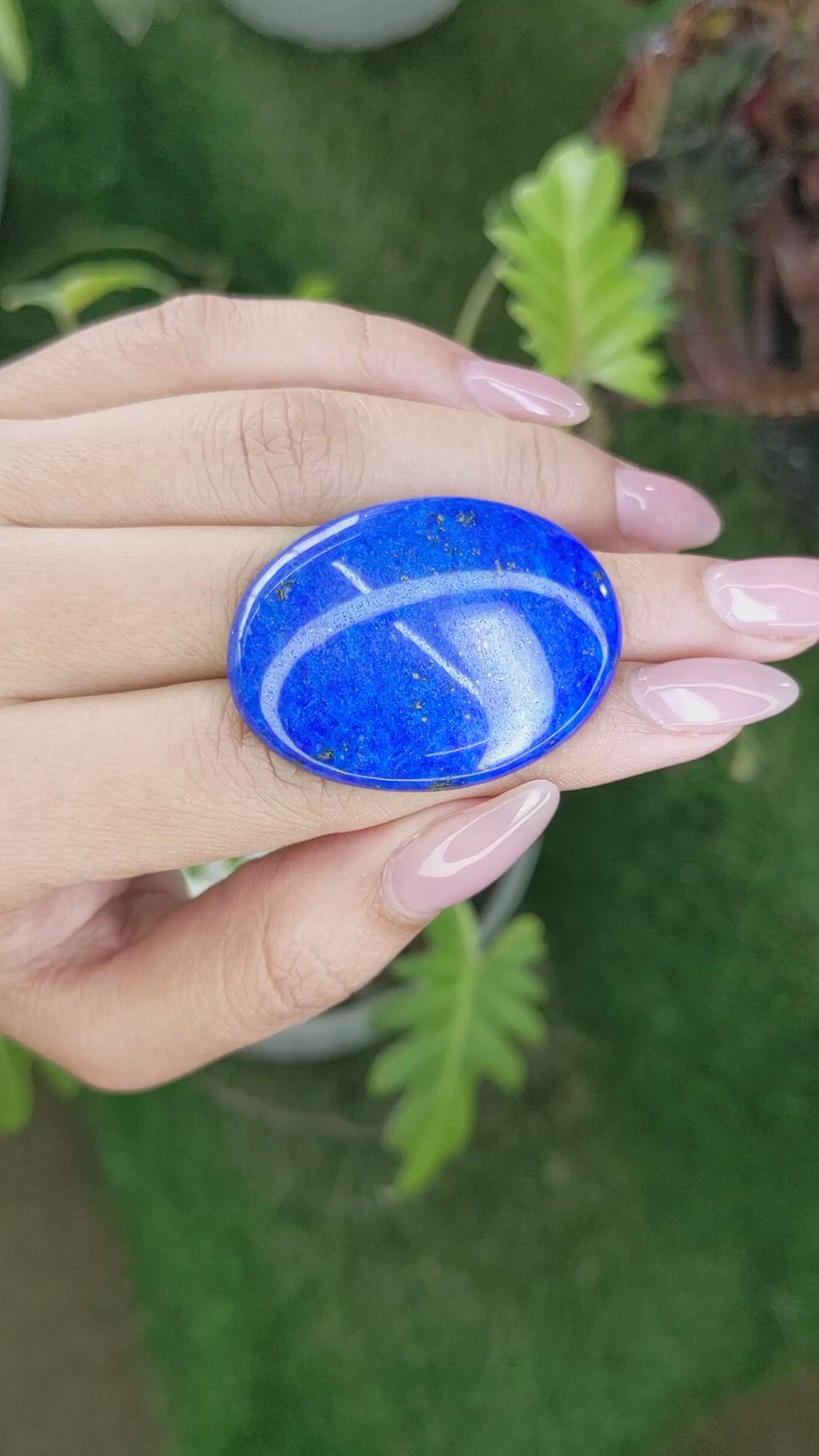
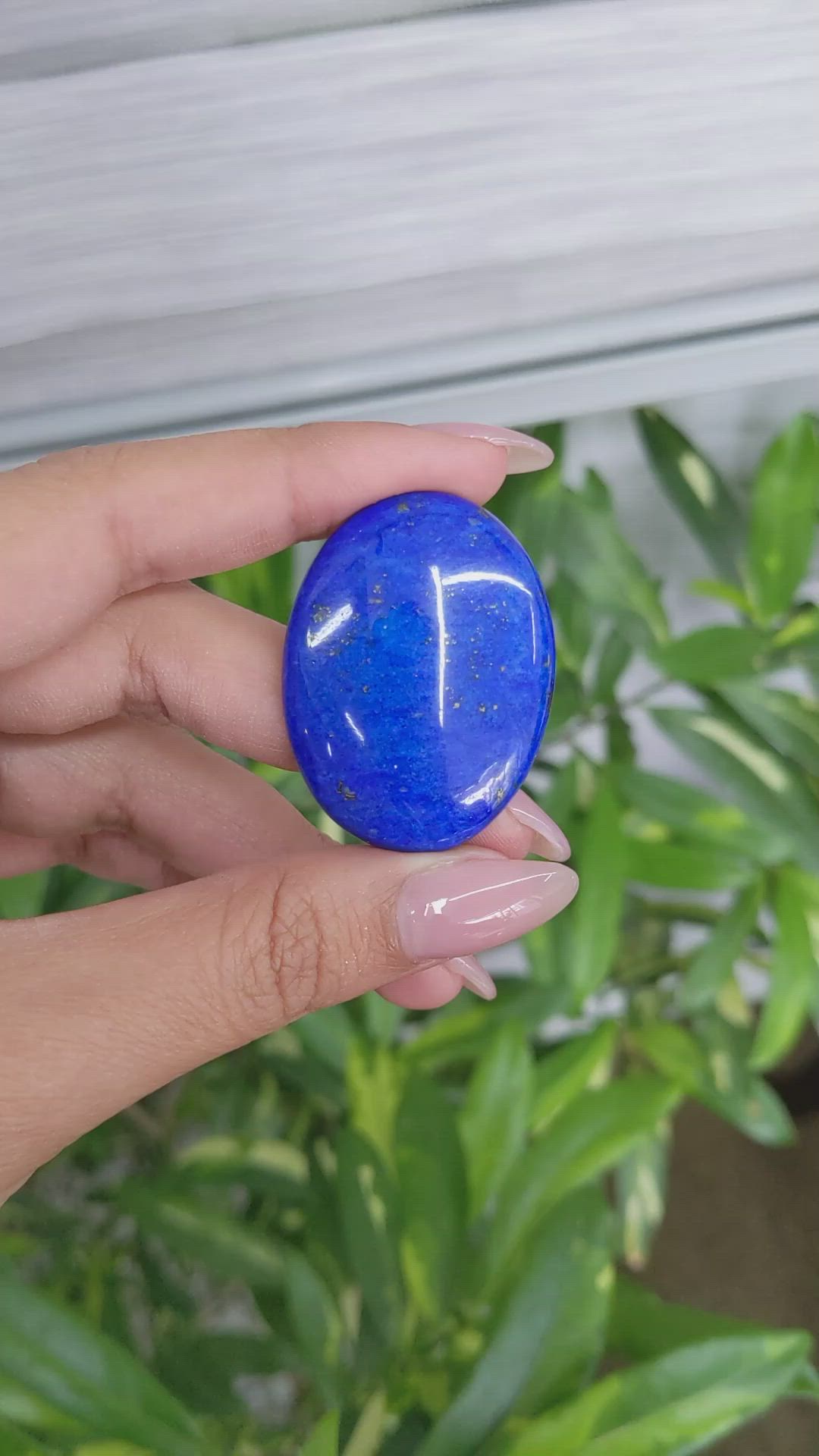


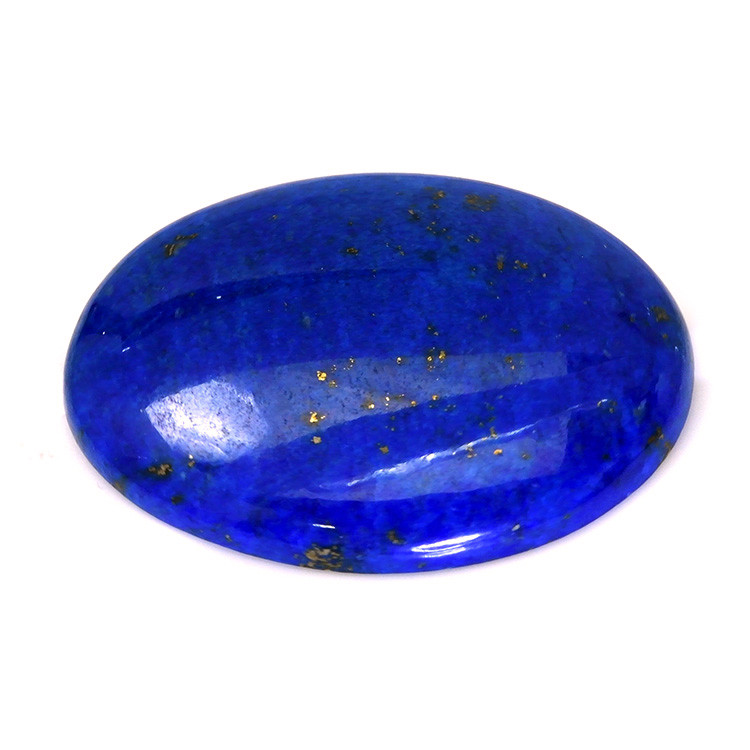
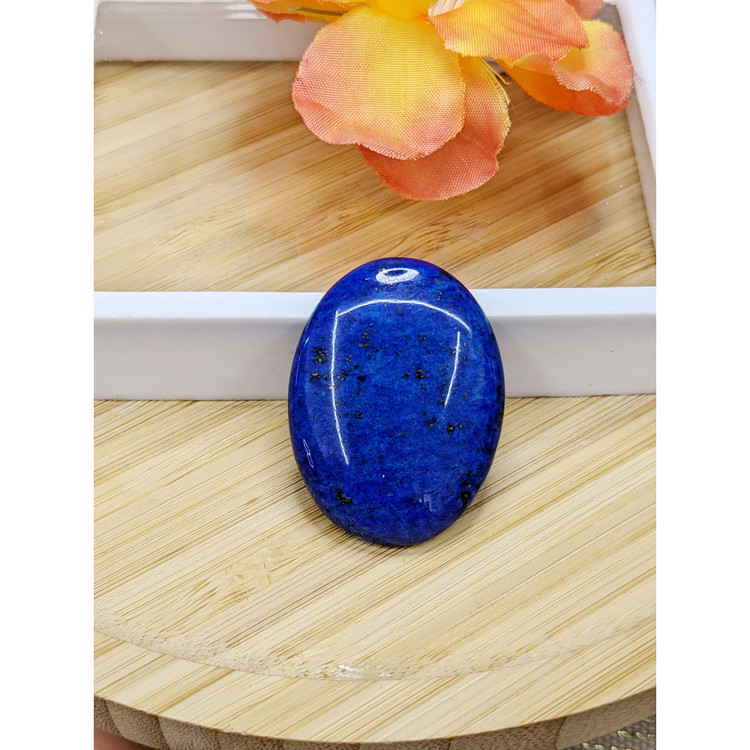
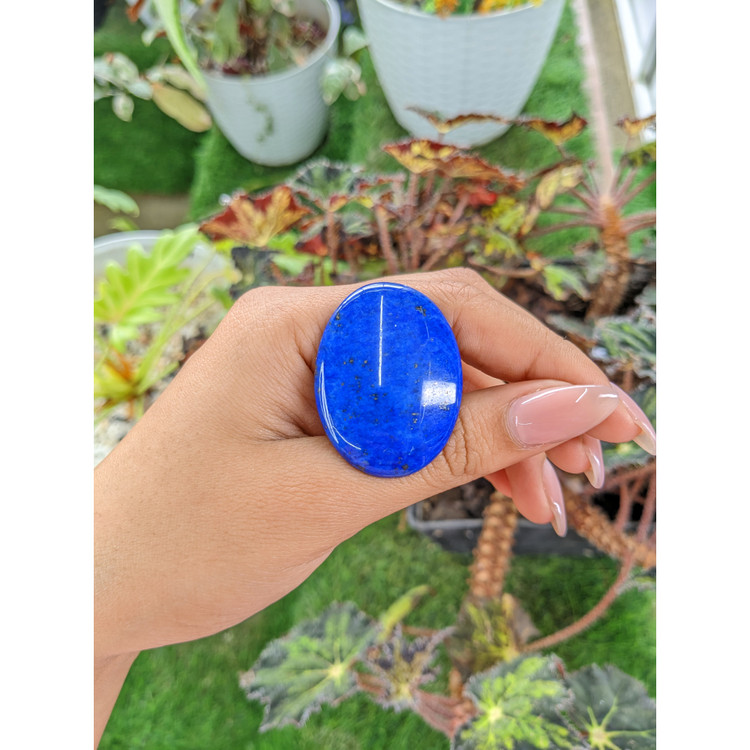
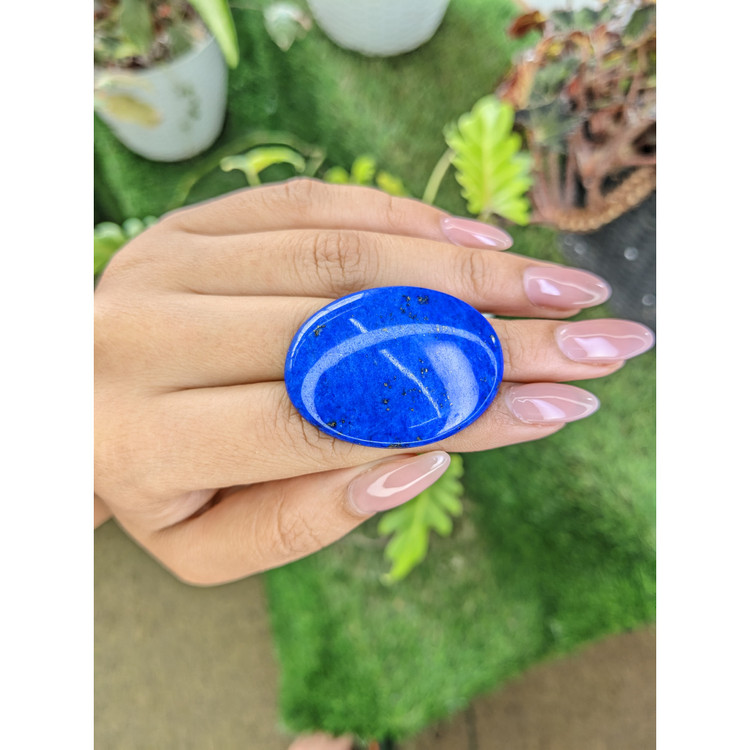
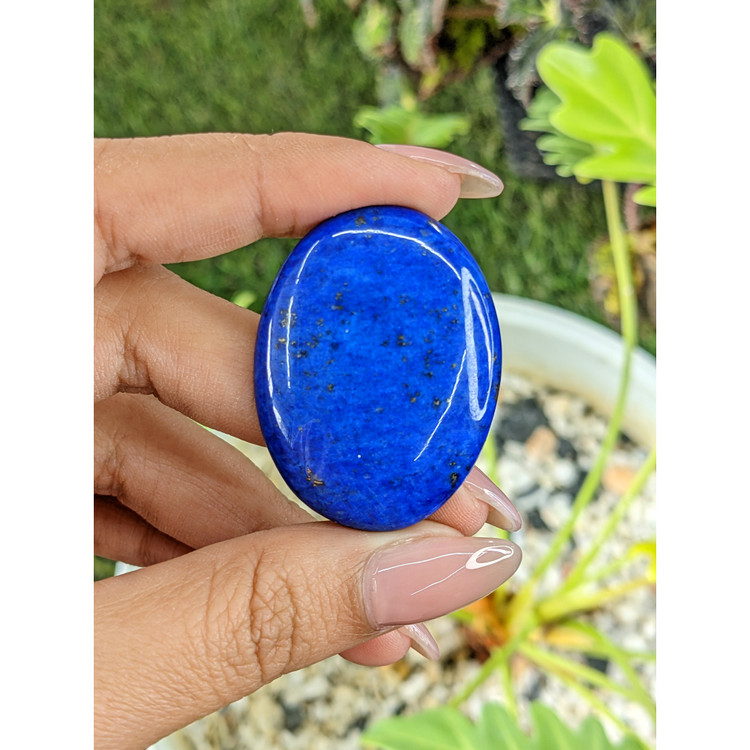


61.50 Ct. Cabochon Lapis from Afghanistan
This loose stone is available to ship now
Item ID: | K21626 |
|---|---|
Dimensions (MM): help | Length: 40.17 Width: 30.21 Height: 6.19 |
Weight: | 61.50 Ct. |
Color: help | Blue |
Color intensity: help | N/A |
Clarity: help | Not Applicable |
Shape: help | Oval |
Cut: | Cabochon |
Cutting style: | Cabochon |
Enhancements: help | No Enhancement |
Origin: help | Afghanistan |
Per carat price: help | $16 |
This specimen is a substantial opaque oval cabochon of lapis, weighing 61.50 carats, with precise dimensions of 40.17 by 30.21 by 6.19 millimeters. The cutter has respected the inherent grain and inclusion architecture of the rough, producing a symmetrical oval outline with an aspect ratio near 1.33, a shallow domed profile, and a uniform table plane that maximizes surface area while preserving internal structure. Color intensity is not applicable for this opaque material, nevertheless the body tone of the lazurite rich matrix reads as a deep saturated blue, with microtonal variation across the surface that is authentic to high grade Afghan material. The polish is excellent, exhibiting a smooth tactile finish and a satiny to slightly vitreous luster appropriate to a fine lapis cabochon. No enhancement has been applied, the gem is presented in a natural, untreated state, and its provenance is Afghanistan, a classic source for lapis that informs both the mineralogical composition and the inclusion morphology. The Natural Gemstone Company offers this piece as a finished lapidary product ready for setting, or as a collectible specimen for connoisseurs who value traceable origin and unaltered material.
The most diagnostic and visually compelling aspect of this piece is the suite of inclusions that define its unmistakable signature. Distributed within the lazurite matrix are pyrite platelets that range from submicron dustings to discrete facets on the order of hundreds of micrometers, these pyrite aggregates present as brassy metallic specks and short linear arrays that catch light at oblique angles, producing localized flashes of metallic brilliance against the deep blue groundmass. Interspersed with the pyrite are narrow calcite veins and patches that register as pale, off white to cream contrasts, their angular geometry forming subtle networks that accentuate the three dimensionality of the cabochon when viewed under raking light. The inclusions are subhedral to euhedral in habit where pyrite developed as small cubic forms, and in other areas they appear as elongate laths and irregular glints, evidence of heterogeneous nucleation during rock formation. This complex inclusion pattern is not random, it reflects the petrogenesis of Afghan lapis, where lazurite crystallized alongside accessory pyrite and calcite within calcic marbles, and it produces a repeating but non uniform motif that functions like a fingerprint for provenance. The spatial distribution of metallic flecks in this particular stone is coherent enough to allow orientation by the setter, yet variegated enough that no two views are identical, giving the cabochon a dynamic visual identity that is prized by collectors and jewelers alike.
From a technical standpoint the cabochon profile and inclusion characteristics dictate specific considerations for setting and presentation. The modest height of 6.19 millimeters yields a low to medium dome that reads as elegant in bezel work, and the cutter left sufficient thickness across the girdle to permit secure setting without compromising the inclusion display. For jewelry, I recommend a well proportioned bezel that follows the oval outline to protect the edges and to present the pyrite highlights in the most favorable viewing plane. Avoid heavy prong aggression that could chip the thin peripheral regions, and orient the stone so that the densest pyrite clustering faces slightly upward in the intended wearing position, this will maximize the contrast between the metallic inclusions and the lapis blue ground. For buyers concerned with long term care, the untreated nature of the piece means there is no dye to migrate, but standard precautions apply, avoid exposure to strong acids and oxidizers that could alter pyrite surfaces, and prefer gentle cleaning with a soft brush and mild soapy water. The Natural Gemstone Company can provide additional photographic orientations and microscopic images on request to document the inclusion pattern for appraisal files, and we can advise on recommended mounting strategies to best showcase the signature pyrite and calcite architecture that makes this Afghan lapis both scientifically interesting and aesthetically distinctive.


