
- Pair14
- Reports4
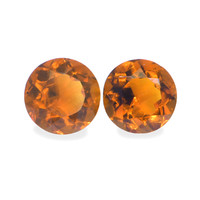
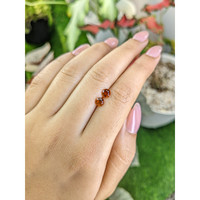
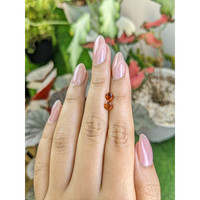
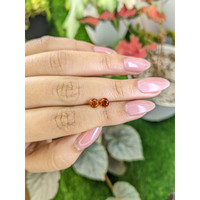
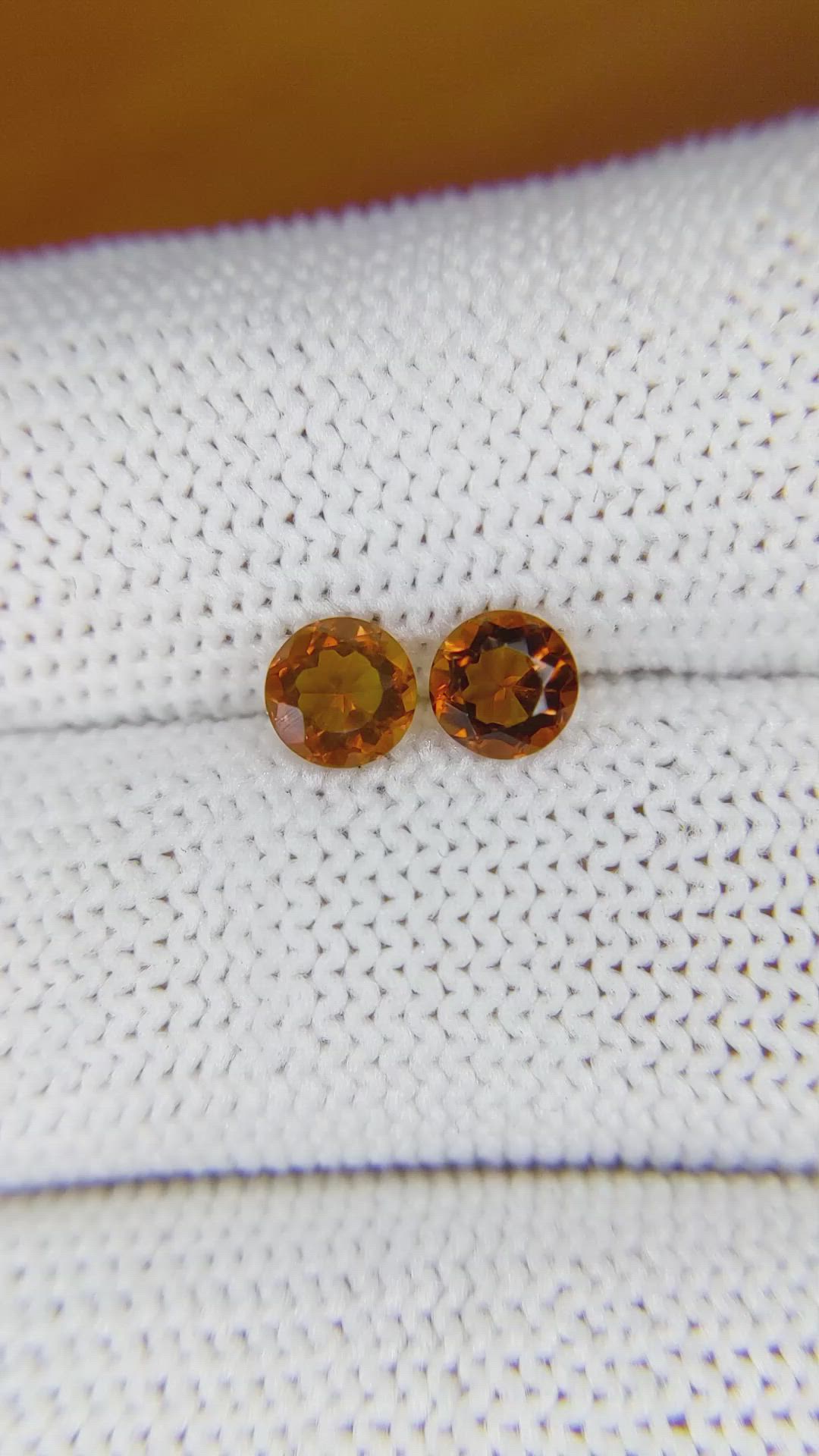
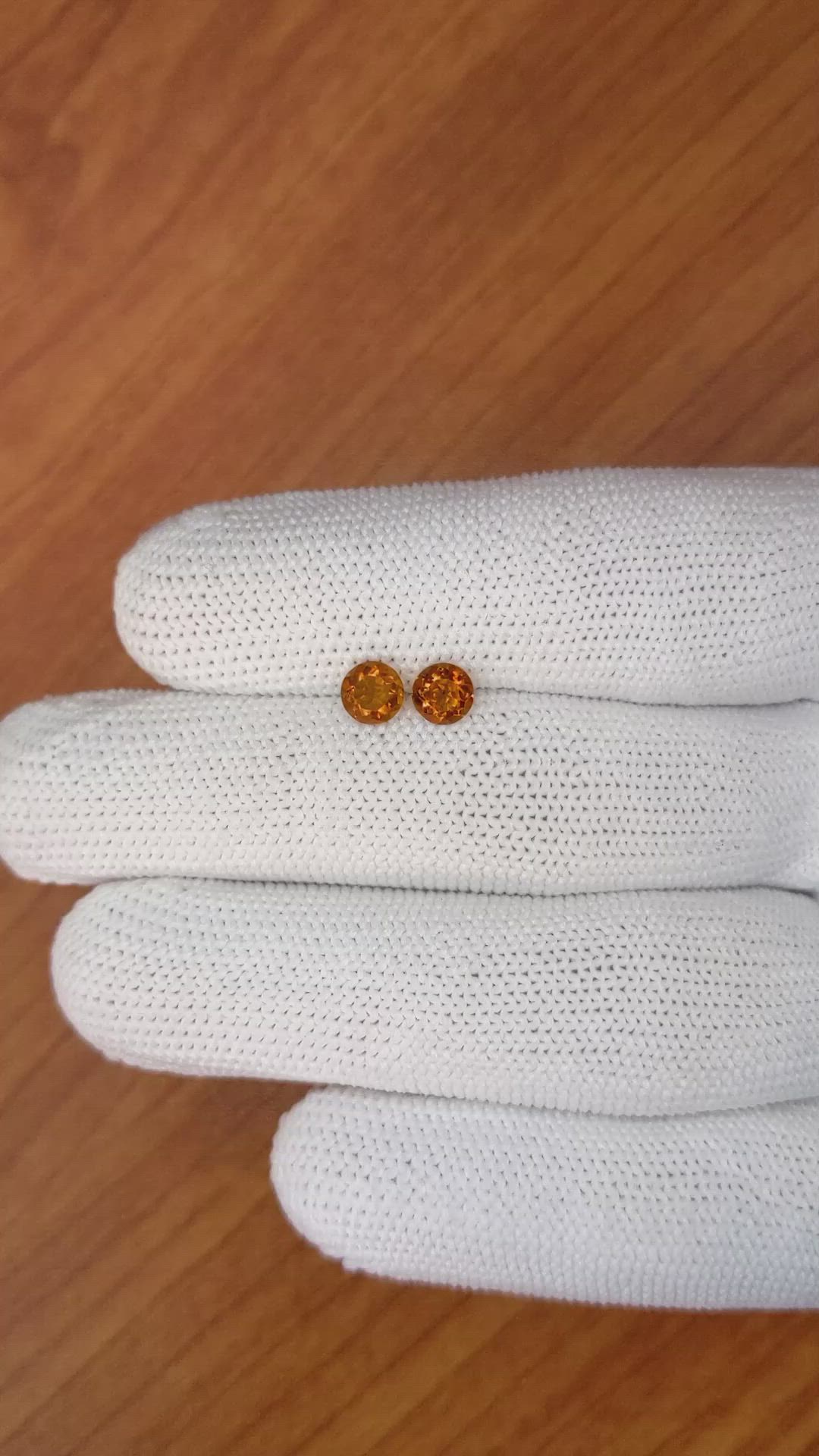
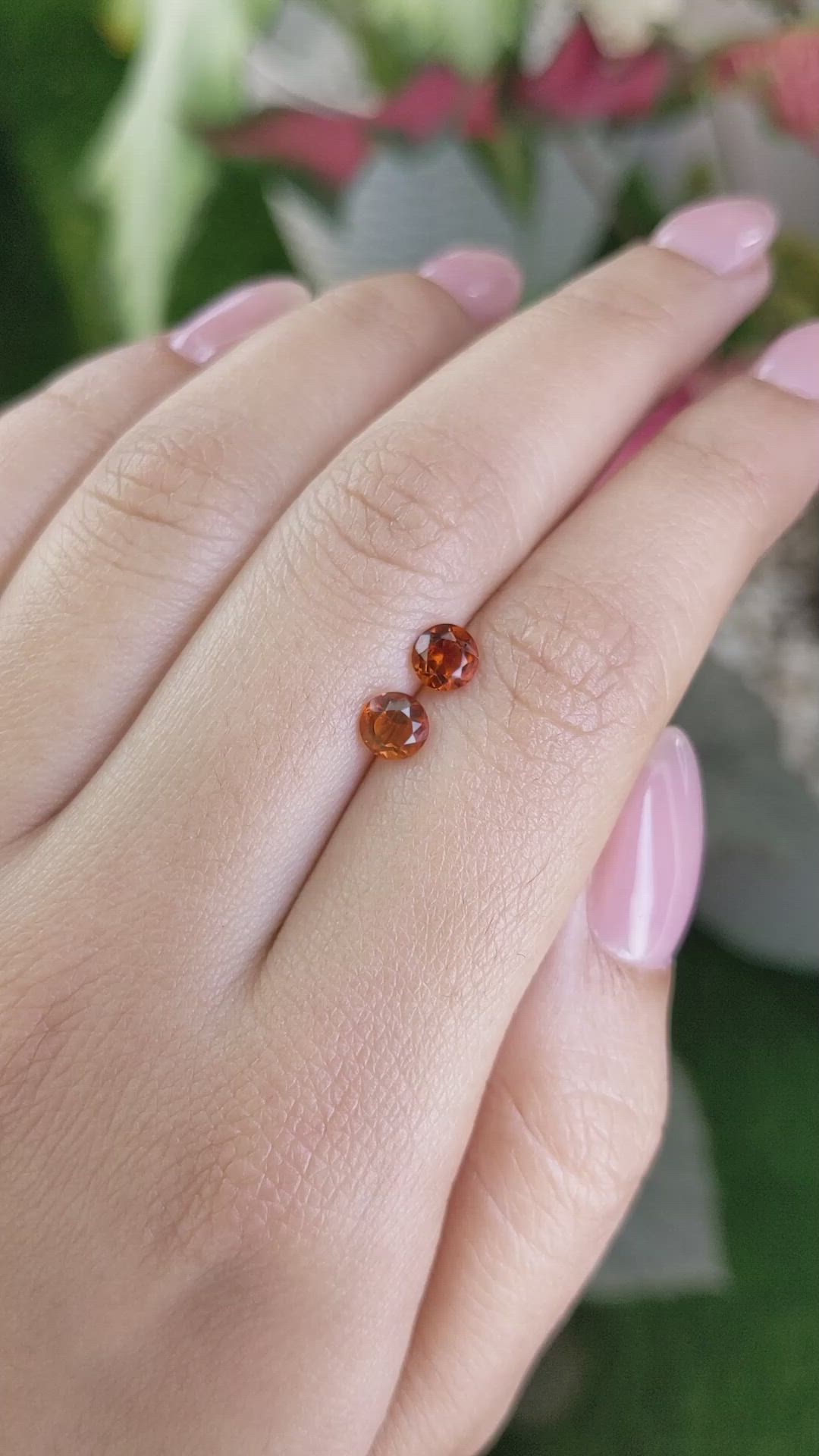
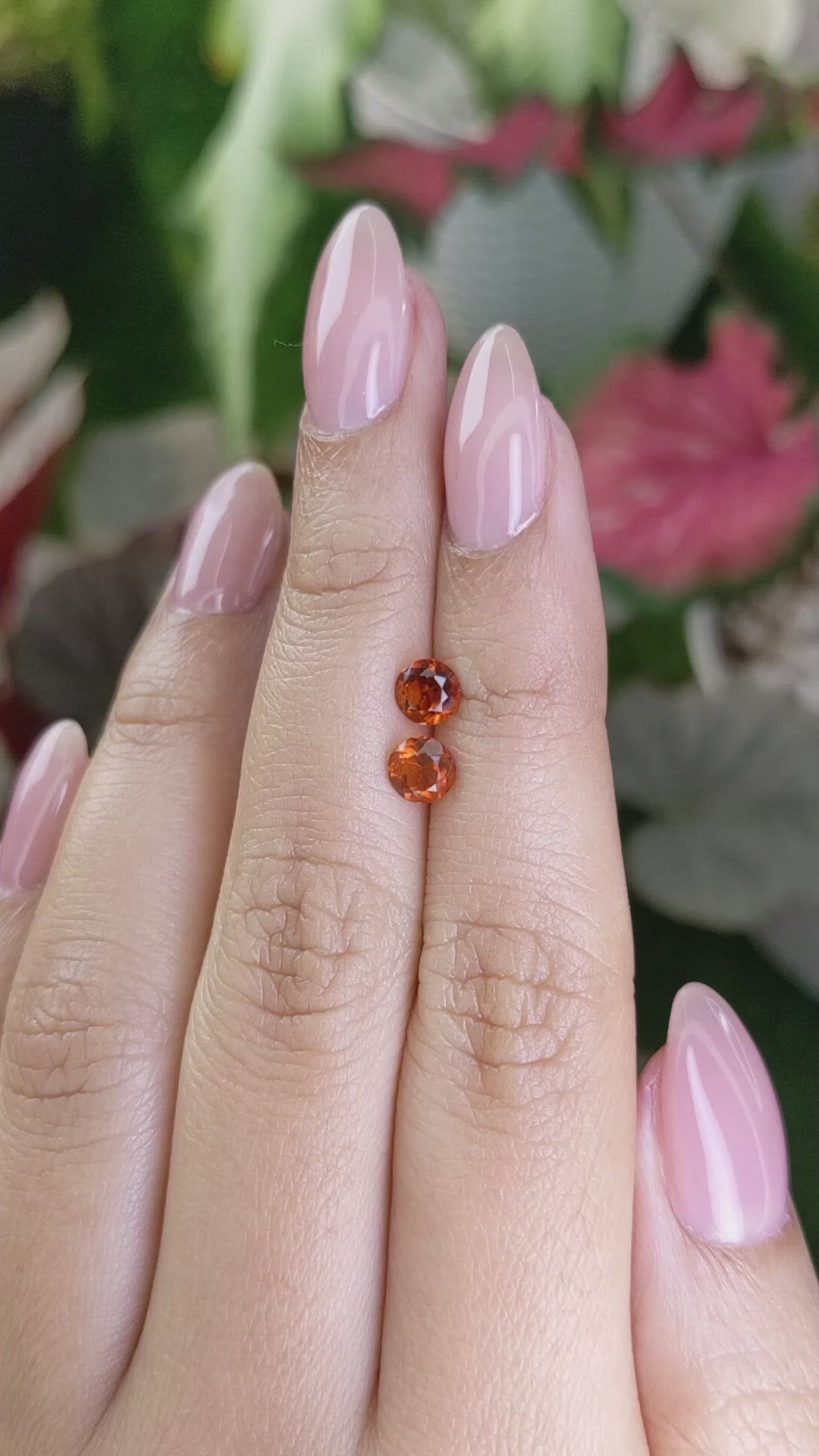
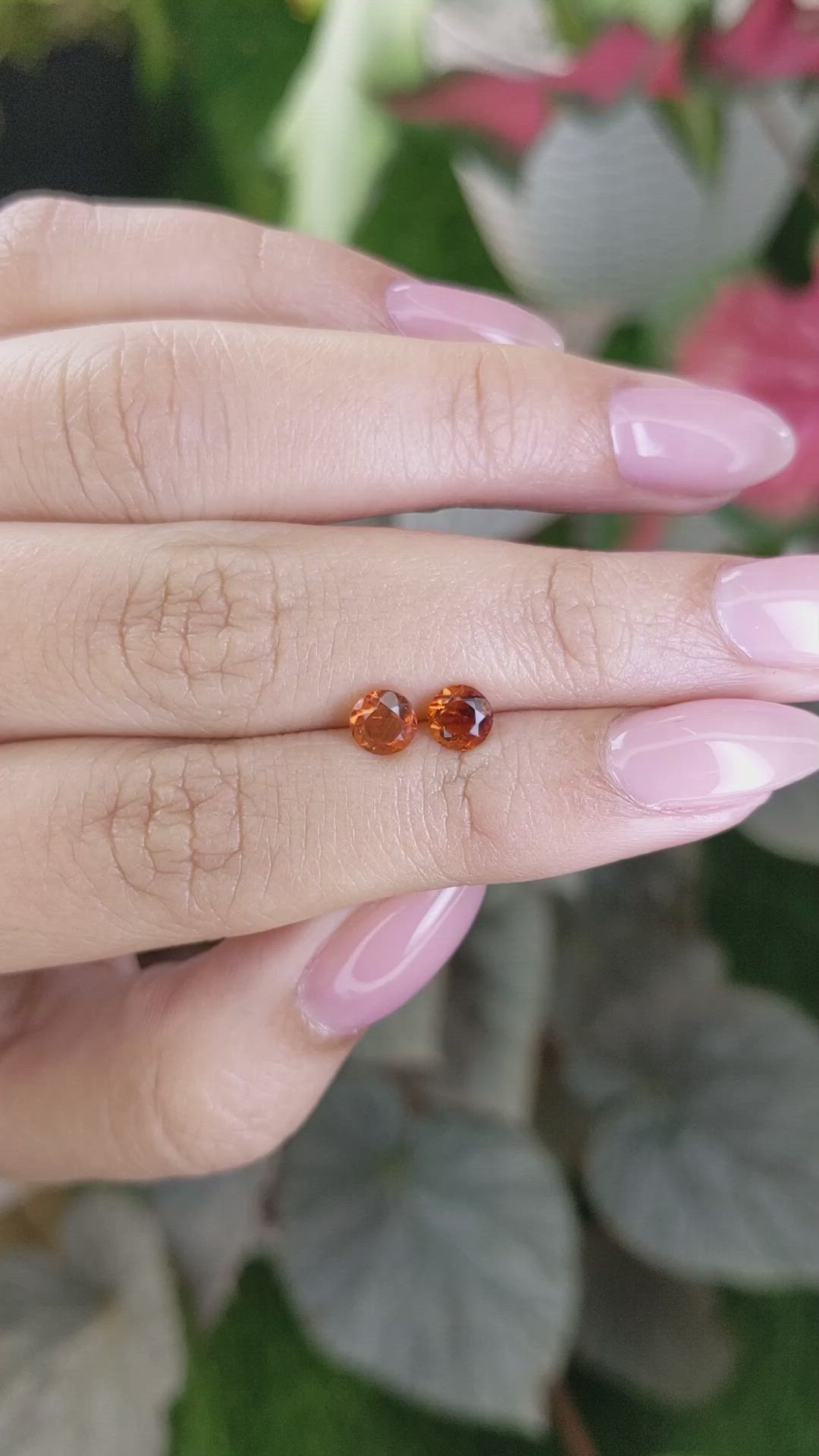

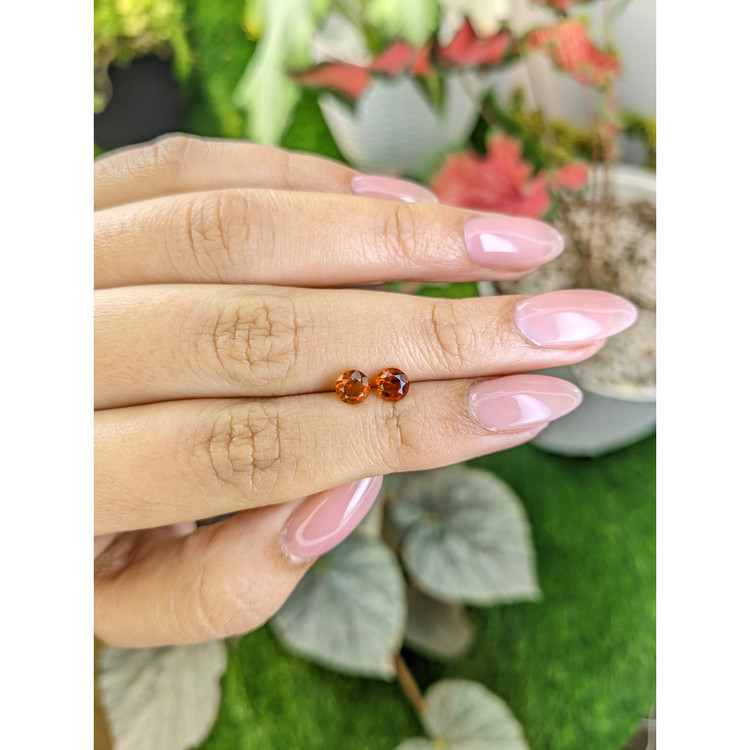

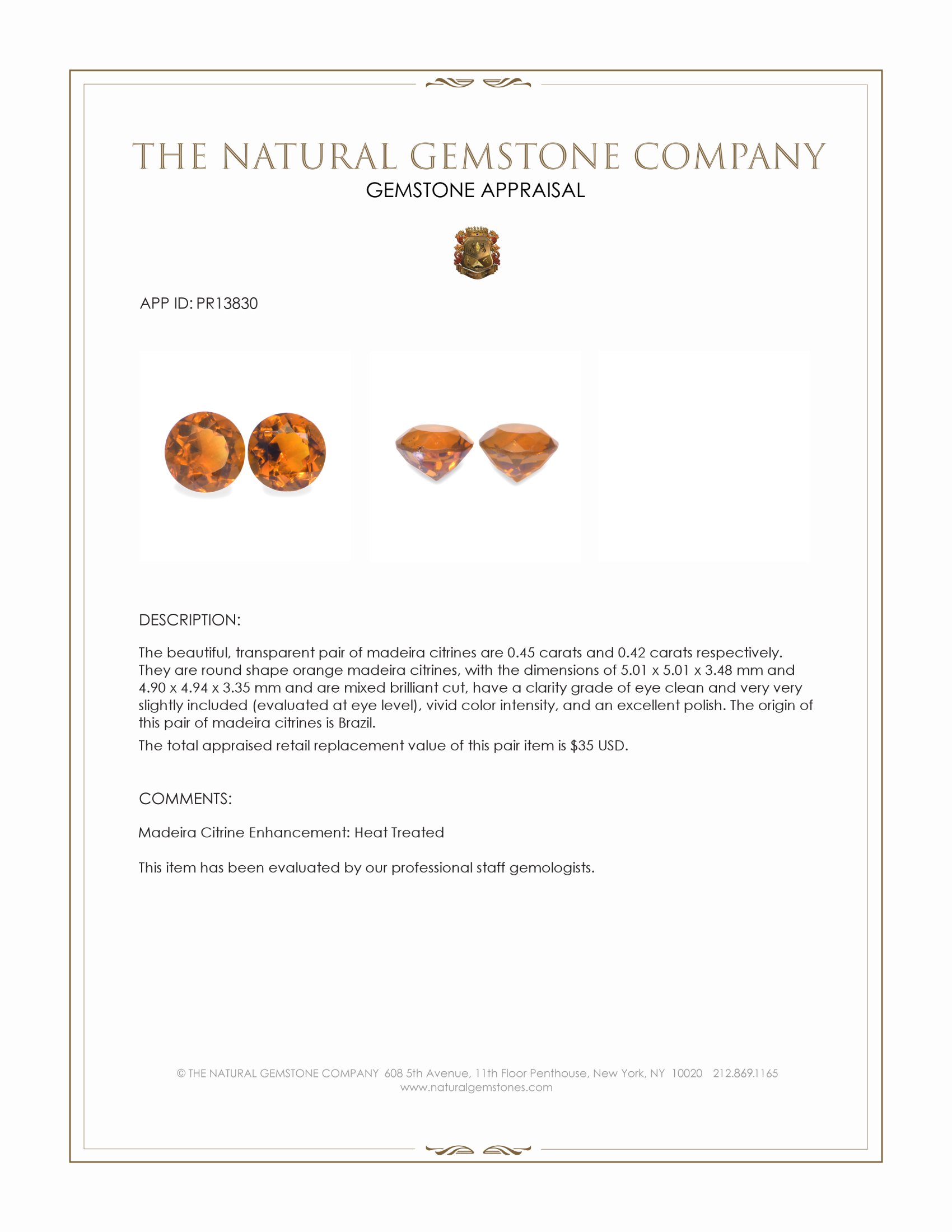
0.87 Ct.Tw.Total Carat Weight Madeira Citrine Pair from Brazil
This pair of stones ships by Apr 16
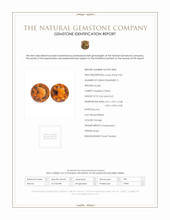
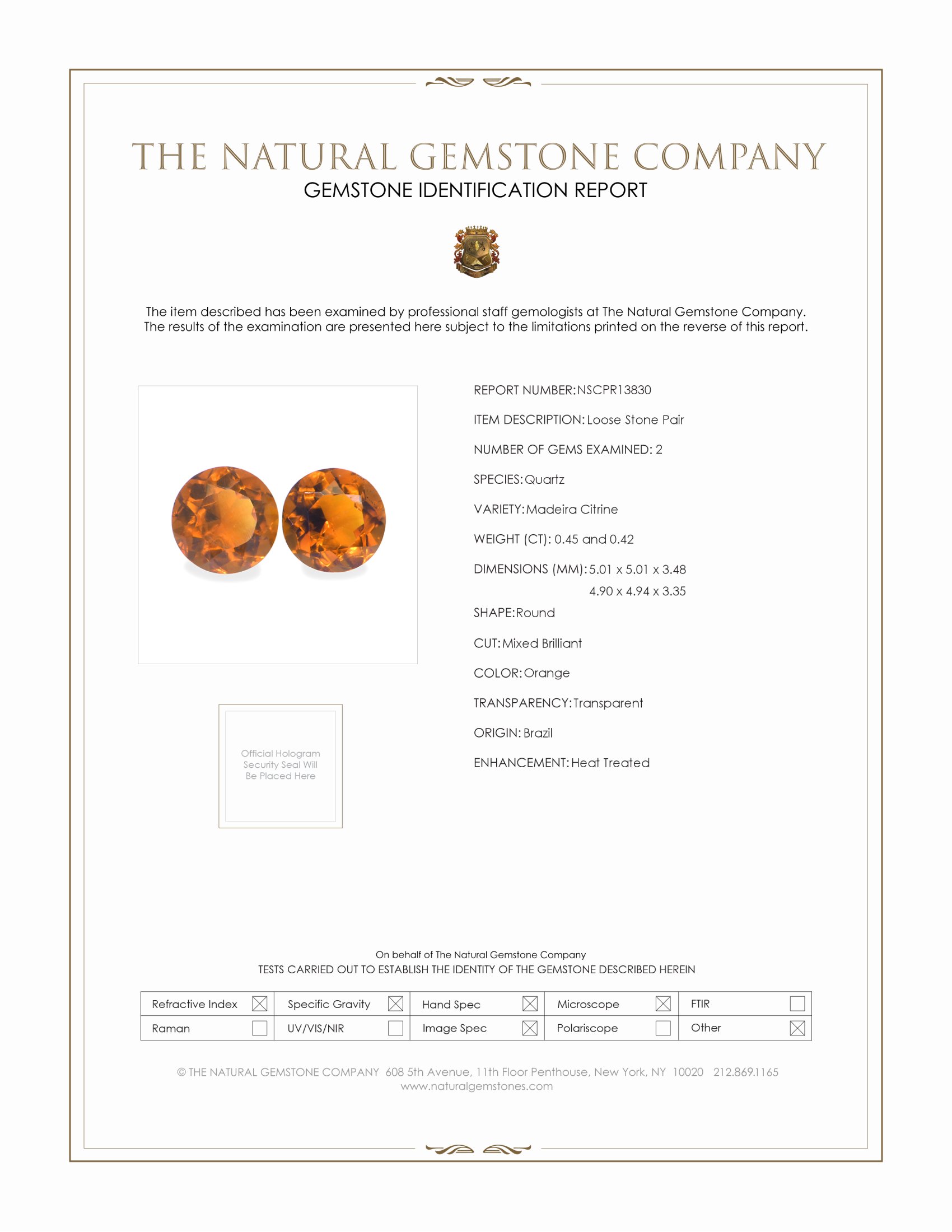
Stone type: | Madeira Citrine | Madeira Citrine |
|---|---|---|
Item ID: | PR13830 | PR13830 |
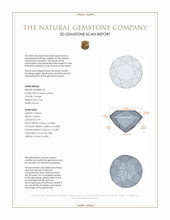
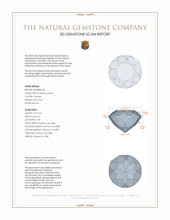
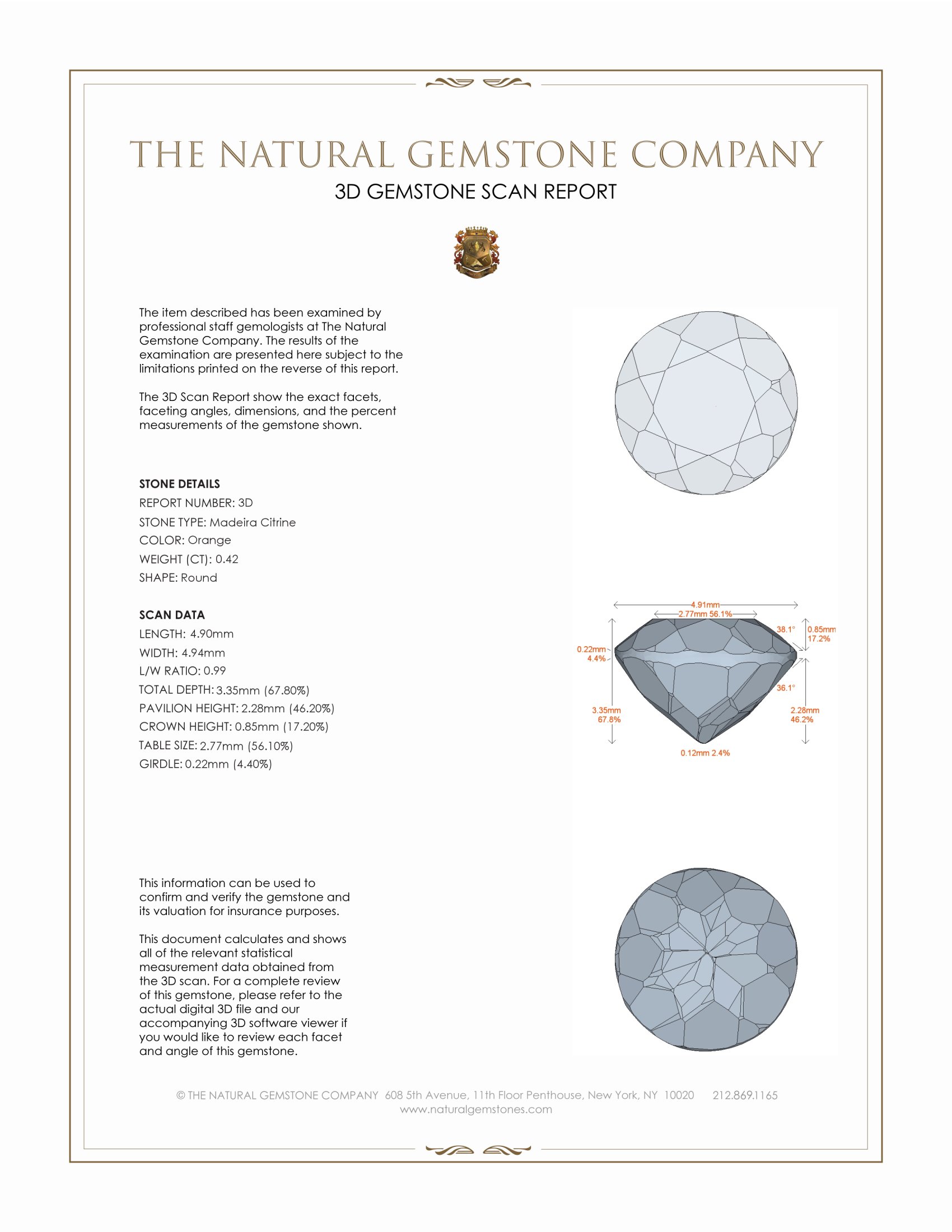
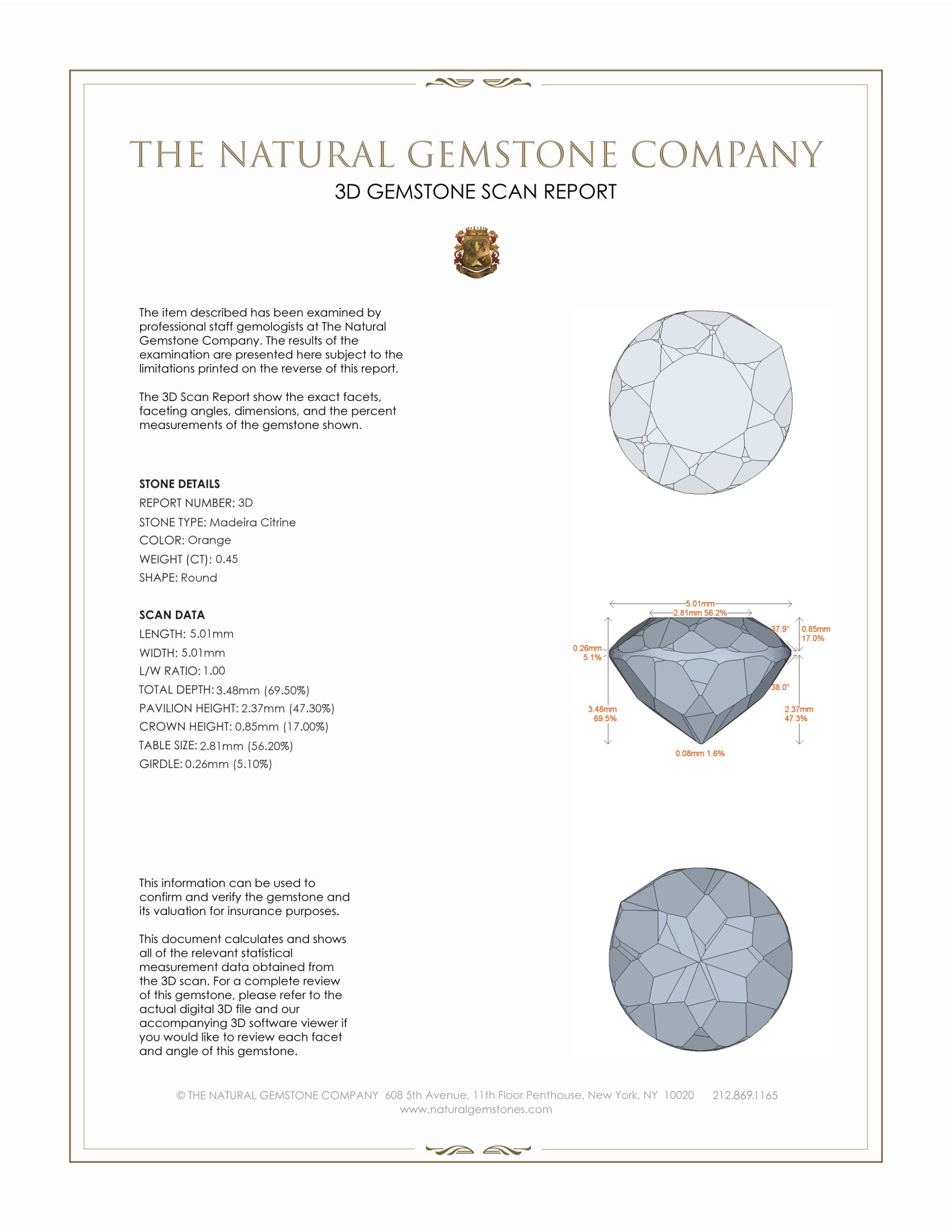
Dimensions (MM): help | Length: 5.01 Width: 5.01 Height: 3.48 | Length: 4.9 Width: 4.94 Height: 3.35 |
Weight: | 0.45 Ct. | 0.42 Ct. |
Color: help | Orange | Orange |
Color intensity: help | Vivid | Vivid |
Clarity: help | Eye Clean | Very Very Slightly Included |
Shape: help | Round | Round |
Cut: | Mixed Brilliant | Mixed Brilliant |
Cutting style: | Faceted | Faceted |
Enhancements: help | Heat Treated | Heat Treated |
Origin: help | Brazil | Brazil |
Per carat price: help | $40 | $40 |
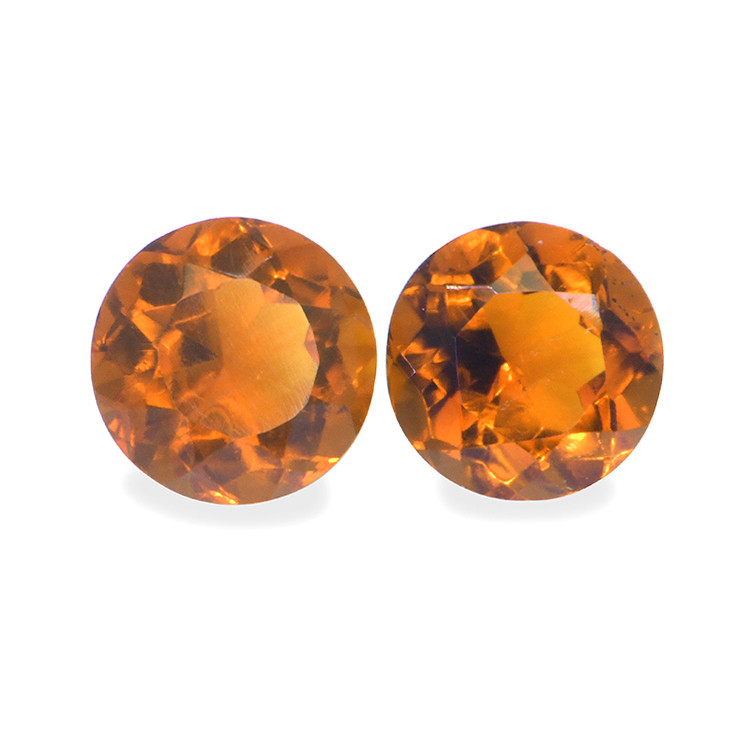
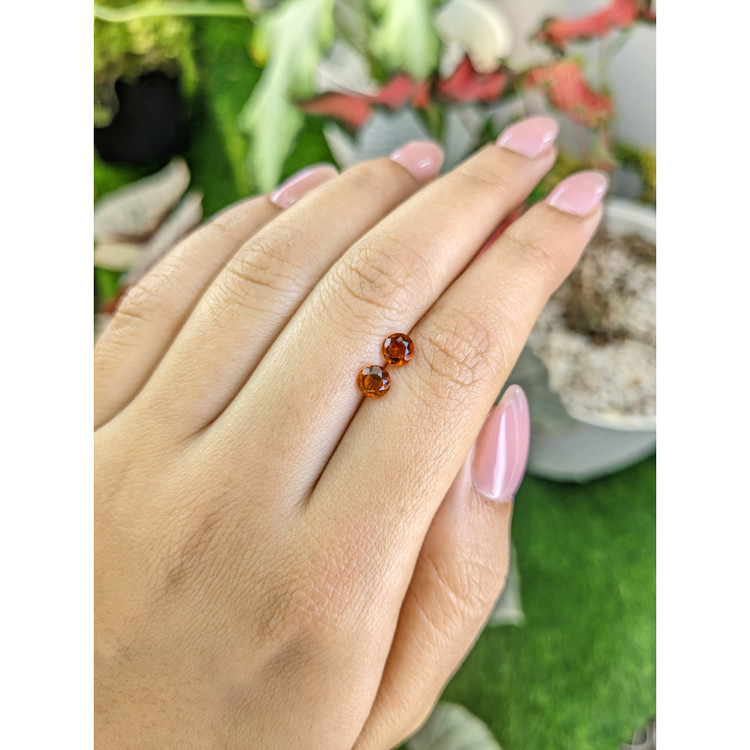
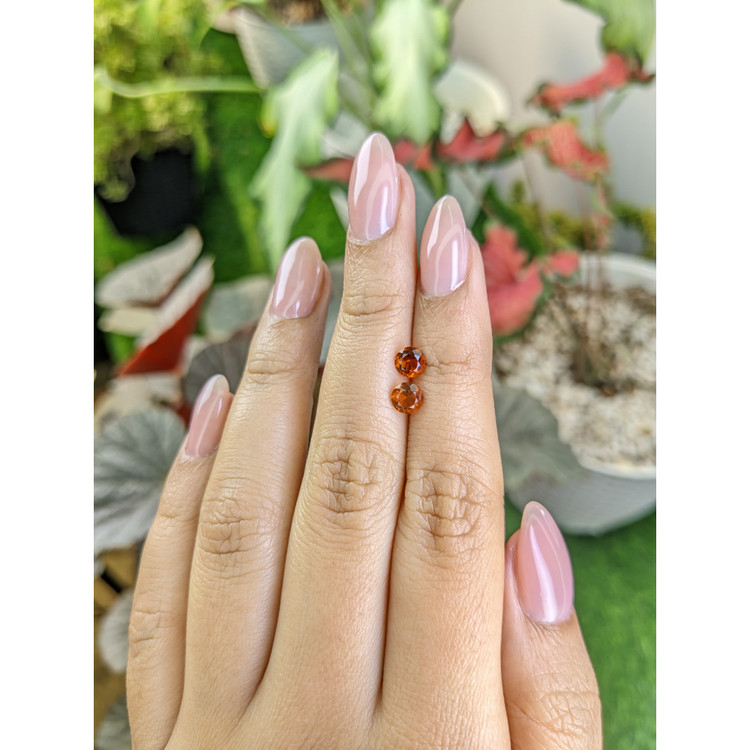
This matched pair of Madeira citrines, presented by The Natural Gemstone Company, combines precise cutting with notable color saturation, each stone measured and graded to exacting standards. The pair comprises a 0.45 carat gem and a 0.42 carat gem, both fashioned in a round shape with mixed brilliant cuts, the larger at 5.01 x 5.01 x 3.48 mm and the smaller at 4.90 x 4.94 x 3.35 mm. Both stones exhibit vivid orange Madeira color intensity, are evaluated as eye clean at typical viewing distances, and display an excellent polish consistent with professional lapidary work. These citrines have been heat treated, a standard and stable enhancement for intensifying Madeira tones, and their documented origin is Brazil, a source known for producing warm, saturated citrine material. The combination of calibrated dimensions and mixed brilliant faceting yields a predictable table and pavilion relationship that supports both strong face up color and lively light return.
From an optical perspective the Madeira citrines are defined by their high refractive clarity and lively faceted brilliance, producing sharp scintillation and well defined flashes as light interacts with the mixed brilliant facet arrangement. The cut proportions and excellent polish maximize internal reflection and return, creating bright, directional highlights and deep, saturated body color when viewed face up. These reflective qualities are most apparent under directional lighting, where pinpoint scintillation and contrast between the facets emphasize the gems’ internal geometry and vivid orange hue. The eye clean clarity grade allows these effects to occur without distraction from inclusions, so the viewer perceives clean, uninterrupted flashes and a uniform color field. The warm, honey to pumpkin tones of Madeira citrine are visually strong and concentrated, and the gems’ polished facet junctions contribute to a crisp, lively presentation that reads as both warm and brilliant under a range of lighting conditions.
White Opal, described here as a companion stone for design consideration, exhibits a distinctly different optical behavior that complements the Madeira citrines rather than competes with them. White Opal is characterized by a soft, translucent body with opalescence and potential play of color, where diffuse internal scattering and diffraction by silica spheres produce shifting flashes and patches of spectral color across the surface. Unlike faceted citrine with directional sparkle, White Opal offers a more diffuse, atmospheric shimmer that appears to glow from within, and that glow changes subtly with viewing angle and light source. Paired together, the citrine’s precise, mirror like facet reflections and the opal’s internal, diffuse fire create a balanced contrast. The citrines draw the eye with defined points of light and concentrated orange saturation, while White Opal provides a gentle, multicolored backdrop that softens transitions between metal and gemstone and adds depth and complexity to the overall composition.
When designed together in jewelry, the two gem types enhance one another through contrast in reflective modalities and color interaction, an effect that can be planned to emphasize either the citrine or the opal depending on setting and orientation. Set adjacent to a White Opal, the Madeira citrines’ bright facet reflections create focal points that are accentuated by the opal’s internal shimmer, the opal acting as a luminous counterpoint that expands perceived color range and visual interest. In warm metal settings, citrine brilliance is reinforced and opal warmth is subtly emphasized, while in cooler metals, the clear facet reflections can appear more crisp and the opal’s play of color may appear more pronounced. For practical considerations, the harder, faceted citrines provide durable focal elements that withstand daily wear, while the softer White Opal benefits from protective bezel or halo treatments that preserve its surface and maximize its opalescent display. The Natural Gemstone Company recommends that designers and clients consider facet alignment, seat depth, and light access when combining these materials, to ensure that the citrine’s engineered brilliance and the opal’s natural luminescence are both fully realized in the finished piece.


