
- Pair14
- Reports4


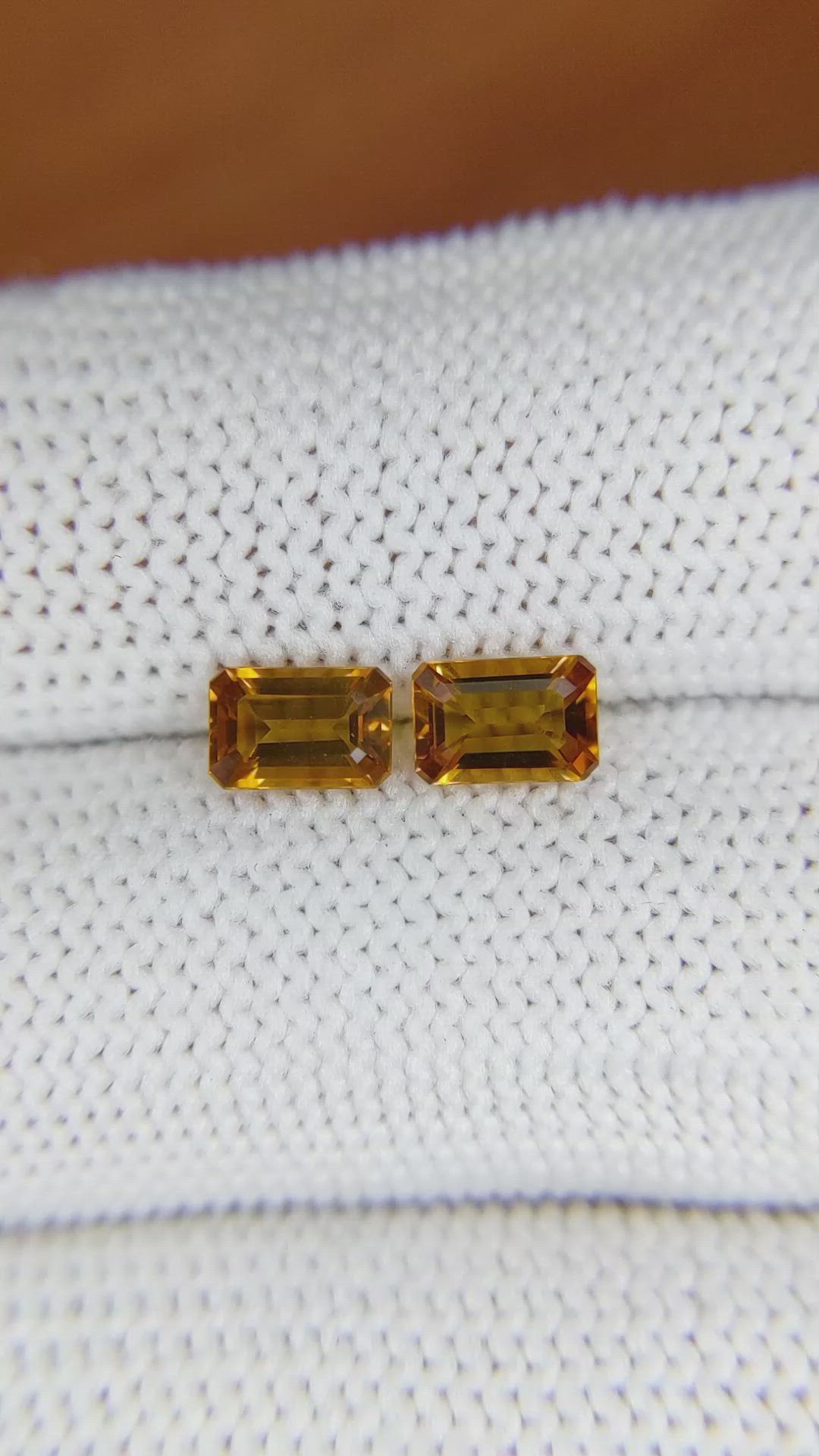
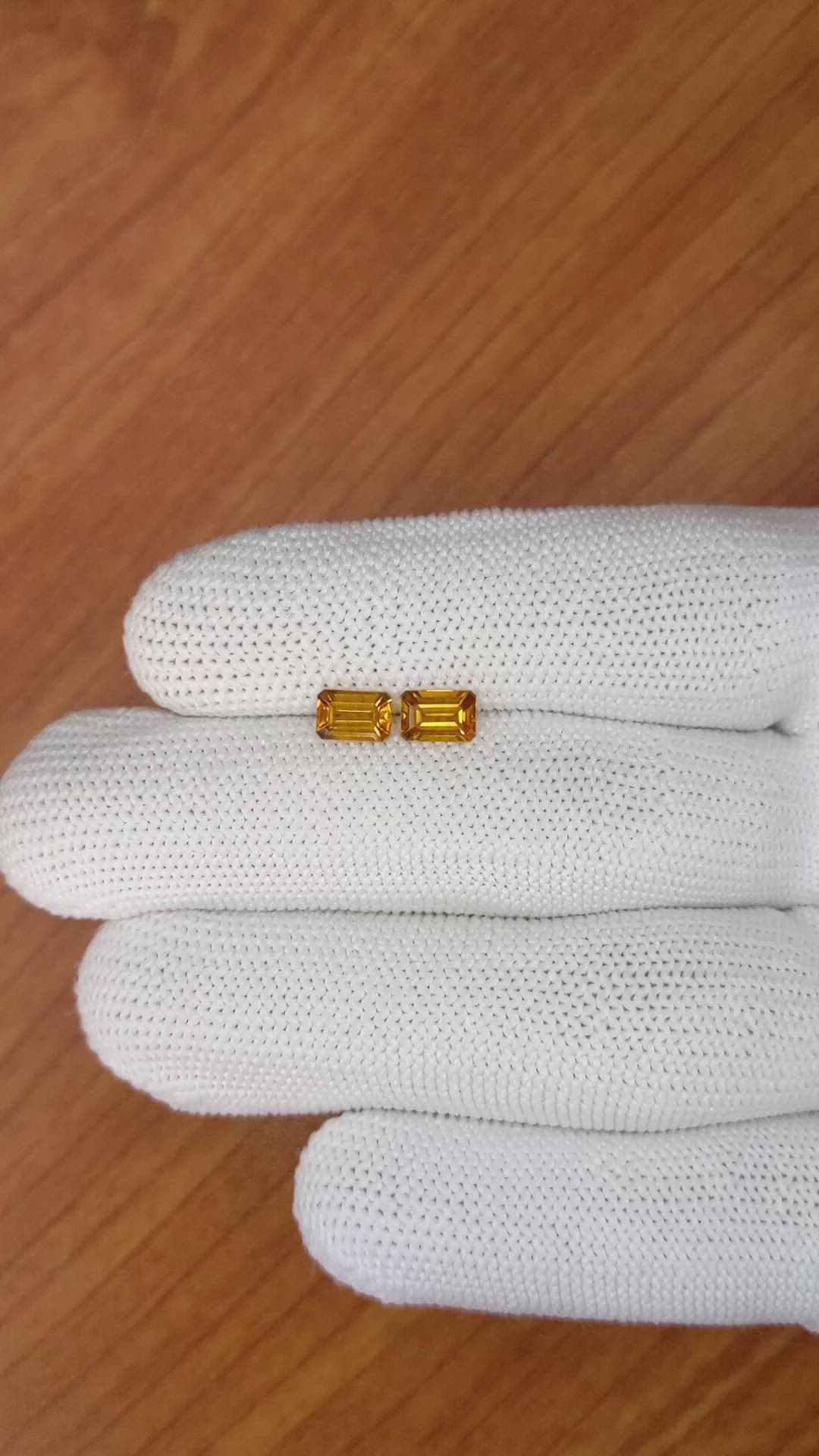
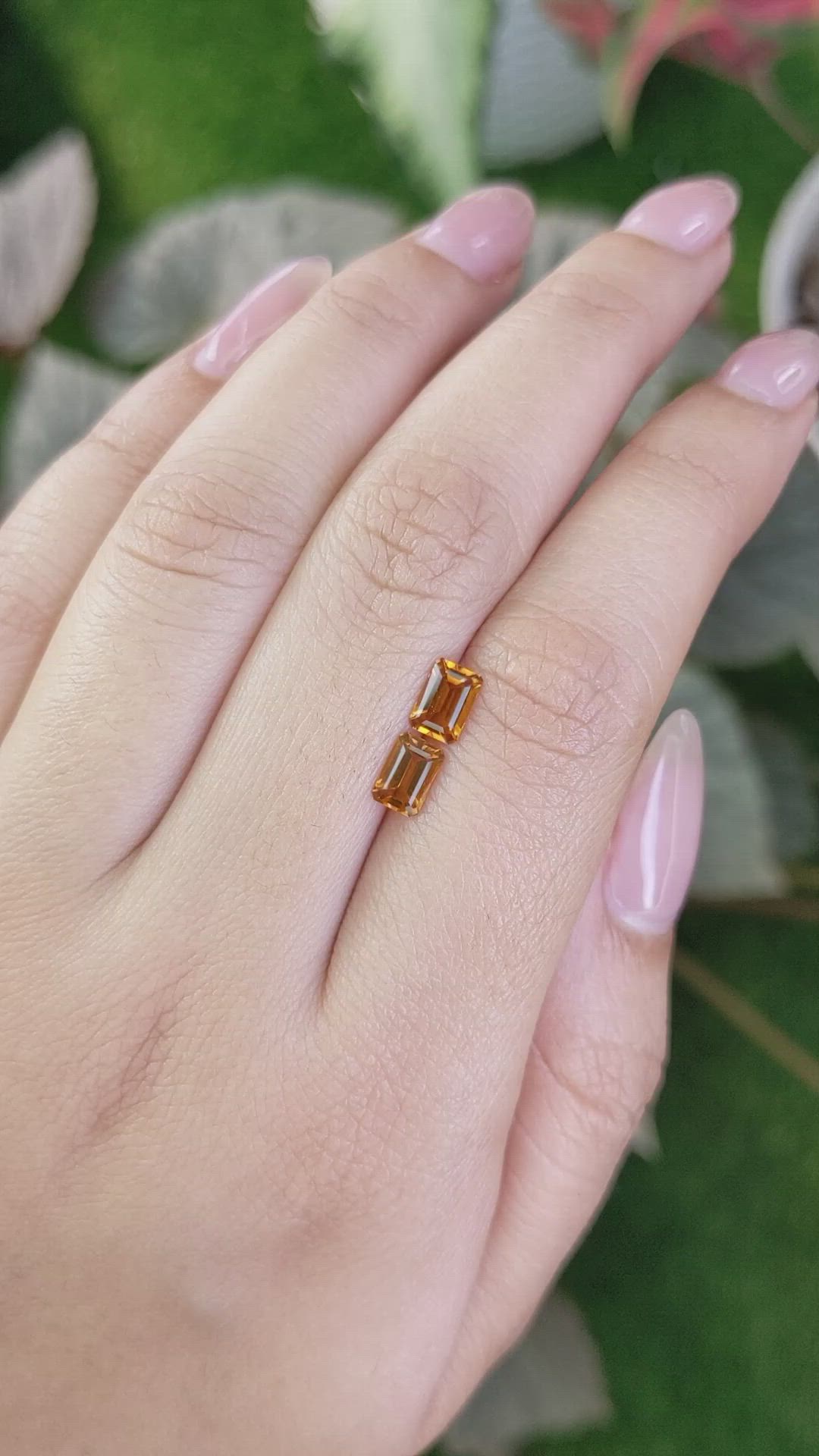
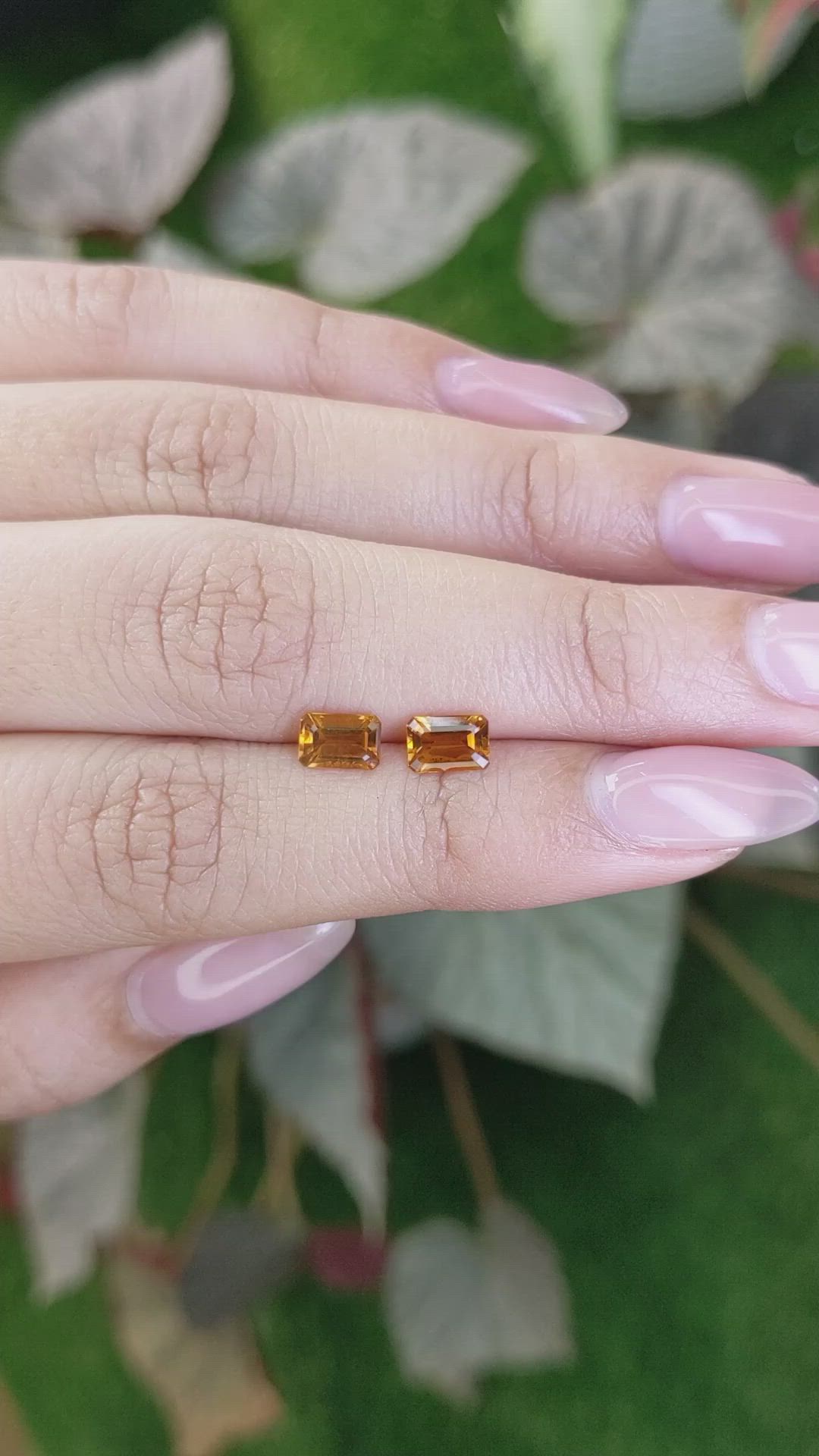
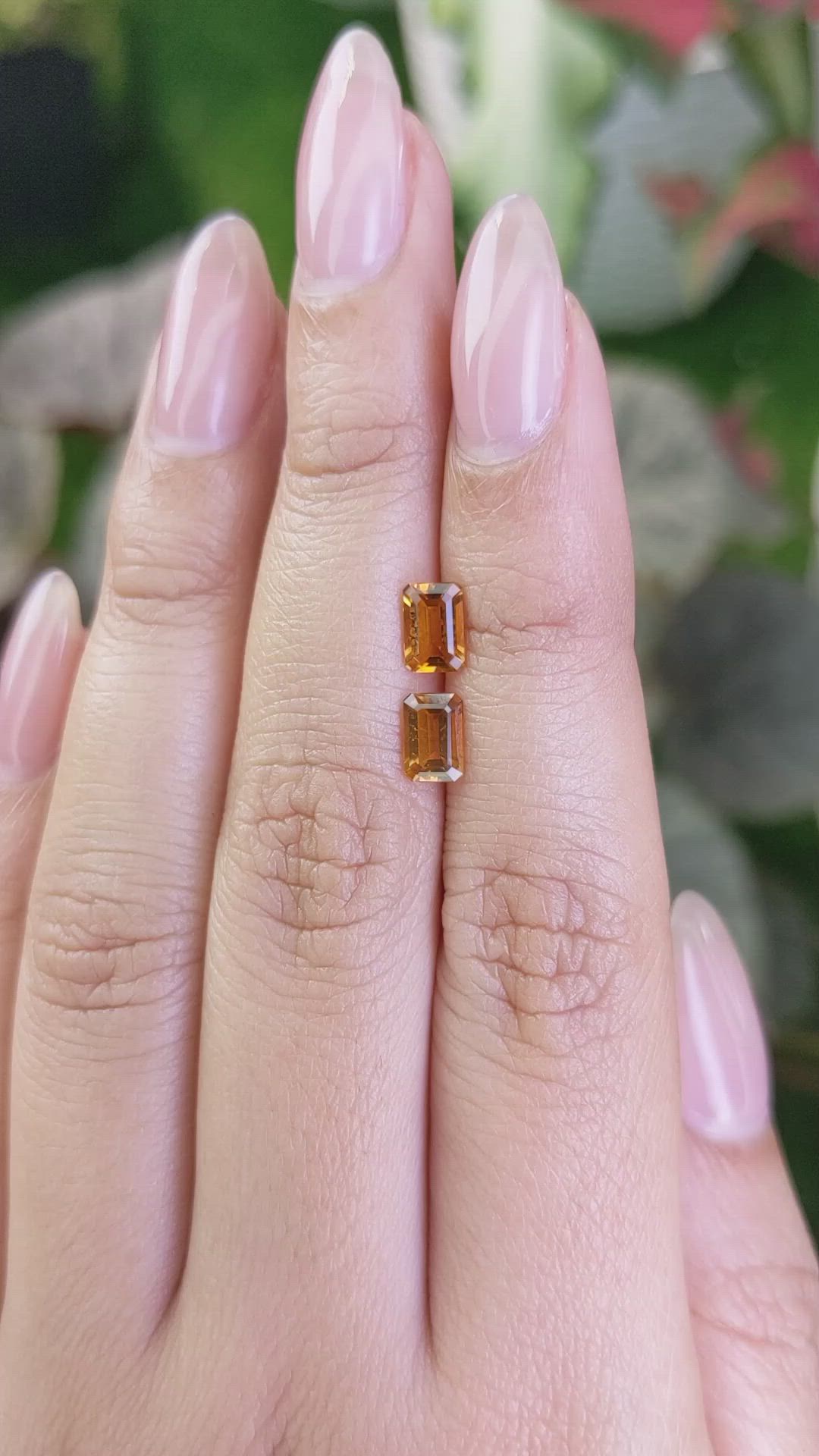


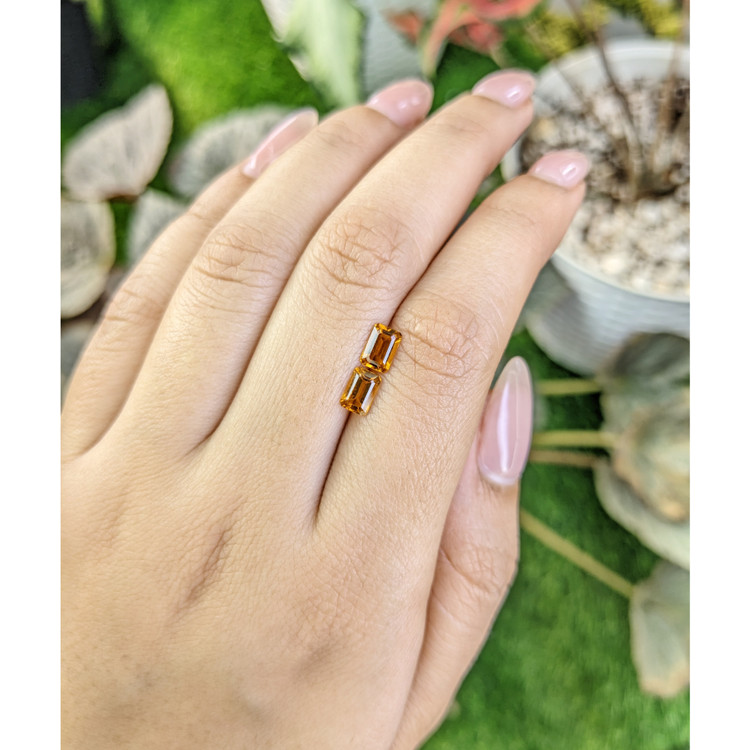

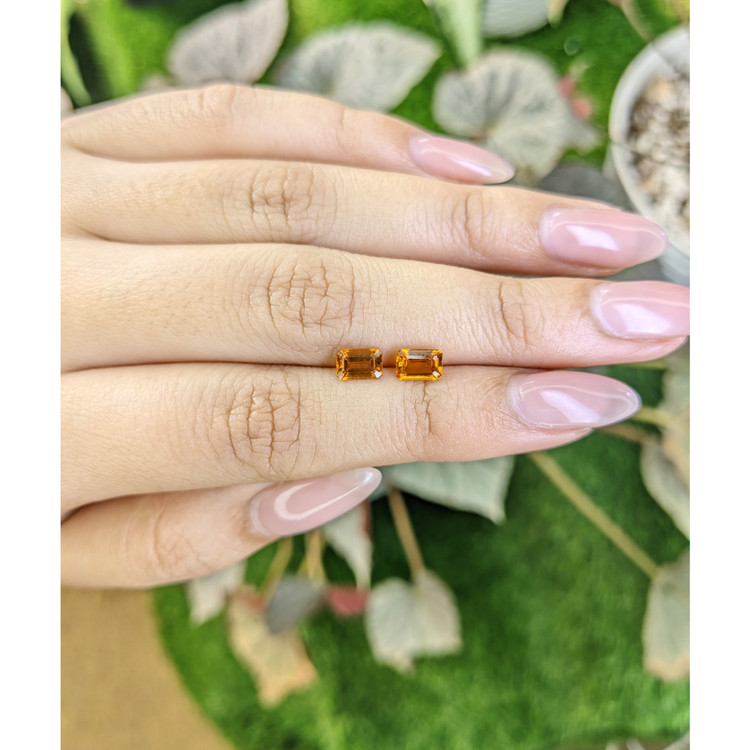


1.02 Ct.Tw.Total Carat Weight Orange Madeira Citrine Pair from Brazil
This pair of stones is available to ship now
Stone type: | Madeira Citrine | Madeira Citrine |
|---|---|---|
Item ID: | PR13693 | PR13693 |
Dimensions (MM): help | Length: 6.35 Width: 4.21 Height: 2.79 | Length: 6.14 Width: 4.12 Height: 2.97 |
Weight: | 0.50 Ct. | 0.52 Ct. |
Color: help | Orange | Orange |
Color intensity: help | Intense | Intense |
Clarity: help | Eye Clean | Eye Clean |
Shape: help | Emerald Cut | Emerald Cut |
Cut: | Emerald | Emerald |
Cutting style: | Faceted | Faceted |
Enhancements: help | Heat Treated | Heat Treated |
Origin: help | Brazil | Brazil |
Per carat price: help | $30 | $30 |
This matched pair of Madeira citrines presents a precisely considered combination of weight, color and proportion. The two stones weigh 0.50 carats and 0.52 carats respectively, each cut into a classic emerald cut rectangular outline. The individual dimensions are 6.35 by 4.21 by 2.79 millimeters and 6.14 by 4.12 by 2.97 millimeters, demonstrating tight dimensional tolerance for a matched set. Both stones exhibit an intense orange color intensity, assessed against established color grading parameters for Madeira citrine tone and saturation, while clarity is graded as eye clean when viewed at normal arm length and lighting conditions. The cut is described as emerald cut, with step facets across the crown and pavilion, truncated corners to maintain durability, and an extended table plane that accentuates the depth of tone. Polish quality is excellent, reflecting a high degree of lapidary finishing that minimizes surface abrasion and maximizes light transmission. These citrines originate from Brazil, and have undergone routine heat treatment enhancement to stabilize and intensify the characteristic Madeira orange hue, a treatment that is standard practice for this species and which yields durable, stable color when properly set.
From a faceting and optical performance perspective, the emerald cut on these stones has been executed to emphasize color uniformity and controlled light return rather than brilliance dominated by pavilion crown scintillation. The step faceting pattern consists of a sequence of parallel crown and pavilion facets that create a hall of mirrors effect, which is particularly effective for warm, saturated colors such as Madeira orange, because it reveals depth and flashes of darker and lighter orange without causing excessive windowing. The cutters maintained balanced facet junctions and parallelism, which is evident in the symmetry between the two stones and in the consistent reflection patterns observed across both tables. Matching procedures focused on three technical criteria, weight equivalence, color coordinates and proportion congruence. Weight parity between 0.50 and 0.52 carats keeps visual mass consistent in paired settings, while the near identical length to width ratios preserves proportional harmony. Color matching was achieved by selecting rough material from contiguous parcels and by fine tuning pavilion depths to modulate tone, thereby aligning the perceived saturation across varying viewing angles. The excellent polish complements the facet geometry, reducing microabrasions that could scatter light and diminish the clean, saturated appearance. Heat treatment was applied under controlled conditions to avoid overstressing the crystal lattice, resulting in a stable enhancement that does not compromise clarity or facet crispness.
The craftsmanship behind presenting these stones as a matched pair is central to their utility in precision jewelry applications, and The Natural Gemstone Company emphasizes that matching extends beyond mere visual similarity to include considerations of setting geometry, bezel clearance and wear orientation. For designers, these emerald cuts work exceptionally well in paired ring settings, east west mounts, or as the principal stones flanking a center gem, and they pair especially well with White Opal accents when a color contrast between saturated warm orange and the soft pearly body of opal is desired. The White Opal type provides a subtle milky backdrop and occasional play of color that offsets the citrine intensity, enabling layered design narratives that use both refractive and diffractive optical phenomena. Practical setting recommendations include protective bezel shoulders over the truncated corners, slightly elevated galleries to allow light ingress to the step facets, and secure prong placement that avoids faceted edges to maintain the excellent polish. Care guidance notes that the heat treated Madeira citrines are stable under normal wear conditions, but should be protected from prolonged exposure to high temperatures and harsh chemicals, while White Opal components require consideration for sensitivity to solvents and rapid temperature change. Each pair is selected and certified by The Natural Gemstone Company for origin, treatment disclosure and technical measurements, providing the informed buyer with the detailed specifications necessary for exacting design and production.


