
- Stone15
- Reports3
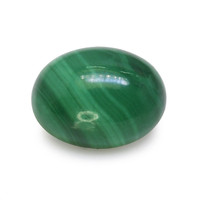
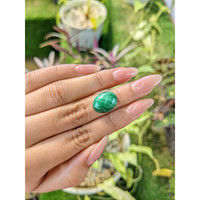
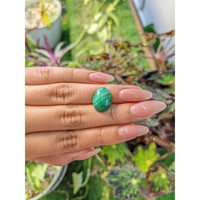
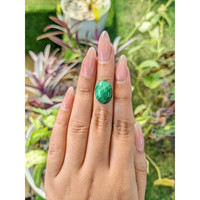
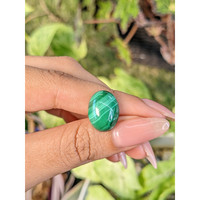
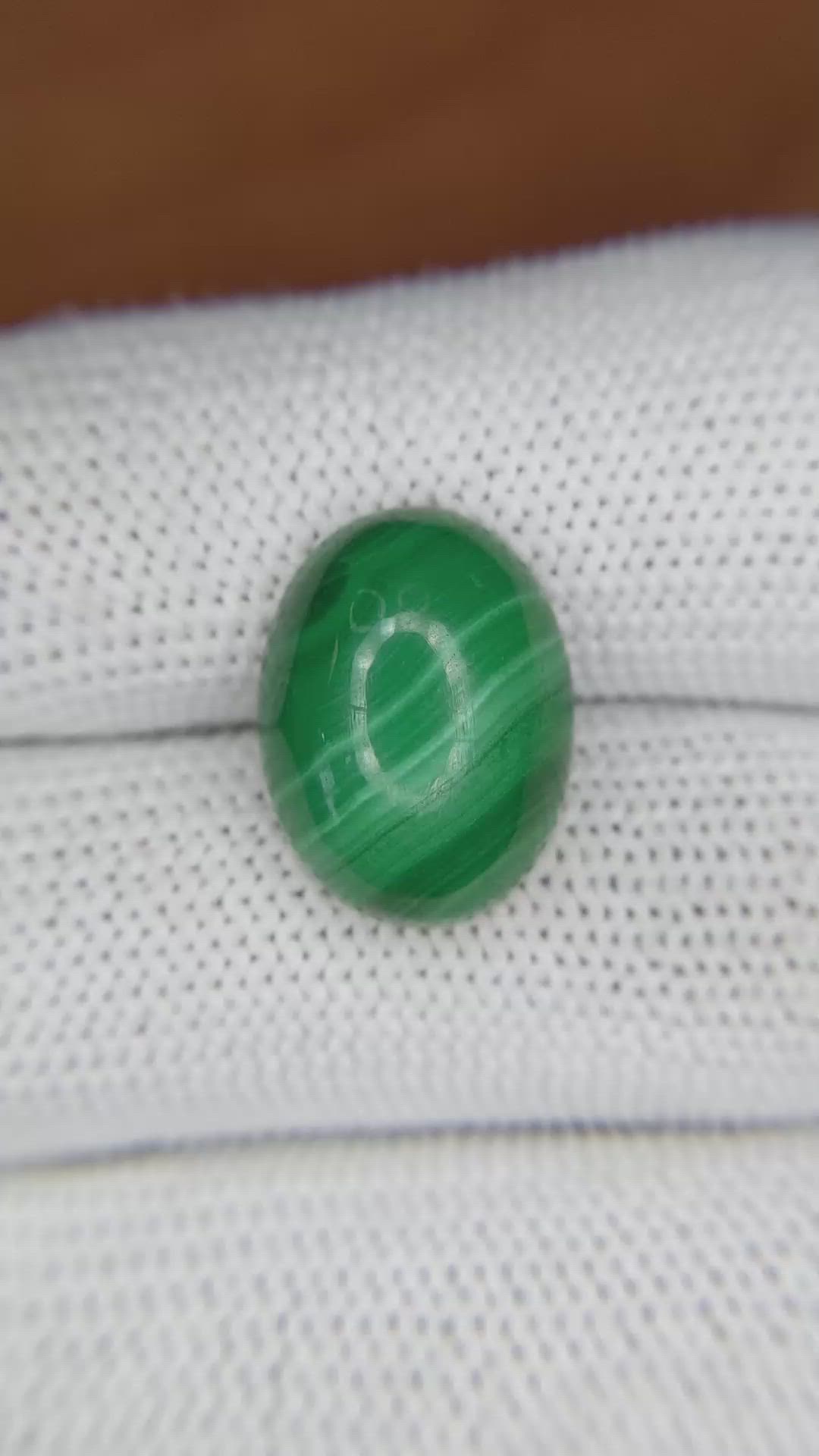
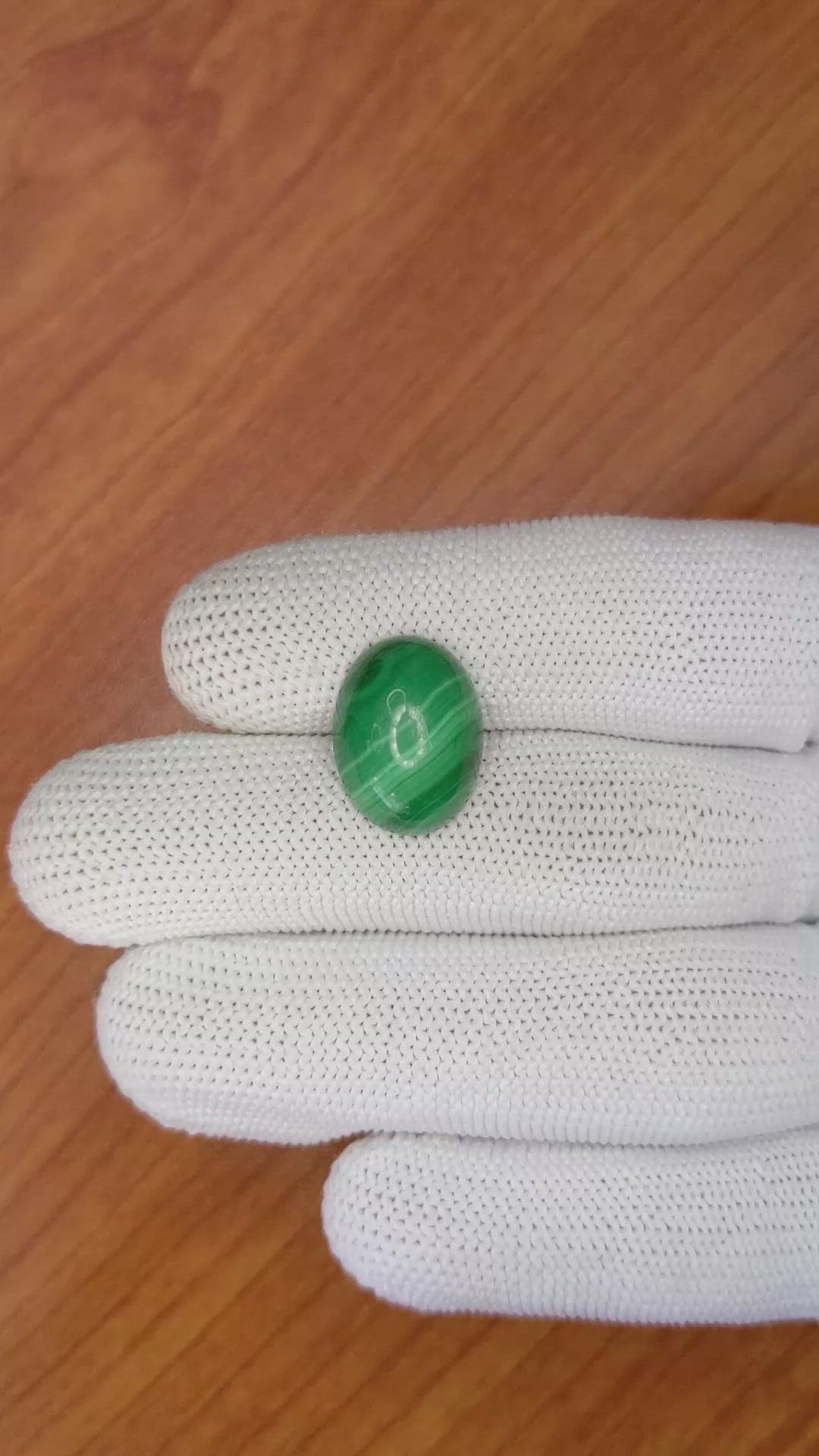
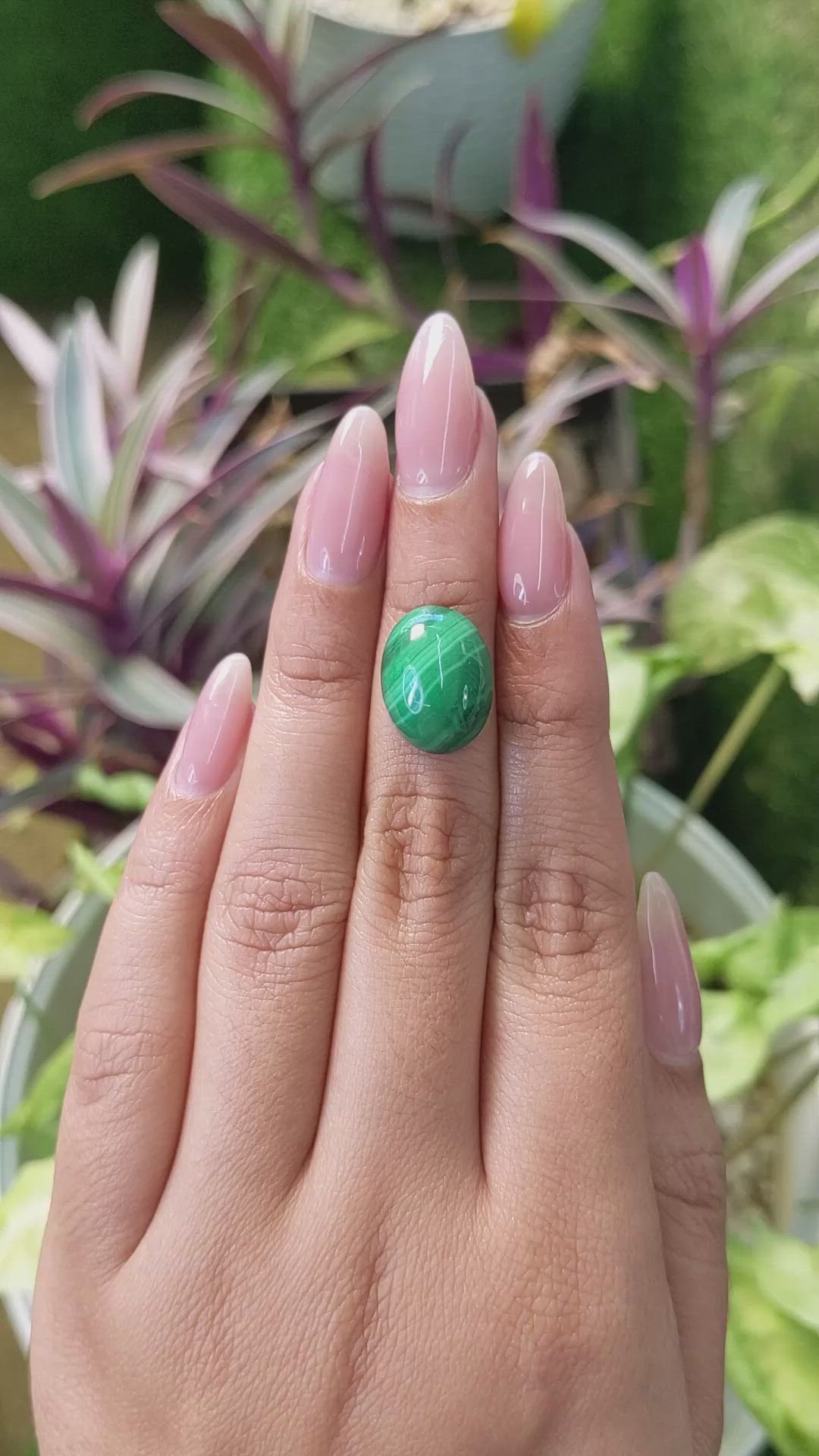
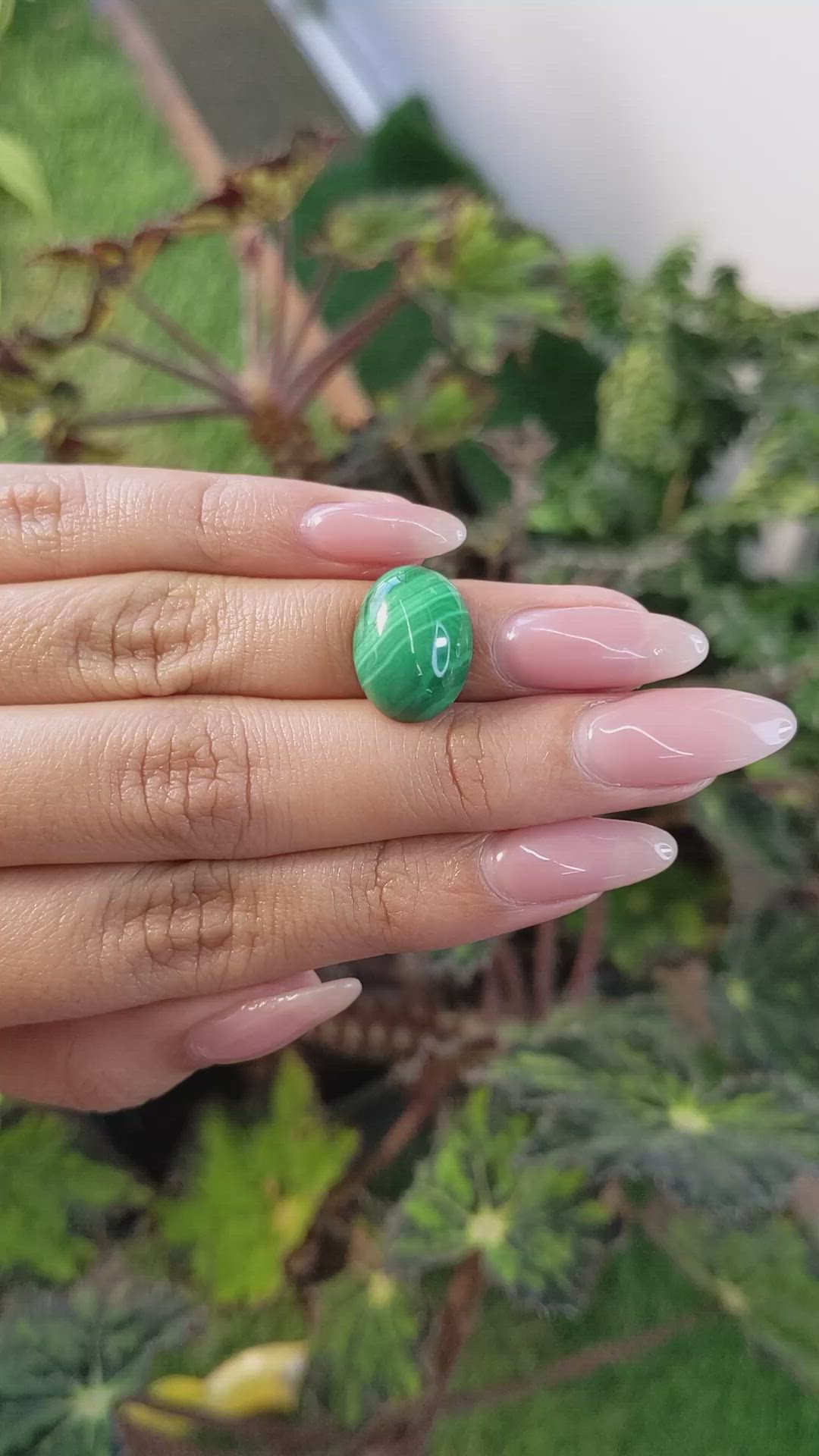
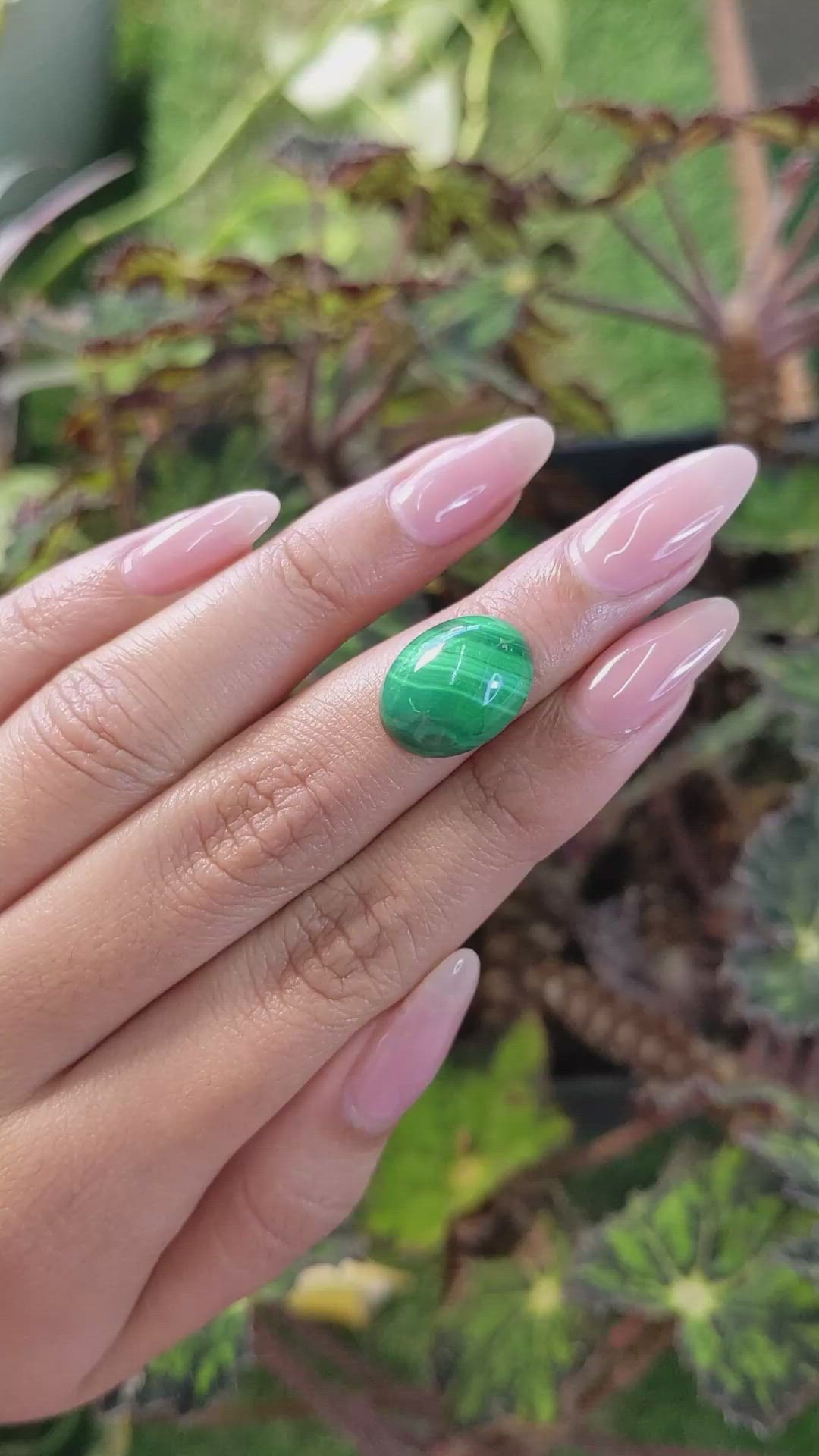
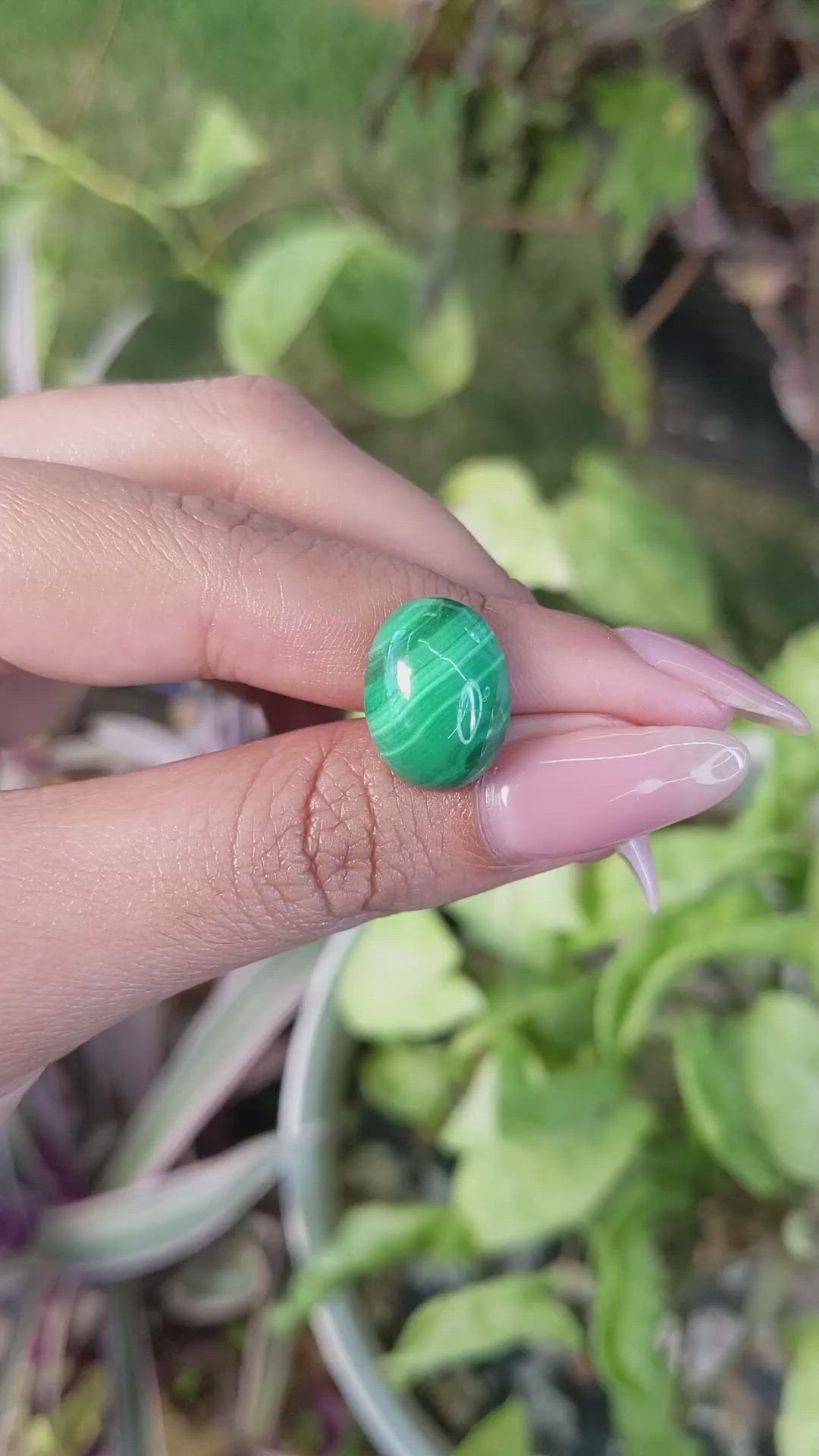

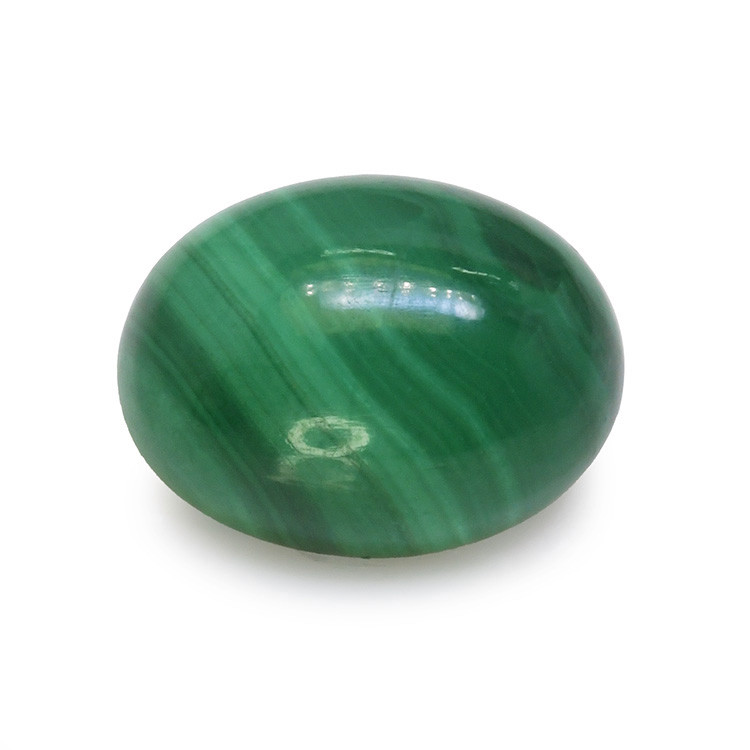
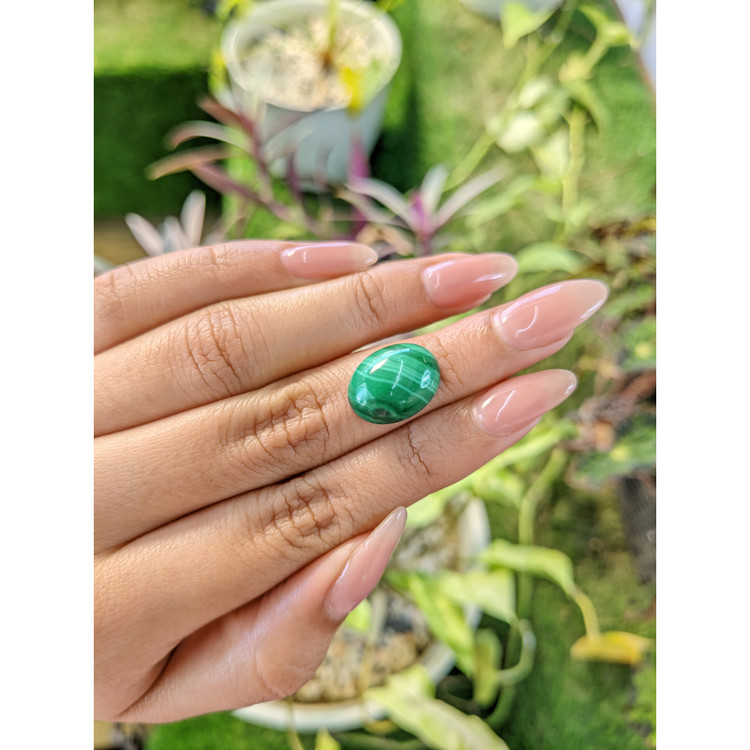
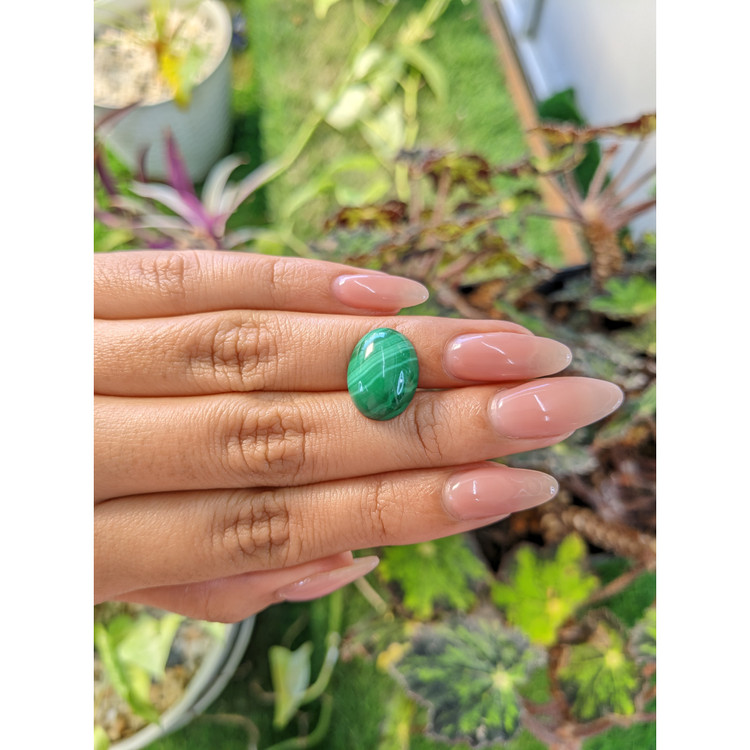
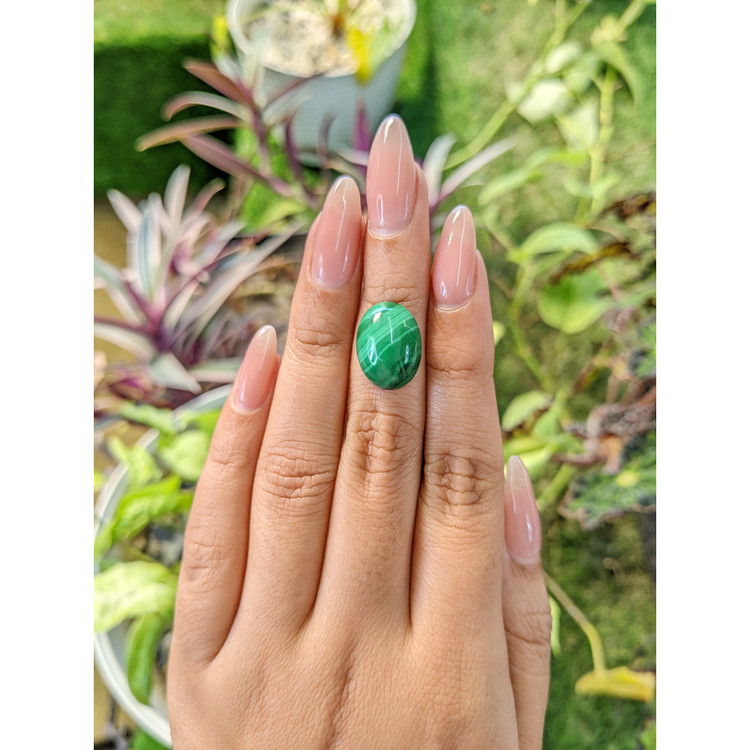
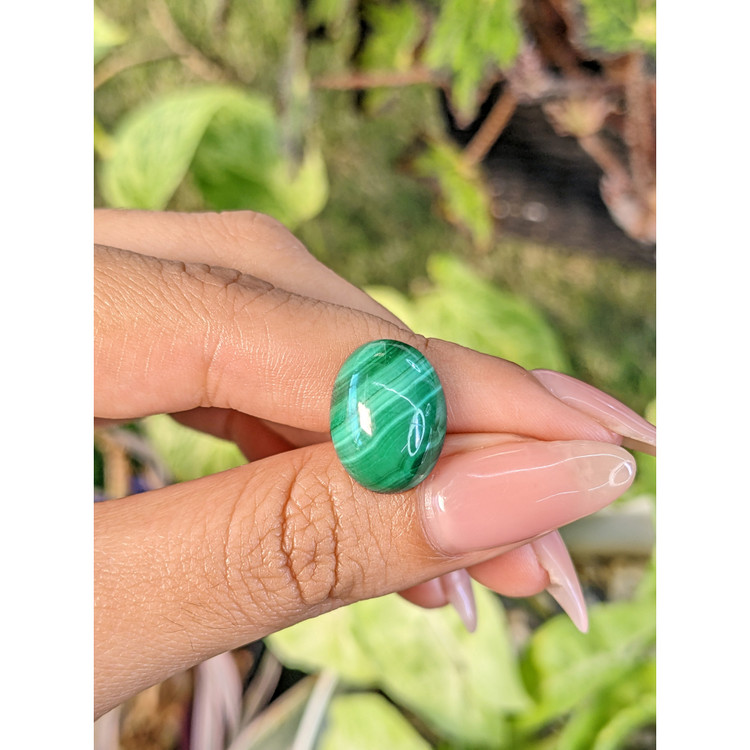


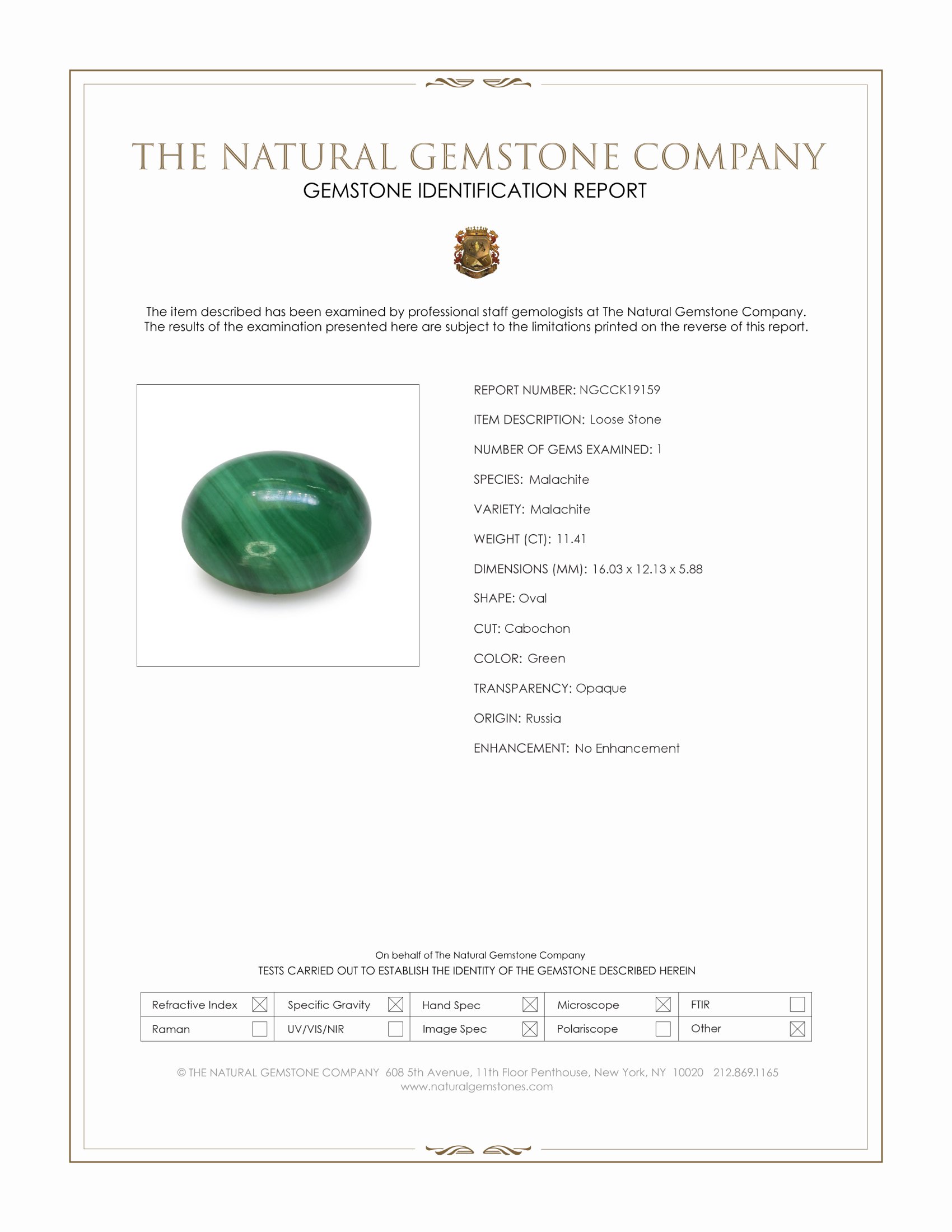
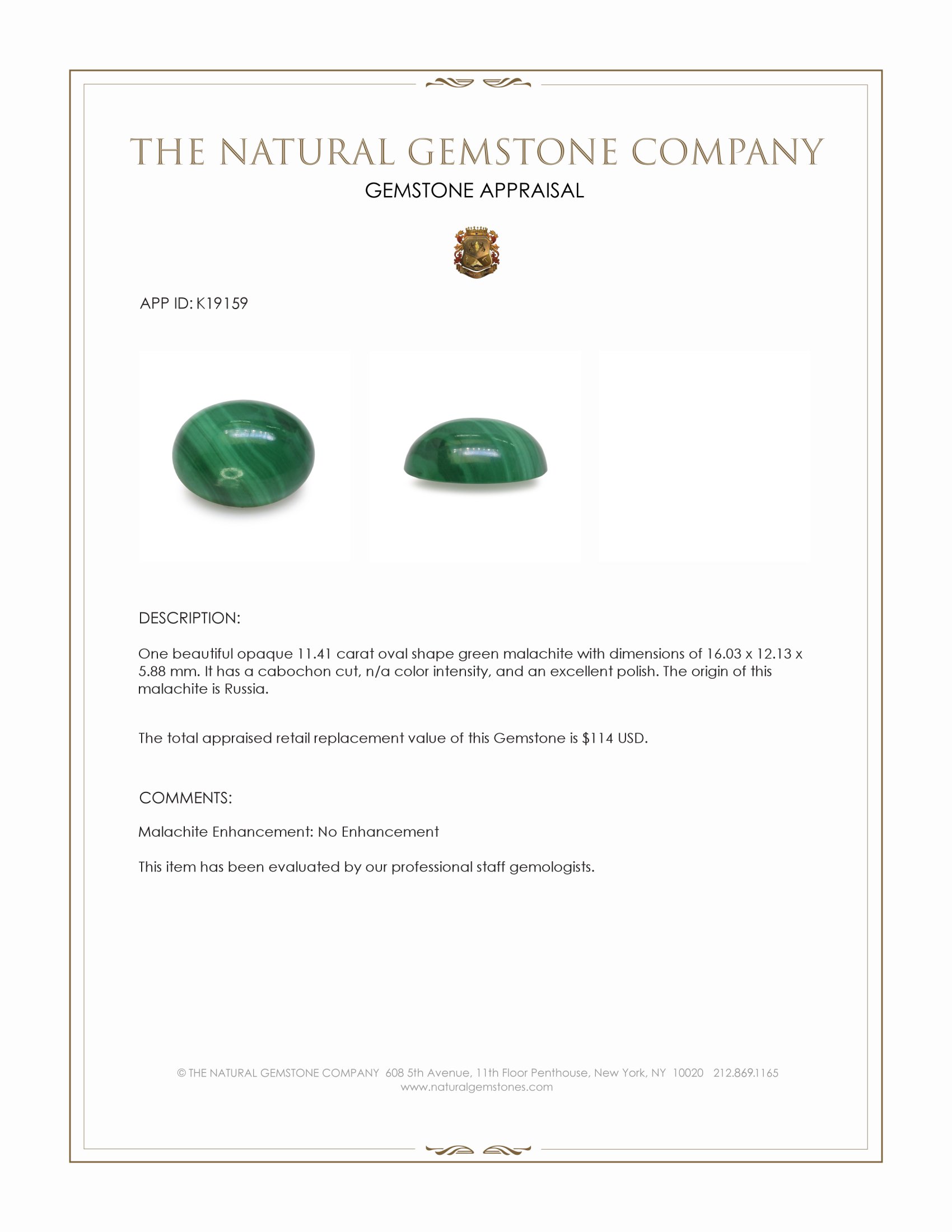
11.41 Ct. Cabochon Malachite from Russia
This loose stone is available to ship now
Item ID: | K19159 |
|---|---|
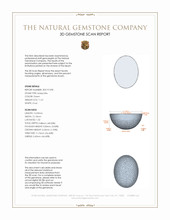
Dimensions (MM): help | Length: 16.03 Width: 12.13 Height: 5.88 |
Weight: | 11.41 Ct. |
Color: help | Green |
Color intensity: help | N/A |
Clarity: help | Not Applicable |
Shape: help | Oval |
Cut: | Cabochon |
Cutting style: | Cabochon |
Enhancements: help | No Enhancement |
Origin: help | Russia |
Per carat price: help | $10 |
There is a hush about this gem, a quiet green hymn held beneath a domed surface, one beautiful opaque 11.41 carat oval shape green malachite, dimensions 16.03 x 12.13 x 5.88 mm, a cabochon cut that gathers light like morning fog on a forest lake, bands of verdant melody flowing across its skin. The polish is excellent, the surface a satin mirror that invites fingertips to linger, and yet the interior keeps its secrets, opaque and serene. Each stripe and wave seems to be a memory of layered seasons, a cartography of growth written in mineral verse. The oval silhouette rests like a small island of green, balanced and generous, a shape that speaks of timeless elegance and of hands that hold stories. No enhancement has altered this stone, no artifice has been applied to coax its color or texture, it comes to you pure, a natural offering from the earth. The cutting style is cabochon, a gentle hemisphere that favors the malachite soul, shaping its bands into a moving horizon that will never face the hard angles of faceting, but will instead echo the soft language of memory and of time.
Born in the wide lands of Russia, this malachite carries the slow breath of place, a provenance that matters to lovers of true earthborne beauty. Imagine remote outcrops where green seams run like secret rivers through rock, where miners and the land have exchanged gifts for generations, where the mineral grew in patient bands inside caverns and seams, each stripe a year in slow time. The origin gives context to the color, to the particular rhythm of lines, to the depth and quality that only natural formation can create. When you hold this stone, you hold a fragment of that landscape, a portable place that reminds you of pine shadow, of cold light, of a horizon softened by drifting green. It is a gemstone that invites narrative, one to be handed down, one to be set with intention, one to become a talisman for memory and affection. The Natural Gemstone Company is honored to present this piece, a gem that is as much story as it is matter, curated with care and described with exactness so that beauty and truth walk together.
Imagine this cabochon set as the heart of a ring, held in a warm bezel that follows its oval curve, or cradled as a pendant where its dome will catch the sun and tell its green tale. Envision it framed by soft metals, gold or sterling, or surrounded by small accent stones that respect its opaque presence, perhaps tiny diamonds or warm citrine that will act as morning stars to the malachite moon. Designers and dreamers will find that the scale is generous enough to make a statement, yet intimate enough to sit against the skin like a secret kept between lovers. The excellent polish makes it ideal for jewelry that will be worn, for pieces that will be stroked and admired, for objects that will grow in meaning with every touch. Because it is unenhanced, it will age with honesty, showing wear as living proof of journey, rather than as evidence of alteration. Consider a custom commission, a family heirloom in the making, a promise ring that speaks of deep verdant vows, or a brooch that anchors a winter coat with color and confidence. Our team can advise on setting styles that honor the stone, and we can share thoughtfulness about prongs, bezels, and fittings that will keep the cabochon safe while allowing its bands to sing.
When you choose this oval green malachite from The Natural Gemstone Company, you choose a companion that is grounded and poetic, a gem that is honest about its origin and generous in its presence. Care is simple, treat it with warm soapy water and a soft cloth, avoid harsh chemicals and heavy impacts, remember that malachite is a mineral that answers to tenderness. The dimensions are precise, 16.03 x 12.13 x 5.88 mm, and the weight is exact, 11.41 carat, measurements that allow jewelers to plan with confidence and lovers to imagine with clarity. This stone will work beautifully as the centerpiece of bespoke pieces, and it will delight those who value natural story, unaltered beauty, and careful craftsmanship. Picture it in an intimate setting, a ring that feels like an embrace, a pendant that rests like a green heart over the sternum, an object that carries quiet declarations. We at The Natural Gemstone Company invite you to hold this malachite in your imagination, to feel its cool polish, to follow its banded map, and to consider how it might hold your vows, your memories, your quiet promises.


