
- Stone14
- Reports3
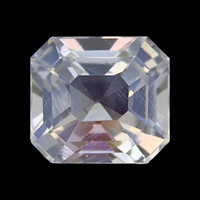
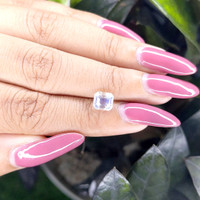
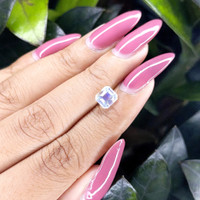
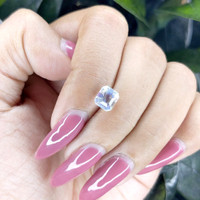
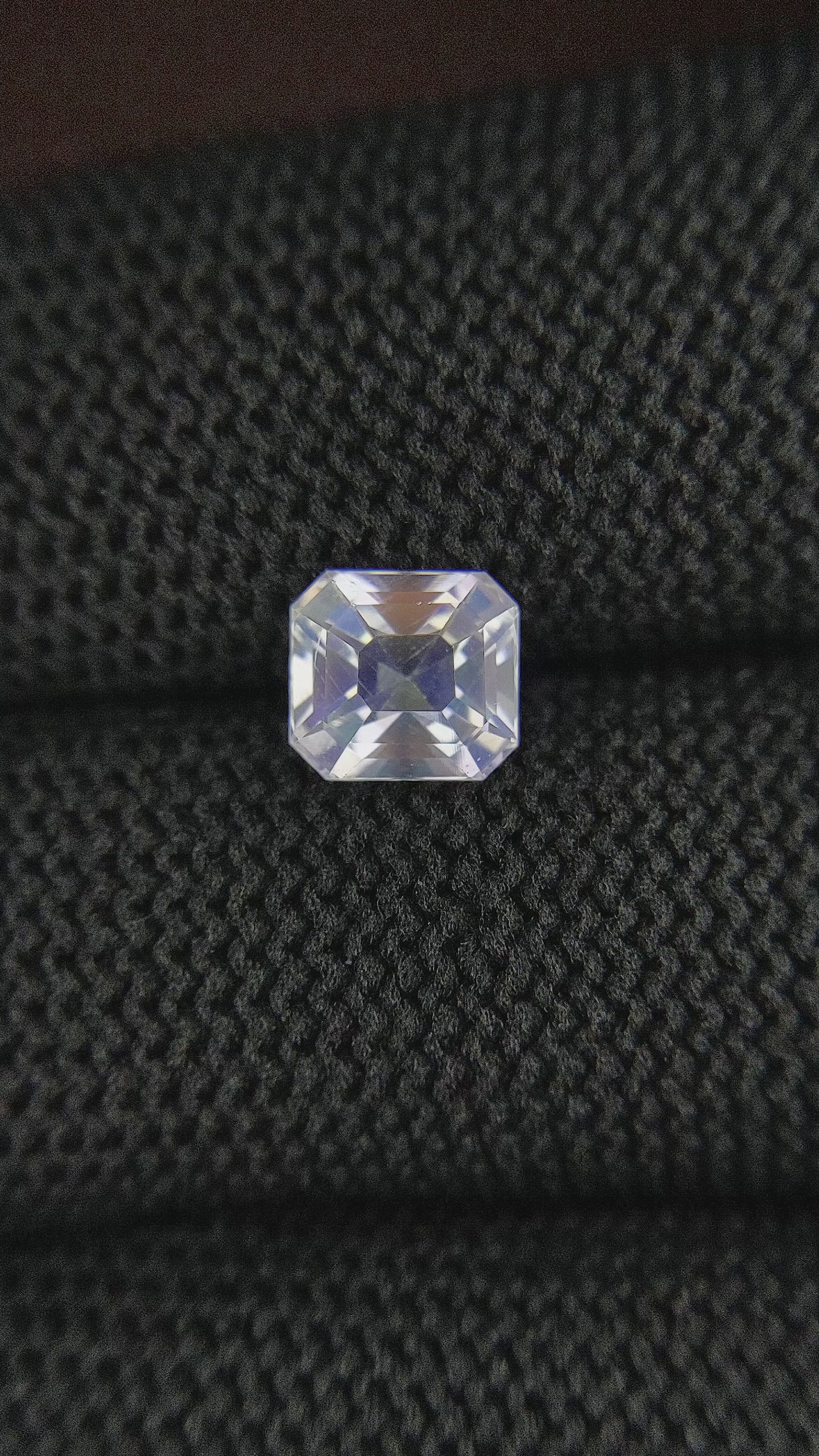
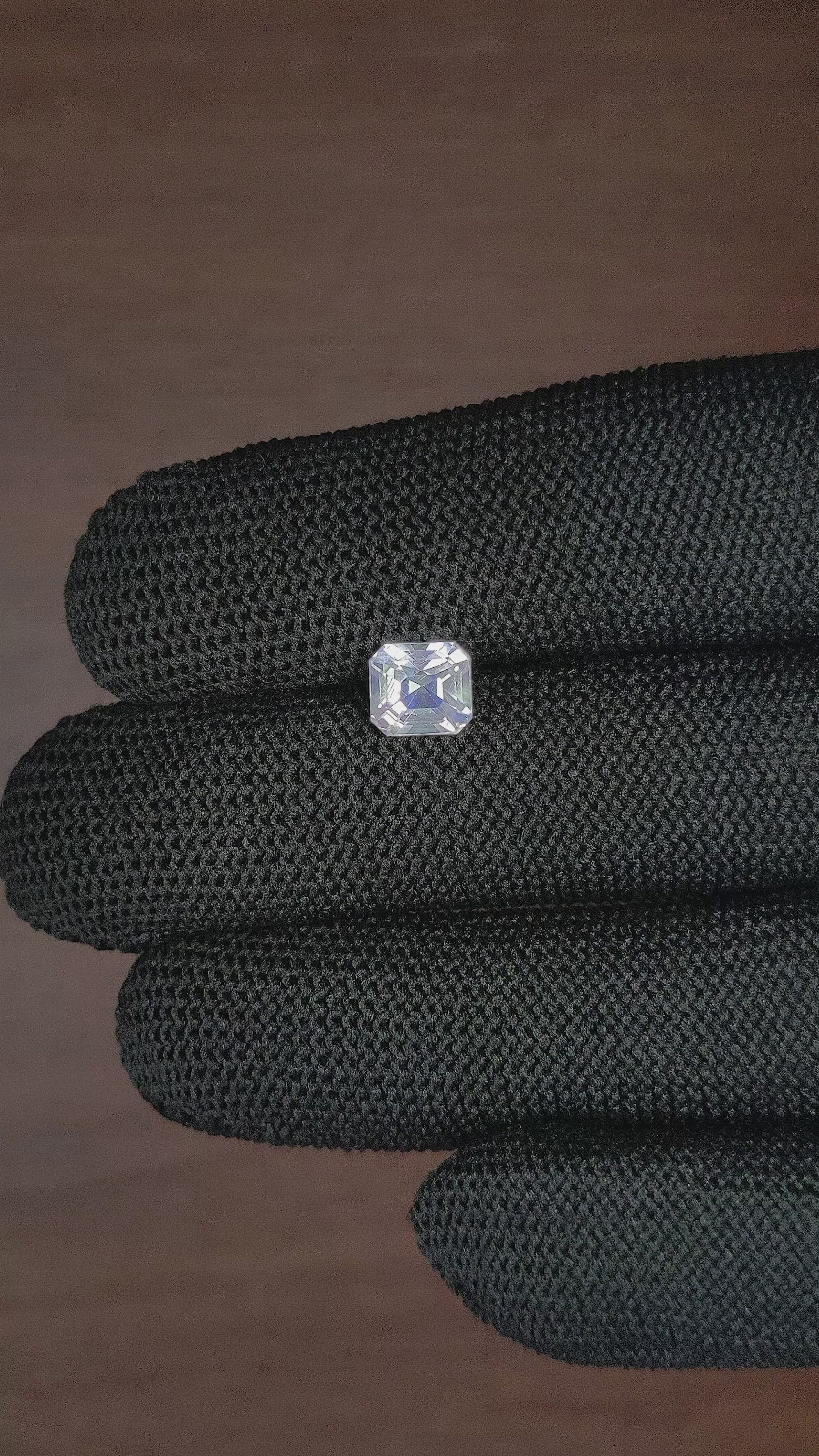
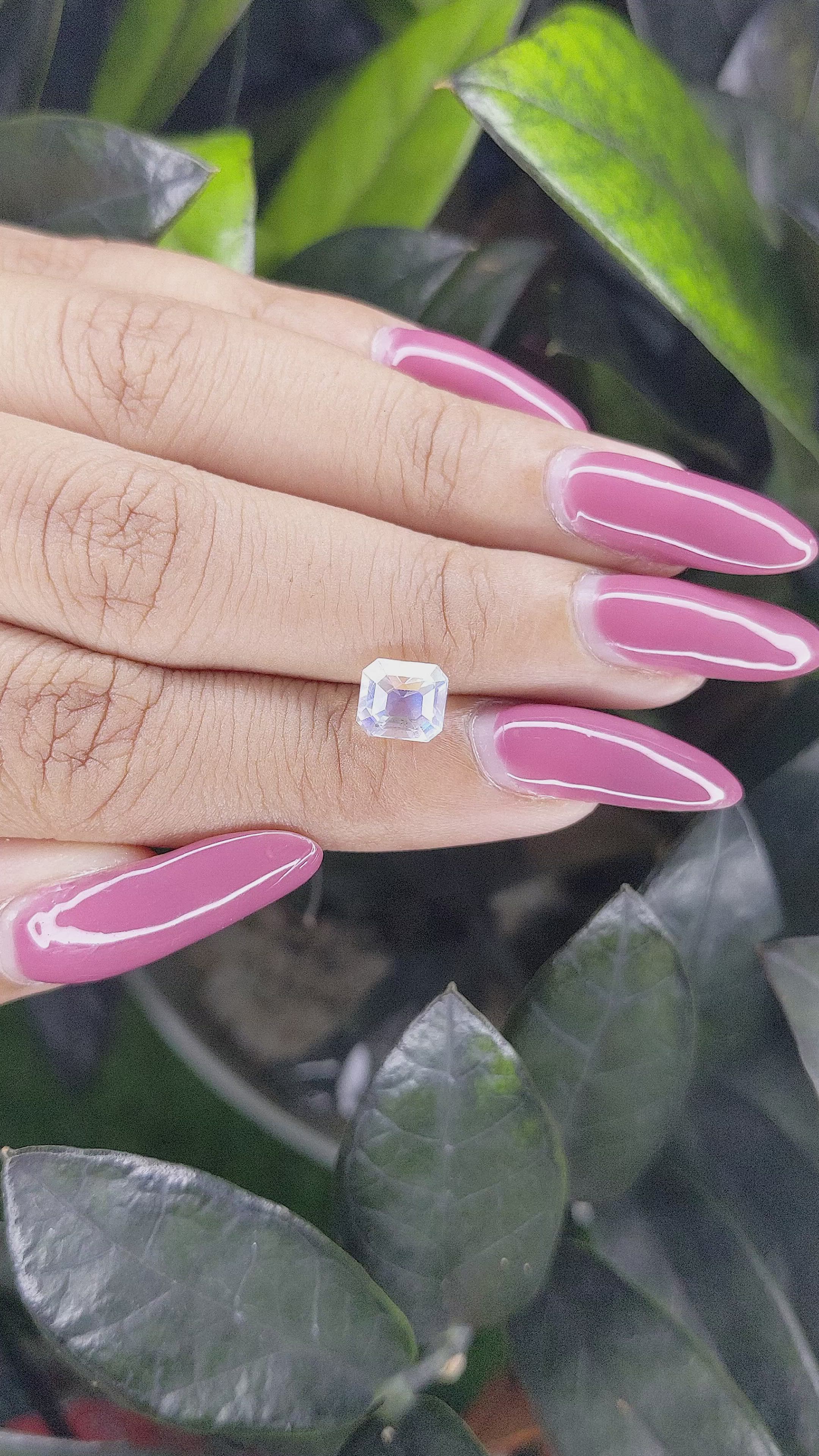
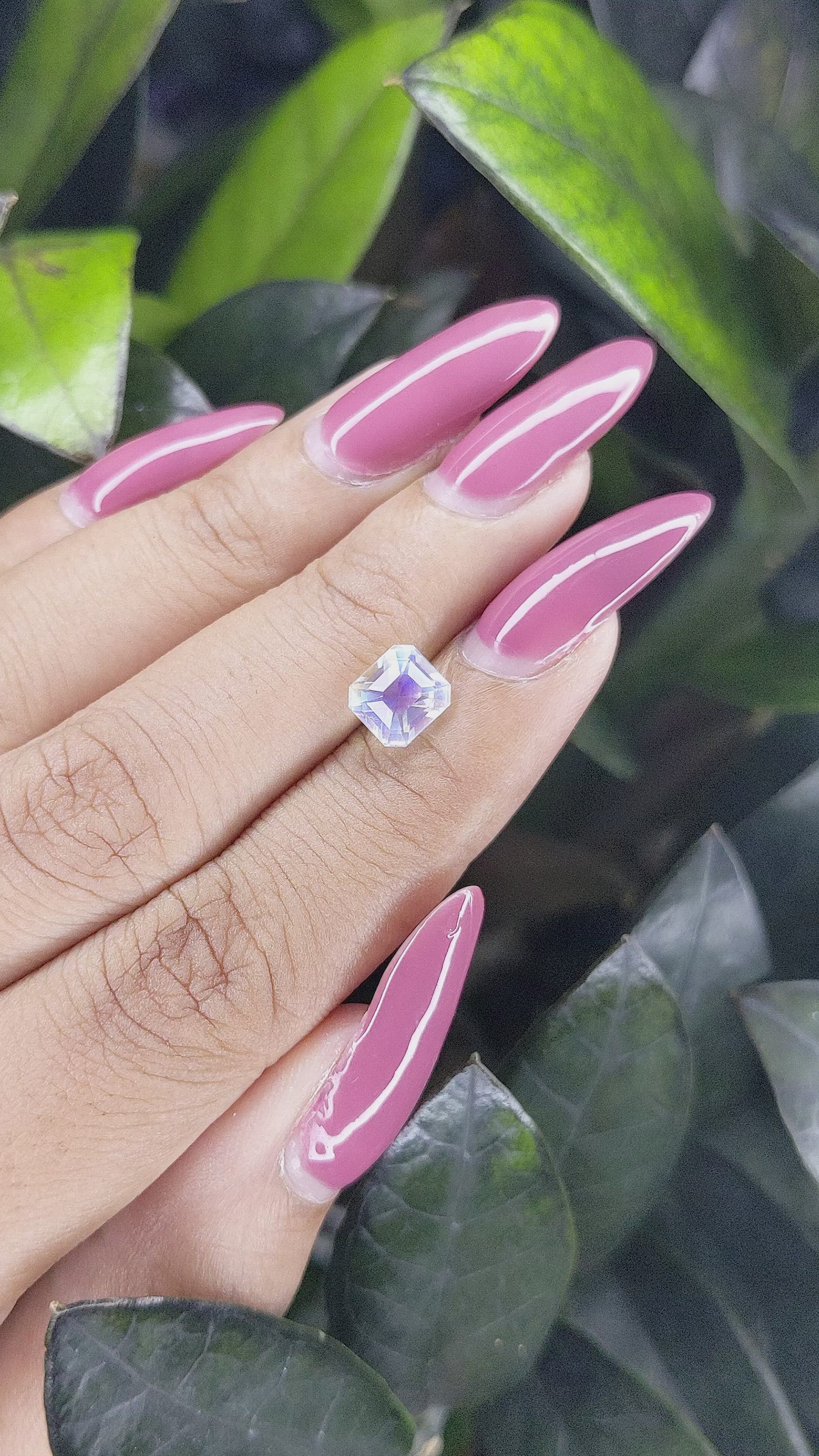

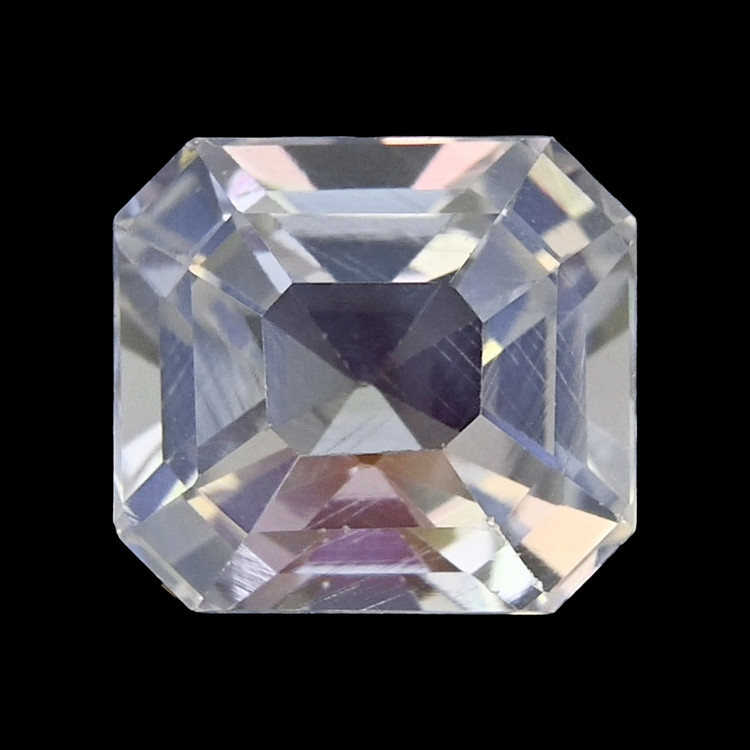
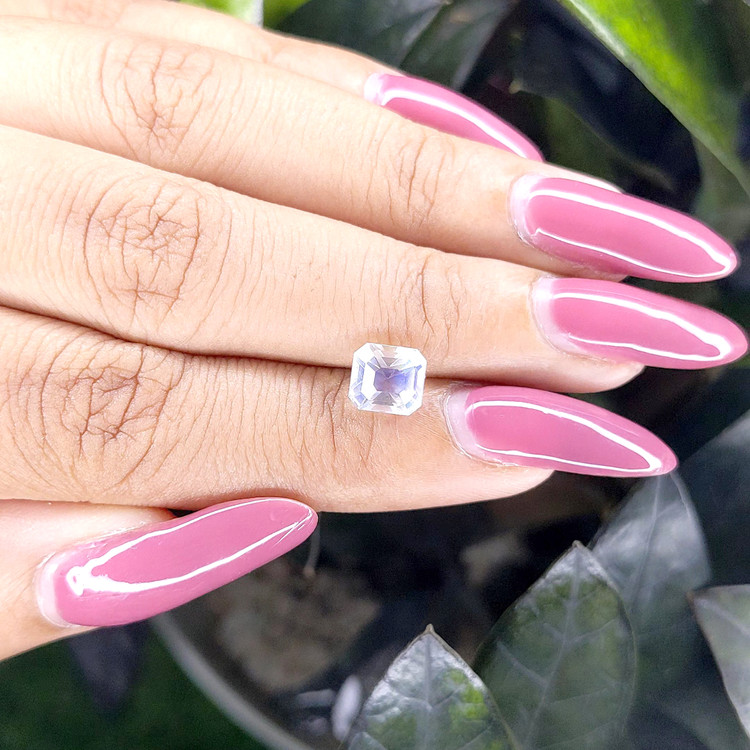
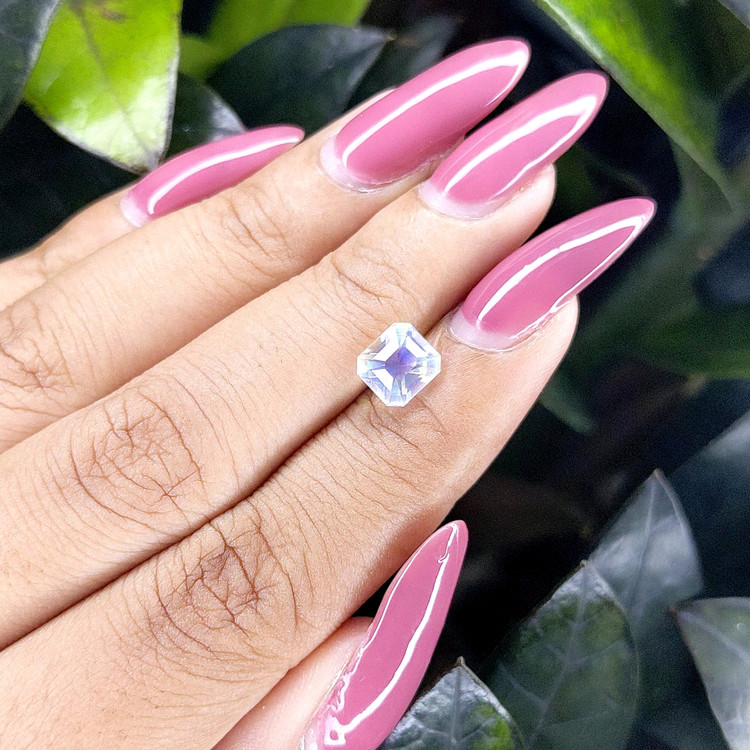
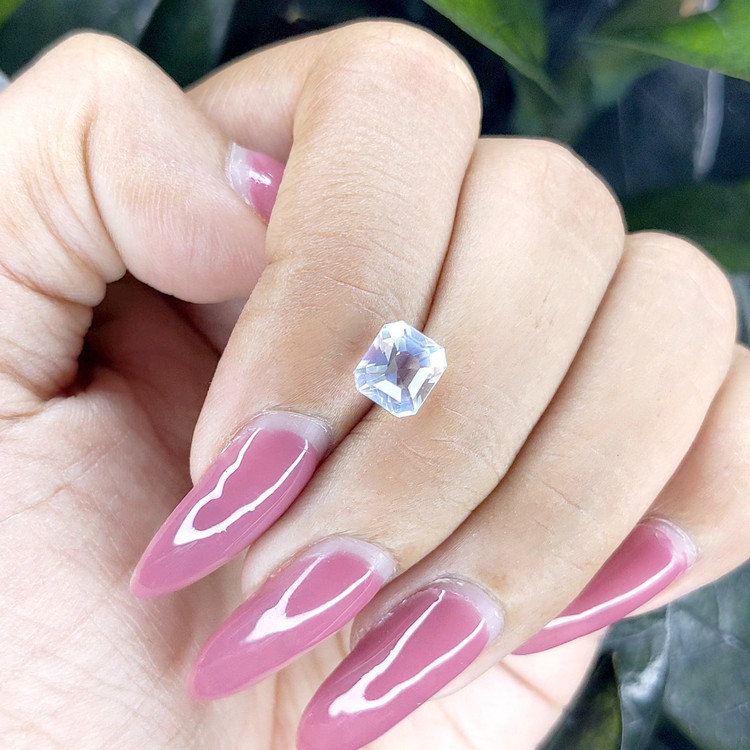

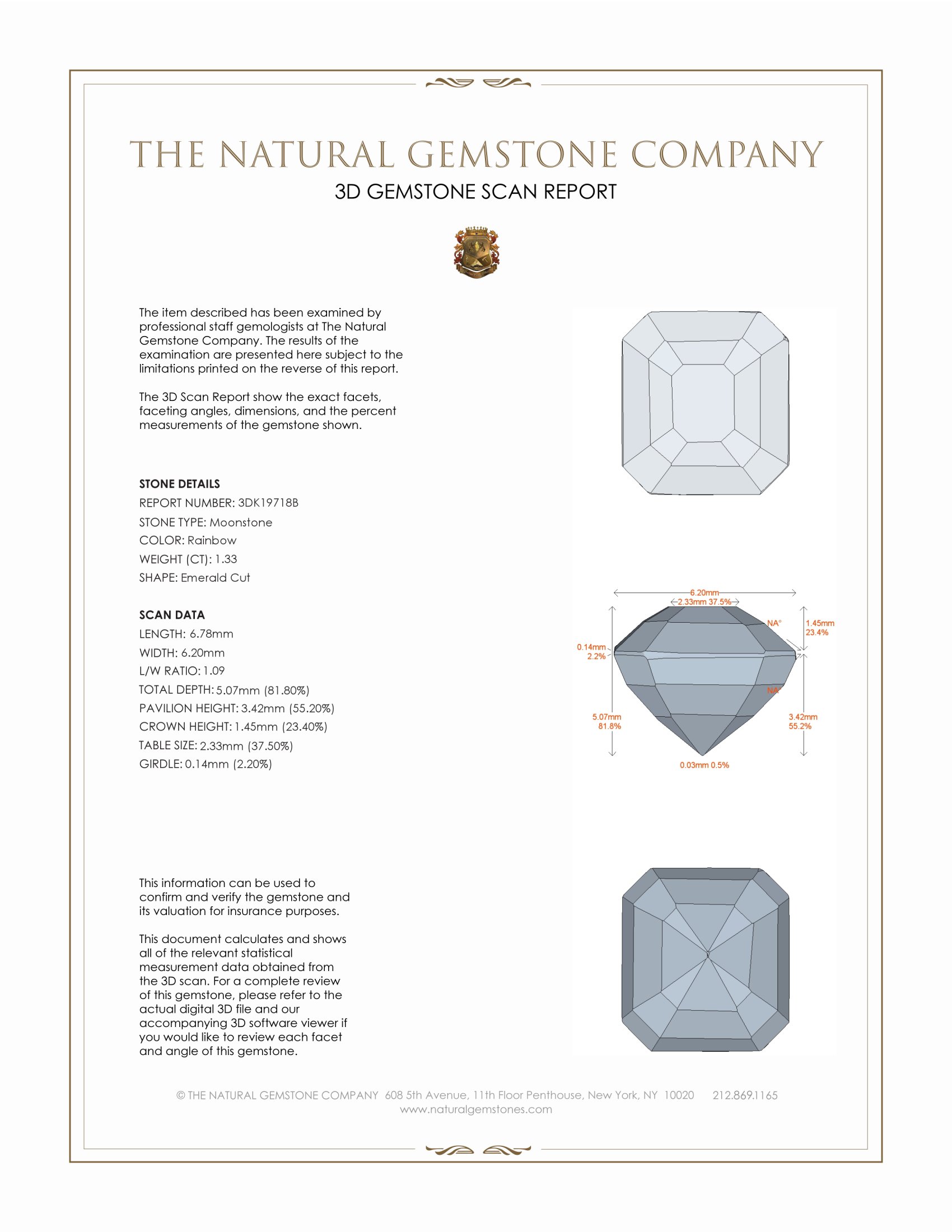
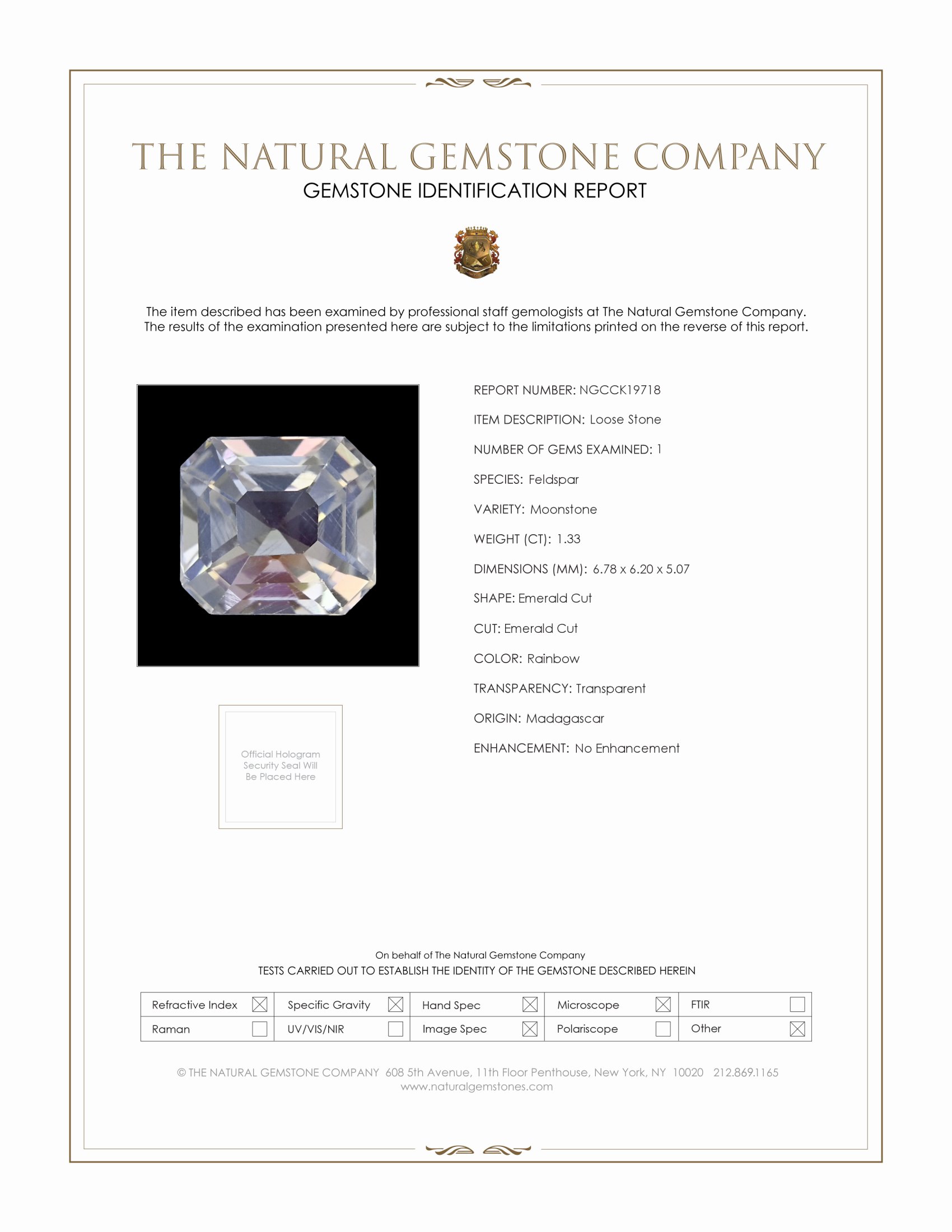
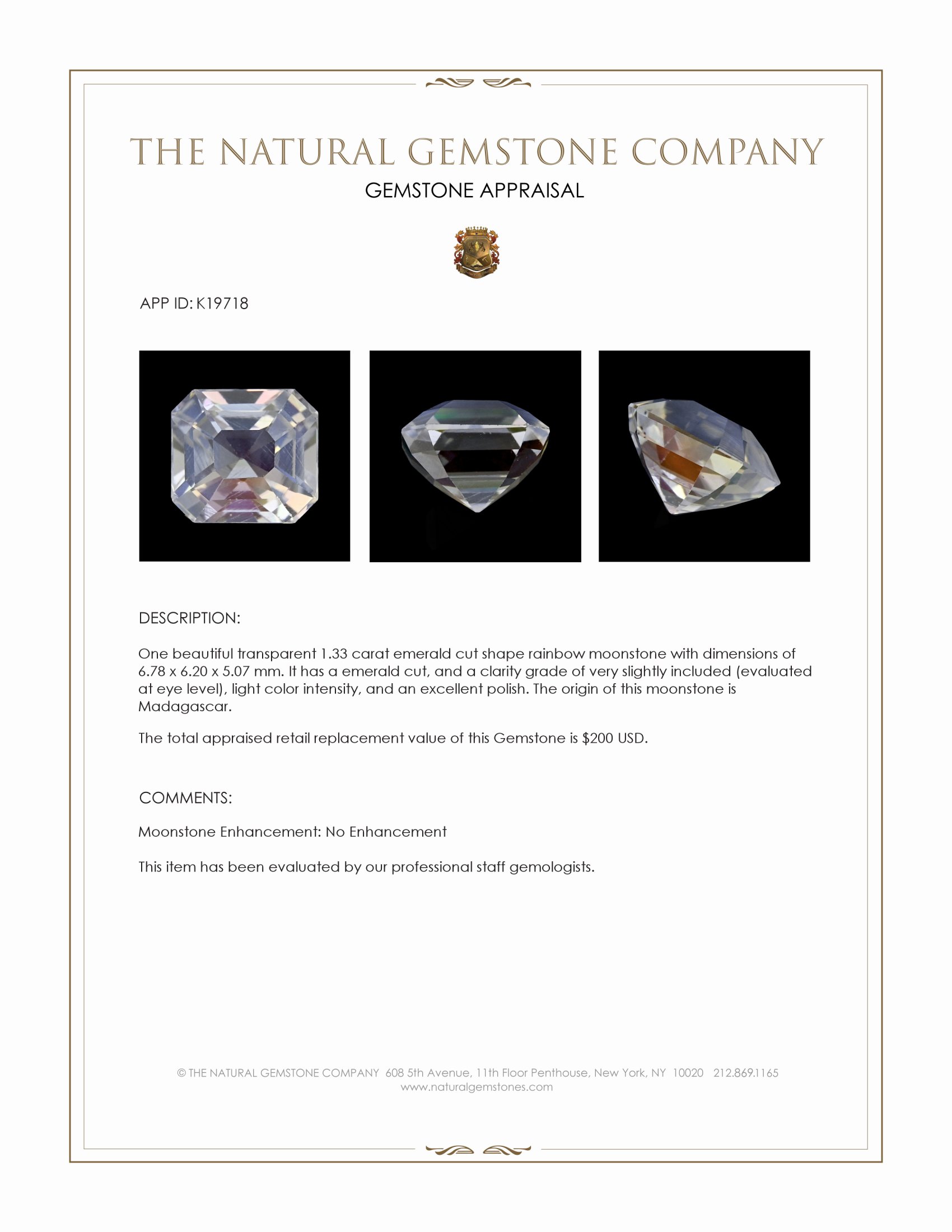
1.33 Ct. Moonstone from Madagascar
This loose stone ships by Apr 16
Item ID: | K19718 |
|---|---|
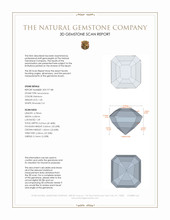
Dimensions (MM): help | Length: 6.78 Width: 6.2 Height: 5.07 |
Weight: | 1.33 Ct. |
Color: help | Rainbow |
Color intensity: help | Light |
Clarity: help | Very Slightly Included |
Shape: help | Emerald Cut |
Cut: | Emerald Cut |
Cutting style: | Faceted |
Enhancements: help | No Enhancement |
Origin: help | Madagascar |
Per carat price: help | $150 |
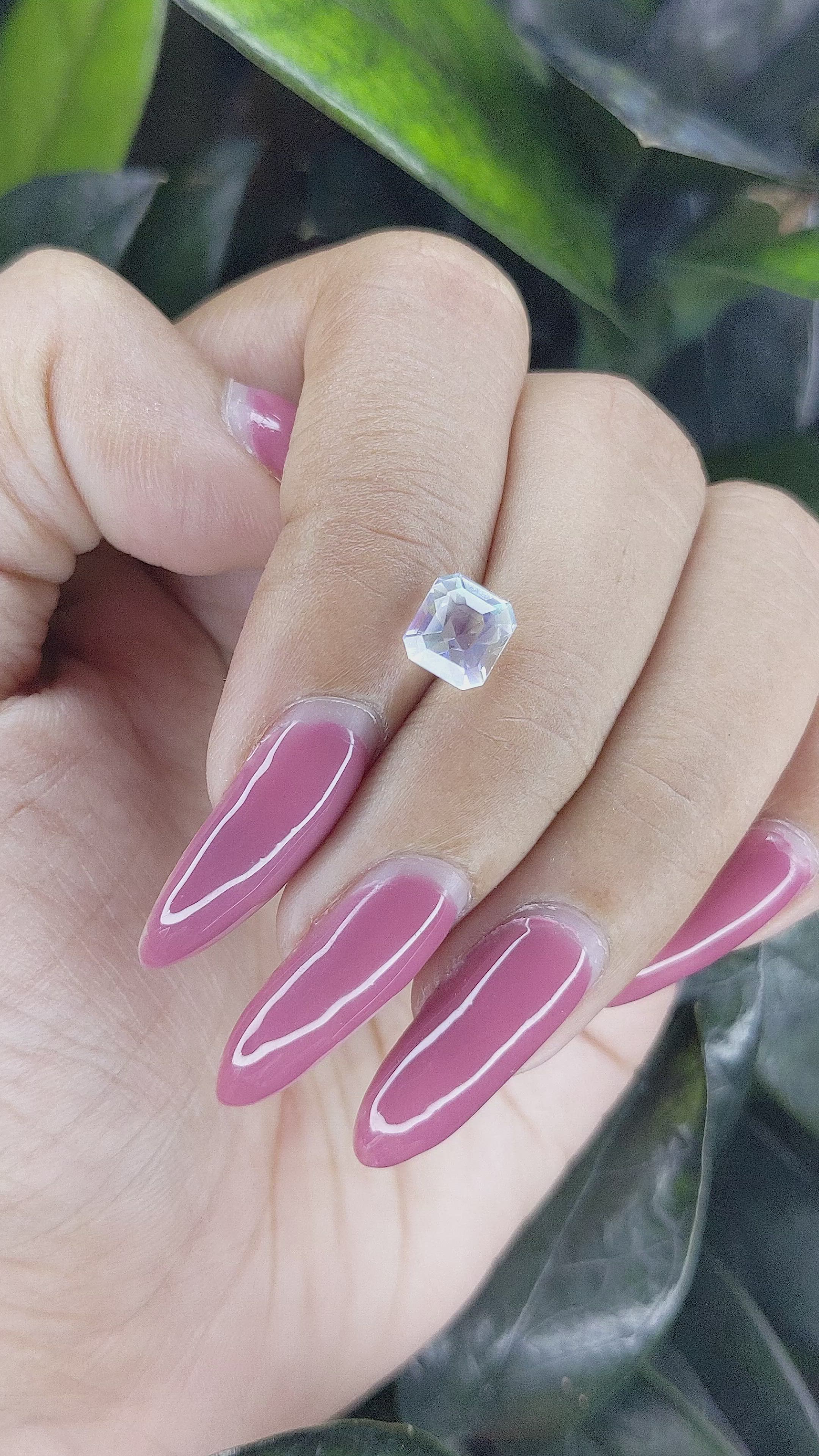
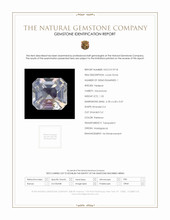
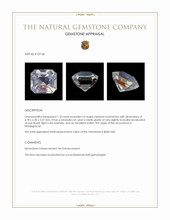
This 1.33 carat, transparent emerald cut rainbow moonstone offers a rare combination of measured proportions, refined cutting, and natural origin. The stone measures 6.78 by 6.20 by 5.07 millimeters, furnished with a classic emerald cut that emphasizes clean planes and controlled light return. At a clarity grade of very slightly included evaluated at eye level, the gem displays minimal internal features that do not detract from its overall clarity when observed from normal viewing distances. Its color intensity registers as light, allowing the inherent optical phenomena of moonstone to be read with clarity across the table and step facets. The finish is an excellent polish, with facet junctions aligned to preserve crisp reflections and the plane of adularescence. There has been no enhancement to the material, and the specimen is sourced from Madagascar, a region known for producing feldspar gemstones with distinctive optical character. The Natural Gemstone Company presents this piece as a natural, untreated example of rainbow moonstone in a precision cut that supports both contemporary and traditional settings.
The geological narrative behind this rainbow moonstone begins millions of years ago within the continental crust that now underlies Madagascar. In that deep time, silica rich melts and metamorphic fluids migrated through fractures and pockets in the host rock, cooling and crystallizing slowly to form bodies of feldspar. Within these environments, alternating layers of two closely related feldspar species accumulated at the microscopic scale. Through processes of exsolution and differential crystallization, films of slightly differing composition stacked in thin lamellae, establishing the microstructure responsible for the gemstone phenomenon known as adularescence. Subsequent tectonic activity subjected these feldspathic masses to cycles of burial, pressure, and uplift, further refining crystal habit and occasionally concentrating gem quality material within pegmatitic lenses and metamorphic boudins. Weathering and erosion over geologic time liberated fragments from primary deposits, after which secondary concentration in alluvial gravels allowed local miners to recover cleaner, well formed crystals. When recovered, the cleavable nature of feldspar and the presence of subtle inclusions required careful selection and orientation to preserve the optical layers during cutting. The resulting gem retains the record of those formative processes, a microscopic stratigraphy that scatters light in a manner characteristic of moonstone group feldspars, and that links the finished gem to the deep geologic history of Madagascar.
This particular example conveys how precise lapidary choices can reveal and respect a stone s natural history. The emerald cut was selected to balance weight retention against the need to present the adularescent sheen as planar, directional flashes that travel beneath the table and along the step facets. The measured dimensions and proportions translate to practical mounting options while maintaining optical performance when viewed in common lighting. With a light body color and very slight inclusions at eye level, the stone performs as a transparent gem that responds to clean, controlled light, and the excellent polish preserves the delicate interaction between surface and internal scattering. As no thermal or surface treatments were applied, the gem is a faithful example of its Madagascar provenance and of the feldspar processes that produced it. The Natural Gemstone Company notes that appropriate setting and periodic gentle cleaning will help preserve the optical qualities of this moonstone, and that careful orientation in a jewelry design will allow the adularescence to be experienced most effectively, providing a direct aesthetic and geological connection to the millions of years of formation recorded within the gem.


