
- Stone14
- Reports3
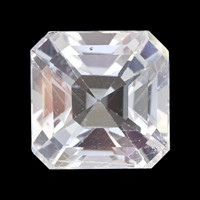
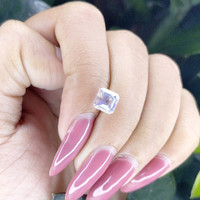
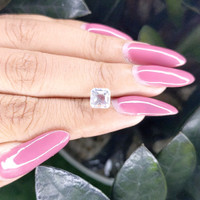
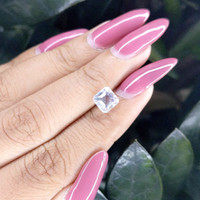
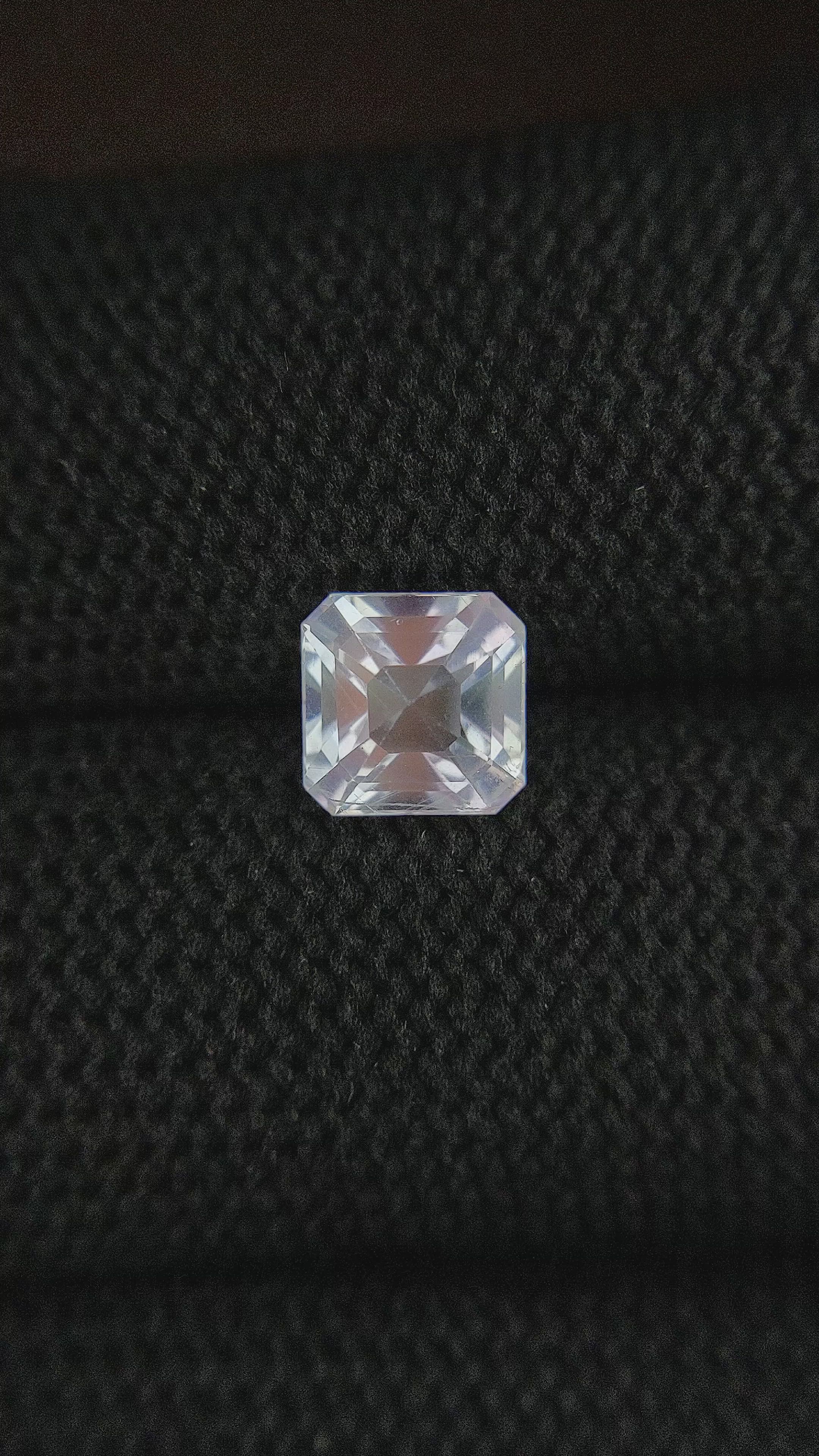
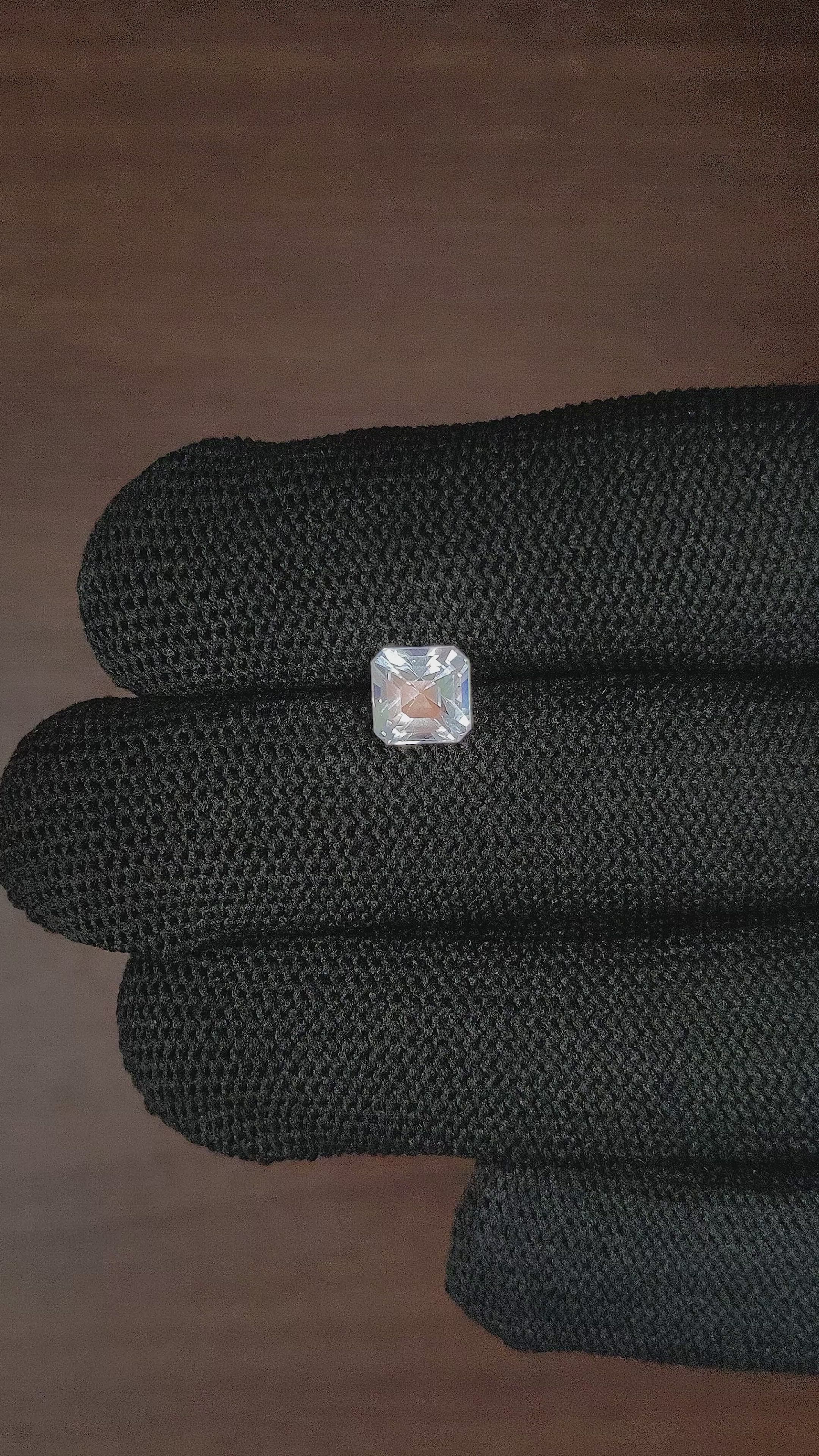
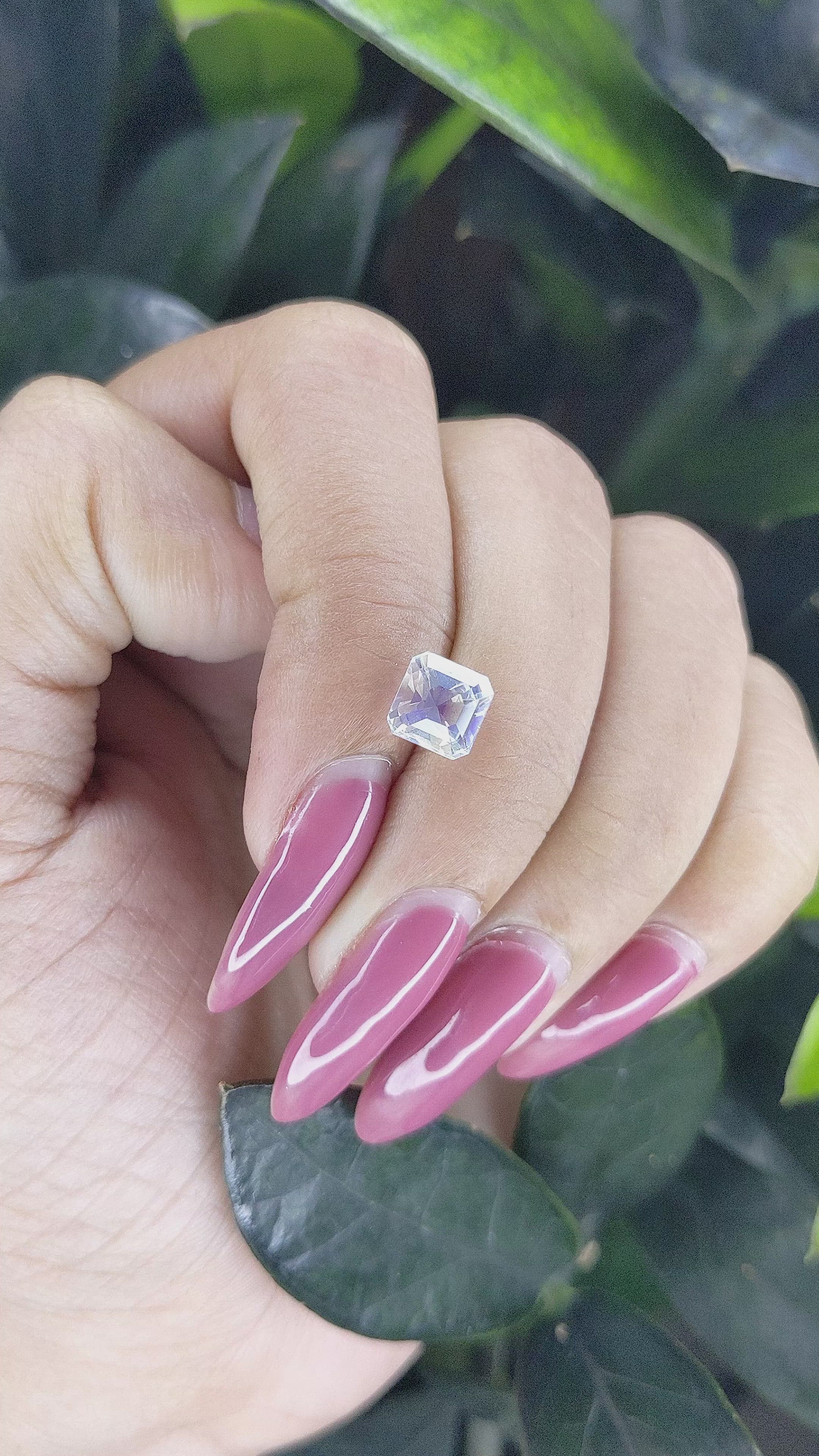
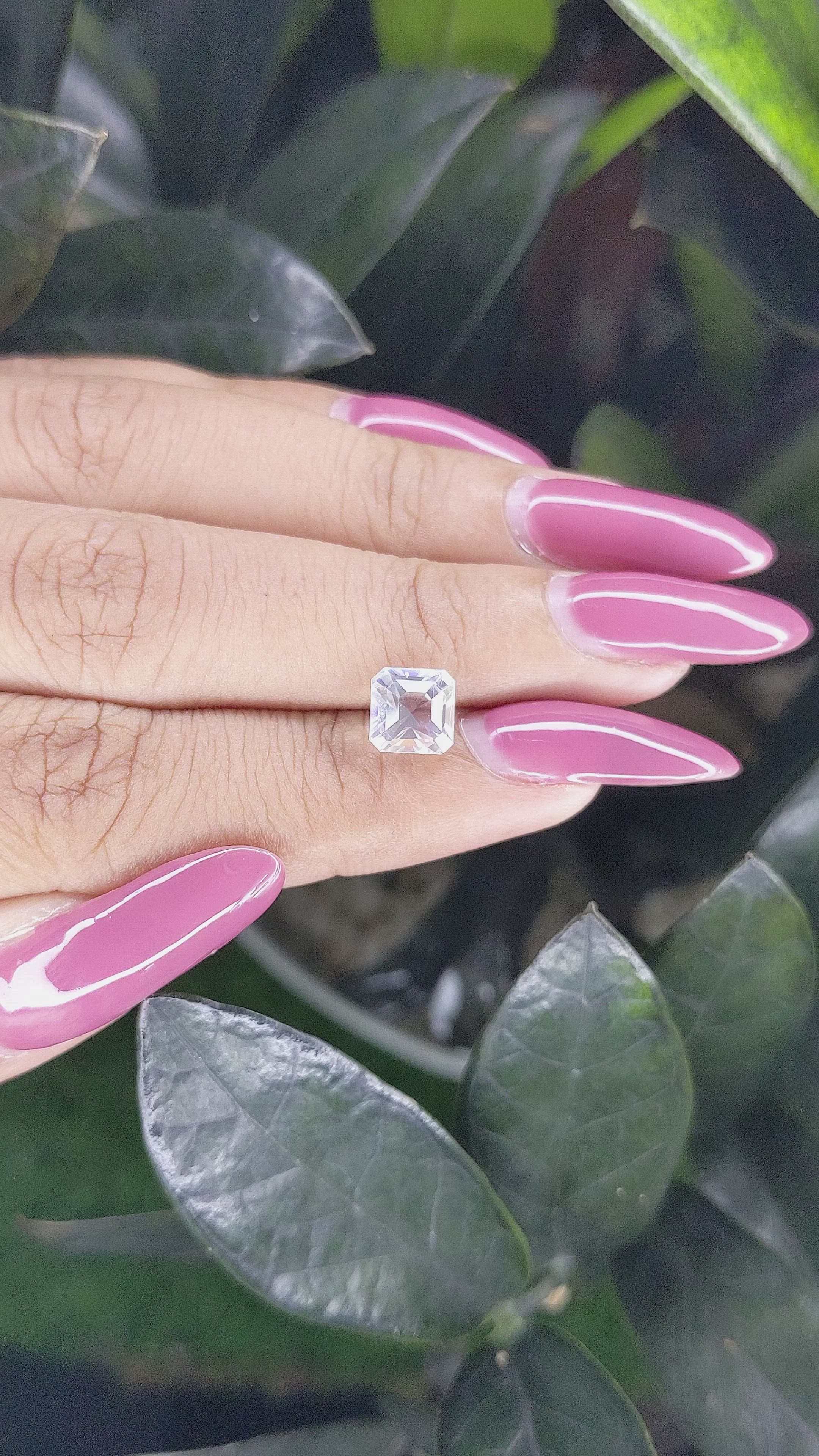

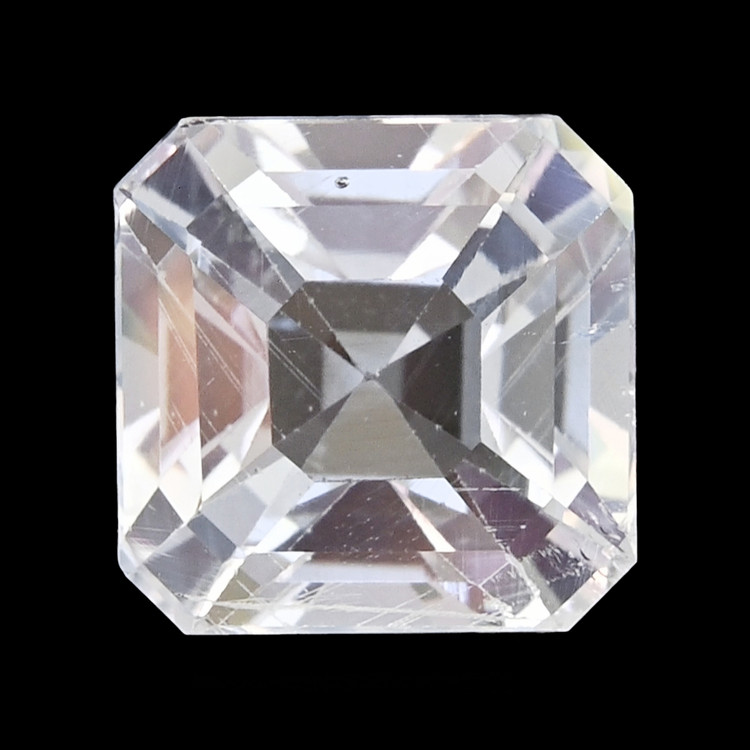
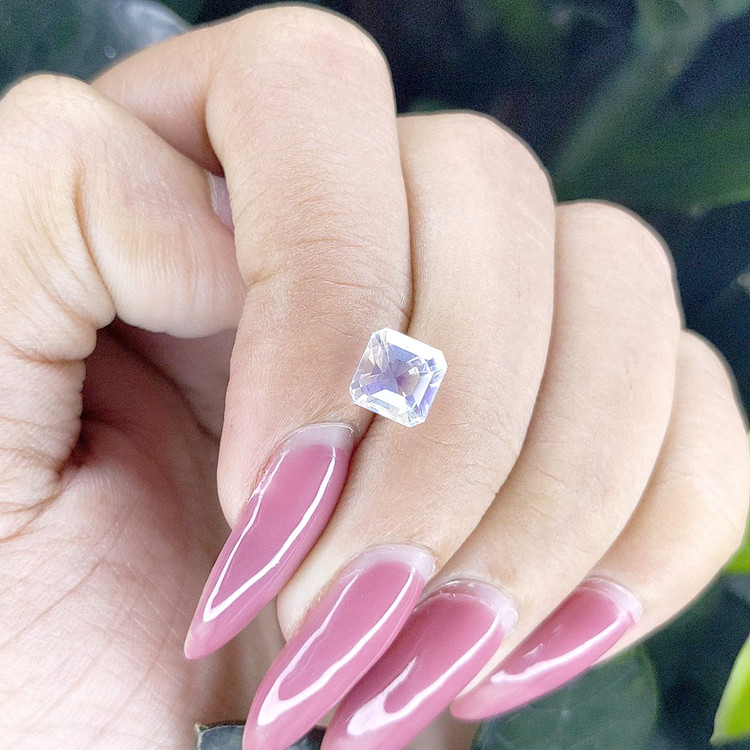
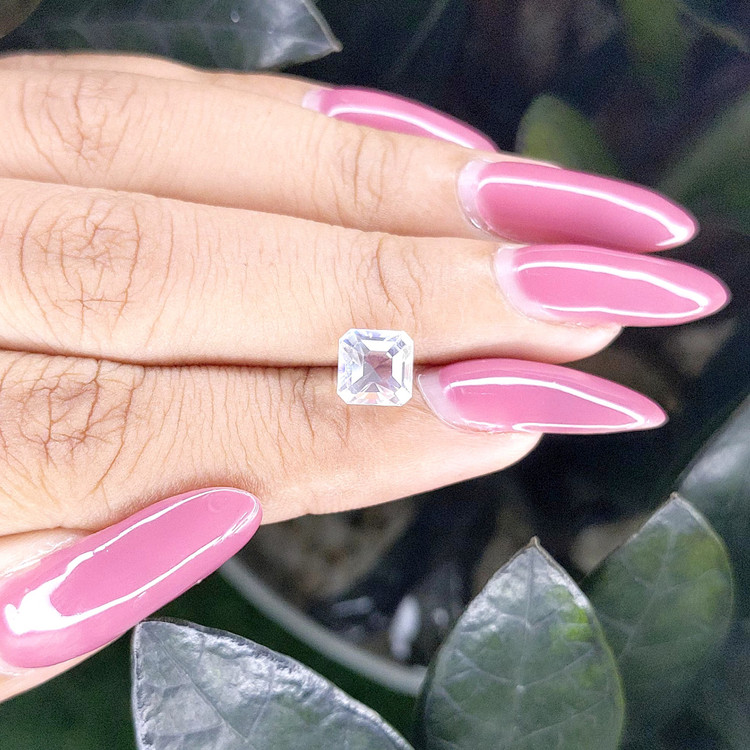
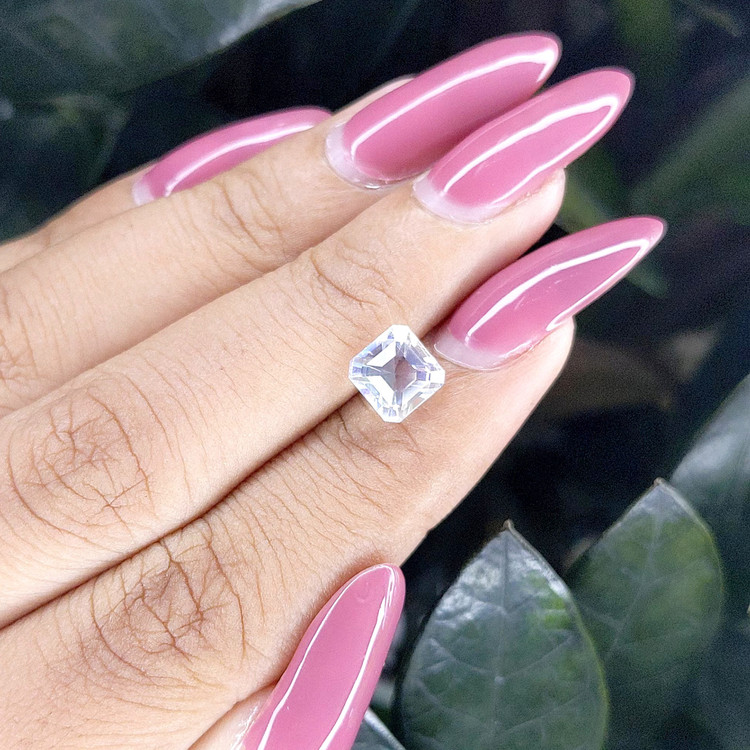

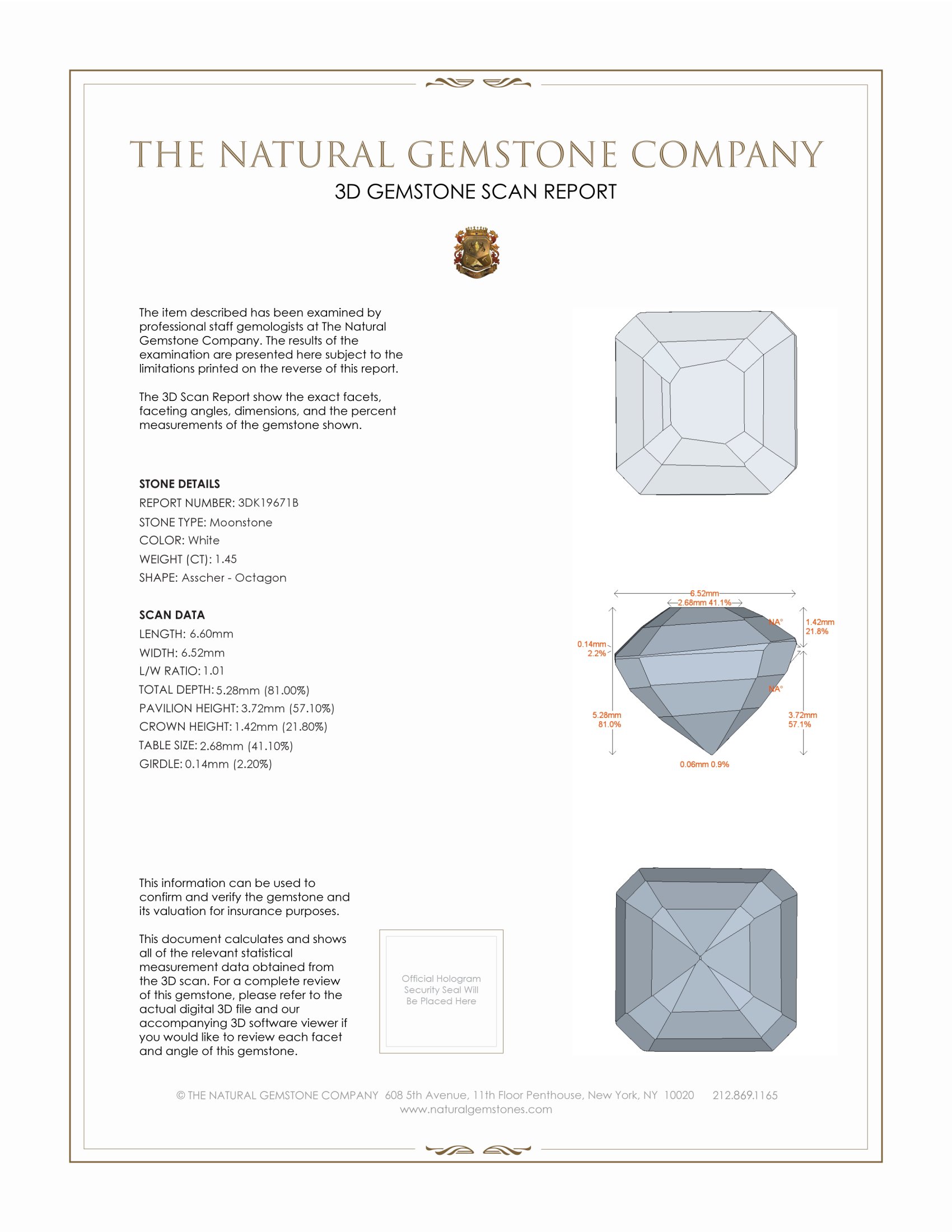
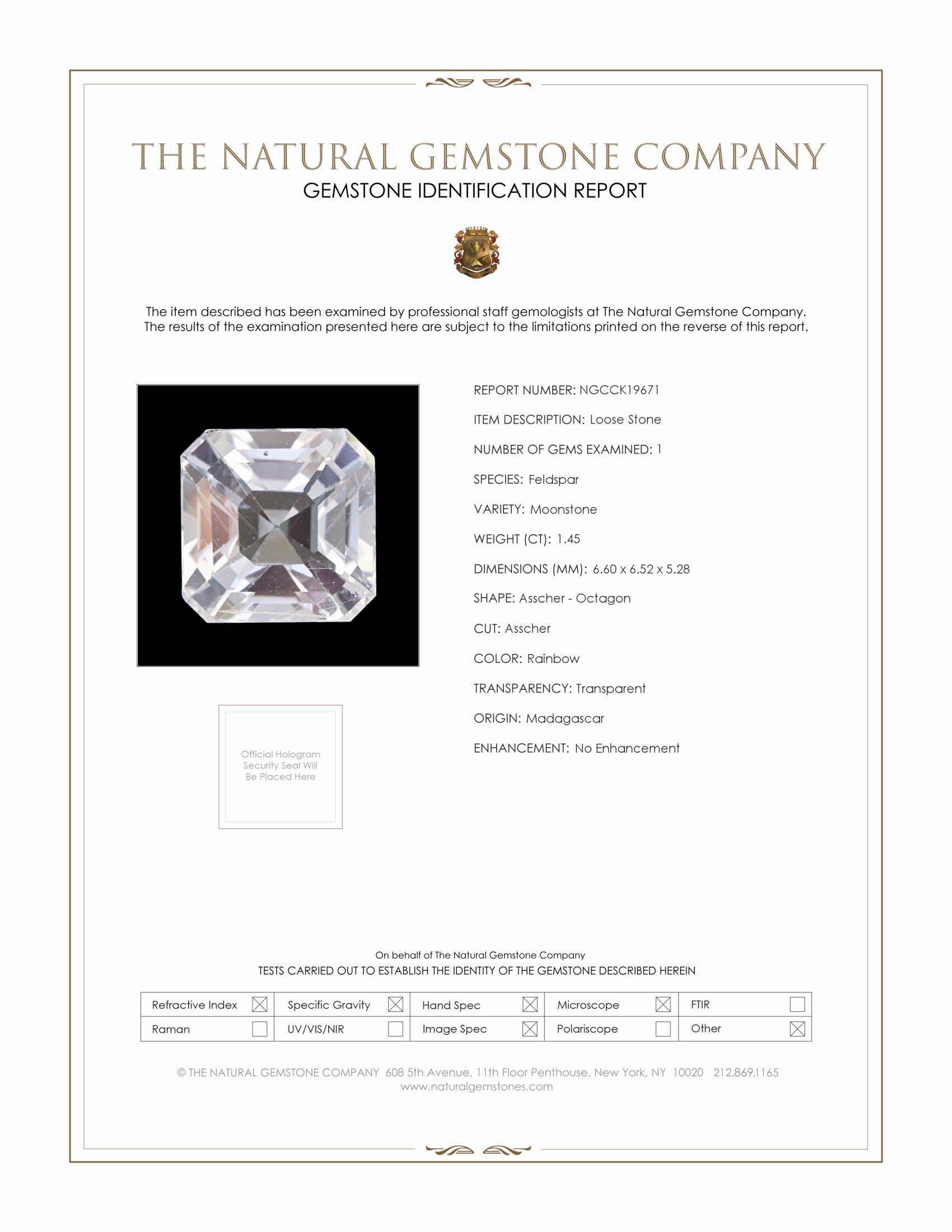
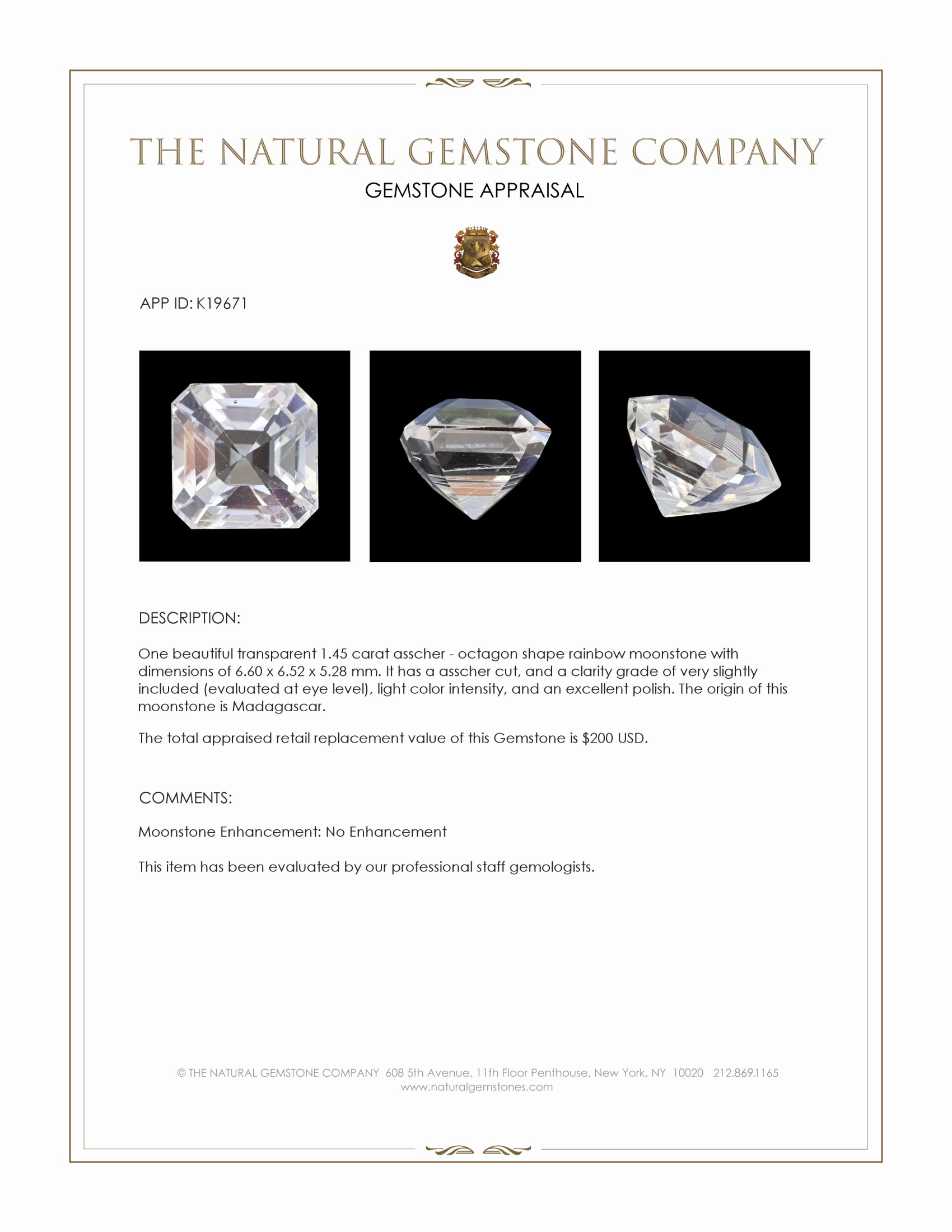
1.45 Ct. Moonstone from Madagascar
This loose stone ships by Apr 16
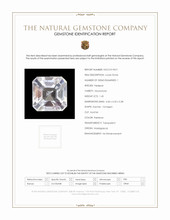
Item ID: | K19671 |
|---|---|
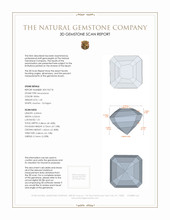
Dimensions (MM): help | Length: 6.6 Width: 6.52 Height: 5.28 |
Weight: | 1.45 Ct. |
Color: help | Rainbow |
Color intensity: help | Light |
Clarity: help | Very Slightly Included |
Shape: help | Asscher - Octagon |
Cut: | Asscher |
Cutting style: | Faceted |
Enhancements: help | No Enhancement |
Origin: help | Madagascar |
Per carat price: help | $138 |
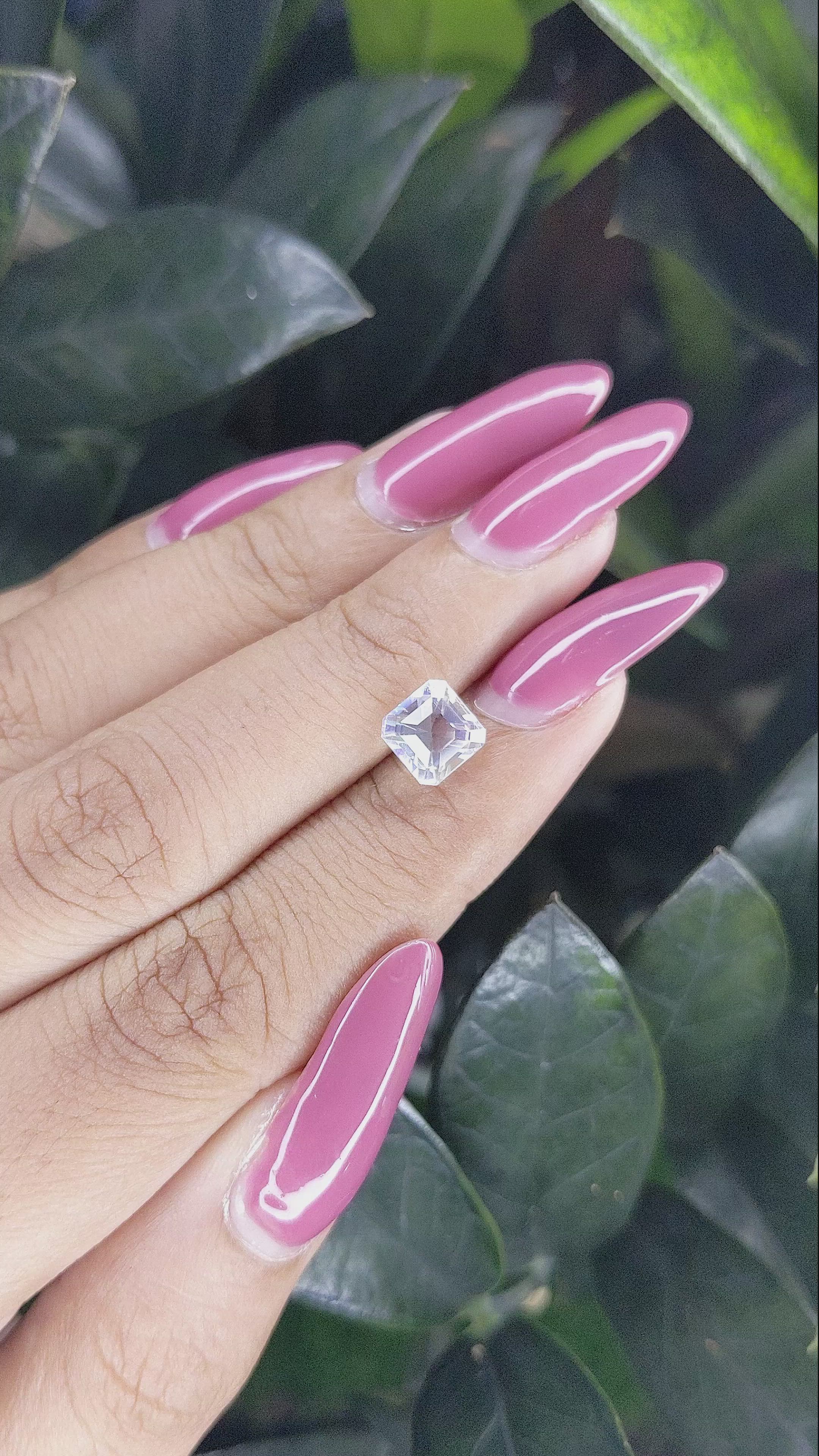
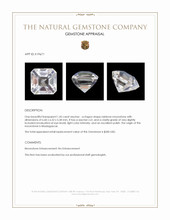
This transparent 1.45 carat asscher octagon rainbow moonstone from Madagascar represents a deliberate marriage of gemological precision and artisanal faceting, offered by The Natural Gemstone Company. The stone measures 6.60 x 6.52 x 5.28 mm, and carries an asscher cut executed to highlight both crystalline purity and internal optical phenomena. The asscher octagon form is a step cut with concentric square facets and truncated corners, a geometry that yields strong directional light return and a calm, architectural play of light. Clarity is graded very slightly included when evaluated at eye level, a condition that preserves excellent transparency while allowing minute internal features to enhance the stone character. Color intensity is light, an attribute that provides a neutral body ground ideal for the rainbow adularescence to manifest without overwhelming the face up appearance. The facet junctions and overall surface exhibit an excellent polish, and the gem is supplied untreated, with no enhancement, preserving its natural optical properties and structural integrity.
From a faceting and light performance perspective this asscher treatment of a rainbow moonstone is executed to balance facet geometry with the unique lamellar microstructure that produces adularescence. The asscher cut uses parallel step facets on both crown and pavilion, creating a series of reflective planes that act as mirrors for the interference colors generated by thin, alternating layers within the feldspar matrix. Light entering the flat table is channeled into these steps and returned as planar flashes rather than scintillating points, so the face up presentation reads as layered, spectral bands that shift with viewing angle. The octagonal outline tightens the optical axis, producing a concentrated, near symmetrical distribution of rainbow shimmer when oriented correctly. This controlled distribution is especially effective in a stone with light body color, where the absence of strong background hue permits blue violet and rose gold spectral components to be observed cleanly against the transparent field.
Clarity and internal structure are key to both value and personality in moonstone, and this specimen balances those aspects with collector oriented refinement. The very slightly included grade at eye level indicates inclusions are minor and not disruptive to visual purity, and they often take the form of submicroscopic platelets and thin exsolution lamellae that are responsible for the desired interference effects. These internal features do not compromise toughness, and the excellent polish ensures facet surfaces and junctions are crisp, allowing unobstructed light transmission. Notably the stone displays a relatively deep profile, with the pavilion depth measured at 5.28 mm against an average girth of 6.56 mm, producing a depth to average diameter ratio of approximately 80.5 percent, a proportion selected to intensify internal interference and give the rainbow flashes a strong three dimensional presence when examined face up or in motion. This depth is a considered facetting decision rather than an incidental outcome, and it emphasizes the vertical depth of color and sheen that discriminating collectors seek.
For the high end collection this asscher octagon rainbow moonstone is versatile in both display and wearable contexts. The asscher cut conveys a refined, architectural aesthetic well suited to museum quality trays and precision mountings, and the measured dimensions make it adaptable to bespoke rings where a deep pavilion can be accommodated without sacrificing setting security. Recommended settings include a low bezel for protective exhibition of the corners and a four prong layout aligned to the principal facet axes to preserve the optical orientation that yields peak adularescent response. The untreated origin from Madagascar is significant, as regional crystallization conditions produce feldspar with clean transparency and consistent lamellar spacing, characteristics that the cutter exploited with controlled step facet placement. The natural provenance, combined with no enhancement and excellent polish, makes this specimen an ideal acquisition for connoisseurs who value both scientific veracity and aesthetic subtlety. For further technical data, imaging at multiple angles, or to discuss bespoke mounting and provenance documentation, please contact The Natural Gemstone Company, where we can provide detailed reports and handling recommendations tailored to the needs of advanced collectors.


