
- Stone13
- Reports3
-marquise-blueflash-moonstone-2.2000-cts-k21442-1.jpg?d=200x200&v=20260127105408)
-marquise-blueflash-moonstone-2.2000-cts-k21442-lifestyleimage-1.jpg?d=200x200&v=20260130030224)
-marquise-blueflash-moonstone-2.2000-cts-k21442-lifestyleimage-2.jpg?d=200x200&v=20260130030224)
-marquise-blueflash-moonstone-2.2000-cts-k21442-lifestyleimage-3.jpg?d=200x200&v=20260130030224)

-marquise-blueflash-moonstone-2.2000-cts-k21442-1.jpg?d=750x750&s=ngc&v=20260127105408)
-marquise-blueflash-moonstone-2.2000-cts-k21442-lifestyleimage-1.jpg?d=750x750&s=ngc&v=20260130030224)
-marquise-blueflash-moonstone-2.2000-cts-k21442-lifestyleimage-2.jpg?d=750x750&s=ngc&v=20260130030224)
-marquise-blueflash-moonstone-2.2000-cts-k21442-lifestyleimage-3.jpg?d=750x750&s=ngc&v=20260130030224)

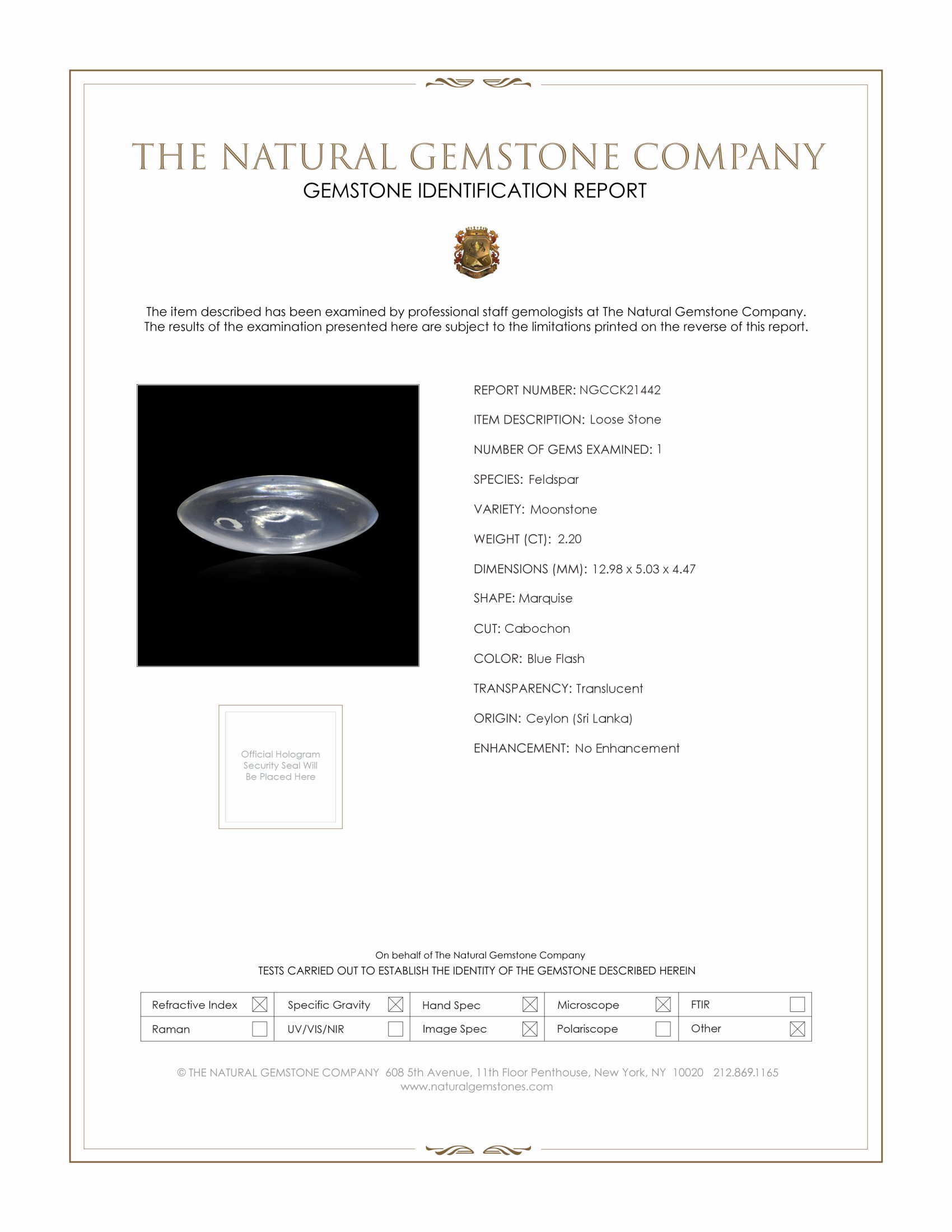
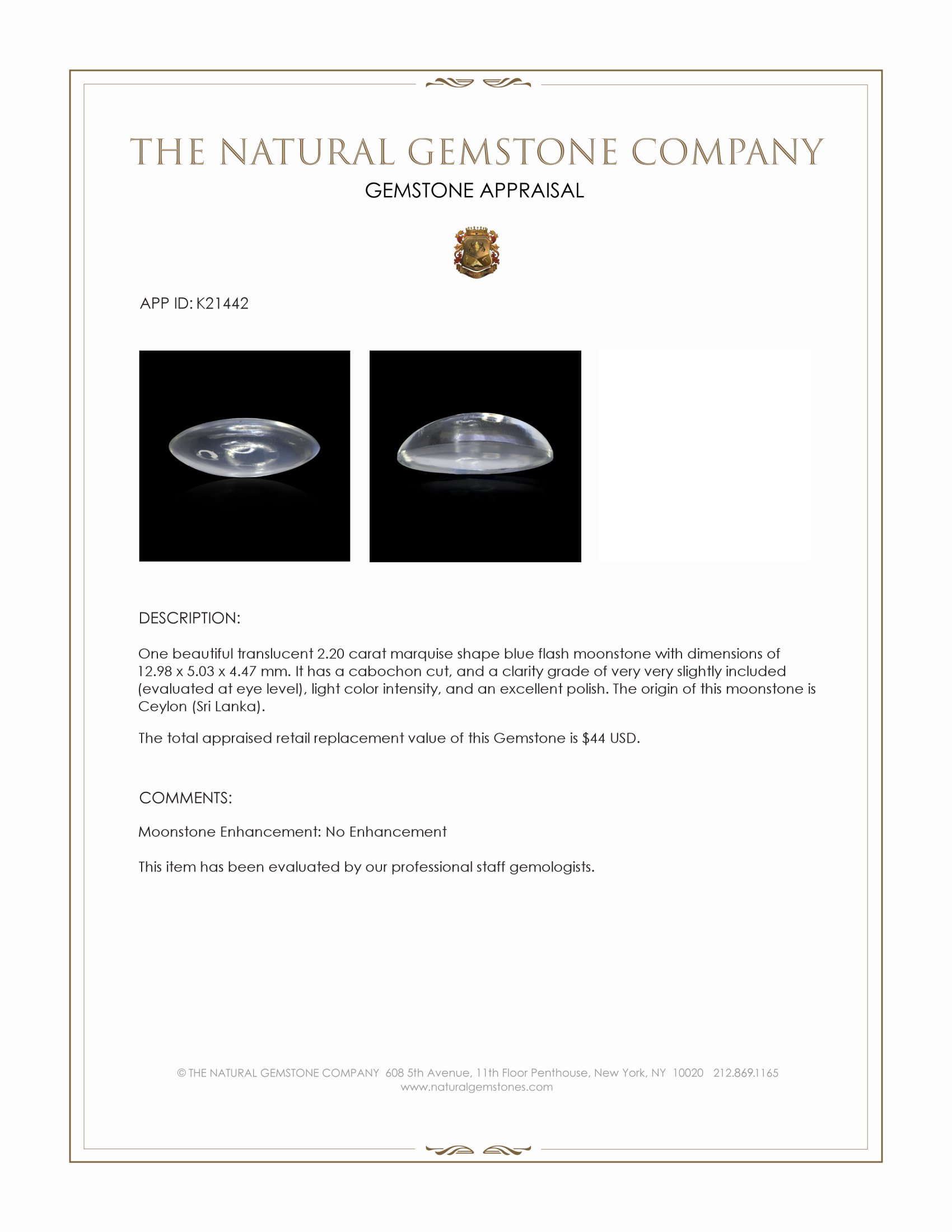
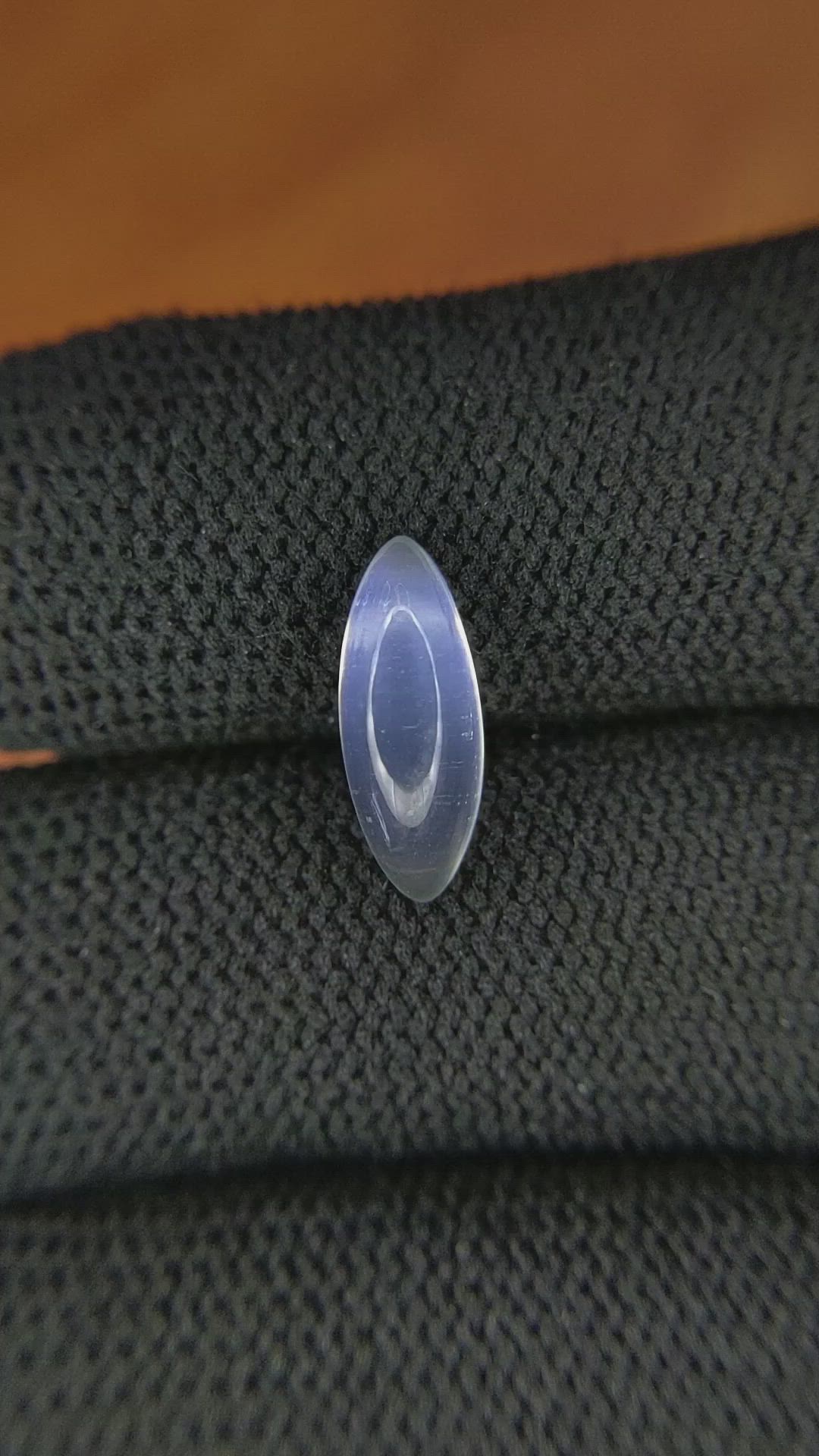
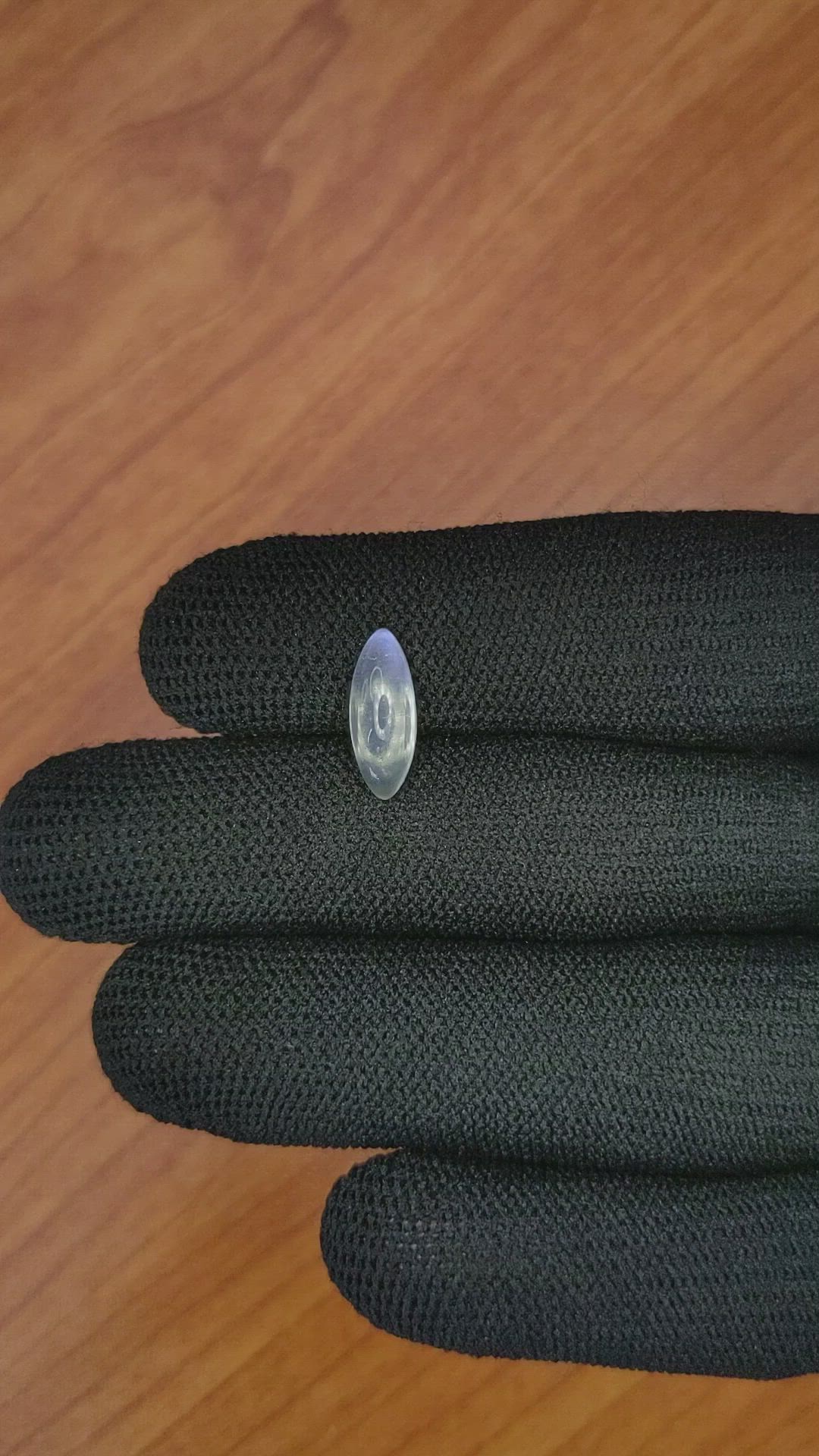
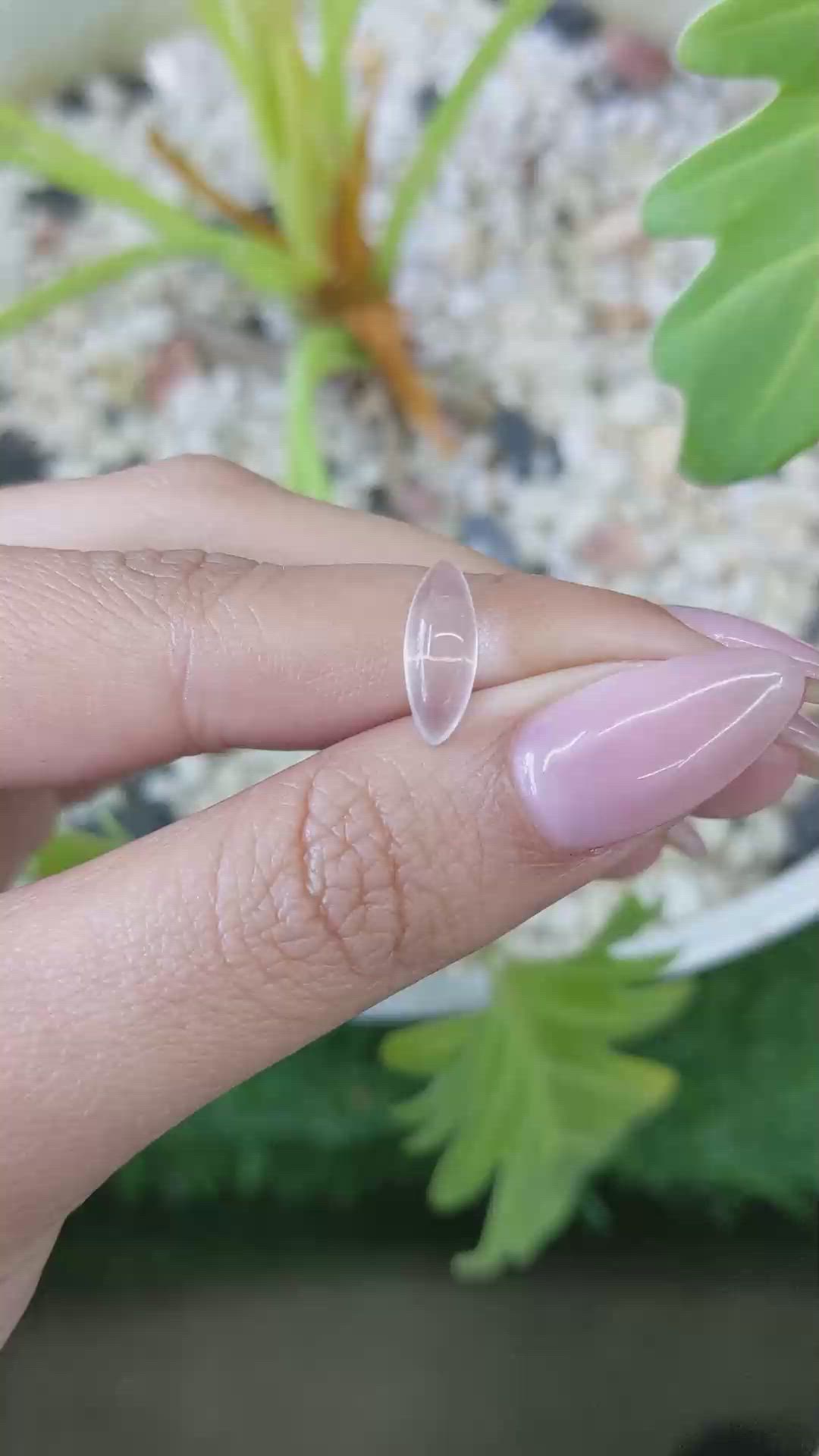
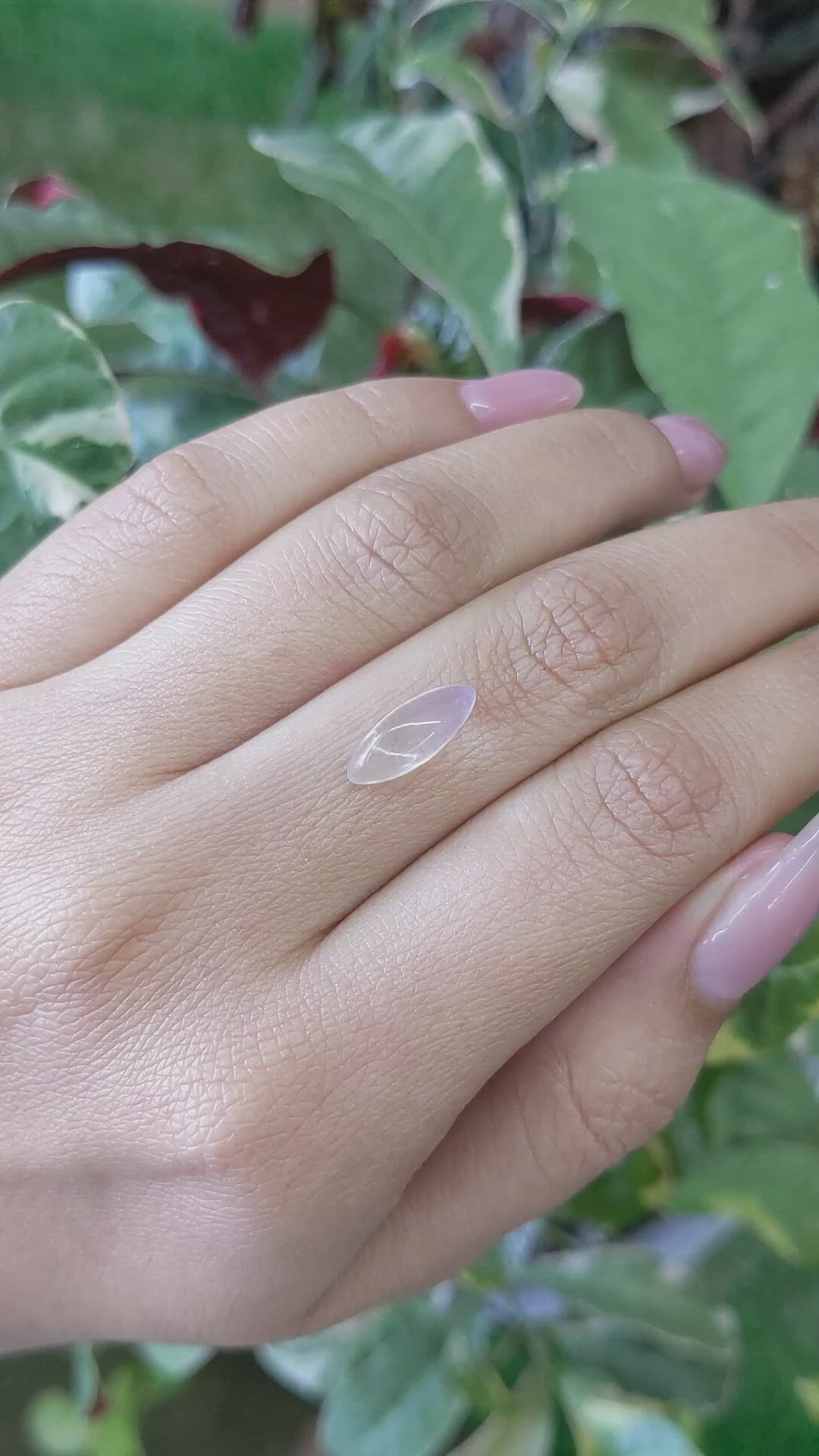
2.20 Ct. Cabochon Moonstone from Ceylon (Sri Lanka)
This loose stone ships by Apr 16
Item ID: | K21442 |
|---|---|
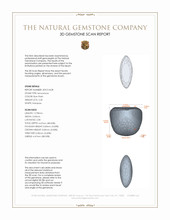
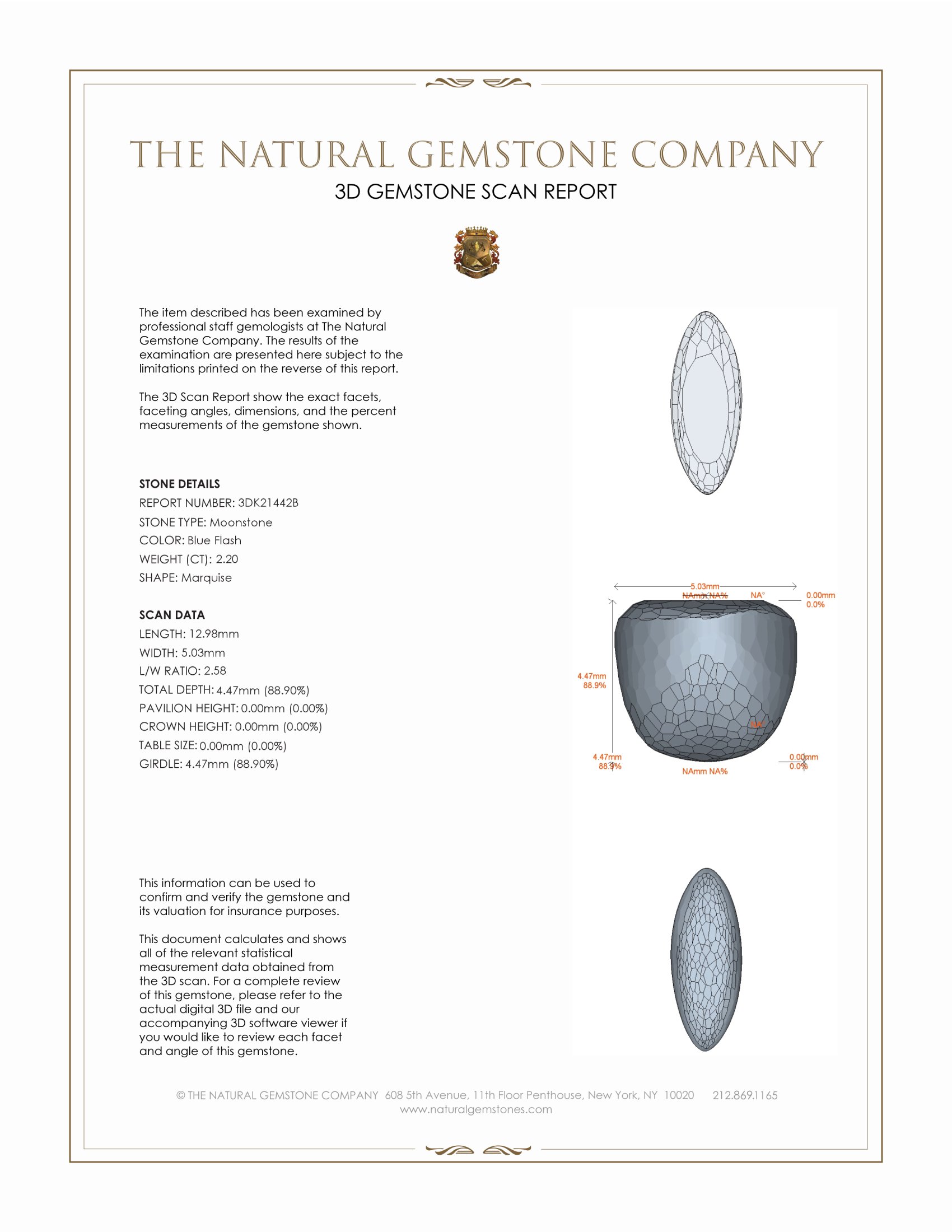
Dimensions (MM): help | Length: 12.98 Width: 5.03 Height: 4.47 |
Weight: | 2.20 Ct. |
Color: help | Blue Flash |
Color intensity: help | Light |
Clarity: help | Very Very Slightly Included |
Shape: help | Marquise |
Cut: | Cabochon |
Cutting style: | Cabochon |
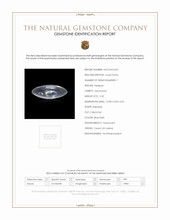
Enhancements: help | No Enhancement |
Origin: help | Ceylon (Sri Lanka) |
Per carat price: help | $20 |
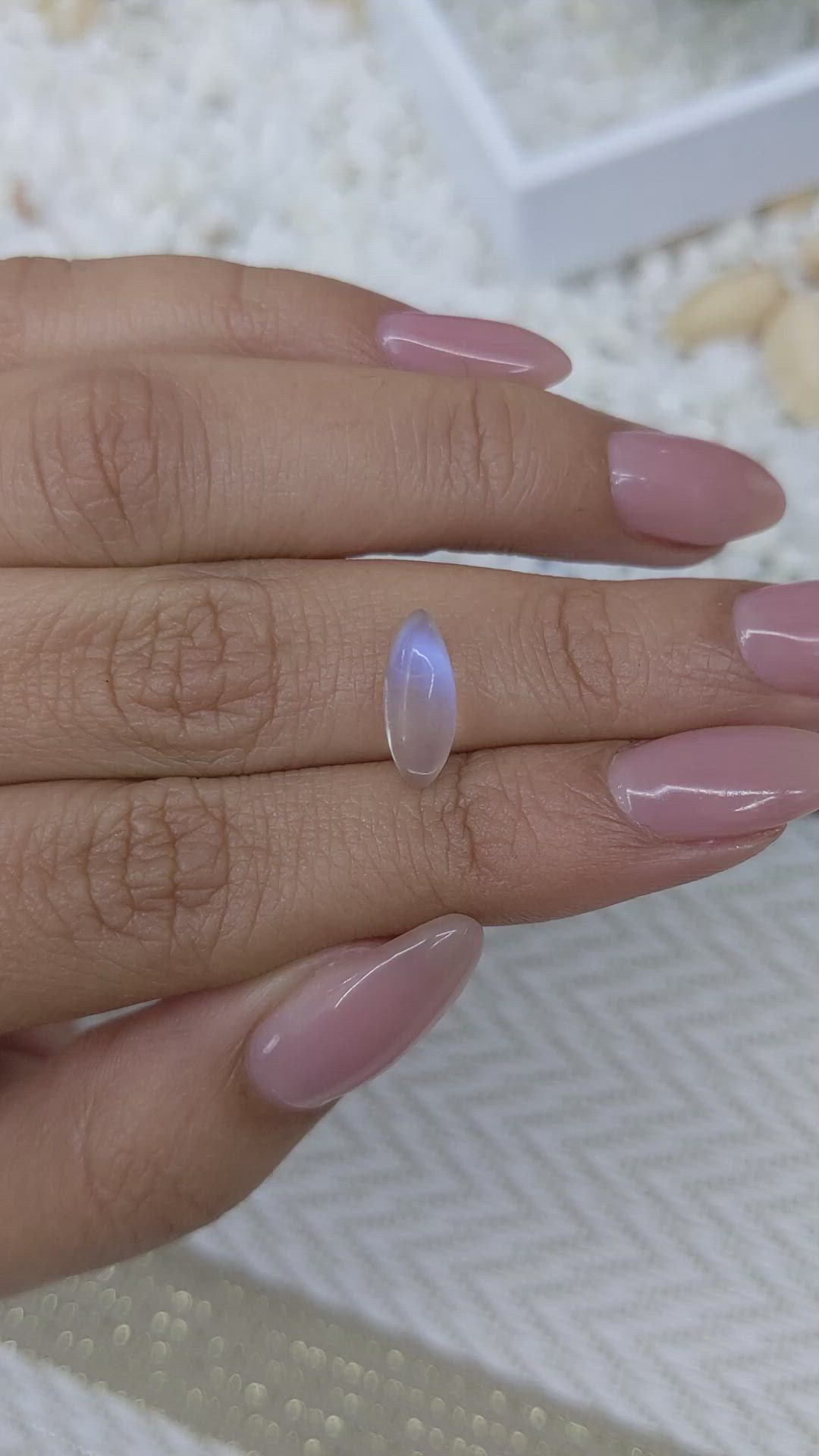
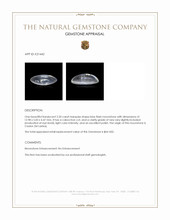
This specimen is a translucent blue flash moonstone weighing 2.20 carats, presented in a marquise shape with precise dimensions of 12.98 by 5.03 by 4.47 millimeters. The gem has been fashioned as a cabochon to maximize its adularescence, and it exhibits a clarity grade described as very very slightly included when evaluated at eye level. Color intensity is light, which allows the characteristic blue sheen to play across the surface without being obscured by strong body color. The polish is excellent, and there are no enhancements recorded for this piece. Origin is Ceylon Sri Lanka, a region with a long history of producing fine feldspar gemstones. The Natural Gemstone Company presents this moonstone as an example of careful selection and skilled cutting intended to showcase the stone as it occurs in nature.
Technically, the optical phenomenon observed in this moonstone is adularescence, which produces the floating, blue flash that gives moonstone its name. The marquise cabochon shape creates a directional effect, guiding light along the length of the stone and producing a pronounced band of flash that shifts with movement. Compared with historic and famous gemstones, the adularescence in this stone is more akin to the luminous qualities admired in classical and Victorian era moonstones than to the color saturation prized in large faceted gems. For historical context, moonstones were valued by ancient cultures for their lunar association, and in European jewelry of the 19th century they were set as centerpieces to emphasize their soft glow. While not comparable in scale or fame to singular museum pieces such as the Hope Diamond, this moonstone offers a distinctive optical quality that aligns with the refined aesthetic once preferred by collectors who sought subtle light play rather than bold color dominance.
When placing this moonstone in the context of other celebrated gemstones, it is useful to compare both similarities and contrasts. The Star of India, a famous sapphire from Sri Lanka, exemplifies how origin can correlate with exceptional gem quality, and this moonstone benefits from the same geographic reputation. The Star of India is renowned for its pronounced asterism and for its historical significance, whereas the value proposition of this moonstone rests on translucence, clean eye clarity, and a coherent blue flash. In contrast with celebrated opals such as the Andamooka Opal or the Olympic Australis, which are noted for vivid play of color across multiple hues, this moonstone exhibits a single dimensional optical effect that is more restrained and ethereal. For reference, the opal classification White Opal describes common opal with a light body tone that can show play of color against a pale background. This moonstone is not an opal, however referencing White Opal clarifies that in the lighter spectrum of light reflecting gemstones, different stones achieve visual interest through distinct mechanisms, adularescence for moonstone, and play of color for opal.
In practical terms this moonstone offers specific advantages to designers and collectors who appreciate natural, unenhanced material. The cabochon cut with its excellent polish enhances presentation and wearability, and the marquise outline provides efficient use of carat weight while creating an elegant silhouette suitable for rings, pendants, or bespoke settings. The clarity grade very very slightly included at eye level indicates that the stone presents a clean appearance to the unaided eye, contributing to its aesthetic strength despite the light body color. Origin from Ceylon Sri Lanka supports provenance and traceability, while the lack of enhancement preserves the stone in its original state. The Natural Gemstone Company can provide additional information about sourcing and can arrange independent assessment on request, for clients who require formal documentation. Overall, this 2.20 carat marquise blue flash moonstone represents a measured balance between classical optical appeal and practical specifications for use in refined jewelry.


