
- Stone15
- Reports3
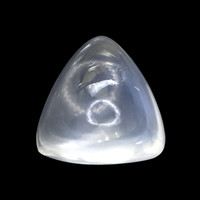
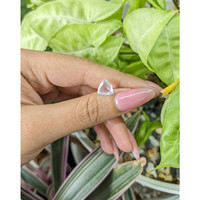
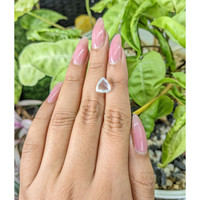
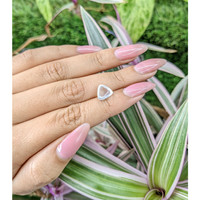
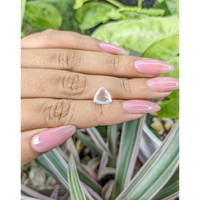
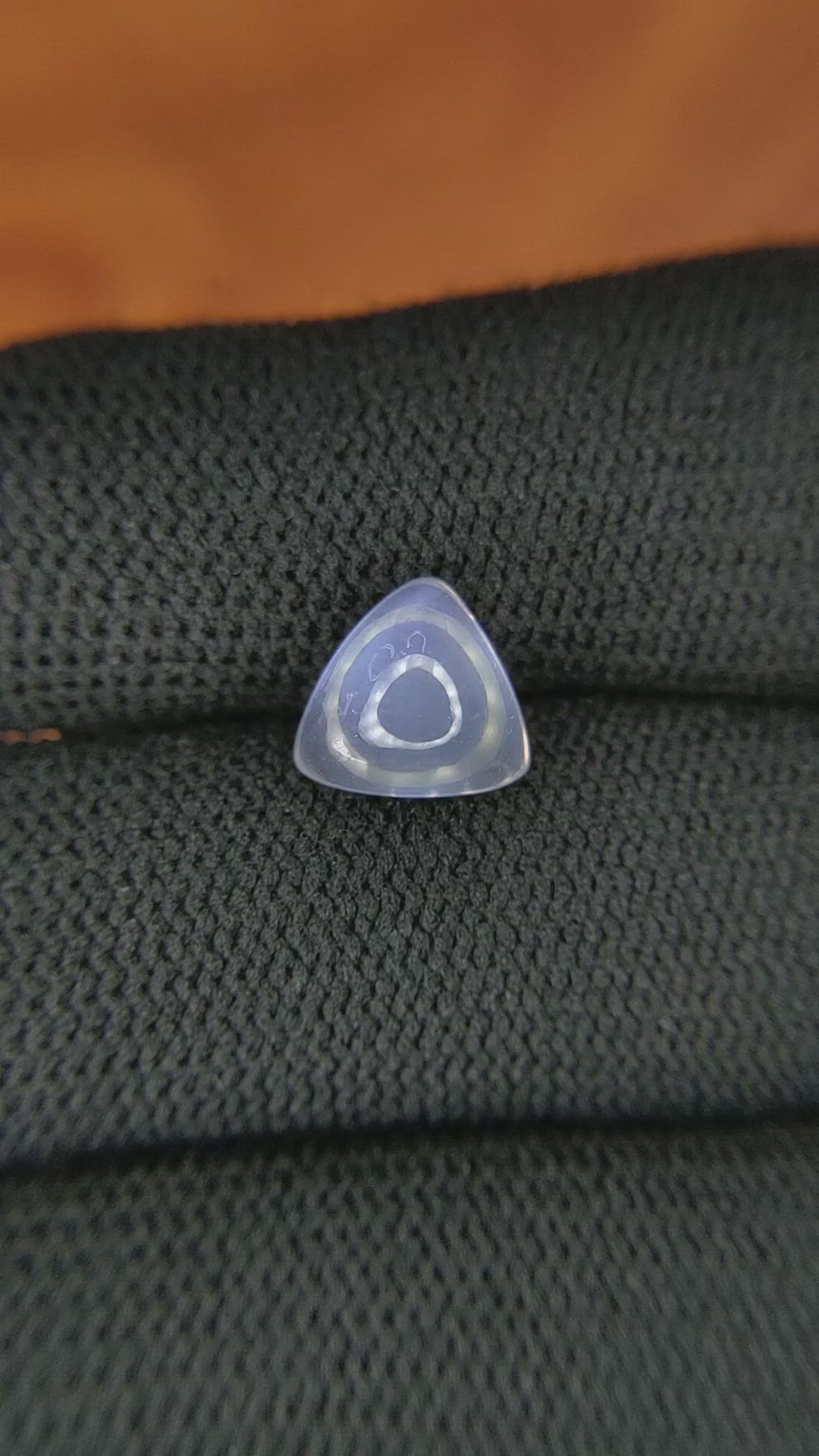
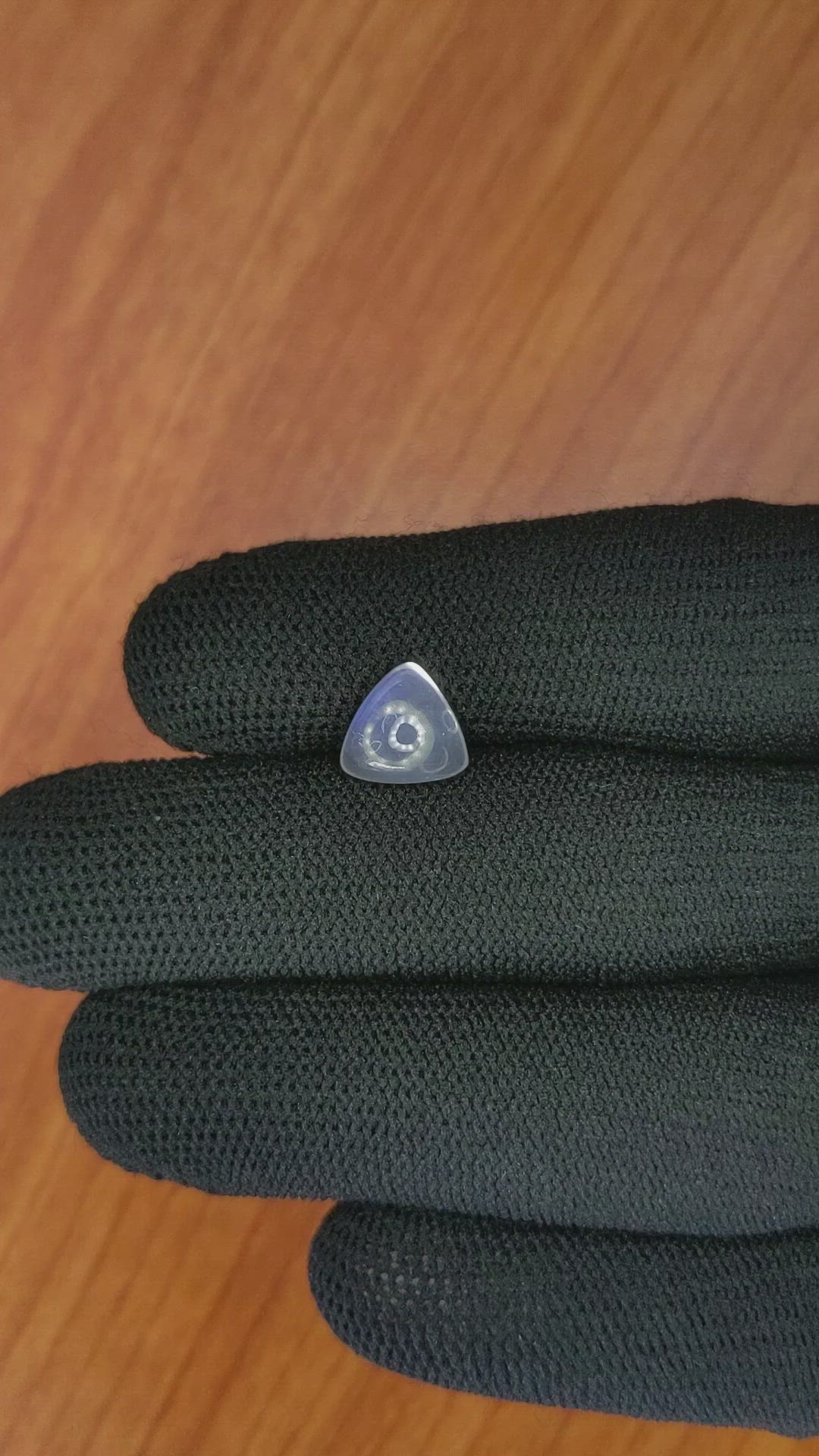
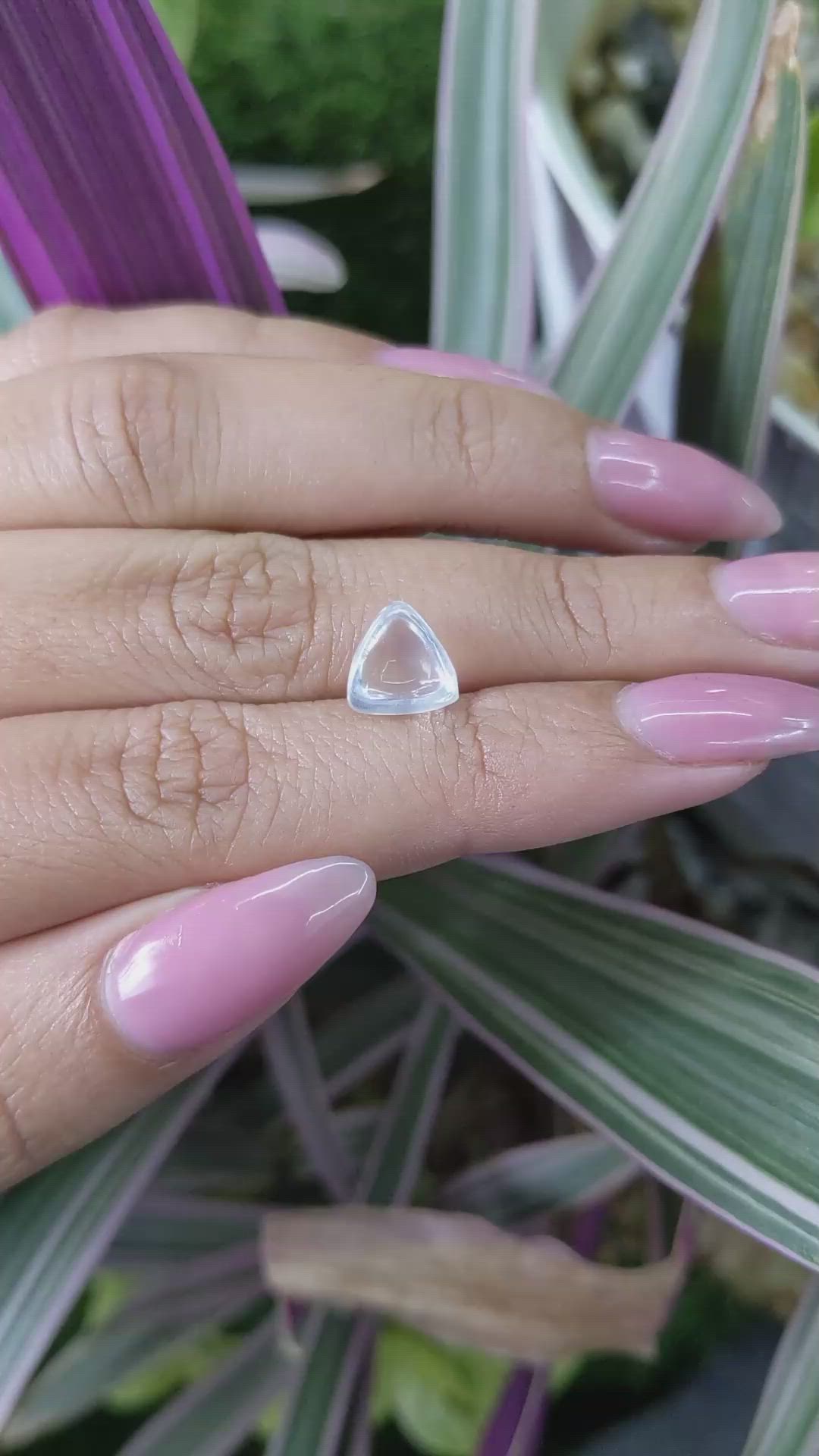

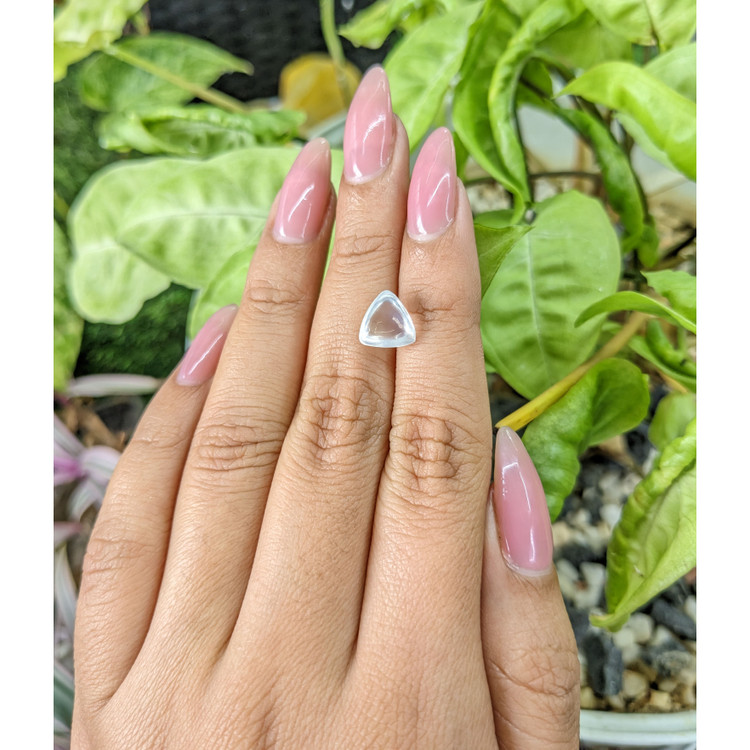
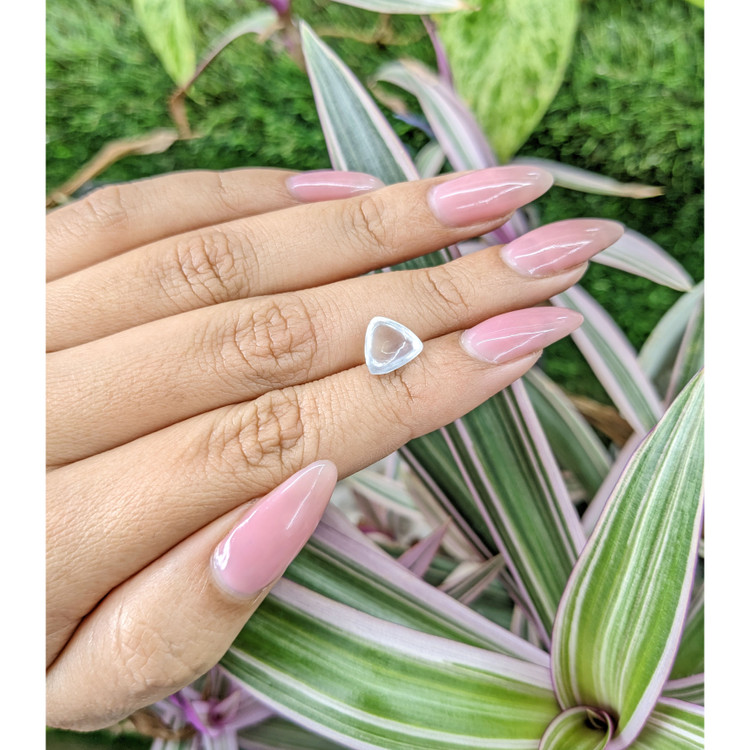
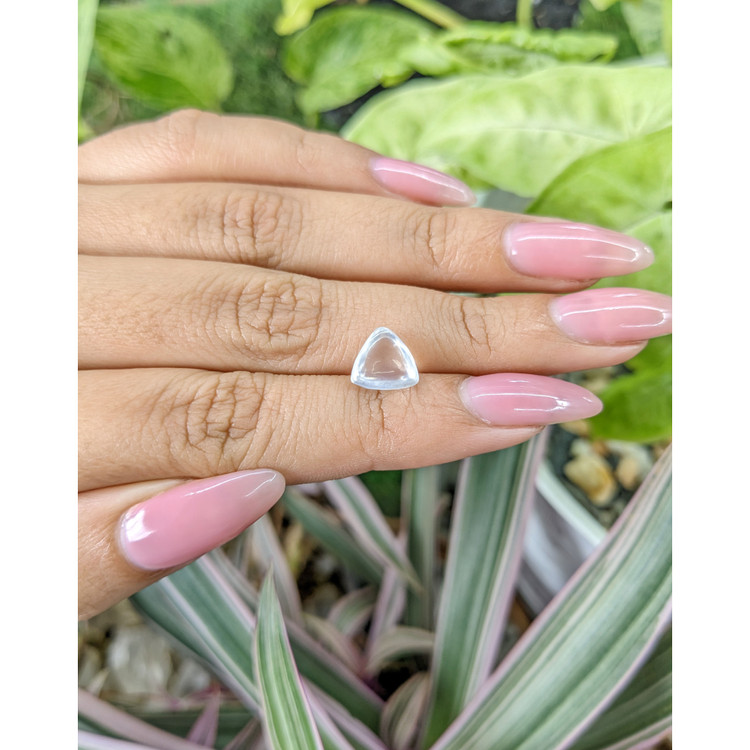

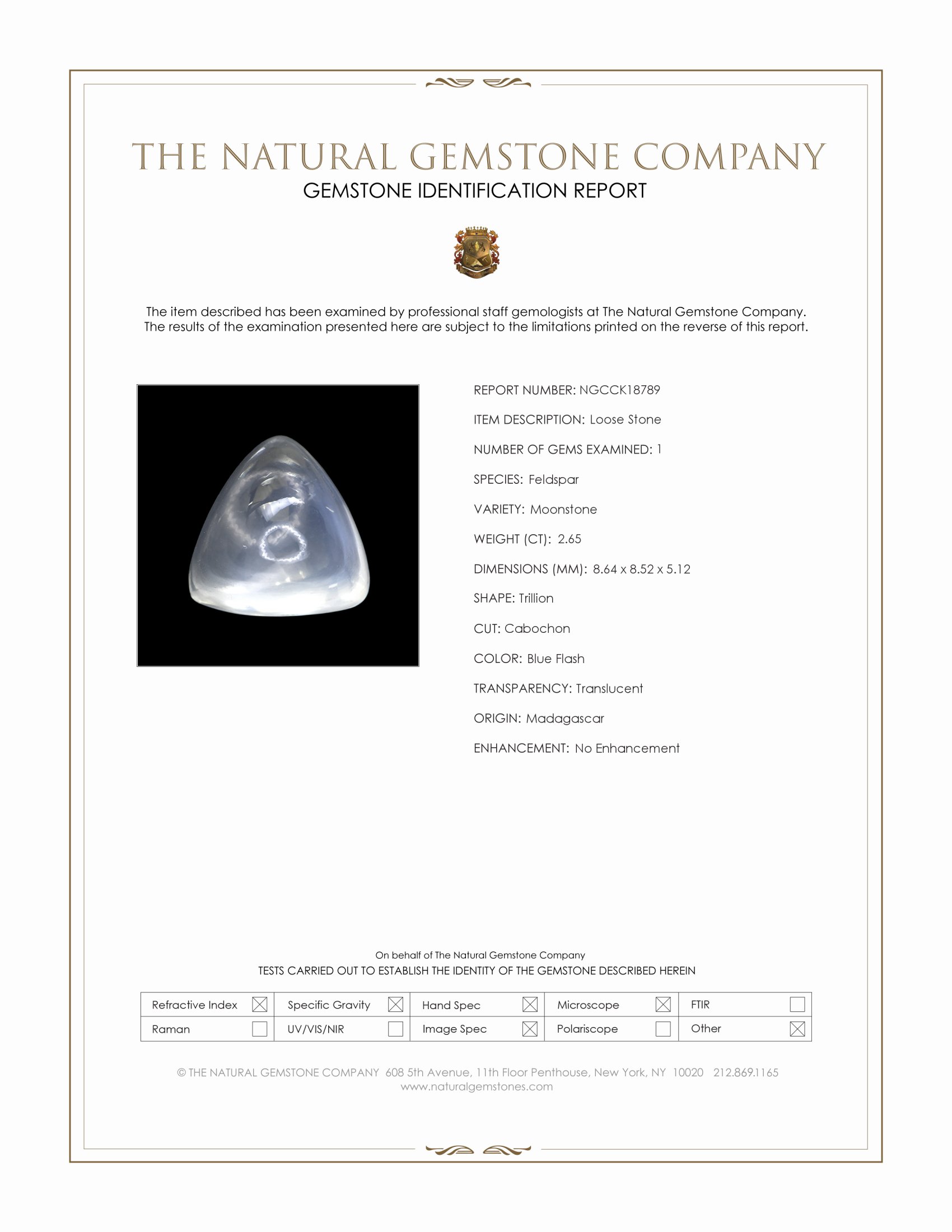
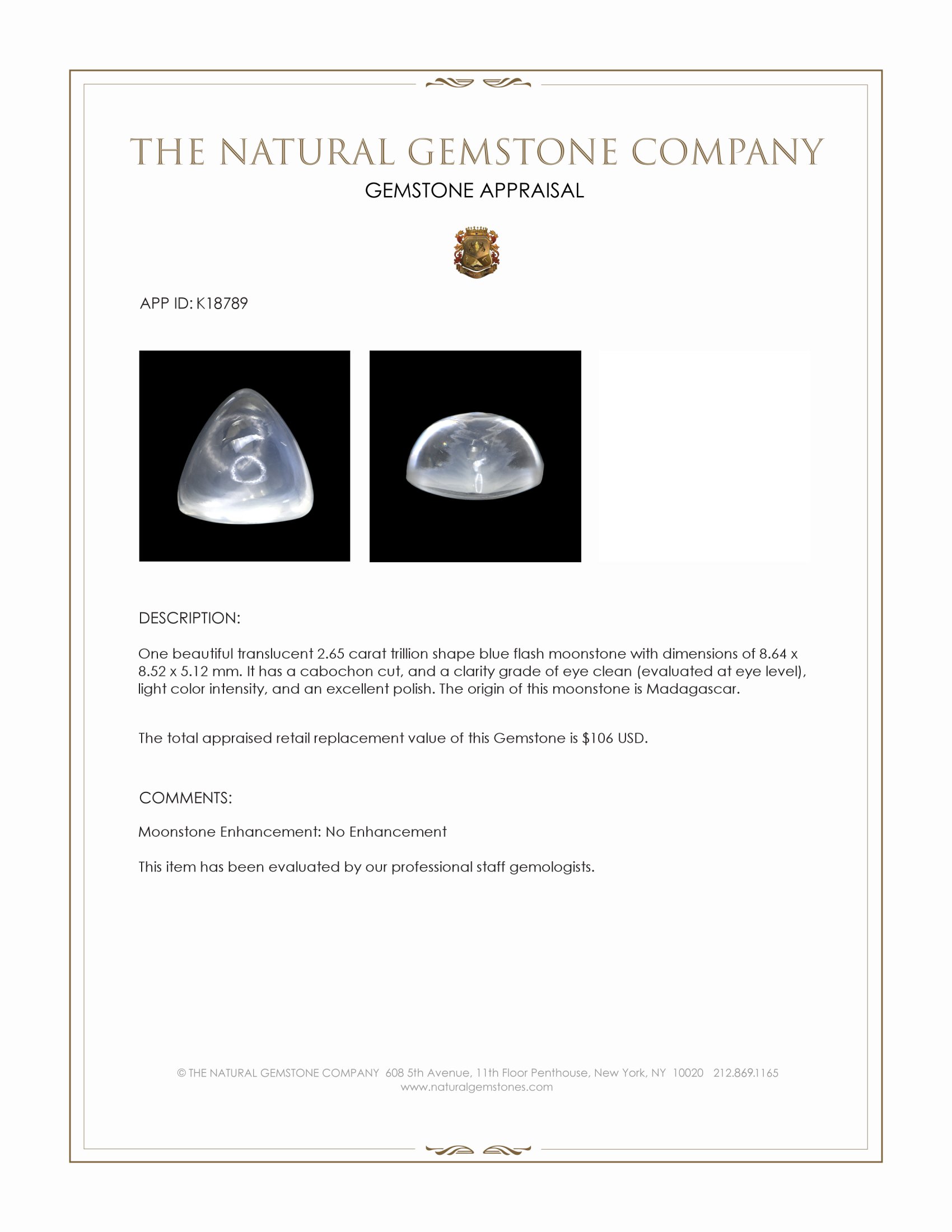
2.65 Ct. Blue Flash Cabochon Moonstone from Madagascar
This loose stone ships by Oct 29
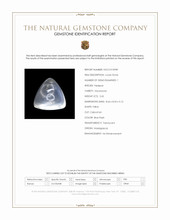
Item ID: | K18789 |
|---|---|
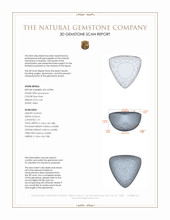
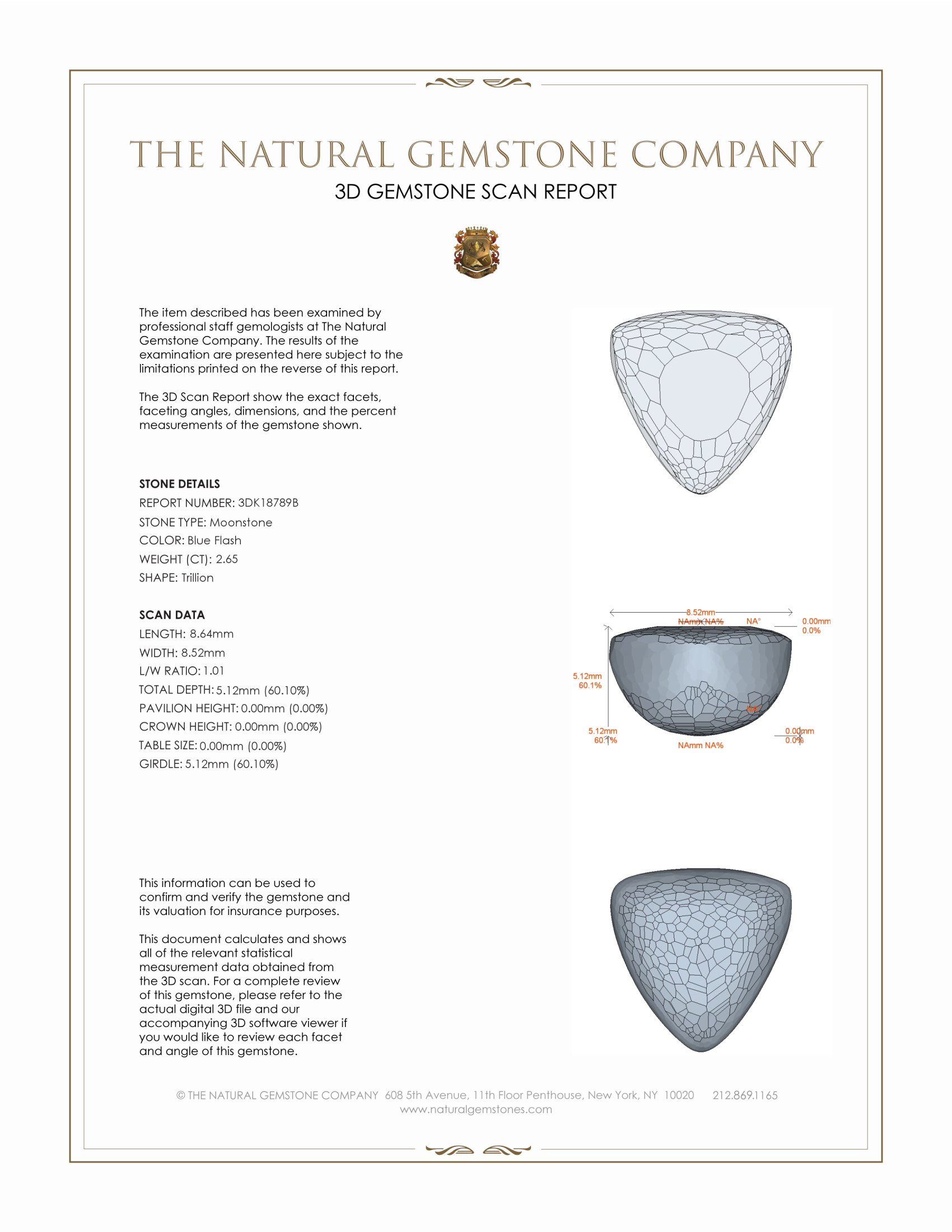
Dimensions (MM): help | Length: 8.64 Width: 8.52 Height: 5.12 |
Weight: | 2.65 Ct. |
Color: help | Blue Flash |
Color intensity: help | Light |
Clarity: help | Eye Clean |
Shape: help | Trillion |
Cut: | Cabochon |
Cutting style: | Cabochon |
Enhancements: help | No Enhancement |
Origin: help | Madagascar |
Per carat price: help | $40 |
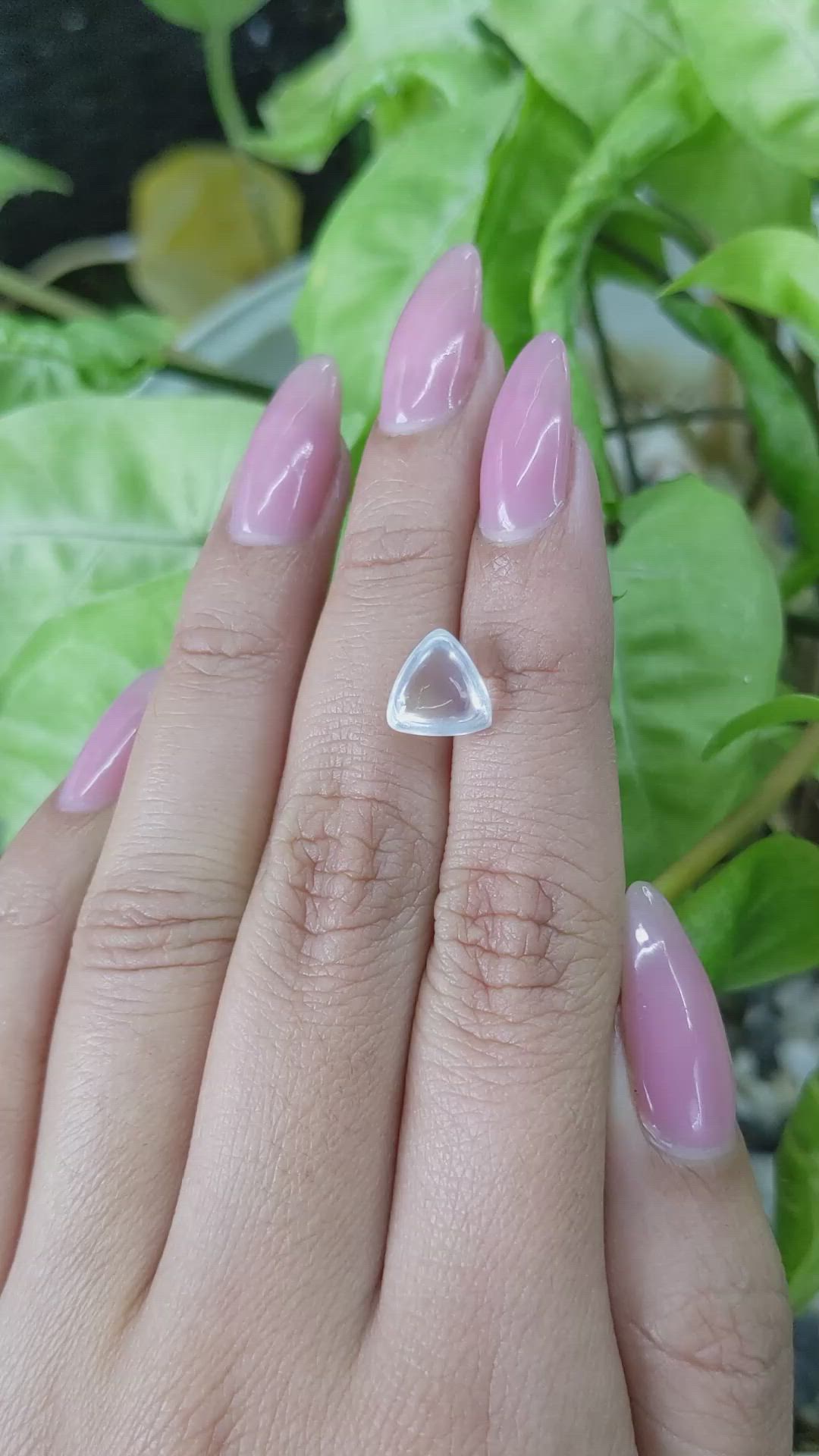
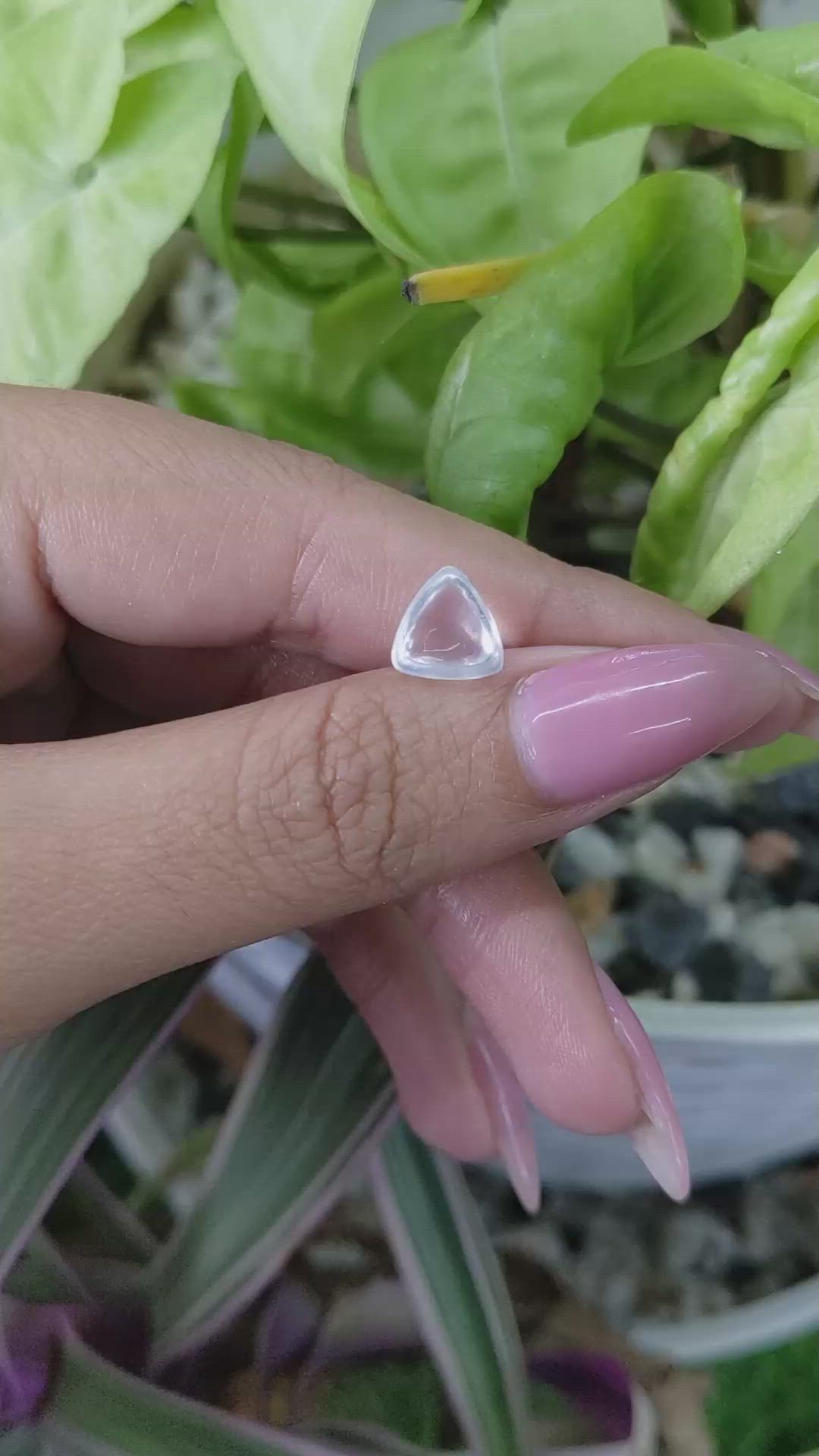
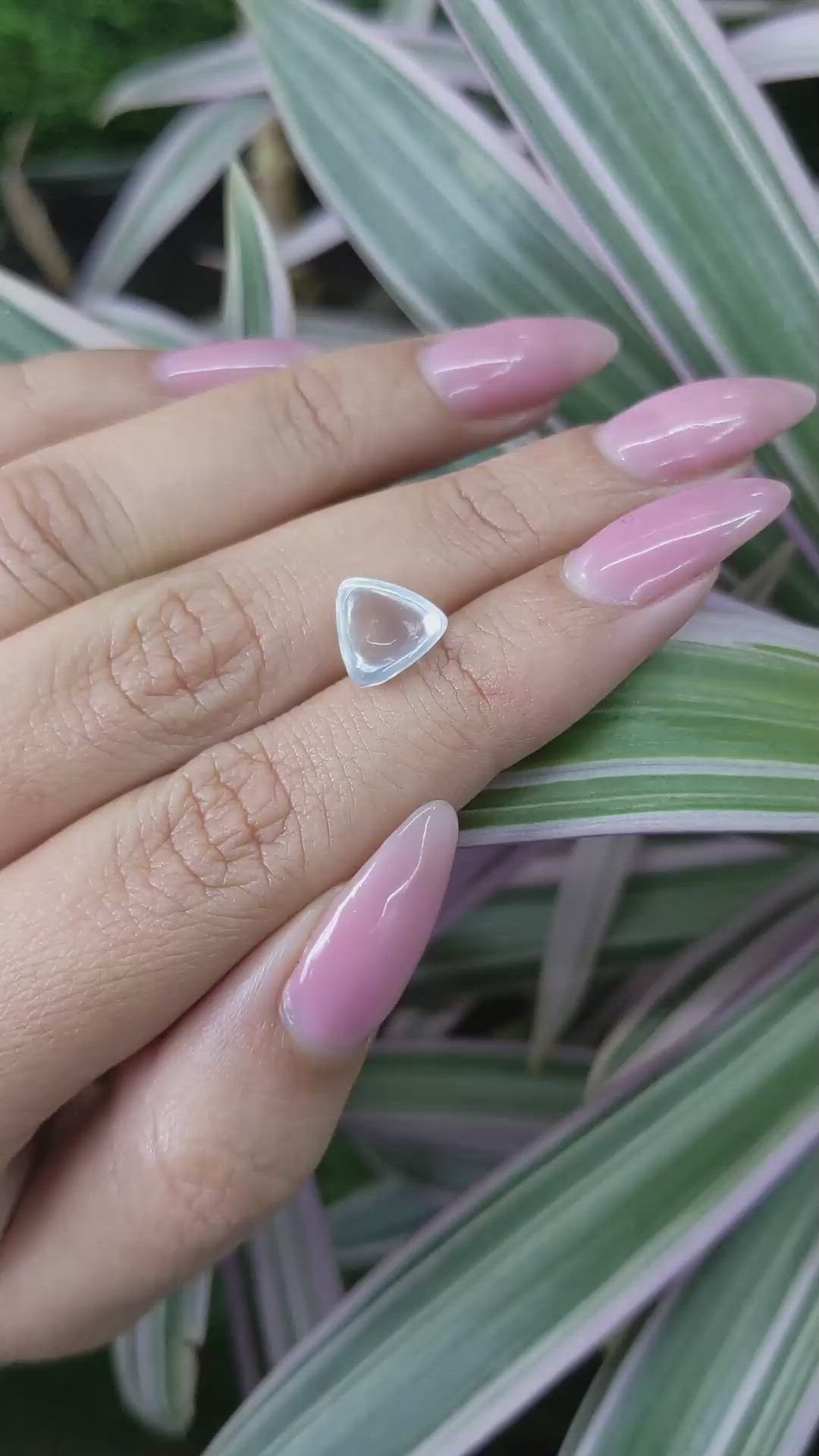
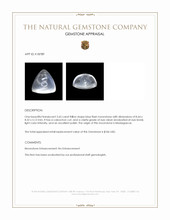
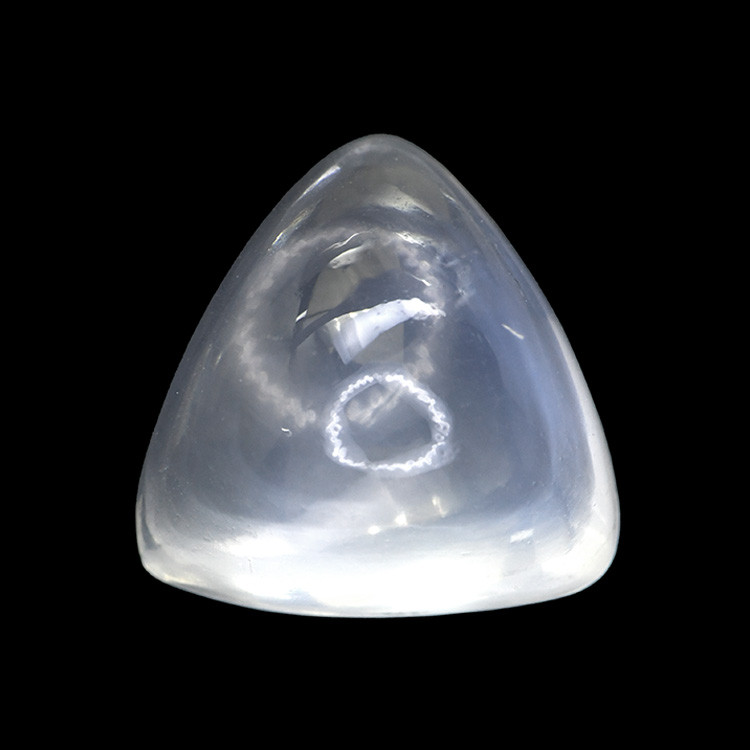
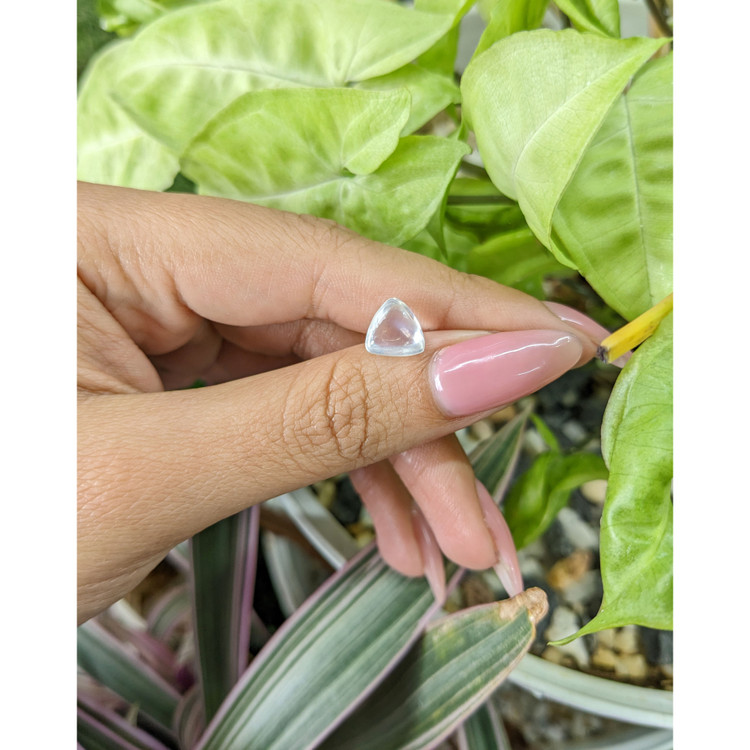
This specimen is a translucent 2.65 carat trillion shape blue flash moonstone, cut as a cabochon and measuring 8.64 x 8.52 x 5.12 mm. The decision to present this piece as a cabochon is intentional, the domed profile and proportional height optimized to display a concentrated adularescence band across the triangular plane. The cutter oriented the lamellar structure so that the blue flash traverses the surface with minimal dispersion, producing a clean, focused sheen rather than a diffuse glow. Clarity grade is eye clean, evaluated at eye level, with no surface-reaching fractures or significant inclusions that would interrupt the adularescent effect. Color intensity is light, which in moonstone often enhances the perception of a floating blue sheen, and the polish is excellent, providing a smooth interface that allows uninterrupted light migration over the dome. Enhancement status is none, the stone is untreated, and the documented origin is Madagascar, a provenance known for delivering feldspar material with fine adularescence and consistent crystallographic layering.
The adularescence exhibited by this moonstone is a technical signature of its internal structure. Light interacts with submicroscopic layers of albite and orthoclase within the feldspar intergrowth, scattering to produce a soft, floating glow that appears to move across or beneath the surface as the viewing angle or light source changes. In this trillion cabochon the effect is predominantly blue, indicating relatively uniform lamellar spacing and minimal mixed spectral scattering. The sheen has a distinct directional quality, appearing to glide from one apex to another as the stone is tilted, which is a product of precise orientation during cutting and a well controlled dome curvature. The translucency of the body allows the adularescent band to appear as if it is suspended within the stone, rather than merely reflected from the surface. For cataloging purposes, opal type is White Opal, referenced here to provide a comparative framework for collectors who track translucency and play of light characteristics across different gem families.
From an investment perspective, this specimen presents several favorable indicators for potential appreciation. First, the combination of a strong, directional blue adularescence in an eye clean, untreated Madagascar example is becoming scarcer in primary markets, as high grade rough is often diverted to jewelry houses and bespoke lapidaries. The trillion cabochon format is less common than oval or round shapes, offering differentiation that appeals to collectors and designers seeking distinctive center stones. The absence of treatment enhances marketability, given the premium placed on natural gem material in secondary markets and private collections. Over the medium to long term demand drivers include sustained interest in sustainably sourced and untreated gems, the increasing visibility of modal jewelry using singular, characterful stones, and limited supply from known Madagascar deposits. Practical considerations for investment include obtaining independent documentation of weight, dimensions and origin, preserving the cabochon with appropriate mounts to avoid surface abrasion, and leveraging specialized auction houses or private dealer networks for resale. The Natural Gemstone Company recommends maintaining provenance records and condition reports to support future valuation.
In summary, this 2.65 carat blue flash moonstone combines technical quality and rarity vectors that are attractive to knowledgeable buyers. The precise cabochon cutting, eye clean clarity, excellent polish, and focused blue adularescence derived from well aligned feldspar lamellae create both visual impact and collectable pedigree. Its untreated status and Madagascar origin support a narrative of natural rarity that can enhance desirability in curated markets. For investors and connoisseurs looking for a gemstone with demonstrable optical character and clear documentation potential, this piece aligns with appreciation pathways driven by scarcity, craftsmanship, and provenance, and it is available through The Natural Gemstone Company.


