
- Stone14
- Reports3
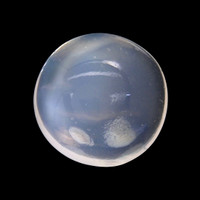
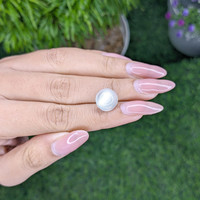
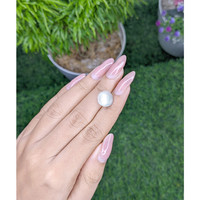
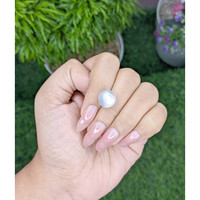
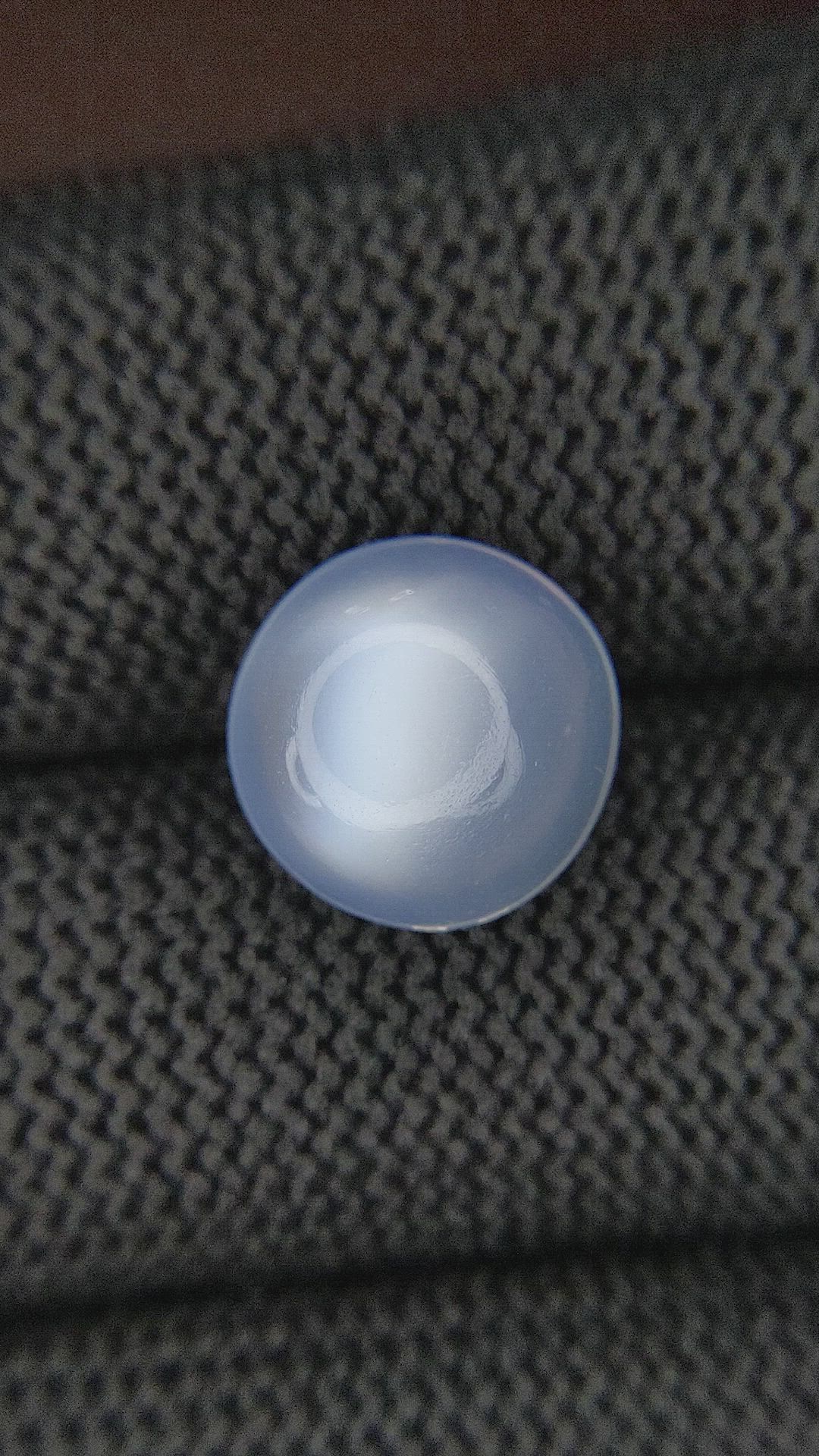
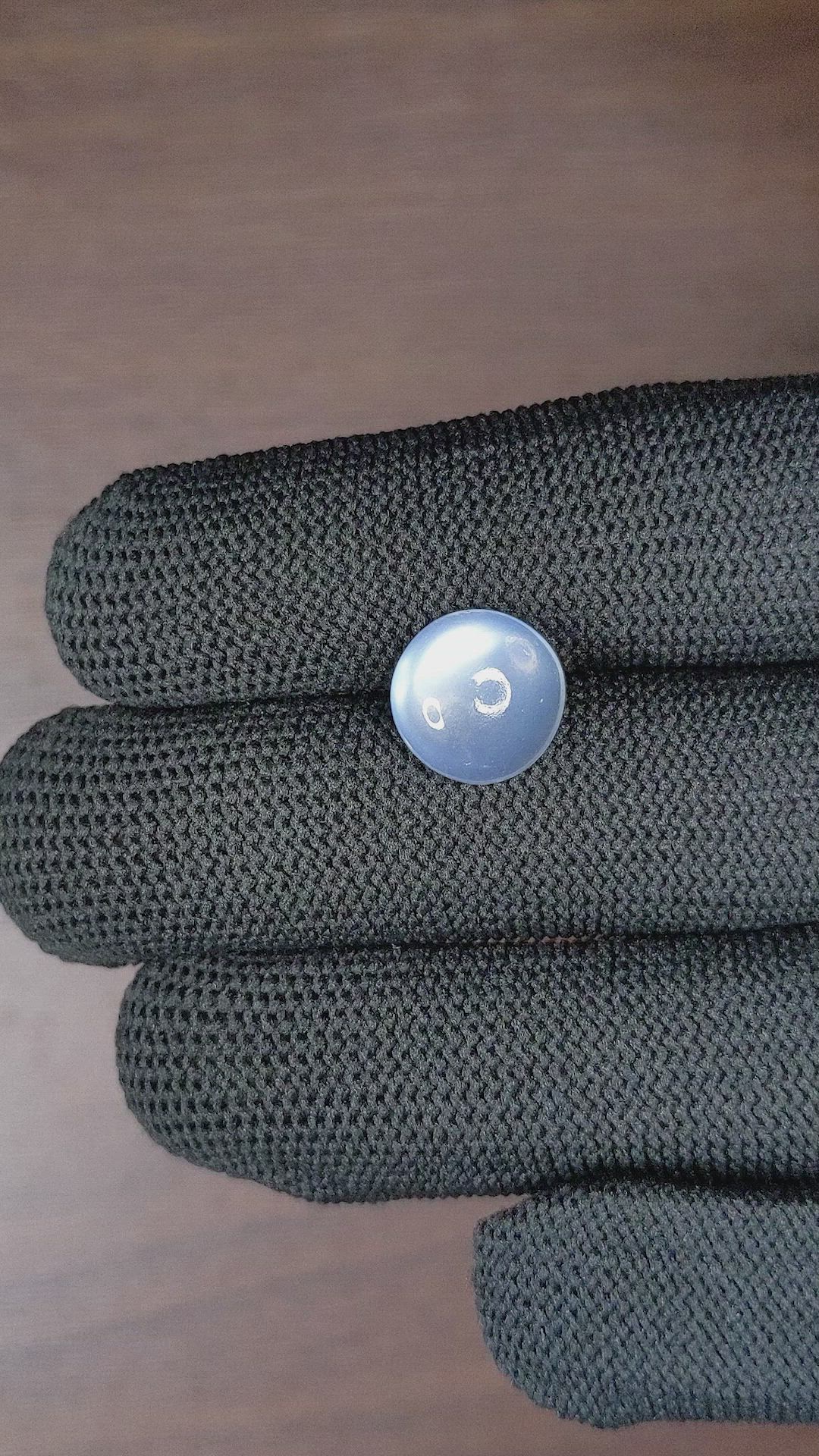
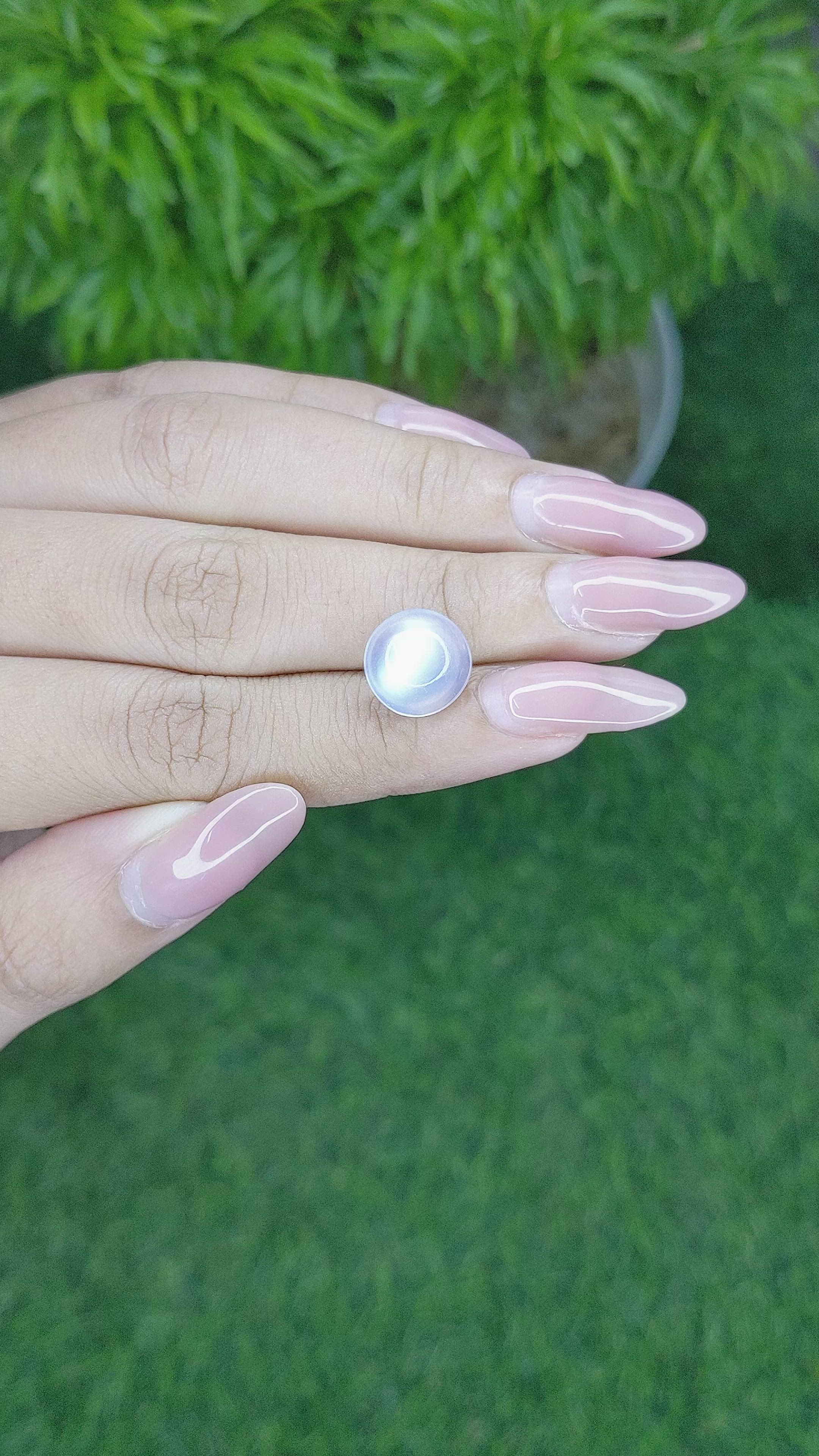
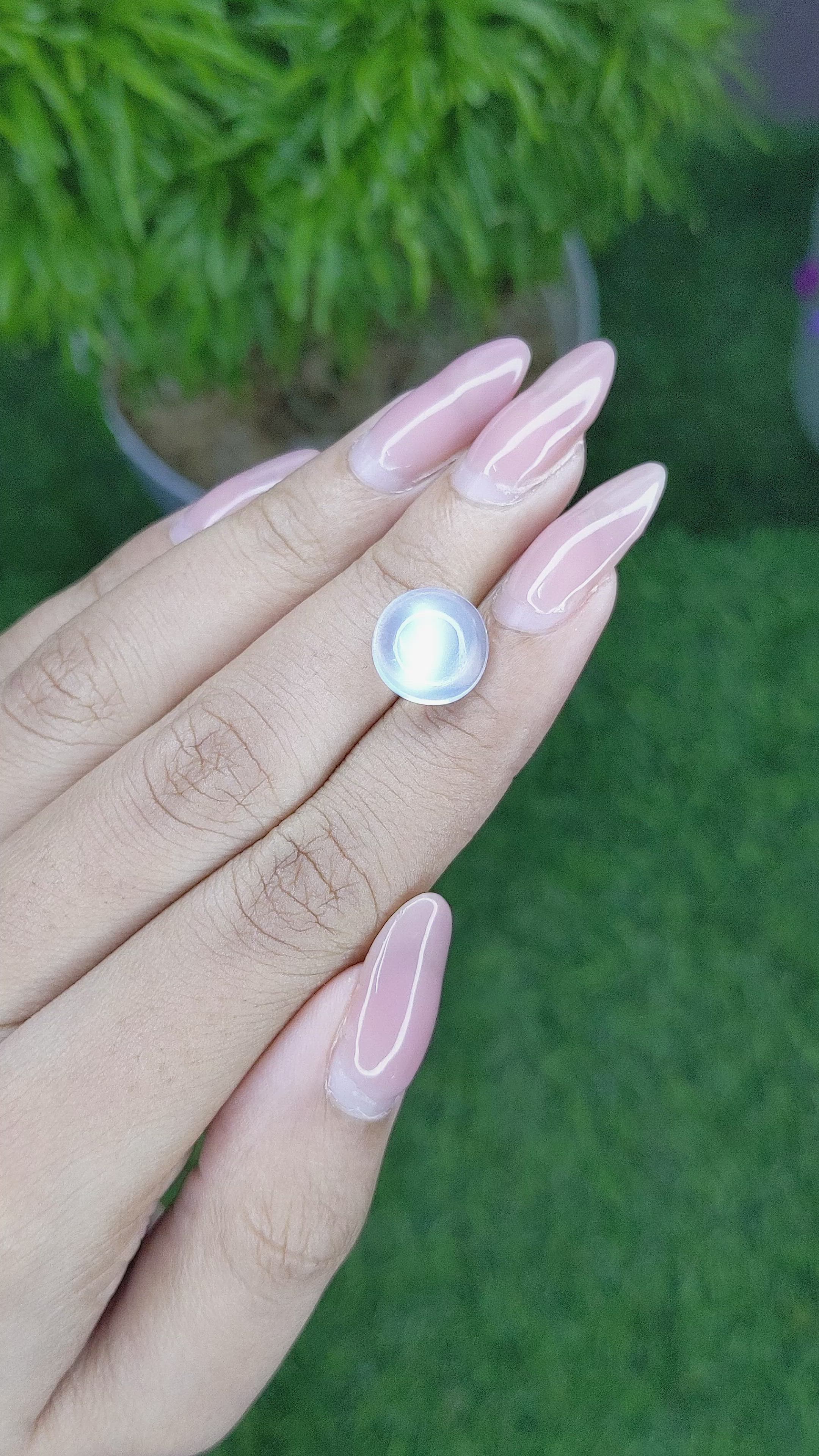

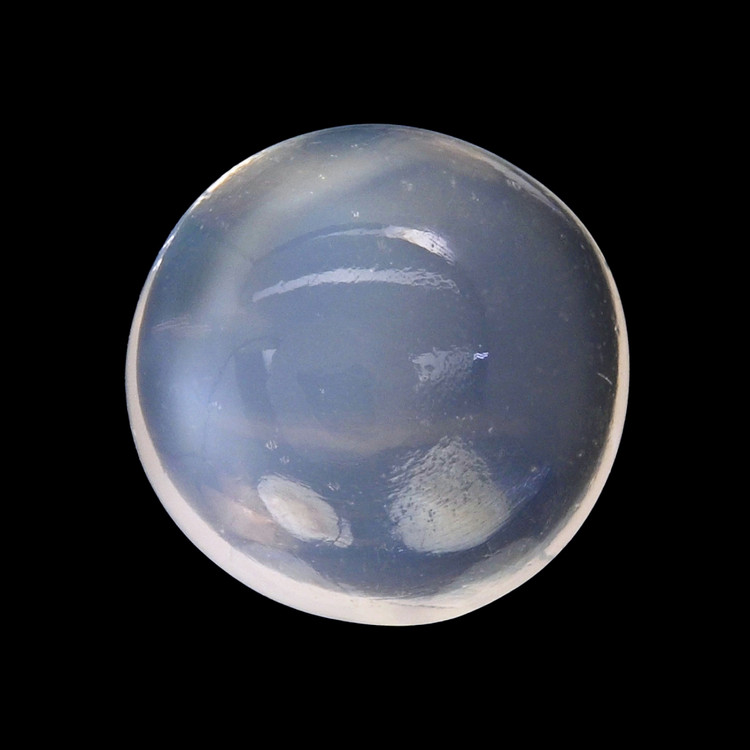


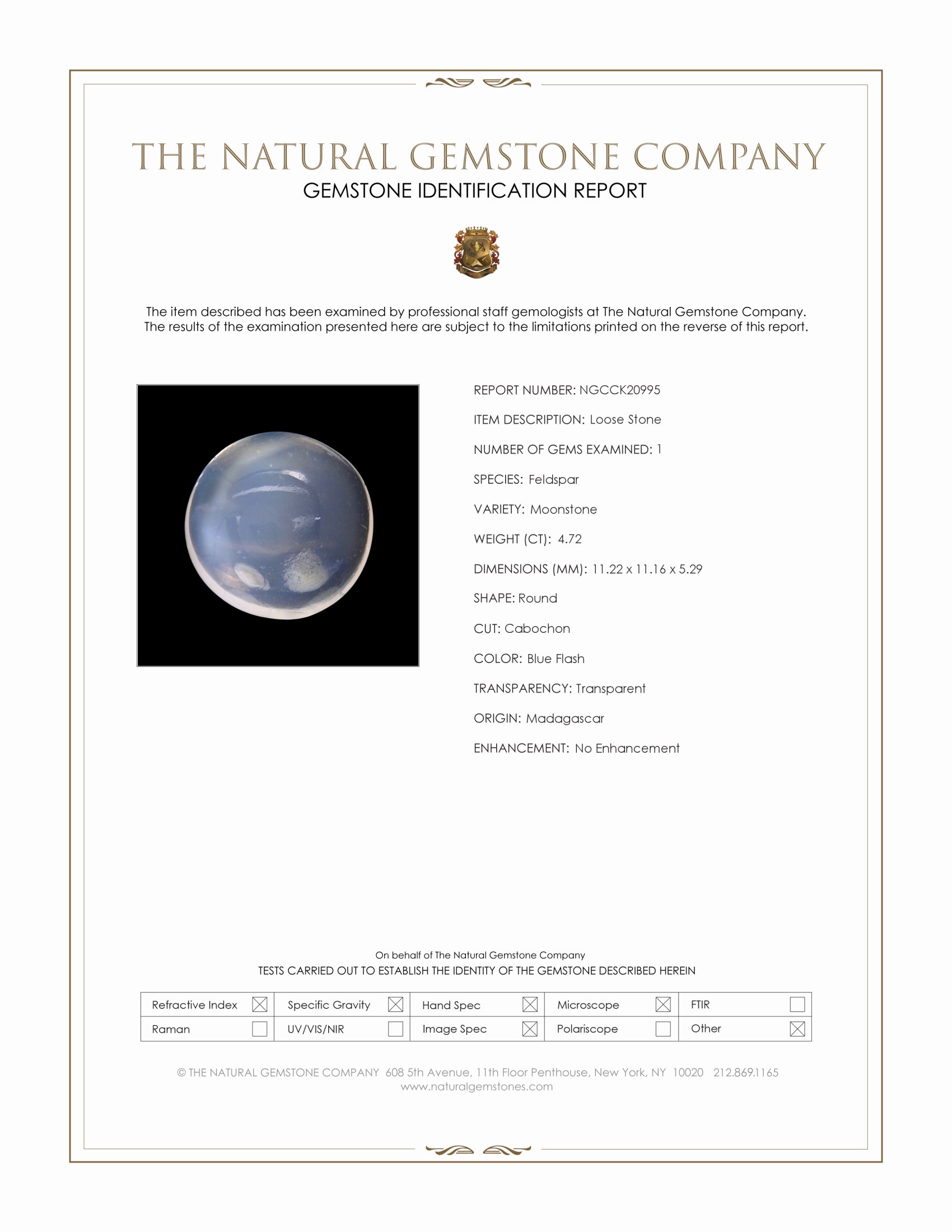
4.72 Ct. Blue Flash Cabochon Moonstone from Madagascar
This loose stone ships by Oct 29
Item ID: | K20995 |
|---|---|
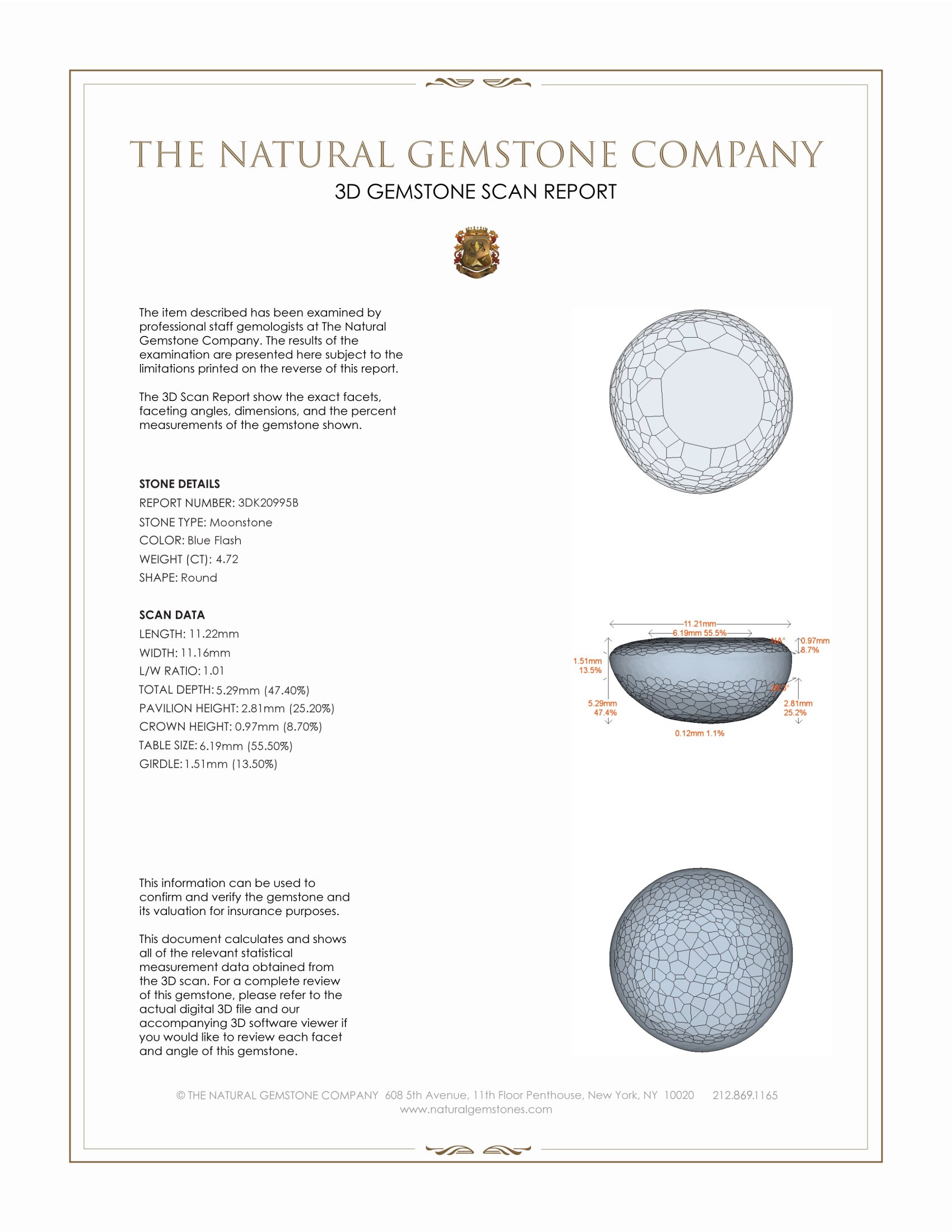
Dimensions (MM): help | Length: 11.22 Width: 11.16 Height: 5.29 |
Weight: | 4.72 Ct. |
Color: help | Blue Flash |
Color intensity: help | Light |
Clarity: help | Very Slightly Included |
Shape: help | Round |
Cut: | Cabochon |
Cutting style: | Cabochon |
Enhancements: help | No Enhancement |
Origin: help | Madagascar |
Per carat price: help | $66 |
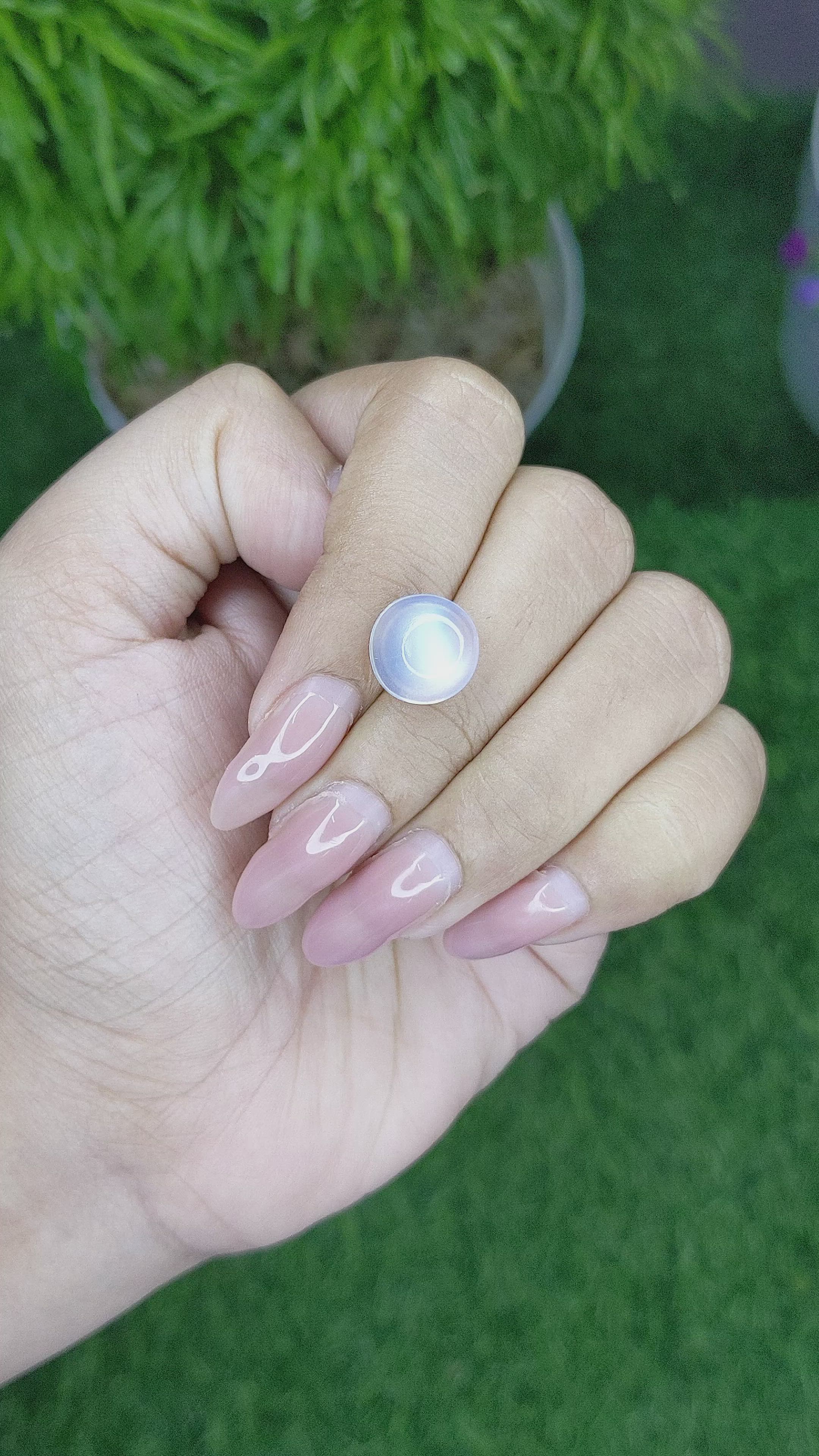
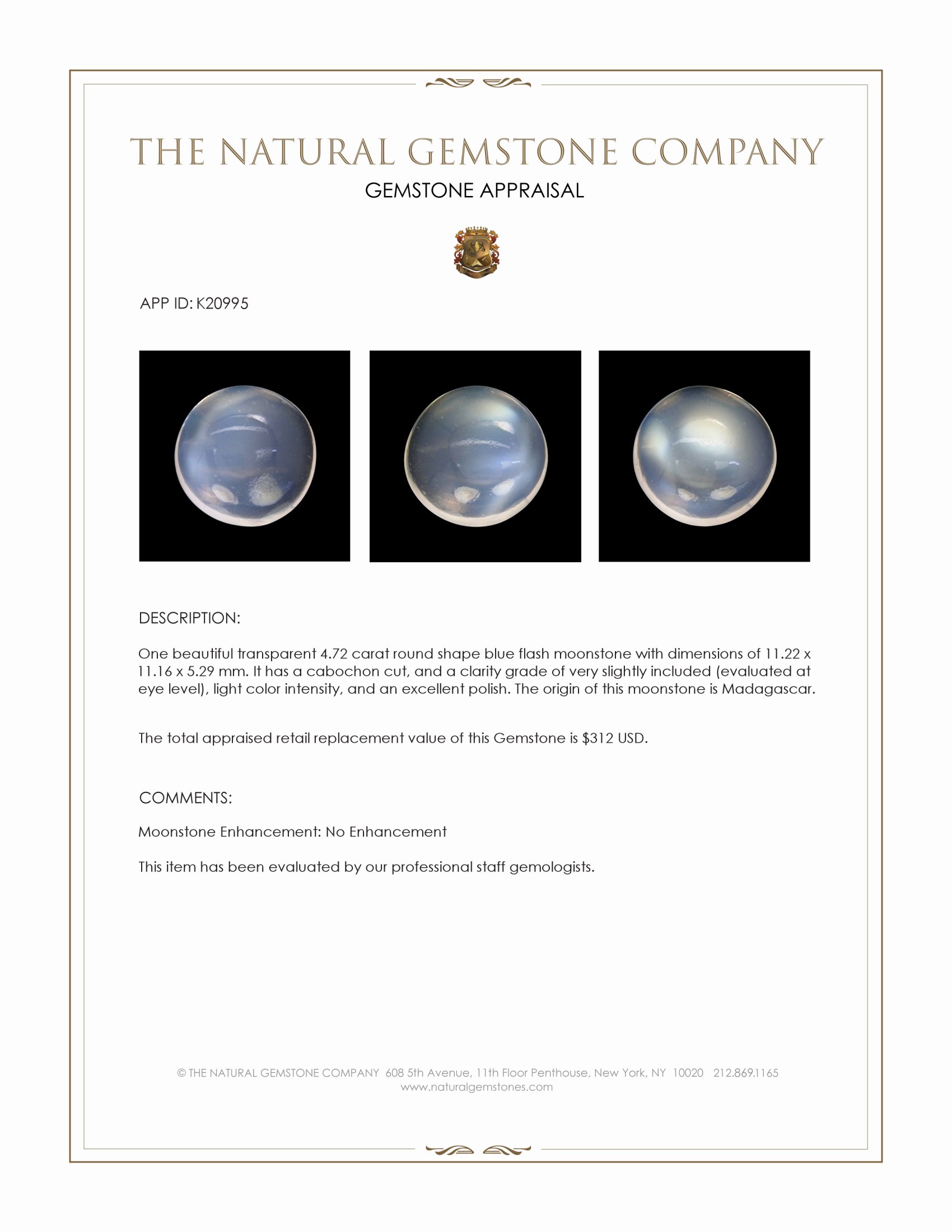
This specimen is a transparent, round shape blue flash moonstone weighing 4.72 carats, with measurements of 11.22 x 11.16 x 5.29 mm, cut as a classic cabochon to maximize its optical effect. The cabochon cutting style for moonstone is intentionally executed with a controlled dome height and a well centered apex, to allow light to strike and interact with the internal lamellar structure in a predictable way, and this piece exhibits those attributes with precise symmetry and a uniformly rounded profile. The clarity has been graded as very slightly included at eye level, indicating minor internal features that do not disrupt the overall transparency or the movement of the adularescent sheen. Color intensity is light, which is desirable for blue flash specimens because a subdued body color permits the blue adularescence to appear more vivid against a neutral backdrop. The polish is excellent, yielding a smooth, mirror like surface that minimizes surface scattering and lets the internal soft glow remain clean and uninterrupted. There has been no enhancement, and the material is sourced from Madagascar, a locality renowned for well oriented orthoclase albite lamellar structures that produce strong blue flashes, and this origin is a reliable indicator of high quality adularia type moonstone.
The adularescence in this stone manifests as a soft, floating blue glow that appears to move beneath and across the surface when the stone or light source is translated, and the phenomenon is technically a result of coherent light scattering and thin film interference between alternating microscopic lamellae of orthoclase and albite within the feldspar matrix. When light enters the transparent body it is partially reflected at the boundaries of these lamellae and the interference of those reflected waves preferentially reinforces the shorter blue wavelengths in this specimen, producing the characteristic blue flash. The cabochon geometry and dome curvature are critical to that effect, because a properly proportioned dome concentrates incident light at the lamellar planes, producing a well defined, directional sheen. The transparency of this example enhances the perceptual depth of the adularescence, creating a layered or floating appearance rather than a surface sheen. From a gemological perspective this material exhibits the classical trade off inherent to cabochon stones, namely reduced facet derived brilliance but increased directional internal luminescence, and in this piece the cutting and polish choices weight strongly in favor of an expansive and coherent blue flash rather than scattered reflections.
Comparatively, within the feldspar family and among commonly compared gems this moonstone presents a unique reflective signature. Labradorite and spectrolite produce labradorescence, which often yields multi hue flashes in greens, golds, and sometimes violet, with a blocky or patchy appearance that can be intense but often more localized and angular than the moonstone sheen. Spectrolite, a high end variety of labradorite, can present saturated spectrums that are more vivid than moonstone but less ethereal. By contrast, the blue flash moonstone offers a monochromatic, soft, and mobile sheen that reads as a floating band or cloud, which is inherently more subtle and atmospheric than the high chroma flashes of labradorite. Compared to opal, which displays play of color created by diffraction through ordered silica spheres and yields discrete spectral points and shifting rainbow colors, moonstone adularescence is fundamentally less chromatic and more unidirectional, favoring a clean blue emission rather than dispersed spectral flecks. In relation to faceted gems such as sapphire or spinel, which rely on high refractive index and precision faceting to produce scintillation and brilliance, this cabochon moonstone trades that facet derived sparkle for an internal luminescent motion, so the perceived reflectivity is softer, more diffuse, and more dependent upon orientation and light angle. The refractive and optical constants of moonstone are modest, with low birefringence relative to highly brilliant gemstones, and that physical context explains why the gemologist and the cutter choose cabochon shaping to emphasize internal sheen instead of faceting to emphasize surface reflection.
From a craftsmanship and practical use perspective the combination of very slightly included clarity, excellent polish, and the well executed cabochon geometry make this 4.72 carat Madagascar blue flash moonstone particularly well suited to jewelry designs that exploit directional light, such as solitaire settings with an open back or thin bezels that allow light to enter from multiple angles. The minimal inclusions contribute negligibly to light obstruction, so the adularescent cloud travels smoothly when the piece is tilted under a light source, creating the characteristic floating effect. The excellent polish reduces micro surface scattering, which is essential because any surface roughness can diffuse the adularescent band and weaken the perceptual depth. For mounting, orienting the lamellar planes parallel to the base of the mounting will preserve the strongest flash when worn, and settings that allow for top to bottom movement will maximize the perceived dynamism of the sheen. At The Natural Gemstone Company we document cutting axis and recommended mounting orientation so that jewelers and clients can reproduce the optimal display of the adularescence. If you prefer a comparison under controlled viewing conditions we can provide calibrated photography and short video sequences showing the directional movement of the blue flash, and assist with any technical questions regarding cut, orientation, or setting options to ensure the gem performs to its highest optical potential.


