
- Stone9
- Reports2
-oval-orange-moonstone-6.6100-cts-k7380-1.jpg?d=200x200&v=20250519175958)


-oval-orange-moonstone-6.6100-cts-k7380-1.jpg?d=750x750&s=ngc&v=20250519175958)


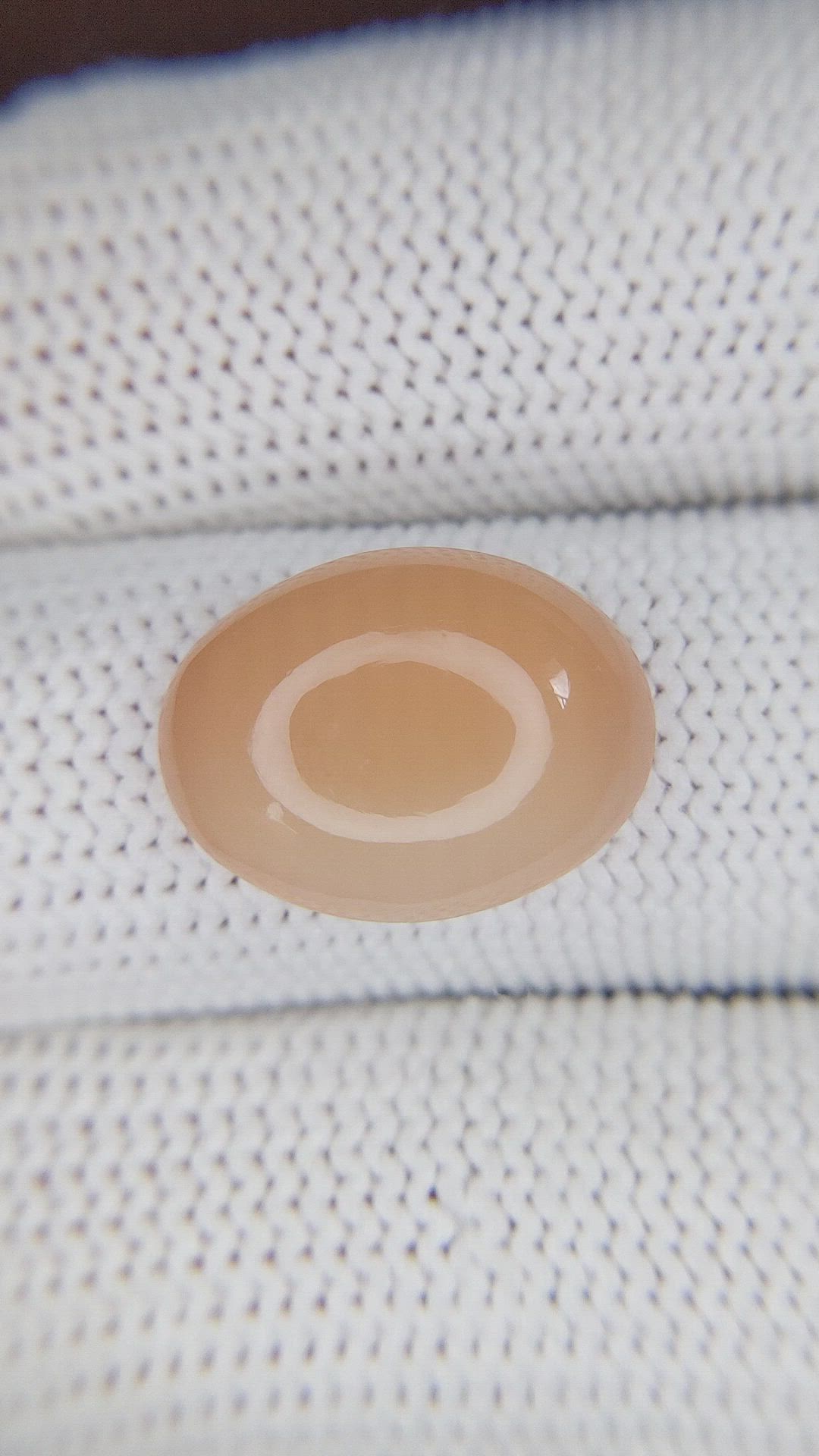
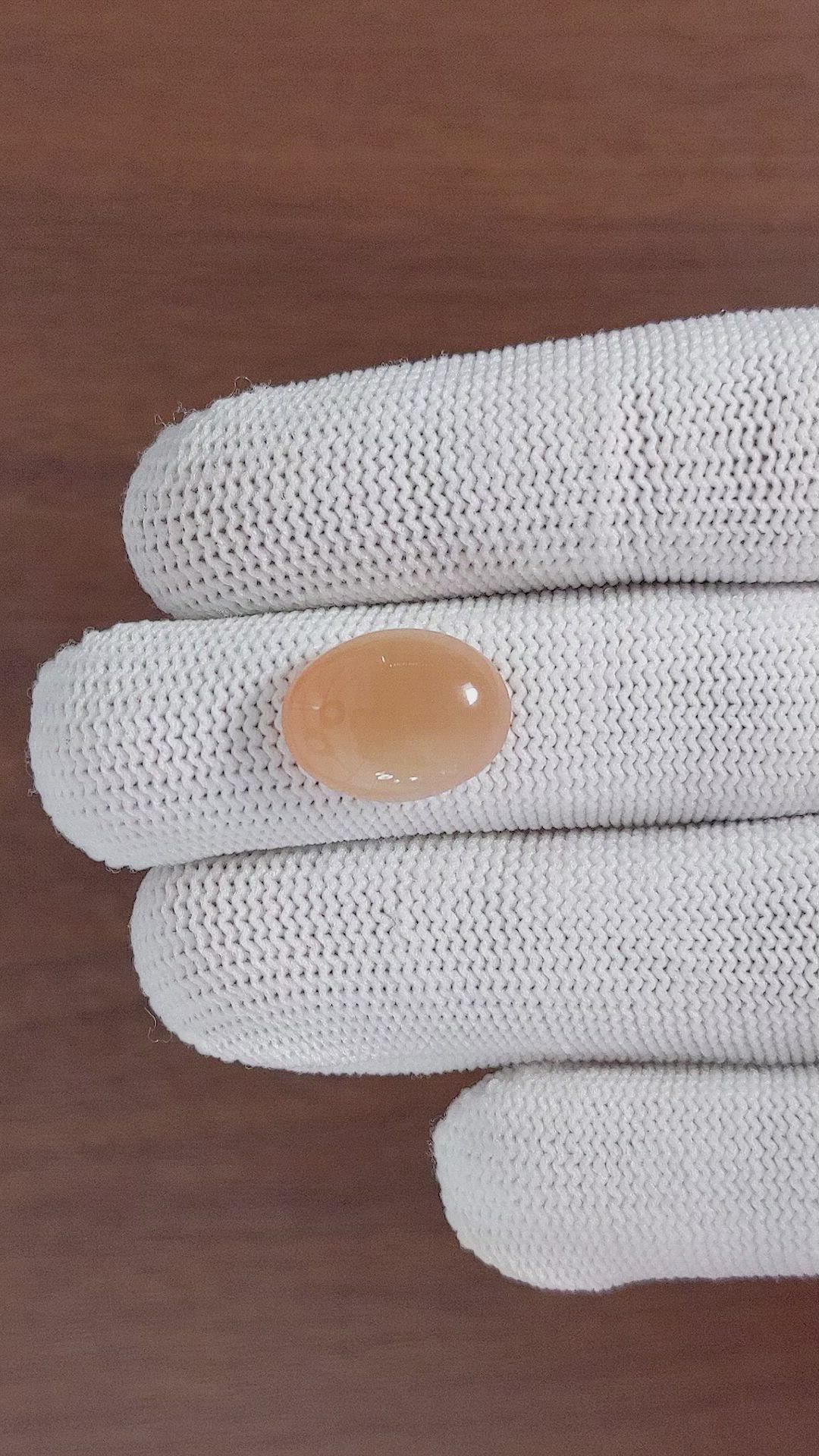
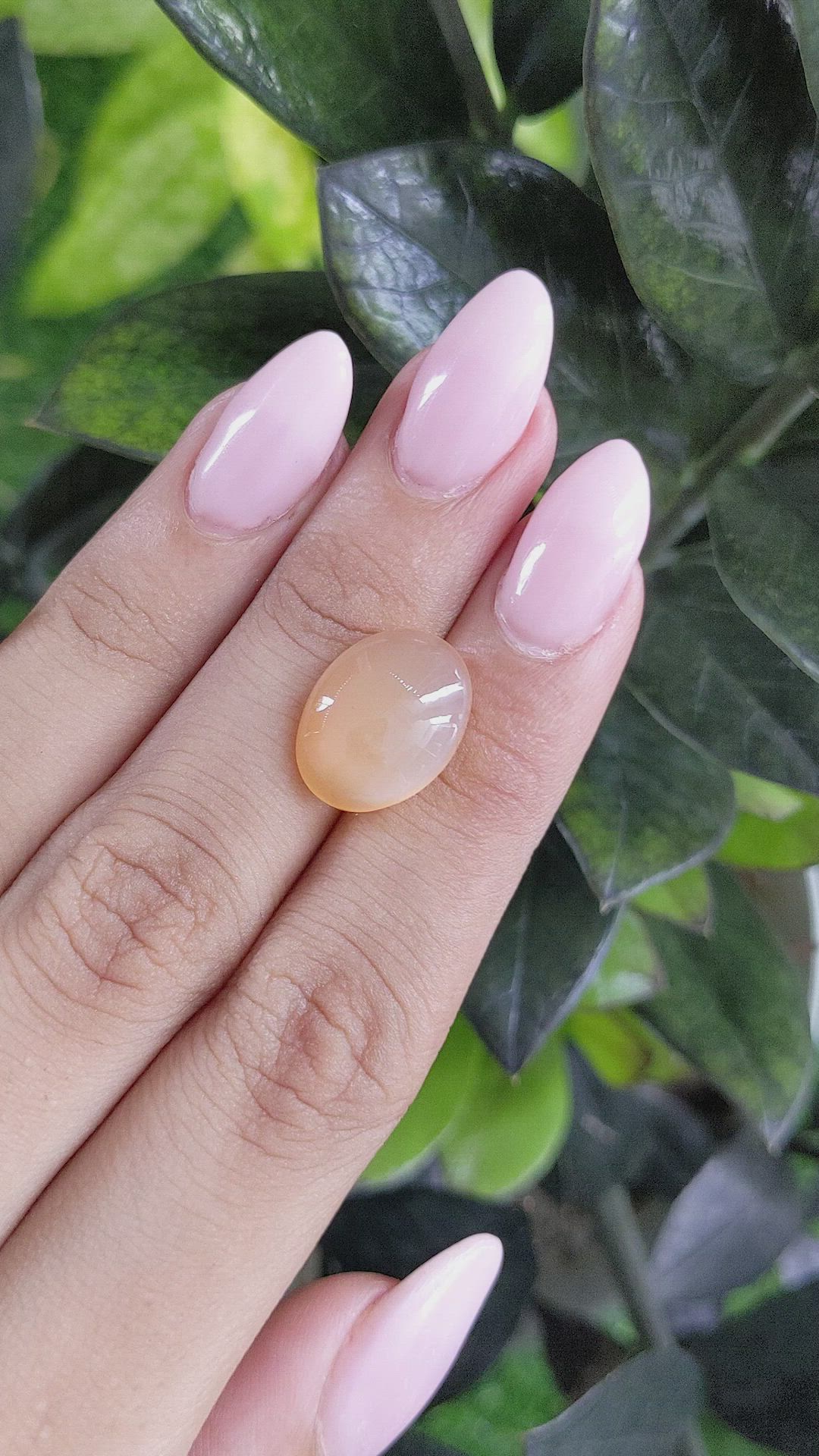
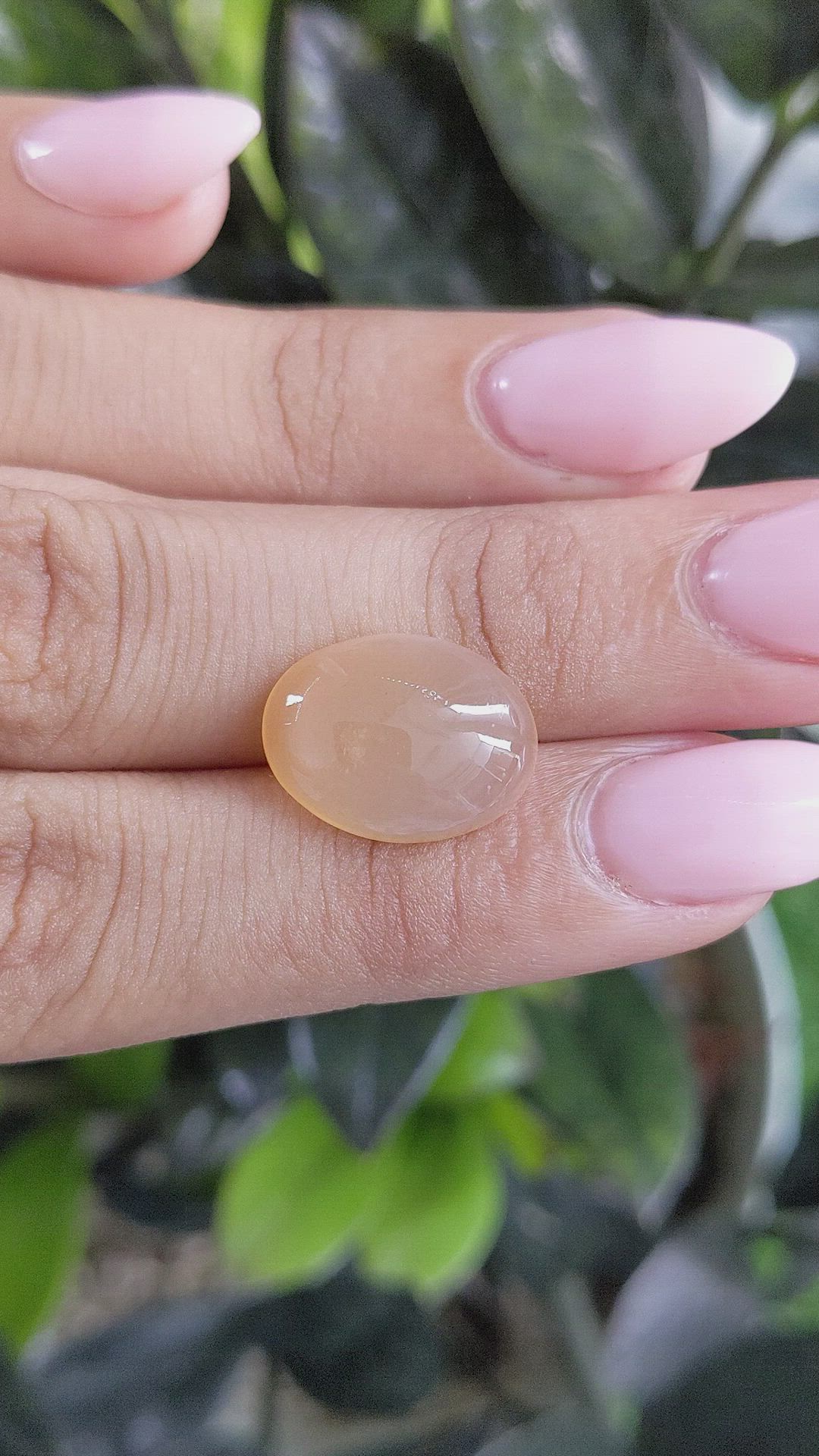
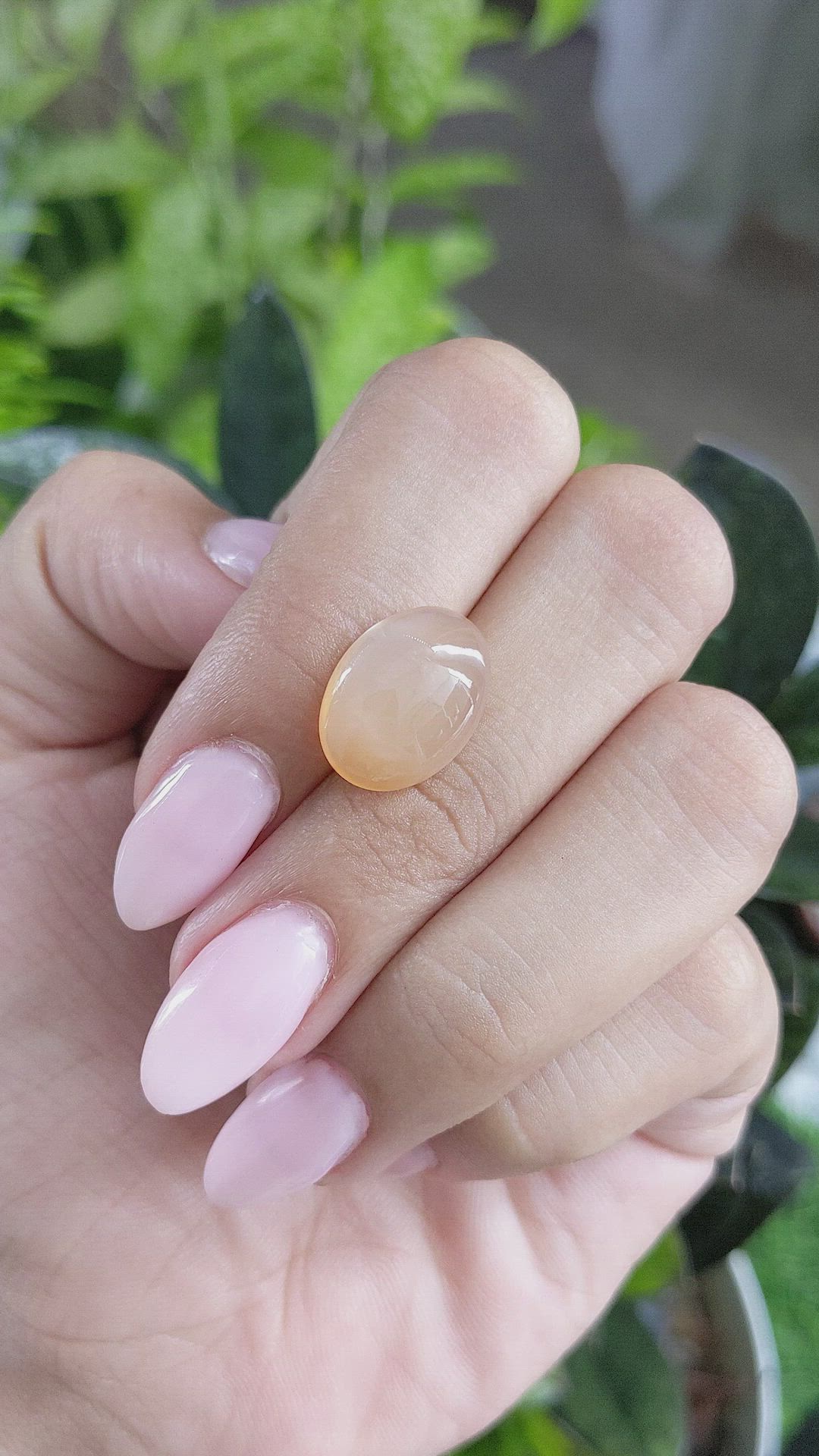
6.61 Ct. Cabochon Moonstone from Ceylon (Sri Lanka)
This loose stone is available to ship now
Item ID: | K7380 |
|---|---|
Dimensions (MM): help | Length: 15.88 Width: 12.02 Height: 5.08 |
Weight: | 6.61 Ct. |
Color: help | Peach |
Color intensity: help | Medium |
Clarity: help | Very Very Slightly Included |
Shape: help | Oval |
Cut: | Cabochon |
Cutting style: | Cabochon |
Enhancements: help | No Enhancement |
Origin: help | Ceylon (Sri Lanka) |
Per carat price: help | $10 |
This oval cabochon moonstone weighs 6.61 carat, and measures 15.88 by 12.02 by 5.08 mm, presenting a classic oval outline with a well proportioned dome. The cut is a traditional domed cabochon, shaped to optimize the stone receiving and scattering of light rather than faceting reflections, with a dome height that preserves the internal lamellar layers responsible for adularescence. The body color is a refined peach with medium color intensity, evenly distributed across the table and girdle, and the stone grades very very slightly included evaluated at eye level, indicating minimal visual interruptions to the optical plane when viewed without magnification. The polish is excellent, producing a smooth, mirror like surface that minimizes surface scatter and allows the internal sheen to remain the primary visual characteristic. There has been no enhancement, and the rough is sourced from Ceylon Sri Lanka, a provenance known for producing warm tone moonstones with strong adularescent effects, uniform color, and fine crystallographic layering.
Technically, the visual phenomenon in this specimen is adularescence, produced by the submicroscopic intergrowth of albite and orthoclase lamellae within the potassium feldspar matrix, arranged roughly parallel to the base of the cabochon. Light entering the dome interacts with these lamellae, undergoing constructive interference and scattering, which yields a soft sheen that appears to float below the surface. Because of the cabochon geometry, the sheen remains coherent and directional, often appearing as a band of light that travels as the viewing angle changes. The medium body color of peach modifies the perceived hue of the sheen, imparting warmer undertones to the adularescent flash, while the very very slightly included clarity grade at eye level ensures that inclusions do not disrupt the interference layers. The excellent polish is the result of precision lapidary technique, employing sequential grit reduction through fine diamond abrasives and a final polish with cerium oxide on a leather lap, producing a surface free of micro abrasions that would otherwise diffuse the adularescent band.
Under natural daylight, particularly in open shade or on a slightly overcast day, the stone exhibits a balanced expression of both body color and adularescent flash, with the peach body appearing luminous and the adularescent band showing cool white to soft blue highlights that contrast attractively with the warm base color. In direct sunlight the adularescence intensifies and becomes highly directional, creating a more pronounced floating sheen that can display motion as the stone or light source moves, while the translucency allows internal scattering to soften direct reflections. Under warm incandescent illumination the warmth of the peach body color deepens, and the sheen tends toward a creamy or warm white tone, yielding a harmonized overall appearance. Under cool white LED lighting the sheen often reads cooler, with the adularescent band taking on a bluish cast against the peach field, which increases perceived color contrast and crispness of the flash. In low ambient light the stone preserves its appeal by giving a subtle, internal glow, and when presented with a focused beam or spotlight the cabochon produces a concentrated moving band of light, ideal for controlled display in jewelry settings or museum exhibits.
For jewelry use, the cabochon profile and dimensions favor settings that protect the dome while allowing the adularescence to remain visible, such as bezel settings that cradle the girdle without obscuring the table, or low bezel prongs that secure the stone while permitting oblique viewing angles. Because the visual effect is angle dependent, designs that allow movement or that position the stone to face the observer will maximize the perceived quality of the adularescence. Care recommendations include avoiding ultrasonic cleaning and harsh chemicals, using only mild soap and warm water with a soft brush, and storing the piece separately to prevent abrasion of the polished dome. Certification of origin and treatment history is available on request, noting the stone is natural, untreated, and from Ceylon Sri Lanka. This specimen exemplifies the subtle intersection of crystallographic structure and skilled lapidary work, and The Natural Gemstone Company presents it as a gallery quality oval cabochon moonstone for collectors and designers who prioritize optical performance, natural provenance, and meticulous finishing.


