
- Stone8
- Reports2
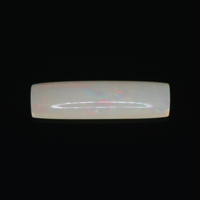
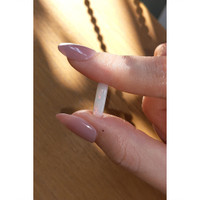


1.10 Ct. Cabochon White Opal from Australia
This loose stone is available to ship now
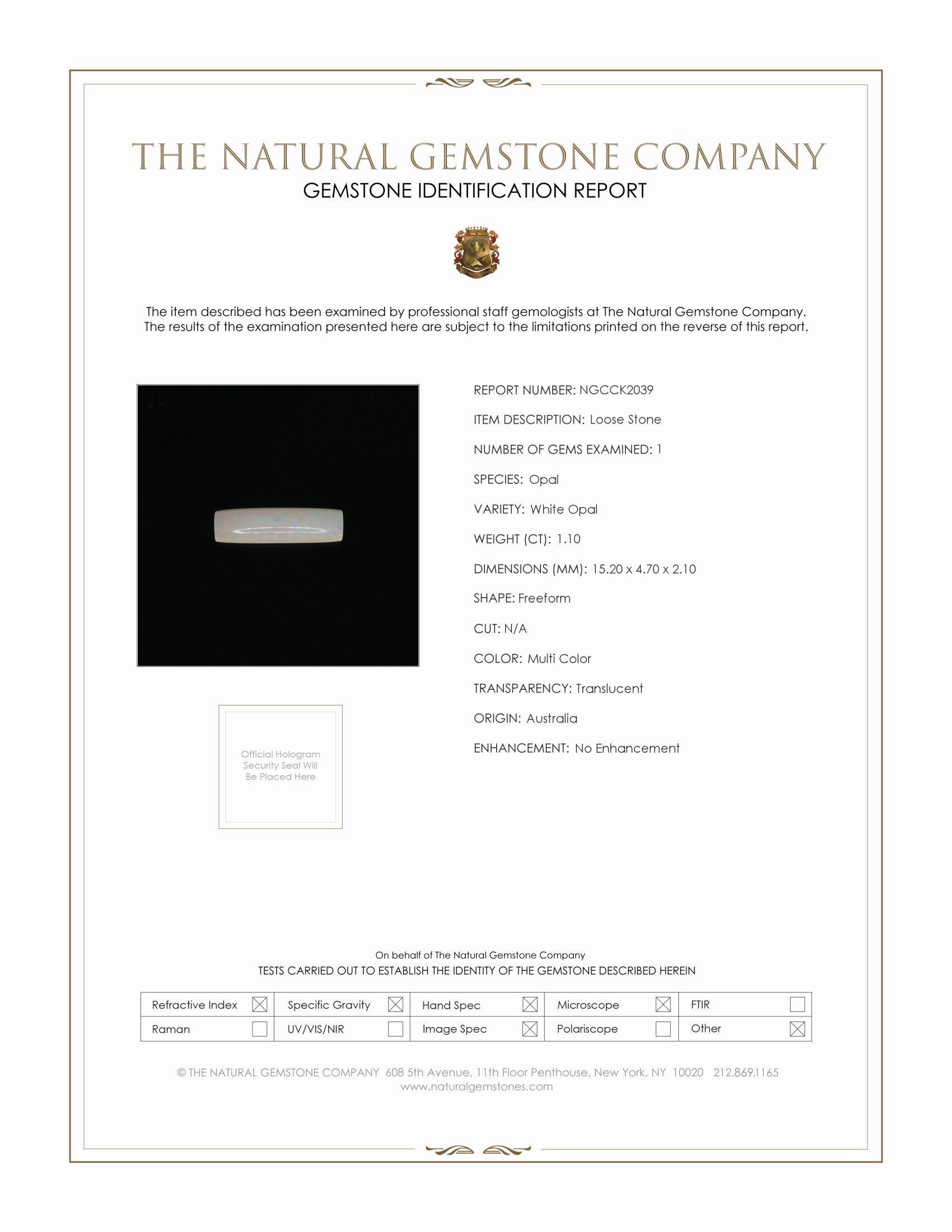
Item ID: | K2039 |
|---|---|
Dimensions (MM): help | Length: 15.2 Width: 4.7 Height: 2.1 |
Weight: | 1.10 Ct. |
Color: help | Multi Color |
Color intensity: help | Light |
Clarity: help | Very Slightly Included |
Shape: help | Freeform |
Cut: | N/A |
Cutting style: | Cabochon |
Enhancements: help | No Enhancement |
Origin: help | Australia |
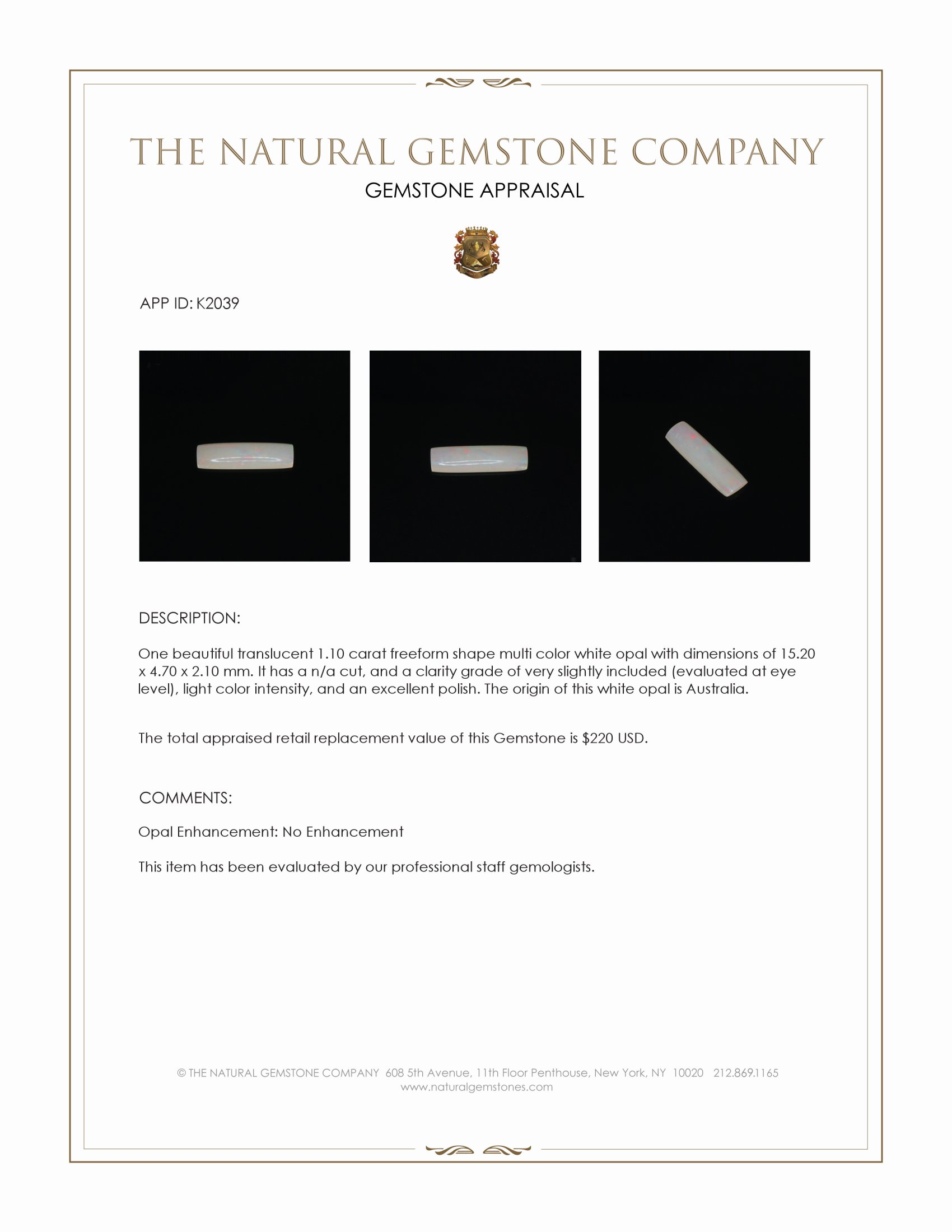
Per carat price: help | $200 |
This listing from The Natural Gemstone Company describes a beautiful translucent White Opal, weighing 1.10 carat, in a freeform shape with dimensions 15.20 x 4.70 x 2.10 mm. The gem is n a cut in the sense that it is a freeform polished specimen rather than a faceted stone, clarity is graded as very slightly included on an eye level inspection, color intensity is light, polish is excellent, and there has been no enhancement of any kind. The origin is Australia, which provides a provenance consistent with the finest traditional white opals. The multi color play of light within the piece is visible across the surface, and the shallow profile and fine polish make this opal particularly well suited to bespoke settings where a delicate, face up presentation is desired.
From a technical perspective this White Opal exhibits the classical internal structure that produces opal play of color, namely a regular arrangement of submicron silica spheres that diffract incident light. The stone is translucent rather than fully transparent, which means that light penetrates and is scattered within the body, enhancing the visibility of the internal spectral flashes. Because the body tone is on the lighter end of the scale, and color intensity is graded as light, the play of color reads with a softer quality, but the multi color palette remains distinct when viewed under directional light or in motion. At the given thickness of 2.10 mm the opal shows efficient light transmission for face up display, and the 15.20 mm length allows for layered color effects along the length of the freeform, while the 4.70 mm width provides a delicate band to balance color distribution. The very slightly included clarity rating indicates minor internal features that are visible to the eye under careful inspection, but these do not materially affect the optical performance or structural integrity of this solid, untreated opal.
The lapidary work on this specimen emphasizes preservation of natural color and structural stability, rather than aggressive faceting. Because opal is a hydrated amorphous form of silica, careful preforming and graded abrasion was used to achieve the freeform outline, followed by progressive sanding to remove tool marks and a final polishing sequence to achieve the stated excellent polish. Standard practice for quality opal finishing includes sequential laps of increasing grit, ending with a fine oxide polish such as cerium oxide or tin oxide, and in some workflows controlled use of diamond abrasives at coarse stages to reduce material removal time. For this piece the cutter prioritized maintaining a uniform thickness of approximately 2.10 mm to avoid thin edges that can be vulnerable to impact, and to preserve the internal sphere lattice that creates play of color. The absence of enhancement means the stone is a natural solid opal, not a doublet or triplet, which preserves longevity and collector value. Given the freeform geometry and slim profile, recommended settings are those that protect the girdle area and provide a low risk of edge chipping, such as a bezel setting or a custom inlay, and designers often orient the stone so that the most vivid color flash faces upward in typical lighting.
Heritage and traditional context further enrich the appeal of this White Opal. Australian opals have long held cultural significance in Aboriginal Dreamtime stories, where they are described as carrying the colors of the Creator or as echoes of water and sky, and they were historically used as talismans and trading items among indigenous communities. In European jewelry history, white opals became esteemed during the 19th century for their use in cameos and sentimental pieces, valued for their soft iridescence and association with purity and hope. This continuity of use informs contemporary design choices, where a freeform White Opal such as this one can serve as a central devotional pendant, a bezel set ring with a protective surround, or an heirloom brooch that echoes traditional forms while benefiting from modern lapidary precision. The Natural Gemstone Company offers this specimen for collectors and designers who appreciate both technical exactitude and cultural provenance, and we are available to provide additional photomicrographs, orientation guidance for mounting, and certificate level descriptions to assist in design and appraisal.


