
- Stone10
- Reports3



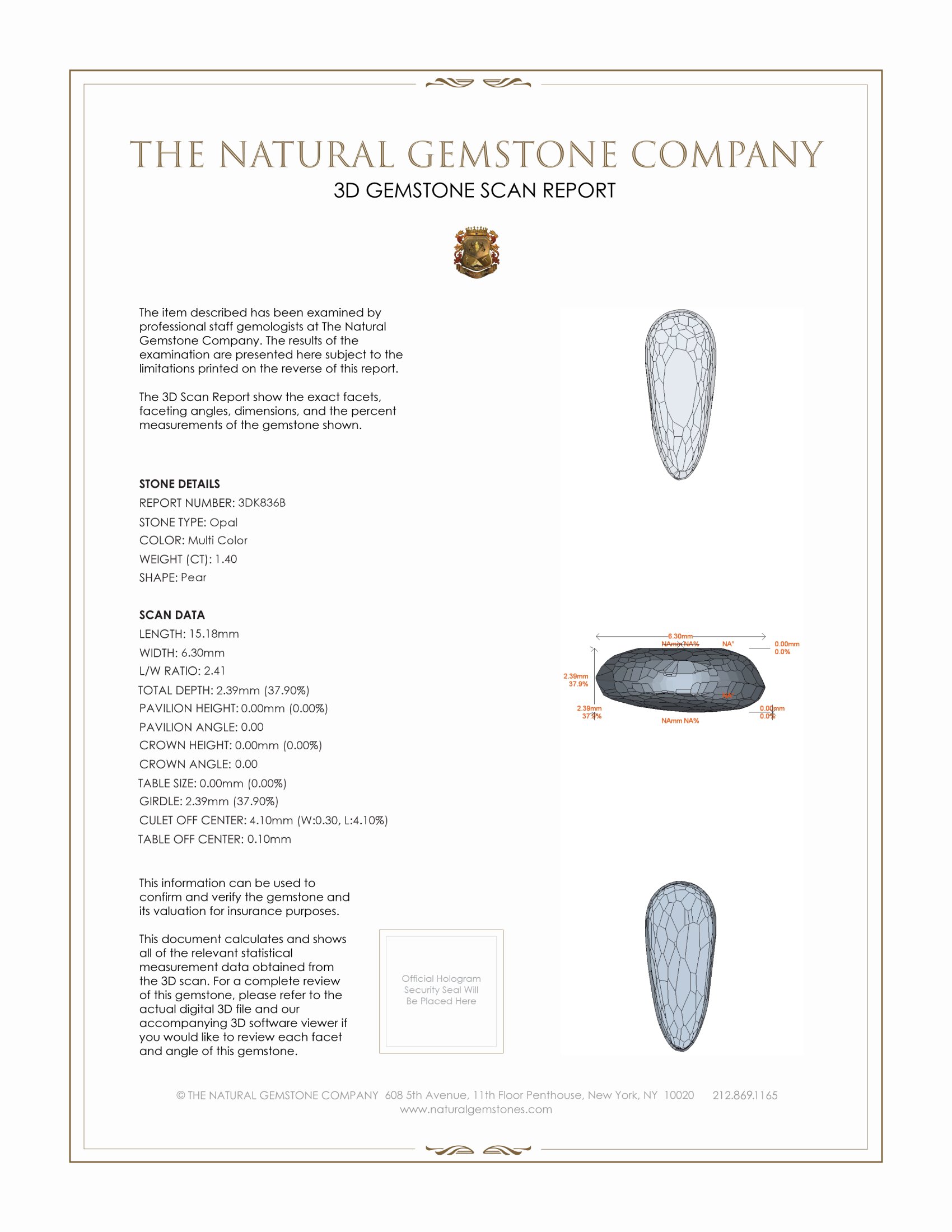
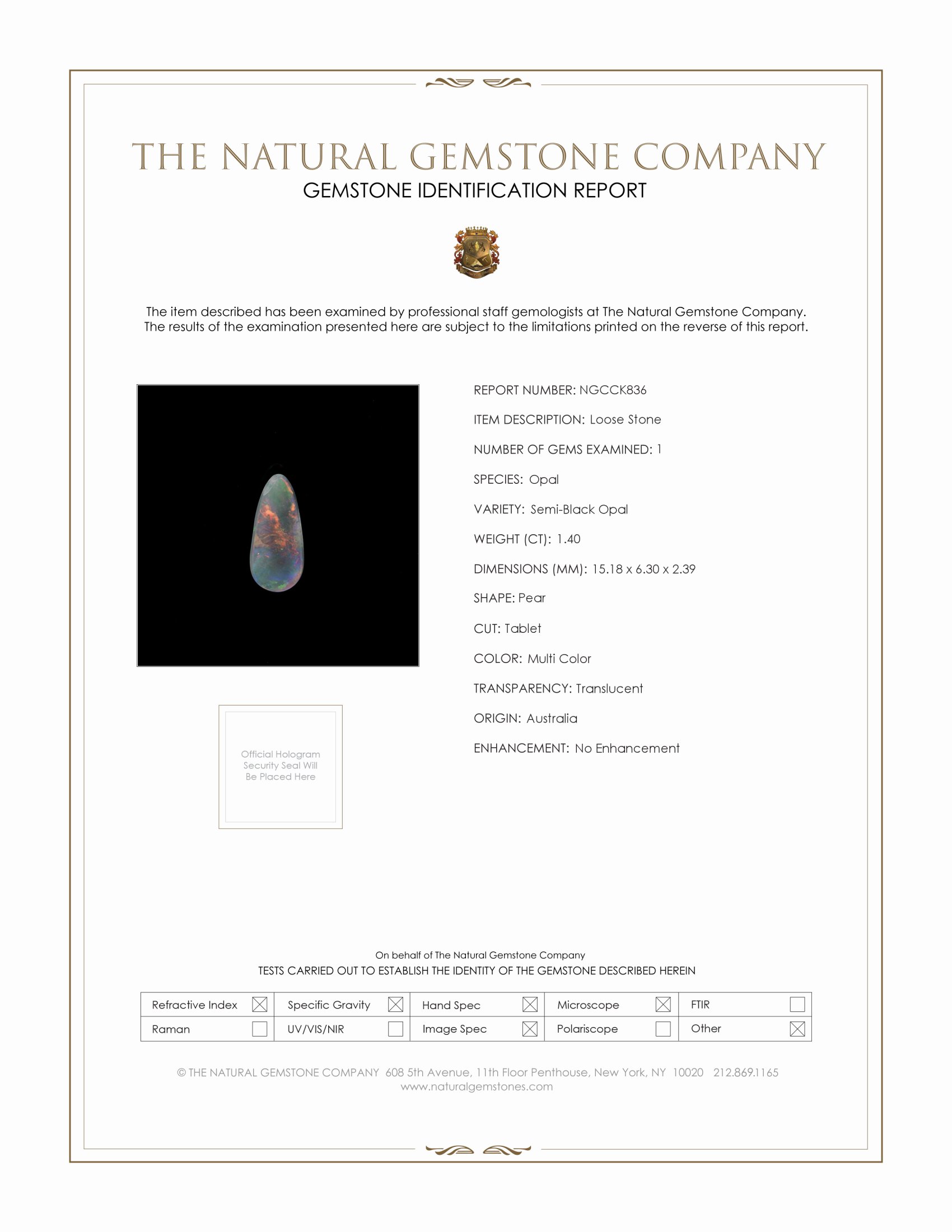
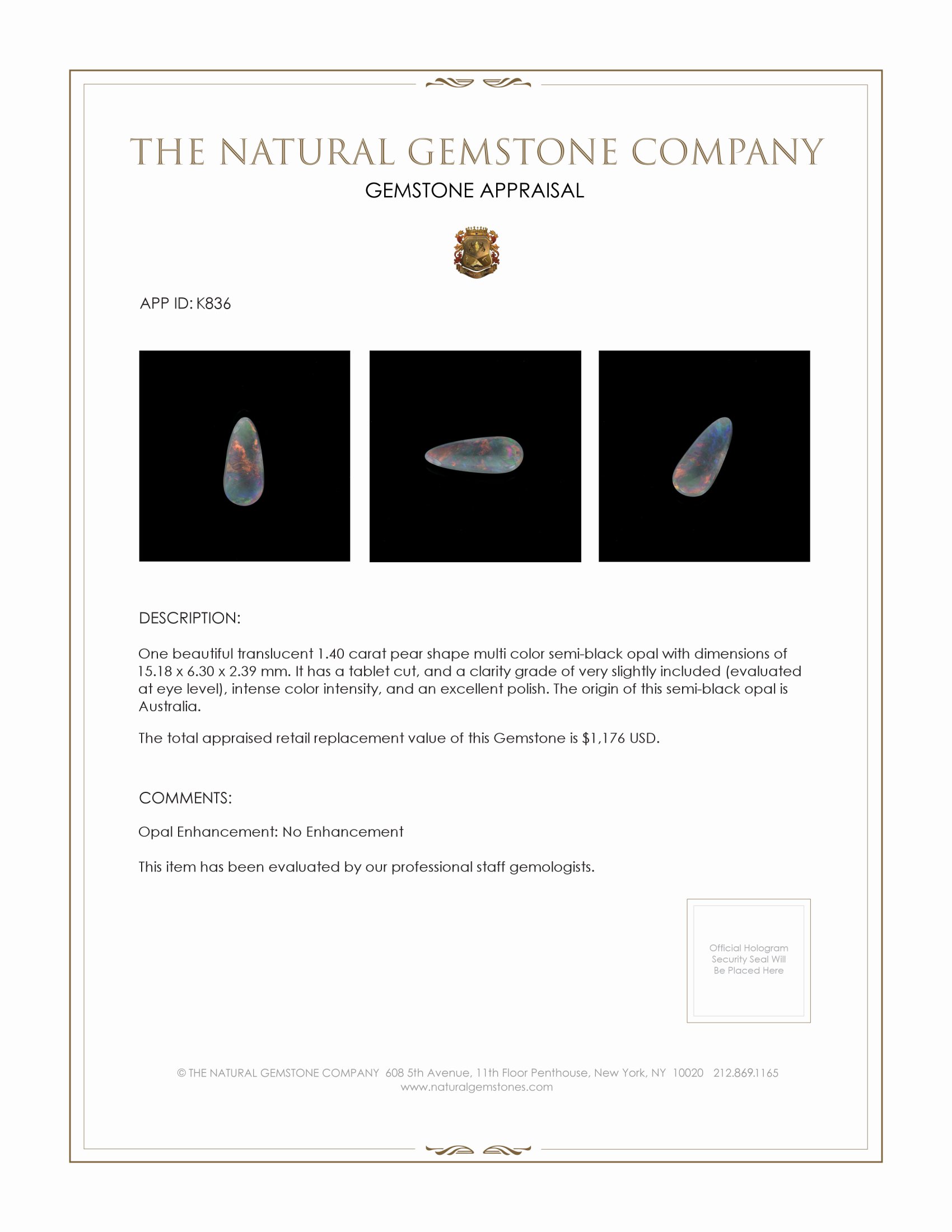
1.40 Ct. Multi Color Opal from Australia
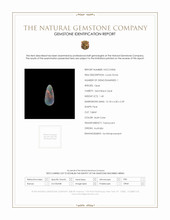
Item ID: | K836 |
|---|---|
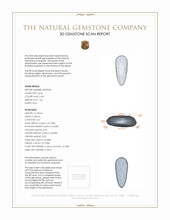
Dimensions (MM): help | Length: 15.18 Width: 6.3 Height: 2.39 |
Weight: | 1.40 Ct. |
Color: help | Multi Color |
Color intensity: help | Intense |
Clarity: help | Very Slightly Included |
Shape: help | Pear |
Cut: | Tablet |
Cutting style: | Tablet |
Enhancements: help | No Enhancement |
Origin: help | Australia |
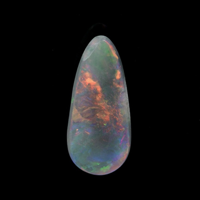
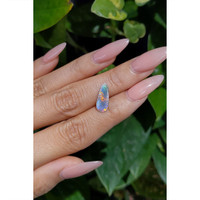
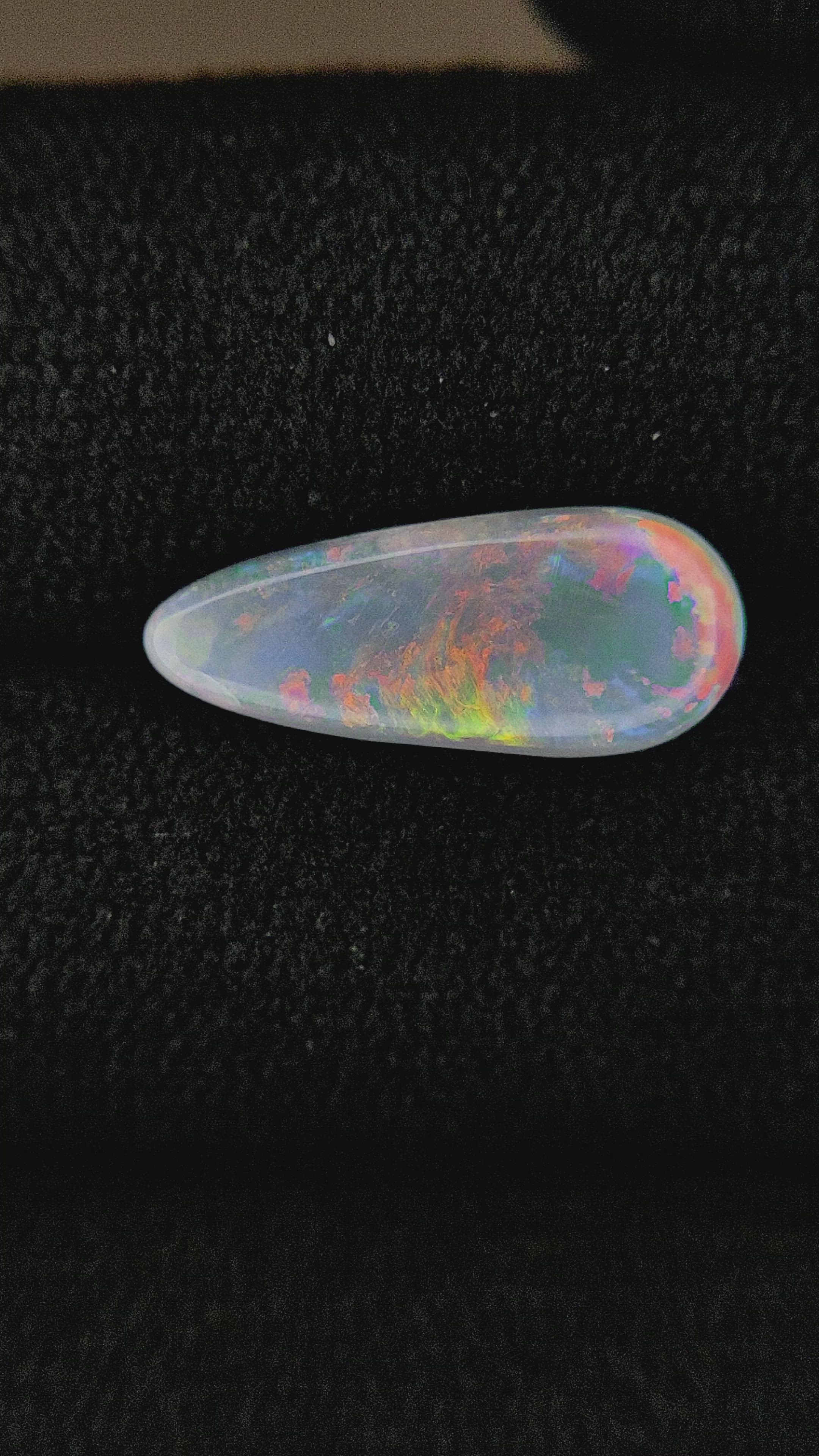
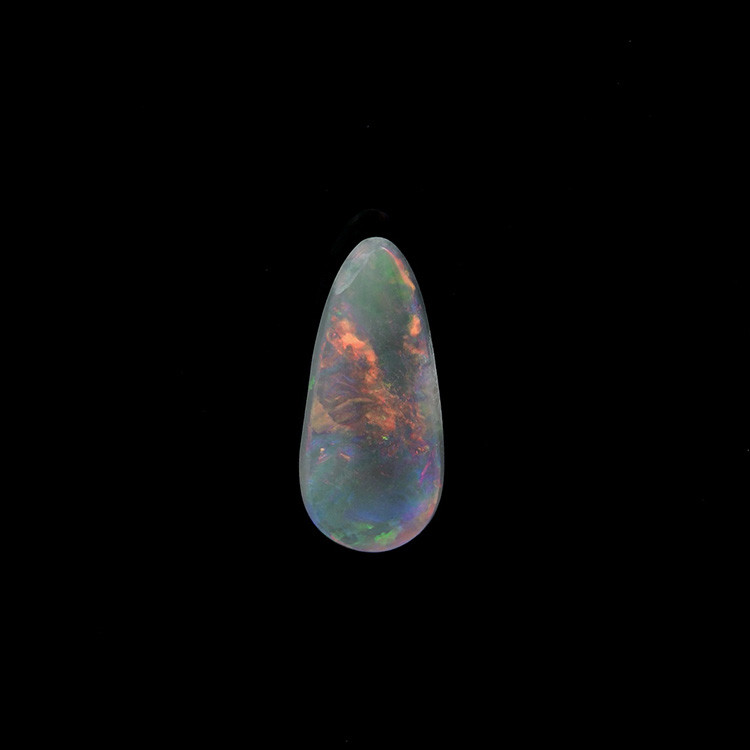
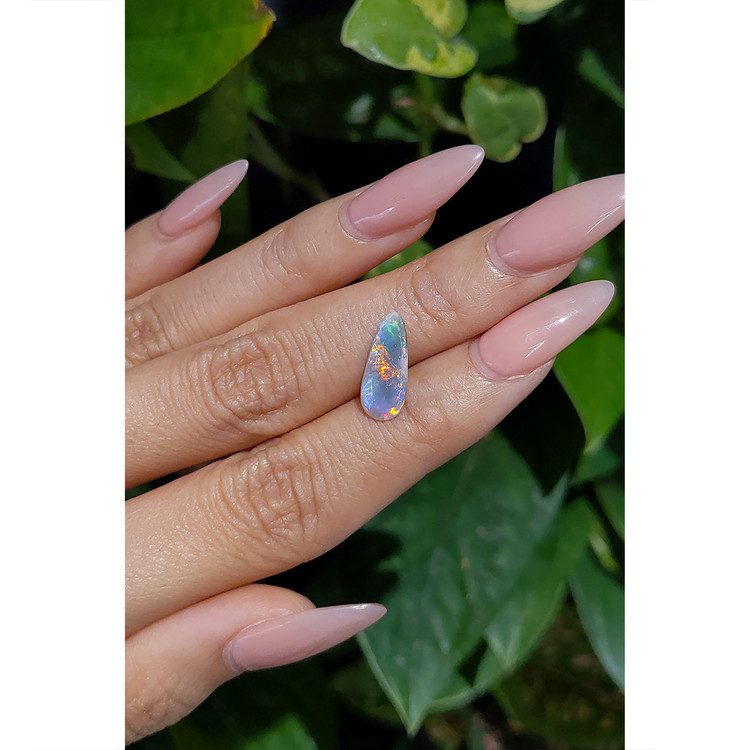
This specimen is a translucent 1.40 carat pear shaped Semi-Black Opal, precisely measured at 15.18 x 6.30 x 2.39 millimeters, presented in a tablet cut. The tablet profile is shallow with a gently flattened crown and a defined perimeter that maximizes lateral play-of-color across the surface without the deep dome typical of standard cabochons. Color intensity is graded as intense, with multi-color play including dominant reds and oranges with secondary greens and blues appearing as broad flashes and diffuse patches across the teardrop plane. Clarity has been evaluated at eye level as very slightly included, indicating minor internal features that are not detrimental to overall visual impact and that do not interrupt the continuity of the color patches under typical viewing conditions. The polish has been executed to an excellent degree, yielding a glass-like surface finish that enhances the opal’s diffraction of visible light. There has been no enhancement, and the material is natural Australian origin, consistent with the semi-black body tone that provides contrast to the internal color spectrum.
From a lapidary and craftsmanship perspective, the tablet cut of this opal represents a deliberate trade-off between thickness and surface area. The cutter controlled the crown height to preserve broad color flashes while minimizing material loss and internal stress, a crucial consideration for hydrated silica in which dehydration or thermal shock can induce crazing. The resulting profile is thin at 2.39 millimeters, which explains the efficient weight-to-size ratio for 1.40 carats within the specific gravity range expected for opal. Edge symmetry and outline accuracy are maintained to tight tolerances along the pear silhouette, reducing asymmetry that can scatter light irregularly. The very slightly included clarity grade reflects microscopic internal heterogeneities or minute potch inclusions positioned below the viewing plane; these inclusions can slightly diffuse light yet in this example contribute to a softening of color transitions rather than obscuring play-of-color. The excellent polish indicates minimal surface pitting or polishing lines, and the lapidary work preserved the opal’s natural surface curvature to optimize spectral diffraction from silica sphere arrays.
For setting and practical use, consider that the tablet cut and 2.39 millimeter thickness favor low-profile jewelry designs that protect the thin edge and reduce exposure to knocks. A flush or full bezel setting is recommended for maximum protection, with the bezel walls slightly raised to shield the perimeter and prevent edge chipping. Prong settings can be used only with additional protective design measures, such as a halo or underbezel, to avoid point contact stress on the thin tablet edge. Orientation of the pear should be planned to present the broadest face toward typical light incidence; for pendants and drop earrings a vertical orientation with the wider end downwards will allow red and orange flashes to dominate when viewed frontally, while a slight forward tilt in the mounting can increase play-of-color under ambient lighting. For ring applications, a protective bezel with a low profile or a recessed table is advisable, and consider a metal surround to absorb impacts. Warm-toned metals, especially yellow or rose gold, will visually enhance the warm red and orange components of the opal’s palette, whereas white gold and platinum will emphasize cooler blue and green components. Any modification to dimensions such as re-cutting or drilling is not recommended because it will reduce thickness and could materially increase risk of fracture.
Care, provenance, and verification information are essential for long-term value and stability. As a hydrated silica, this Australian Semi-Black Opal should be protected from rapid temperature changes, prolonged exposure to strong heat sources, and chemical cleaners including acids and ultrasonic or steam cleaning methods. Routine maintenance consists of gentle cleaning with warm water and a soft brush or cloth, avoiding agitation and high-pressure cleaning. For extended storage, maintain a stable, moderate humidity environment to reduce the risk of dehydration-related crazing; long-term storage in a padded box with a slightly dampened cloth in a secondary sealed compartment may be employed in particularly arid climates. The Natural Gemstone Company affirms that this piece is natural, unenhanced, and sourced from Australia, and we provide full disclosure documentation on request. Our gemological team is available to discuss mounting strategies, to supply additional high-resolution imaging and viewing-angle photographs, and to facilitate bespoke settings tailored to the tablet profile and optical focal plane of this opal. If you require matching pairs, certification, or specific mounting recommendations for this 1.40 carat pear Semi-Black Opal, contact The Natural Gemstone Company for detailed technical consultation.


