
- Stone6
- Reports3



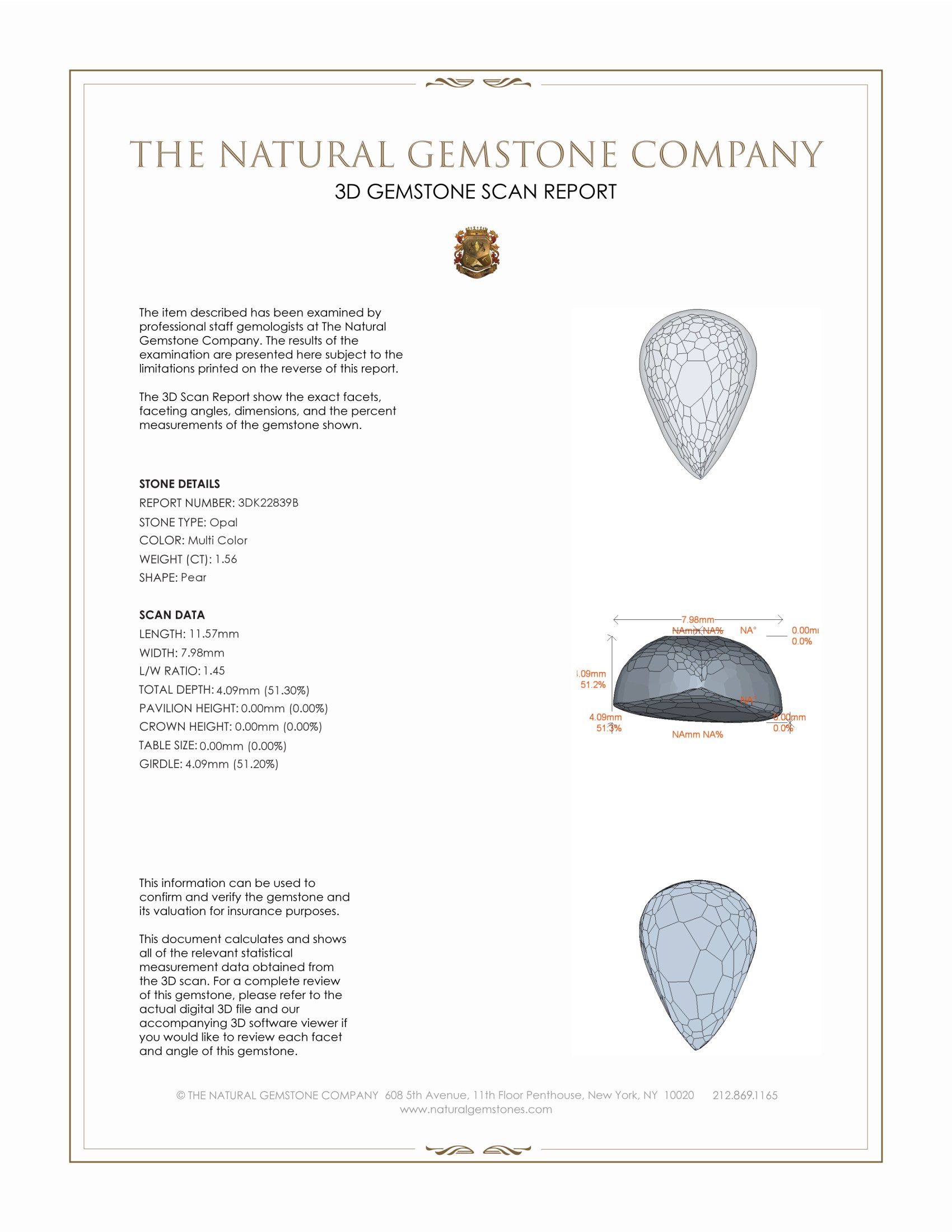
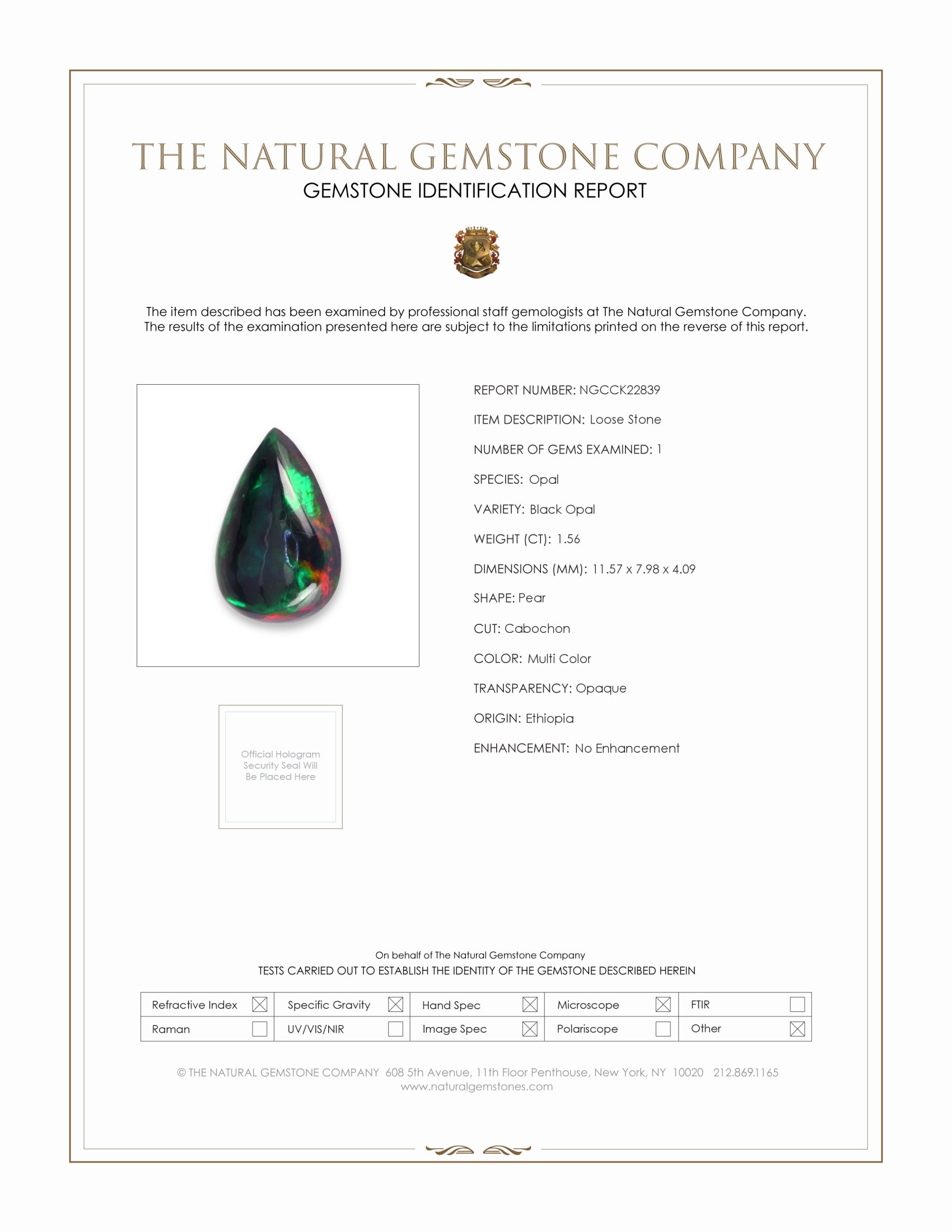
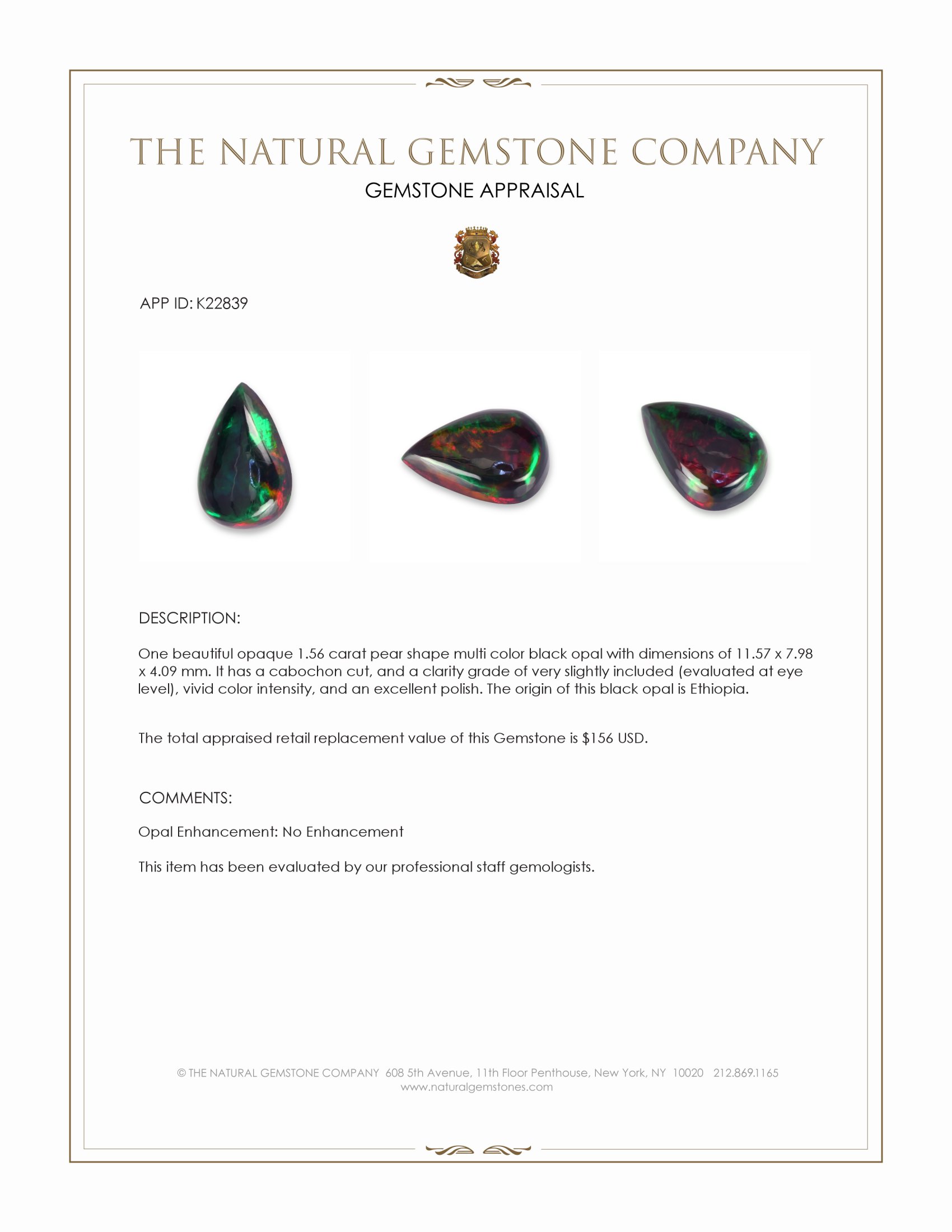
1.56 Ct. Cabochon Black Opal from Ethiopia
This loose stone ships by Apr 7
Item ID: | K22839 |
|---|---|
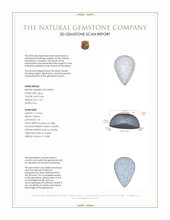
Dimensions (MM): help | Length: 11.57 Width: 7.98 Height: 4.09 |
Weight: | 1.56 Ct. |
Color: help | Multi Color |
Color intensity: help | Vivid |
Clarity: help | Very Slightly Included |
Shape: help | Pear |
Cut: | Cabochon |
Cutting style: | Cabochon |
Enhancements: help | No Enhancement |
Origin: help | Ethiopia |
Per carat price: help | $100 |
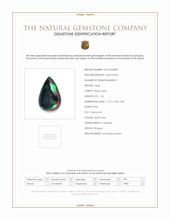
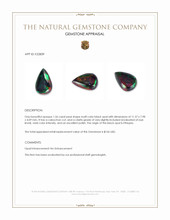
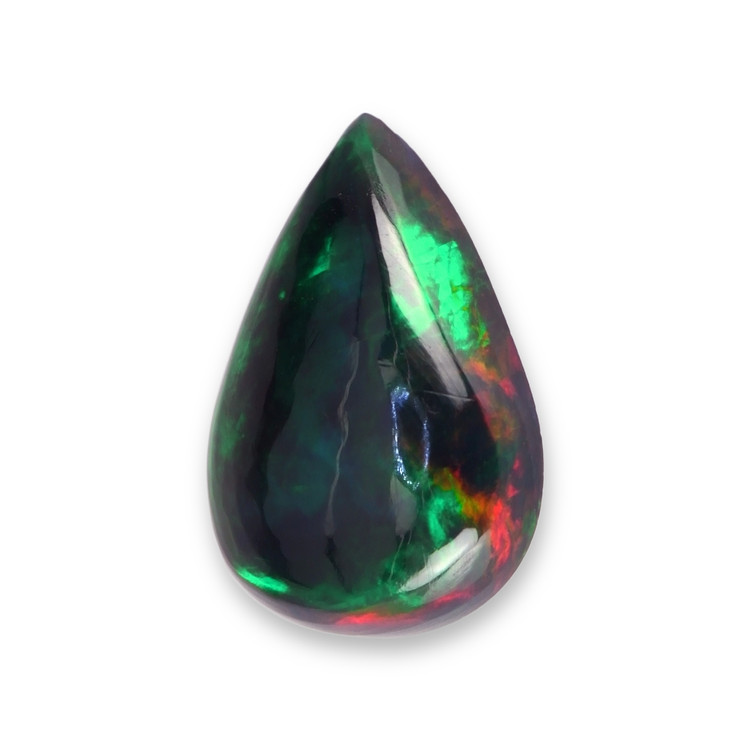
One beautiful opaque 1.56 carat pear shape multi color Black Opal, dimensions 11.57 by 7.98 by 4.09 mm, cabochon cut, clarity grade of very slightly included evaluated at eye level, vivid color intensity, excellent polish, enhancement no enhancement, origin Ethiopia. The cabochon has been executed with technical precision, the dome proportion calibrated to maximize play of color while preserving stability, the 4.09 mm crown producing a balanced dome height that enhances broad flash and patchy color patterning without overthinning the girdle. The pear outline is cleanly maintained, apex symmetry and lateral profiles are consistent, and the polish is at an excellent level with mirror like reflections across the surface. Color distribution is multi color with dominant green and red flashes against a deep body tone characteristic of Black Opal material, the internal color patches exhibiting irregular, non repeating pattern morphology that signals natural formation rather than synthetic regularity. Inclusions are minimal to the eye, distributed in a way that does not interrupt the color play, and the stone shows no evidence of dye, resin filling, or other enhancement, making it a robust example of Ethiopian Black Opal in a wearable size and weight.
Compared to lab grown opals, this natural Black Opal from The Natural Gemstone Company has several technical and market advantages. Natural play of color arises from a stochastic arrangement of silica spheres and microstructure heterogeneity, producing organic, non periodic patterning, complex color layering, and depth that synthetic versions struggle to replicate without obvious repeating motifs. Lab grown opals often show columnar or too regular patterning under magnification, whereas this specimen displays variable grain boundaries and nuanced color transitions that are diagnostic of natural origin. From a craftsmanship perspective, cutting a natural opal requires controlled material removal and polishing strategies to preserve flash and avoid fracturing, and the cabochon shape and dome height of this piece reflect that skilled lapidary intervention. From a value perspective, natural stones carry provenance and rarity premiums, retain market desirability, and respond better to collectors who seek unique, one of a kind internal patterns. For buyers who prioritize authenticity, longevity of aesthetic appeal, and documented origin, this Ethiopian Black Opal offered by The Natural Gemstone Company provides a technically superior and materially unique alternative to lab grown counterparts.


