
- Stone12
- Reports3
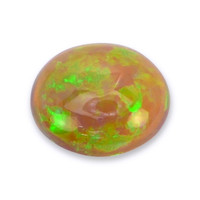

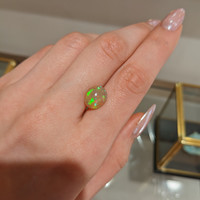
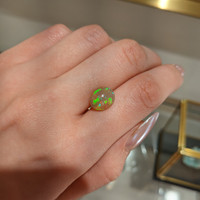
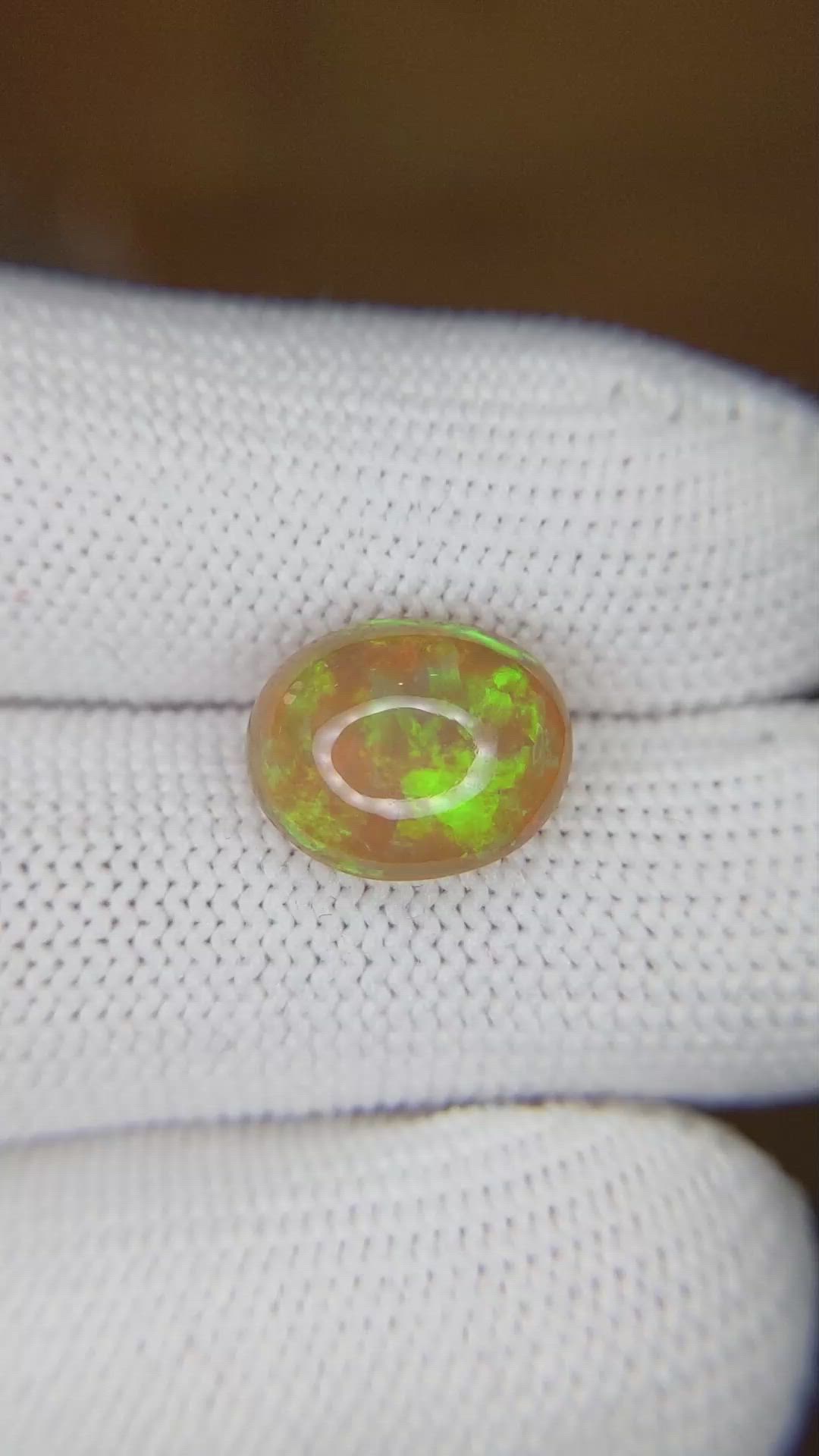
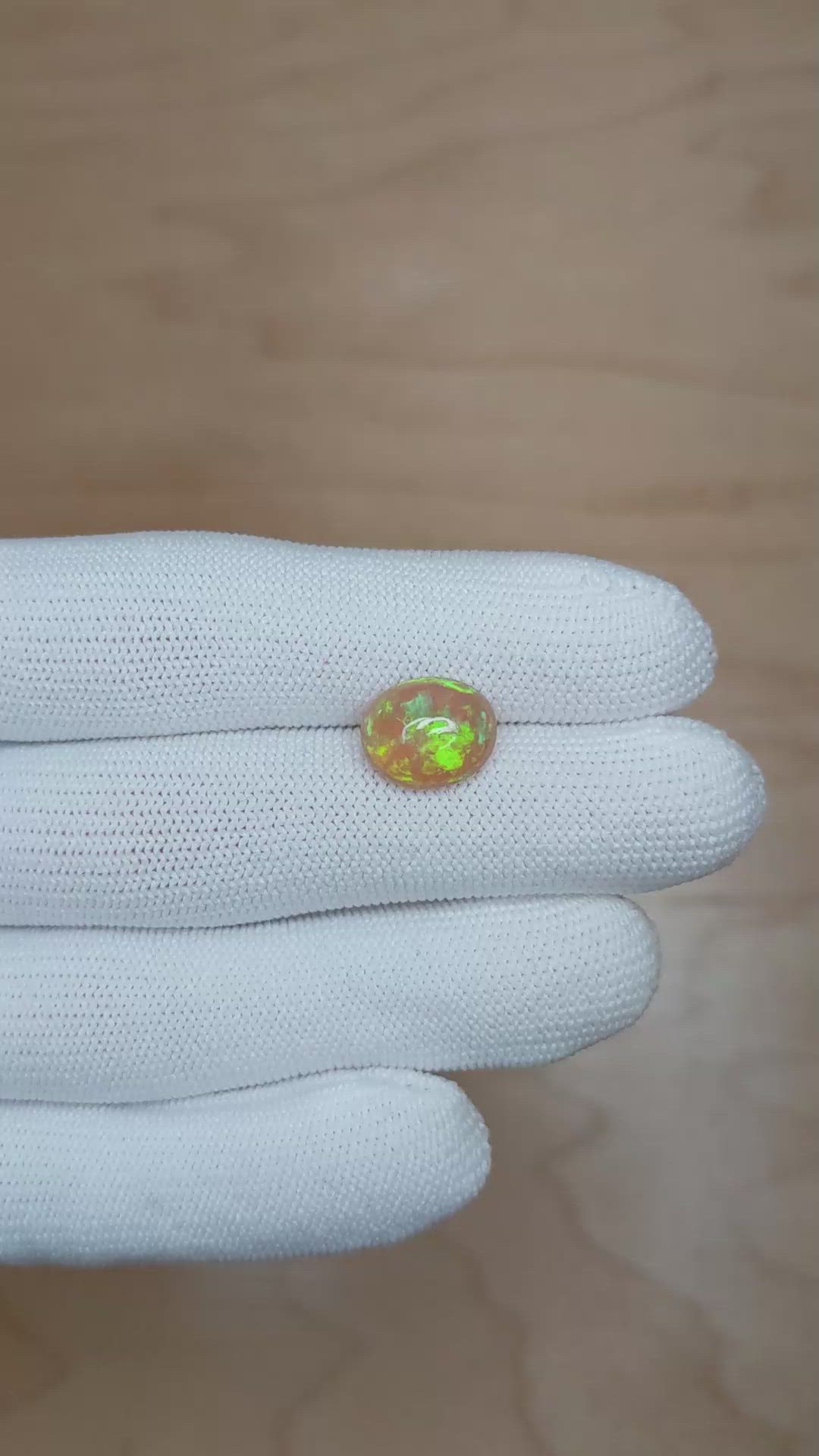
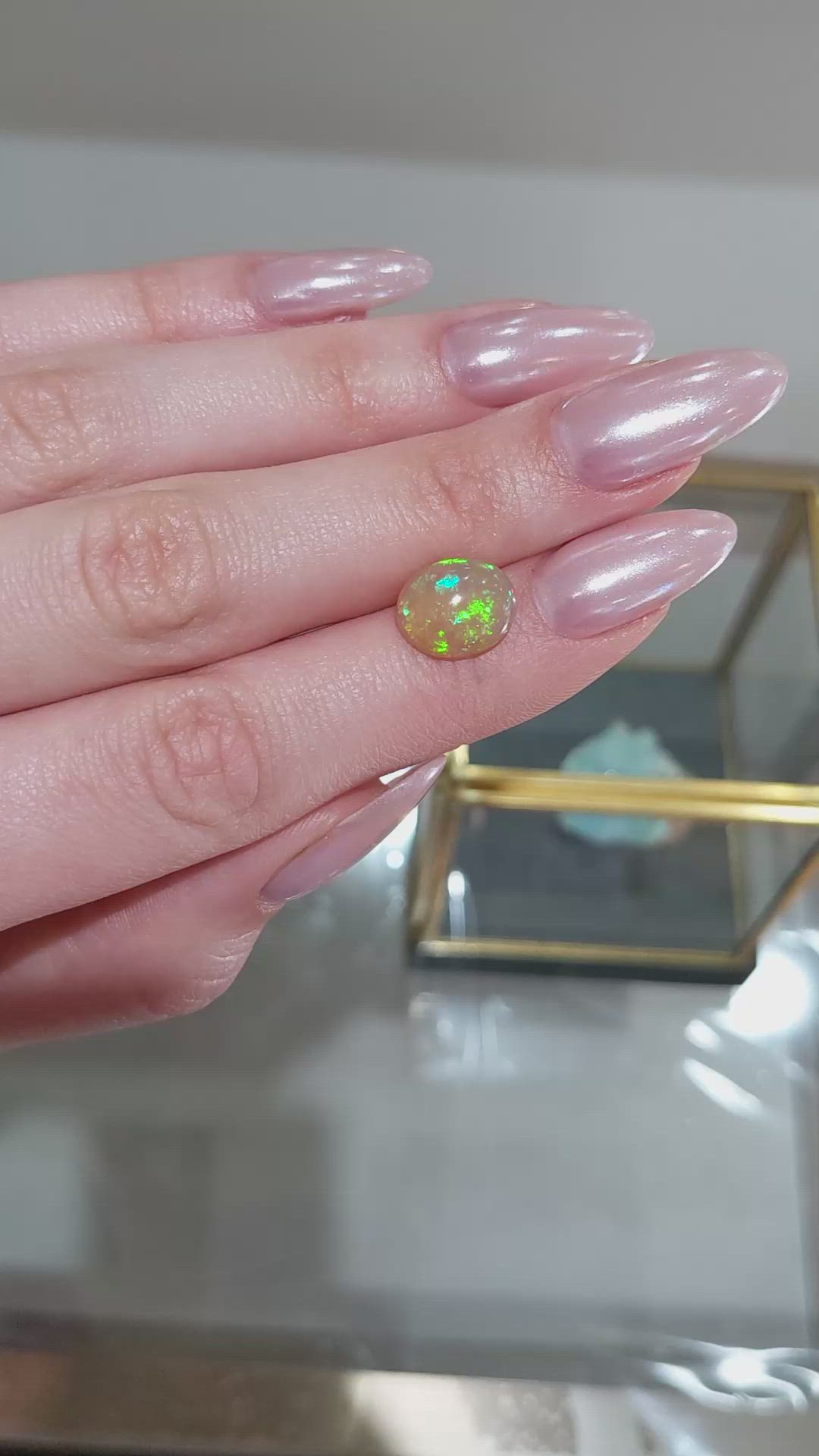




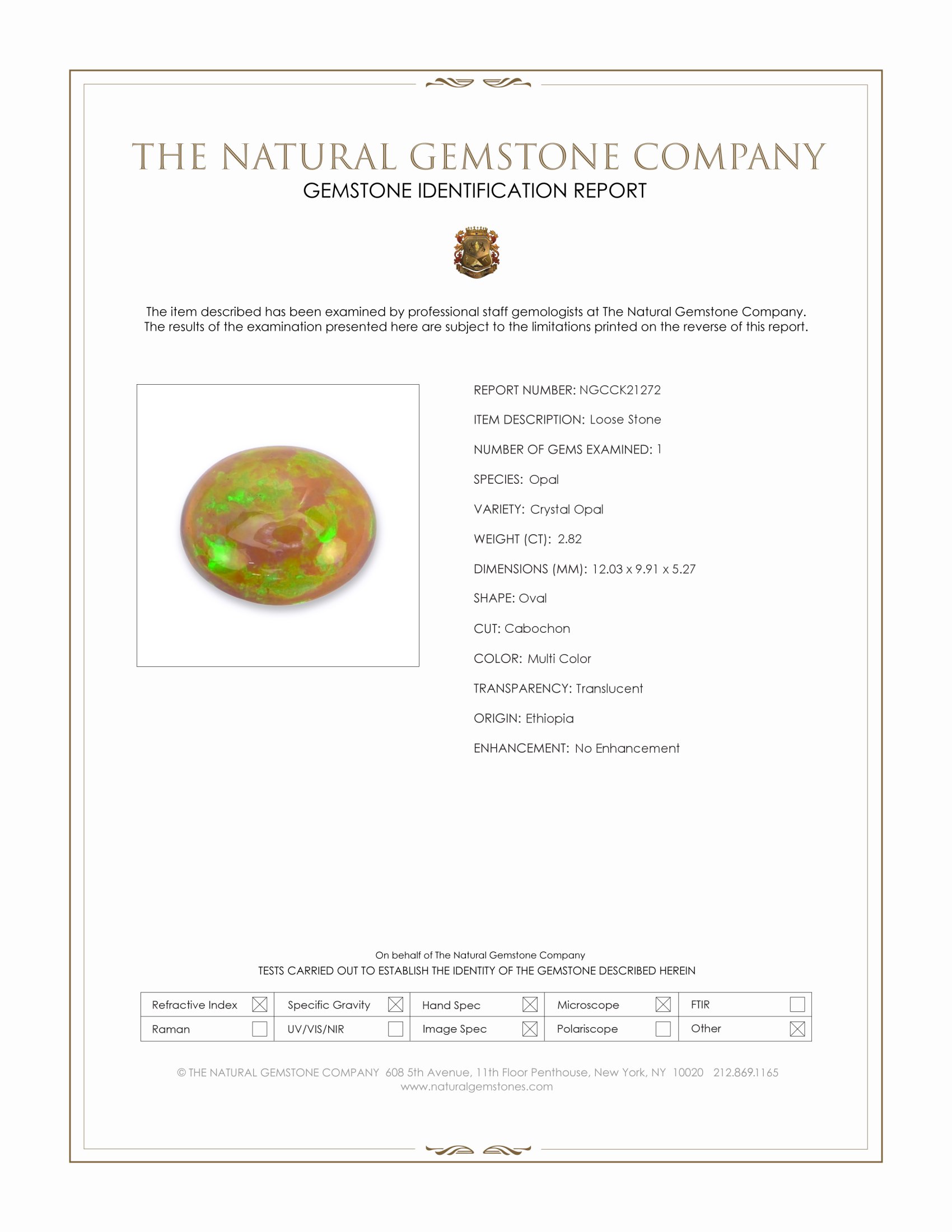
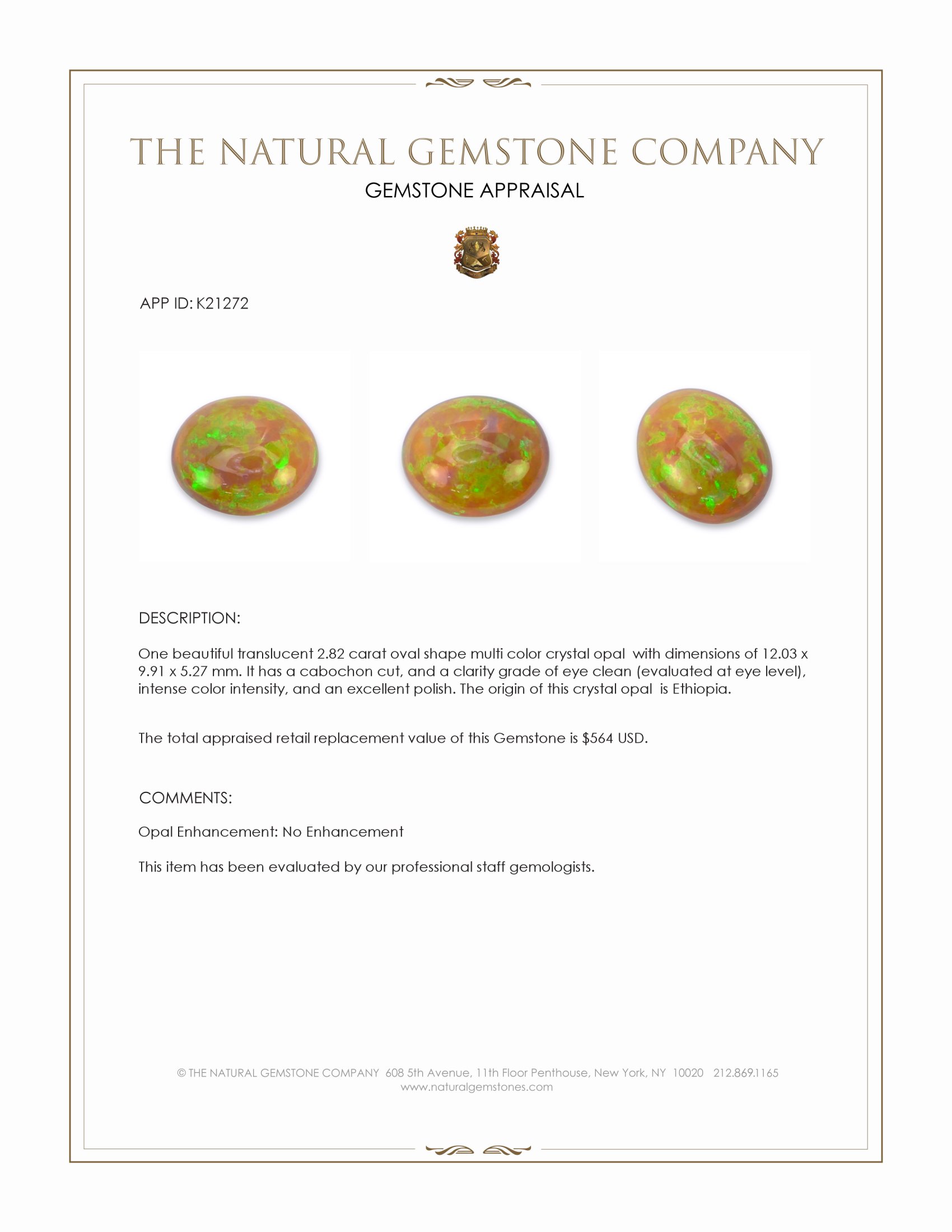
2.82 Ct. Multi Color Cabochon Opal from Ethiopia
This loose stone is available to ship now
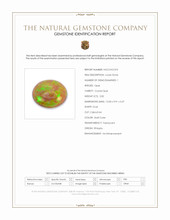
Item ID: | K21272 |
|---|---|
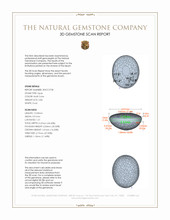
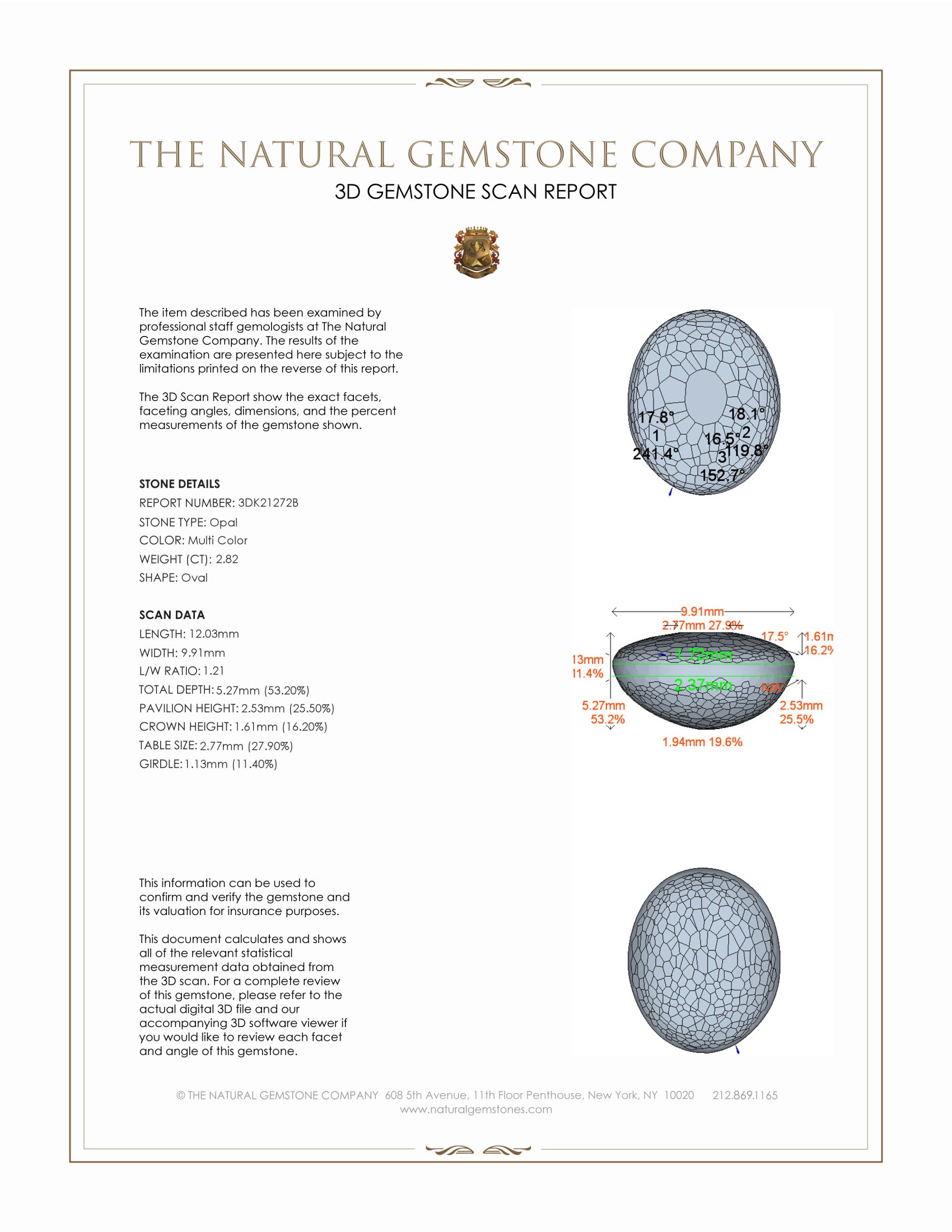
Dimensions (MM): help | Length: 12.03 Width: 9.91 Height: 5.27 |
Weight: | 2.82 Ct. |
Color: help | Multi Color |
Color intensity: help | Intense |
Clarity: help | Eye Clean |
Shape: help | Oval |
Cut: | Cabochon |
Cutting style: | Cabochon |
Enhancements: help | No Enhancement |
Origin: help | Ethiopia |
Per carat price: help | $200 |
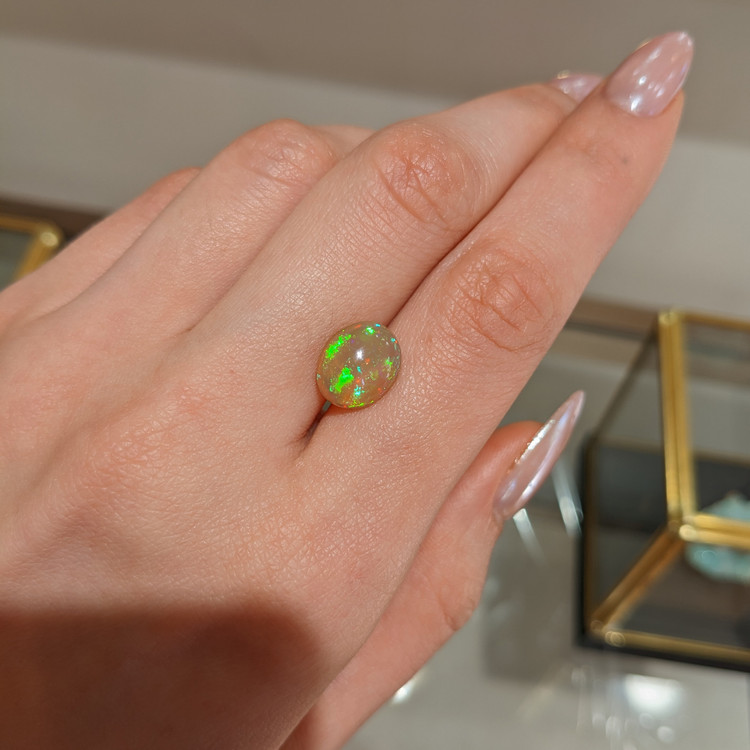
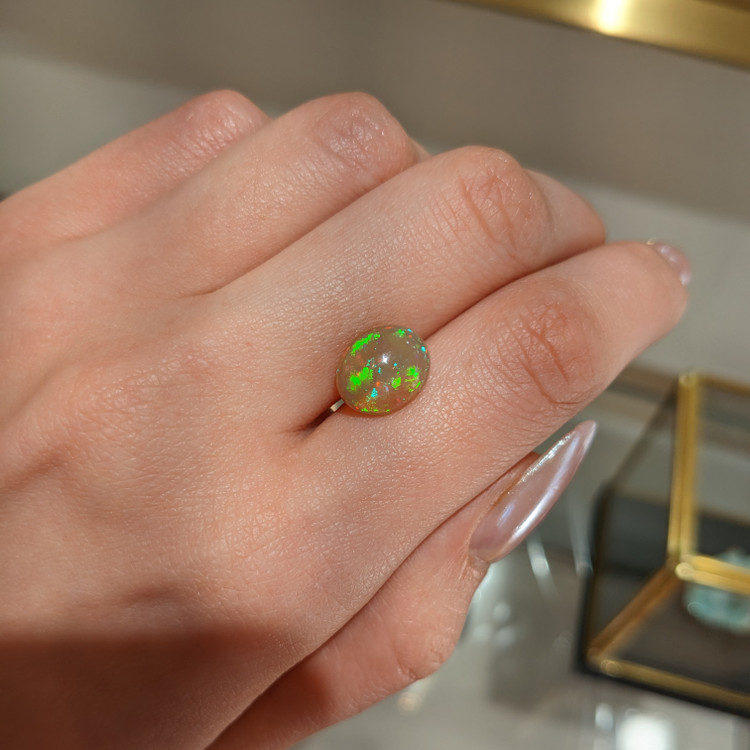
This Crystal Opal offered by The Natural Gemstone Company is a meticulously finished, translucent cabochon weighing 2.82 carats, with precise dimensions of 12.03 x 9.91 x 5.27 mm, oval in outline and exhibiting an eye clean clarity grade when evaluated at eye level, intense color intensity, and an excellent polish. The cabochon cut here is executed with attention to dome profile and symmetry, yielding a medium to high dome that measures 5.27 mm maximum thickness, a length to thickness ratio of approximately 2.28 to 1, and a width to thickness ratio of approximately 1.88 to 1, proportions that favor an expansive play of color while maintaining structural integrity for secure setting. No enhancements have been applied to this specimen, the body is natural and untreated, and the opal retains the inherent physical characteristics associated with quality Ethiopian Crystal Opal, including a translucent base that optimizes internal diffraction without sacrificing depth. The multi color play of color is distributed across the table as discrete flashes and larger broad pattern patches, and the excellent polish produces mirror like facets on the dome that enhance light return and color contrast during viewing.
From a material science perspective, this Crystal Opal derives its optical performance from a regular array of submicron silica spheres arranged in a three dimensional lattice, producing coherent diffraction of visible wavelengths and resulting in the observed play of color, intensity, and color separation. The translucent body of this specimen allows transmission of light into the stone volume, which interacts with the silica sphere lattice to create internal interference effects, producing both directional flashes and broader blotchy patterns depending on sphere regularity and packing. In lapidary terms, orientation was critical during preforming, as the cutter aligned the dome axis to maximize the most saturated color patches and to present broad flash patterns across the table when set flat in standard jewelry orientations. The multi color characteristic indicates variation in sphere size and ordering across micro domains, allowing simultaneous green, orange, and occasional red components to appear as viewing angle changes, a signature behavior of high quality Crystal Opal that collectors and technical buyers specifically seek.
Craftsmanship on this cabochon reflects disciplined lapidary technique, starting with careful selection of rough that displayed favorable color zoning and structural continuity. Preforming was executed to remove plane irregularities and to center the color patches near the crown axis, followed by sequential abrasive laps from coarse to fine grit to establish curvature, maintain consistent crown thickness, and avoid subsurface microfractures. Final shaping employed fine abrasives and low pressure contouring to preserve the interface between fire and body tone, while final polishing utilized cerium oxide on a leather or felt lap to achieve the excellent polish reported, delivering high gloss and minimal abrasions on the dome, which directly contributes to the perceived intensity of play of color. Stability checks and gemological inspection confirmed the absence of fillers, resins, or dye, and no thermal or chemical enhancement was used, assuring that the visual character arises solely from intrinsic microstructure and natural formation, a factor that increases desirability for technical buyers who prioritize untouched material.
The Ethiopian origin of this Crystal Opal is a defining component of its technical and market value, as Ethiopian opal fields are known for producing opals with unusually bright, often neon like, greens and oranges, and for producing hydrophane varieties that can show dynamic shifts in transparency and color when exposed to moisture. Origin impacts supply, rarity, and expected material behavior, and in this instance provenance from Ethiopia implies both strong color saturation and potential responsiveness to environmental moisture, properties that informed the cutter during orientation and finishing choices to preserve and highlight the most stable color domains. For practical use, the 5.27 mm maximum thickness suggests a secure bezel or low profile domed setting to protect the crown while allowing sufficient light penetration to energize the internal diffraction, and given the eye clean clarity and intense color, the stone performs well in pendants and rings where movement and varied lighting reveal its full spectral range. The Natural Gemstone Company documents origin and treatment status as part of our quality control, offering traceable sourcing and technical data for connoisseurs and jewelers seeking predictable behavior and raw optical performance, attributes that together with the precision cut and natural, untreated status, substantiate the intrinsic and collectible value of this Crystal Opal.


