
- Stone14
- Reports4
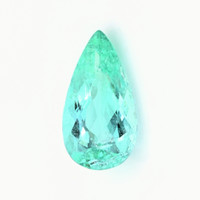
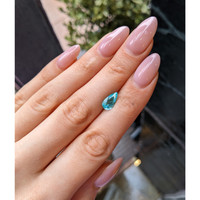
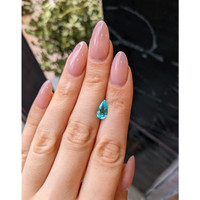
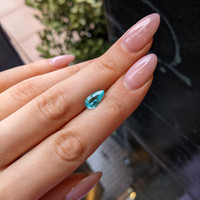
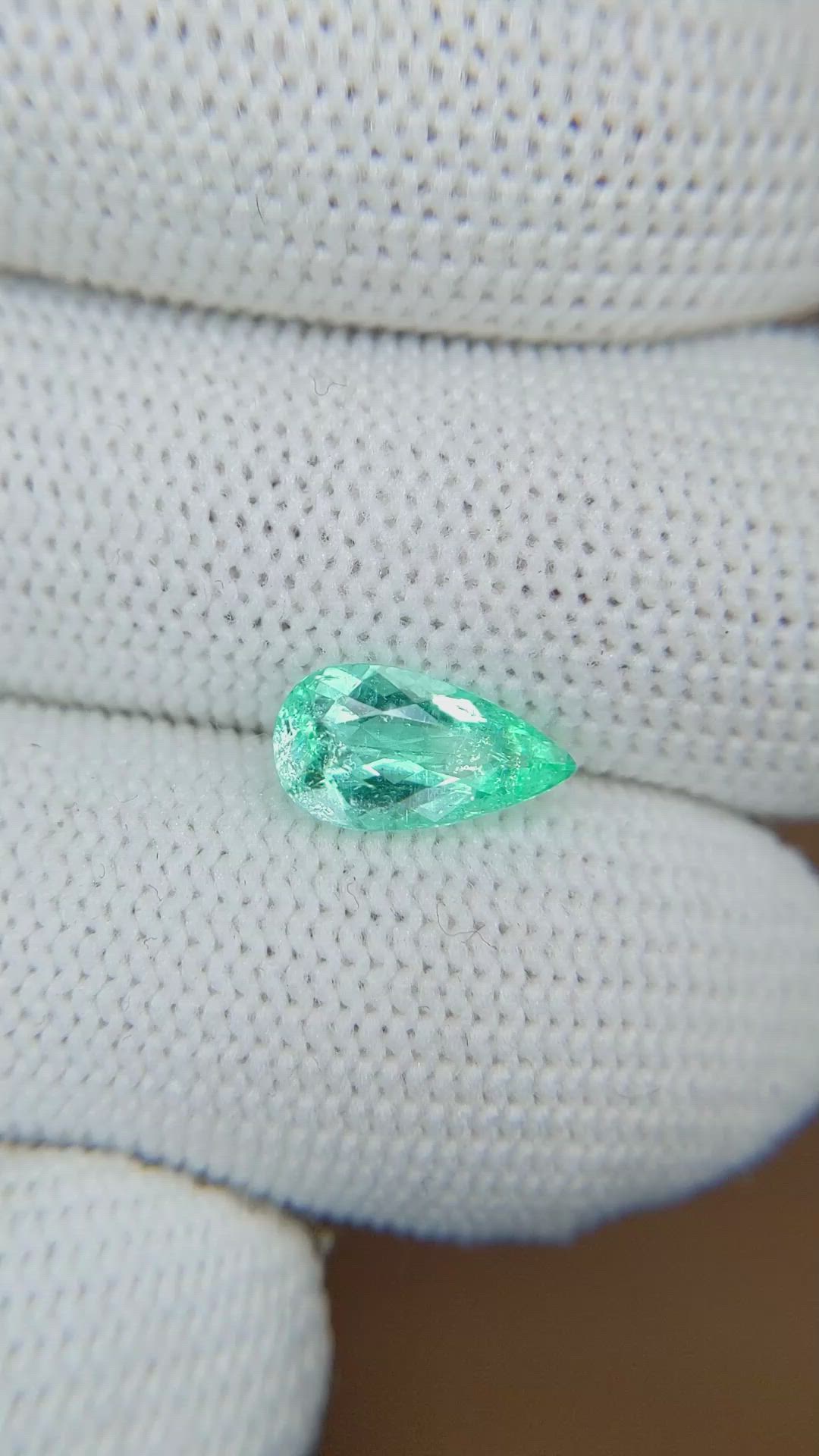
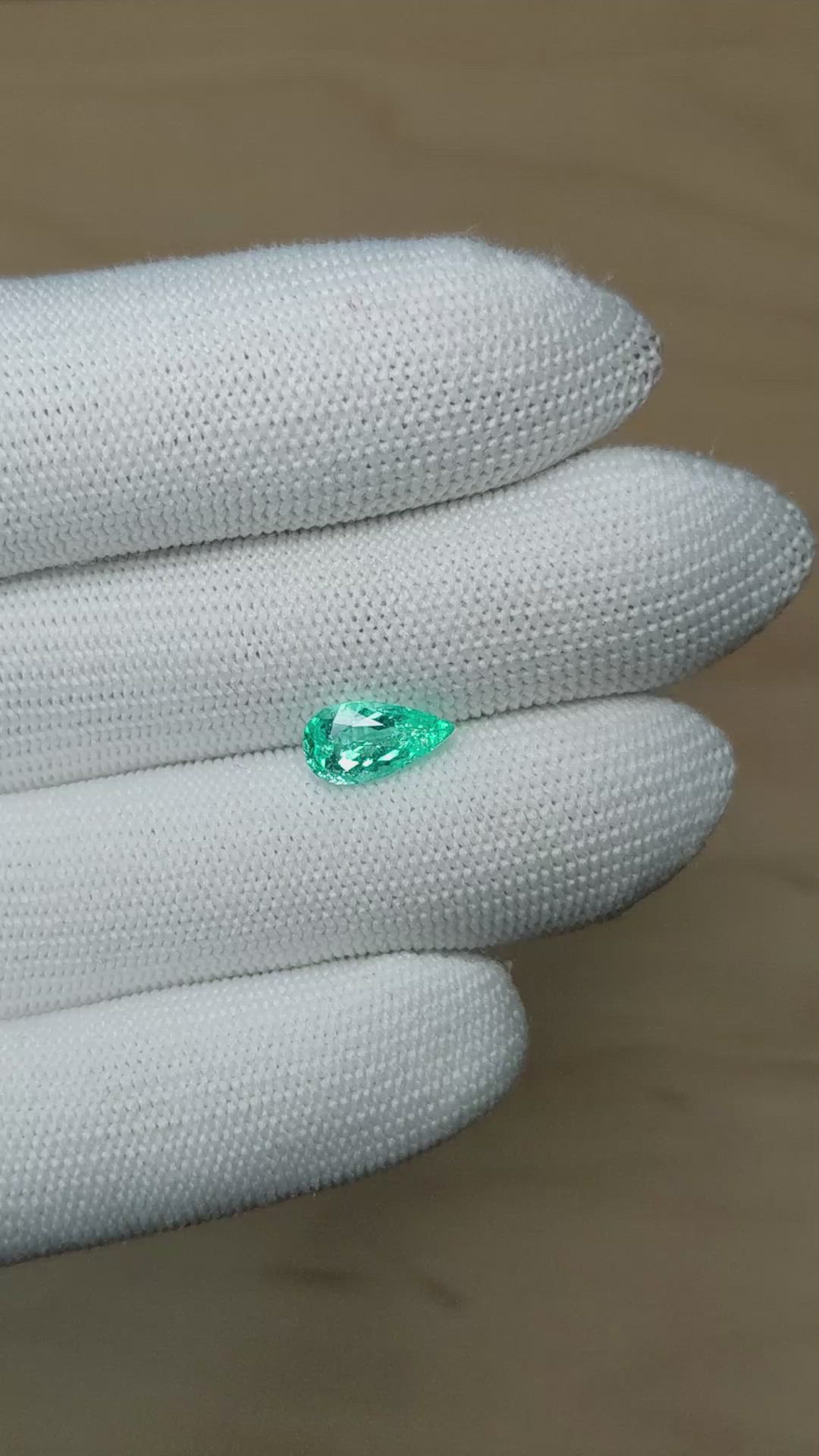
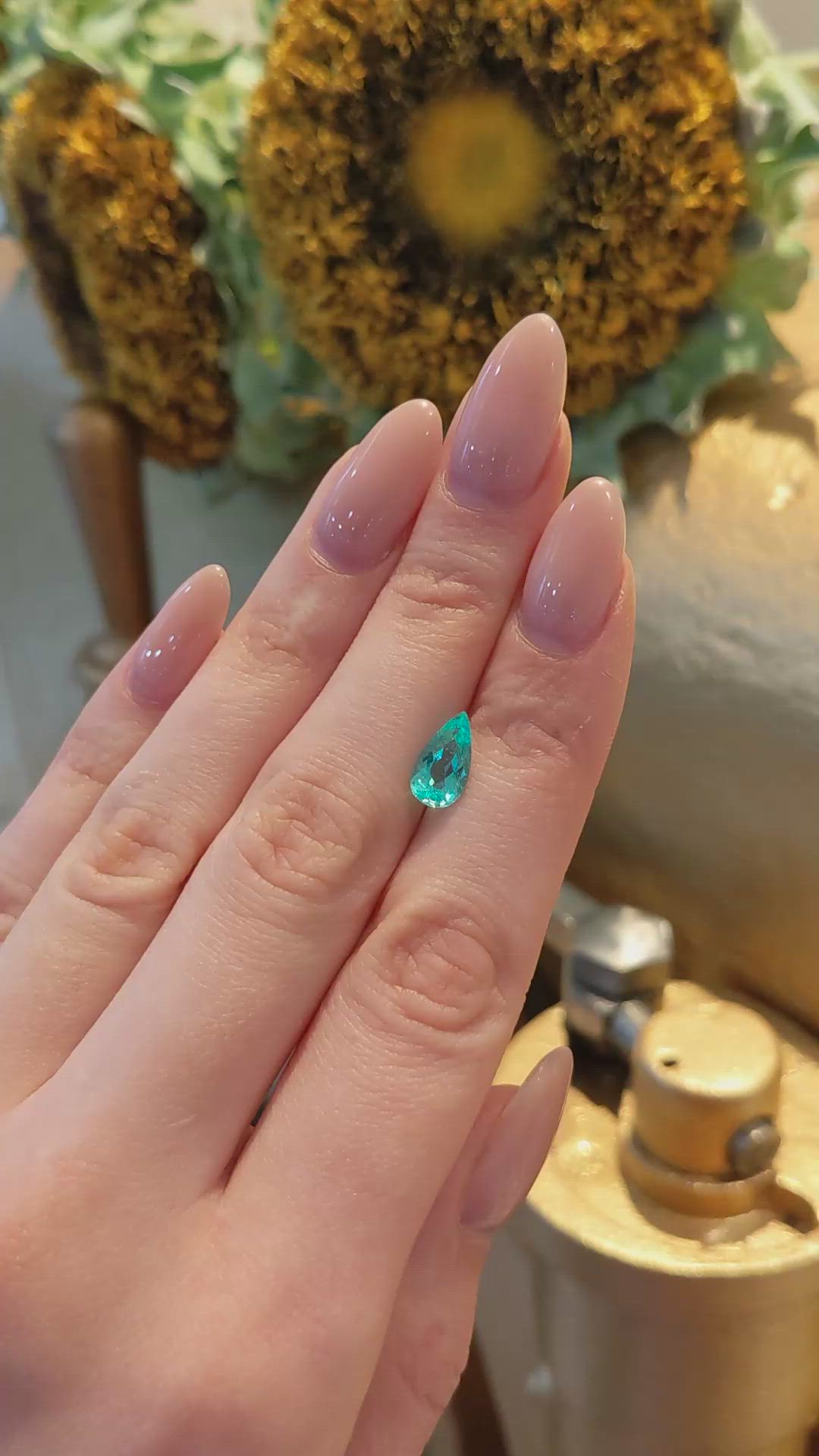
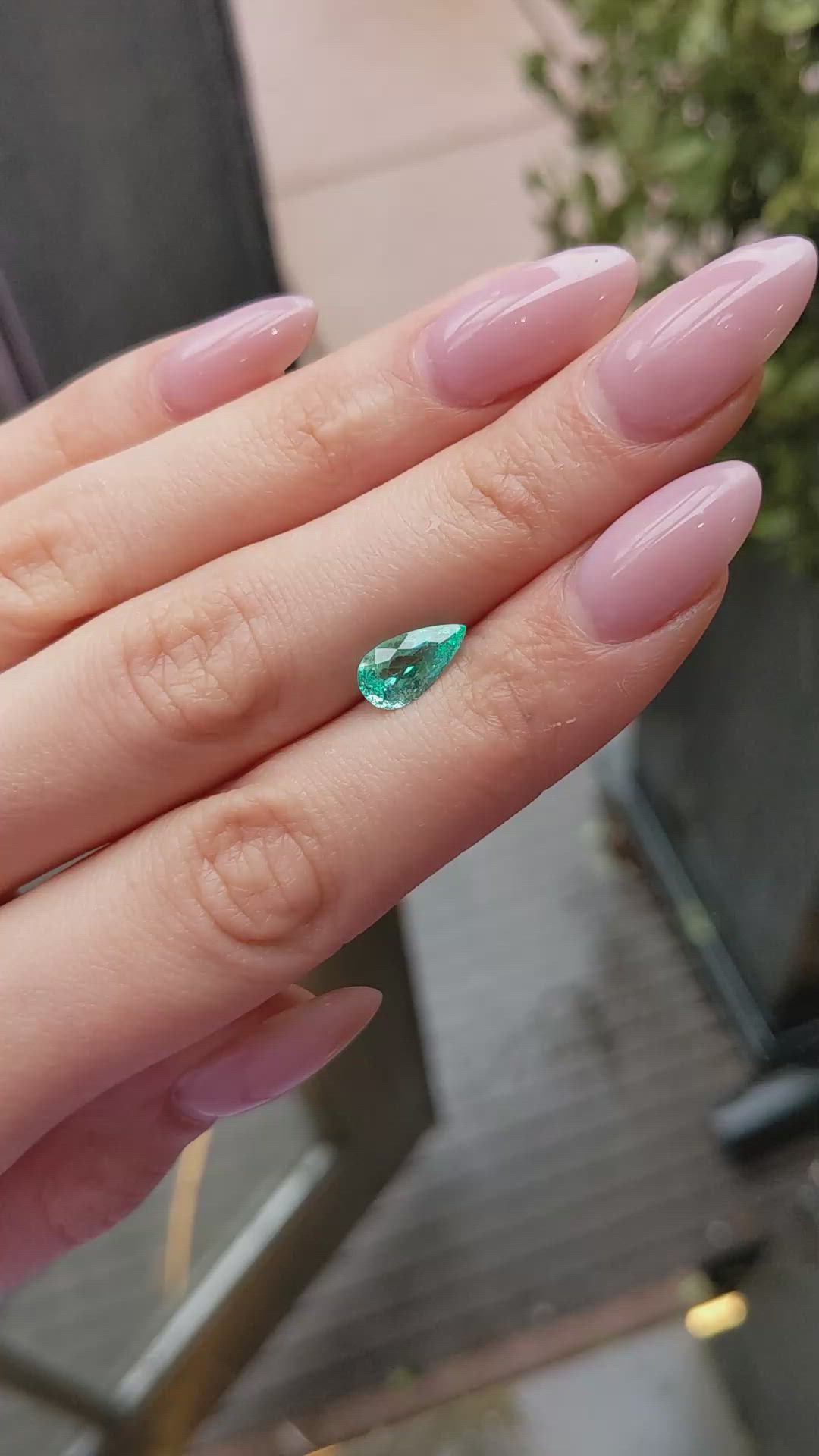

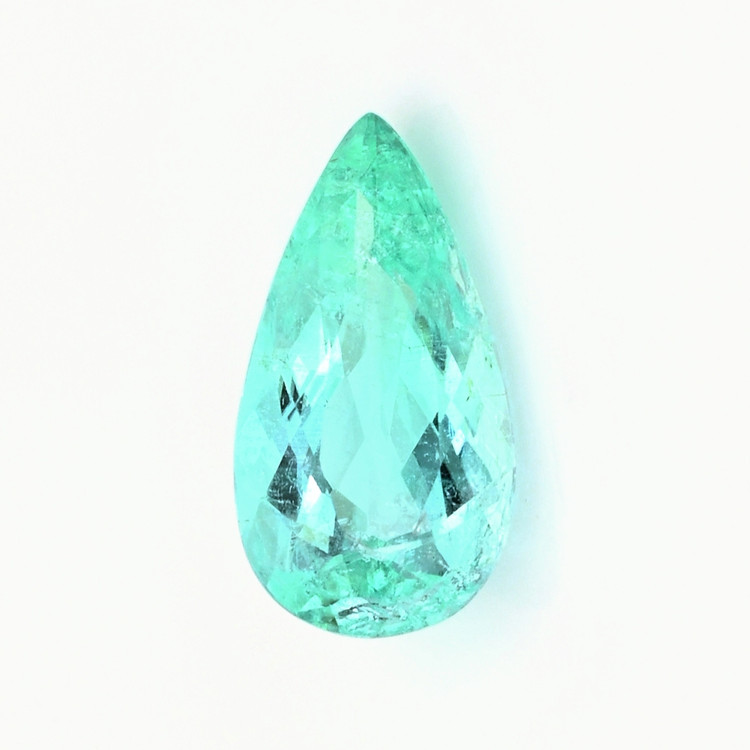
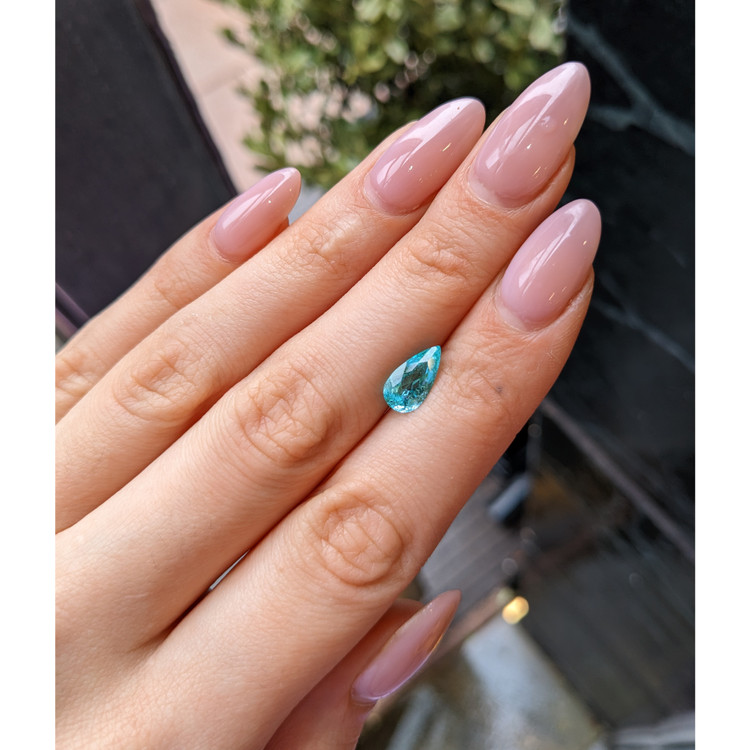
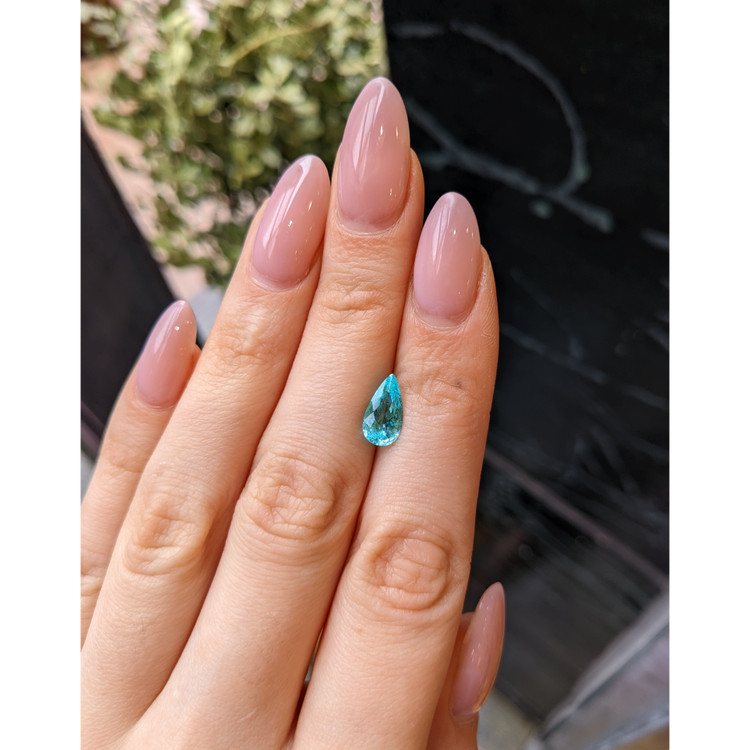
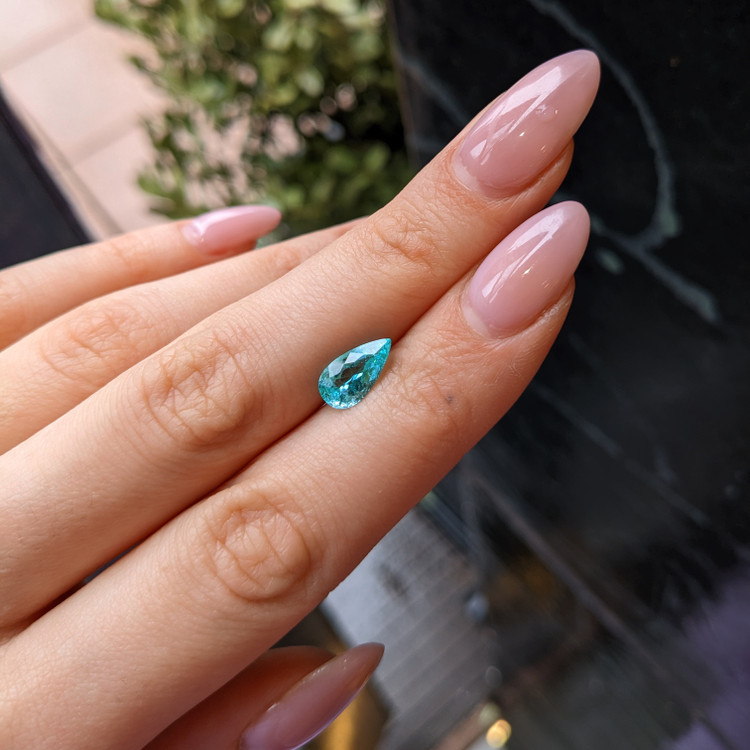

1.36 Ct. Paraiba Tourmaline from Mozambique
This loose stone is available to ship now
Item ID: | K22148 |
|---|---|
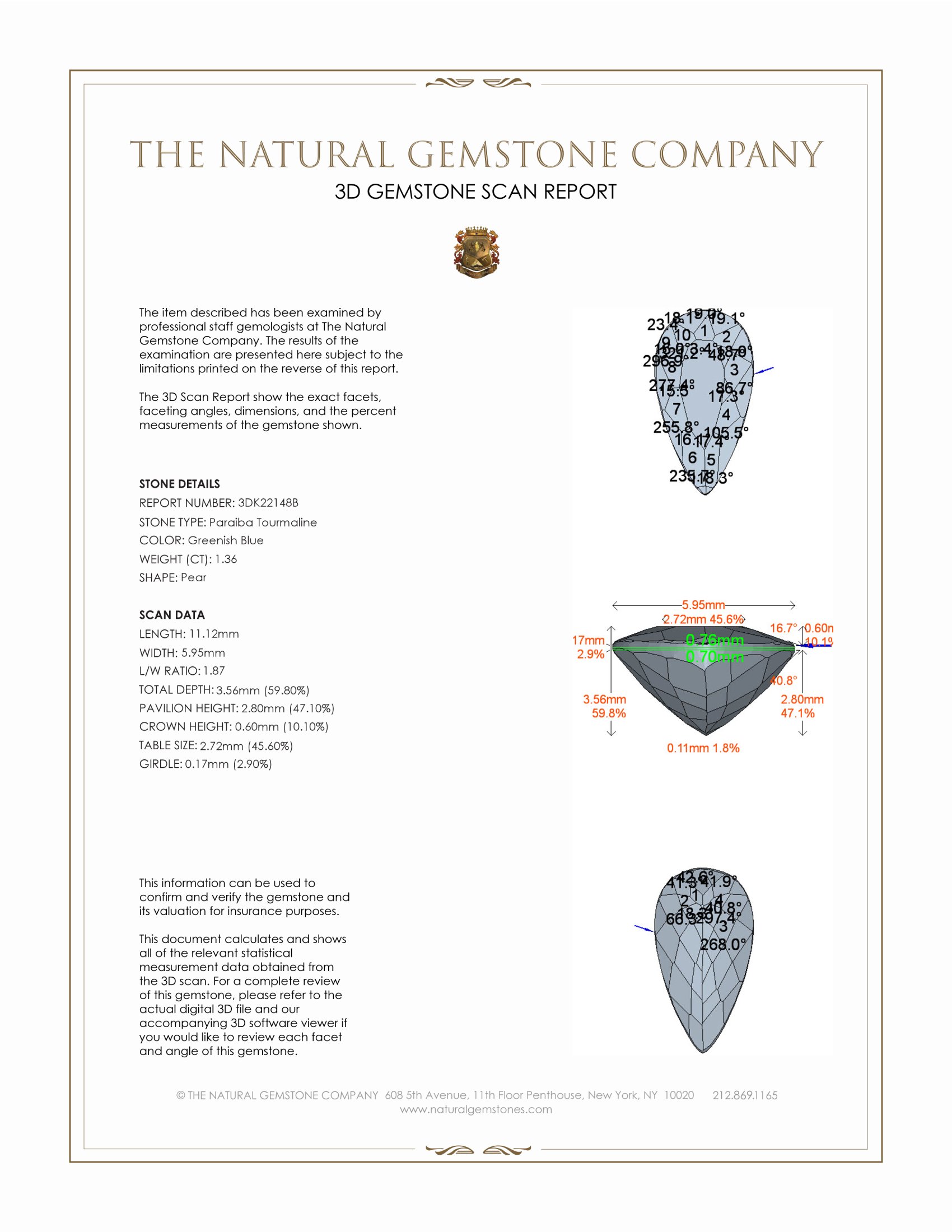
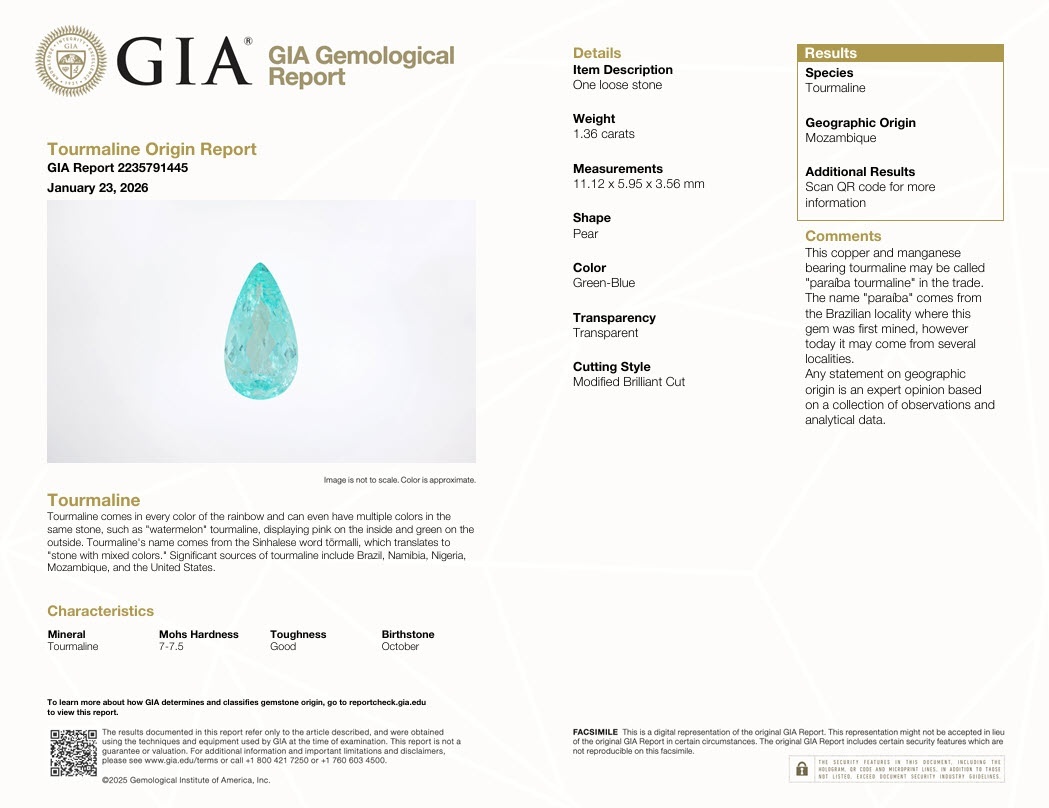
Dimensions (MM): help | Length: 11.12 Width: 5.95 Height: 3.56 |
Weight: | 1.36 Ct. |
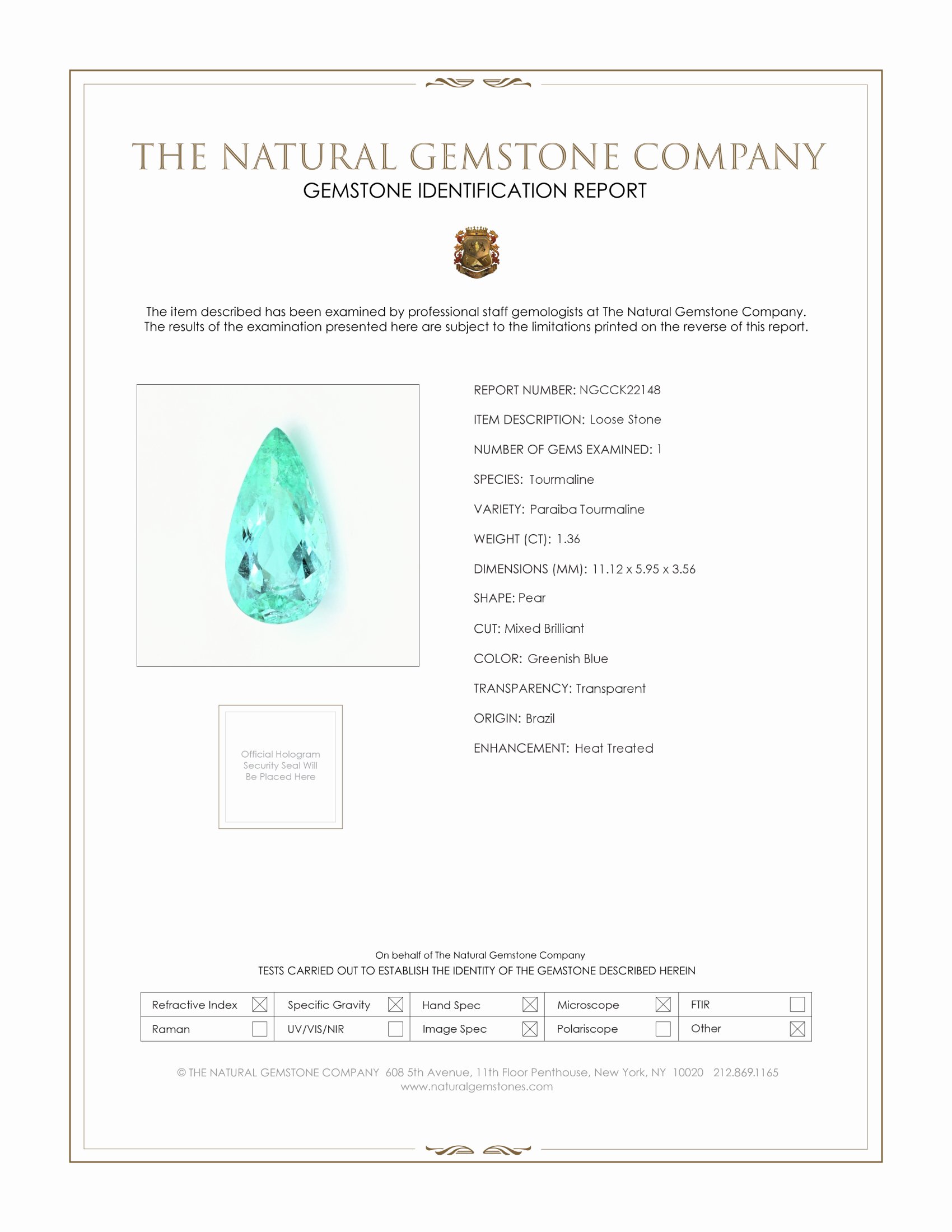
Color: help | Greenish Blue |
Color intensity: help | Medium |
Clarity: help | Slightly Included |
Shape: help | Pear |
Cut: | Mixed Brilliant |
Cutting style: | Faceted |
Enhancements: help | Heat Treated |
Origin: help | Mozambique |
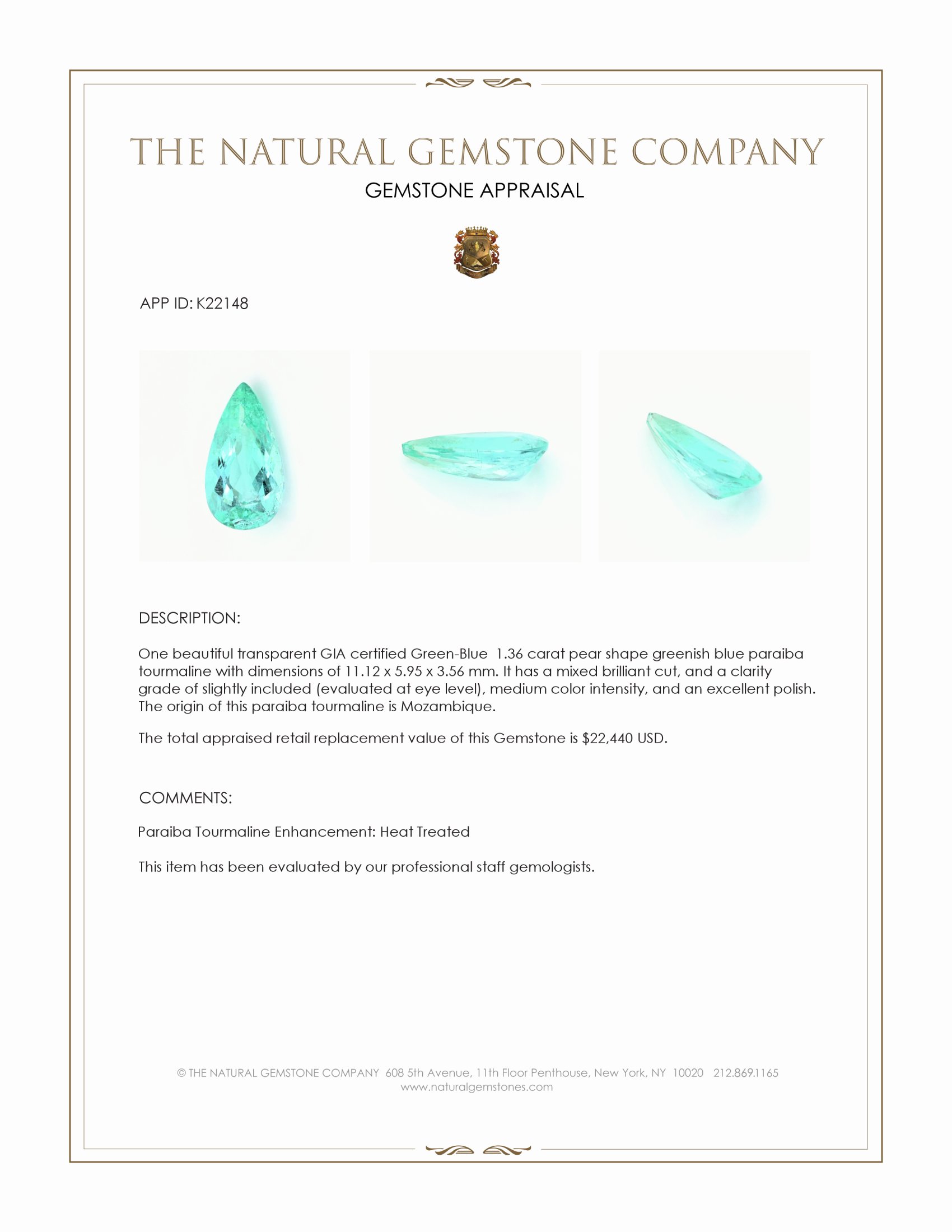
Per carat price: help | $16,500 |
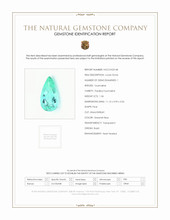
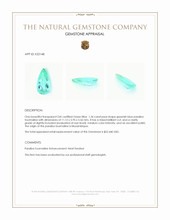
This jewel offered by The Natural Gemstone Company is a transparent pear shaped paraiba tourmaline weighing 1.36 carat, measuring 11.12 by 5.95 by 3.56 mm. The gem displays a greenish blue hue with medium color intensity, and it has been fashioned with a mixed brilliant cut that balances a sparkling crown with a faceted pavilion to enhance both scintillation and depth. Clarity in this specimen is graded as slightly included when evaluated at eye level, and the stone has an excellent polish that gives the facets crisp reflections. The material has received a heat treatment enhancement, a common and stable practice to optimize tone and saturation, and the stone’s reported origin is Mozambique, a locality now celebrated for producing copper bearing tourmalines with vivid neon like colors that echo the legendary Paraiba of Brazil.
When assessing the clarity and cut for an educated buyer, the slightly included grade means that inclusions are present but do not detract significantly from the gem’s overall appearance or transparency when viewed without magnification. Inclusions in tourmaline are often internal hallmarks that confirm natural origin and can also act to scatter light subtly, which in some cases enhances the perceived glow of a neon colored stone. The mixed brilliant cut on this pear shape is particularly effective for paraiba tourmaline because the combination of brilliant crown facets and a step or mixed pavilion allows for lively surface sparkle while maintaining a window of saturated color through the depth of the stone. The excellent polish ensures facet junctions are sharp and light returns are maximized, which is important for a gem where color and brilliance must work together to produce the distinct paraiba effect.
From a gemological perspective this Mozambique paraiba stands apart from more common blue and green gems in several ways. Tourmaline typically shows a refractive index range around 1.624 to 1.644 and a modest dispersion that is lower than that of diamond, meaning that contrasty spectral fire is not its primary source of appeal. What makes paraiba tourmaline exceptional is the presence of copper and sometimes manganese trace elements, which generate intense, almost electric blues and green blues that appear to glow from within. Compared with aquamarine, which usually shows pale blue tones and high clarity but lower saturation, this paraiba’s medium intensity greenish blue reads much more vivid and dramatic. Compared with blue topaz, which can be attractive but often lacks depth of saturation and natural neon quality, a copper bearing tourmaline exhibits a richer inner light. Against sapphires and emeralds this paraiba offers a different kind of visual currency, trading crystalline depth and a neon hue for the classic velvety blue of sapphire or the botanical green of emerald. The result is a stone that catches the eye not through dispersion or hardness alone, but through saturated color, internal luminescence, and the lively reflections produced by the mixed brilliant faceting.
For the informed buyer there are several compelling reasons this particular paraiba is valuable. Rarity is central, because copper bearing tourmalines with this chroma and transparency are comparatively scarce, and Mozambique origins have become especially sought after since the discovery of significant deposits that rival early Brazilian material. The combination of a well executed mixed brilliant cut, a clean face up appearance, and excellent polish enhances both visual appeal and wearable versatility, making the stone suitable for fine jewelry and collectors alike. The slightly included clarity grade preserves evidence of natural formation, which can be desirable to connoisseurs who prefer natural characteristics over heavily treated or synthetic replacements. Heat treatment, when disclosed as it is here, is an accepted enhancement that stabilizes color without the permanence concerns associated with some surface treatments, and it is easily documented and disclosed in sales and appraisal paperwork. At The Natural Gemstone Company we prioritize transparent provenance reporting and responsible sourcing, and we can provide additional details or third party reports upon request, to support investment grade decisions.
In practical terms this pear shaped paraiba tourmaline adapts well to a variety of settings that emphasize its face up color and protection of the thinner tip. For a ring a setting that lifts the stone to allow light to penetrate the pavilion will emphasize the neon like glow, and a bezel or partial bezel at the tip can provide extra security without sacrificing appearance. A halo of small white diamonds will heighten perceived brilliance and emphasize the unique blue green tone, while minimalist solitaire mountings let the color speak for itself. Care wise the gem’s hardness near 7 to 7.5 on the Mohs scale means routine wearability is good with sensible care, avoiding harsh knocks and extended exposure to chemicals. Ultrasonic cleaning may be acceptable for heat treated stones but should be approached with caution if inclusions are oriented in ways that could trap stress, and when in doubt a gentle warm soapy bath and soft brush will maintain the stone’s polish and brilliance. If you would like to explore custom settings, independent appraisal, or additional imaging to evaluate face up color under different lighting, The Natural Gemstone Company is ready to assist with expert guidance and secure handling to ensure this rare Mozambique paraiba finds the ideal setting and owner.


