
- Stone11
- Reports4




1.95 Ct. Green Paraiba Tourmaline from Mozambique
This loose stone is available to ship now
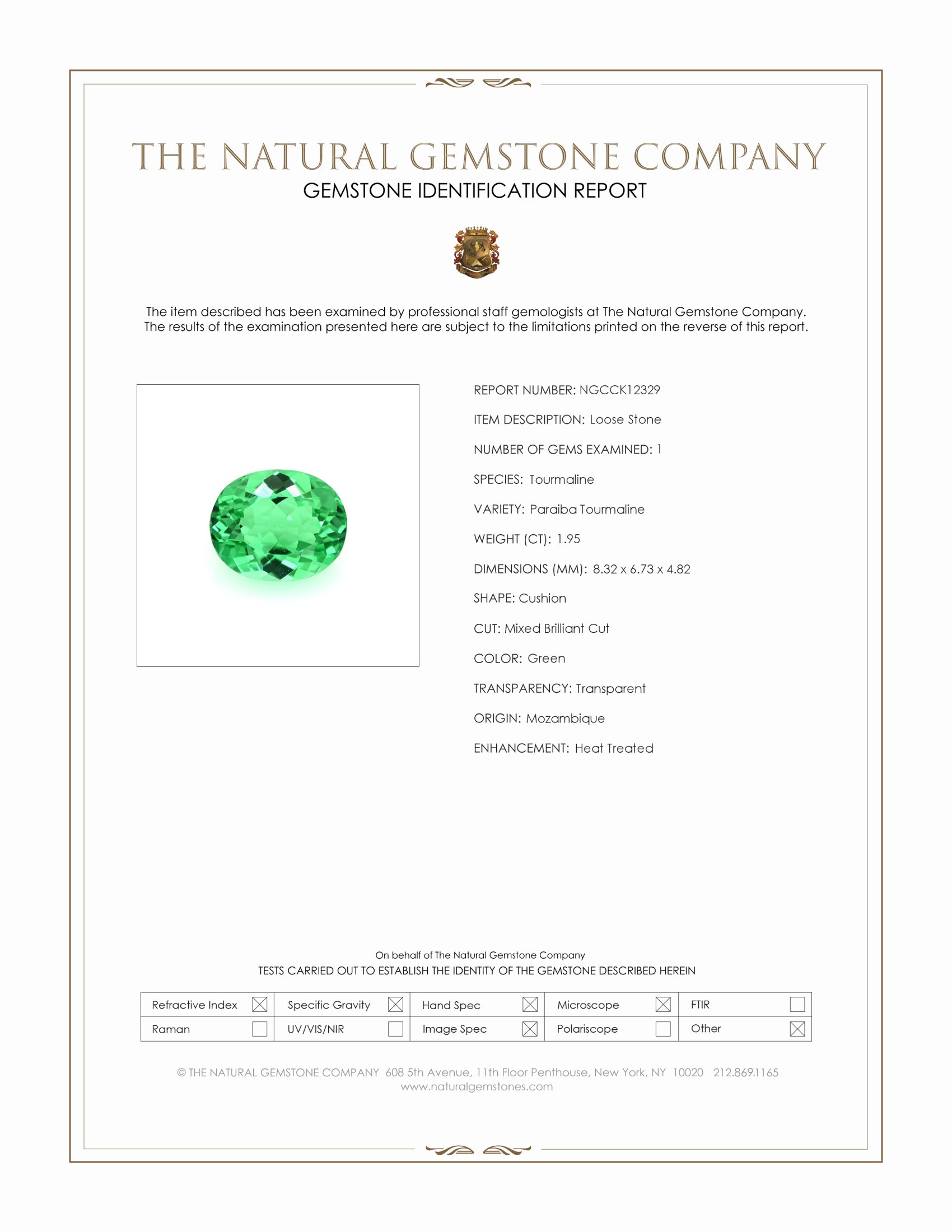
Item ID: | K12329 |
|---|---|
Dimensions (MM): help | Length: 8.32 Width: 6.73 Height: 4.82 |
Weight: | 1.95 Ct. |
Color: help | Green |
Color intensity: help | Intense |
Clarity: help | Eye Clean |
Shape: help | Cushion |
Cut: | Mixed Brilliant Cut |
Cutting style: | Faceted |
Enhancements: help | Heat Treated |
Origin: help | Mozambique |
Per carat price: help | $8,500 |
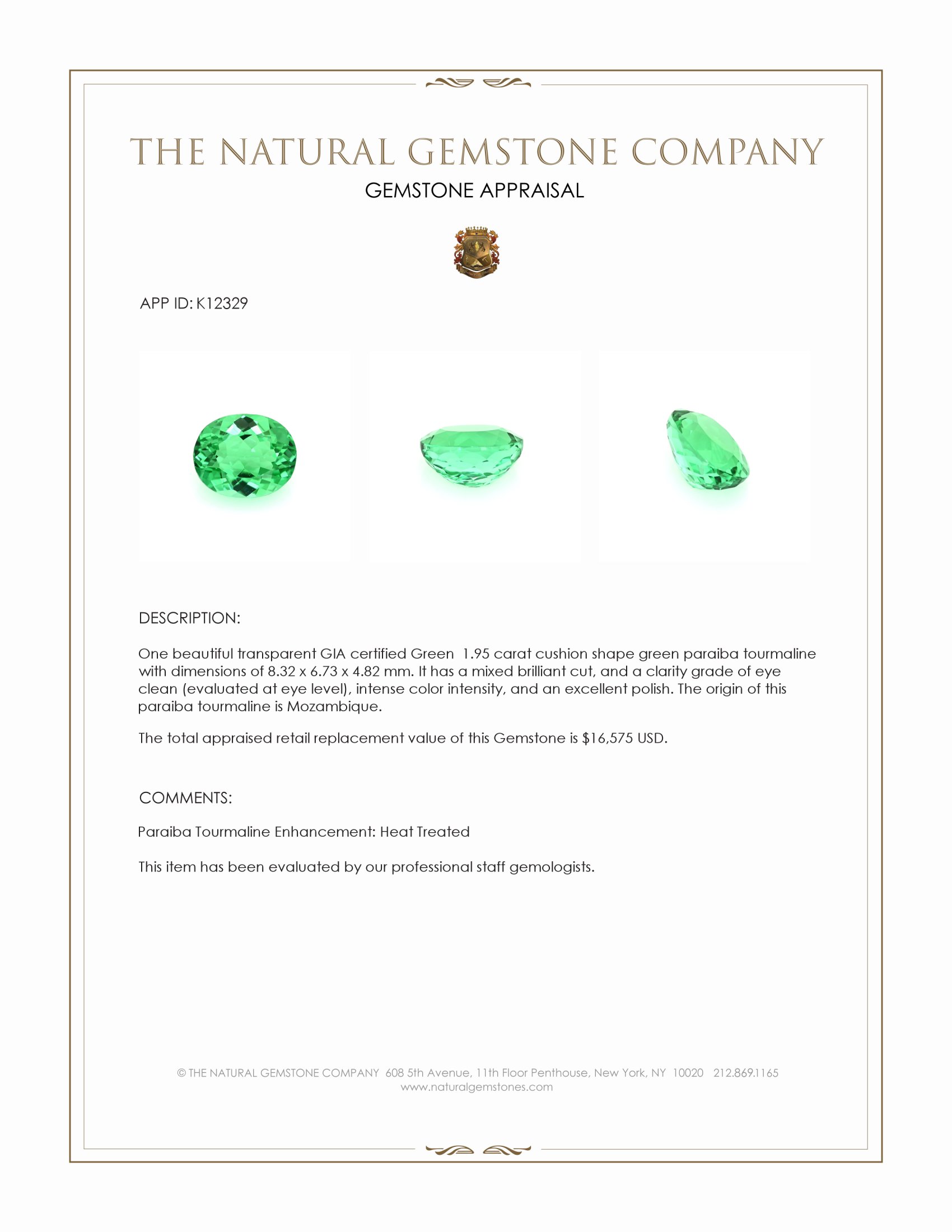
This GIA certified Green 1.95 carat cushion shape paraiba tourmaline is a transparent example of one of the most sought after tourmaline varieties, presented with precise dimensions of 8.32 x 6.73 x 4.82 mm. The cutting style is faceted, executed in a mixed brilliant cut that balances fire and color saturation, and the stone exhibits an intense color intensity that is characteristic of copper bearing tourmalines. Clarity has been evaluated as eye clean at normal viewing distances, and the finish reflects an excellent polish that allows the surface to interact cleanly with light. The stone has received heat treatment as an enhancement, a standard and stable method applied to optimize hue and remove minor color zoning, and it is identified as originating from Mozambique, a notable locality for vivid copper rich tourmalines. This detailed specification underpins the gemstone assessment and provides a clear technical foundation for connoisseurs and gem professionals.
The story of this paraiba begins deep within the earth, millions of years ago, in an environment shaped by tectonic forces and the slow choreography of crustal processes. Magmas intruded into older rocks, evolving and fractionating as they cooled, while the late stage fluids became enriched in volatile components and a suite of trace elements. In these late magmatic to hydrothermal stages, boron rich fluids circulated through fractures and cavities in pegmatitic bodies, creating the conditions necessary for tourmaline crystallization. Copper, introduced either from the host magma or from surrounding copper bearing rocks, became incorporated into the growing tourmaline lattice, imparting the striking green hue that distinguishes paraiba tourmaline. Manganese and other trace elements modulated the final tone and saturation, and slow cooling allowed well formed crystals to develop, their internal structures capturing the chemical signature of that moment in geological time.
Over subsequent geological epochs this nascent crystal experienced burial, thermal events, and the gradual uplift of the continental crust, each phase leaving an imprint on its eventual path to the surface. Regional metamorphism and repeated episodes of deformation altered the host rocks, opening new channels for fluid migration and occasionally facilitating recrystallization at crystal margins, while long term erosion stripped away overlying materials. The crystal survived transport processes that ranged from gentle fluvial movement to more energetic alluvial dispersion, ultimately reaching deposits where it could be concentrated and later discovered. The Mozambique origin recorded for this stone reflects a particular geological setting in which copper enriched pegmatites and related hydrothermal systems produced gem quality tourmalines, and where natural sorting processes have contributed to the recovery of well preserved crystals suitable for faceting.
The cutting and finishing of this cushion shaped gem were chosen to emphasize both color and brilliance, the mixed brilliant facet configuration combining pavilion and crown arrangements designed to return light effectively while preserving the vivid green that defines its identity. The dimensions of 8.32 x 6.73 x 4.82 mm and the weight of 1.95 carats result in a balanced face up presence that performs well in a range of jewelry applications, from classic solitaire settings to more contemporary designs that showcase color. The eye clean clarity grade indicates that no inclusions interfere with normal visual appreciation, allowing the intense color and internal play of light to be experienced without distraction. The excellent polish contributes to surface brightness and the ability of the gem to display crisp facet junctions, while the disclosed heat treatment is consistent with accepted trade practices for enhancing stability and uniformity of hue in paraiba material. The GIA certification attests to these attributes through standardized evaluation, providing independent confirmation of the gem identifications and reported characteristics.
At The Natural Gemstone Company we document provenance and treatment transparently, and we present this Mozambique paraiba tourmaline with the full set of technical details that conscientious buyers, jewelers, and collectors require. The combination of copper influenced color chemistry, pegmatitic origin, meticulous cutting in a mixed brilliant cushion style, and the gemstone s measured dimensions and clarity create a profile that is both scientifically grounded and aesthetically compelling. Care recommendations include routine cleaning with mild detergent and warm water, avoidance of sudden thermal shocks, and prudent handling to preserve the excellent polish. The gem s journey from molten and fluid driven geological environments, through tectonic and surface processes, to a precisely faceted jewel embodies a natural history that spans millions of years, and our documentation seeks to honor that history while providing assurance of quality and authenticity.


