
- Stone14
- Reports3


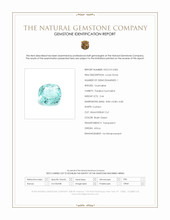
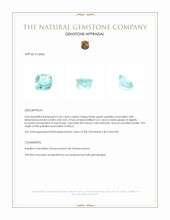


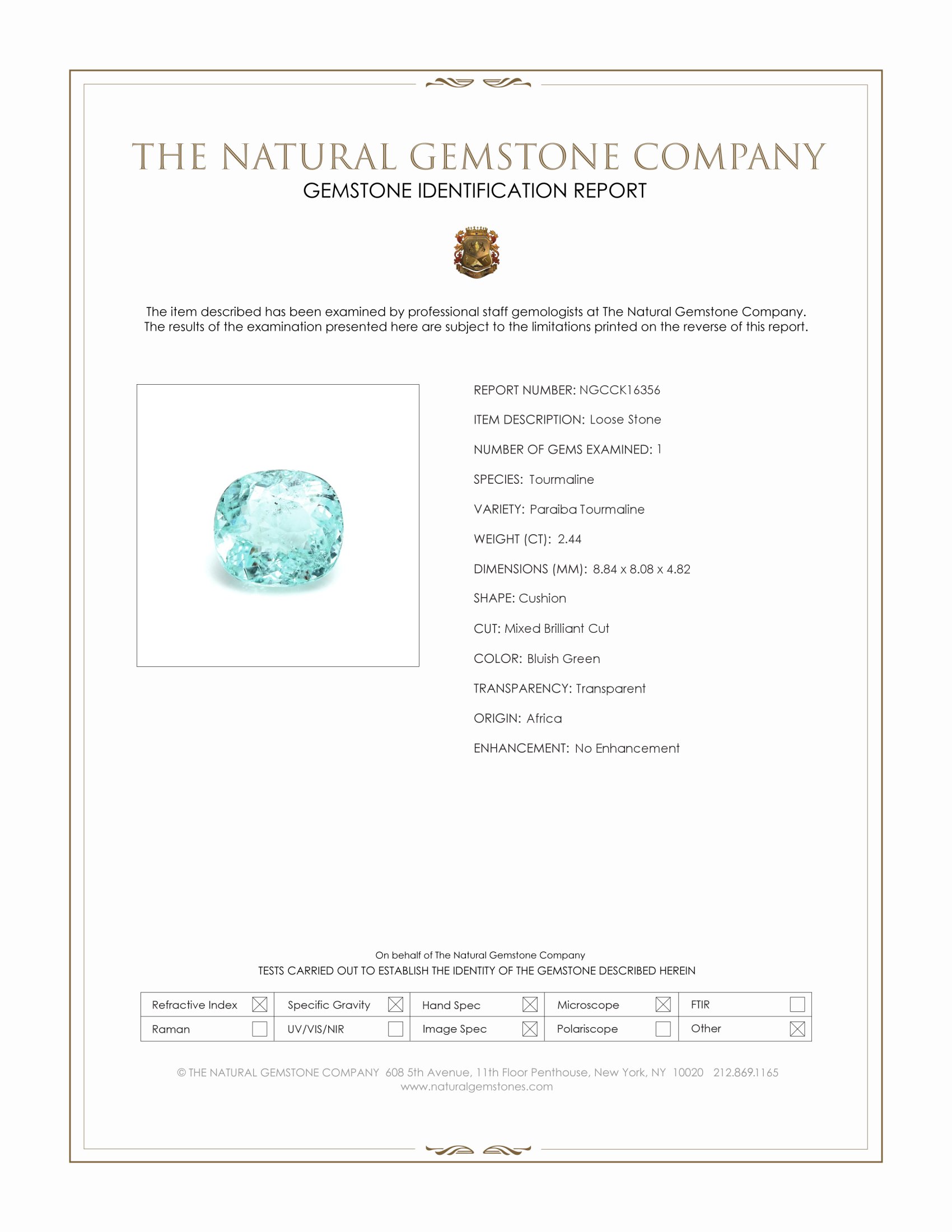
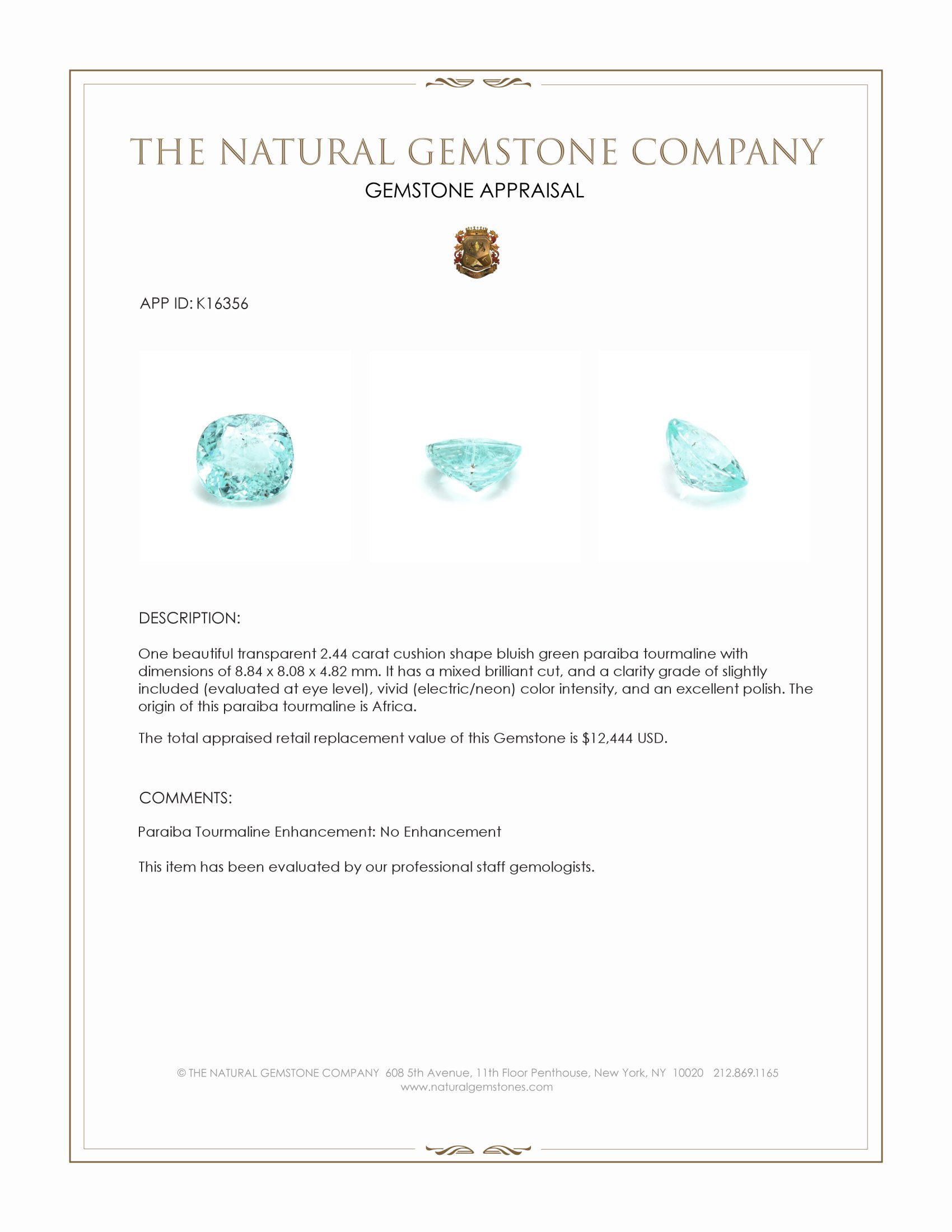
2.44 Ct. Bluish Green Paraiba Tourmaline from Africa
This loose stone ships by Nov 30
Item ID: | K16356 |
|---|---|
Dimensions (MM): help | Length: 8.84 Width: 8.08 Height: 4.82 |
Weight: | 2.44 Ct. |
Color: help | Bluish Green |
Color intensity: help | Vivid (Electric/Neon) |
Clarity: help | Slightly Included |
Shape: help | Cushion |
Cut: | Mixed Brilliant Cut |
Cutting style: | Faceted |
Enhancements: help | No Enhancement |
Origin: help | Africa |
Per carat price: help | $5,100 |
This 2.44 carat cushion shape bluish green Paraiba tourmaline measures 8.84 x 8.08 x 4.82 mm, faceted to a mixed brilliant cut, offering a precise balance between scintillation and color saturation. The cutter has preserved a broad, shallow crown with a finely faceted pavilion, optimizing light return while maintaining strong color saturation in the body of the stone. Clarity is slightly included, evaluated at eye level, with inclusions that are characteristic of natural pegmatitic growth and that do not disrupt transparency or brilliance. The polish is excellent, delivering crisp facet junctions and clean facet planes that enhance the electric, neon color intensity that defines Paraiba tourmaline. This specimen is untreated, no enhancement, and originates from Africa, exhibiting the intense copper and manganese induced bluish green hue that connoisseurs seek. The mixed brilliant faceting maximizes internal reflections and scintillation, while the cushion outline preserves broad color windows so the vivid color reads consistently face up.
The geological history of this tourmaline began millions of years ago in a volatile pegmatitic environment, where silica rich melts and saline hydrothermal fluids percolated through a granitic intrusive body. Trace copper and manganese ions were available in the evolving fluid, and as temperature and pressure declined during late stage crystallization, these ions were incorporated into the tourmaline crystal lattice, producing the characteristic electric bluish green color. Growth occurred in elongated prismatic crystals that later experienced brittle fracturing and healed over successive pulses of mineral bearing fluid, a process that produces the typical inclusion spectrum observed under magnification. Subsequent uplift and erosion liberated the crystals from the host pegmatite, and geological transport rounded and selected crystals of gem quality. The finished gem you see here, presented by The Natural Gemstone Company, is the result of that deep time chemistry and modern lapidary precision, a combination of natural rarity, strict no enhancement policy, and meticulous cutting that preserves both color intensity and optical performance. I encourage examination under daylight and controlled lighting to appreciate the pleochroic behavior and vivid neon tone that make this African Paraiba tourmaline a technical and aesthetic success.


