
- Stone10
- Reports3
-pear-green-peridot-1.3300-cts-k22451-1.jpg?d=200x200&v=20260227034254)
-pear-yellowishgreen-peridot-1.3300-cts-k22451-lifestyleimage-1.jpg?d=200x200&v=20260327012113)
-pear-yellowishgreen-peridot-1.3300-cts-k22451-lifestyleimage-2.jpg?d=200x200&v=20260327012330)

-pear-green-peridot-1.3300-cts-k22451-1.jpg?d=750x750&s=ngc&v=20260227034254)
-pear-yellowishgreen-peridot-1.3300-cts-k22451-lifestyleimage-1.jpg?d=750x750&s=ngc&v=20260327012113)
-pear-yellowishgreen-peridot-1.3300-cts-k22451-lifestyleimage-2.jpg?d=750x750&s=ngc&v=20260327012330)

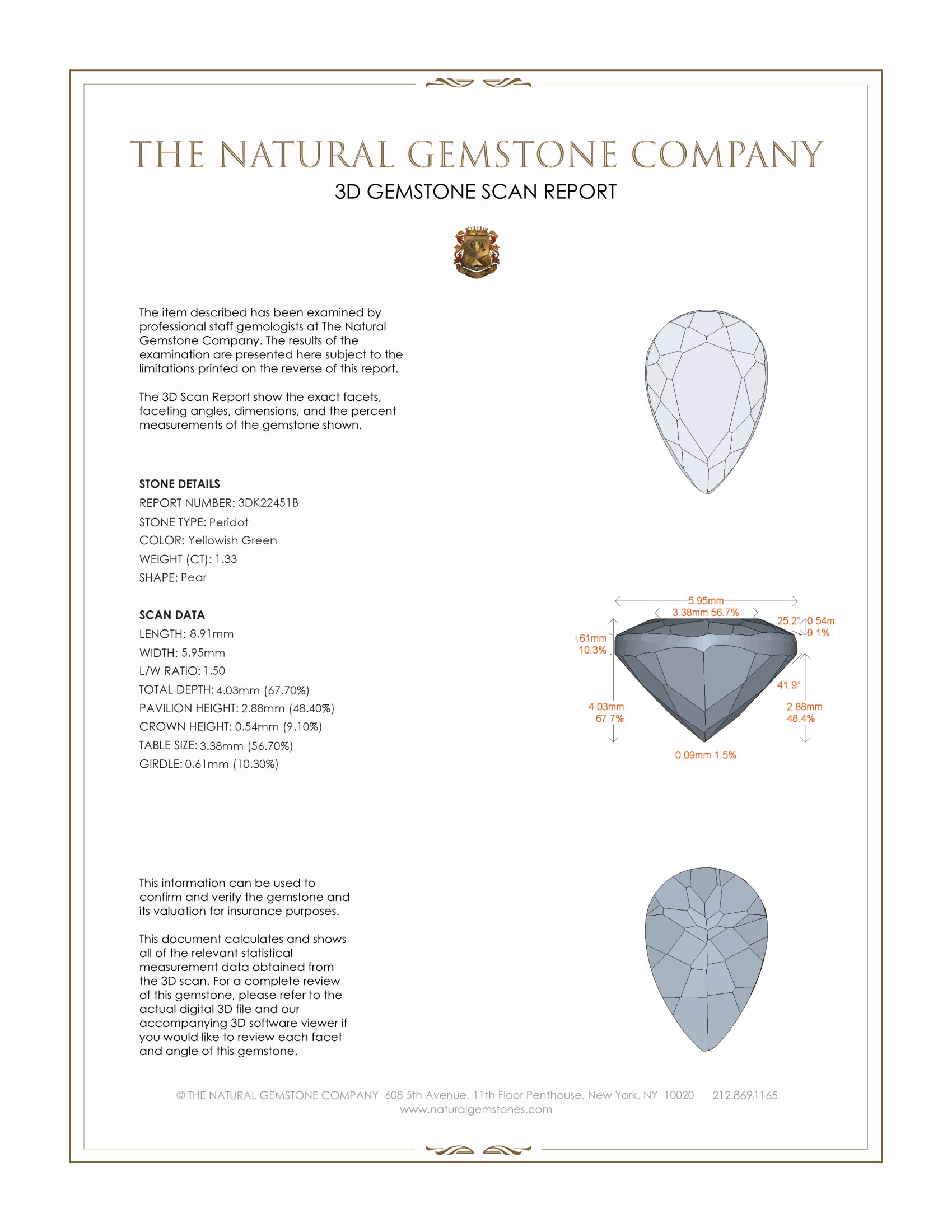
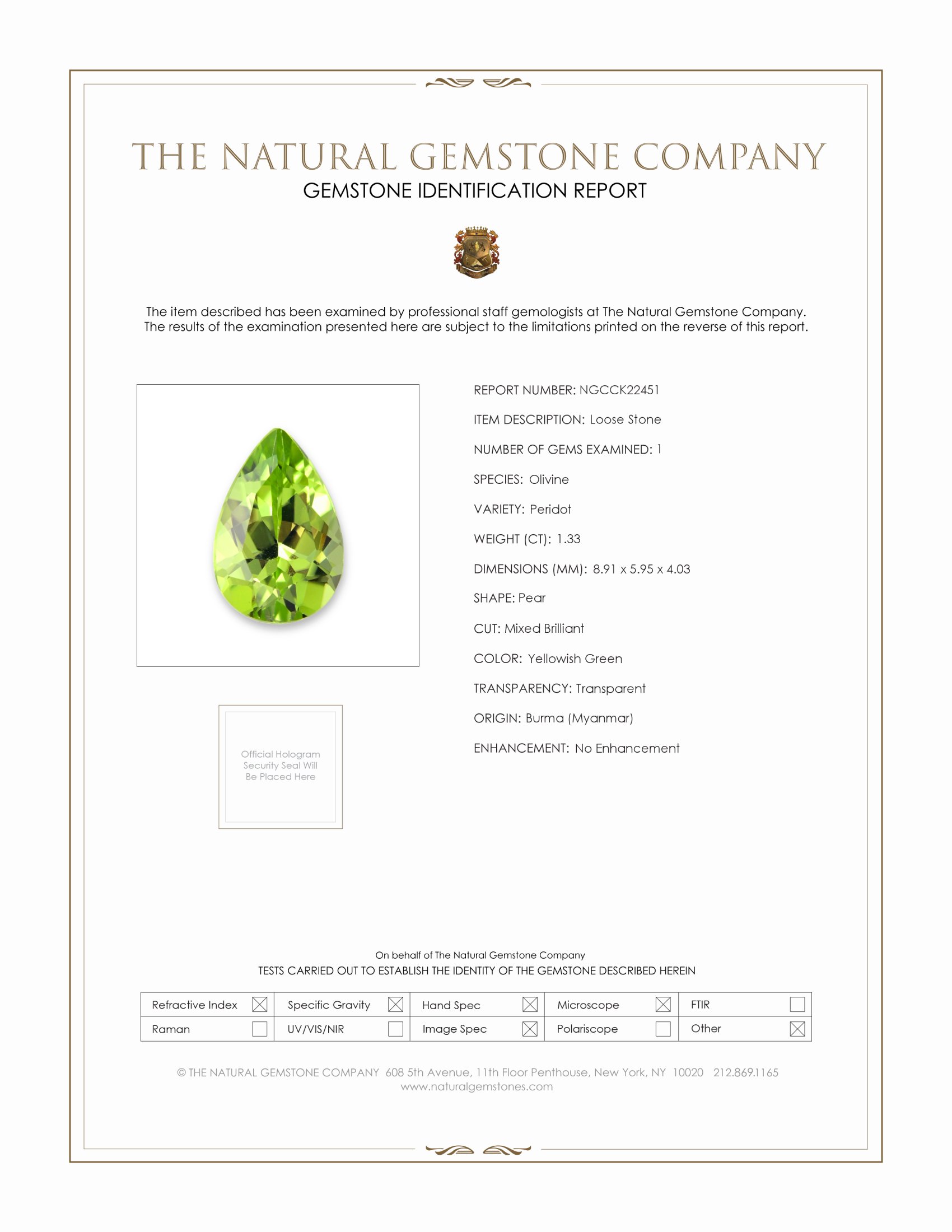
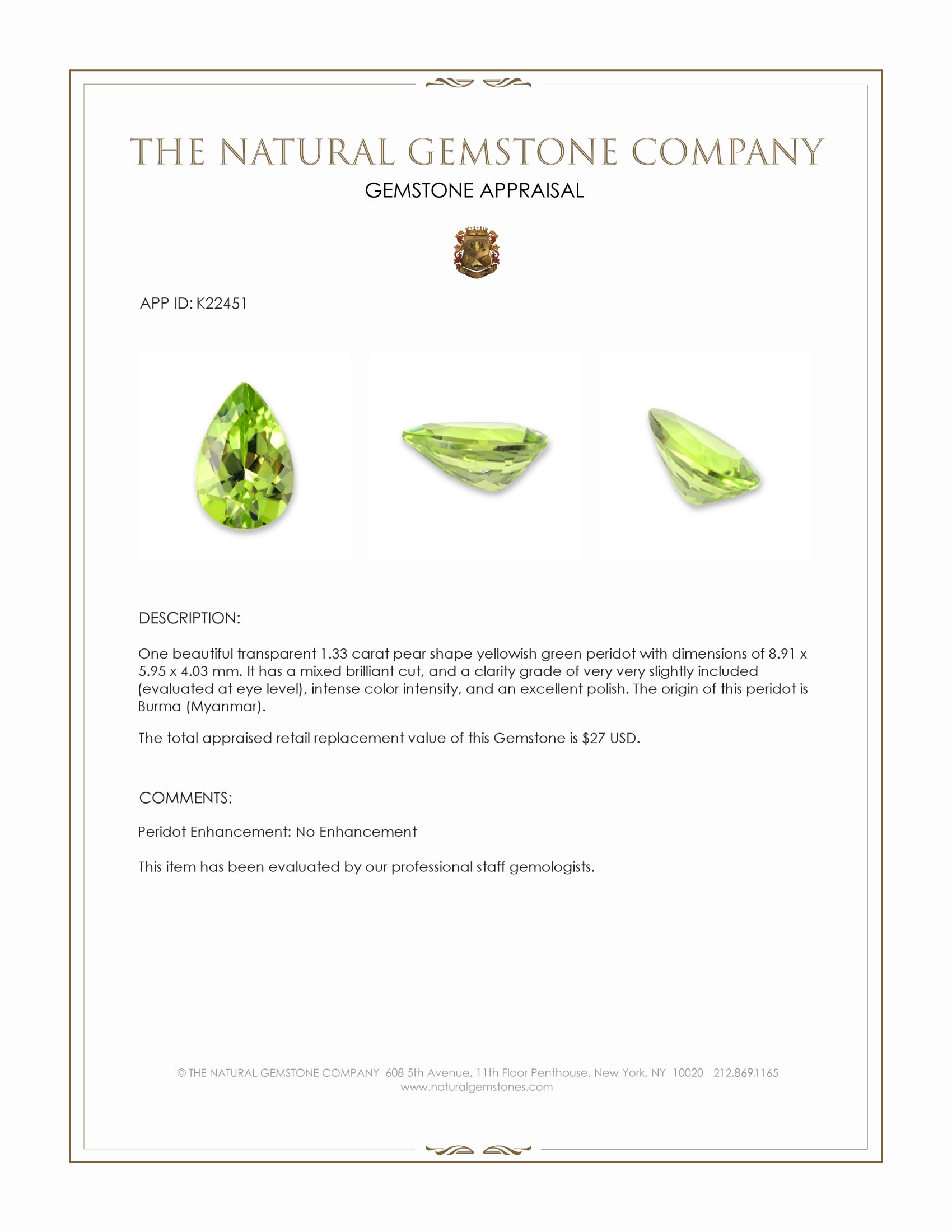
1.33 Ct. Peridot from Burma (Myanmar)
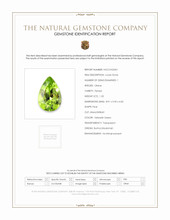
Item ID: | K22451 |
|---|---|
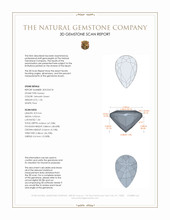
Dimensions (MM): help | Length: 8.91 Width: 5.95 Height: 4.03 |
Weight: | 1.33 Ct. |
Color: help | Yellowish Green |
Color intensity: help | Intense |
Clarity: help | Very Very Slightly Included |
Shape: help | Pear |
Cut: | Mixed Brilliant |
Cutting style: | Faceted |
Enhancements: help | No Enhancement |
Origin: help | Burma (Myanmar) |
Per carat price: help | $20 |
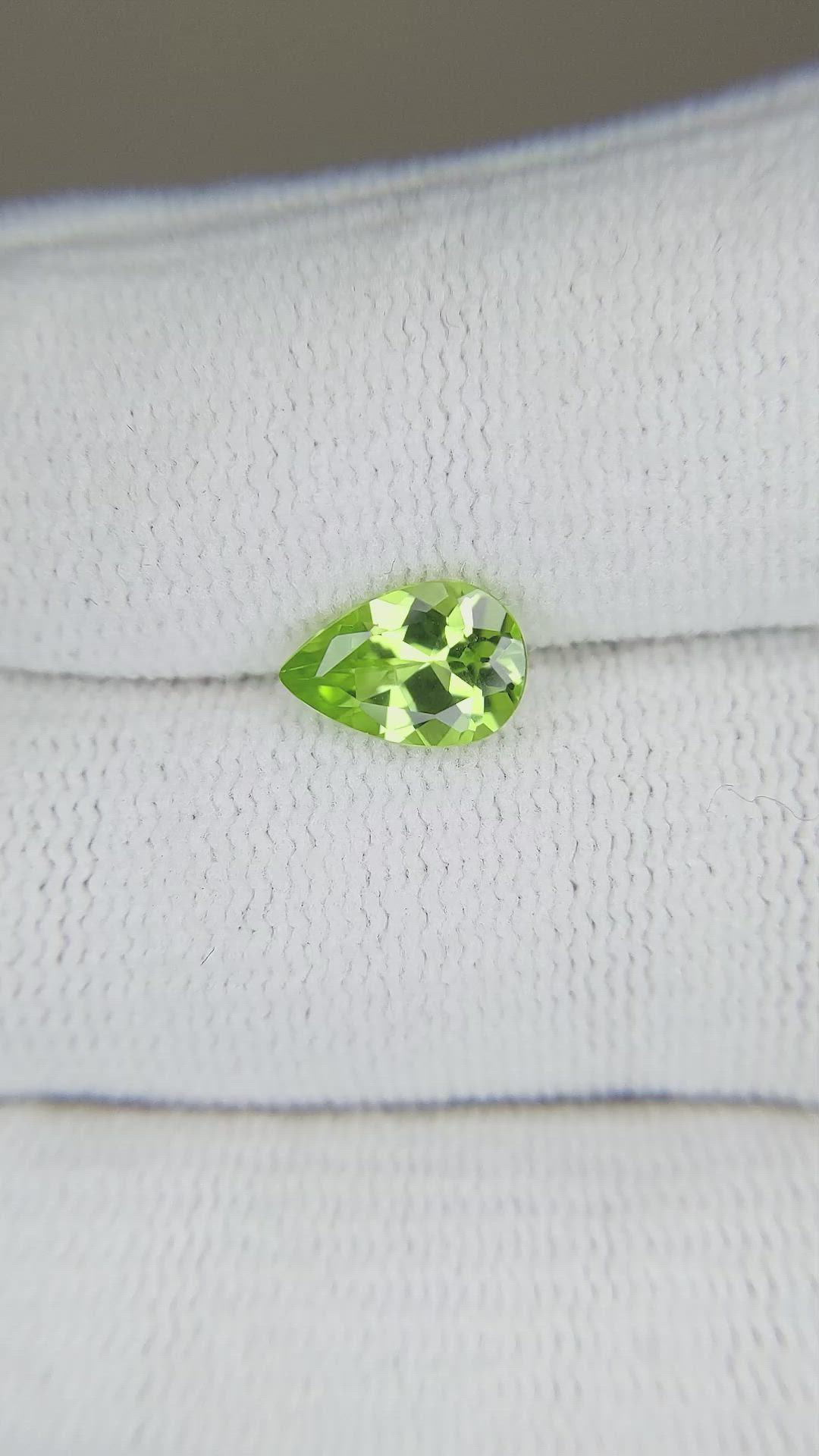
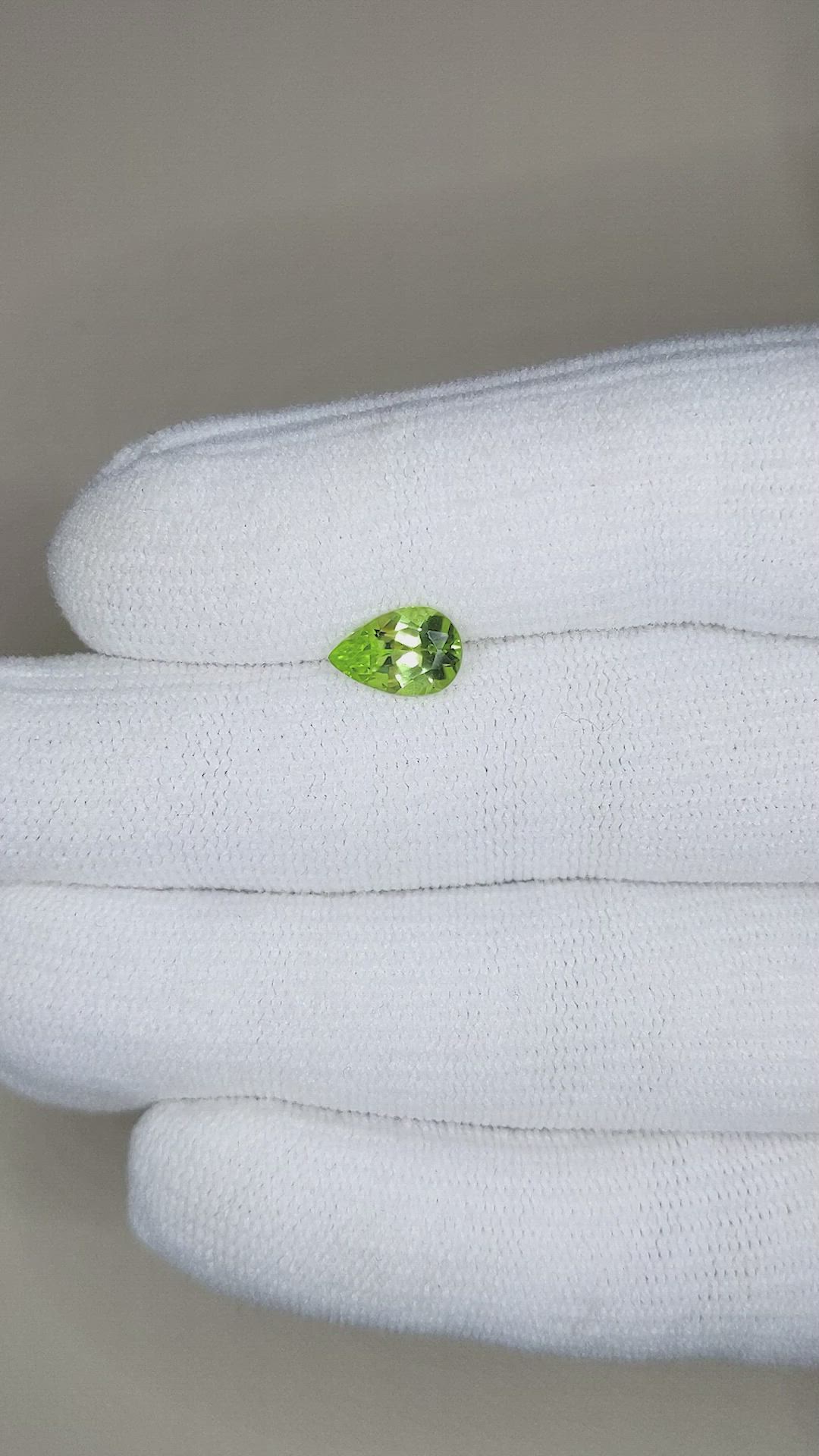
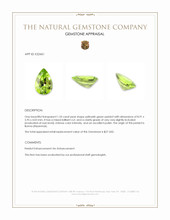
This pear shaped, transparent peridot weighs 1.33 carat, and presents precise dimensions of 8.91 by 5.95 by 4.03 mm, a profile that balances presence and wearable scale for a focal gem. The gem is fashioned in a mixed brilliant cut, with crown and pavilion relationships engineered to maximize return from its intense yellowish green body color, and it exhibits an excellent polish that finishes each facet junction with crisp facet lines and minimal surface disturbance. The overall table to depth relationships yield a depth percentage of approximately fifty four percent when calculated from the average of length and width, a proportion that preserves weight while maintaining an open window free of significant light leakage. Clarity is graded very very slightly included when observed at eye level, with only fine internal characteristics that do not materially affect transparency or sparkle under typical lighting. This peridot is untreated, no enhancement, and is documented as originating from Burma Myanmar, provenance that is consistent with the vivid olivine hues and strong saturation seen in this stone, and this offering is presented by The Natural Gemstone Company with full disclosure of its natural state.
The mixed brilliant faceting employed on this pear showcases a technical approach that combines a brilliant style crown with a complementary pavilion plan aimed at optimizing internal reflection and return to the observer. The cutter retained a moderately shallow crown coupled with a pavilion geometry that approaches a fifty eight facet equivalent, a deliberate design to create multiple small light facets across the curved pear outline, thereby producing scintillation and scintillating flashes through the truncated apex and the rounded base. The girdle is finished to a consistent thickness, neither excessively thick which would add nonproductive weight, nor extremely thin which would risk damage during setting, and the symmetry is closely monitored to ensure even facet alignment along the tapered shoulders of the pear. The excellent polish cited in the grading indicates that facet junctions are sharp, table flatness is controlled, and the pavilion facets meet in planes that allow for crisp return of white light and colored flashes, a critical attribute for peridot whose optical performance depends on controlled facet geometry rather than dispersive fire.
Color and internal clarity speak to both the material chemistry and the lapidary choices made in cutting this stone, the hue is a clear yellowish green with an intense saturation and medium tone, characteristics that read as lively and verdant in both direct and diffused light. The coloration of peridot derives from iron substituting into the olivine lattice, and the refractive index range for olivines of this class is approximately 1.65 to 1.69, with birefringence values on the order of 0.036, optical parameters that contribute to the strong brilliance and crisp facet contrasts seen in the photographs. The internal inclusions are subtle, to the point that at normal viewing distances the gem reads eye clean, and these small inclusions do not act as significant stress concentrators nor do they interrupt the overall color zoning, which is even across the body of the stone. The absence of enhancement is significant for color stability, and the Burma Myanmar origin reported for this piece aligns with known deposits that produce higher saturation peridots, a factor of interest to collectors and designers seeking natural vivid greens.
Durability considerations are essential for practical use, and on the Mohs hardness scale this peridot sits in the 6.5 to 7.0 range, a hardness that is moderate and must be compared to common jewelry materials for context. Quartz at seven is slightly harder, topaz at eight and corundum at nine are substantially harder, and diamond at ten is the extreme reference for hardness, consequently peridot is not as resistant to abrasion as those harder stones and will show surface wear before corundum or diamond would. This hardness profile suggests that while peridot is perfectly suitable for pendants and earrings where exposure to impacts is lower, for rings intended for heavy daily wear protective setting choices should be prioritized. Bezel settings or protective halo settings that shield the girdle and pavilion from lateral knocks are preferred, and prong settings are acceptable provided the stone is positioned to minimize exposure to hard contact. Standard toughness for peridot is moderate, and while it does not suffer from pronounced cleavage that would make it catastrophically fragile, it is wise to avoid hard impacts, exposure to household chemicals, and extreme thermal shock when wearing or cleaning the gem.
Practical care, mounting suggestions, and the craftsmanship pedigree complete the technical picture, this peridot benefits from conservative handling and straightforward maintenance, warm soapy water and a soft brush are the recommended cleaning method, and avoid steamers and ultrasonic cleaners when inclusions are present or if the stone is set in complex metalwork. In the context of design, The Natural Gemstone Company recommends this 1.33 carat pear peridot for designs that exploit its intense yellowish green color and mixed brilliant engineered scintillation, ring designs with protective bezels, drop earrings that allow light to enter from multiple angles, and pendants that take advantage of the pear silhouette. The gem’s origin of Burma Myanmar and its lack of enhancement are important hallmarks for provenance conscious buyers, and the combination of precise cutting, excellent polish, and eye level clarity grading make this an attractive option for connoisseurs seeking a natural, finely cut peridot with reliable optical performance. For further technical details on facet angles, suggested mounting tolerances, and secure setting specifications, The Natural Gemstone Company can provide additional lapidary and setting guidance tailored to the chosen metal and design concept.


