
- Stone14
- Reports3
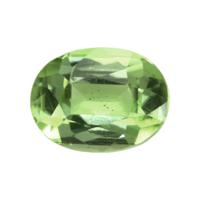
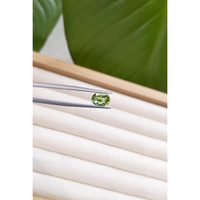
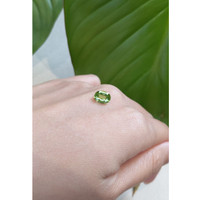
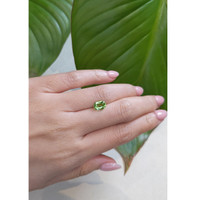
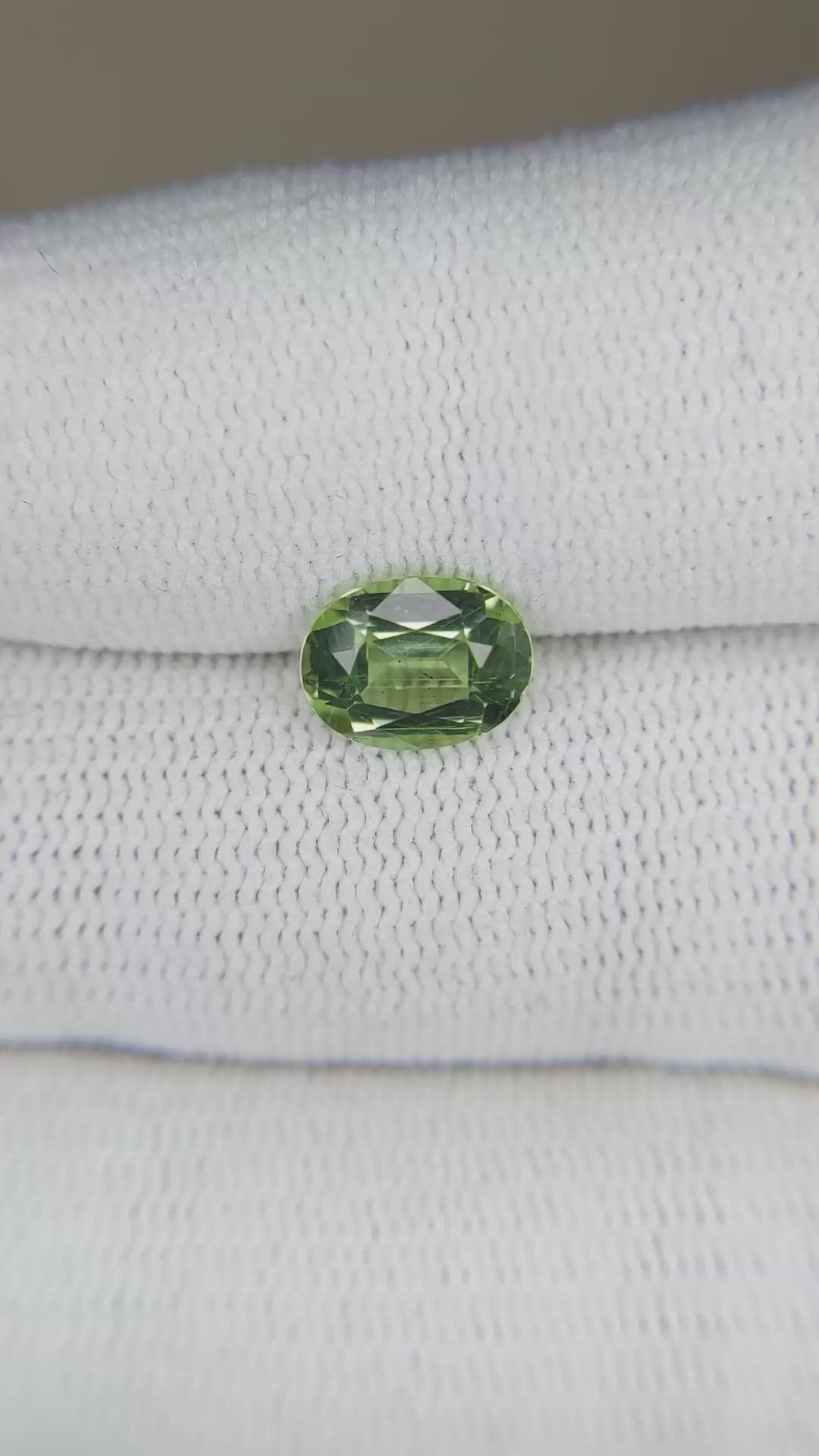
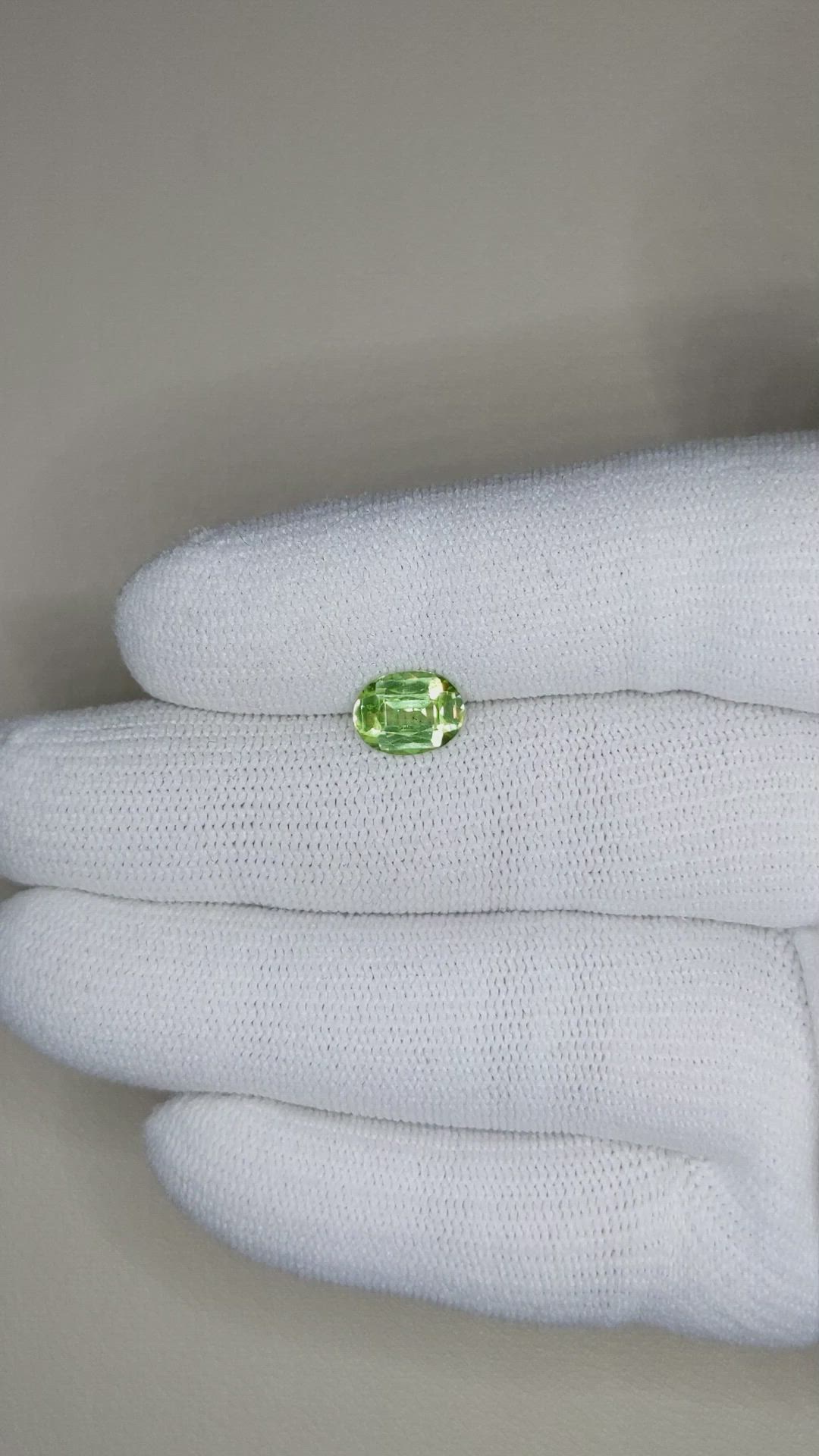
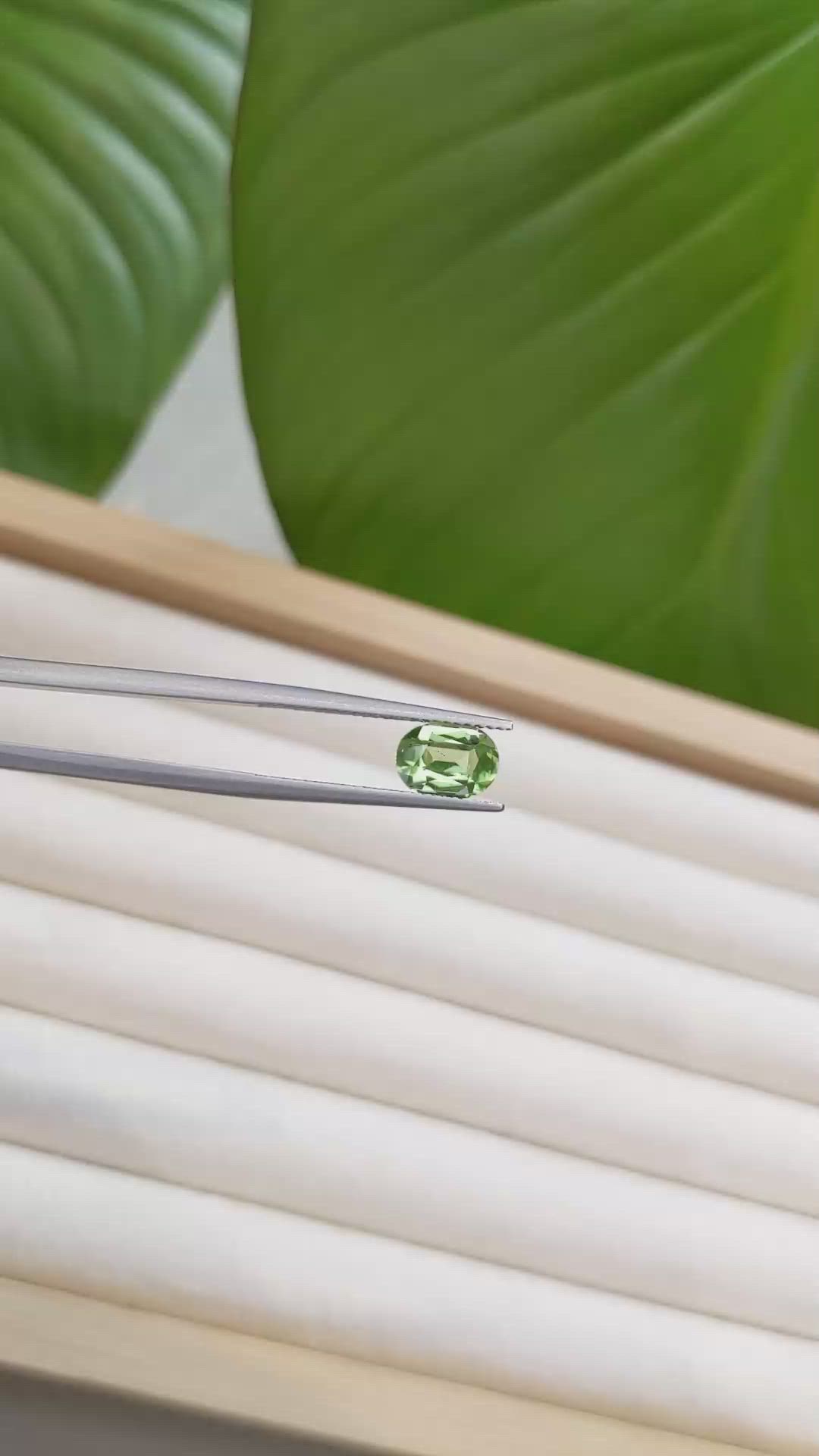
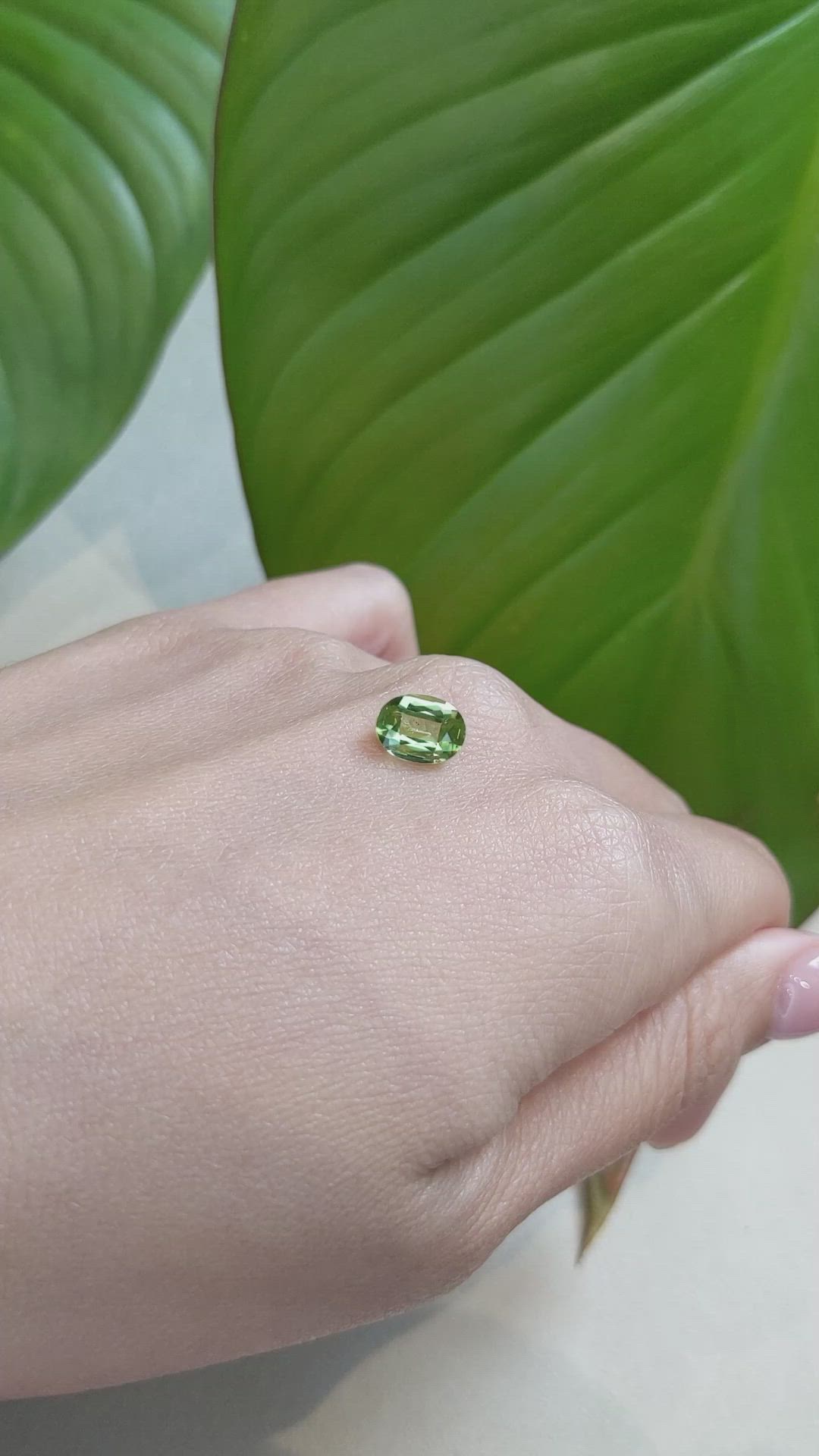
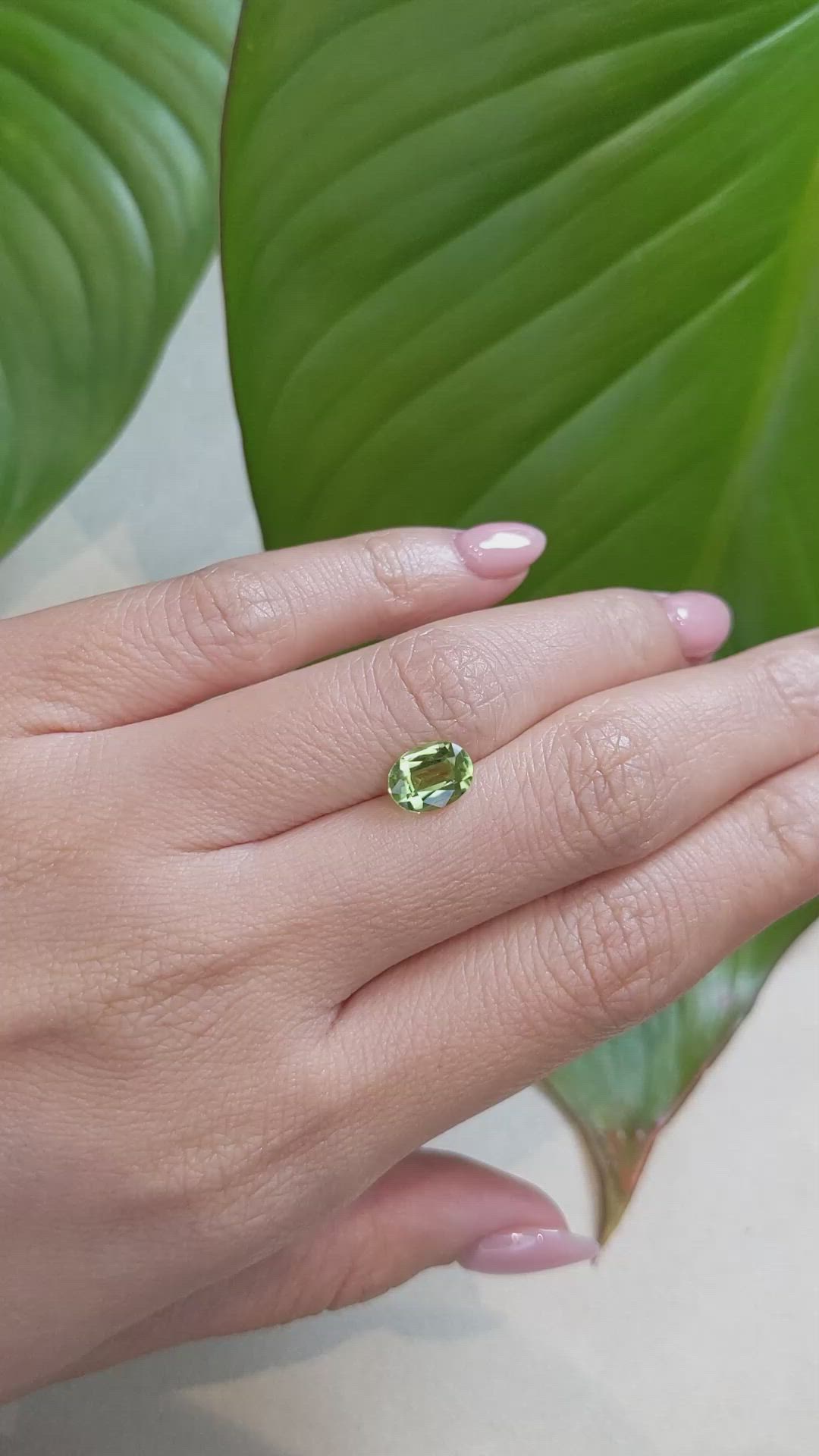


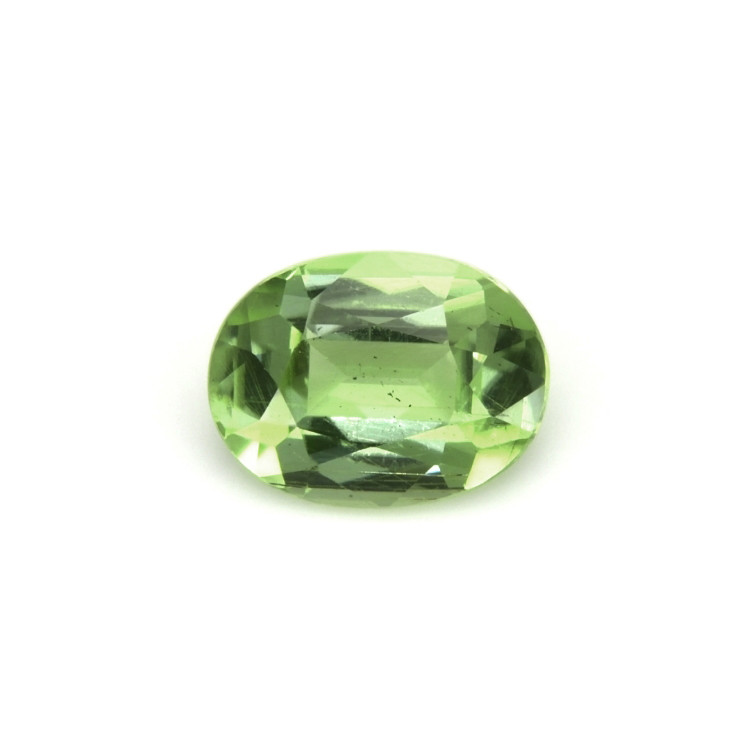
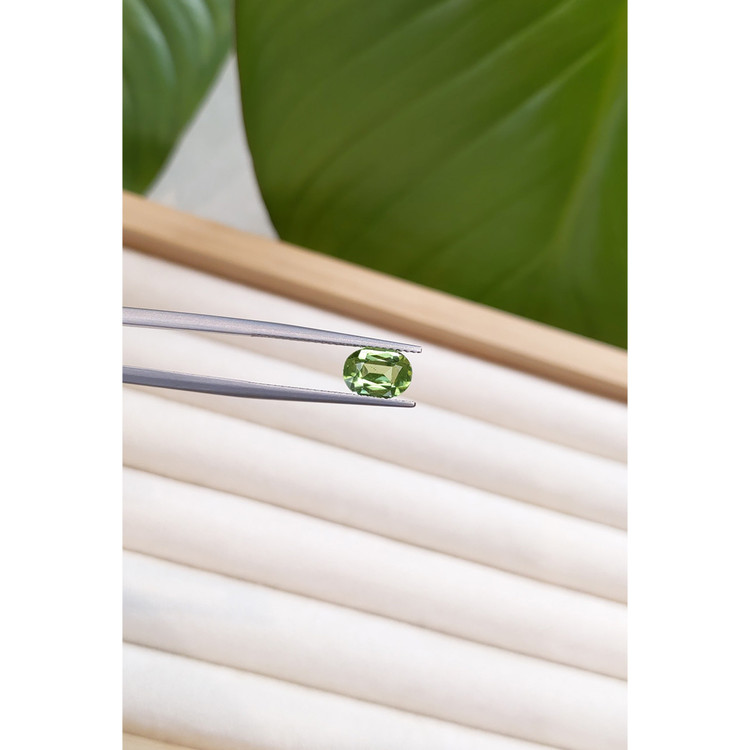
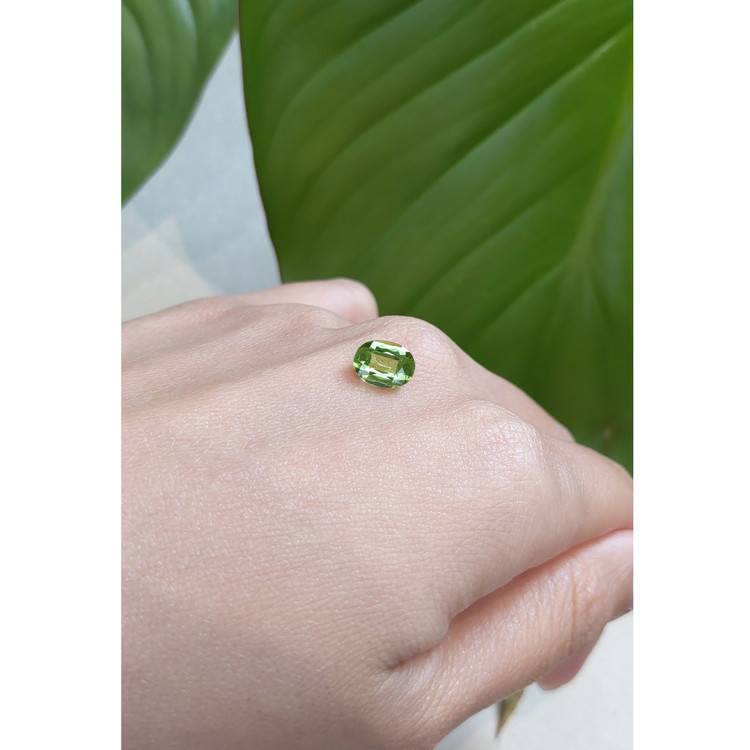
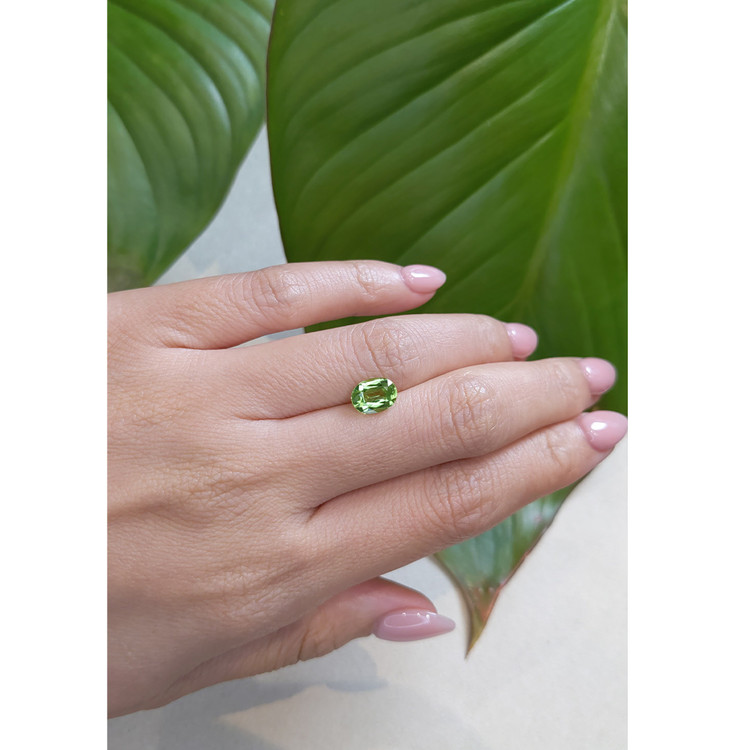



1.56 Ct. Green (Lime Green) Peridot from Tanzania
This loose stone is available to ship now
Item ID: | K16249 |
|---|---|
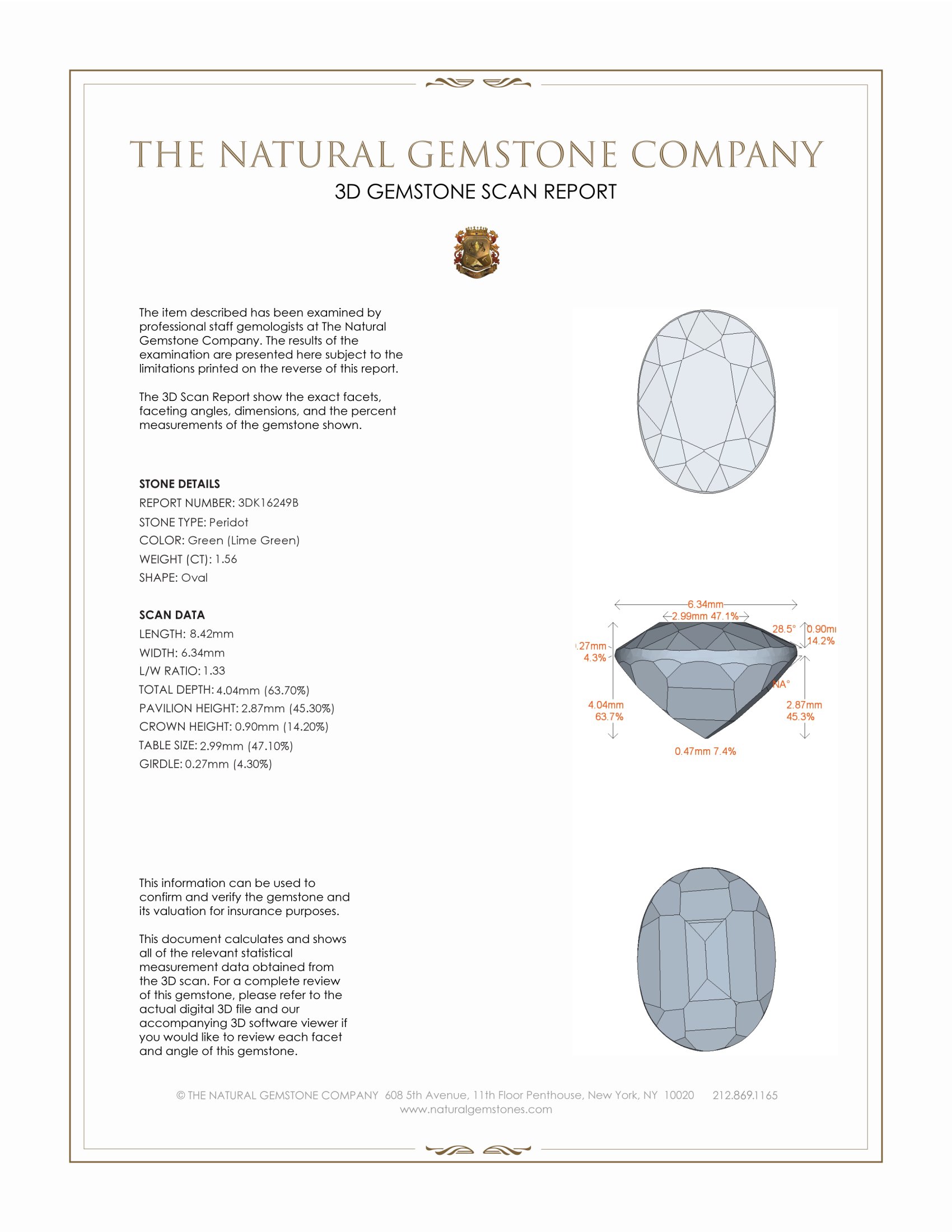
Dimensions (MM): help | Length: 8.42 Width: 6.34 Height: 4.04 |
Weight: | 1.56 Ct. |
Color: help | Green (Lime Green) |
Color intensity: help | Medium |
Clarity: help | Very Very Slightly Included |
Shape: help | Oval |
Cut: | Mixed Brilliant Cut |
Cutting style: | Faceted |
Enhancements: help | No Enhancement |
Origin: help | Tanzania |
Per carat price: help | $60 |
This 1.56 carat oval peridot from Tanzania exemplifies purposeful material selection and precision cutting, as presented by The Natural Gemstone Company. The gem measures 8.42 by 6.34 by 4.04 millimeters, producing a length to width ratio of 1.33 and a depth ratio of 54.7 percent based on the average of the length and width. The face up appearance is a clear lime green with medium color intensity, and the clarity is graded as very very slightly included when viewed at eye level, indicating that inclusions are minimal and do not compromise visual performance. The stone is rendered with a mixed brilliant cut and finished to an excellent polish, and no enhancements have been applied. These combined parameters result in a balanced stone that retains weight while delivering optimal face up color and even light distribution.
From a crystallographic and optical perspective this peridot derives its brilliance from the intrinsic properties of olivine in the forsterite fayalite series, specifically an orthorhombic crystal lattice and a biaxial optical character. Typical refractive index values for peridot fall in the range of approximately 1.65 to 1.69, and this relatively high refractive index in concert with a measurable birefringence near 0.036 governs how light is refracted and split as it traverses the gem. Although peridot has modest dispersion on the order of 0.019 and therefore does not produce the spectral fire of higher dispersion gems, the higher bulk refractive index increases contrast and internal reflection, enabling strong brilliance. The mixed brilliant cut has been executed to exploit these optical constants. The cutter has used a brilliant facet schema on the crown to generate concentrated scintillation and small pinpoint flashes, while adapting a controlled step element on the pavilion to manage color zoning and prevent windowing. Critical facet angles were chosen to maximize total internal reflection for the specific refractive index of peridot, so rays entering the table are repeatedly redirected and returned as bright flashes rather than lost through shallow pavements.
Craftsmanship details are central to the gemological performance and the perception of sparkle, and this piece demonstrates deliberate choices at each stage of manufacture. The cutter preformed the rough to preserve carat weight while orienting the long axis to align the crystal optics so that the face up color reads uniformly, taking into account the weak pleochroism that peridot can exhibit between green and yellow green. Facet junctions are tight and symmetry is controlled, which, together with the excellent polish, minimizes surface scattering and allows internal reflections to remain crisp and well defined. The very very slightly included clarity grading indicates that inclusions are confined and do not form reflective planes that would disrupt light return. The result is a lively interplay of scintillation and brilliance, where the high refractive response produces intense white light returns and the mixed cut translates those returns into numerous small, bright flashes. In practical terms the gem exhibits a type of sparkle that is distinct from high dispersion stones, emphasizing bright contrast and energetic scintillation rather than broad spectral fire. For jewelry applications the Mohs hardness in the mid sixes advises careful setting choices and routine care, and the gem is particularly effective in settings that protect the girdle and crown while allowing the crown facets to project light freely. The Natural Gemstone Company stands behind the natural, unenhanced origin of this Tanzanian peridot and can provide further technical measurements and setting recommendations to optimize its optical performance.


