
- Stone14
- Reports3

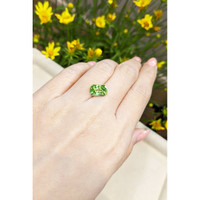
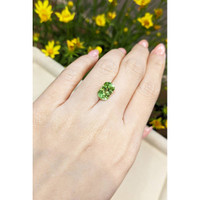
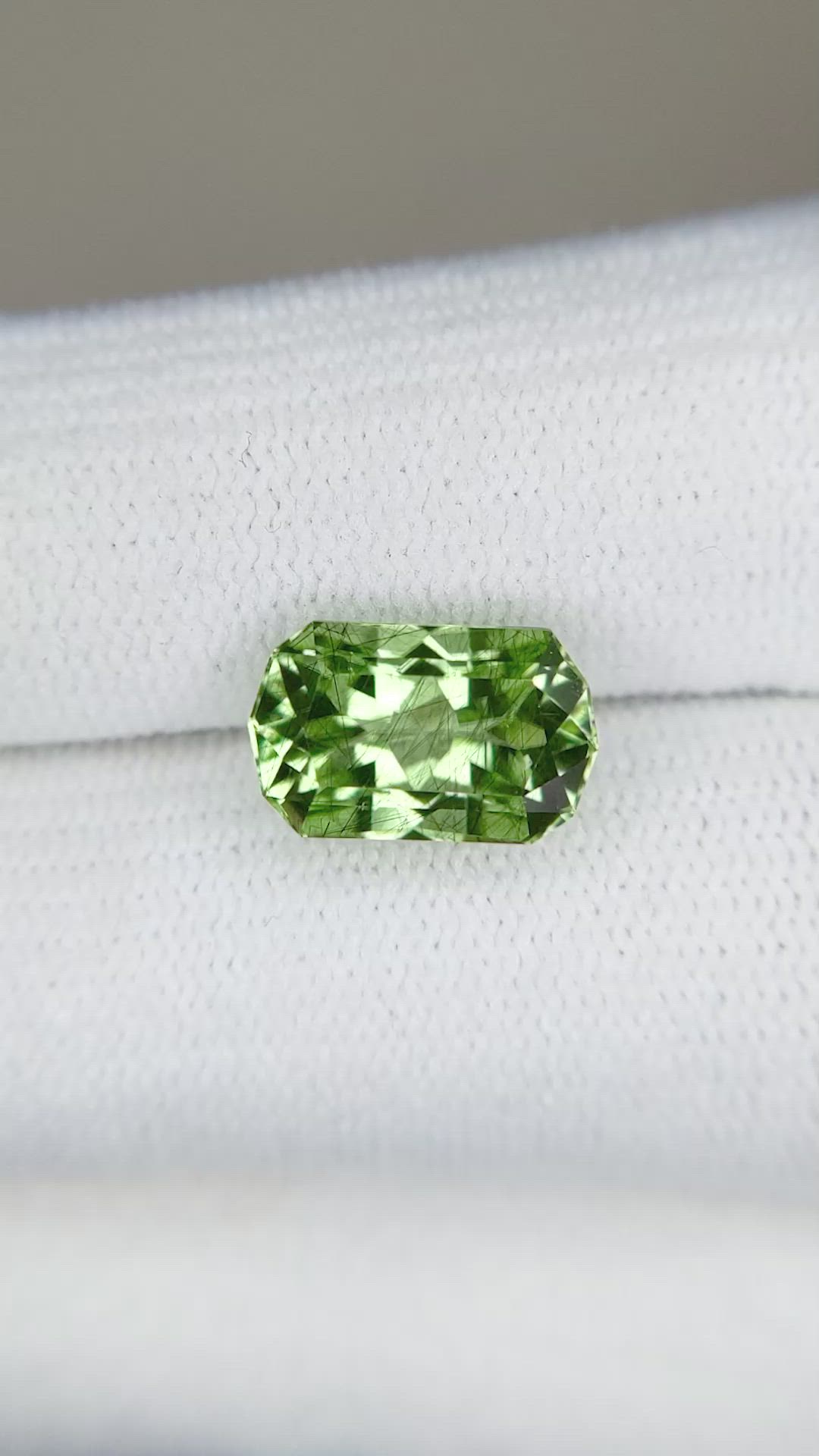
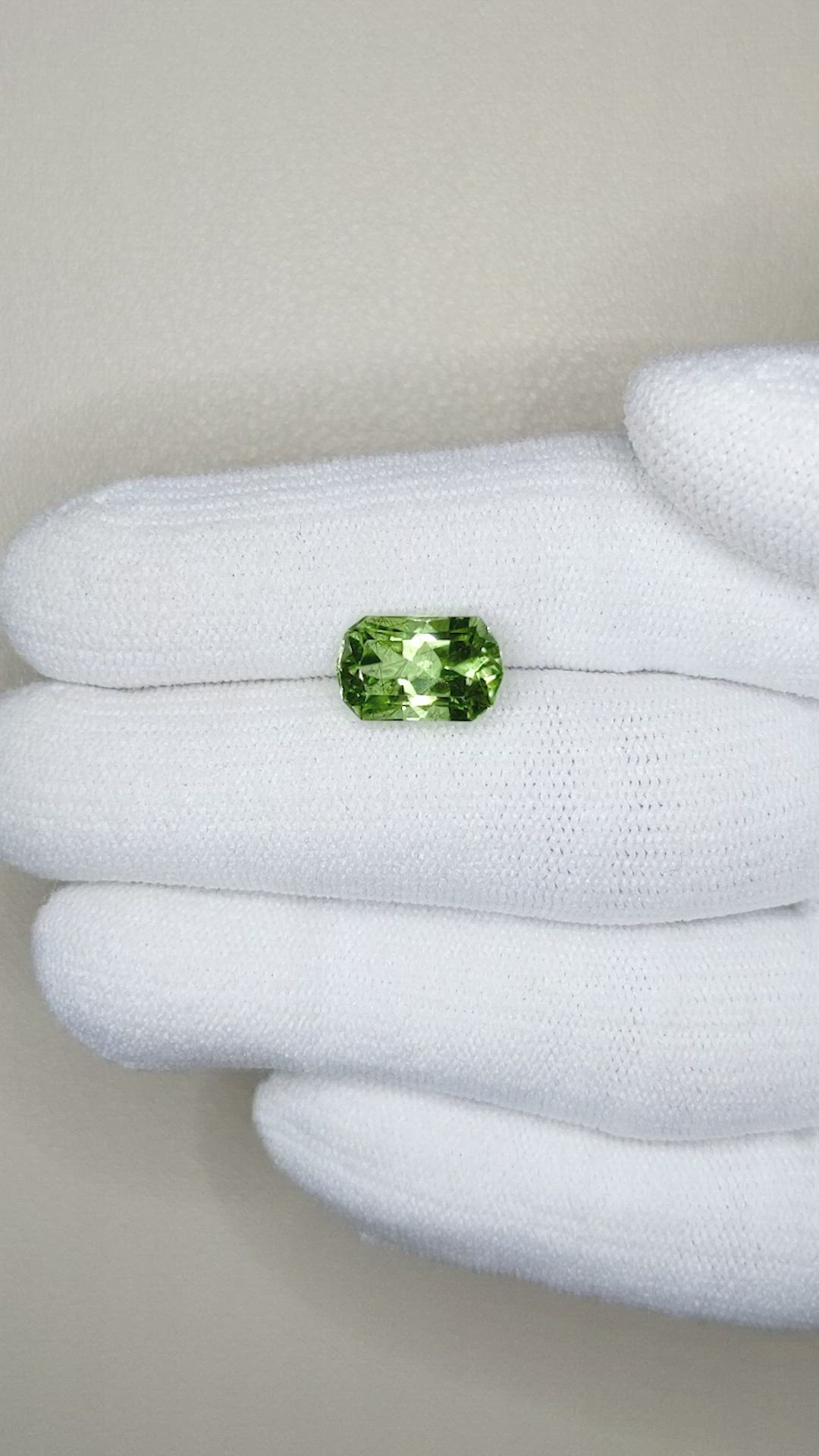
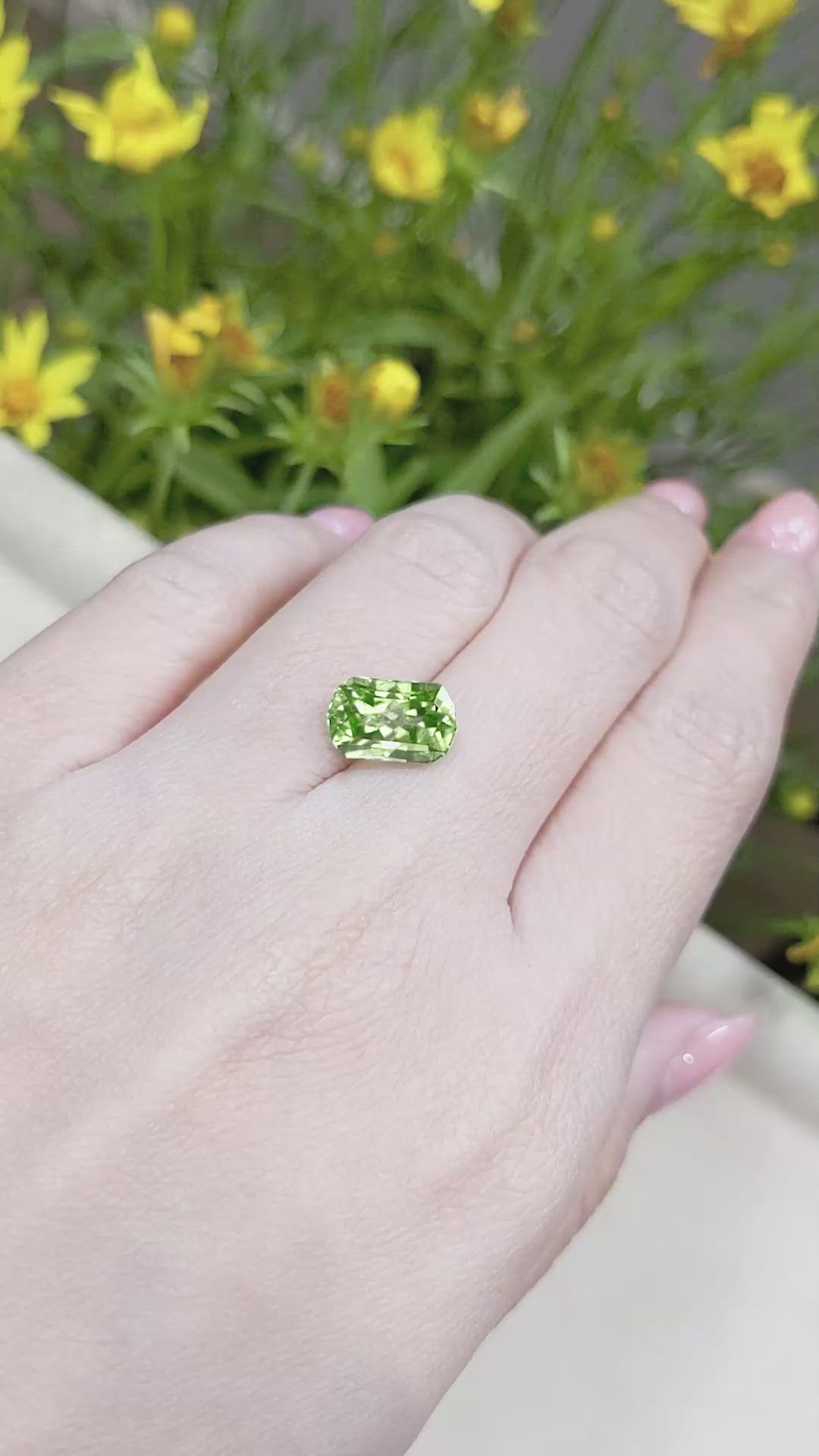
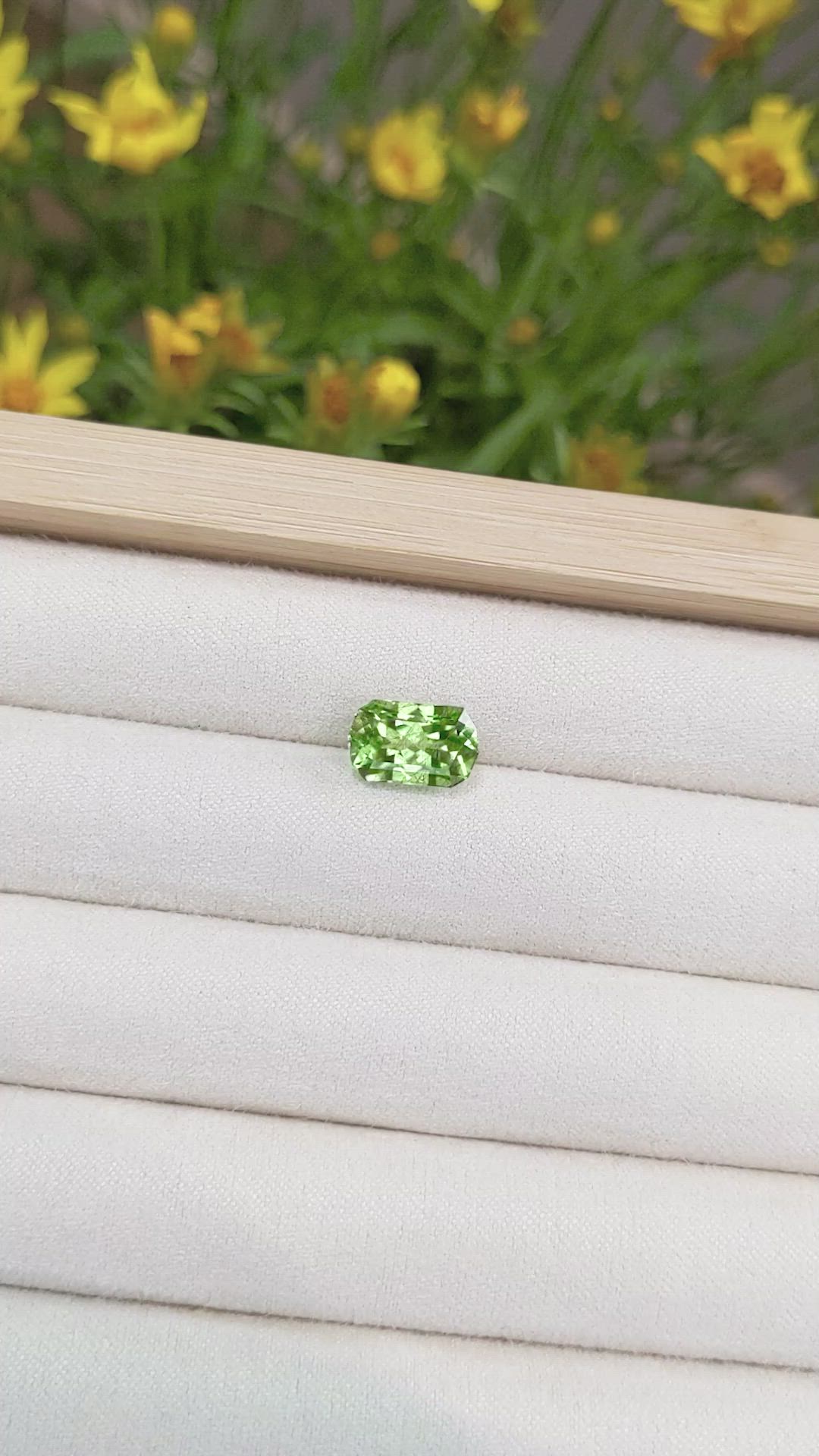
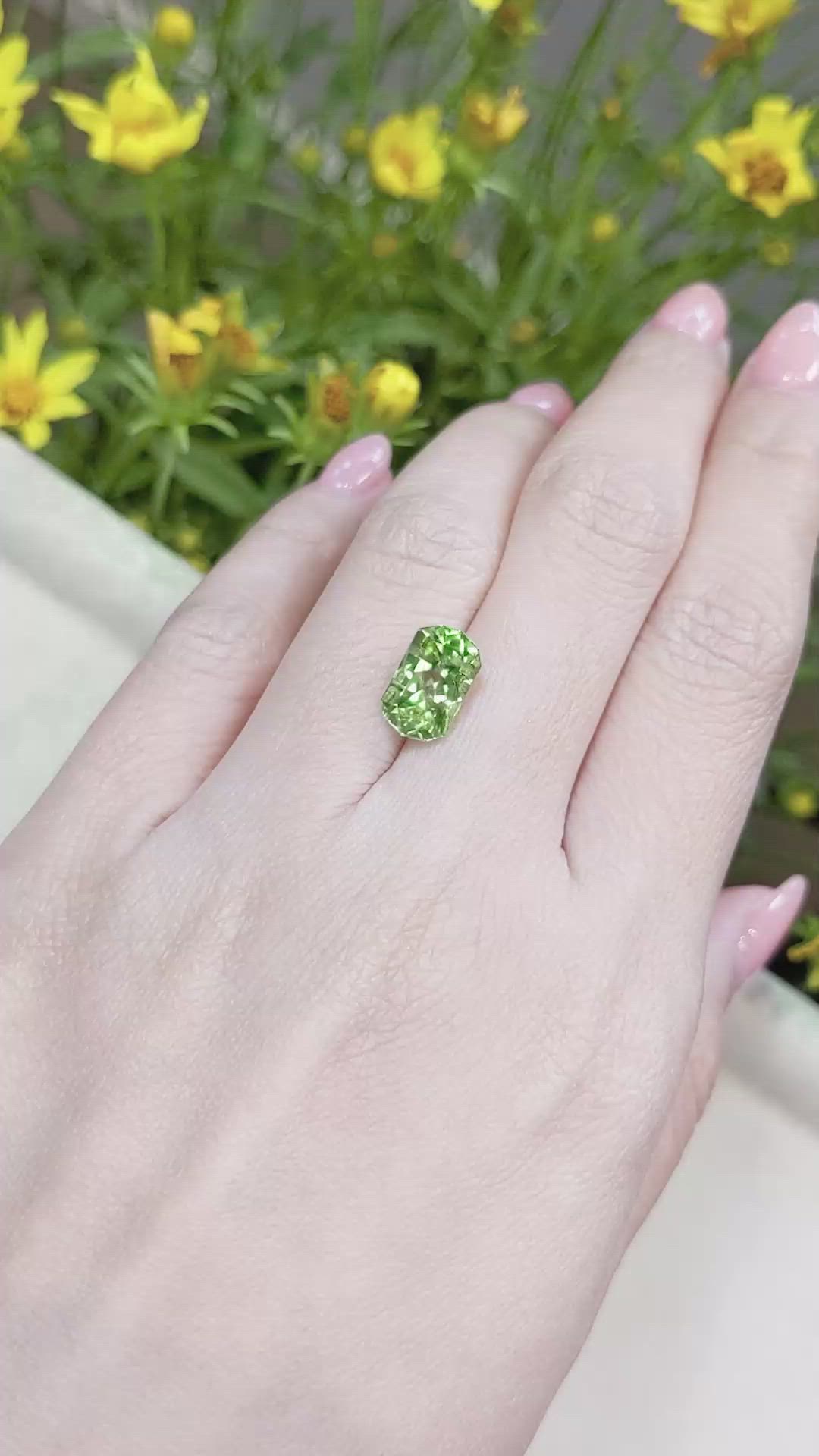





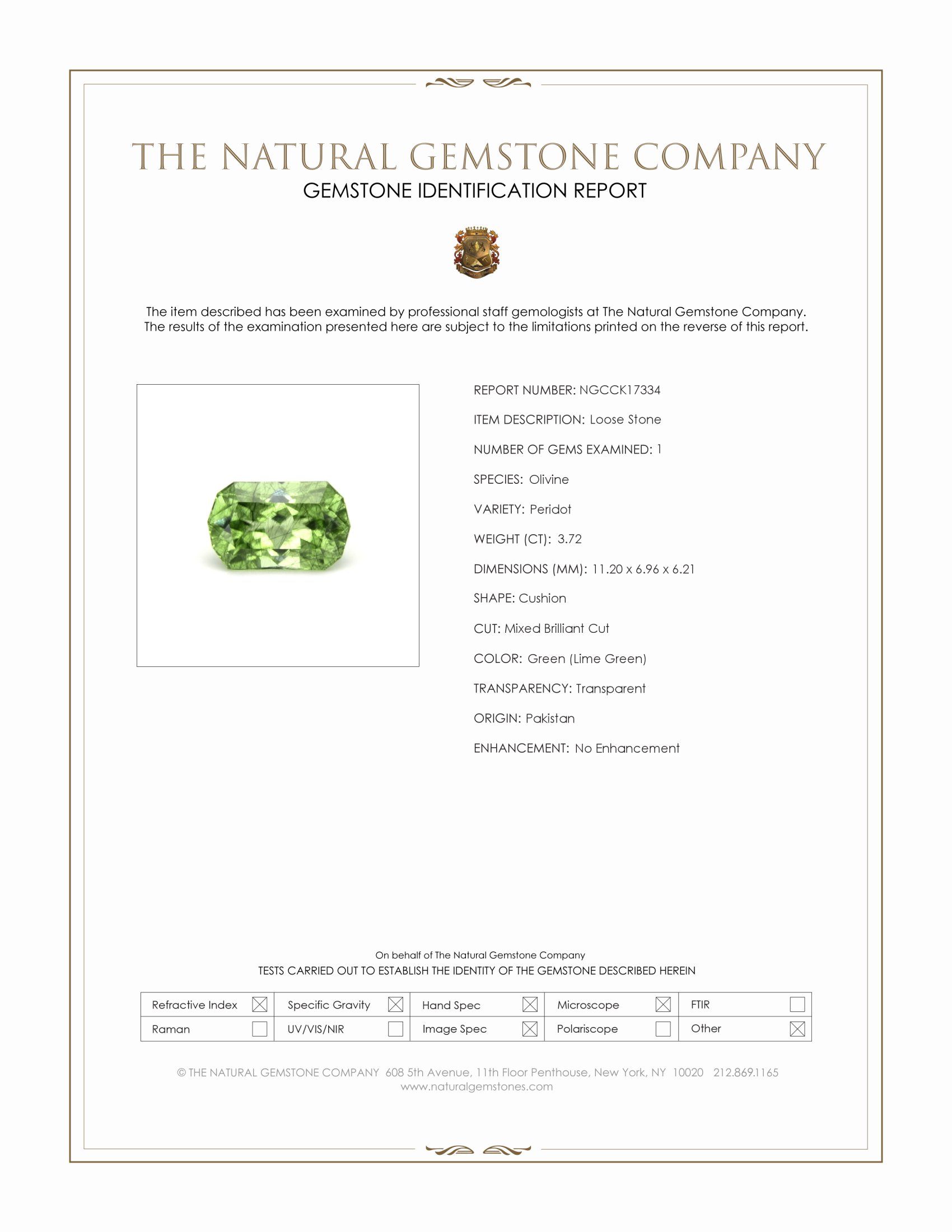
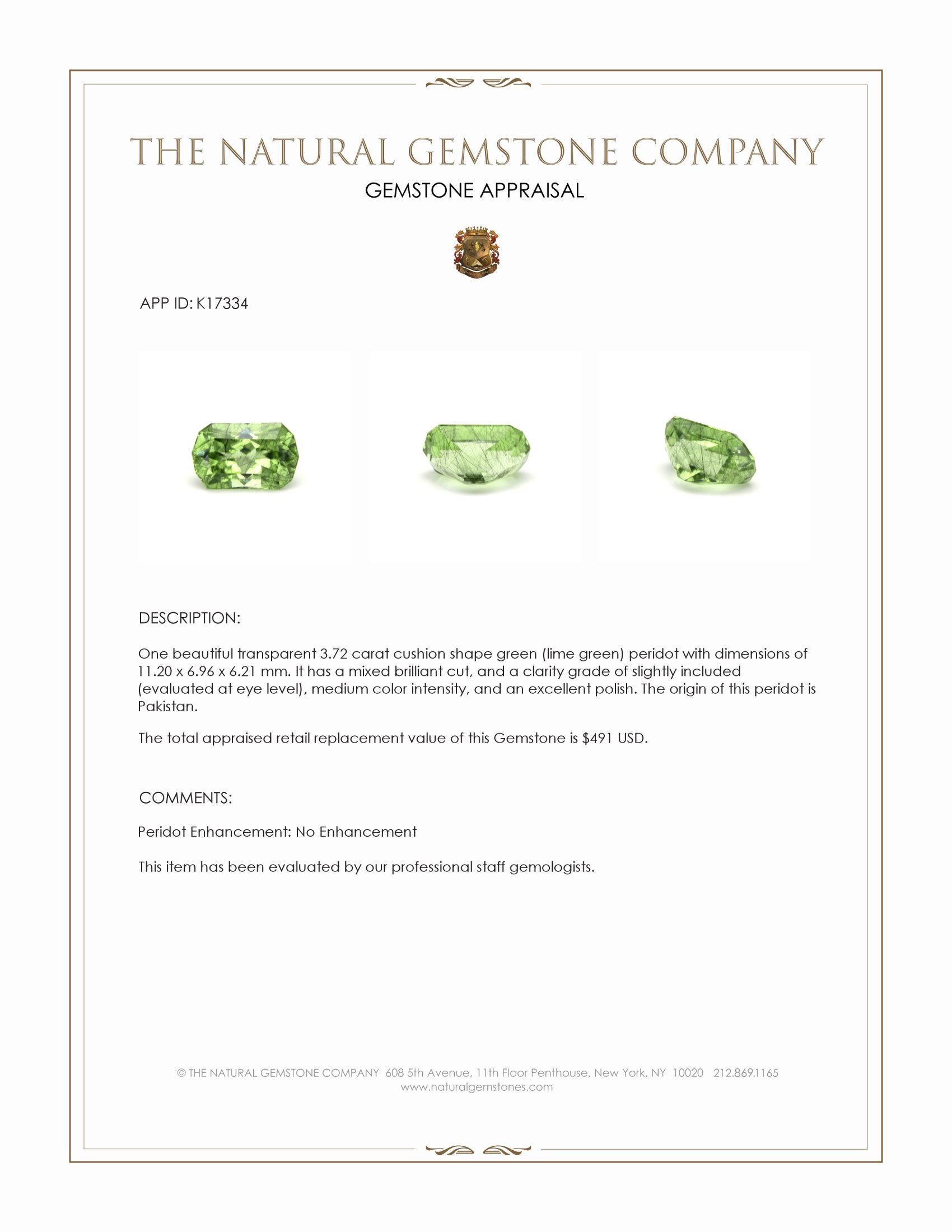
3.72 Ct. Green (Lime Green) Peridot from Pakistan
Item ID: | K17334 |
|---|---|
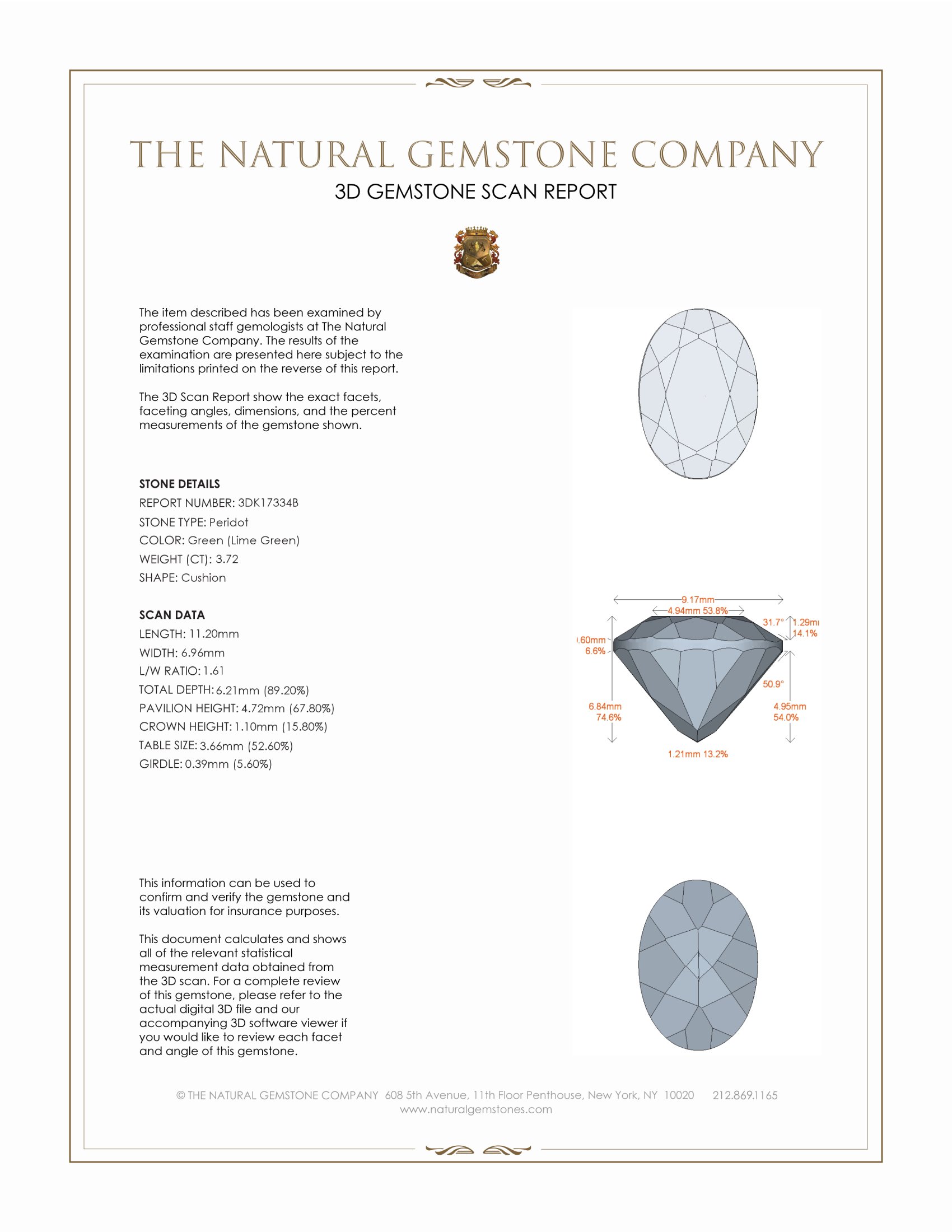
Dimensions (MM): help | Length: 11.2 Width: 6.96 Height: 6.21 |
Weight: | 3.72 Ct. |
Color: help | Green (Lime Green) |
Color intensity: help | Medium |
Clarity: help | Slightly Included |
Shape: help | Cushion |
Cut: | Mixed Brilliant Cut |
Cutting style: | Faceted |
Enhancements: help | No Enhancement |
Origin: help | Pakistan |
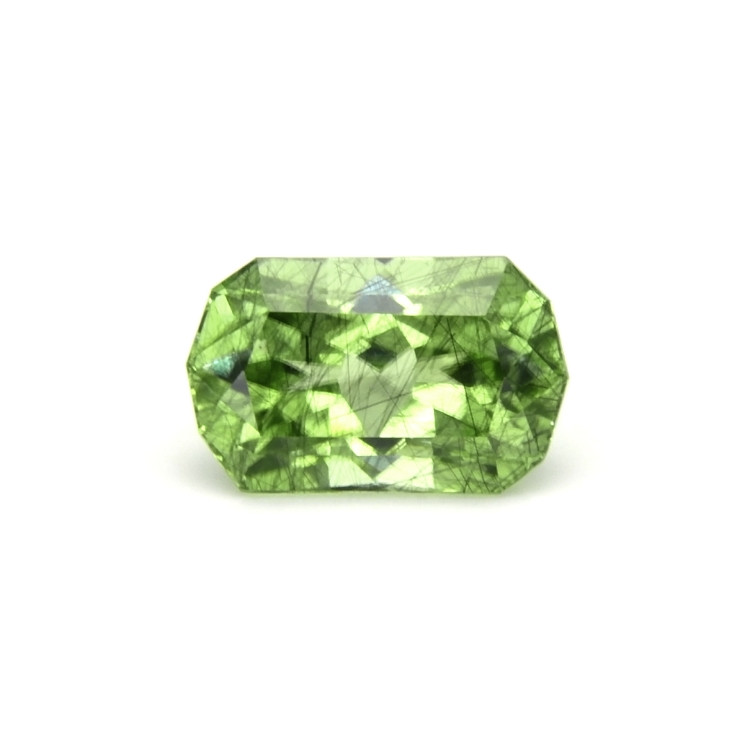
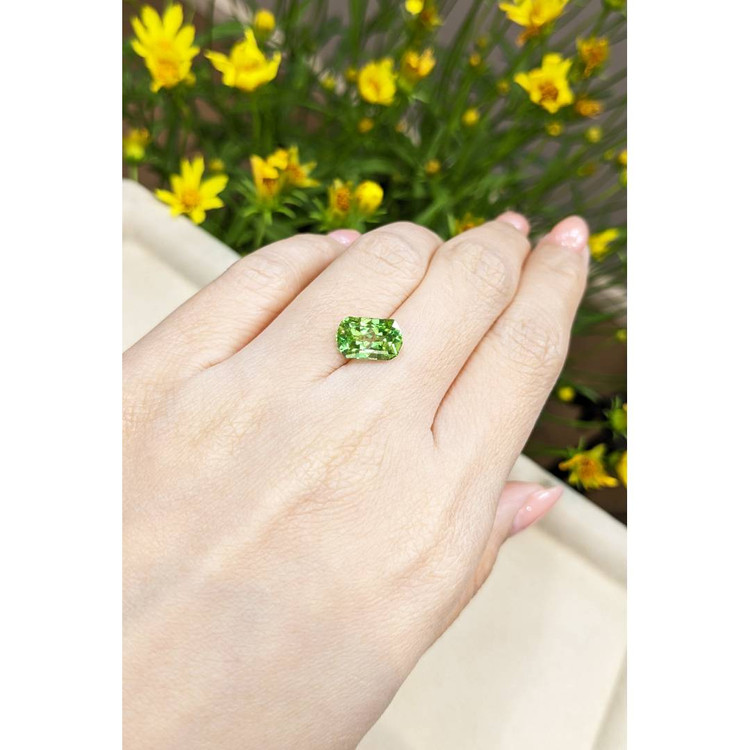
This offering from The Natural Gemstone Company is a single transparent peridot, weighing 3.72 carats, presented in a cushion outline with dimensions 11.20 by 6.96 by 6.21 millimeters. The cutter has executed a mixed brilliant motif, combining a proportioned brilliant crown with a modified step and brilliant pavilion, to balance scintillation and color saturation. At eye level the clarity registers as slightly included, with internal features that are discrete under loupe inspection and do not disrupt the overall transparency. Color is a lime green with medium intensity, calibrated to read lively under daylight and incandescent sources, and the surface finish is described as excellent, with sharp facet junctions and a high degree of polish. No enhancements have been applied, and the documented origin is Pakistan, which for peridot is associated with material that frequently exhibits clean crystallography and pure green hues. The physical proportions yield an effective optical depth near 68 percent when averaged across length and width, a geometry that supports controlled light return and a broad face up table that emphasizes color while preserving an attractive play of light across the crown facets.
From a gemological perspective this peridot benefits from the intrinsic optical properties of olivine. The material displays a refractive index range approximately 1.654 to 1.690, with measured birefringence in the neighborhood of 0.036, values that inform how the cutter oriented the rough to minimize double image effects and to align optic axes with pavilion geometry. Dispersion for peridot is modest, roughly 0.026, so brilliance is achieved primarily through facet proportioning rather than spectral color flashes, and the mixed brilliant treatment amplifies contrast and scintillation while managing windowing that can otherwise desaturate vivid green tones. The slightly included clarity grade corresponds to internal characteristics such as fine needle like inclusions and small healed fissures, features that are consistent with natural peridot crystallization and that can act as internal light refractors, subtly contributing to internal complexity without compromising face up cleanliness. Hardness for the species is in the mid range, approximately 6.5 to 7 on the Mohs scale, which informs the selection of cutting and finishing methods, with the present stone receiving an excellent polish that indicates careful lapidary technique and attention to facet friction and edge retention.
When contextualized against historically famous green gemstones, the qualities of this Pakistani peridot present a distinct and complementary profile. The Dresden Green diamond is an exemplar of rare natural green hue in diamond, prized for its deep saturation and exceptional rarity, yet the physical mechanism producing green in that diamond is fundamentally different from iron induced chromophore effects in peridot. Where an emerald such as those that passed through Mughal treasuries exhibits chromium or vanadium chromophores and a deeper, more saturated green, this peridot offers a cleaner lime green with higher transparency and a livelier, more youthful visual character. The difference in optical density and birefringence between peridot and emerald means that a well cut peridot can appear brighter and more scintillating in modest light, whereas an emerald often appeals for its rich body color and velvety depth. In the catalog of notable gems, the present peridot stands alongside these historic examples as a representation of purity of hue within its class, and its untampered provenance and absence of enhancement align with collector preferences for natural, untreated material, an attribute that echoes the premium placed on origin provenience in other famous gemstones.
For the technically minded buyer this peridot offers practical and aesthetic advantages that make it suitable for both high quality jewelry and specialist collections. The mixed brilliant cut and the proportional depth produce predictable light behavior, and the medium color intensity means that metal color choices can be strategic, with warm metals enhancing the lime facets while white metals can yield a fresher visual effect. Given the hardness range for peridot, designers will typically prefer secure settings that protect girdle integrity and cushion corners, such as low profile bezels or reinforced prong assemblies, and care recommendations favor routine cleaning with mild detergent and a soft brush, avoiding harsh chemical exposure and extreme thermal stresses. For provenance sensitive purchasers, the Pakistani origin and the documented absence of heat treatment or impregnation add tangible value, and for those comparing to historical green gems, this stone presents an opportunity to own a natural, vibrant green specimen that emphasizes clarity and optical performance. To discuss facet orientation data, table percentage specifics, or to request additional photomicrographs and polarized light images, please contact The Natural Gemstone Company, our specialists can provide further technical documentation and assist with mounting recommendations tailored to the stone geometry and the intended wear profile.


