
- Stone16
- Reports3


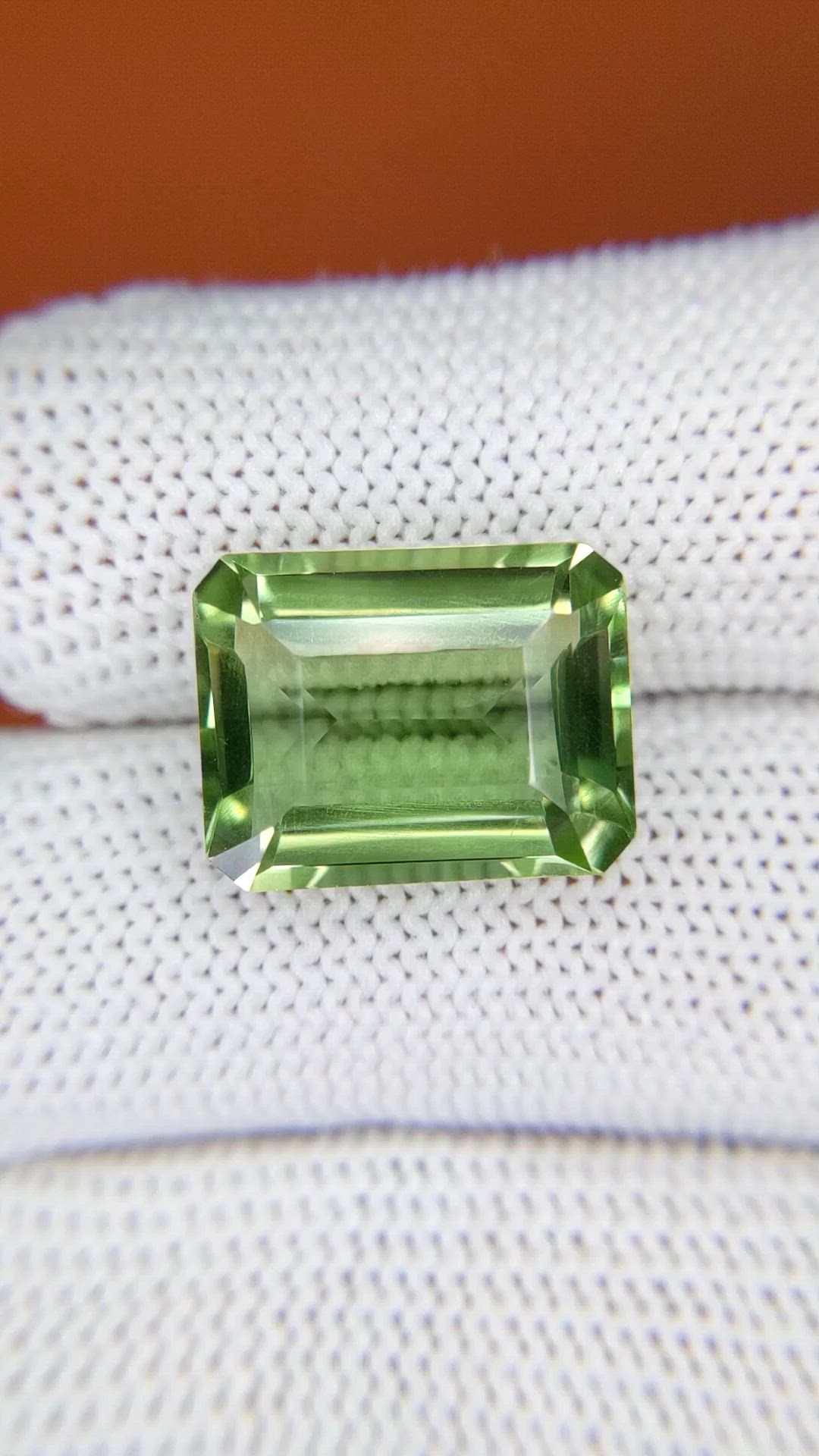
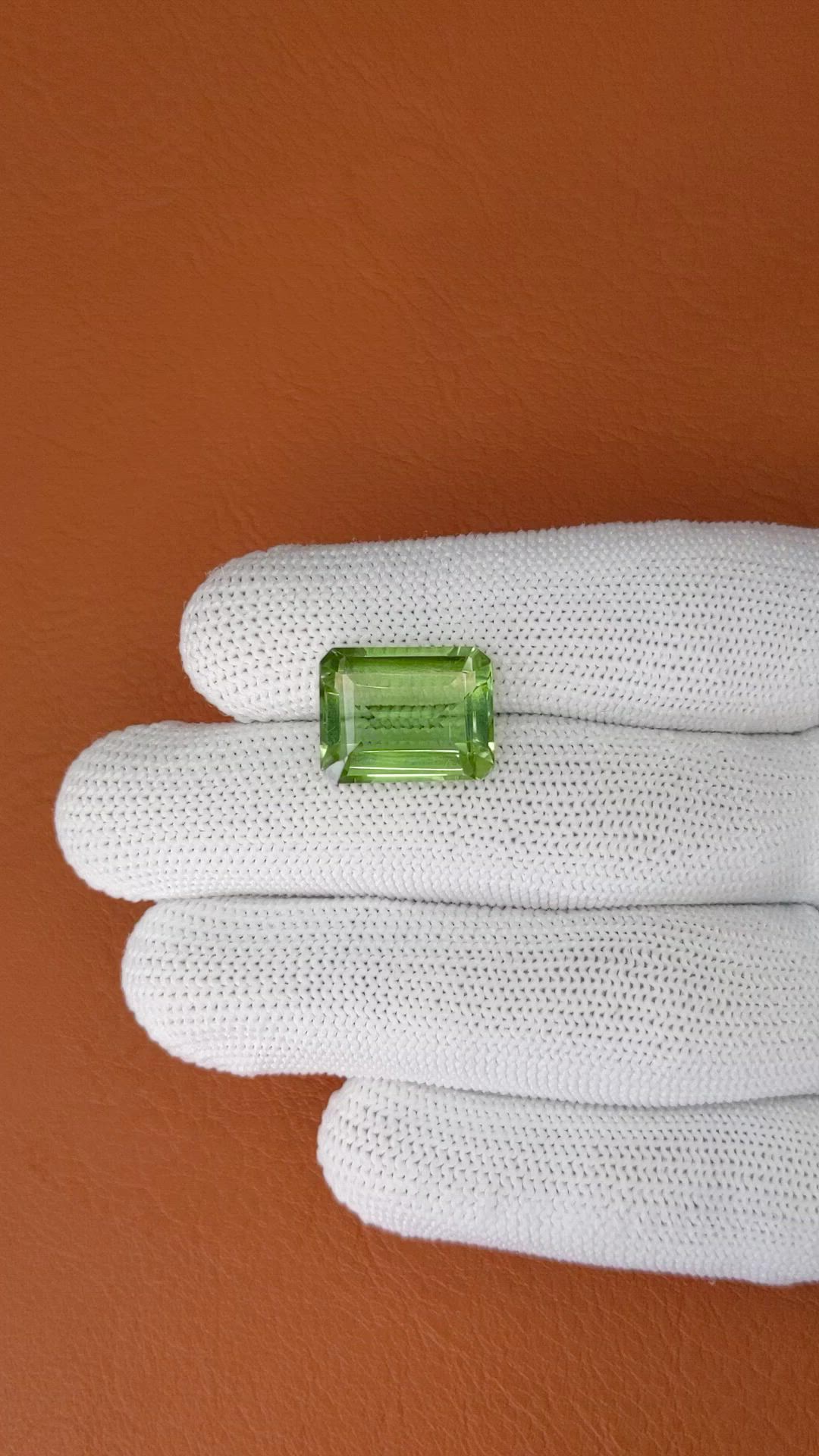
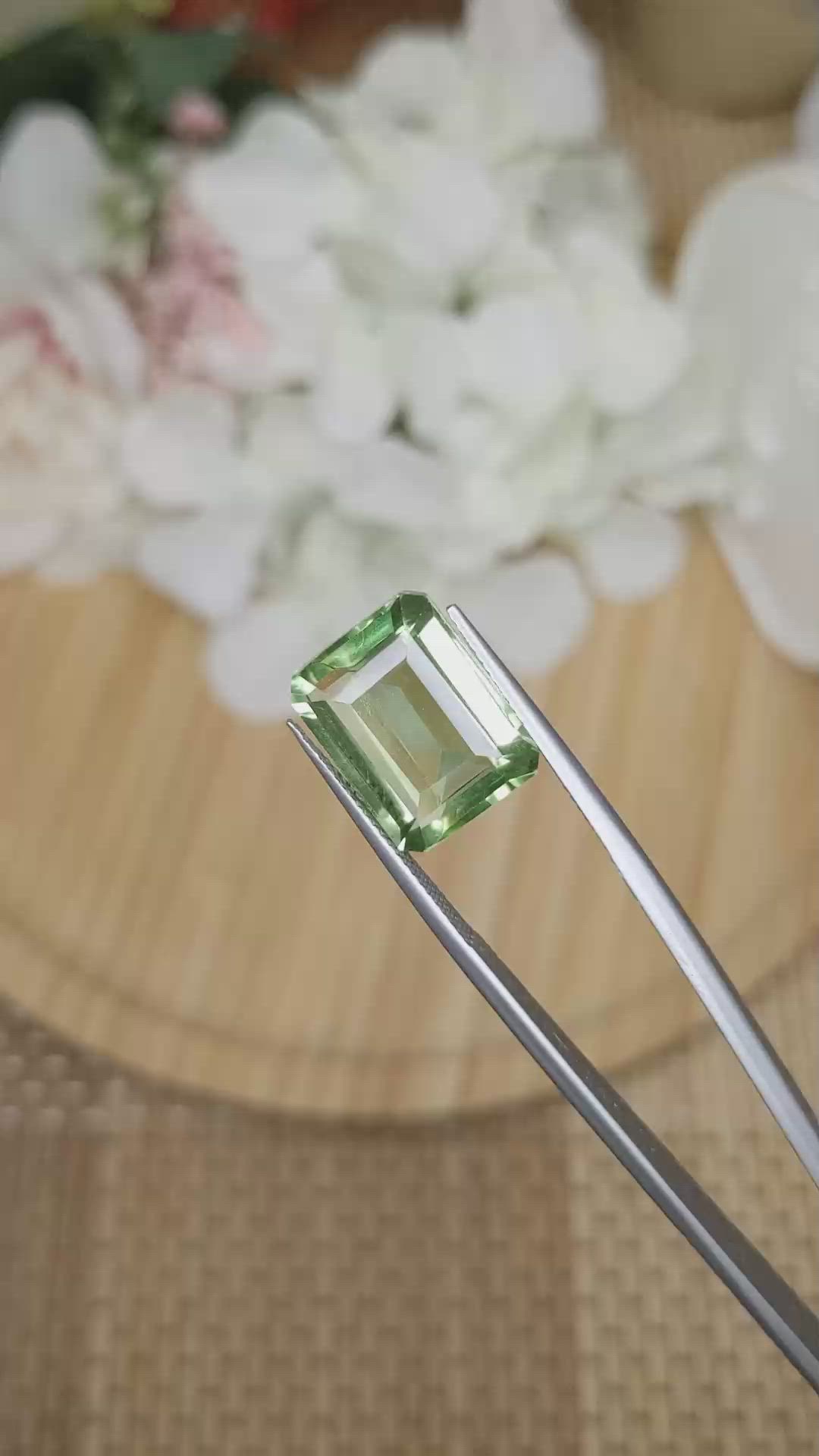
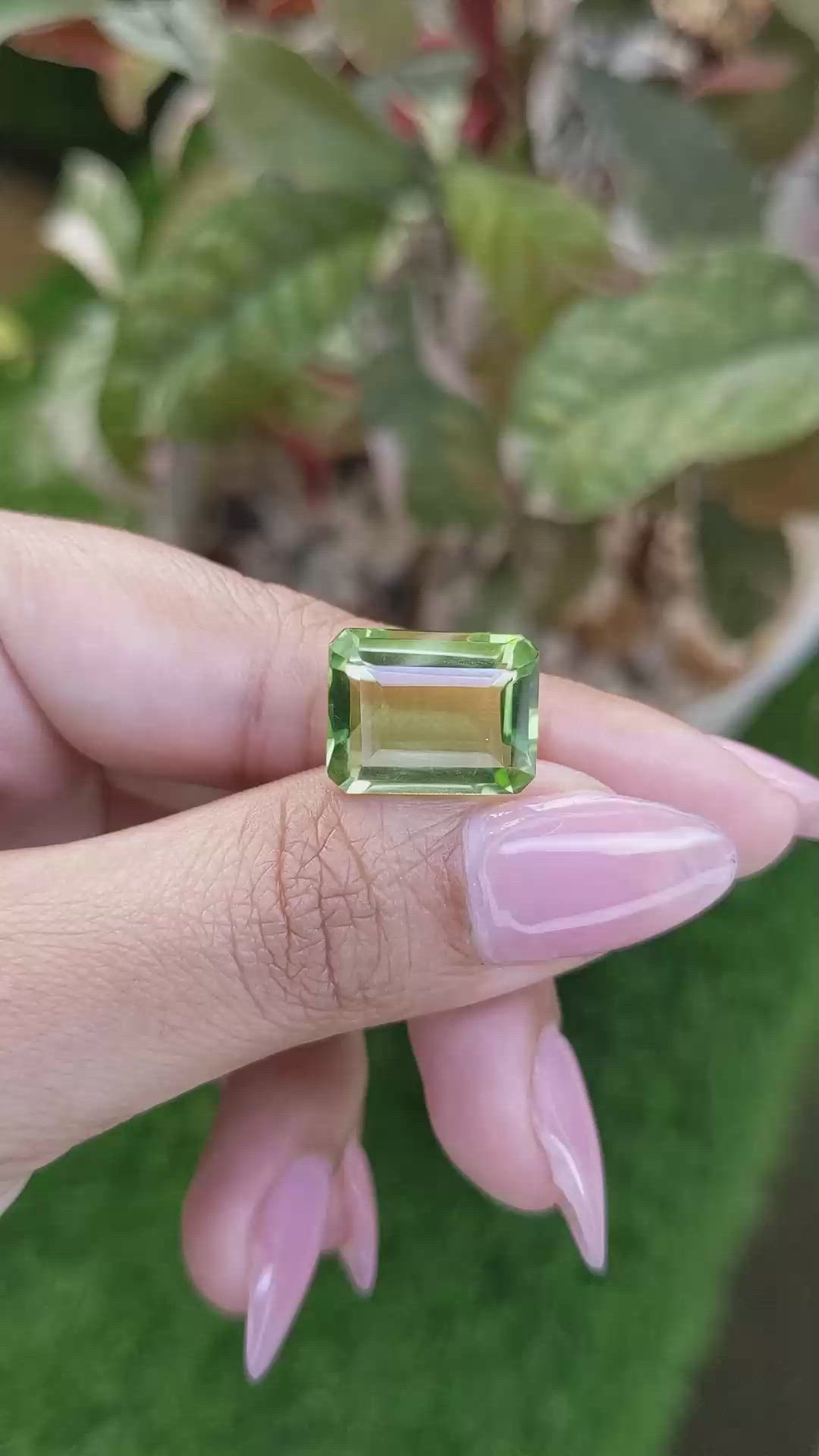
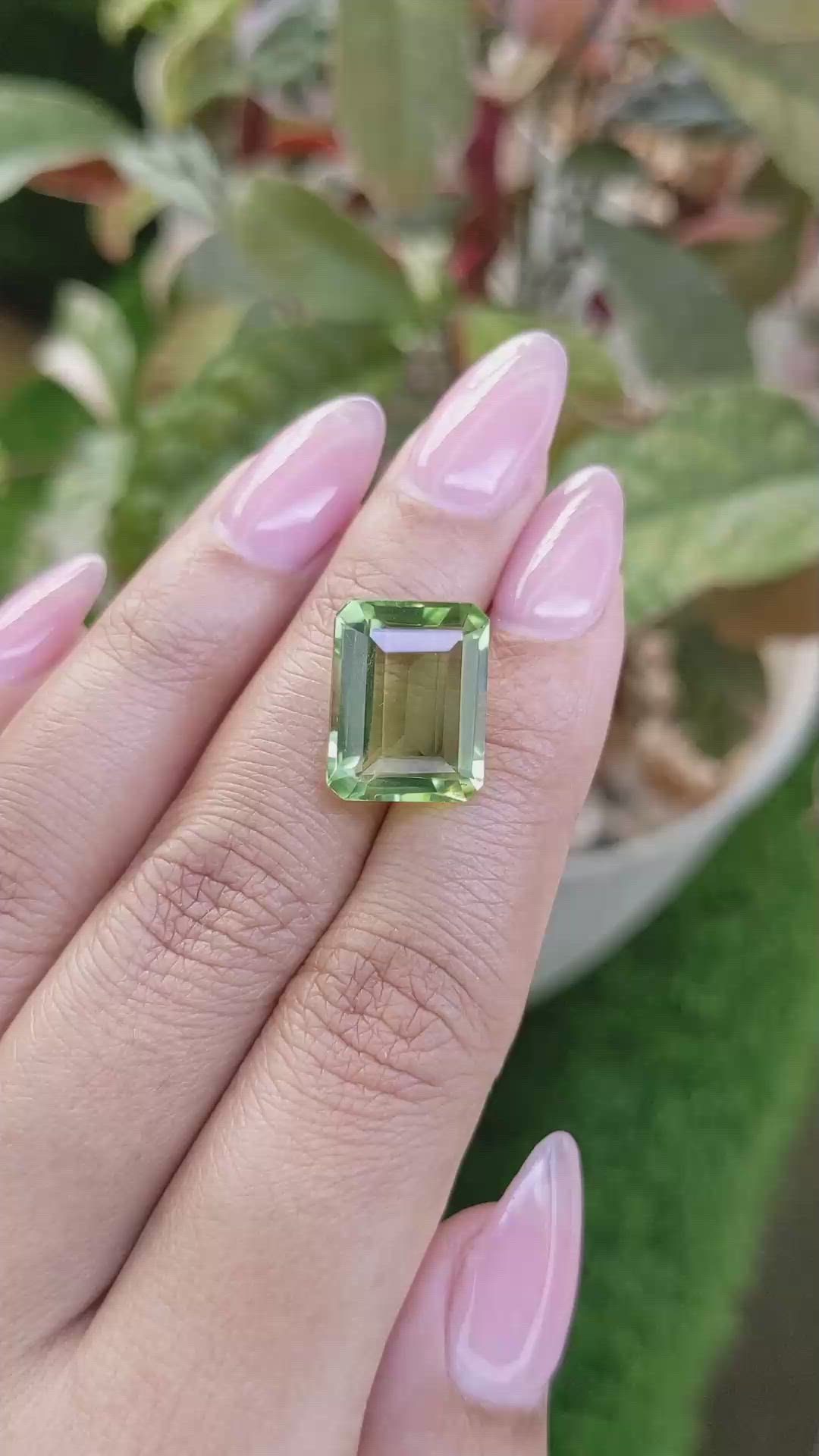
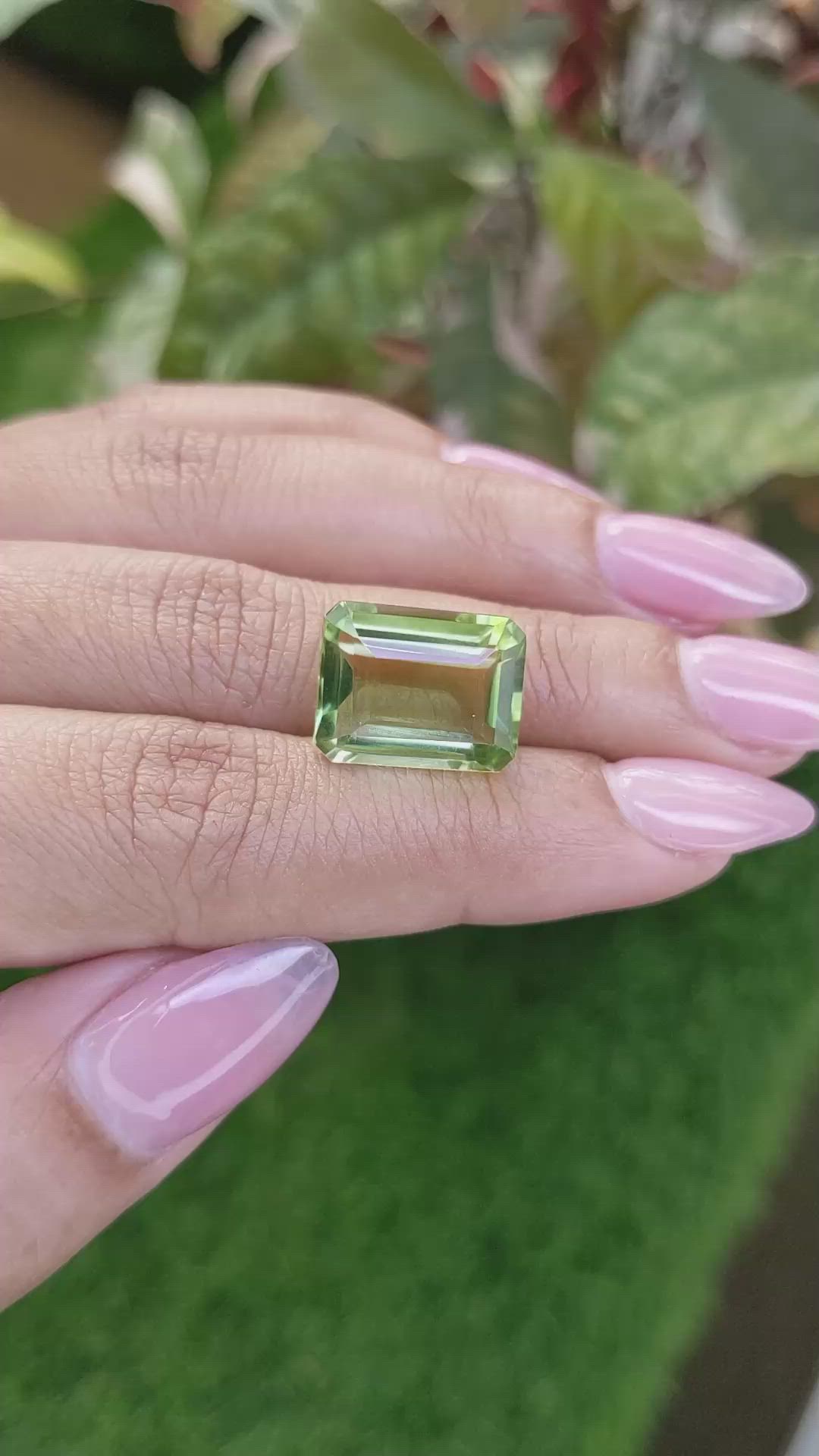



9.80 Ct. Yellowish Green Prasiolite from Madagascar
This loose stone is available to ship now
Item ID: | K27252 |
|---|---|
Dimensions (MM): help | Length: 15.04 Width: 11.73 Height: 7.32 |
Weight: | 9.80 Ct. |
Color: help | Yellowish Green |
Color intensity: help | Medium |
Clarity: help | Very Slightly Included |
Shape: help | Emerald Cut |
Cut: | Emerald Cut |
Cutting style: | Faceted |
Enhancements: help | Heat Treated |
Origin: help | Madagascar |
Per carat price: help | $28 |
This prasiolite offered by The Natural Gemstone Company is a transparent, emerald cut, yellowish green stone weighing 9.80 carats, with calibrated dimensions of 15.04 by 11.73 by 7.32 millimeters. The gem displays a medium color intensity and a yellowish green hue that reads as a warm, spring green in daylight, and the stone presents a very slightly included clarity grade when evaluated at eye level. The cut is an emerald style step cut, executed to bring a broad, flat table and long step facets together to form a tranquil color field, the polish is excellent, and the gem has been stabilized and color enhanced by heat treatment. The origin is Madagascar, and the provenance is reflected in the stone character, with a stable, mildly yellow-leaning green that remains even under varying lighting, making this piece suitable for a fine, statement ring or a collector grade set.
From a faceting and craftsmanship perspective the emerald cut is a deliberate choice for this prasiolite, because step facets emphasize the integrity of color and the clarity of the material rather than sparkle alone. The pavilion and crown employ parallel steps and broad facets that create a hall of mirrors effect, allowing controlled interplay of internal reflections and strong windows through the table, and the cutter has preserved generous pavilion depth to produce an optimal balance between face up brightness and color saturation. The stone depth is approximately fifty four point seven percent when depth is calculated against the average of length and width, which is within the expected range for a well proportioned emerald cut quartz, and it supports the medium color intensity without creating an overly dark face up appearance. The facet junctions are crisp and symmetrically aligned, the girdle appears even for secure setting, and the excellent polish enhances facet contrast and edge behavior so that internal features are minimally distracting to the naked eye.
Clarity wise, the very slightly included grade evaluated at eye level indicates the presence of minor inclusions that are small, well located, and do not materially weaken the gem or interrupt the step facet planes. Typical inclusion types in quartz of this clarity can include pinpoint crystals, thin healed feathers, or faint rutile needles, and in this specimen they function more as fingerprint identifiers than detractors, because the large emerald style facets and the well executed polish allow the eye to view uninterrupted fields of color. Optically prasiolite is quartz and shares quartz optical constants, with refractive index values in the range of one point five four four to one point five five three and a birefringence near zero point zero zero nine, a specific gravity around two point six five, and a hardness of seven on the Mohs scale, which makes it relatively durable for daily wear if mounted with attention to the cut corners characteristic of the emerald cut. The heat treatment applied to this Madagascar prasiolite alters iron related chromophores to produce and stabilize the green hue, and under normal wearing conditions the color is stable, though standard gem care practices that avoid aggressive thermal cycling and strong chemical exposure are recommended.
When comparing hue and tone to gemstones from other well known localities, this Madagascar prasiolite occupies a distinct place on the color spectrum. Against Colombian emeralds this stone is appreciably lighter in tone and carries a more pronounced yellow component, where Colombian emeralds are typically richer, deeper and often have a bluish green bias with greater saturation. Compared to tsavorite garnets from the Tsavo region between Kenya and Tanzania, which produce intensely saturated, vivid grass green stones with high refractive brilliance and a cool vivid hue, the prasiolite is more pastel, with a softer visual impact and lower saturation but a more tranquil and even color distribution. Against peridot specimens sourced from Pakistan and Myanmar that show an olive to yellowish green hue with strong yellow presence and high dispersion under light, the Madagascar prasiolite reads as less yellow weighted and more transparently spring green, with gentler tone and fewer internal color zoning effects. When measured against prasiolite or green quartz historically sourced from Brazil, which can at times approach a slightly deeper and greener appearance, the Madagascar material here shows a slightly more delicate yellowish lift that translates into a lighter, more lemon green face up appearance, a quality that appeals to buyers seeking a refined and versatile green that pairs well with both warm and cool metal palettes.
For design and setting recommendations, the emerald cut profile and the approximate fifteen by twelve millimeter table present a commanding face up size, so consideration to protective settings that guard the cut corners is prudent, and four prong mounts with reinforced corner prongs or a bezel with notched corners will secure the stone while preserving its step cut elegance. Metal choice will influence perceived hue, with warm yellow gold subtly intensifying the yellow component for a vintage inspired result, and white gold or platinum keeping the tone cooler and emphasizing clarity and crystalline transparency. This prasiolite from Madagascar, presented by The Natural Gemstone Company, offers collectors and designers a technically well executed, eye clean emerald cut specimen, balanced in depth and polish, with a medium intensity yellowish green hue that differentiates itself from deeper emeralds, more saturated garnets, and more yellow biased peridots, and with predictable physical properties consistent with quartz, it provides an excellent combination of aesthetic refinement and practical wearability.


