
- Pair15
- Reports4


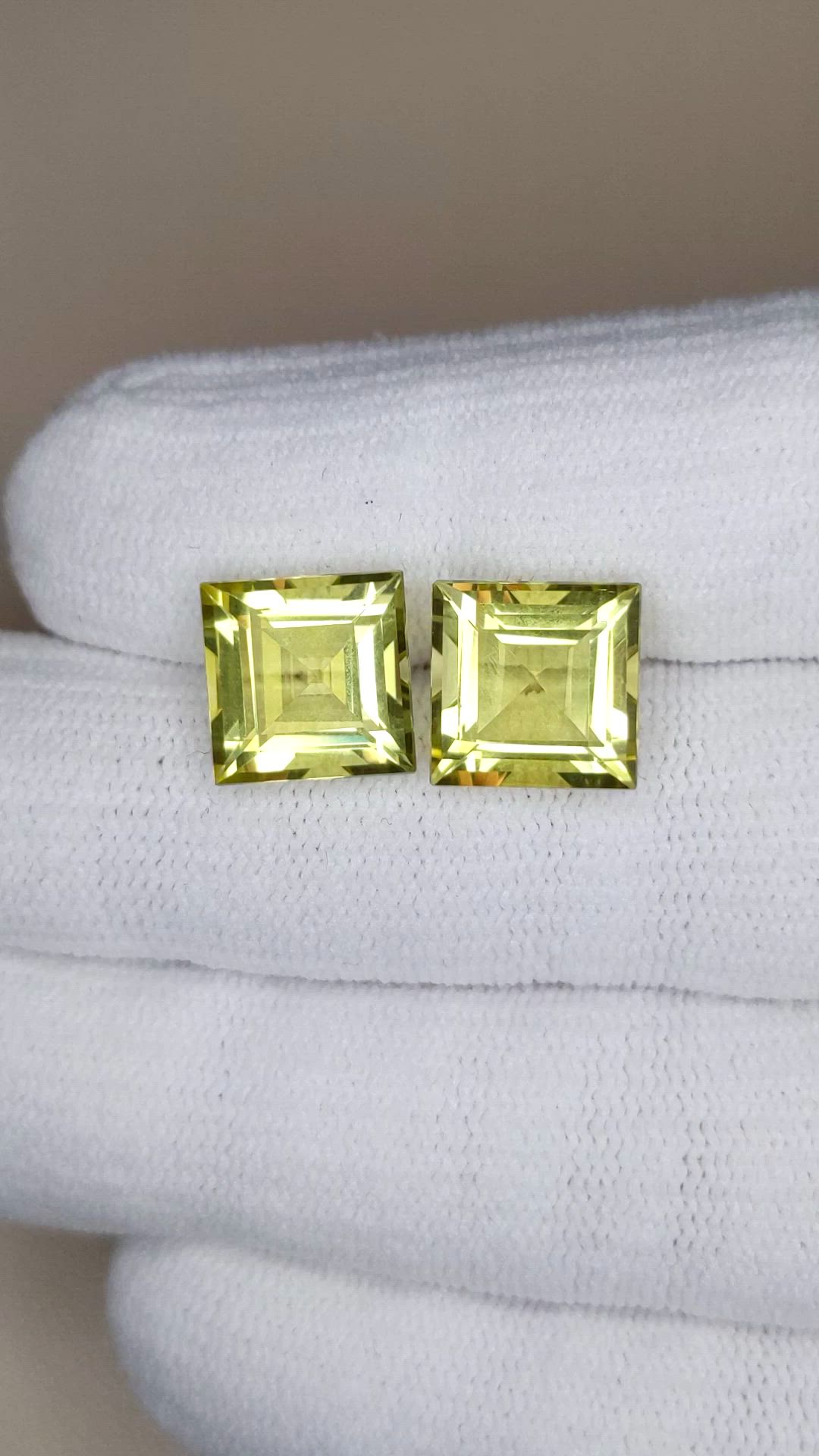
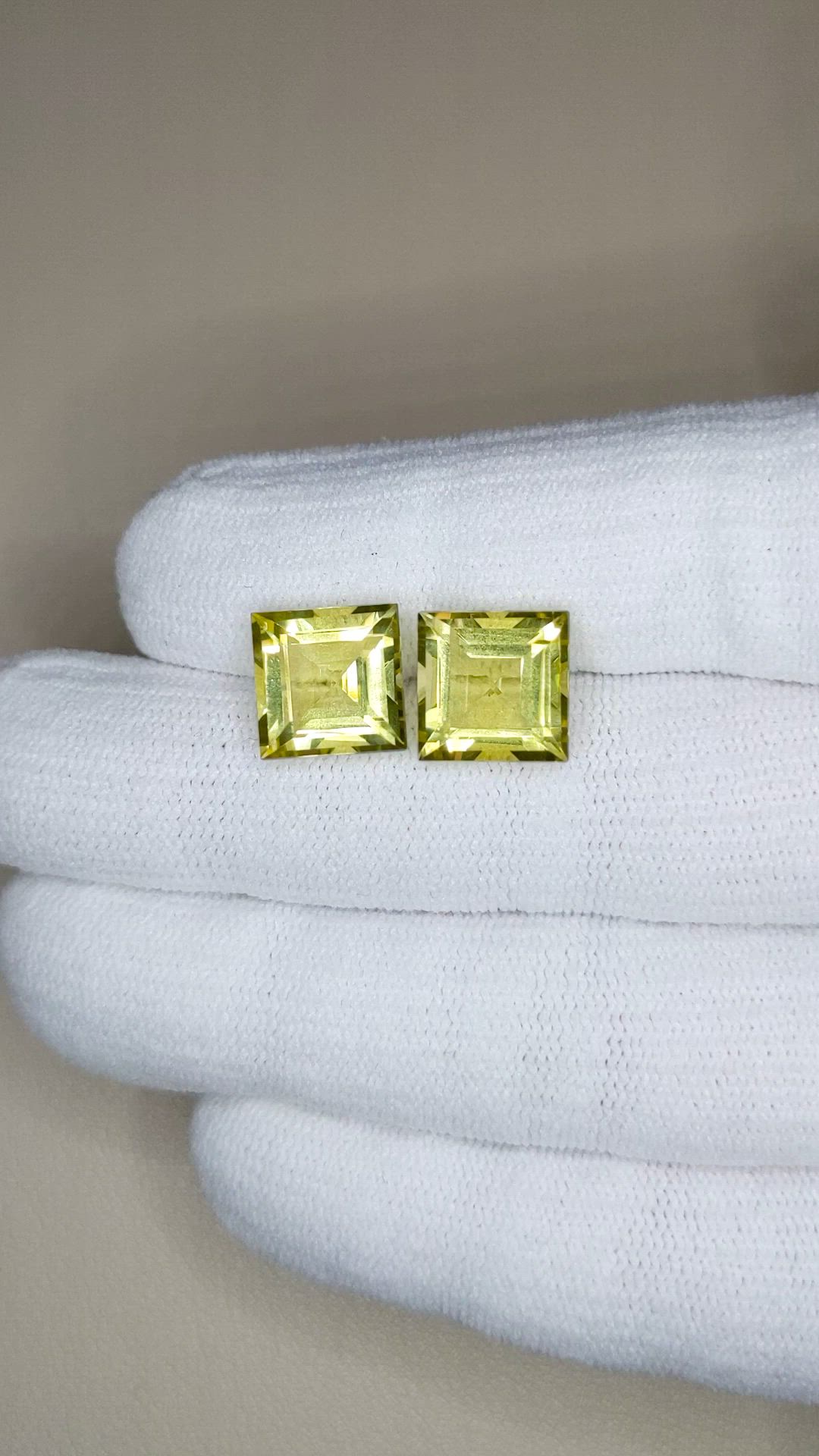
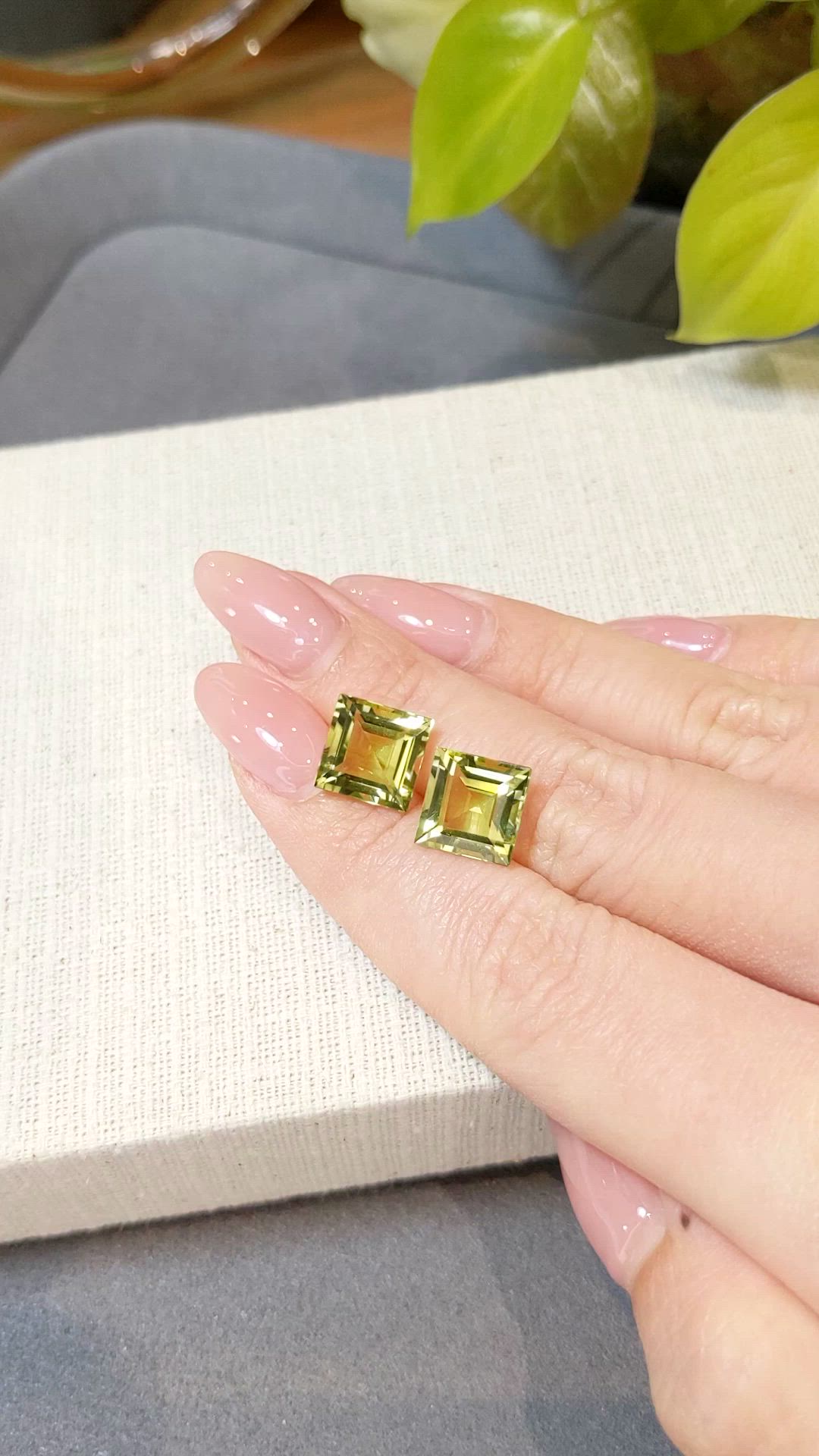
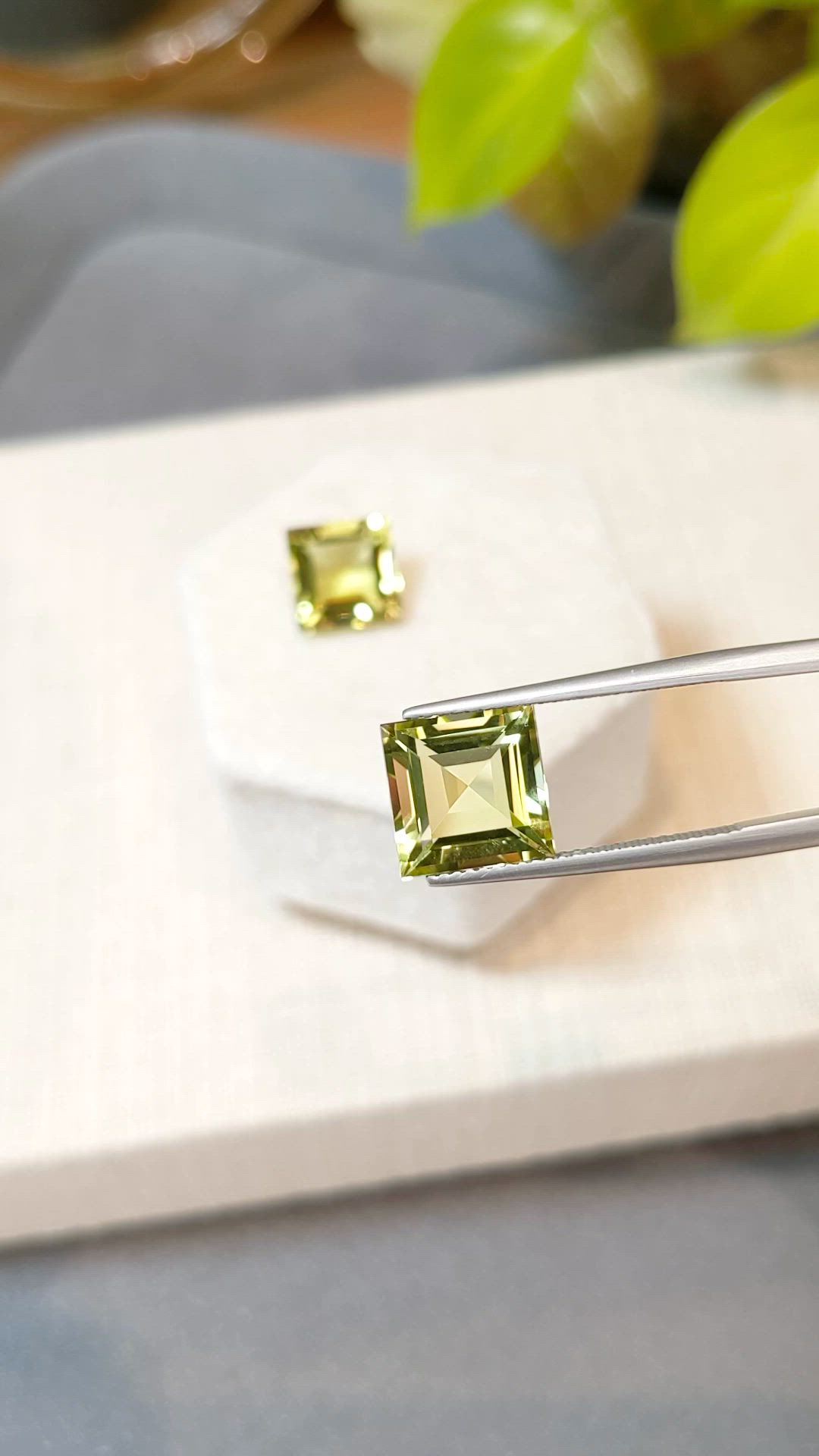
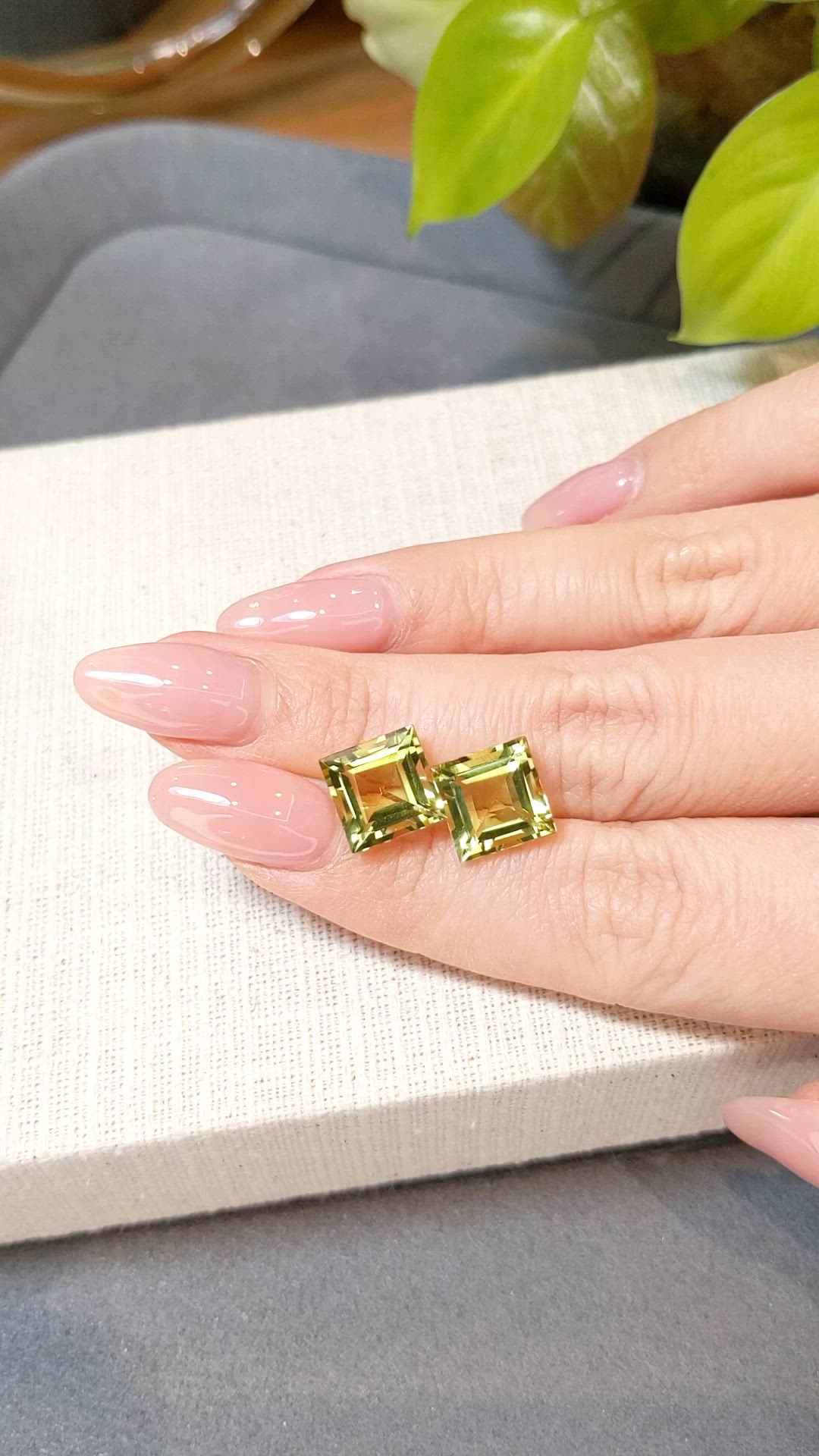

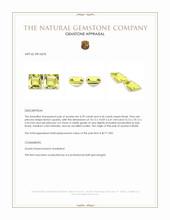


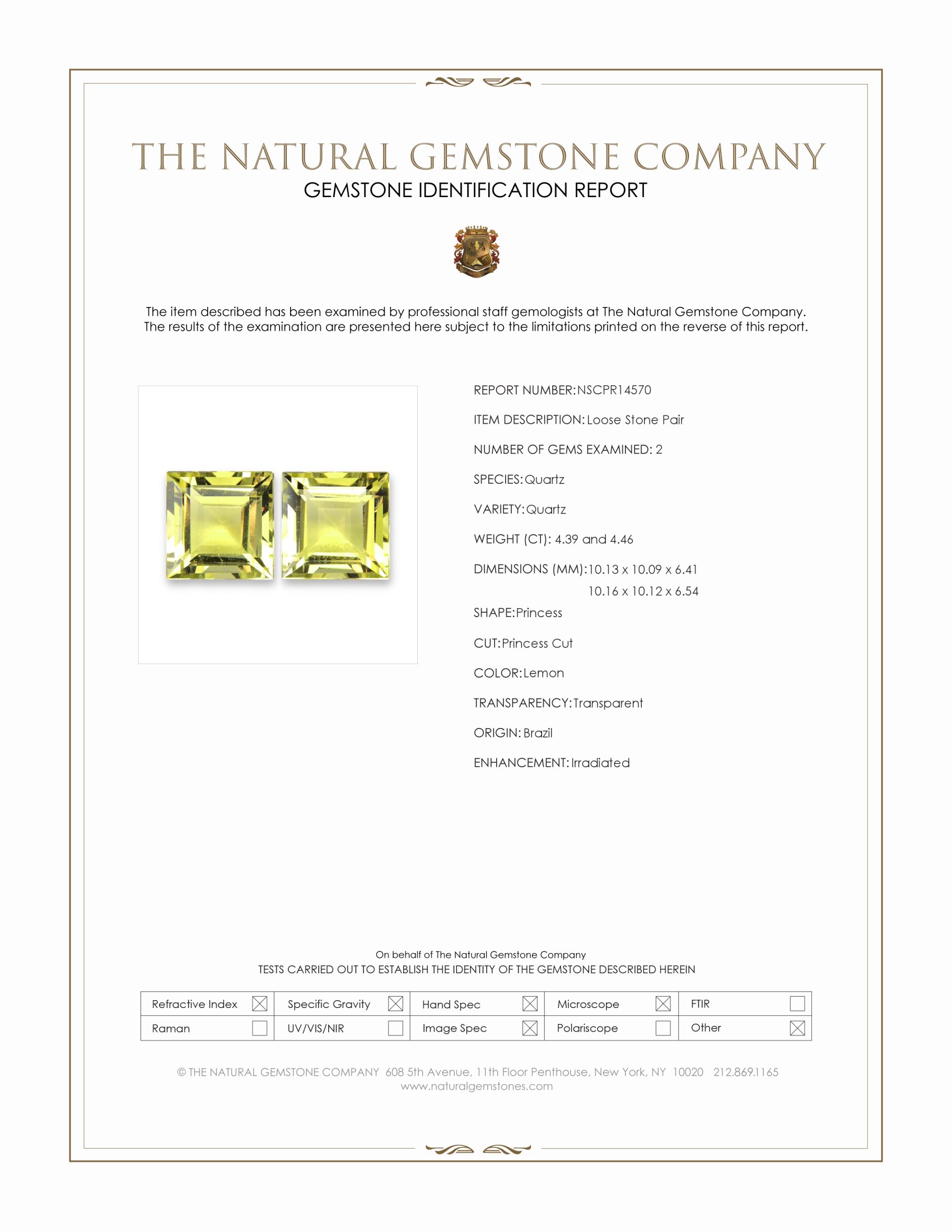
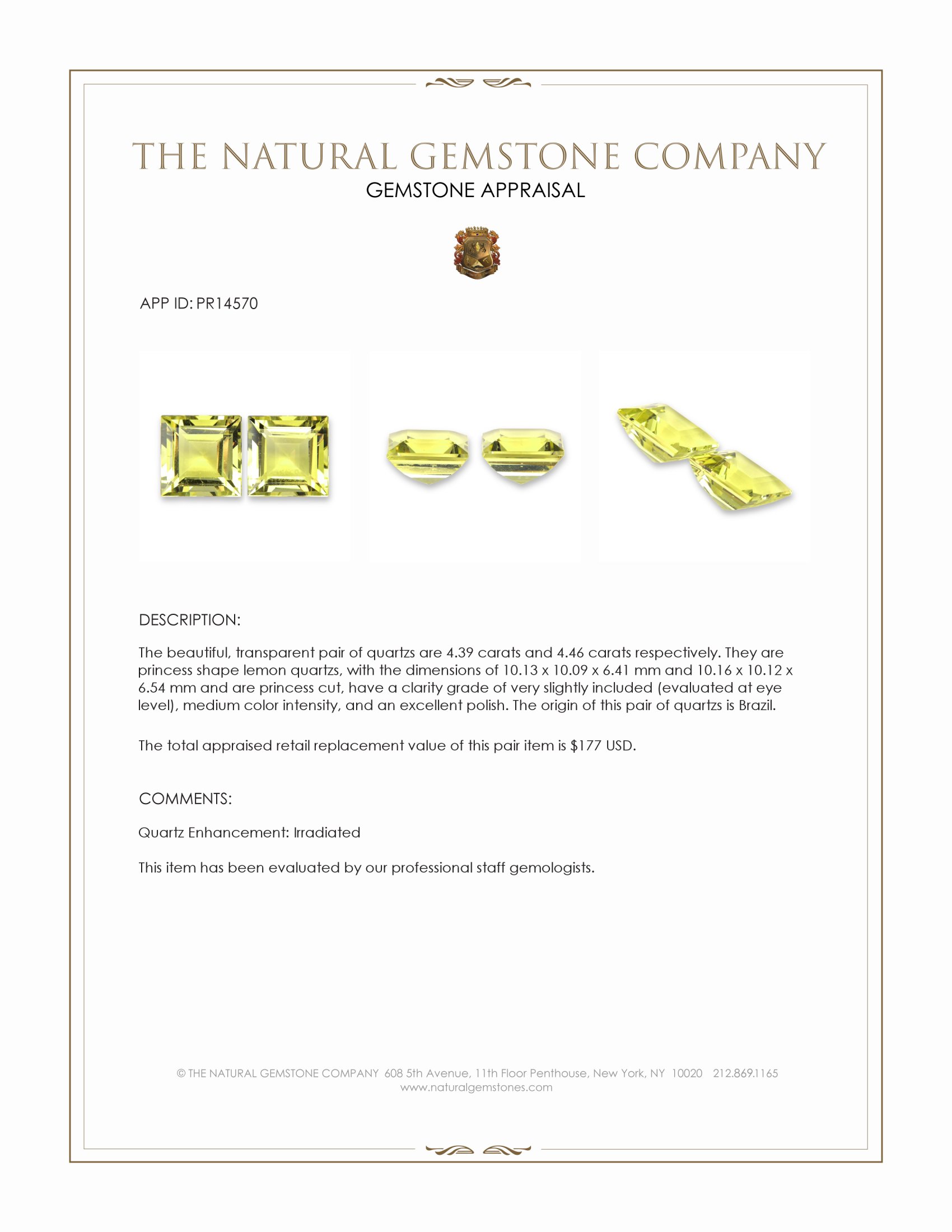
8.85 Ct.Tw.Total Carat Weight Lemon Quartz Pair from Brazil
This pair of stones is available to ship now
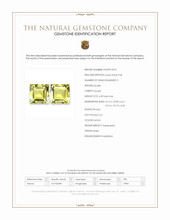
Stone type: | Quartz | Quartz |
|---|---|---|
Item ID: | PR14570 | PR14570 |
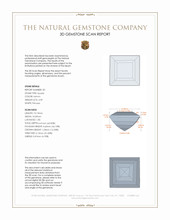
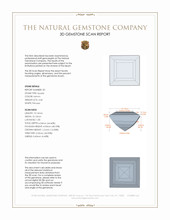
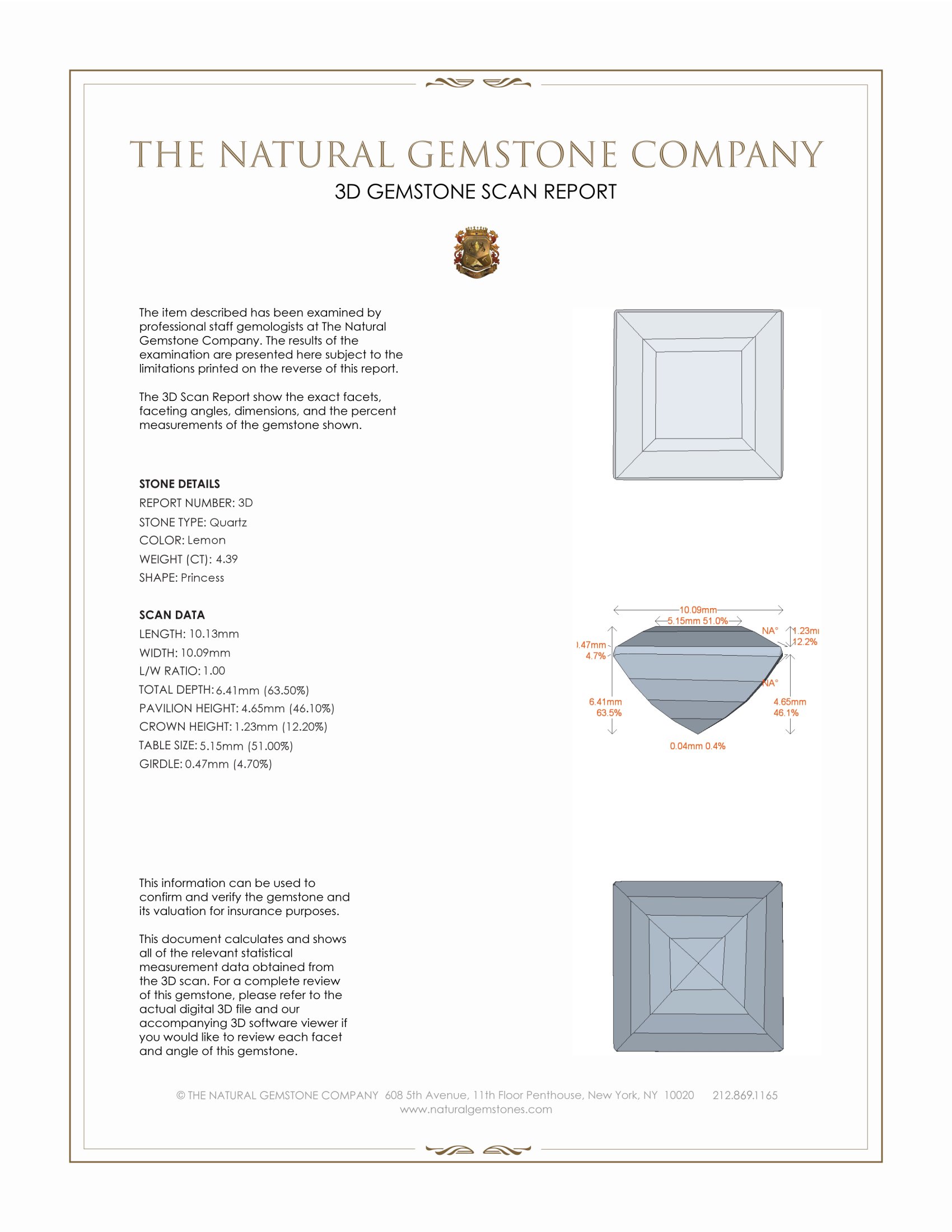
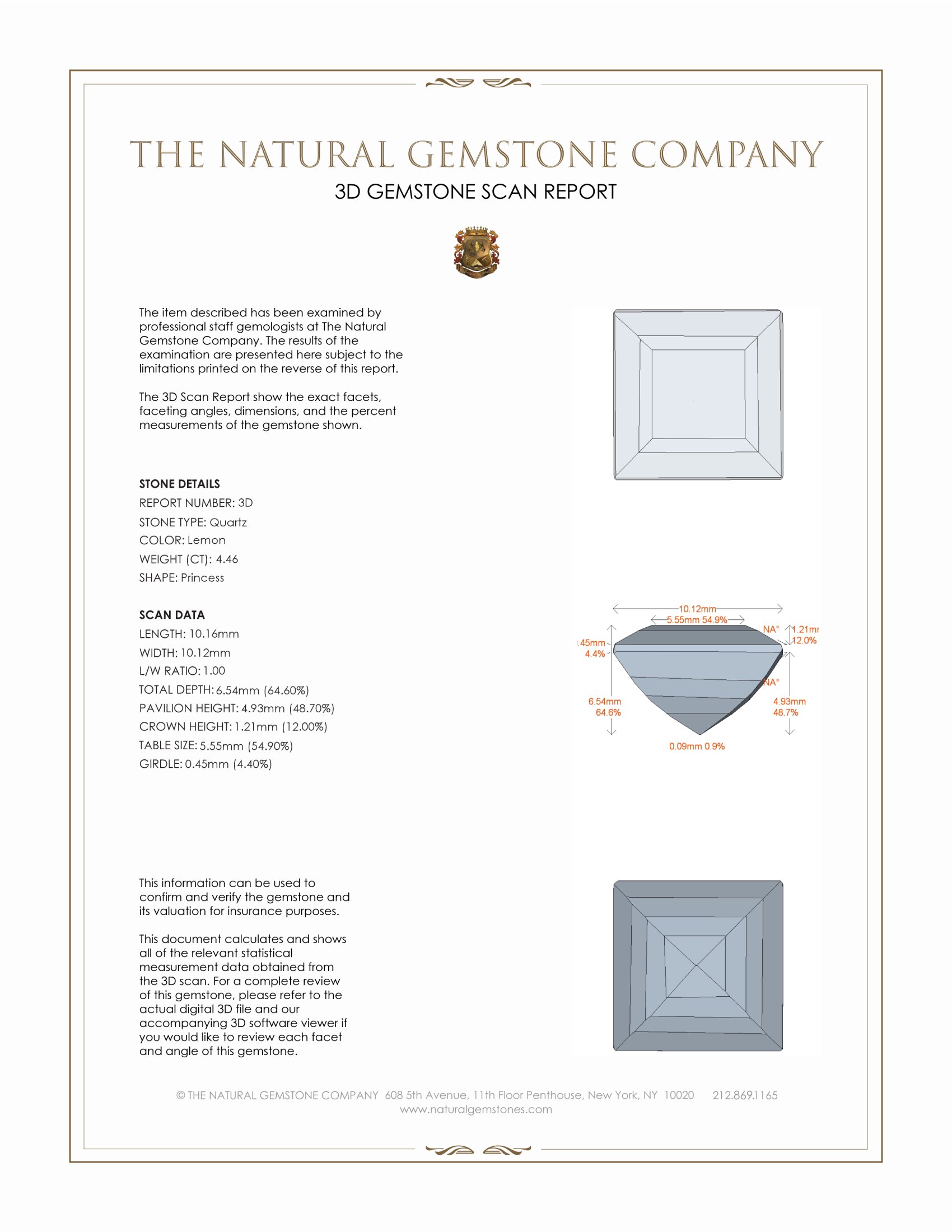
Dimensions (MM): help | Length: 10.13 Width: 10.09 Height: 6.41 | Length: 10.16 Width: 10.12 Height: 6.54 |
Weight: | 4.39 Ct. | 4.46 Ct. |
Color: help | Lemon | Lemon |
Color intensity: help | Medium | Medium |
Clarity: help | Very Slightly Included | Very Slightly Included |
Shape: help | Princess | Princess |
Cut: | Princess Cut | Princess Cut |
Cutting style: | Faceted | Faceted |
Enhancements: help | Irradiated | Irradiated |
Origin: help | Brazil | Brazil |
Per carat price: help | $20 | $20 |
This matched pair of transparent quartz specimens presents a carefully balanced offering for precision jewelry manufacture, each stone weighing 4.39 carats and 4.46 carats respectively, with dimensions of 10.13 millimeters by 10.09 millimeters by 6.41 millimeters, and 10.16 millimeters by 10.12 millimeters by 6.54 millimeters. Both stones are executed in a square princess profile, with precise symmetry and parallel pavilion walls that produce a distinct stepped pavilion signature when viewed on edge. The cutters achieved a medium face up color intensity in a classic lemon yellow tone, the clarity grade is evaluated as very slightly included at eye level, and the finish is described as excellent polish throughout crown and pavilion facets. These quartzs originate from Brazil and have been color enhanced by irradiation to achieve uniformity and saturation, a stable treatment when properly annealed and handled under normal wear conditions. As presented by The Natural Gemstone Company, this pair is matched to tolerances suitable for high quality paired applications such as earrings and matched side stones, making them directly ready for precise bench work or custom setting design.
From a technical cutting perspective the princess style used here is a modified brilliant arrangement, combining a square table and crown facet scheme with a pavilion composed of chevrons and kite facets that direct light back through the table with pronounced return when proportions are controlled. Measured depth yields are approximately sixty three percent for the smaller stone and approximately sixty four percent for the larger stone, numbers that sit within the ideal range for maintaining both brilliance and face up spread in square cuts of quartz. Quartz materials exhibit a refractive index in the range of 1.544 to 1.553 and a low birefringence near 0.009, characteristics that the cutter exploited by orienting pavilion angles to maximize constructive interference and minimize light leakage, while maintaining crisp facet junctions as indicated by the excellent polish. The lack of natural cleavage in quartz contributes to reliable cutting behavior, allowing for accurate facet junctions and narrow girdles where required by flush or channel settings. Specific gravity near 2.65 and a Mohs hardness at seven mean the stones respond well to standard jewelry fabrication techniques while offering suitable resistance to daily wear.
Color grading and treatment documentation are given with specificity to inform design decisions and long term value assessment. These quartzs exhibit a medium lemon yellow hue achieved through controlled irradiation, a treatment commonly applied to alter color centers in silica based materials, followed by any necessary stabilization heat treatments to lock in saturation. At face up view the color is even with minimal zoning, and the medium intensity is chosen deliberately to allow metal interaction to influence perceived warmth or coolness of tone. The treatment is stable under normal light exposure, however prolonged exposure to elevated temperatures or aggressive chemical environments can shift color over time, therefore routine care guidance is to avoid steam cleaning and to use mild ultrasonic cleaning only where the mounting and setting have been verified to offer thermal stability. Pleochroism is not a factor for quartz in this color range, so orientation during setting can be governed primarily by symmetry and table alignment rather than color directional variances.
The versatility of this matched pair makes them highly adaptable to a wide range of jewelry creations, from classical matched stud earrings to more complex multi stone compositions. For stud applications fine carpentry of prong arms at the corners will secure the princess profiles while maximizing light entry through the table, or alternatively a low profile bezel can be used where wear resistance is required, noting that a full bezel will slightly reduce apparent brightness and deepen perceived color. For ring or pendant usage consider halo mounting to amplify apparent size and color saturation, or channel settings where square geometry allows seamless rows with continuous sight lines. Metal selection plays a decisive role in final aesthetic, yellow gold will harmonize and slightly warm the lemon tone, while white metals such as platinum or white gold will offer a fresher contrast and emphasize brilliance. When pairing with accent stones choose diamonds or white sapphires to accentuate fire, or small pink tourmalines to create a contemporary contrast, taking care to calibrate seat depths and prong positioning to the measured pavilion depths provided herein. As with all offerings from The Natural Gemstone Company, these princess lemon quartzs are supplied with clear specification of carat weight, dimensions, clarity grade, polish, treatment and origin to support confident specification by jewelers, designers and discerning collectors who value technical integrity as much as visual appeal.


