
- Stone14
- Reports3
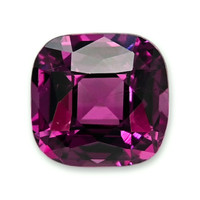
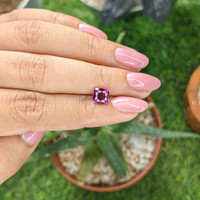
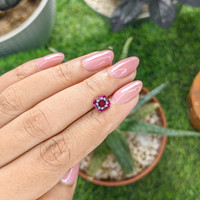
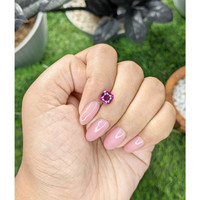
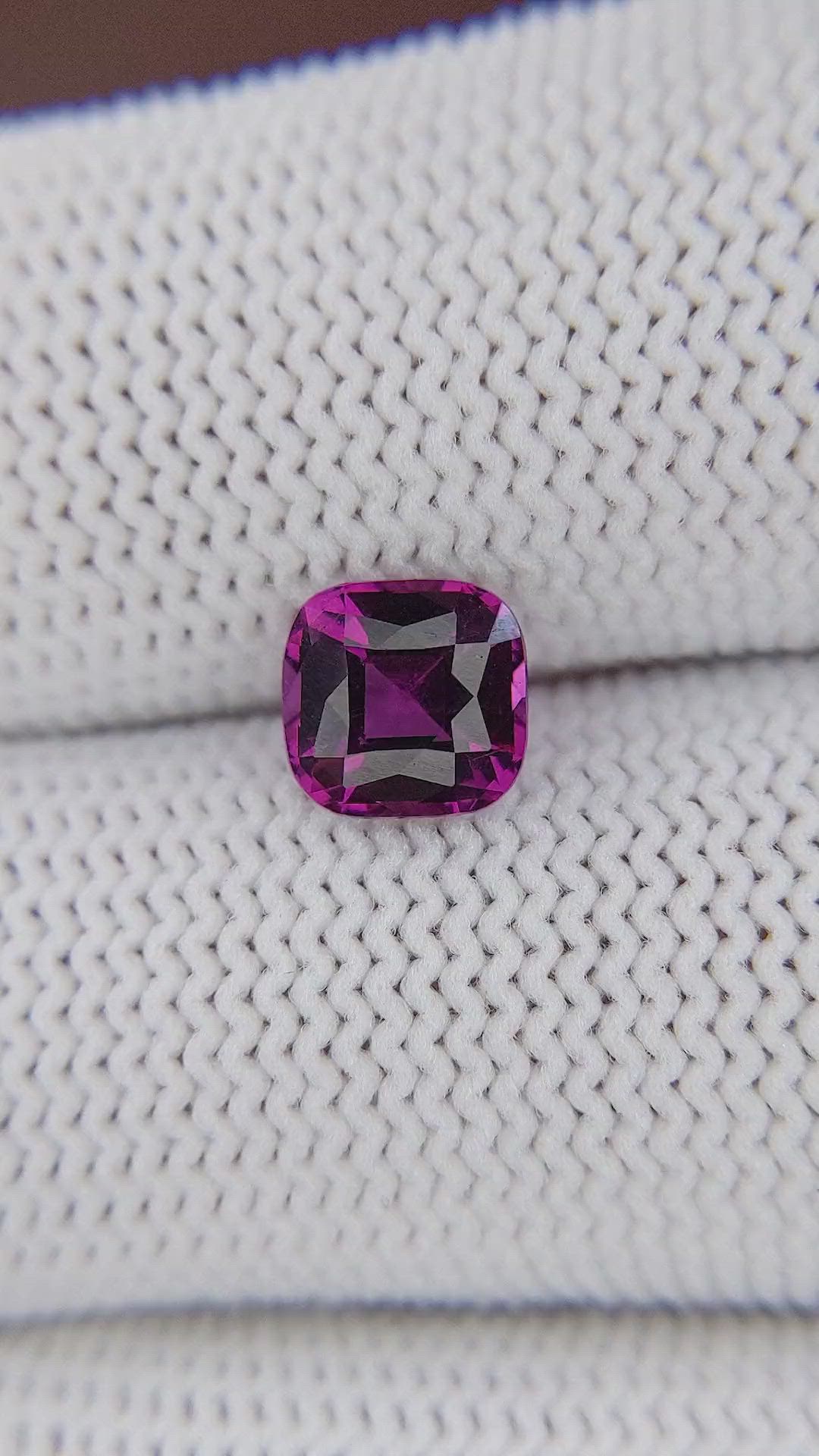
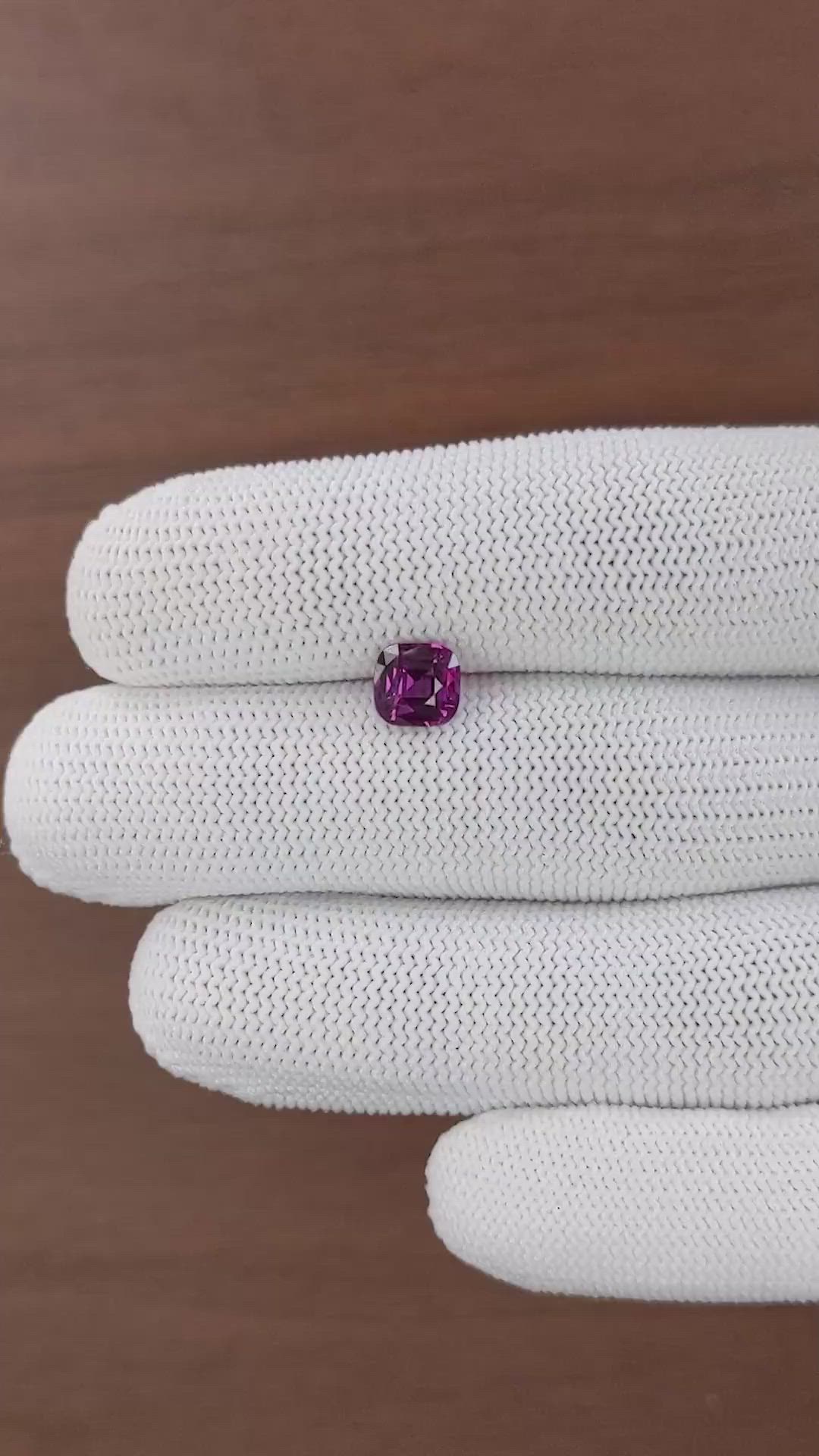
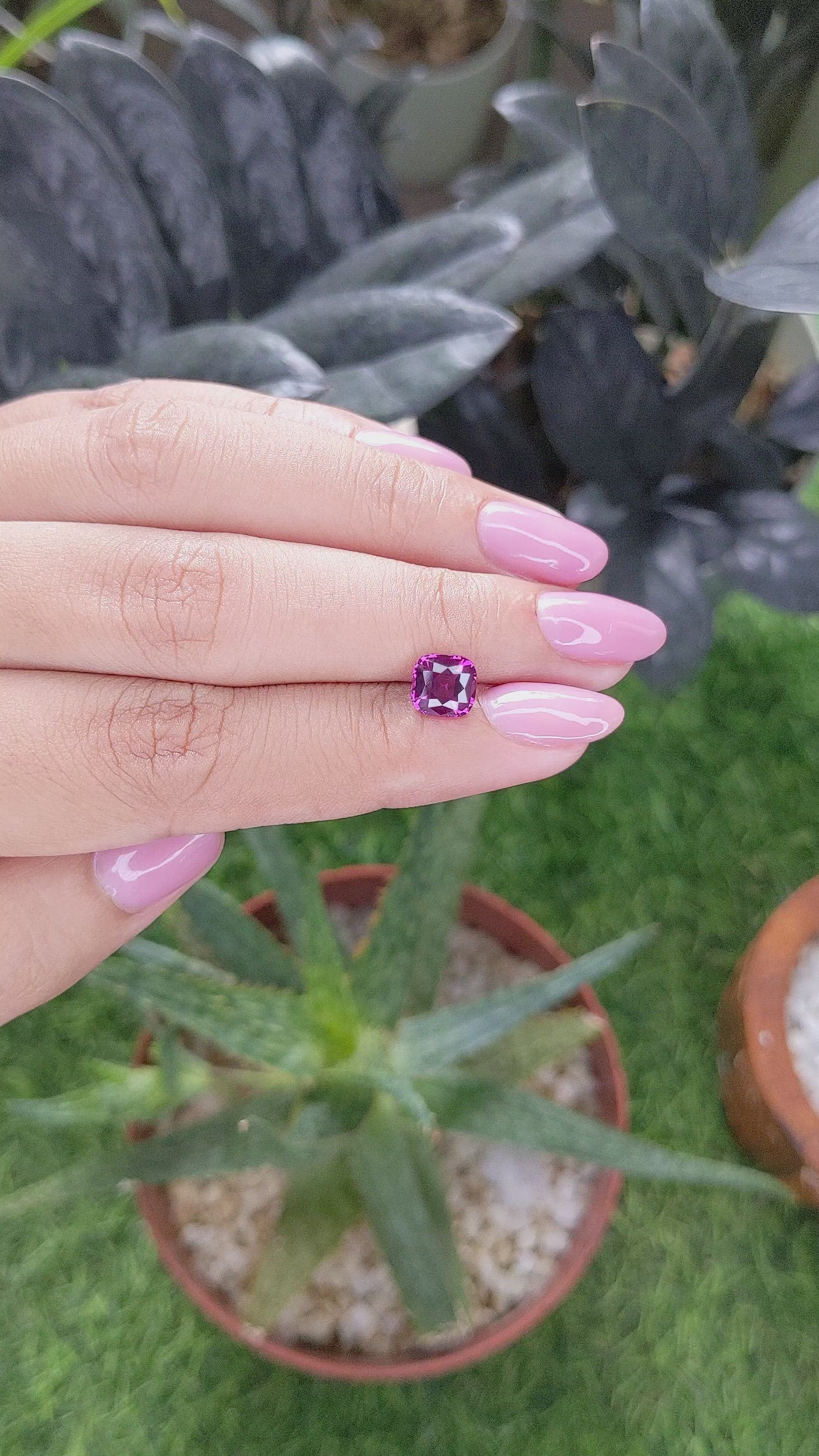
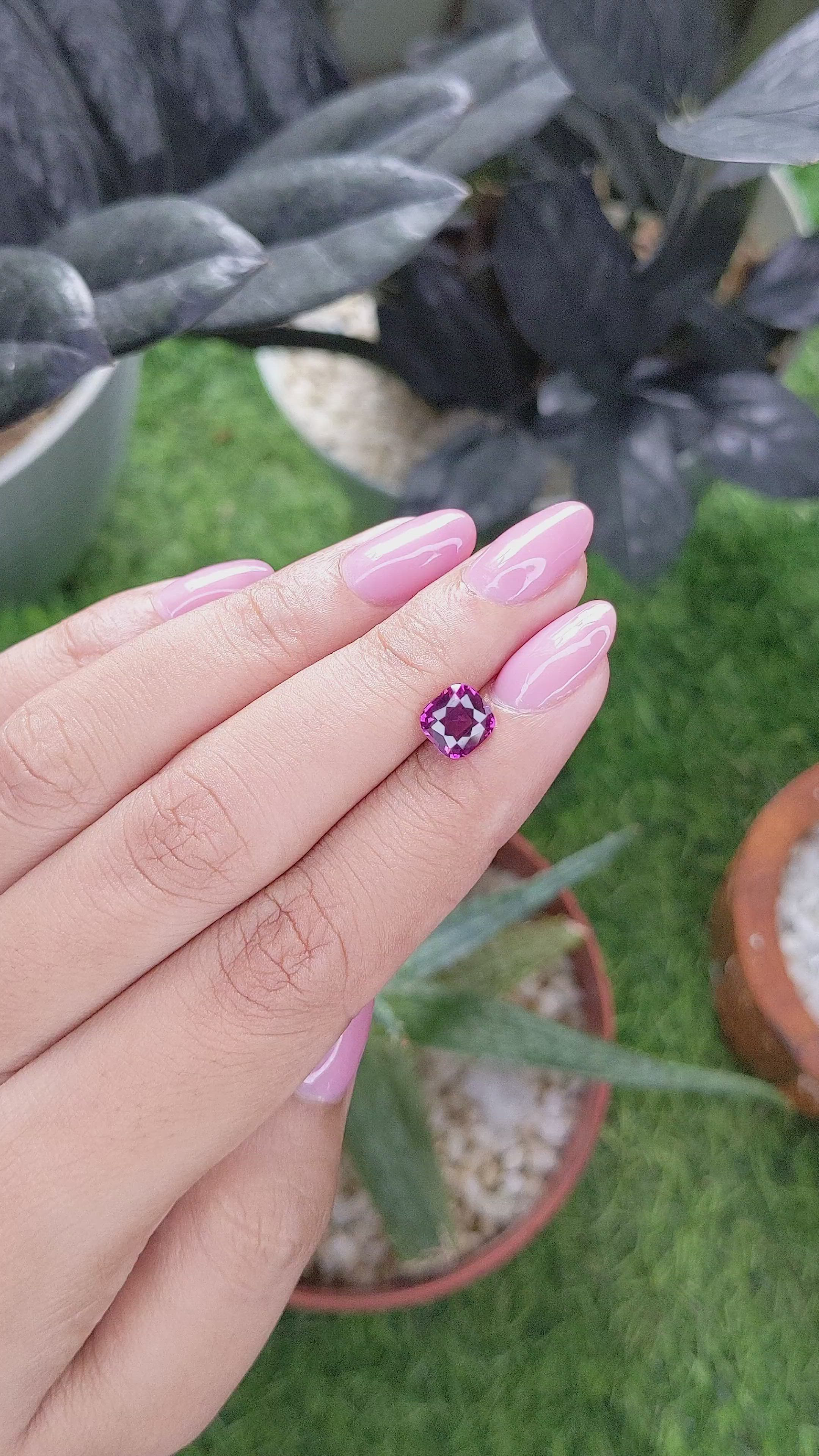
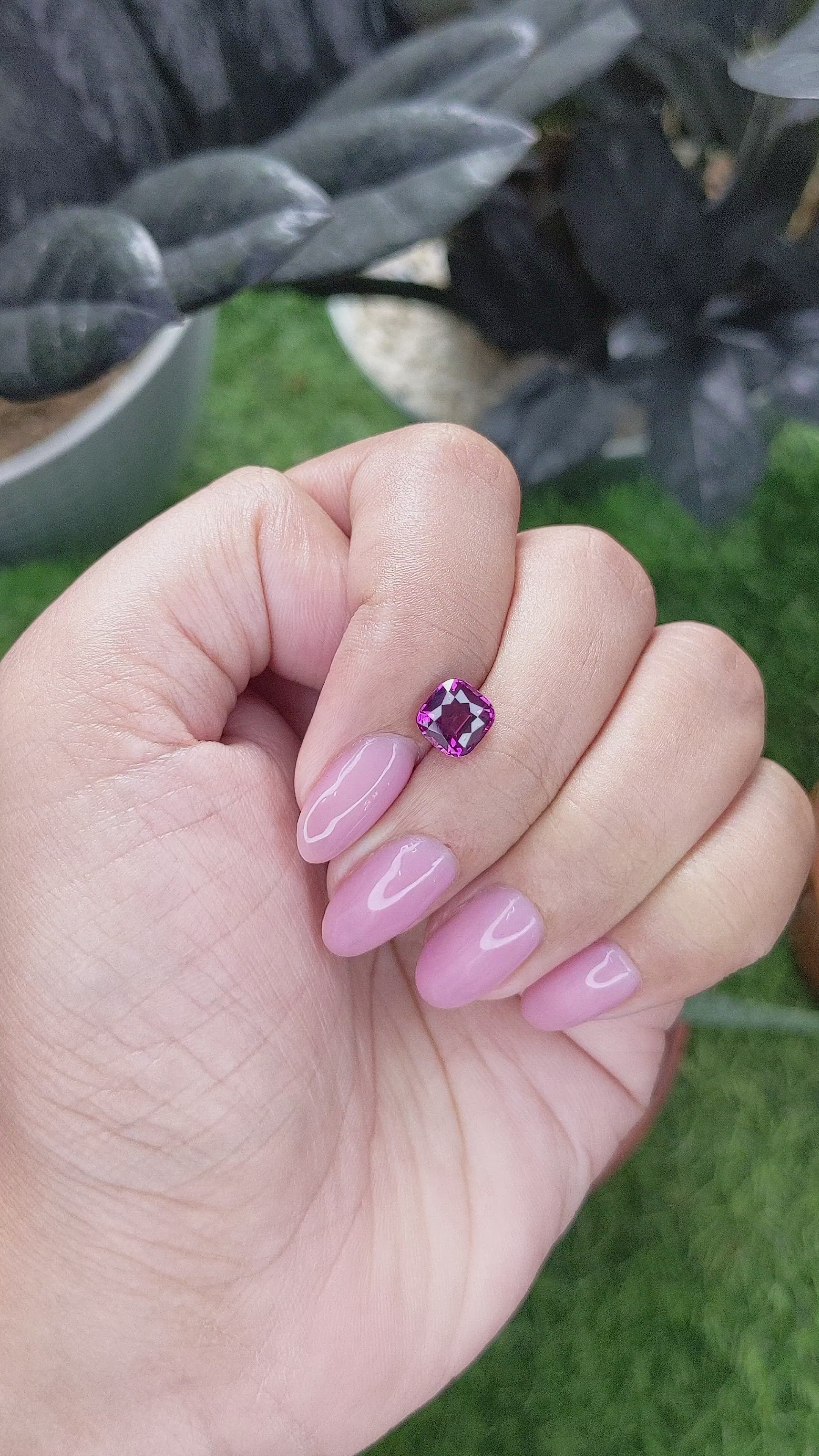

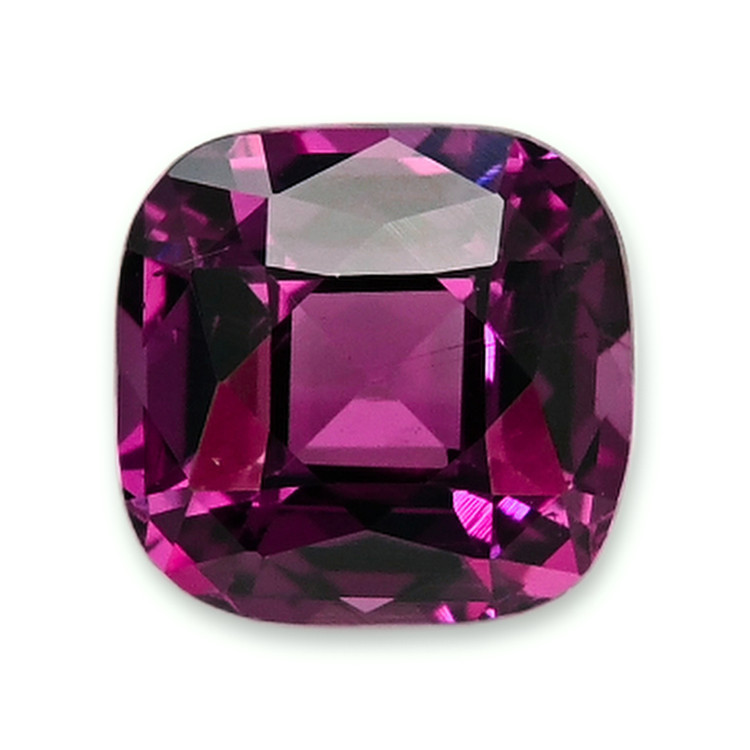
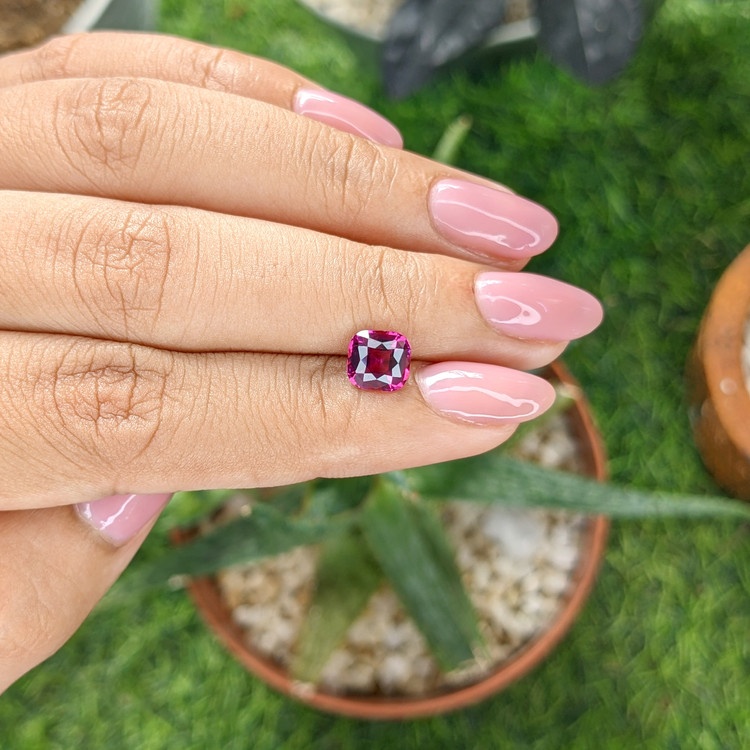
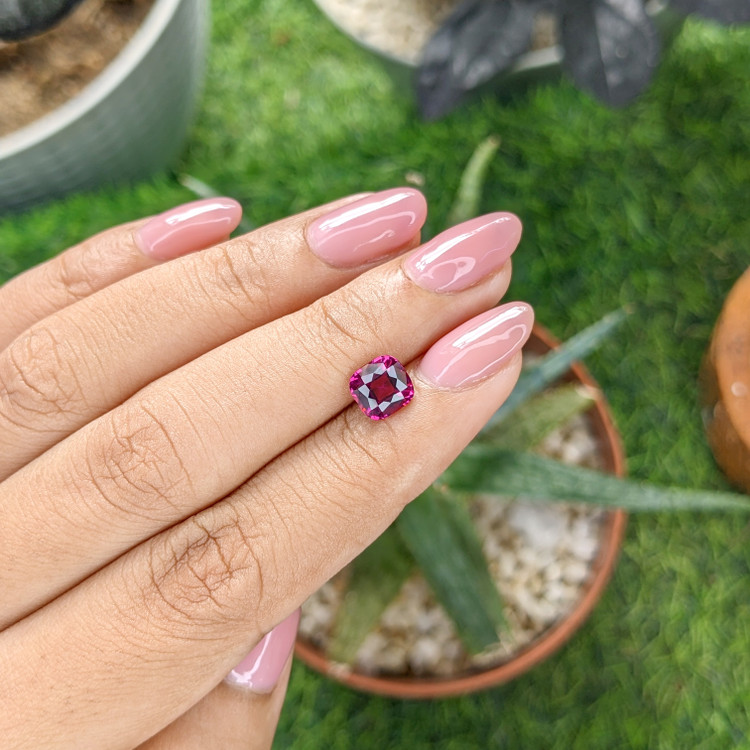
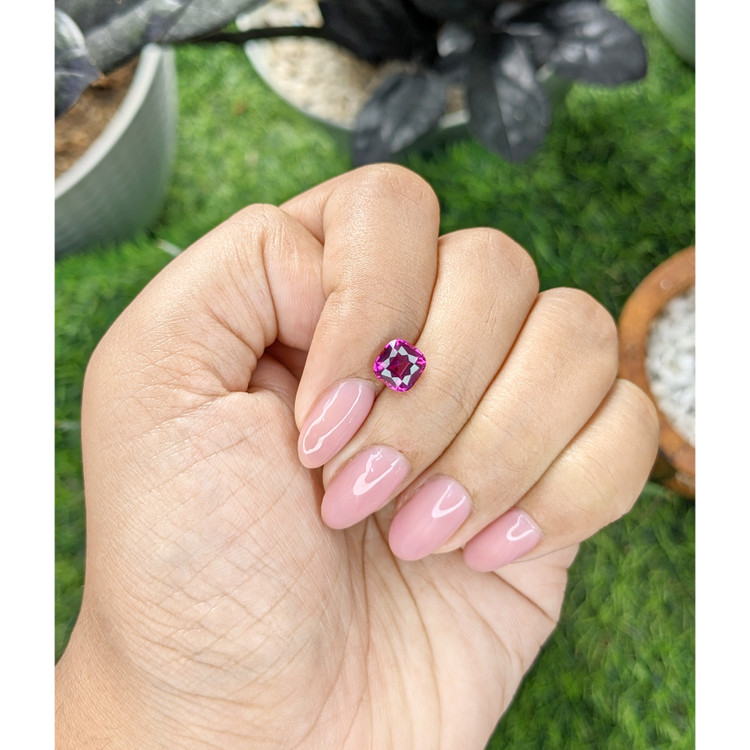

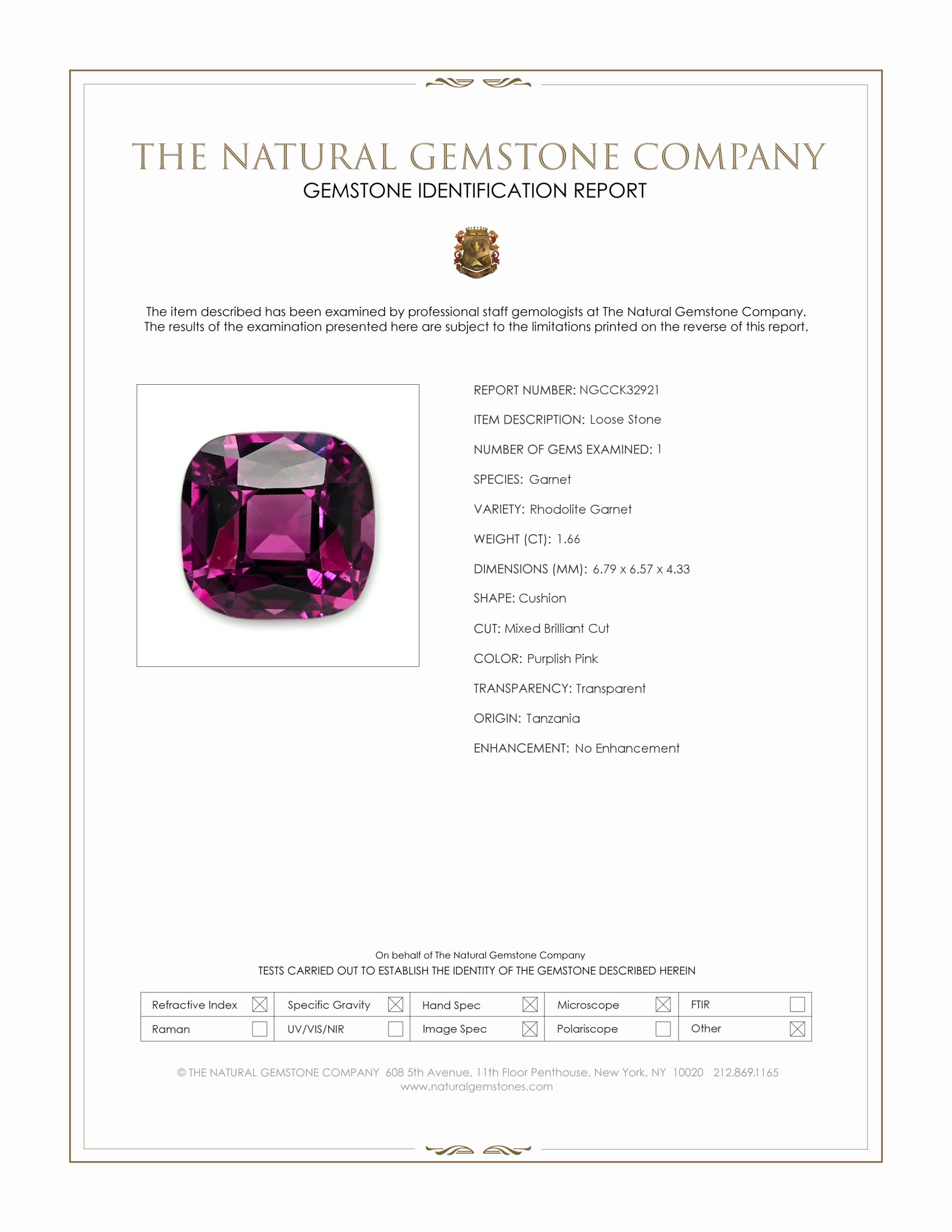
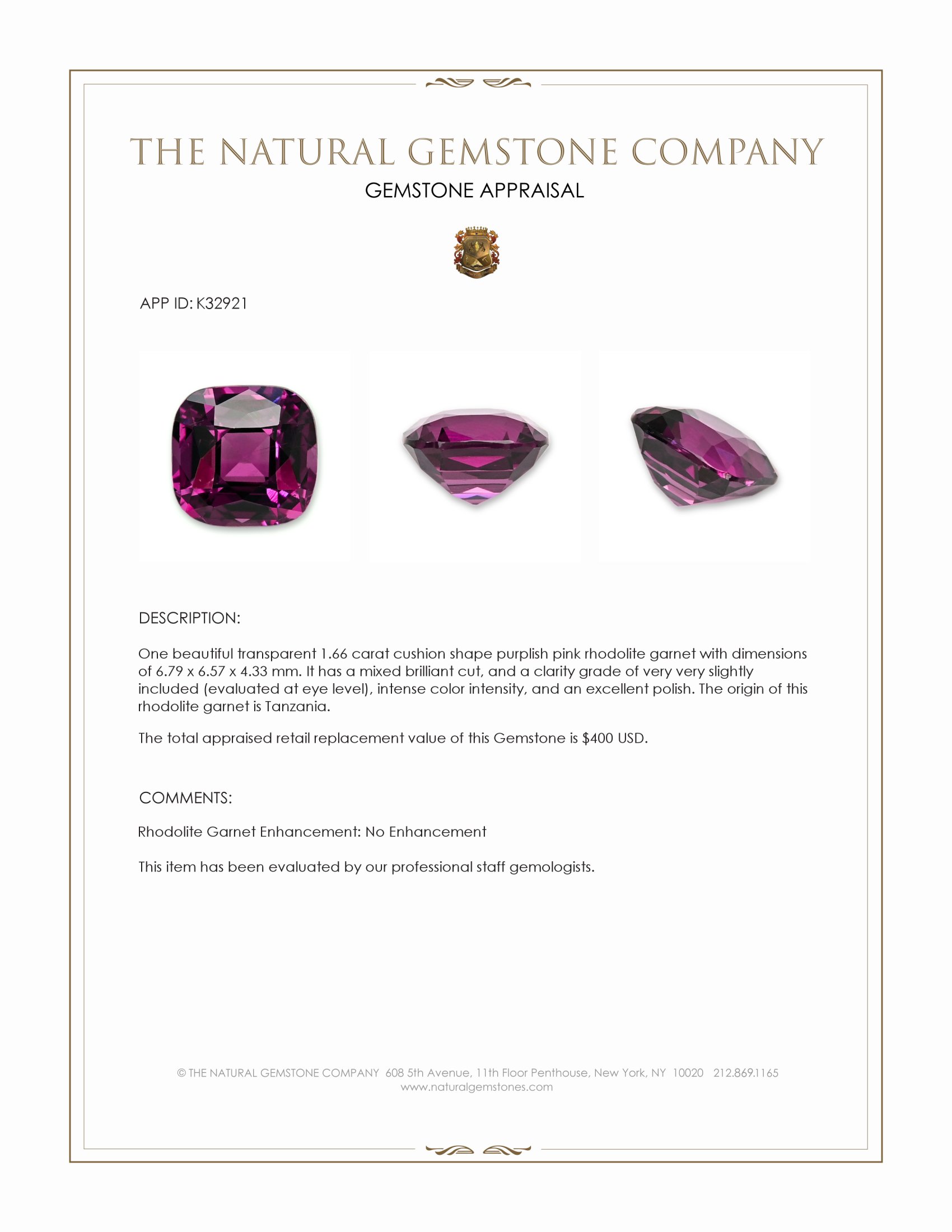
1.66 Ct. Purplish Pink Rhodolite Garnet from Tanzania
This loose stone ships by Nov 21
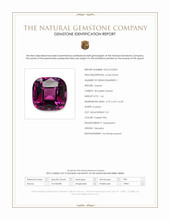
Item ID: | K32921 |
|---|---|
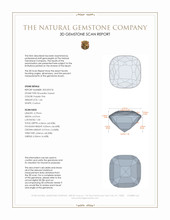
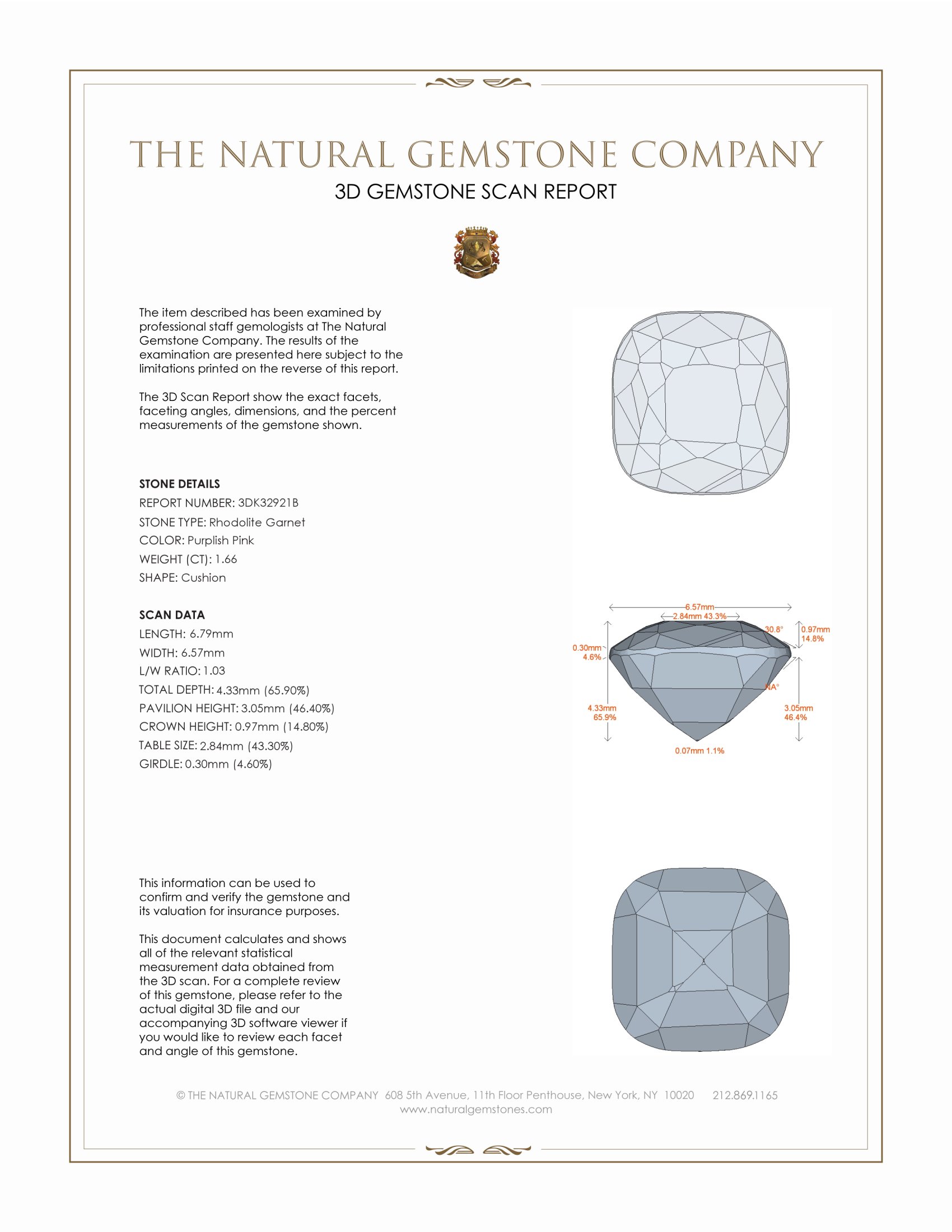
Dimensions (MM): help | Length: 6.79 Width: 6.57 Height: 4.33 |
Weight: | 1.66 Ct. |
Color: help | Purplish Pink |
Color intensity: help | Intense |
Clarity: help | Very Very Slightly Included |
Shape: help | Cushion |
Cut: | Mixed Brilliant Cut |
Cutting style: | Faceted |
Enhancements: help | No Enhancement |
Origin: help | Tanzania |
Per carat price: help | $241 |
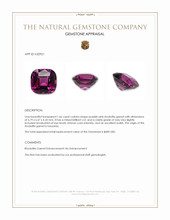
This loose gemstone is a transparent 1.66 carat rhodolite garnet, cut to a cushion outline with dimensions of 6.79 by 6.57 by 4.33 millimeters. The cutting style is faceted with a mixed brilliant arrangement, producing a balanced interplay between table-facing facets and pavilion facets. Color is described as purplish pink with an intense saturation that remains consistent across the crown and pavilion. Clarity is graded as very very slightly included when evaluated at eye level, and the polish is excellent, indicating finely finished facet junctions and smooth facet planes. No enhancement has been applied to this gem. Origin is Tanzania, and the piece is offered through The Natural Gemstone Company, presented as an unenhanced example of rhodolite with strong visual presence and technical quality suitable for precision settings.
Under close inspection the stone contains a subtle but character-defining suite of internal features. These inclusions are minor in scale and distribution, consistent with the stated clarity grade, yet they confer an unmistakable internal texture that differentiates this gem from an optically sterile stone. Fine pinpoint crystals are dispersed in small clusters, most often confined near the pavilion and along select facet junctions. These pinpoints produce tiny, concentrated reflections that act as discreet flash points when the stone is tilted. Complementing the pinpoints are fine, hairline growth lines and very thin planar growth zones that follow the crystal’s natural crystallographic orientation. These lines appear as faint, slightly lighter striations when viewed through the crown and offer a layered depth to the color field rather than interrupting it. In a few locales, minute negative-space cavities or two-phase inclusions are present; because of their scale they appear dark only against strong backlighting and otherwise contribute to the gem’s internal depth by creating tiny shadowed pockets that accentuate the surrounding color rather than detract from it. Together these elements create a nuanced internal topography: delicate, deliberate, and intrinsic to the specimen rather than the result of treatment or filling.
The net effect of these inclusions on appearance and performance is predominantly positive. At typical viewing distances and in most lighting conditions the stone reads as clean and lively; the sparse pinpoints and hairline growth zoning are largely masked by the mixed brilliant cutting and by the gem’s intense purplish pink color, yet they become visible under magnification and under directional light, where they contribute to a distinctiveness that many connoisseurs prize. Because the inclusions are minute and well-healed, they do not present structural weakness or heightened susceptibility to fracture; the garnet’s inherent toughness and the careful polish support secure mounting in ring, pendant, or other settings. The mixed brilliant cut maximizes return of light while the internal textures produce subtle scintillation and depth, resulting in a stone that reads as vivid and dimensional rather than flat. For design and setting considerations, a bezel or secure prong setting will preserve the cushion silhouette and protect the girdle while allowing the table and crown facets to interact with ambient light, showcasing both the saturated color and the internal signature features.
Documented as unenhanced and of Tanzanian origin, this rhodolite garnet should be evaluated in context of its natural character and technical finish. The combination of a precise mixed brilliant cut, excellent polish, intense purplish pink color, and very very slightly included clarity yields a gem that is technically refined yet visibly individual. The inclusions present are diagnostic of natural growth processes and contribute to the stone’s identification and provenance narrative without compromising visual appeal or durability. For clients seeking a high-quality rhodolite with intrinsic personality and untreated provenance, this example from The Natural Gemstone Company offers a considered balance of gemological integrity and aesthetic distinction, suitable for custom work where the stone’s signature internal features can be appreciated as part of the design intent.


