
- Stone14
- Reports3
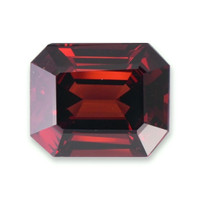


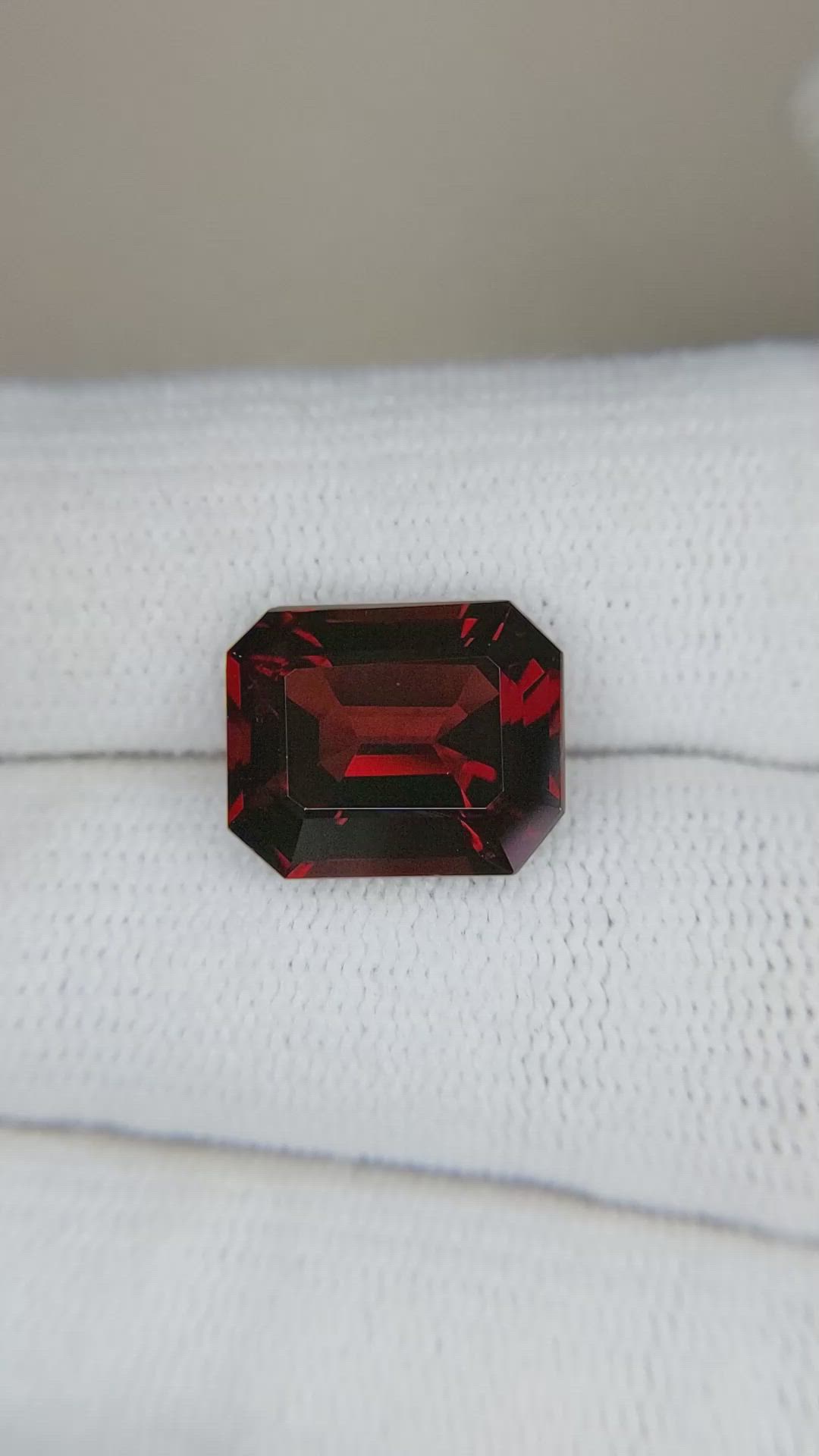
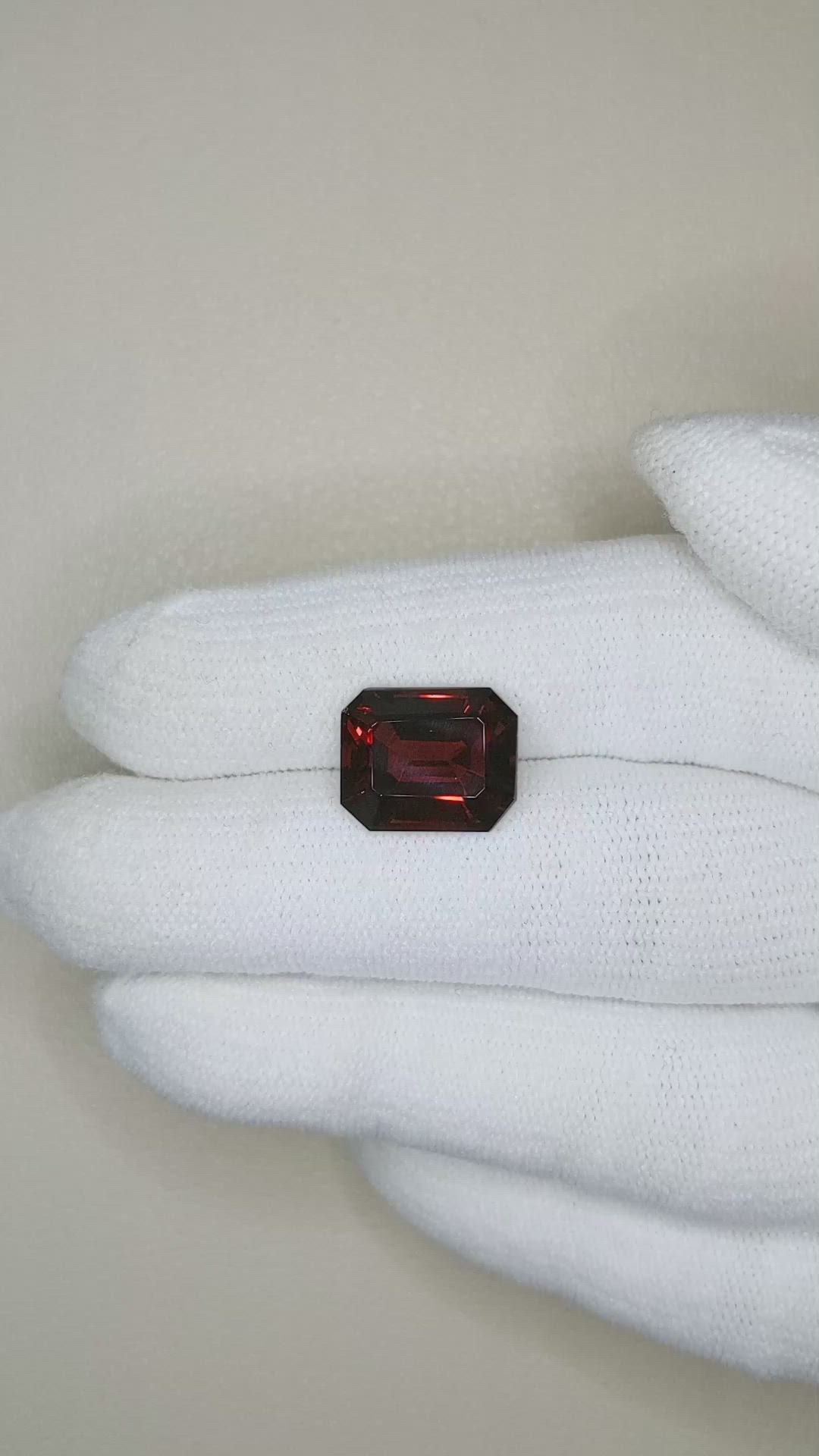
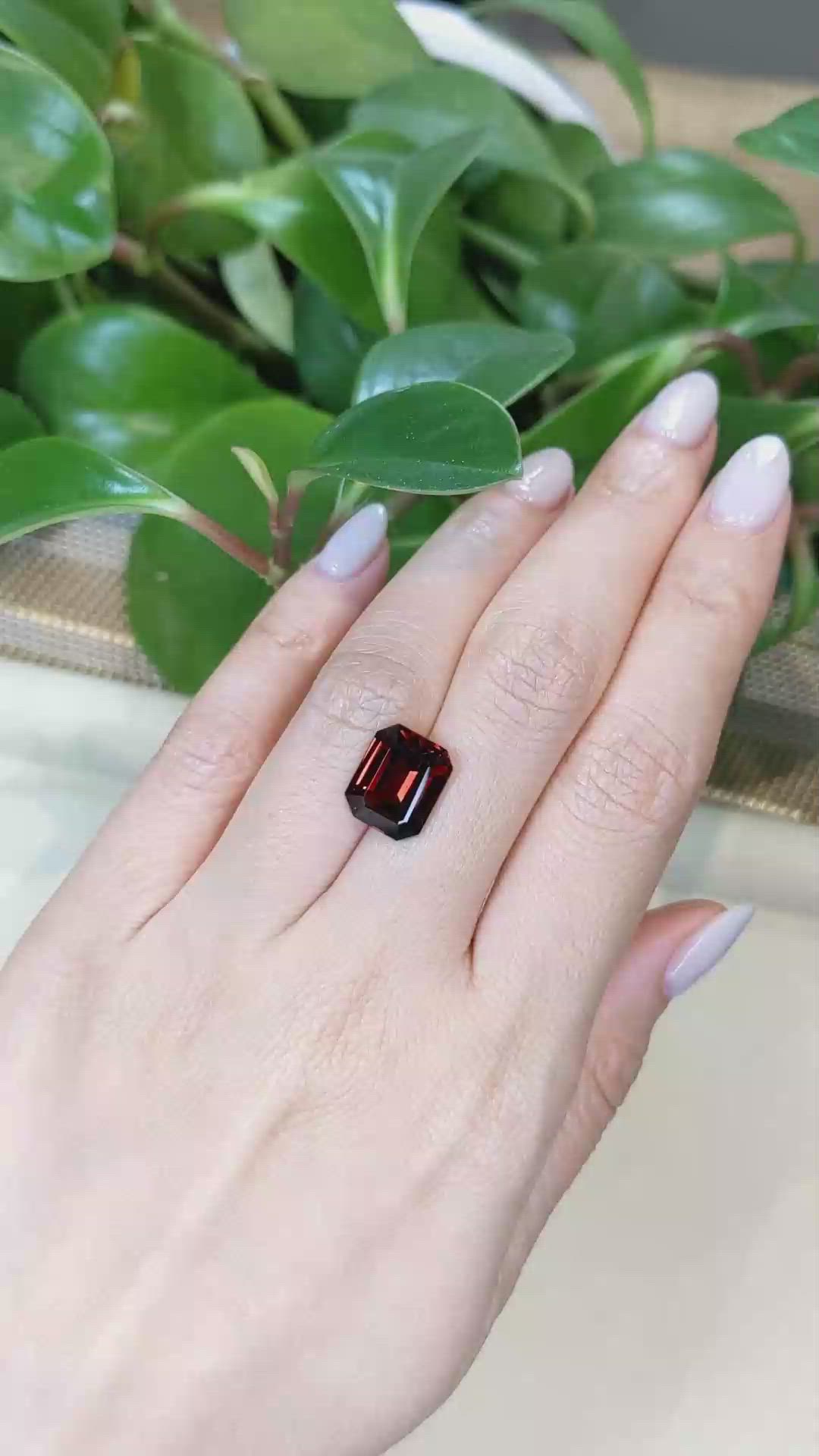
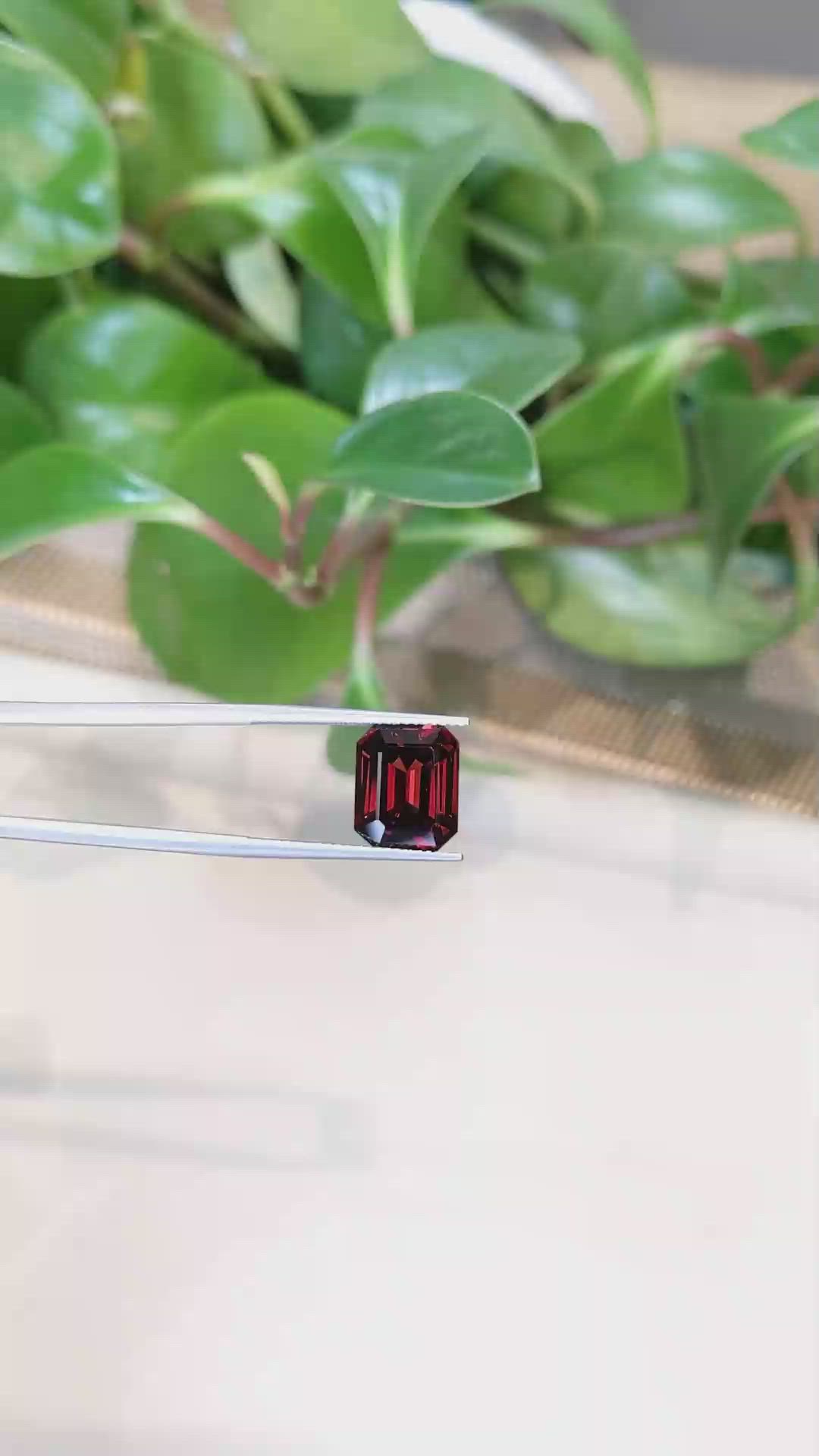
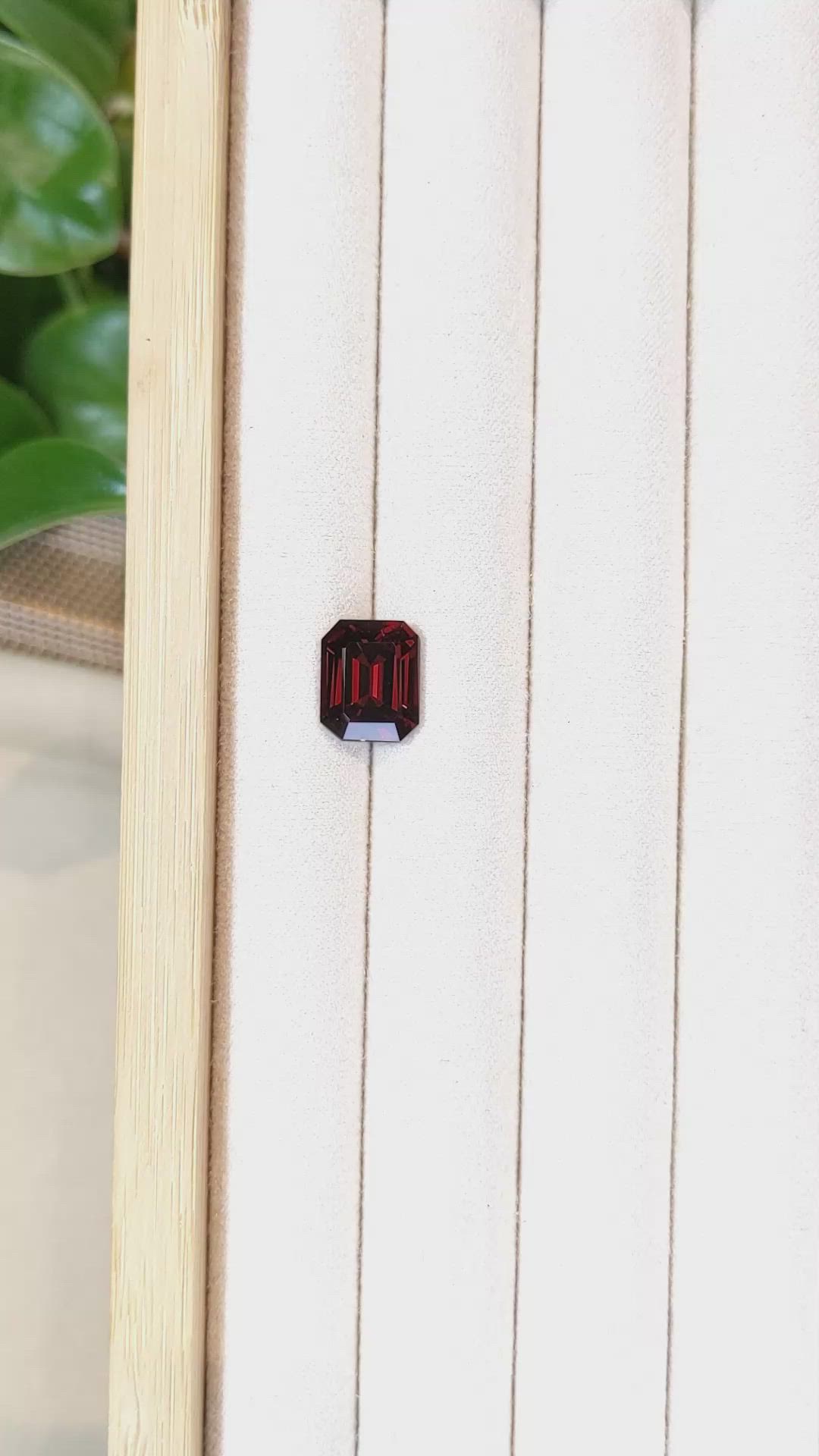


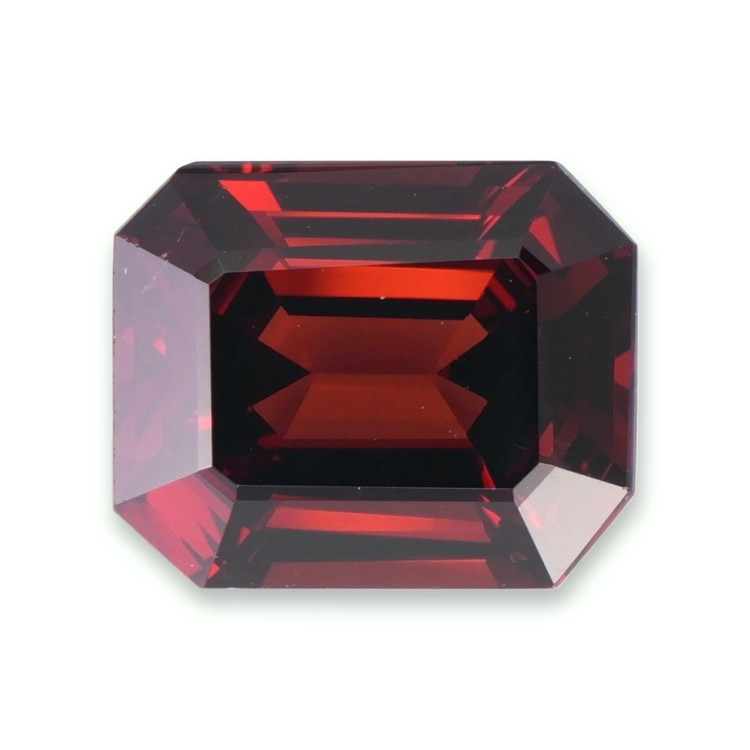
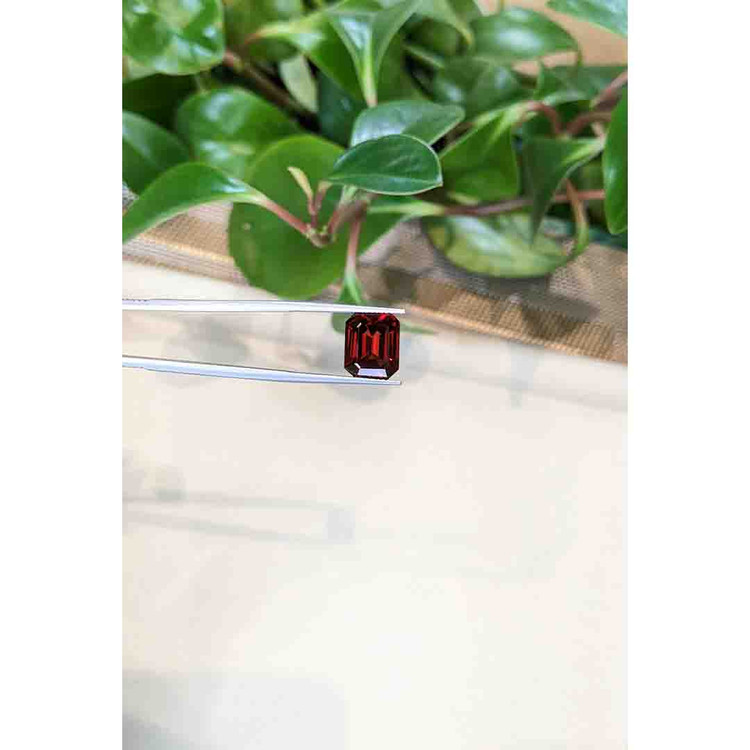
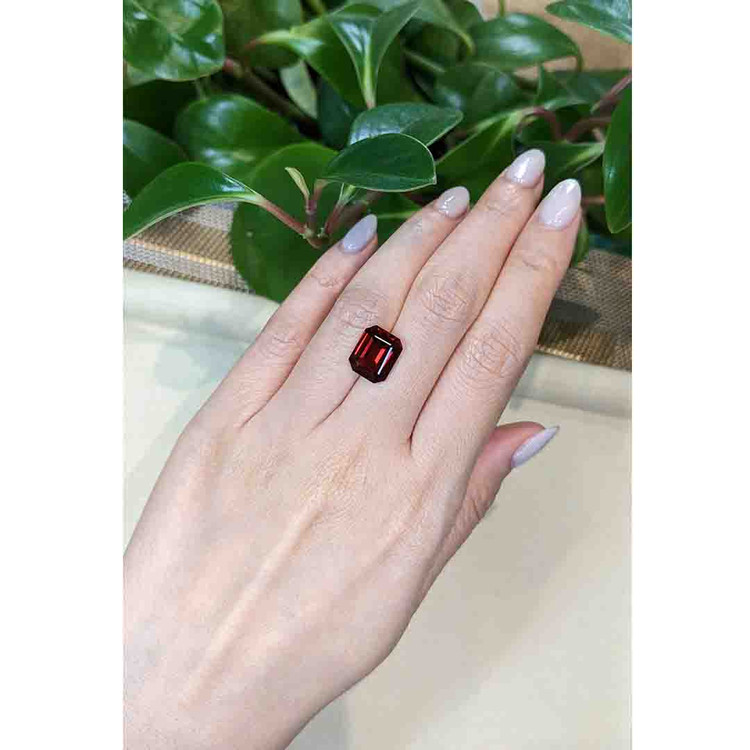
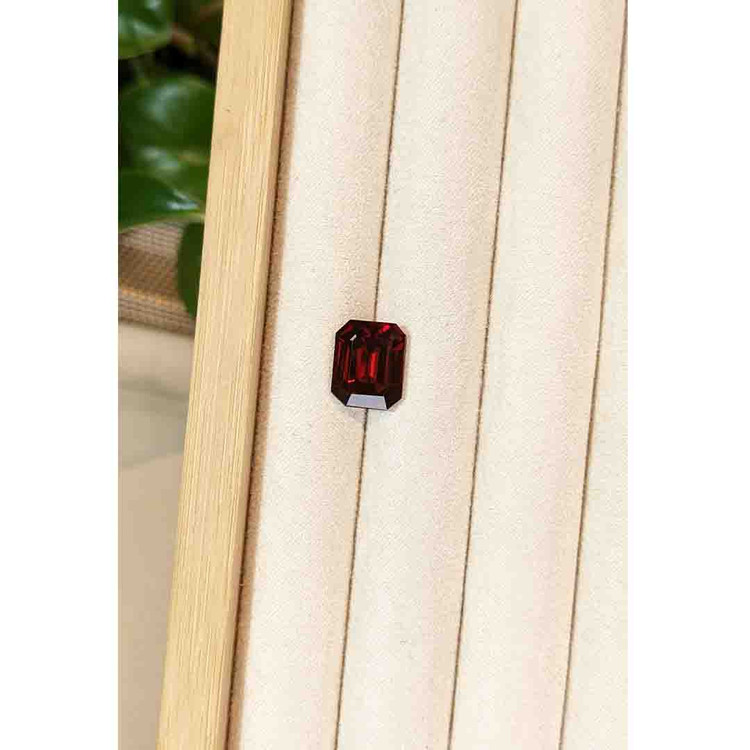


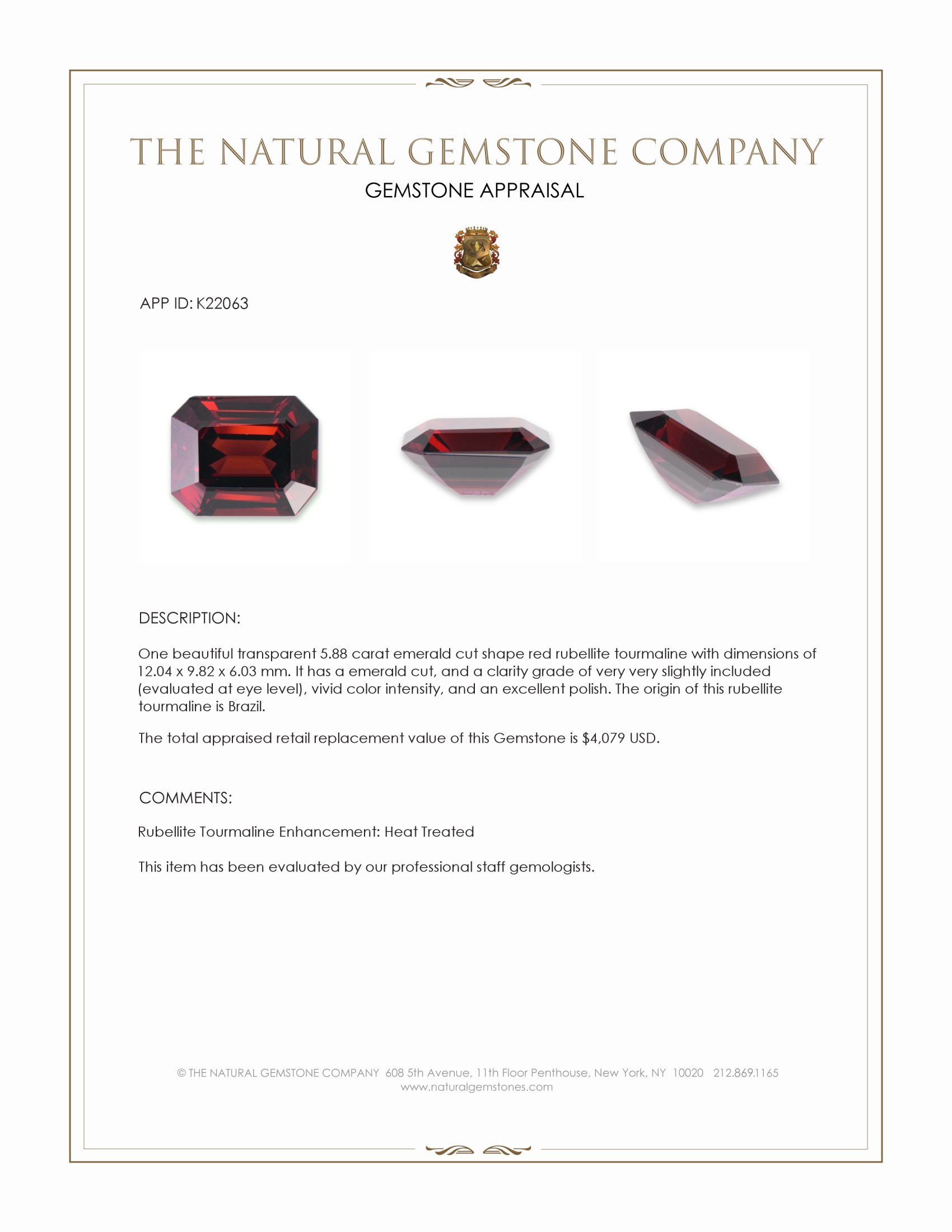
5.88 Ct. Rubellite Tourmaline from Brazil
This loose stone is available to ship now
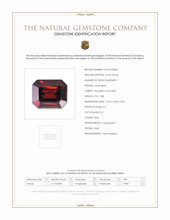
Item ID: | K22063 |
|---|---|
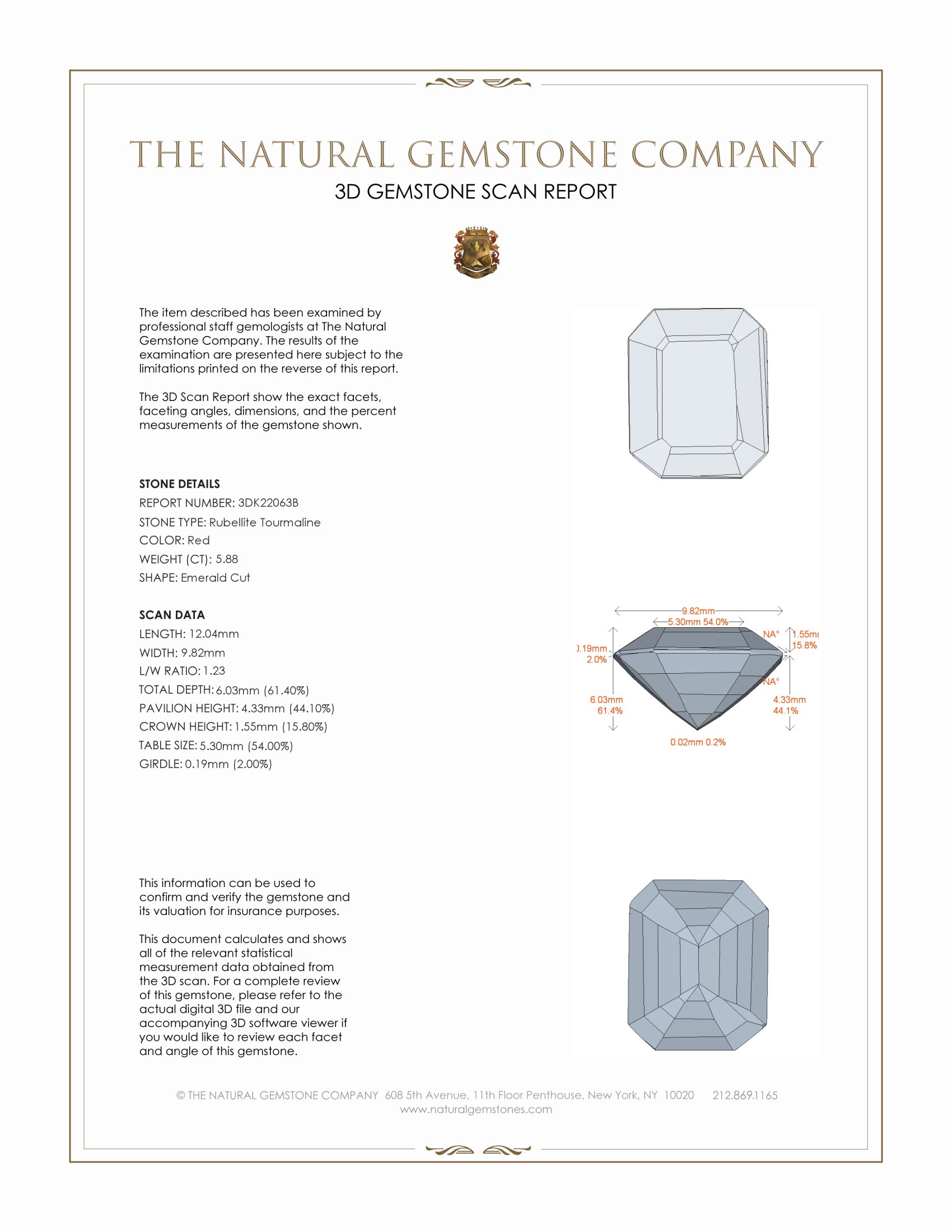
Dimensions (MM): help | Length: 12.04 Width: 9.82 Height: 6.03 |
Weight: | 5.88 Ct. |
Color: help | Red |
Color intensity: help | Vivid |
Clarity: help | Very Very Slightly Included |
Shape: help | Emerald Cut |
Cut: | Emerald Cut |
Cutting style: | Faceted |
Enhancements: help | Heat Treated |
Origin: help | Brazil |
Per carat price: help | $694 |
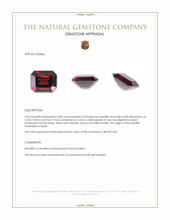
This offering is a beautiful transparent 5.88 carat emerald cut red rubellite tourmaline, measuring 12.04 by 9.82 by 6.03 mm, presented with a classic emerald cut that emphasizes clarity and color over dispersion. The cut has been precision finished to retain maximum weight while maintaining even, parallel step facets that create the refined, mirror like planes typical of the emerald cut. The gem displays vivid color intensity, a saturated red hue with subtle hints of raspberry overtones that are highly desirable in high end rubellite. Clarity is graded as very very slightly included, evaluated at eye level, which means the stone appears clean to most observers without magnification, while fine internal features are present only upon close inspection. The polish is excellent, yielding sharp facet junctions and strong surface reflection that enhance the visual depth of the stone. This rubellite has been heat treated, a common and accepted enhancement in tourmaline, applied to improve color uniformity and remove minor brownish modifiers, and the origin is Brazil, a well known source for richly colored rubellite gems with consistent crystalline quality. The Natural Gemstone Company discloses this enhancement openly, and the gem is offered with full transparency regarding its treatments and origin.
Inclusions within this rubellite tourmaline are best described as unique character marks that serve both as proof of natural formation and as identifiers that gemologists use to understand origin and history. Tourmaline inclusions often include fine acicular needles, aligned tube like growth features, and occasional tiny mineral crystals or fluid inclusions, and in this specimen the internal landscape is delicate and textural rather than detrimental to beauty. Because the stone is very very slightly included at eye level, these features do not interfere with face up appearance, they add a three dimensional internal complexity that interacts with light to enrich the perceived depth of color. From a gemological perspective, these inclusions can be diagnostic, as certain patterns of fluid inclusions and growth zoning correlate with Brazilian pegmatitic environments. Under magnification, a trained observer can document the orientation and morphology of inclusions to support origin determination. Importantly, the inclusions in tourmaline are stable, they do not indicate weakness in the crystal lattice and they do not compromise wearability when the stone is set properly, and they provide a fingerprint that enhances provenance and authenticity.
For an educated buyer, this 5.88 carat emerald cut rubellite represents a compelling combination of attributes that justify premium consideration. Color is the principal determinant of value in rubellite, and the vivid saturated red tone seen here is comparatively rare at this size, particularly in a transparent specimen. The emerald cut is favored by collectors and connoisseurs who prize clarity and color consistency, because the broad, flat facets allow the gem to project its true hue without excessive scintillation that could mask tone. The clarity grade of very very slightly included confirms that the stone reads clean to the eye, which is especially valuable in large table facets where inclusions can be more noticeable. The excellent polish increases the optical performance and enhances the face up brilliance, translating directly into visual appeal in jewelry. Brazil as origin contributes positively to market perception, as Brazilian rubellites are sought after for their pure color and crystalline quality. Heat treatment is disclosed, and this routine enhancement is widely accepted in the trade because it produces stable, lasting color improvement without compromising structural integrity. Practical considerations for use include thoughtful setting design to protect the gem from hard impacts, cleaning with mild soapy water and a soft brush, and professional inspection if the piece is subjected to repair work. The Natural Gemstone Company stands behind the authenticity and description of this gem, and we can provide additional high resolution imagery and gemological documentation upon request, supporting an informed purchase decision and confidence in provenance and quality.


