
- Stone11
- Reports2
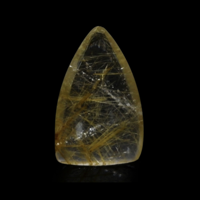
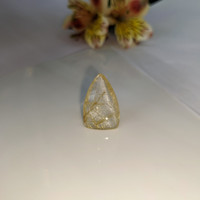
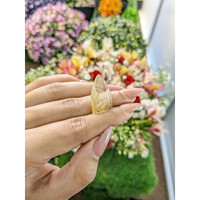
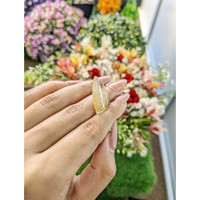


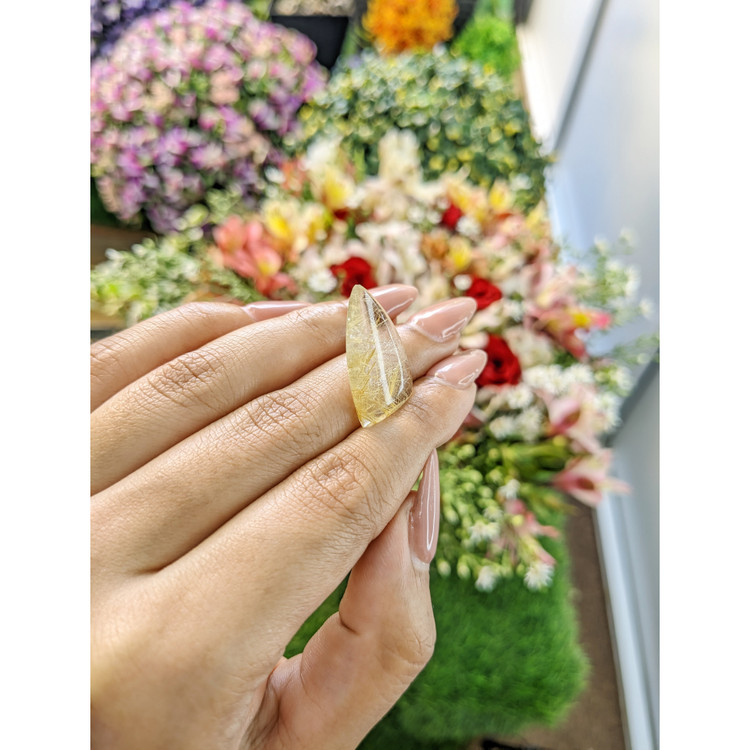
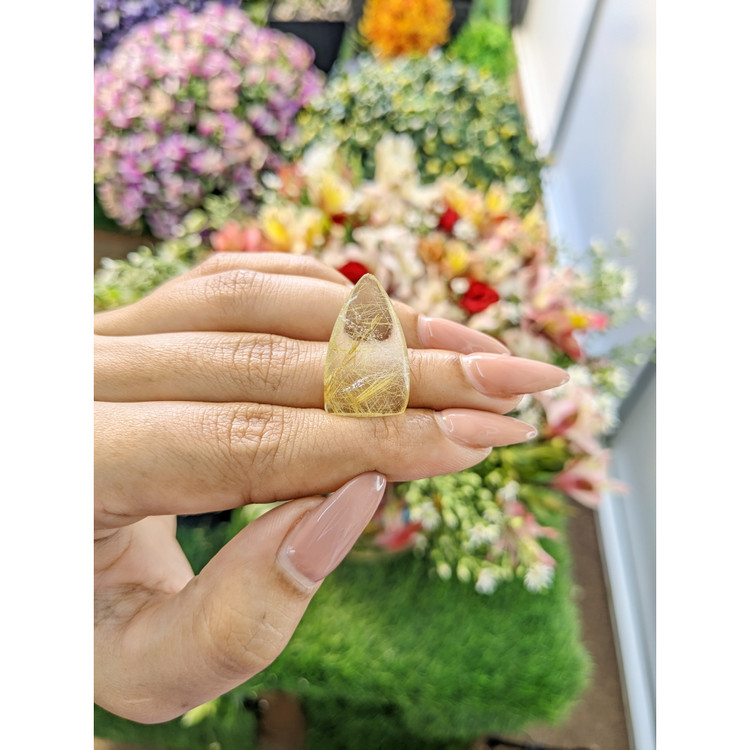
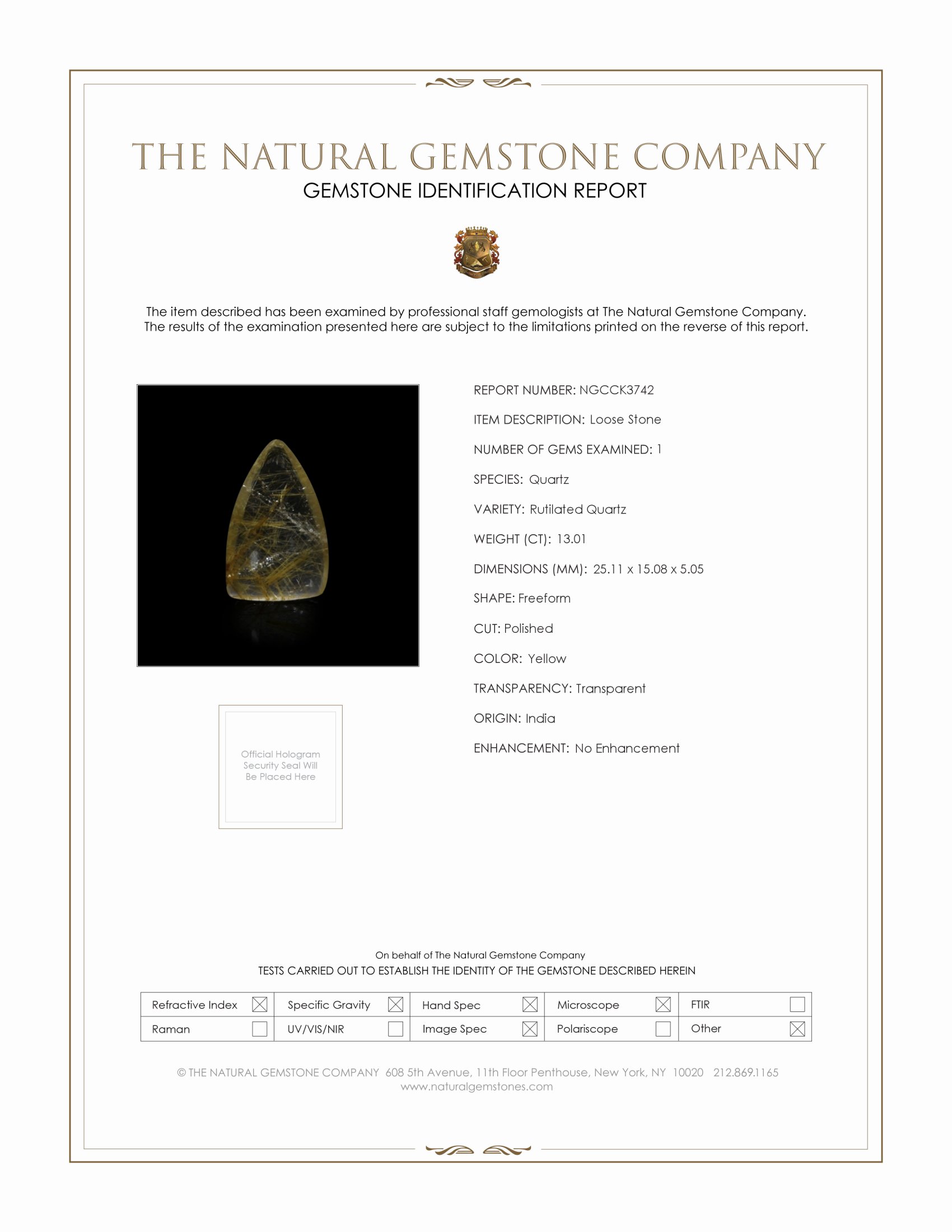

13.01 Ct. Yellow Cabochon Rutilated Quartz from India
This loose stone is available to ship now
Item ID: | K3742 |
|---|---|
Dimensions (MM): help | Length: 25.11 Width: 15.08 Height: 5.05 |
Weight: | 13.01 Ct. |
Color: help | Yellow |
Color intensity: help | Medium |
Clarity: help | Very Slightly Included |
Shape: help | Freeform |
Cut: | Polished |
Cutting style: | Cabochon |
Enhancements: help | No Enhancement |
Origin: help | India |
Per carat price: help | $8 |
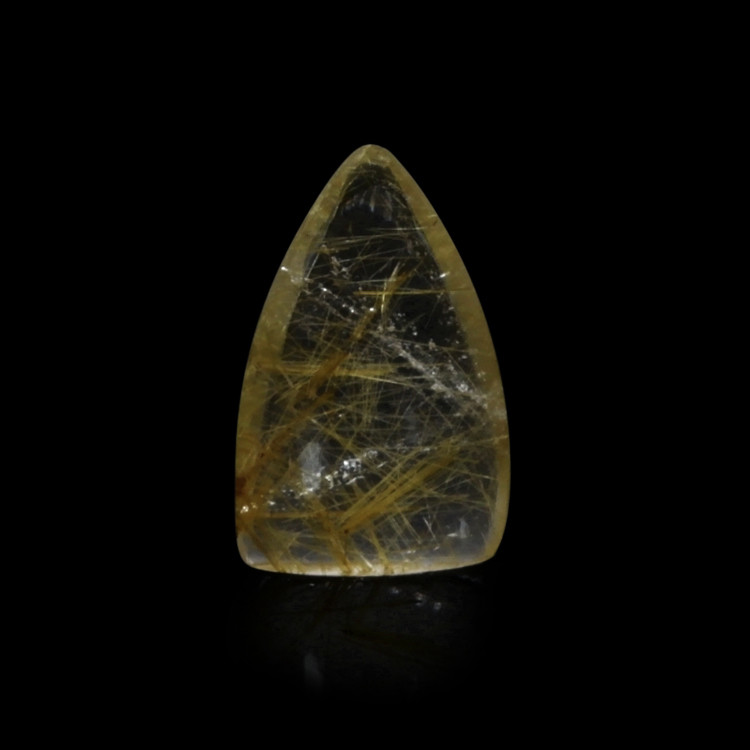
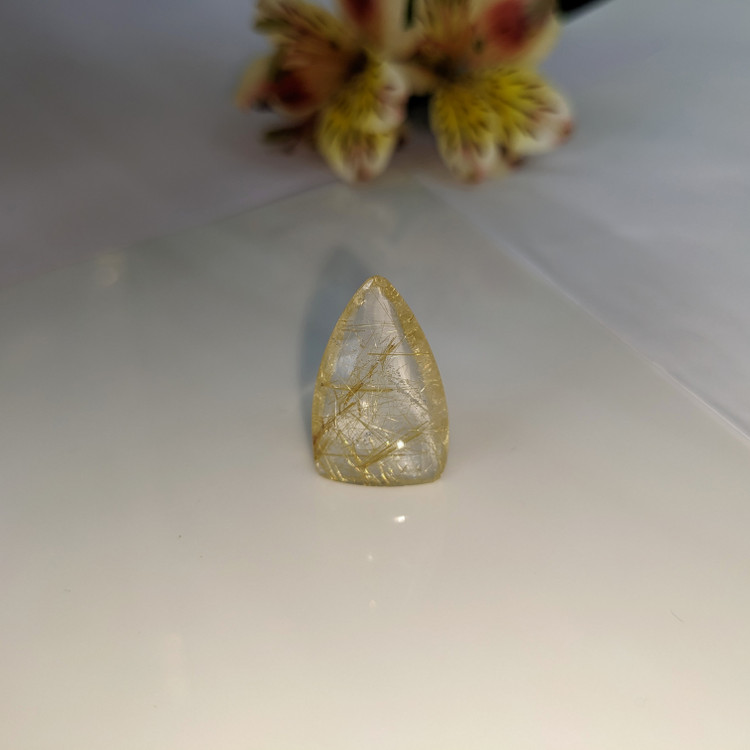
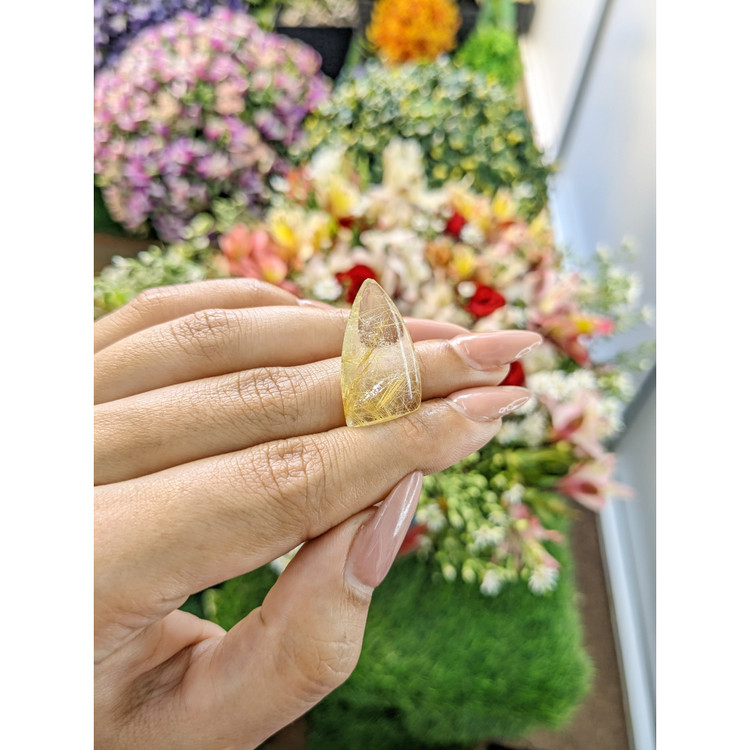
This 13.01 carat freeform yellow rutilated quartz presents a clear, transparent body with dimensions of 25.11 x 15.08 x 5.05 mm. The stone is polished to an excellent surface finish, and evaluated clarity is very slightly included at eye level. Color intensity is moderate, allowing the warm yellow tones to remain lively without overwhelming the internal characteristics. The cut is freeform and polished rather than faceted, a deliberate choice that maximizes face up surface area and reveals the internal rutile networks. There has been no enhancement to this material, and the specimen is sourced from India, a long established origin for rutilated quartz. These facts, combined with its substantial weight and overall condition, identify this piece as a specimen that balances gemological quality with striking internal character, suitable for applications where visual depth and natural patterning are desired.
The defining feature of this stone is its ensemble of golden rutile needles, distributed within a transparent quartz matrix. Rutile forms as acicular, needle like inclusions that refract and reflect light in ways that a homogeneous crystal cannot replicate. In this specimen the needles present a mix of aligned and slightly divergent orientations, which creates layers of apparent depth and directional shimmer when viewed from different angles. Because the body is transparent and the polish is excellent, light penetrates the surface, interacts with the rutile arrays, and is returned as subtle internal highlights and a silky sheen rather than the more prismatic flashes associated with high dispersion gems. The result is an interplay of line and light, a three dimensional landscape within the stone that reads as both structured and organic. The very slightly included clarity grade indicates that aside from the intentional rutile formations, the quartz matrix is unusually clean for a rutilated specimen, so the needles remain the principal visual element without competing internal cloudiness.
When comparing brilliance to more common gemstones it is important to distinguish between optical metrics such as refractive index and visual character produced by inclusions. Diamond, with its high refractive index and strong dispersion, produces intense brilliance and fire. Sapphire and other corundums likewise return light with a degree of brilliance greater than quartz because of their higher refractive indices and traditional faceting strategies. Topaz and citrine, both closer to quartz in refractive behavior, typically rely on faceting and color saturation to create scintillation and face up appeal. By contrast, this yellow rutilated quartz does not compete with diamond or corundum on refractive brilliance alone. Instead it achieves visual impact through internal reflection and light scattering off the rutile needles, producing a distinct kind of luster and movement. The needles act as linear mirrors and diffusers, creating points of light and subtle glows that shift with orientation. The freeform polished shape increases the apparent surface area and allows observers to appreciate the full patterning, resulting in a presentation that is uniquely dimensional. In short, where a diamond dazzles with intense, faceted sparkle, this rutilated quartz commands attention through pattern, depth, and a warm internal radiance that is not replicable by cleaner, conventional gem materials.
Practical considerations underscore the appeal and handling of this piece. The weight of 13.01 carat and the dimensions provided make it well suited as a statement pendant, a centerpiece for a bespoke jewelry commission, or a collectible mineral specimen. Its lack of enhancement means the optical and aesthetic properties are wholly natural, a detail that matters to connoisseurs and designers who prioritize provenance and authenticity. Sourced from India, the stone reflects a locality known for notable rutilated quartz finds and for material that often displays strong, golden needle structures. Care for rutilated quartz is straightforward, cleaning with warm water, mild detergent, and a soft brush, avoiding harsh chemicals and sudden temperature changes. Mechanical impacts should be minimized because the rutile networks can localize stress within the quartz body. For applications that involve drilling or heavy mounting work, experienced lapidaries should be consulted to preserve the integrity of the stone and its internal patterning. The Natural Gemstone Company can provide additional photographs and viewing angles on request, and can supply documentation regarding the origin and the absence of enhancements. This specimen represents a distinctive alternative to more conventional brilliancy focused gems, offering a natural, internal spectacle that is both tactile and visual, and that endures as a singular statement piece.


