
- Stone12
- Reports3
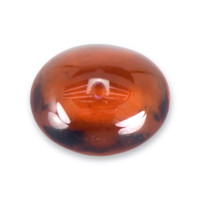
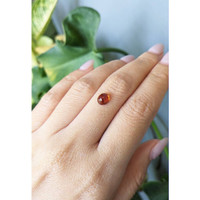
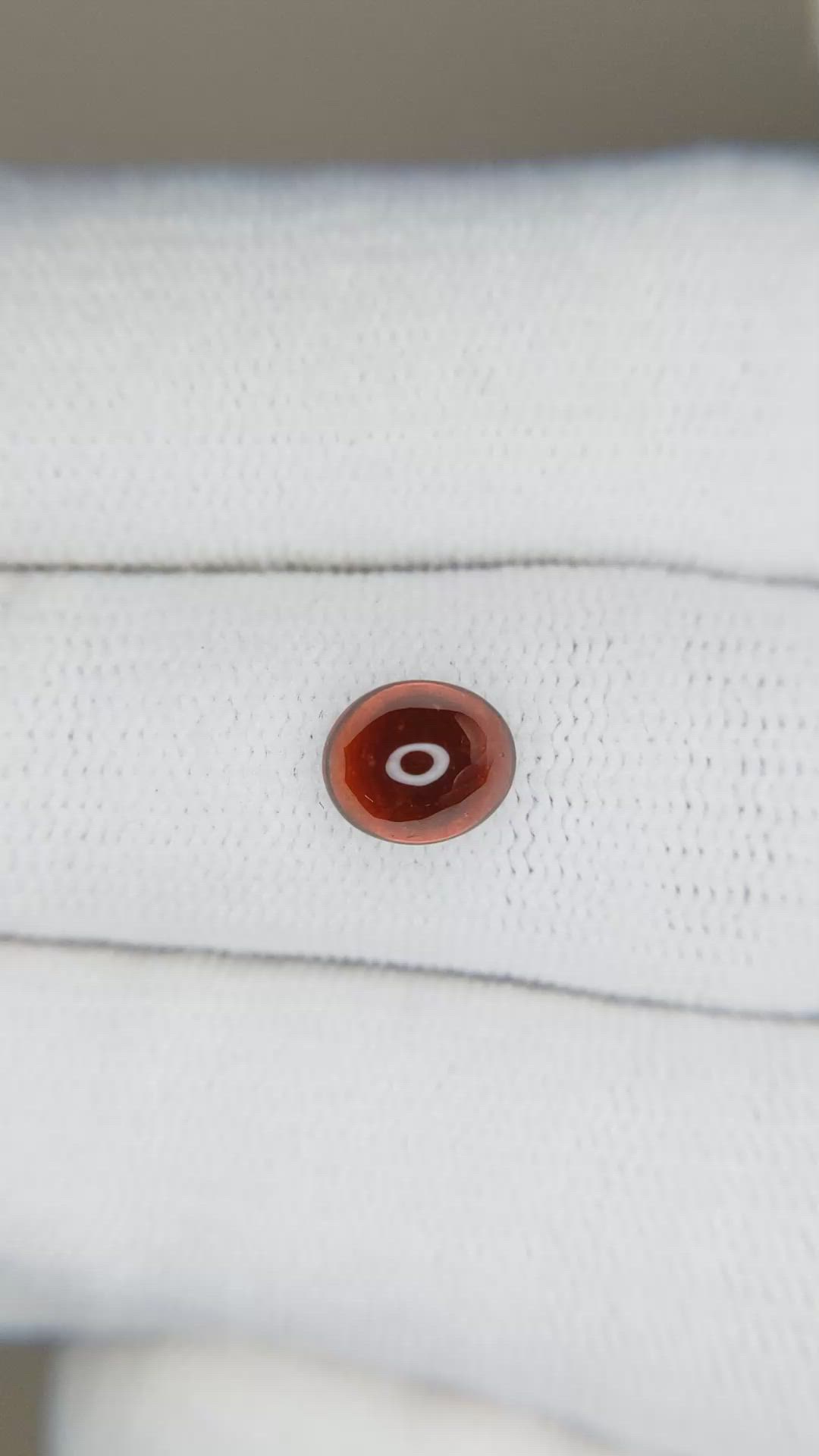
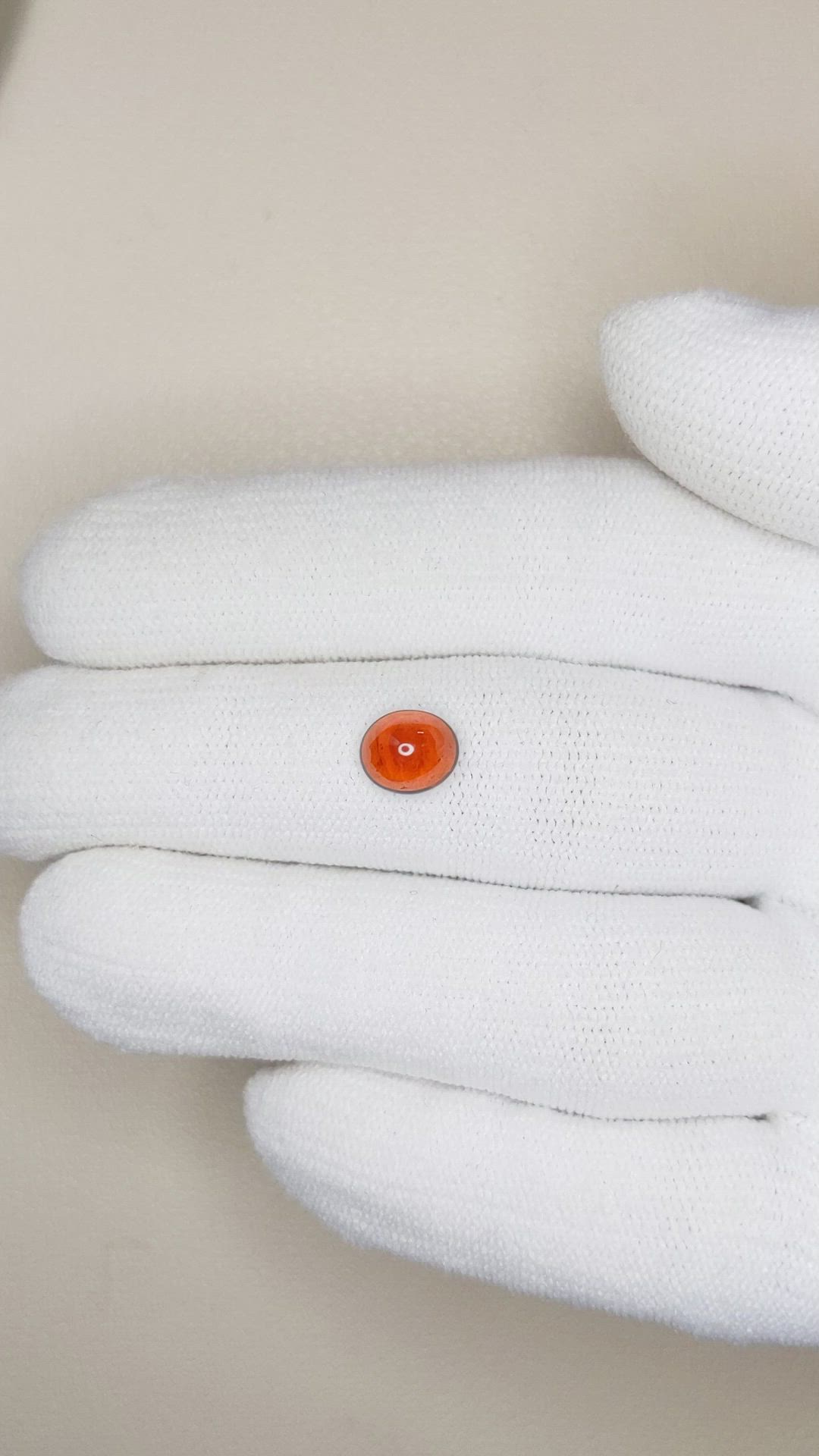
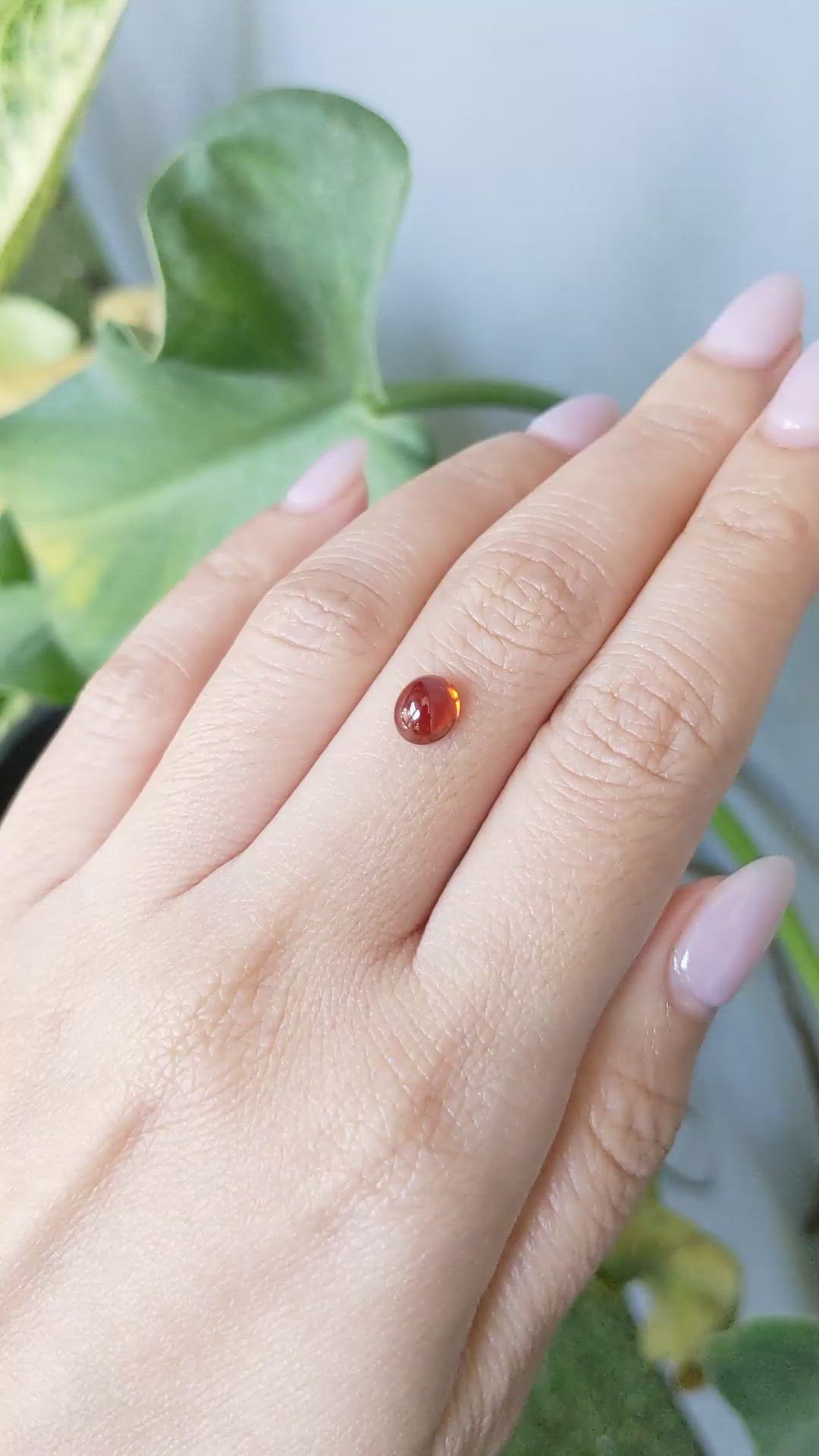
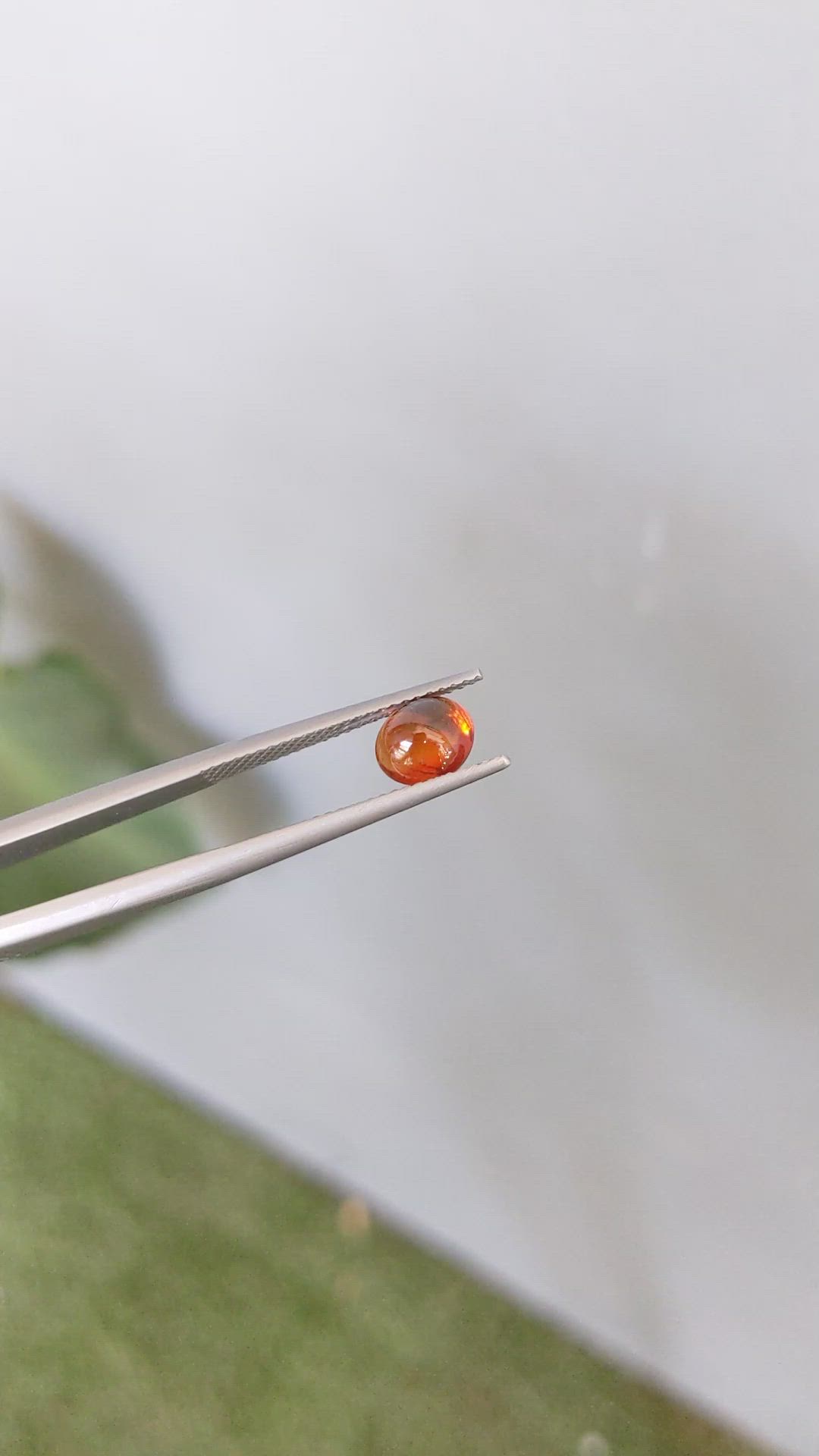


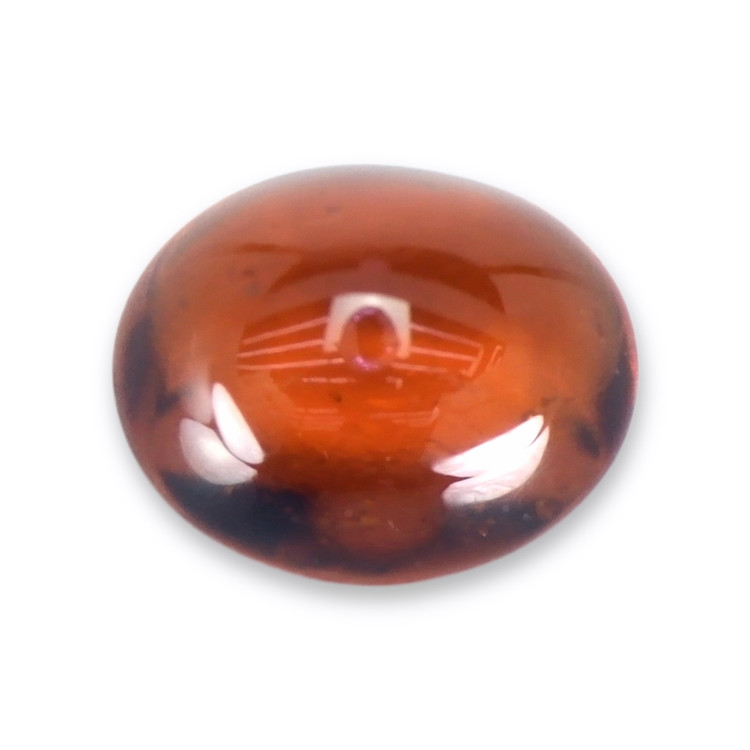
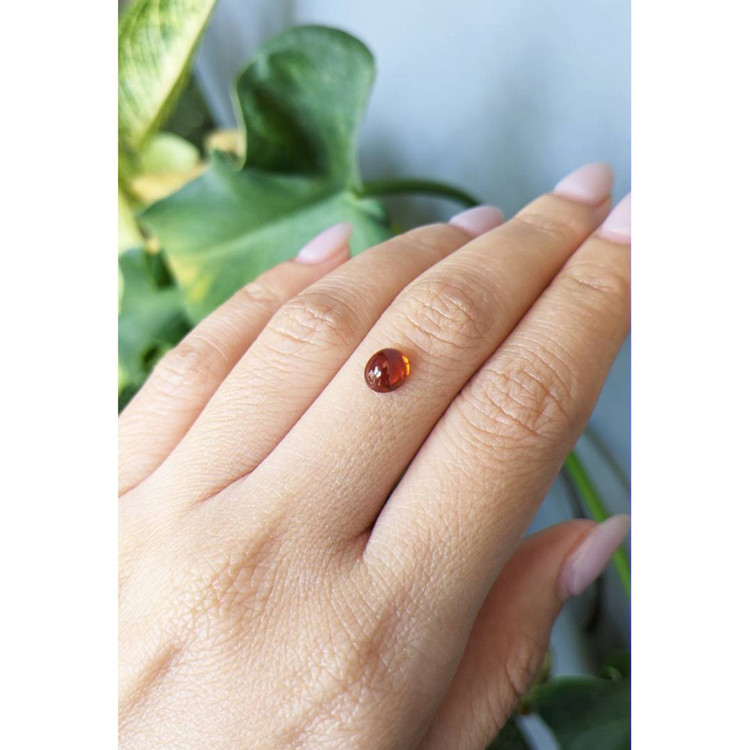
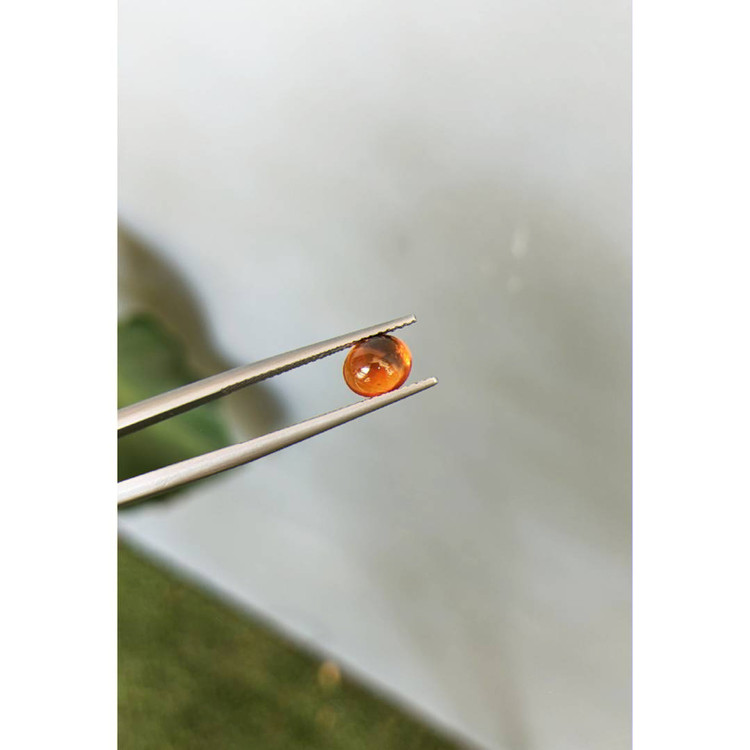

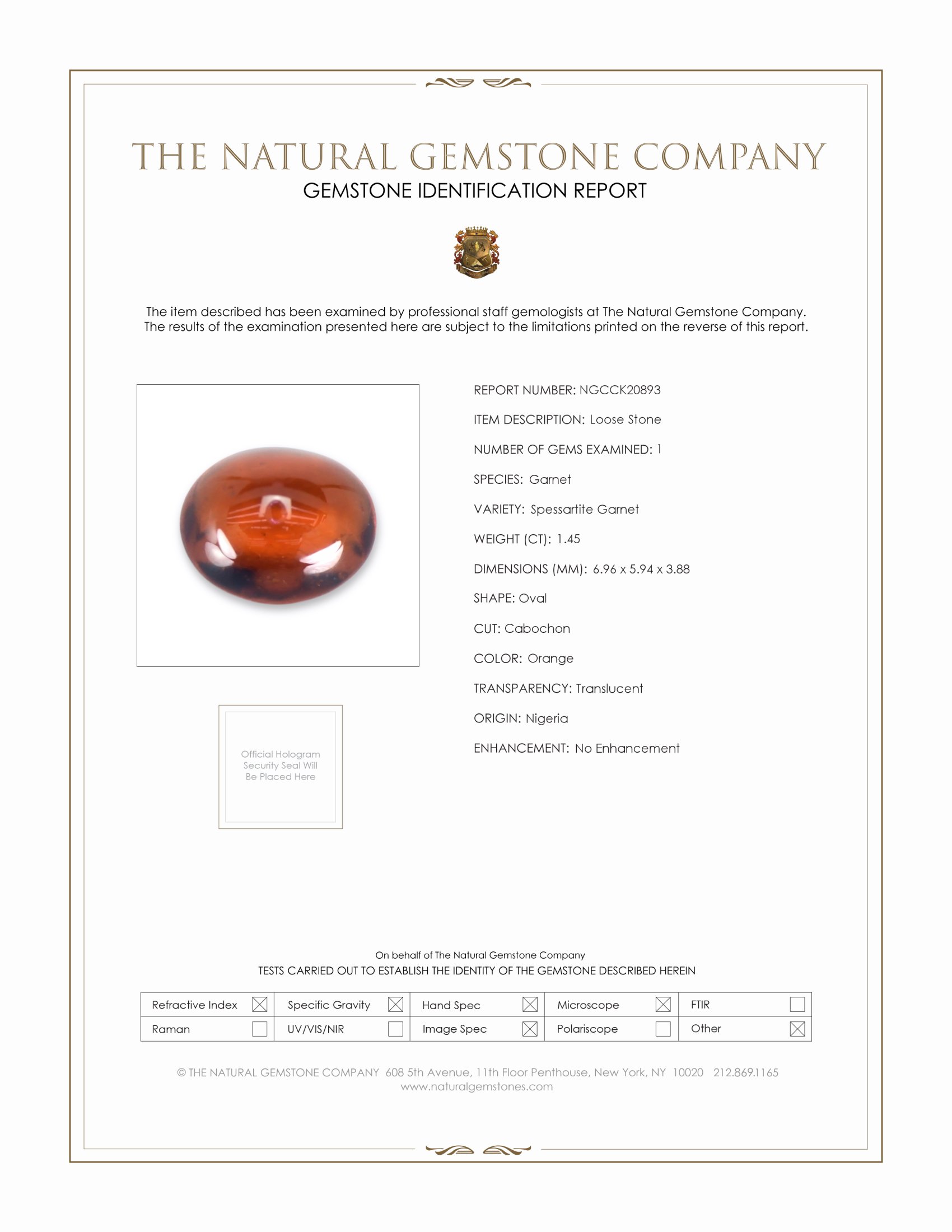

1.45 Ct. Cabochon Spessartite Garnet from Nigeria
This loose stone is available to ship now
Item ID: | K20893 |
|---|---|
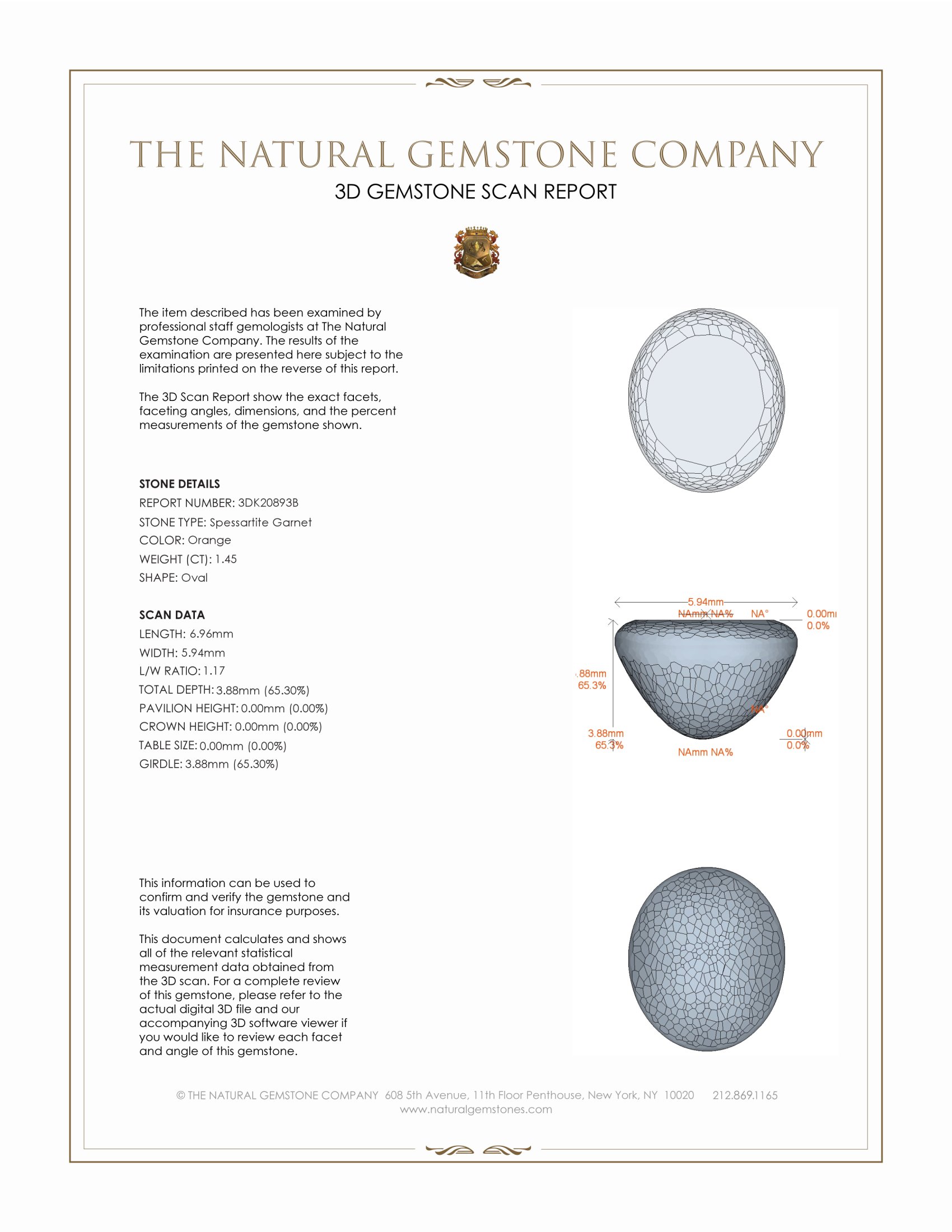
Dimensions (MM): help | Length: 6.96 Width: 5.94 Height: 3.88 |
Weight: | 1.45 Ct. |
Color: help | Orange |
Color intensity: help | Intense |
Clarity: help | Slightly Included |
Shape: help | Oval |
Cut: | Cabochon |
Cutting style: | Cabochon |
Enhancements: help | No Enhancement |
Origin: help | Nigeria |
Per carat price: help | $60 |
One translucent 1.45 carat oval orange spessartite garnet, dimensions 6.96 by 5.94 by 3.88 millimeters, presents a textbook example of how a cabochon conversion can accentuate the intrinsic optical properties of spessartite. Origin Nigeria, no enhancement, intense color intensity, clarity graded slightly included at eye level, and an excellent polish are the defining parameters of this piece as offered by The Natural Gemstone Company. Spessartite is an isometric, isotropic garnet with a relatively high refractive index commonly in the range 1.79 to 1.81 and a Mohs hardness typically around 7 to 7.5. Those physical constants inform the cutting strategy: an isotropic crystal will not exhibit birefringence, therefore light interaction is controlled primarily by surface geometry, internal scattering caused by inclusions, and dispersion. Spessartite also shows measurable dispersion, on the order of 0.02 to 0.03, which in faceted material produces fire. In a cabochon, dispersion is not manifested as traditional faceted fire but instead contributes to the warm, lively internal flashes and the stone’s overall luminous depth. The intense orange hue with medium to slightly saturated tone benefits from the cabochon form because the continuous convex surface concentrates and homogenizes color, producing a stable, saturated appearance that reads as richer in jewelry contexts than some faceted equivalents of the same weight.
The cabochon cut here is a deliberately engineered optical solution rather than a mere stylistic choice. The oval outline is precisely proportioned, and the dome height represented by the 3.88 millimeter depth relative to the length optimizes the internal light paths to favor broad, even back-scatter and forward-lumen transmission. A moderate to high dome is used to balance two competing goals, maximizing the light return that creates a glowing, candlelit effect, and masking or relegating slight eye-visible inclusions toward peripheral zones where they are less optically intrusive. The absence of facets eliminates the multiple discrete internal reflection planes of a faceted cut, replacing them with a continuous curvature that produces soft, large-area specular highlights and smooth internal gradations of color. This geometry enhances the apparent saturation because light entering the dome undergoes multiple internal reflections and scattering events before emerging, thereby increasing the path length within the absorbing medium and accentuating the orange chroma. The cutter’s orientation during preforming was chosen to align the crystal’s cleavage tendencies and inclusion planes so that internal features lie beneath the dome away from the visual center, and symmetry control of the oval ensures isotropic lateral light distribution so that the stone reads uniformly from multiple viewing angles.
Craftsmanship techniques evident in this specimen are consistent with high-grade lapidary practice. The preforming stage establishes the oval outline to conserve weight while positioning any inclusion clusters off-axis. Rough shaping on progressive grit laps produces the desired convex profile, and final blocking is carried out with calibrated laps to maintain concentricity of the dome. The excellent polish reported is achieved through successive compounding with fine abrasives and a final high-pressure diamond paste or cerium oxide finish, which raises the specular reflectivity of the surface and produces the crisp white highlights visible in the images. Those highlights are not merely aesthetic; their sharpness is a direct indicator of surface quality and contributes to perceived brilliance by creating strong surface reflections that contrast with the warm internal glow. For practical mounting, the dimensions and dome geometry make this cabochon well suited to bezel settings that allow for rim protection while permitting light entry at the girdle, or to open-backed settings when the goal is maximum light transmission and depth of color. Because the stone is natural and unenhanced, color and stability are intrinsic rather than induced; care should follow standard garnet handling practices, avoiding aggressive thermal shock and mechanical abrasion during setting. The Natural Gemstone Company stands behind the provenance and cutting provenance of this Nigerian spessartite, and the technical attributes described here will appeal to connoisseurs who value precise cut decisions, optical behavior, and transparent disclosure of clarity, polish, and treatment status.


