
- Stone12
- Reports3
-2.3100-cts-k24202-1.jpg?d=200x200&v=20260429135326)
-2.3100-cts-k24202-lifestyleimage-1.jpg?d=200x200&v=20260521025007)
-2.3100-cts-k24202-lifestyleimage-2.jpg?d=200x200&v=20260521025007)


-2.3100-cts-k24202-1.jpg?d=750x750&s=ngc&v=20260429135326)
-2.3100-cts-k24202-lifestyleimage-1.jpg?d=750x750&s=ngc&v=20260521025007)
-2.3100-cts-k24202-lifestyleimage-2.jpg?d=750x750&s=ngc&v=20260521025007)


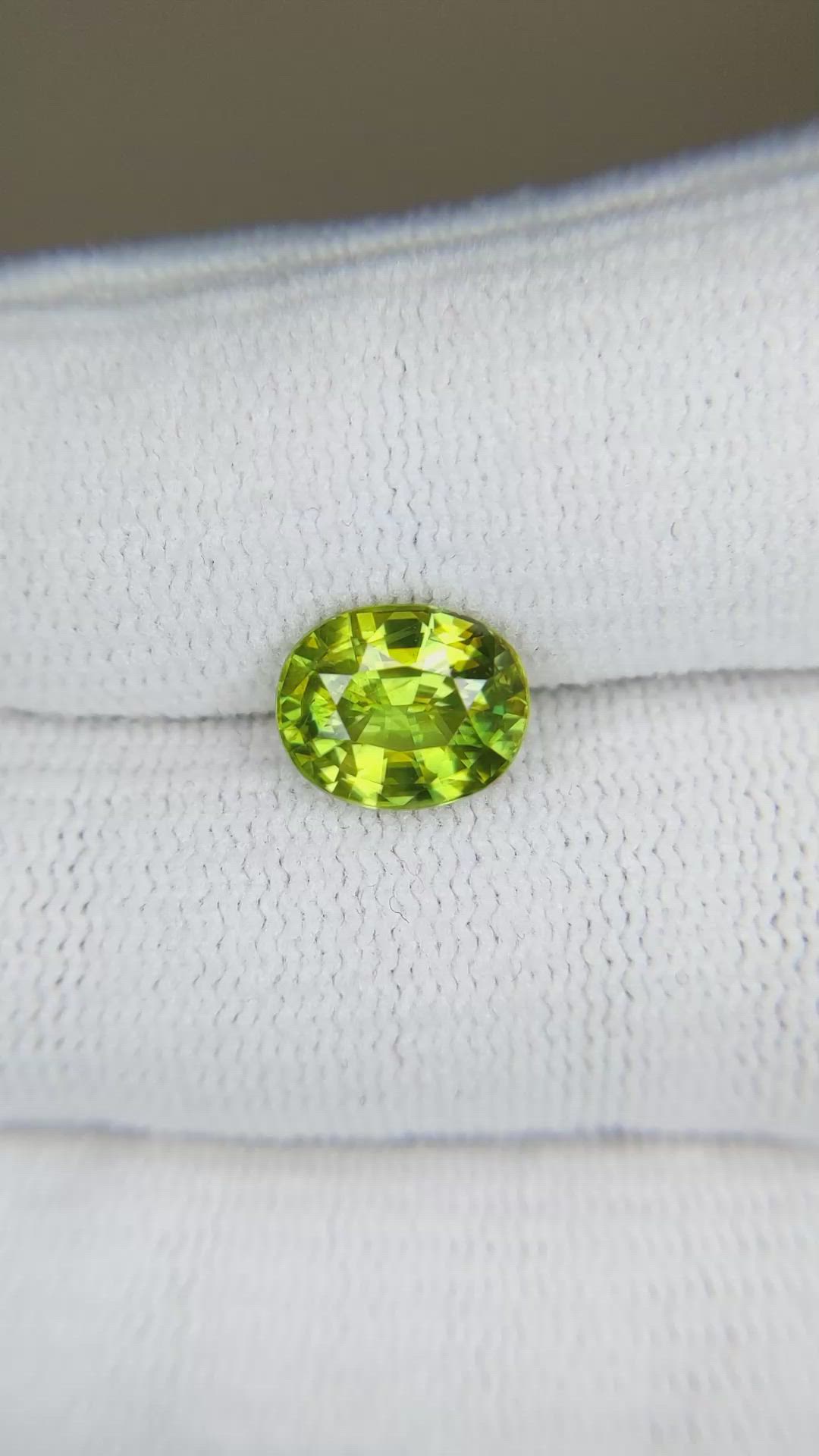
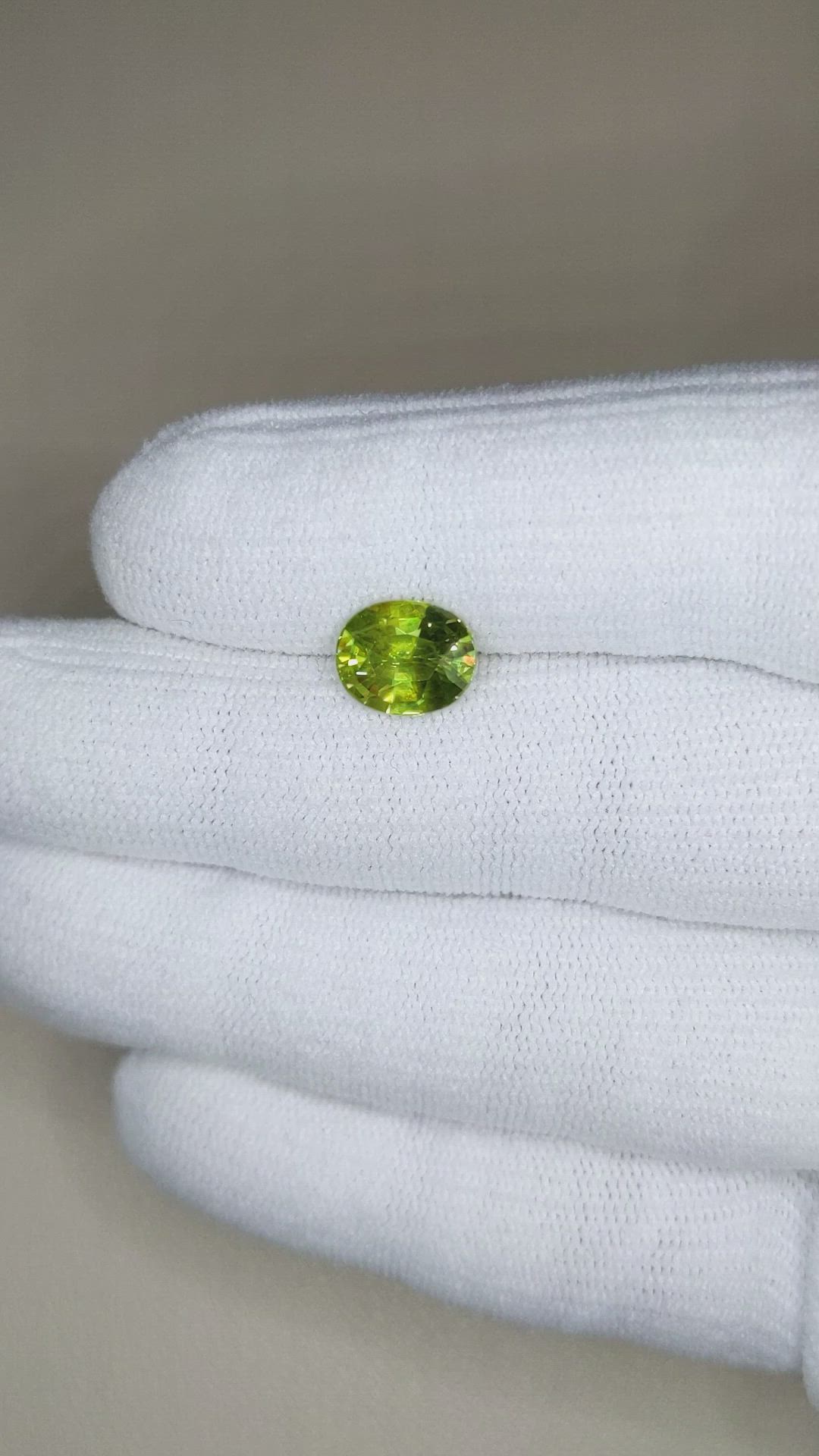
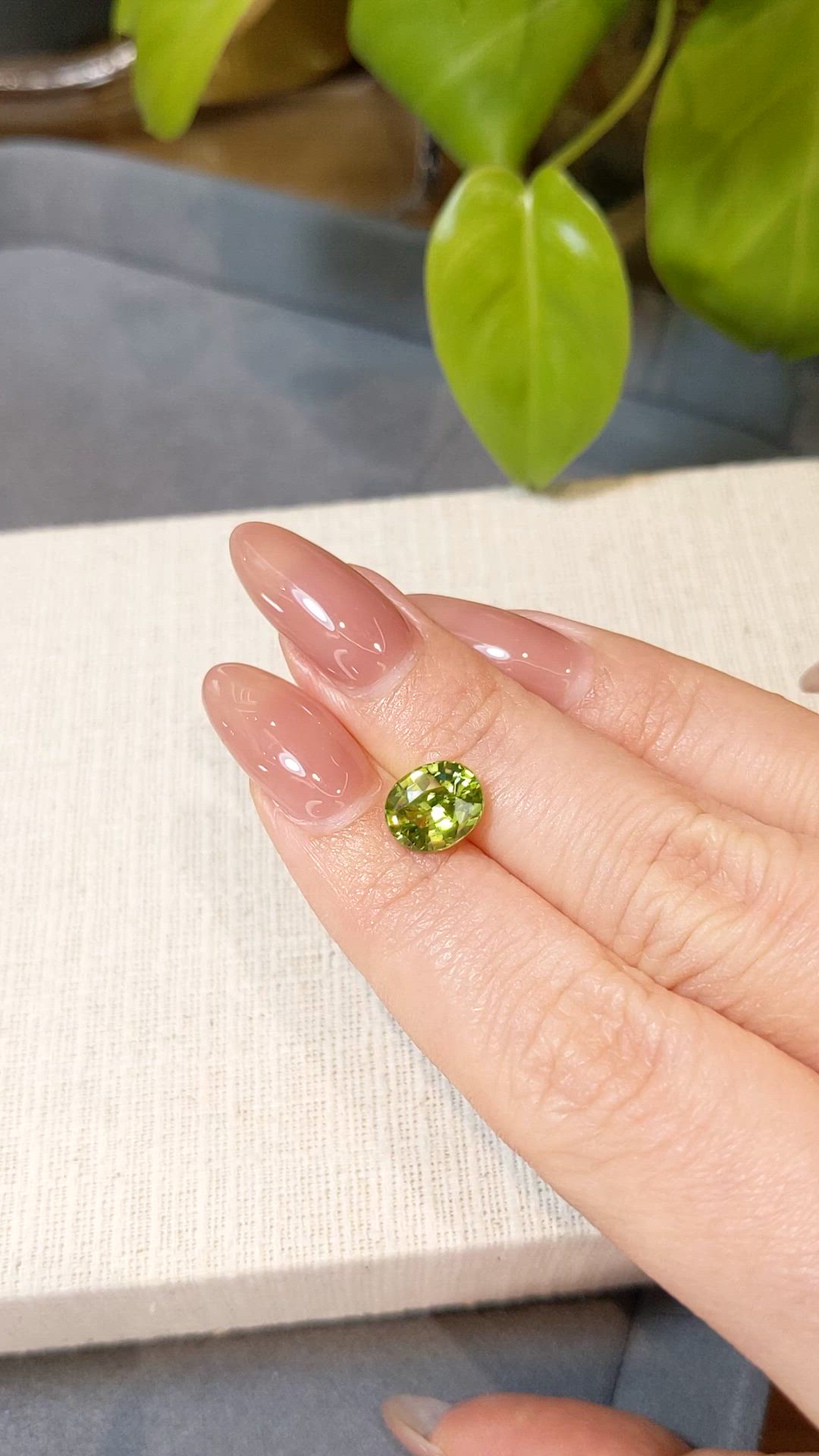
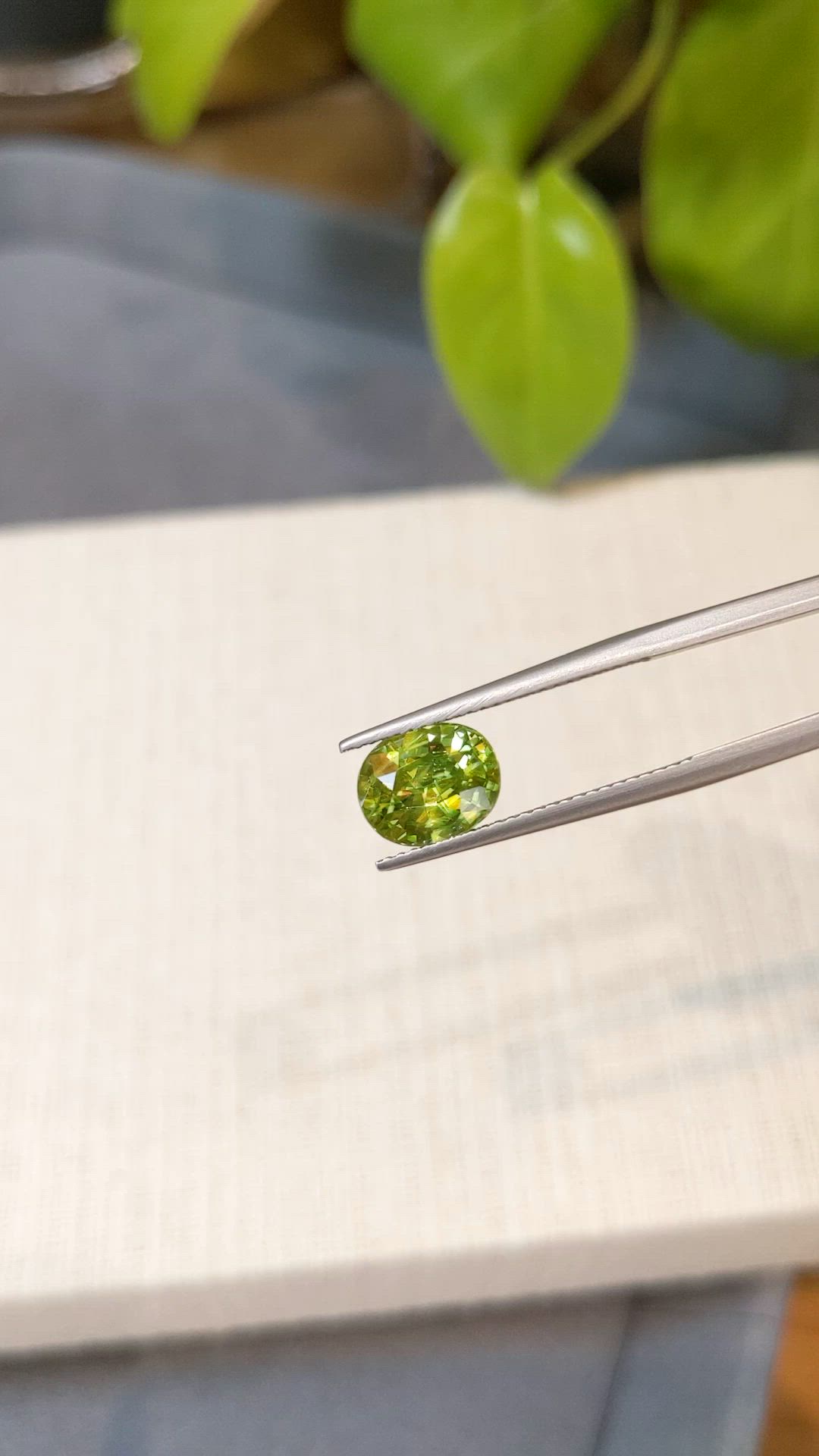
2.31 Ct. Yellowish Green Sphene (Titanite) from Madagascar
This loose stone ships by Nov 4
Item ID: | K24202 |
|---|---|
Dimensions (MM): help | Length: 9.14 Width: 7.48 Height: 4.74 |
Weight: | 2.31 Ct. |
Color: help | Yellowish Green |
Color intensity: help | Intense |
Clarity: help | Very Slightly Included |
Shape: help | Oval |
Cut: | Mixed Brilliant Cut |
Cutting style: | Faceted |
Enhancements: help | No Enhancement |
Origin: help | Madagascar |
Per carat price: help | $432 |
This specimen is a transparent 2.31 carat oval shape sphene, also known as titanite, measuring 9.14 x 7.48 x 4.74 mm, presented by The Natural Gemstone Company. The gem has been fashioned in a mixed brilliant cut, with a carefully proportioned crown to maximize scintillation and a pavilion faceting scheme tuned to return high levels of light and spectral dispersion. The cutter has prioritized optical return over simple weight retention, producing a lively table window and a faceted girdle that preserves outline symmetry for consistent light performance in jewelry. Clarity is graded very slightly included, evaluated at eye level, indicating minor internal characteristics that do not detract from the stone of face up brilliance, while the excellent polish ensures clean facet junctions and crisp reflections. No enhancement has been applied, and the piece is natural in origin, sourced from Madagascar.
The color reads as an intense yellowish green, a saturation that sits well above the typical commercial grade for sphene, and the material demonstrates the dynamic optical properties this species is prized for. Sphene is noted for pronounced dispersion and strong pleochroism, and this stone exhibits a lively play between yellow and green tones as it is rotated beneath the light. The mixed brilliant faceting magnifies these effects, breaking the dominant hue into vivid spectral flashes, and the excellent polish ensures that those flashes are delivered without surface diffusion. For the technically minded buyer, the combination of intense saturation, open pavilion design, and high polish creates an exceptional balance between brilliance and fire, making this gem visually compelling even at moderate carat weight.
When considering metal and setting choices to complement different skin tones, the yellowish green hue of this sphene is remarkably versatile. On warm skin tones, gold alloys, particularly 18 karat yellow gold, will harmonize with the yellow component of the stone, enhancing perceived warmth and producing an integrated, tonal appearance. In this configuration the gem reads slightly warmer and the yellow facets are emphasized, producing a cohesive look that flatters warm undertones. For cool skin tones, white metals such as platinum or 18 karat white gold introduce a neutral backdrop that increases perceived contrast, allowing the green element to appear fresher and more vivid. The neutral metal cools the overall presentation, and when paired with a fine halo of white accent stones the sphene s color contrast is pushed toward a vivid chartreuse effect that is highly contemporary.
Neutral skin tones have the most flexibility, and this sphene responds well to both traditional and experimental design choices. Rose gold will accentuate the yellow component, adding a soft, feminine warmth that can be desirable in halo engagement styles and vintage inspired mounts. Conversely, an open bezel or low profile prong setting in either white or yellow metal will preserve light entry for optimal dispersion and pleochroic movement, particularly important for earrings and pendants where the gem will be viewed on axis as it moves. For rings, an elevated profile ring head with minimal bezel coverage on the pavilion promotes maximum face up brilliance, while a protective bezel or partial bezel is advisable for high wear pieces. Given the gem s dimensions, it occupies a sweet spot for center stone use in a statement ring or pendant, and the stone s natural, untreated status and Madagascar provenance make it an excellent choice for clients who value geological origin as part of their piece s narrative.


