
- Stone12
- Reports3


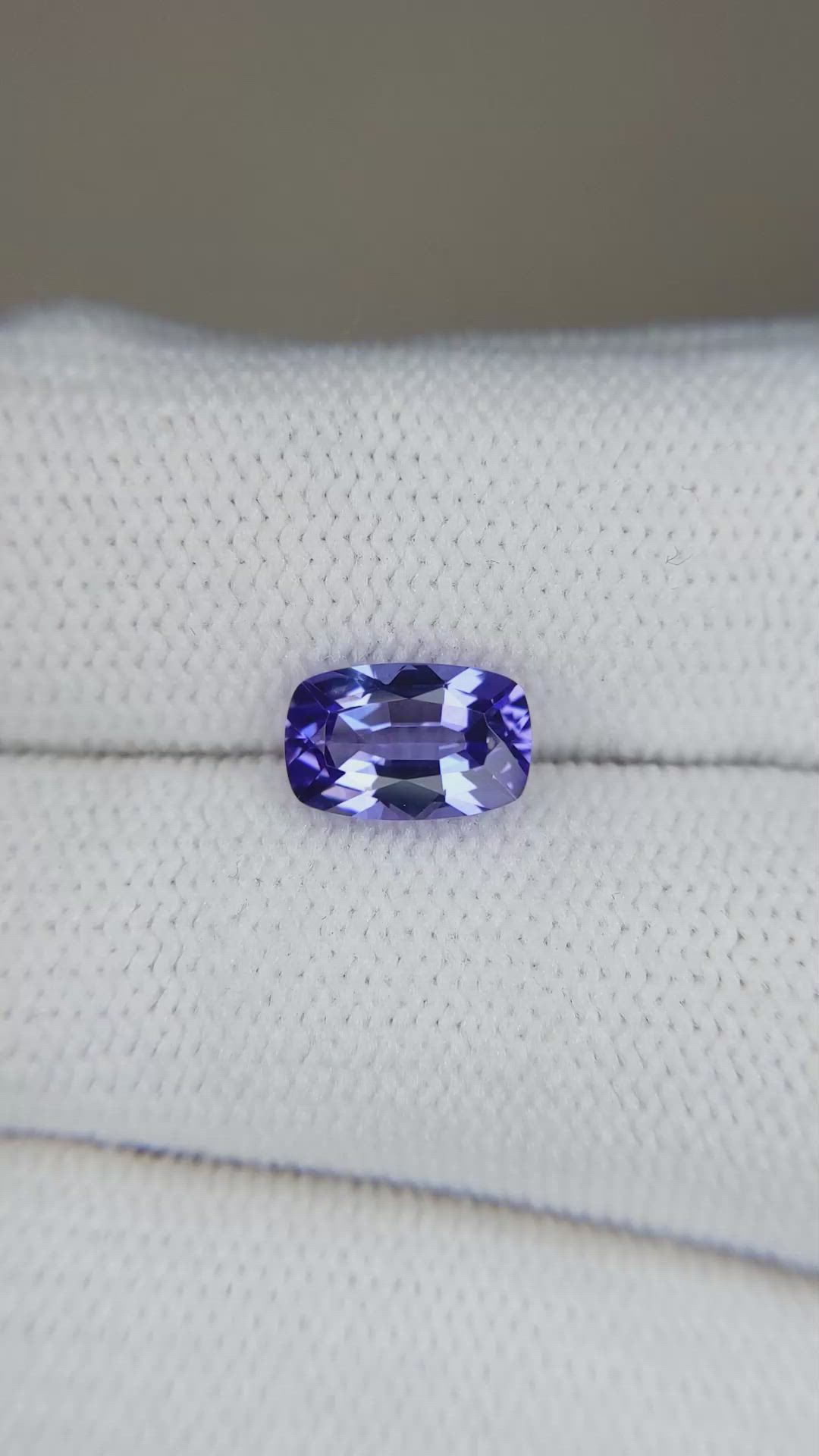
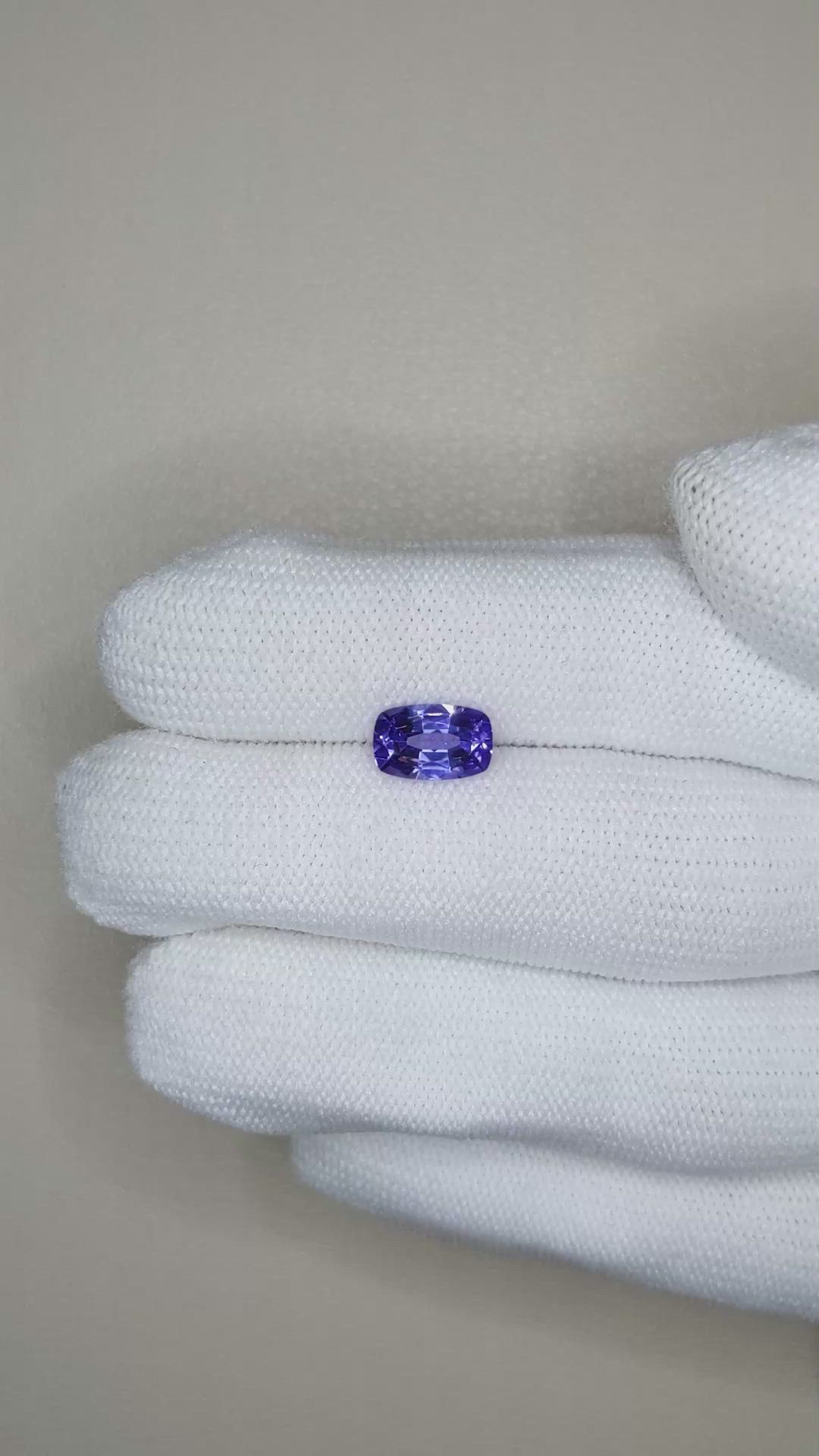





1.66 Ct. Violet Tanzanite from Tanzania
This loose stone ships by Nov 6
Item ID: | K25771 |
|---|---|
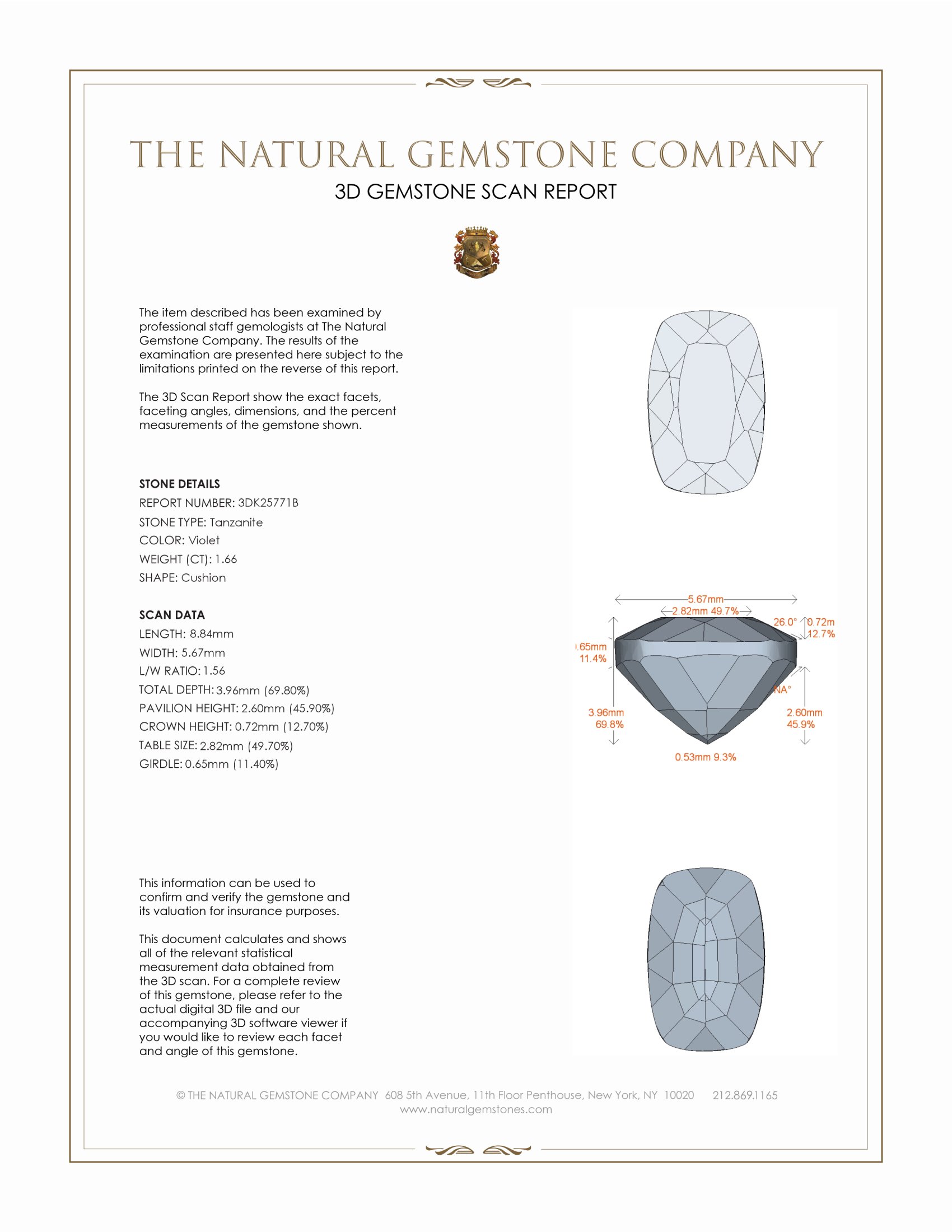
Dimensions (MM): help | Length: 8.84 Width: 5.67 Height: 3.96 |
Weight: | 1.66 Ct. |
Color: help | Violet |
Color intensity: help | Intense |
Clarity: help | Very Slightly Included |
Shape: help | Cushion |
Cut: | Mixed Brilliant Cut |
Cutting style: | Faceted |
Enhancements: help | Heat Treated |
Origin: help | Tanzania |
Per carat price: help | $241 |
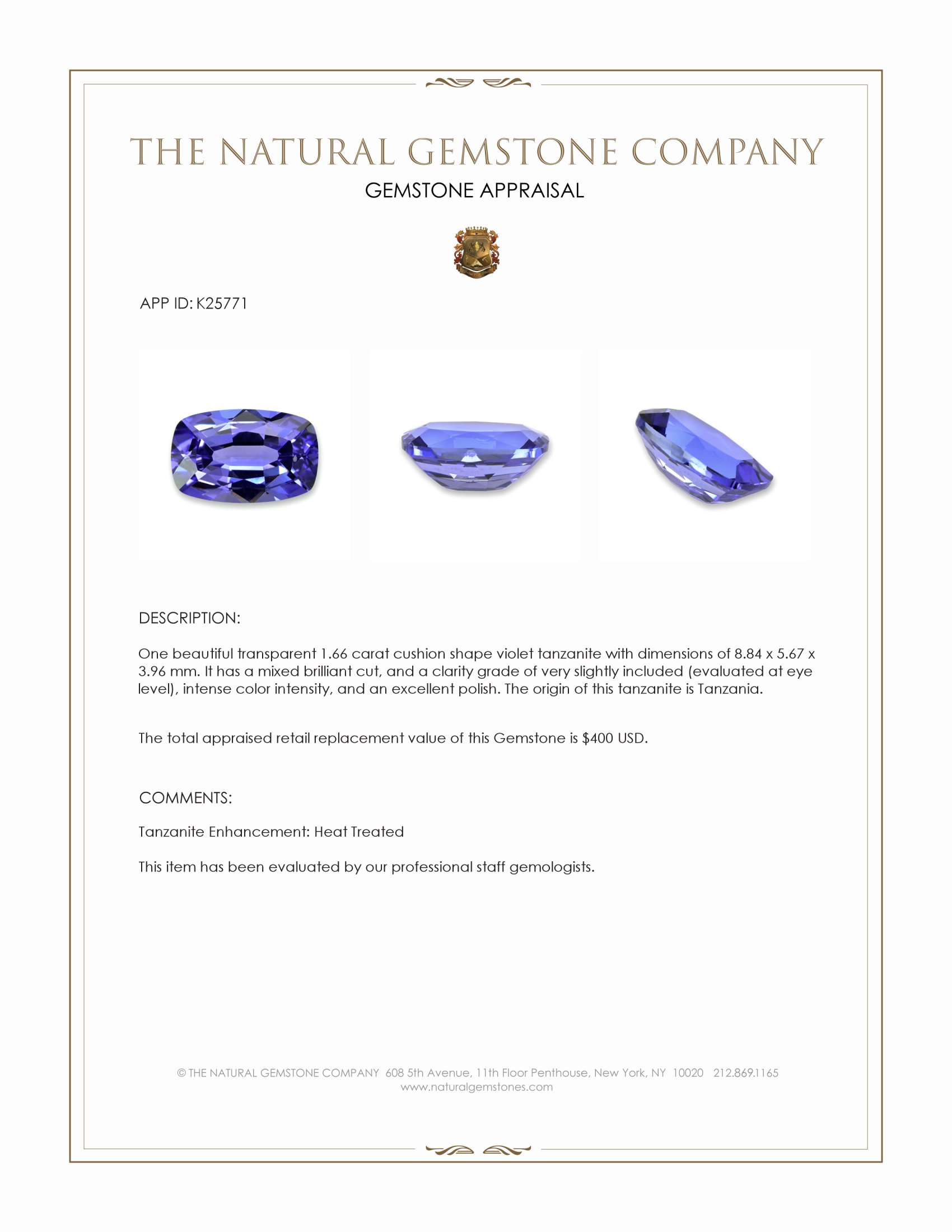
One transparent 1.66 carat cushion shape violet tanzanite is presented by The Natural Gemstone Company, dimensions 8.84 by 5.67 by 3.96 millimeters, mixed brilliant cut, clarity grade described as very slightly included evaluated at eye level, intense color intensity, excellent polish, heat treated enhancement, origin Tanzania. The stone displays an elongated cushion outline with a length to width ratio of approximately 1.56, and a measured depth of 3.96 millimeters which corresponds to a depth of roughly fifty four point six percent relative to the average girdle diameter. These measured proportions produce a balanced pavilion and crown relationship that preserves color saturation while delivering effective light return, a critical parameter for gemstones that exhibit strong pleochroism. The gem is transparent to the naked eye, the inclusions are minimal and do not interrupt the visual field under typical viewing conditions, and the excellent polish ensures crisp facet junctions and minimal surface diffusion of light.
The mixed brilliant faceting strategy applied to this cushion form combines a faceted crown with small triangular and kite shaped facets over a faceted pavilion that incorporates both brilliant and step elements. This hybrid faceting approach is deliberately selected for tanzanite, because the species benefits from well distributed scintillation and controlled table return rather than the high dispersion focused design used for diamonds. The crown facets have been sized to preserve intense violet saturation in face up orientation, while the pavilion angles have been calibrated to the refractive index of tanzanite in order to maximize internal reflection and reduce light leakage. The result is an effective interplay between flash scintillation and broad color zones, producing lively facet contrast when the stone is viewed under directional light, and a stable face up color under mixed ambient conditions.
Optically tanzanite is notable for its strong trichroism, which in this specimen presents as dominant violet to blue violet shades with a secondary, subtler yellowish brown direction that has been minimized by the cutting orientation. Tanzanite has a refractive index in the vicinity of one point six nine to one point seven zero, lower than corundum and substantially lower than diamond, which influences the gem to exhibit less brilliance in terms of high index light return and less spectral dispersion commonly referred to as fire. However, a lower refractive index does not equate to visual weakness, because tanzanite communicates its presence primarily through depth of hue and the dynamic shift of color with movement. The combination of intense color intensity and precise facet angles in this stone generates saturation contrast and color flashes that create perceived brilliance through color rather than by pronounced prismatic separation. Heat treatment in tanzanite is an industry standard, applied to stabilize and enhance the desirable violet blue hue, and the treatment in this stone is a stable thermal enhancement that does not compromise the integrity of the crystal lattice under normal wear.
When compared to more common gemstones, the manner in which this tanzanite stands out is multifaceted. Relative to sapphire, which typically exhibits higher refractive index and greater toughness, this tanzanite presents a more vivid and velvety violet saturation that is rare at this carat weight and clarity, and the mixed brilliant cut emphasizes color depth rather than maximizing white light return. Compared to amethyst, tanzanite displays superior color complexity and a trichroic behavior that results in different color stories when the stone is rotated, a property amethyst lacks. Versus aquamarine and other beryls, which are appreciated for their subtle pastel tones, this tanzanite offers intense hue and a more theatrical shift between blue and violet, lending an immediate visual identity. In practical terms, the hardness of tanzanite is lower than that of sapphire and diamond, so protective setting considerations are recommended for everyday wear, however the combination of eye cleanliness, excellent polish, and optimal proportions in this stone create a remarkable balance of beauty and practicality for rings, pendants, and collector grade pieces.
For the connoisseur who values technical refinement, this tanzanite embodies a considered synthesis of material quality and cutting expertise. The dimensions and depth yield a face up presence that maximizes color without excessive darkening, the mixed brilliant faceting produces a finely tuned scintillation pattern, and the clarity grade very slightly included evaluated at eye level ensures that the visual plane remains clean while preserving carat weight. Origin documentation from Tanzania adds geographic provenance which is relevant for those who track supply chain and rarity factors. The Natural Gemstone Company stands behind the description and can provide additional photomicrography and light performance images upon request, as well as recommendations for setting styles that protect the girdle and pavilion while showcasing the intense violet personality of this stone.


