
- Stone14
- Reports3
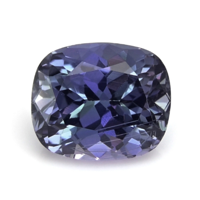
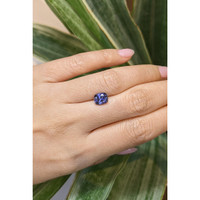
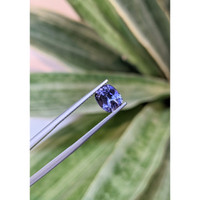
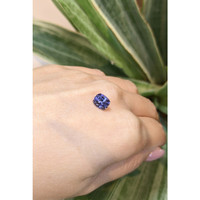


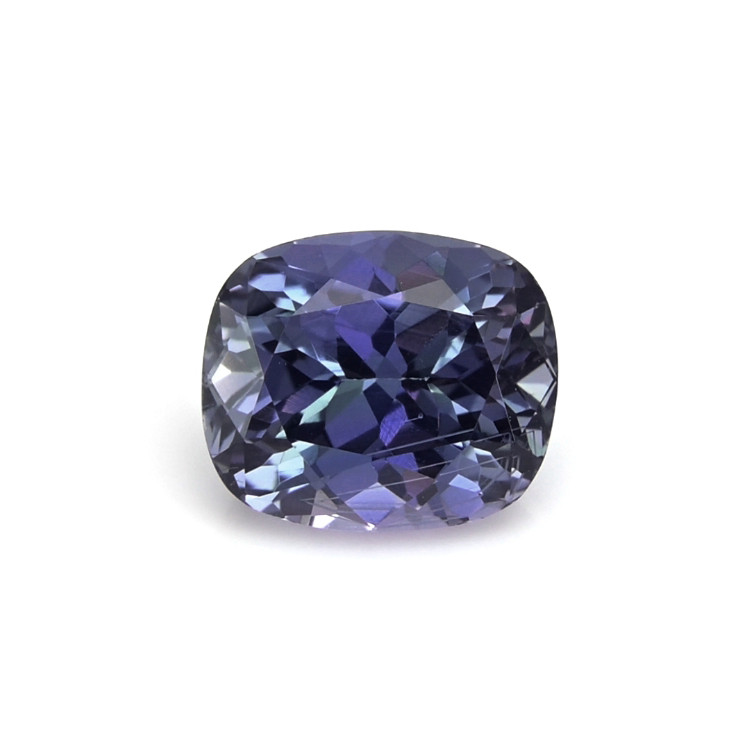
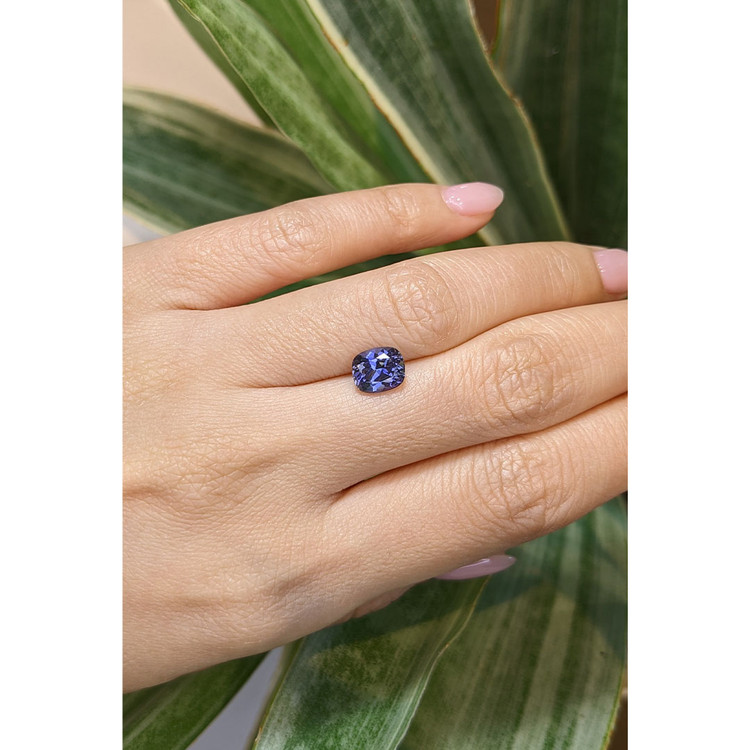
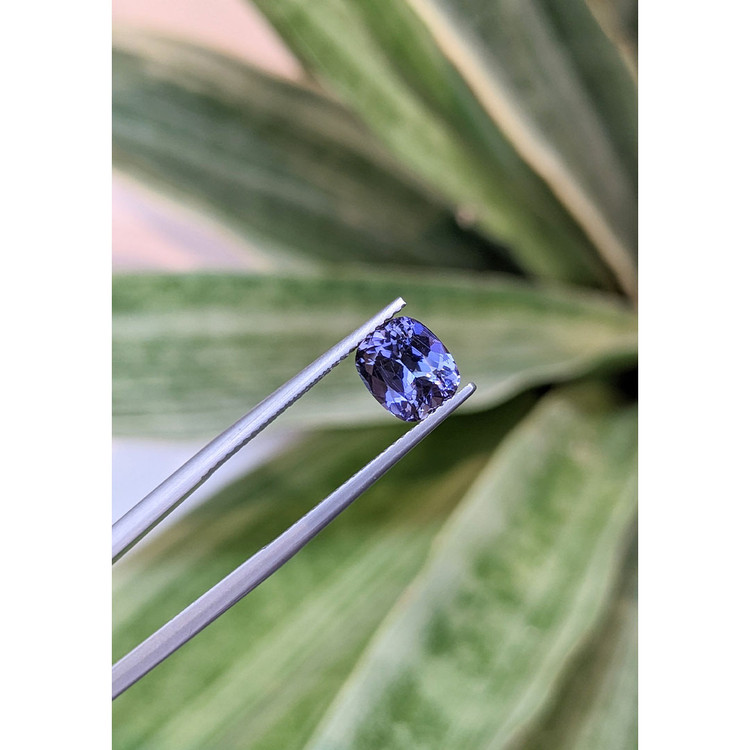
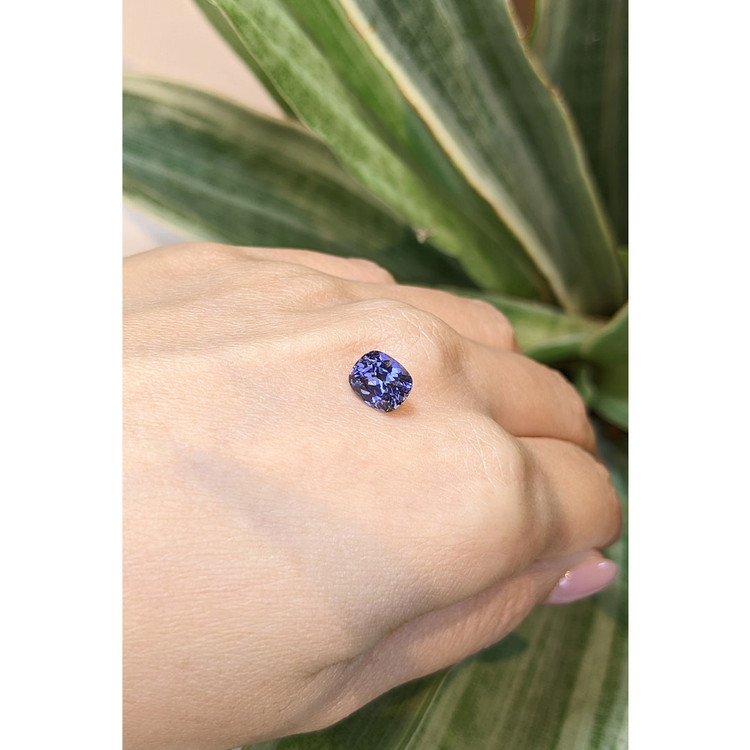

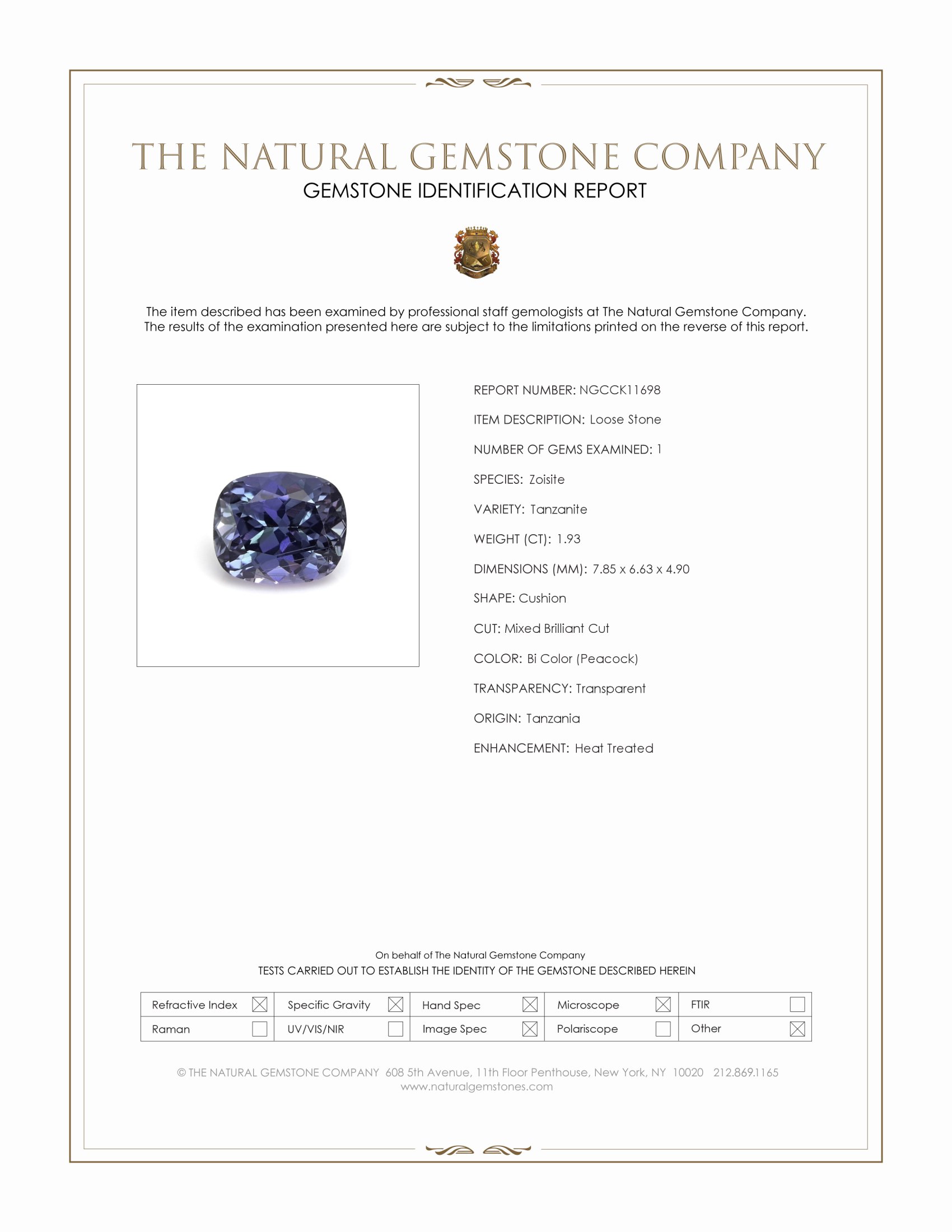
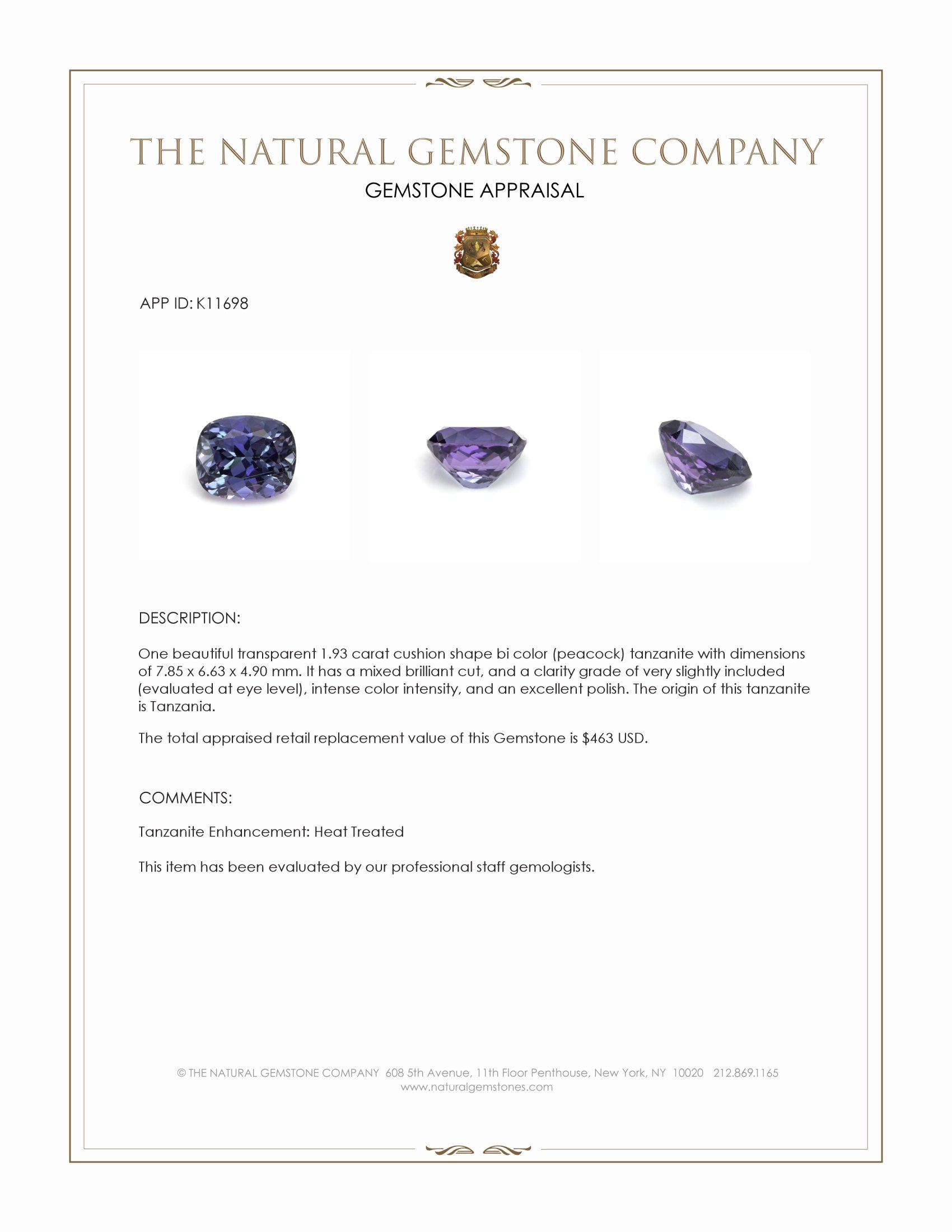
1.93 Ct. Bi Color (Peacock) Tanzanite from Tanzania
Item ID: | K11698 |
|---|---|
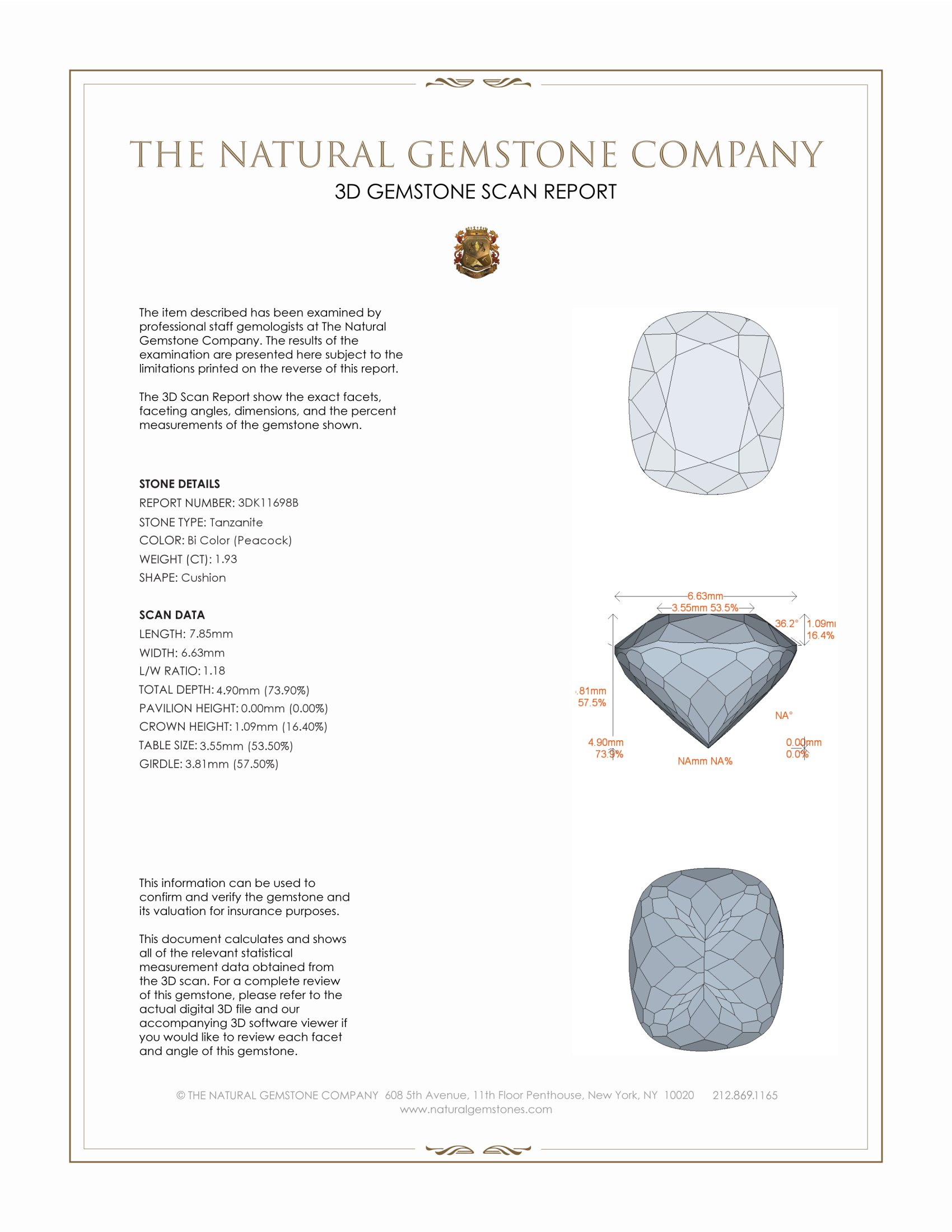
Dimensions (MM): help | Length: 7.85 Width: 6.63 Height: 4.9 |
Weight: | 1.93 Ct. |
Color: help | Bi Color (Peacock) |
Color intensity: help | Intense |
Clarity: help | Very Slightly Included |
Shape: help | Cushion |
Cut: | Mixed Brilliant Cut |
Cutting style: | Faceted |
Enhancements: help | Heat Treated |
Origin: help | Tanzania |
This specimen is a transparent 1.93 carat cushion shape bi color peacock tanzanite offered by The Natural Gemstone Company, and it presents a carefully balanced synthesis of weight, proportion and optical character. The dimensions are seven point eight five millimeters by six point six three millimeters by four point nine zero millimeters, producing a depth percentage of approximately 67.6 percent, a figure that aligns with established ideals for cushion cuts where depth is leveraged to optimize color saturation without sacrificing light return. The cutter employed a mixed brilliant strategy, combining a brilliant style crown with a modified pavilion in order to preserve vivid face up color while delivering lively scintillation. Clarity is graded as very slightly included when evaluated at eye level, indicating only minor internal features that do not interrupt transparency or overall performance. The color intensity is classified as intense, and the polish has been executed to an excellent standard, resulting in crisp facet junctions and high surface luster. The piece has been heat treated, a conventional and stable enhancement for tanzanite that promotes the blue violet tones characteristic of premium material, and the origin is confirmed as Tanzania, the singular geological source associated with classic tanzanite specimens.
From a lapidary perspective the mixed brilliant cut chosen for this cushion shape is a deliberate technical response to tanzanite chemistry and its strong trichroic behavior. Tanzanite is trichroic, showing distinct color directions under different optical axes, and a cutter must orient the rough to present the preferred blue violet axis to the table. In this case the cutter oriented the pavilion axis to balance the blue violet and the secondary hue that produces the peacock effect, while the crown was faceted in a brilliant pattern to fragment light into small, lively flashes that animate the stone face up. The crown to pavilion relationship, informed by the measured depth, yields effective internal reflection paths that maintain saturation in both bright and diffuse lighting. Facet angles were controlled to reduce windowing in bright conditions and to avoid excessive extinction in low light, a refined approach evident in the even color distribution across the table. The excellent polish is the final technical layer, ensuring minimal surface diffusion and maximizing contrast between reflection and refraction so that the stone reads consistently under both directional spotlight and ambient daylight.
Color and clarity interplay are the defining attributes for this peacock tanzanite, and they merit close technical description for discerning buyers. The term peacock references a bi color presentation, where from certain orientations you perceive a deep violet blue and from other orientations you observe cooler green blue or teal flashes depending on lighting and angle. The heat treatment applied to this stone has been precisely controlled to reduce brown or muddy tones and to enhance the blue violet axis without over saturating the material, preserving the natural pleochroic architecture. Intense color intensity indicates a high degree of saturation and chroma relative to size, which is particularly desirable in a 1.93 carat stone where color presence can markedly influence perceived size and value. The very slightly included clarity grade at eye level affirms that inclusions are small, well located, and do not compromise structural integrity, which is important when planning a setting. Under 10 times magnification small internal characteristics are visible to a trained eye, but they do not impede the passage of light through the pavilion nor do they create significant focal disturbances within the table field. The combination of transparency, intense color, and precise faceting yields a gem that performs with strong contrast and lively color shifts that are engaged by wearer movement.
Heritage and provenance are key components of value for tanzanite collectors and connoisseurs, and this gem carries direct lineage to the Merelani region of northern Tanzania, where tanzanite was first introduced to the international gem market in the late twentieth century. Historically, violet blue and related hues have been prized in many cultures for ornament and ceremonial use, associated with rarity and refinement, and tanzanite has entered that continuum as a modern classic, sought after for its singular geographical origin and its striking trichroic personality. At The Natural Gemstone Company we emphasize responsible sourcing and artisanal cutting, and this stone exemplifies that approach through both its documented origin and its refined faceting. For setting recommendations the stone responds exceptionally well to a four or six prong open gallery design that allows light to enter the pavilion and to the girdle area, or to a semi bezel setting that protects the cushion corners while still permitting adequate light access. Orientation in the pre production stage should prioritize the blue violet axis to the table for maximum face up color, and metal choice can be used to augment perceived saturation with warmer metals enhancing violet tones and cooler metals emphasizing blue. Care instructions for the buyer include standard precautions, avoiding harsh chemical exposure and extreme thermal shocks, noting that the heat treatment is stable under normal wear conditions. For clients seeking an informed purchase we can provide additional microscope images and cut plane diagrams, and our gem specialists at The Natural Gemstone Company are available to discuss mounting strategies that preserve both the optical performance and the historical character of this fine peacock tanzanite.


