
- Stone13
- Reports3
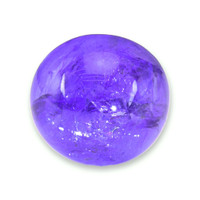


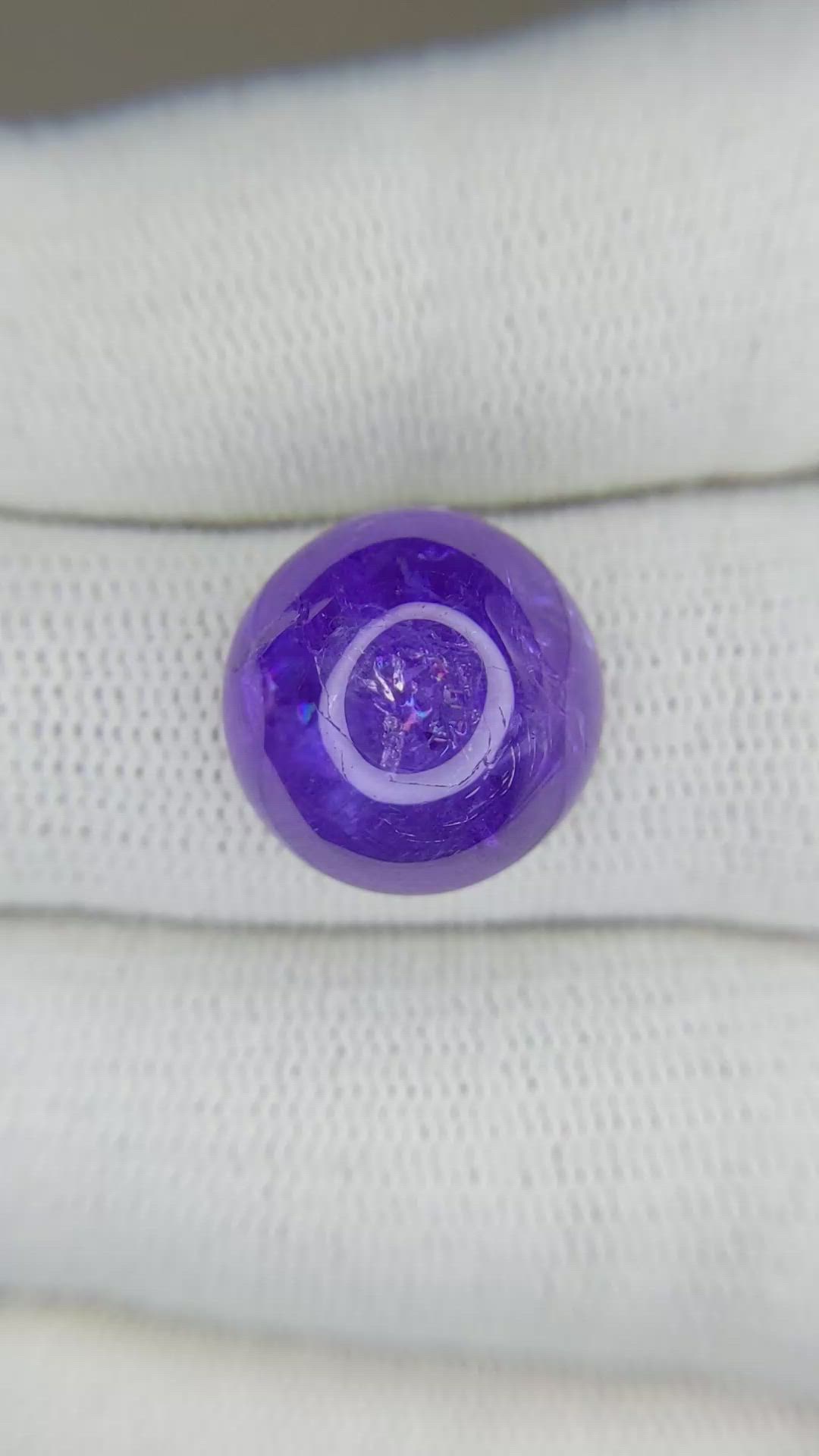
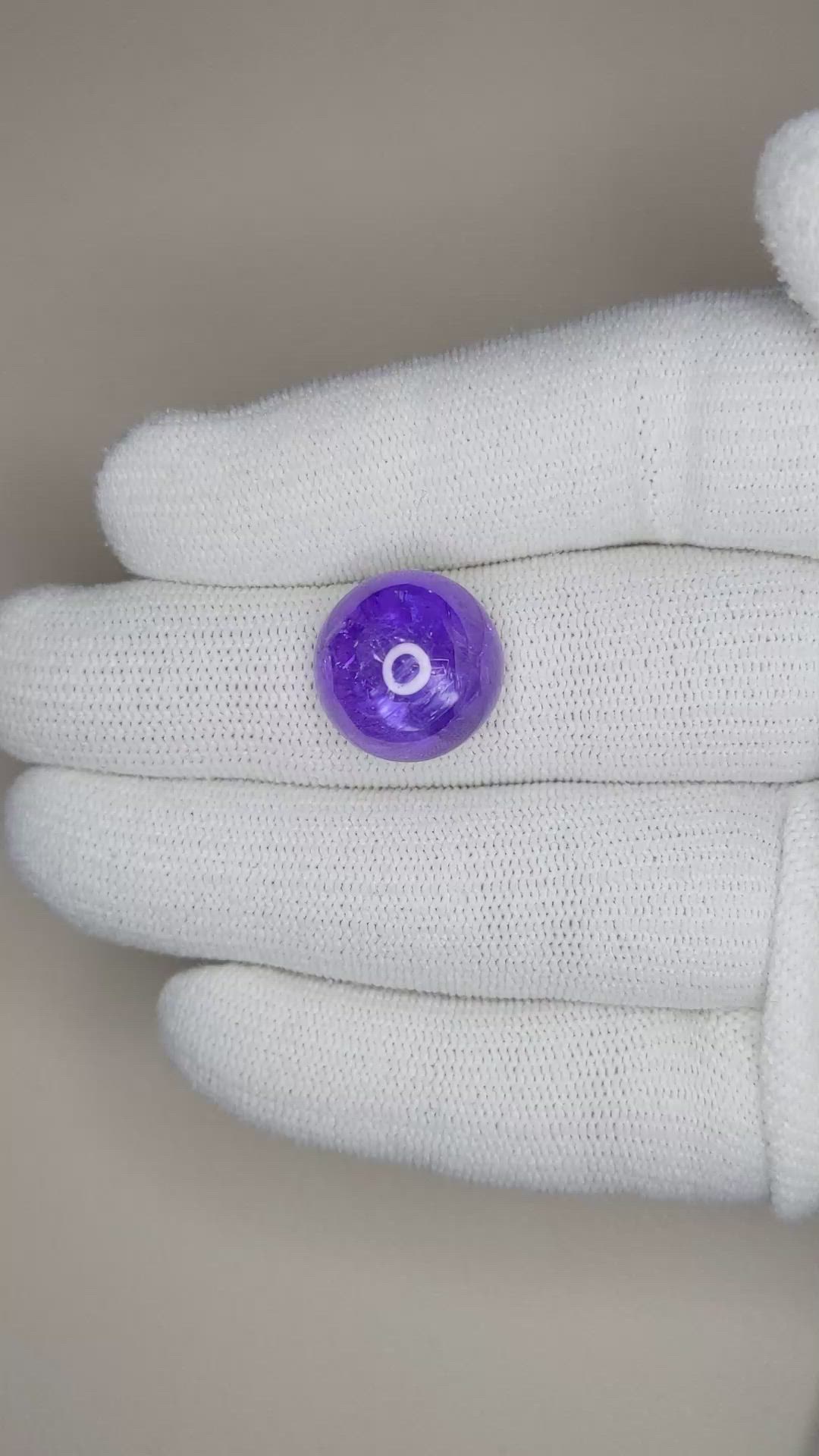
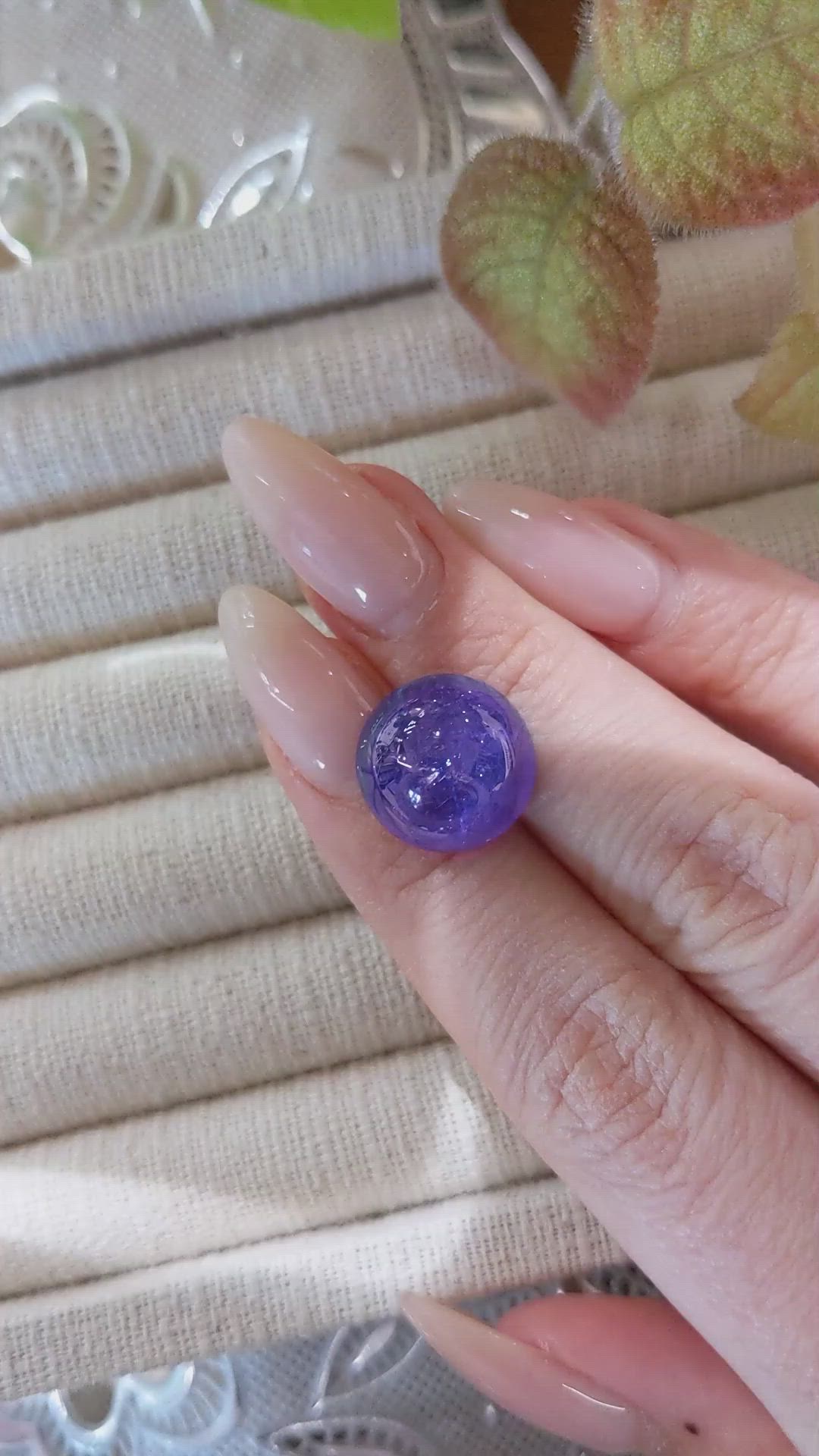

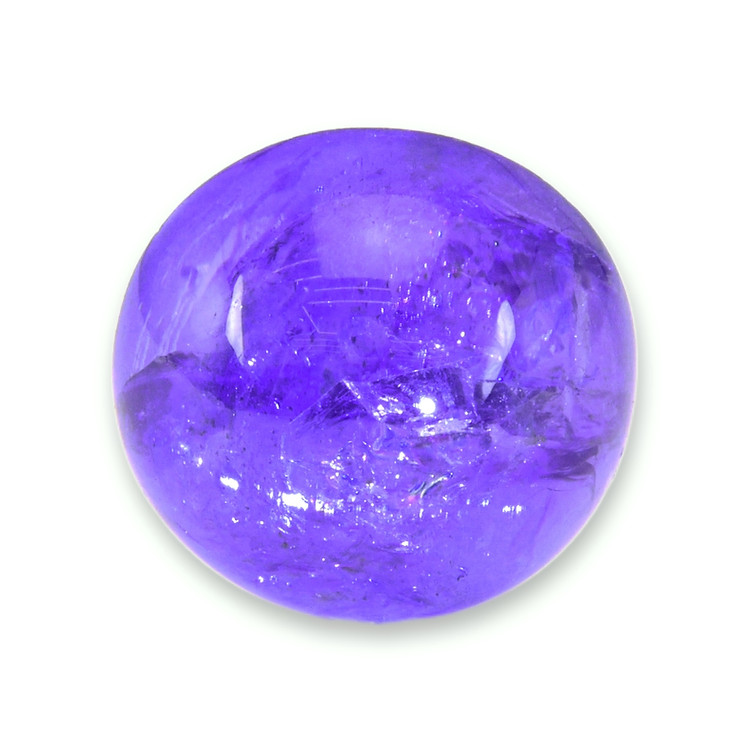


15.22 Ct. Cabochon Tanzanite from Tanzania
This loose stone ships by Apr 14
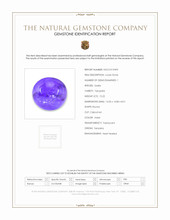
Item ID: | K19493 |
|---|---|
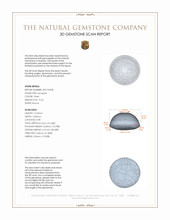
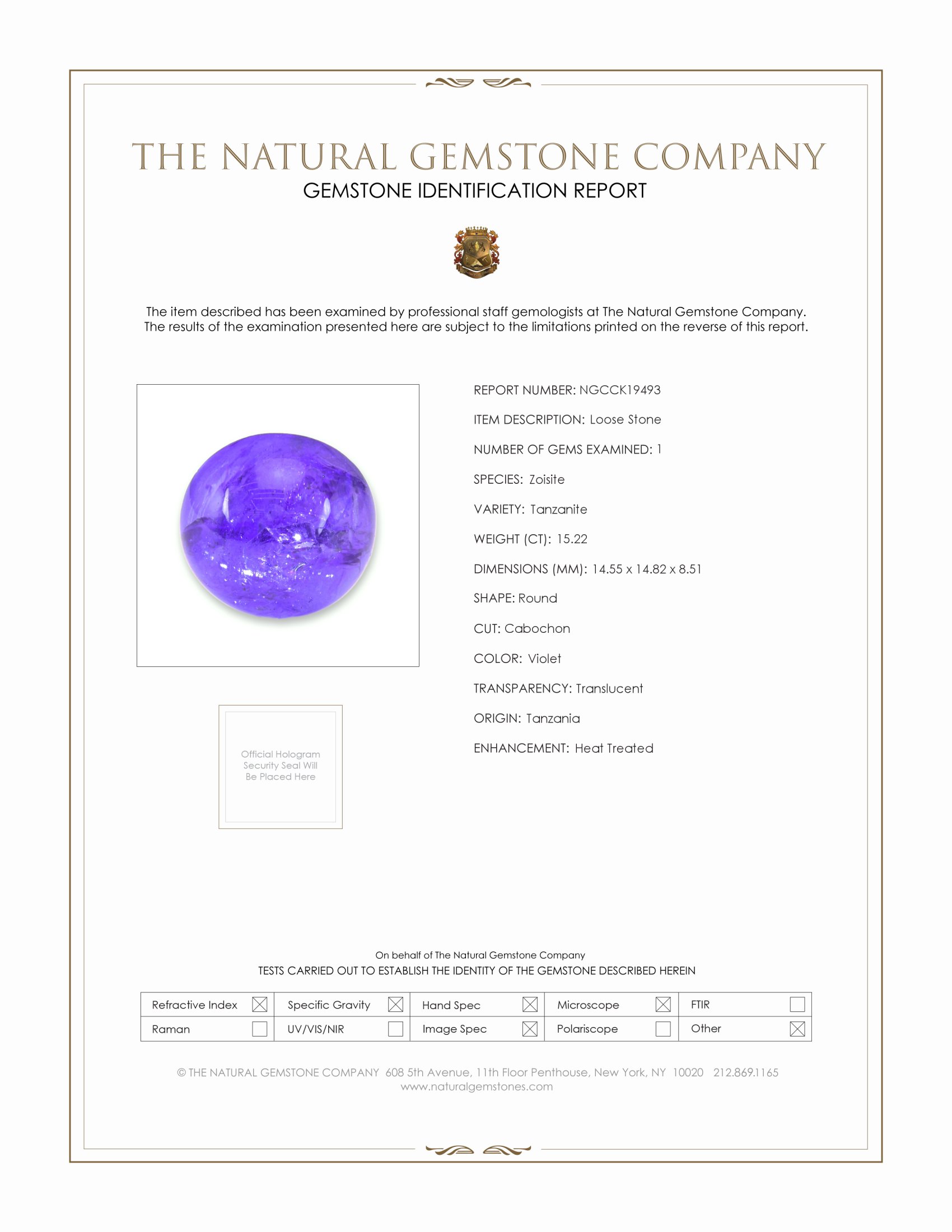
Dimensions (MM): help | Length: 14.55 Width: 14.82 Height: 8.51 |
Weight: | 15.22 Ct. |
Color: help | Violet |
Color intensity: help | Vivid |
Clarity: help | Included |
Shape: help | Round |
Cut: | Cabochon |
Cutting style: | Cabochon |
Enhancements: help | Heat Treated |
Origin: help | Tanzania |
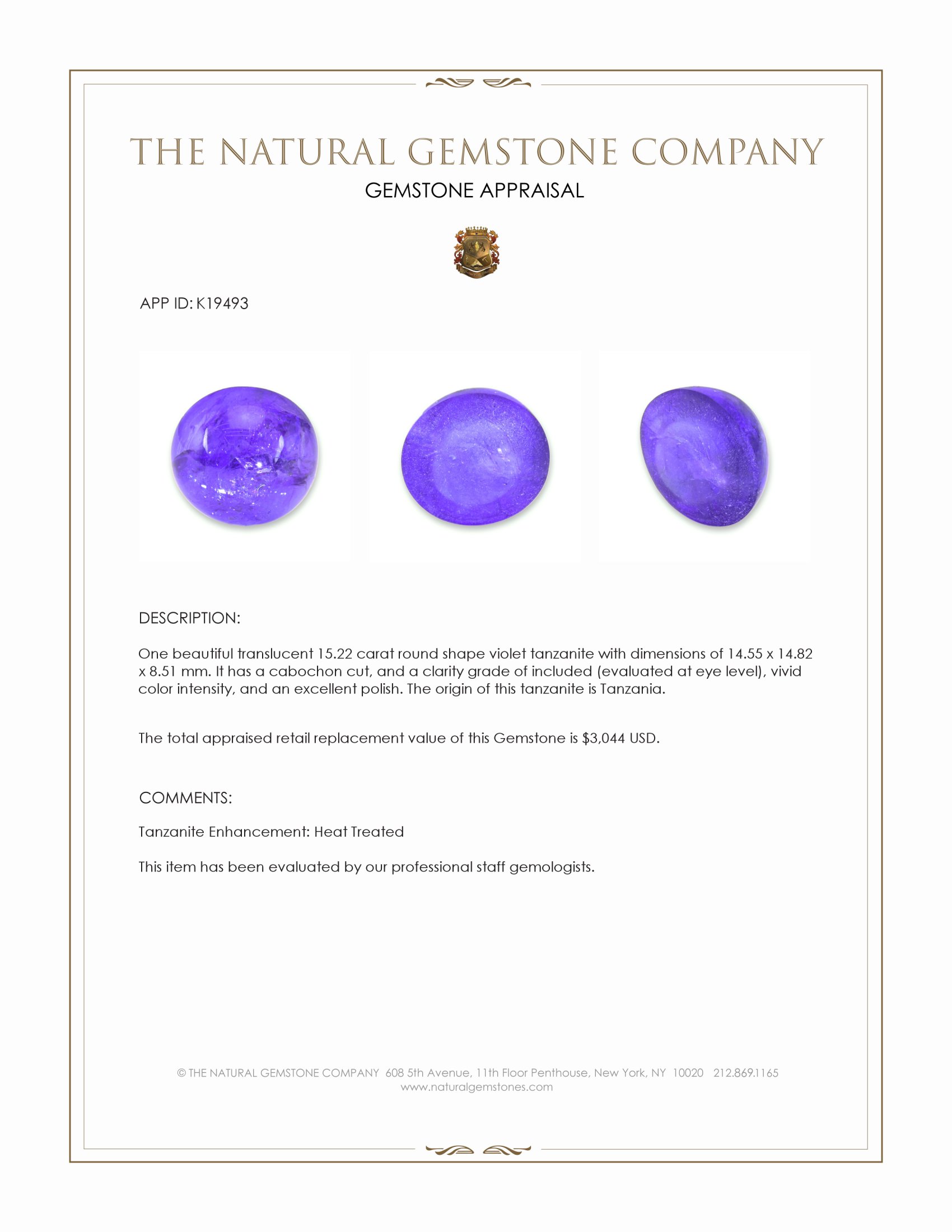
Per carat price: help | $200 |
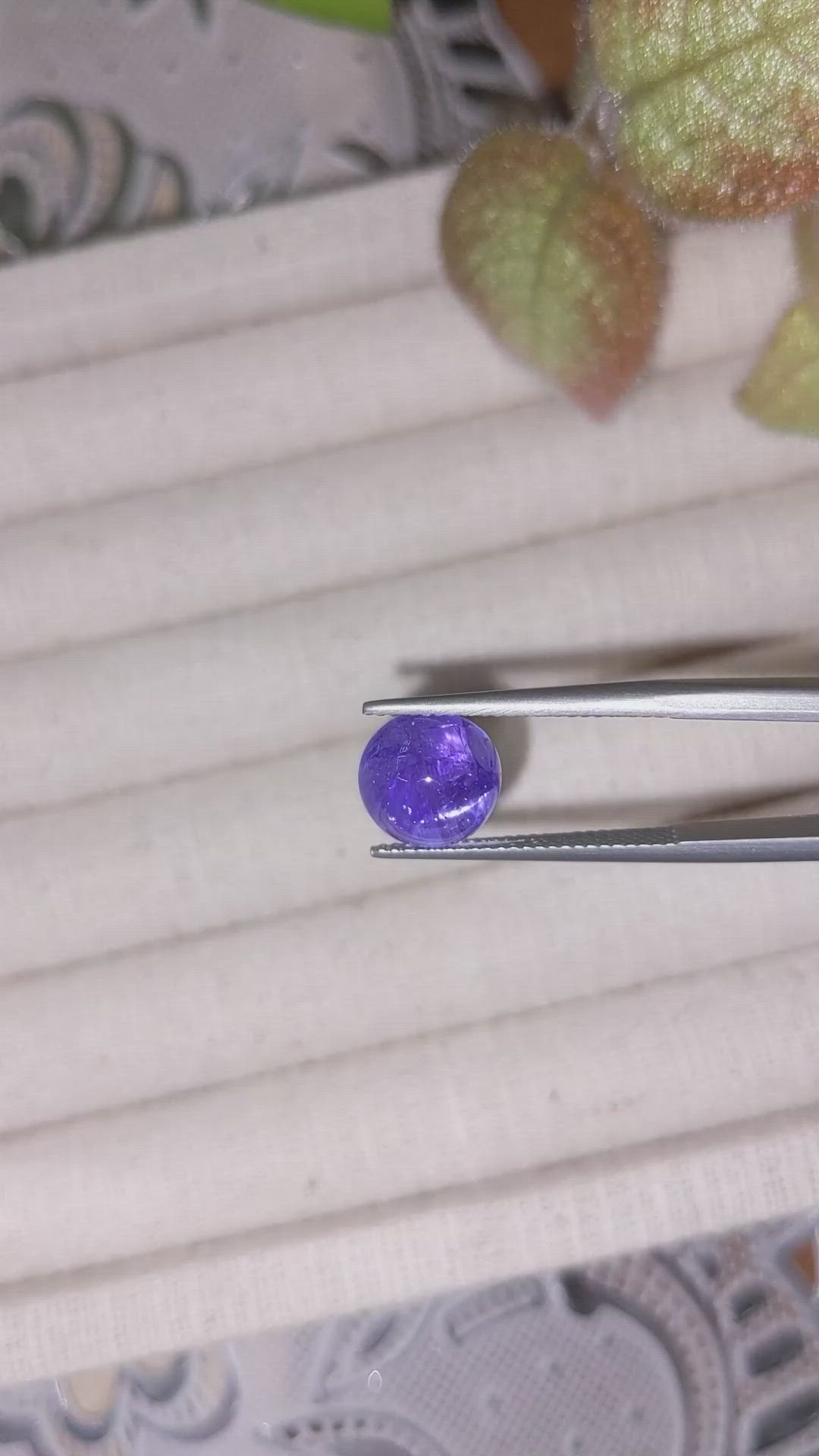
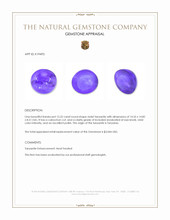
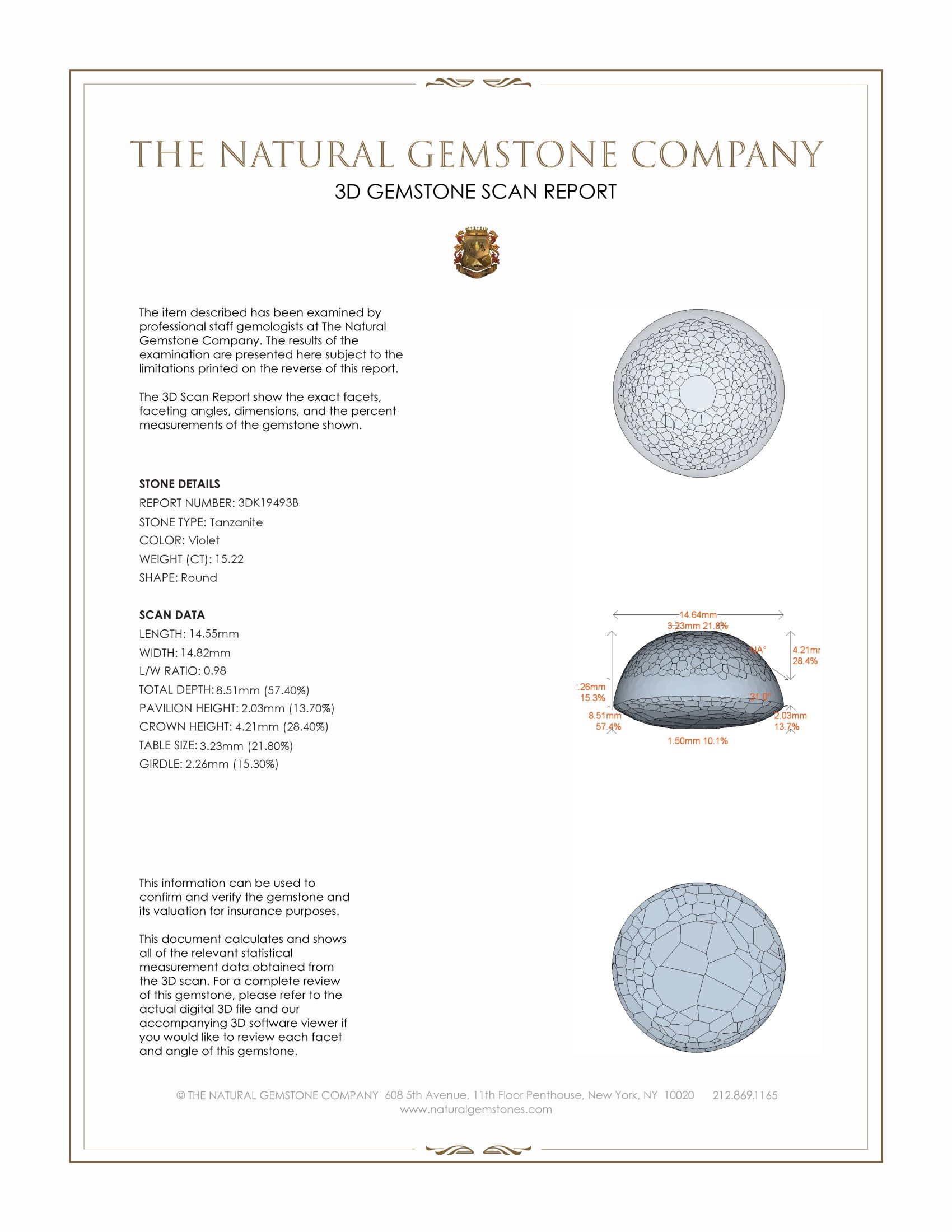
This specimen is a 15.22 carat violet tanzanite, presented in a traditional round outline with measured dimensions of 14.55 x 14.82 x 8.51 mm. The cutting style is a high dome cabochon rather than a faceted style, with an even ovoid dome and a flattened girdle plane to optimize stability within a mounting. The cabochon geometry emphasizes overall proportion and symmetry, which are particularly important for translucent material where light transmission and internal reflection define the visual character. Weight to size ratio is consistent with a dense zoisite matrix, and the specific gravity and bulk dimensions produce a balanced visual mass that is impressive for a single stone presentation. The surface finishing is classified as excellent, indicating a finely executed lap polish with minimal texture on the dome and a mirror like reflection across the crown.
Color evaluation of this tanzanite is classified as vivid in intensity, situated in the strong blue violet to true violet range that collectors and connoisseurs prize. Tanzanite characteristically exhibits trichroism, with distinct pleochroic axes that can show blue, violet, and brownish violet tones depending on viewing orientation and light source, and this piece presents a dominant violet axis with strong saturation. The stone has been heat treated to stabilize and enhance the blue violet component, a standard and widely accepted enhancement for tanzanite, applied to remove brownish zoning and to uniformize color distribution. Color zoning is minimal at the visible scale, and the cabochon form reduces the perception of banding by presenting a smooth continuous color field across the dome, which increases the perceived intensity and depth from a viewing distance while allowing subtle internal color shifts when rotated under directional light.
Clarity is graded as included when evaluated at eye level, indicating the presence of internal features that are observable without magnification, but not necessarily detrimental to overall appeal or structural integrity. In this example, the inclusions are consistent with intrinsic crystal growth features and isolated mineral crystals, presented as small reflective planes and localized clouds rather than pervasive fractures. Because the cutting style is cabochon, inclusions tend to be integrated into the visual texture, often generating depth and internal scintillation that can be desirable in translucent material, rather than appearing as sharp windowed or dead areas as may occur in flat facets. The polish quality is excellent, providing a smooth surface that minimizes surface scattering and allows internal features to remain crisp while maximizing luster. From a practical standpoint, the material retains the toughness typical of zoisite, but care is advised to avoid sharp blows and thermal shock due to the heat treatment history, and routine cleaning with mild detergents and a soft brush is recommended rather than an ultrasonic or steam clean that could stress internal features.
Craftsmanship considerations include the uniformity of the dome curvature, the evenness of the undercut, and the precision of the girdle plane, each of which impacts how the stone will seat in a bezel or open gallery setting. The dome height is optimized to balance surface area exposure with internal depth, allowing the color to read strong without creating excessive magnification of inclusions. The flattened girdle provides a stable contact surface for securing in a bezel setting, which is often preferable for cabochons and for protecting the stone from edge impacts. Optical behavior under different light sources demonstrates good transmission in daylight and a saturated glow under incandescent illumination, and the smooth polish supports attractive light return without strong facet splitting since there are no facets. The combination of weight, dimensions, and dome proportion makes this tanzanite suitable for larger statement rings, pendants with a low profile setting, or bespoke collectors mounts where the orientation of color can be controlled.
The origin of this tanzanite is Tanzania, and the piece is offered by The Natural Gemstone Company with full disclosure of enhancement by heat treatment. Sourcing provenance is an important component of value assessment, and Tanzanian stones from established supply chains provide a traceable context that supports quality grading. For clients seeking mounting recommendations, a bezel with a thin polished rim and a hidden gallery aperture will emphasize the cabochon silhouette while allowing light entry to animate internal color. For certification, independent gemological reports can be arranged that document carat weight, dimensions, clarity, cut description, color grade, enhancement status, and origin, and such documentation is recommended for insurance and resale purposes. This tanzanite represents a technically sound specimen with vivid color intensity, a well executed cabochon geometry, and a professional polish, suitable for connoisseurs who appreciate the interplay of internal features and surface finish in translucent chromatic gemstones.


