
- Stone12
- Reports3
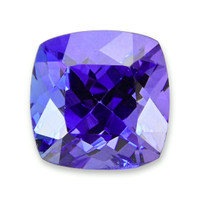
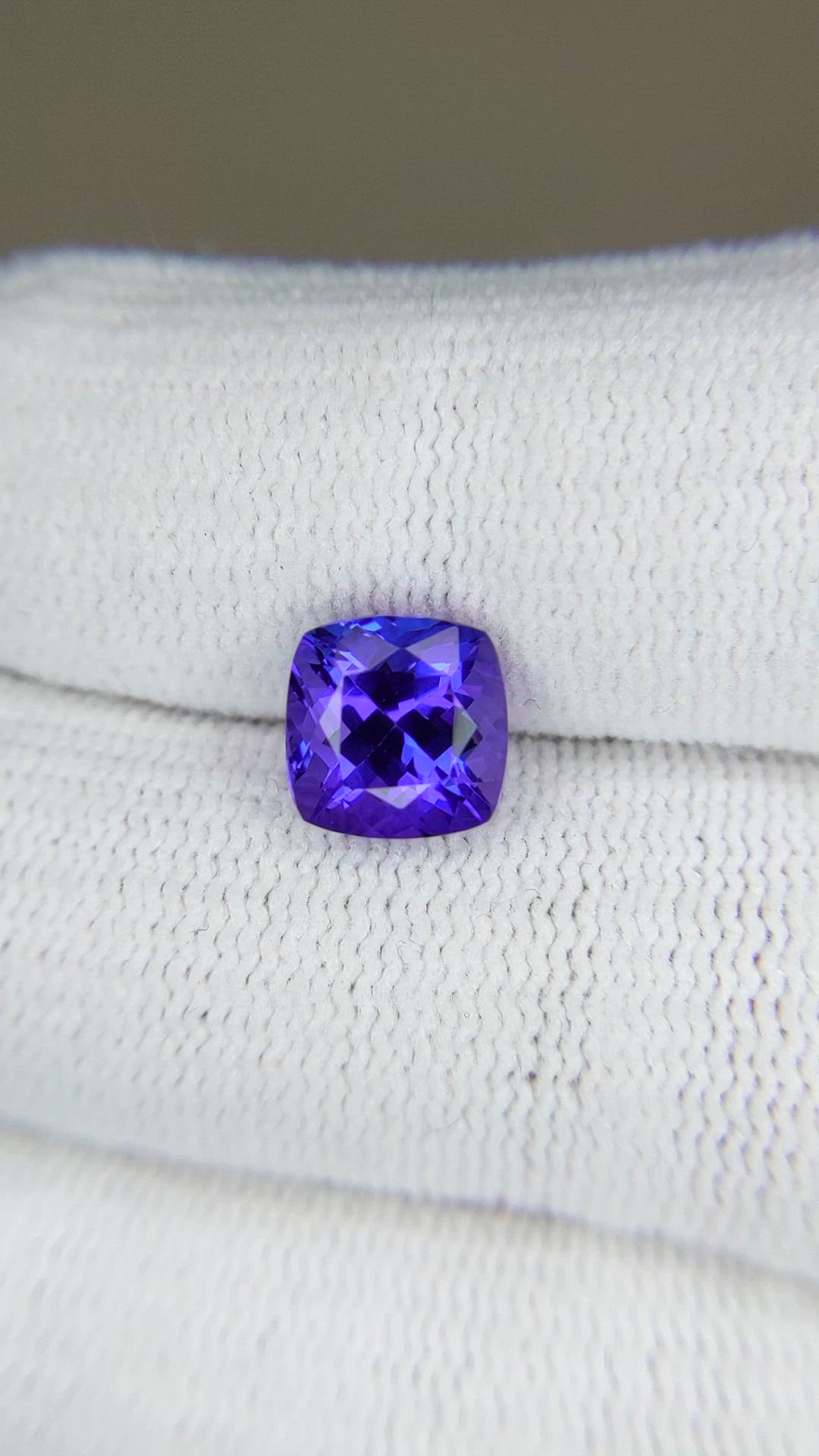

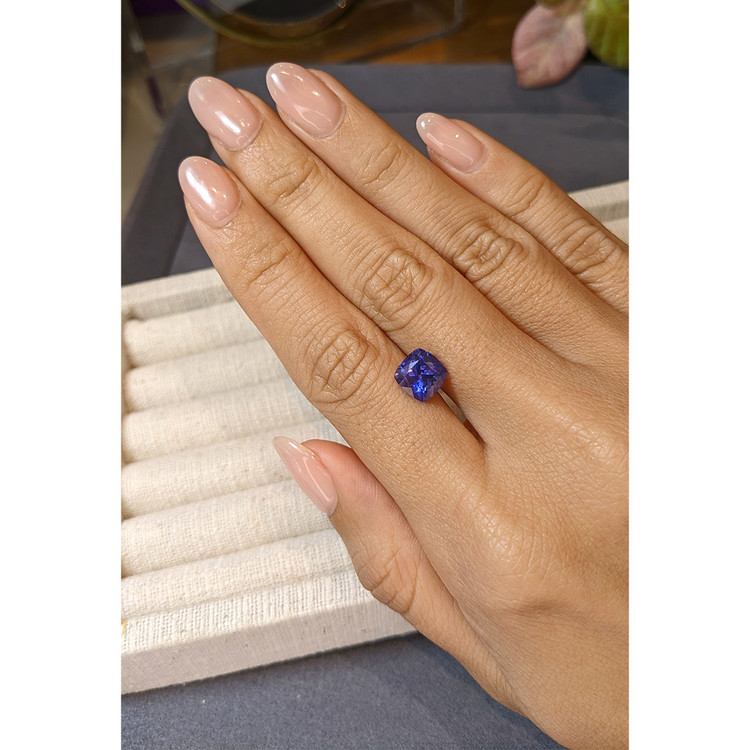

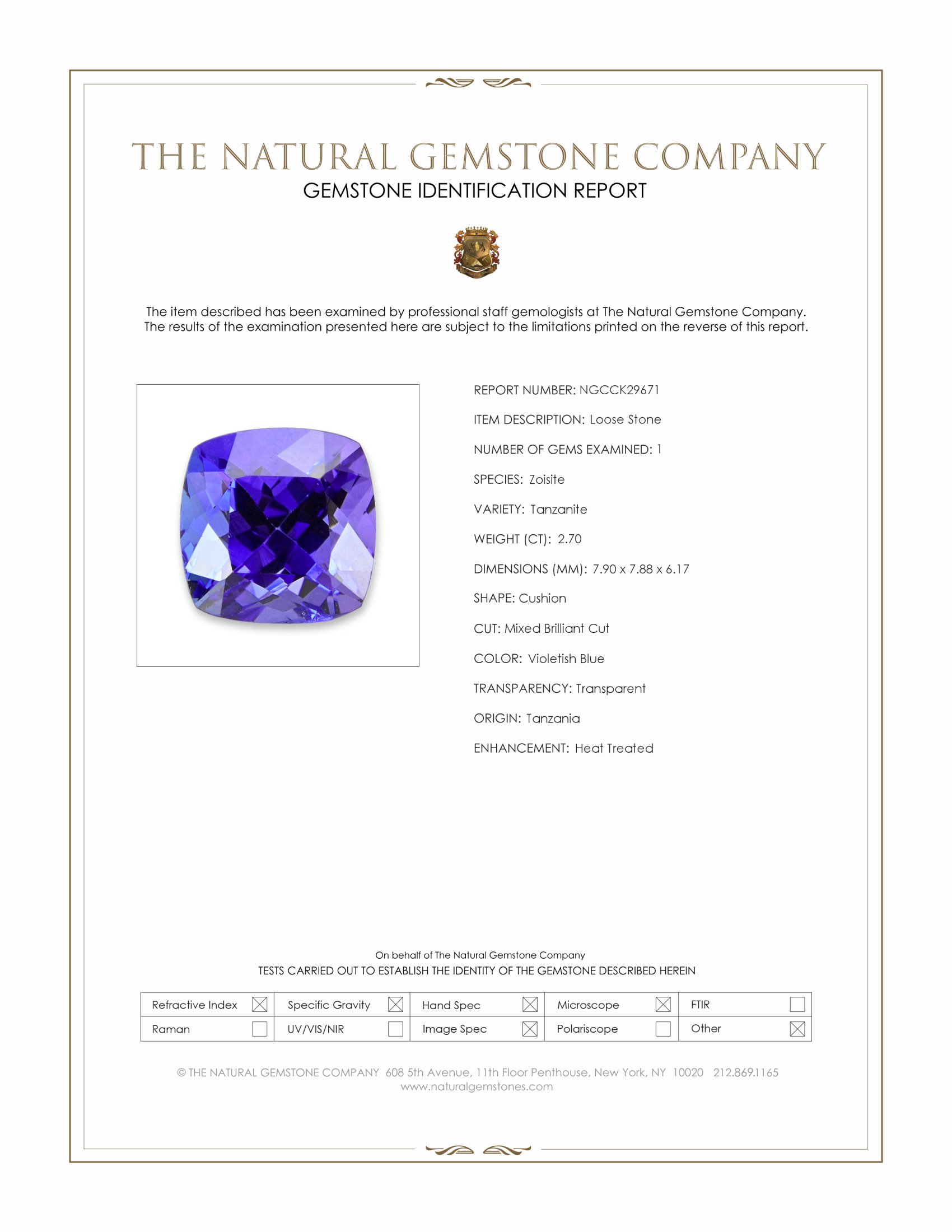
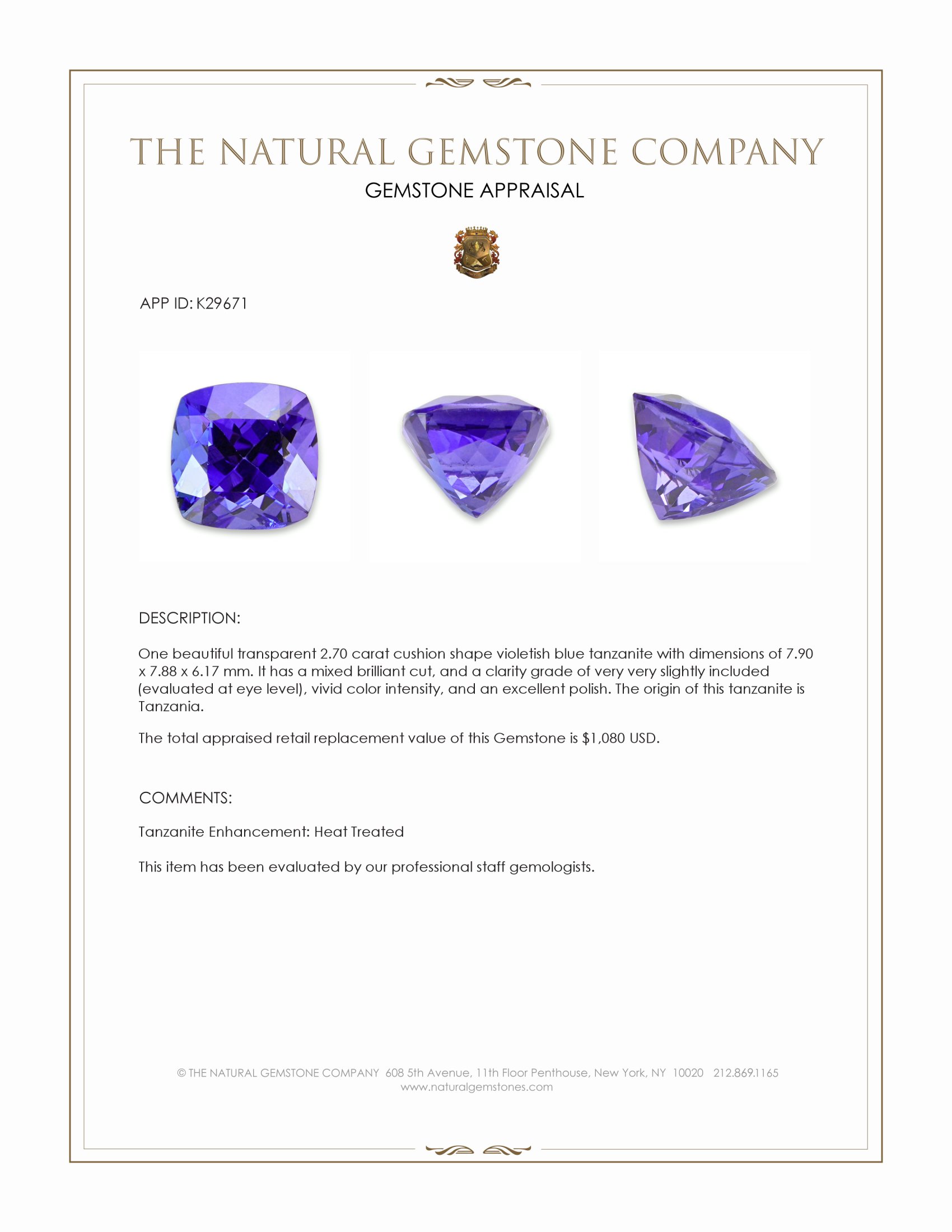
2.70 Ct. Violetish Blue Tanzanite from Tanzania
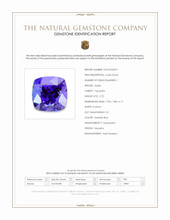
Item ID: | K29671 |
|---|---|
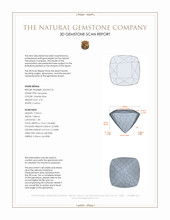
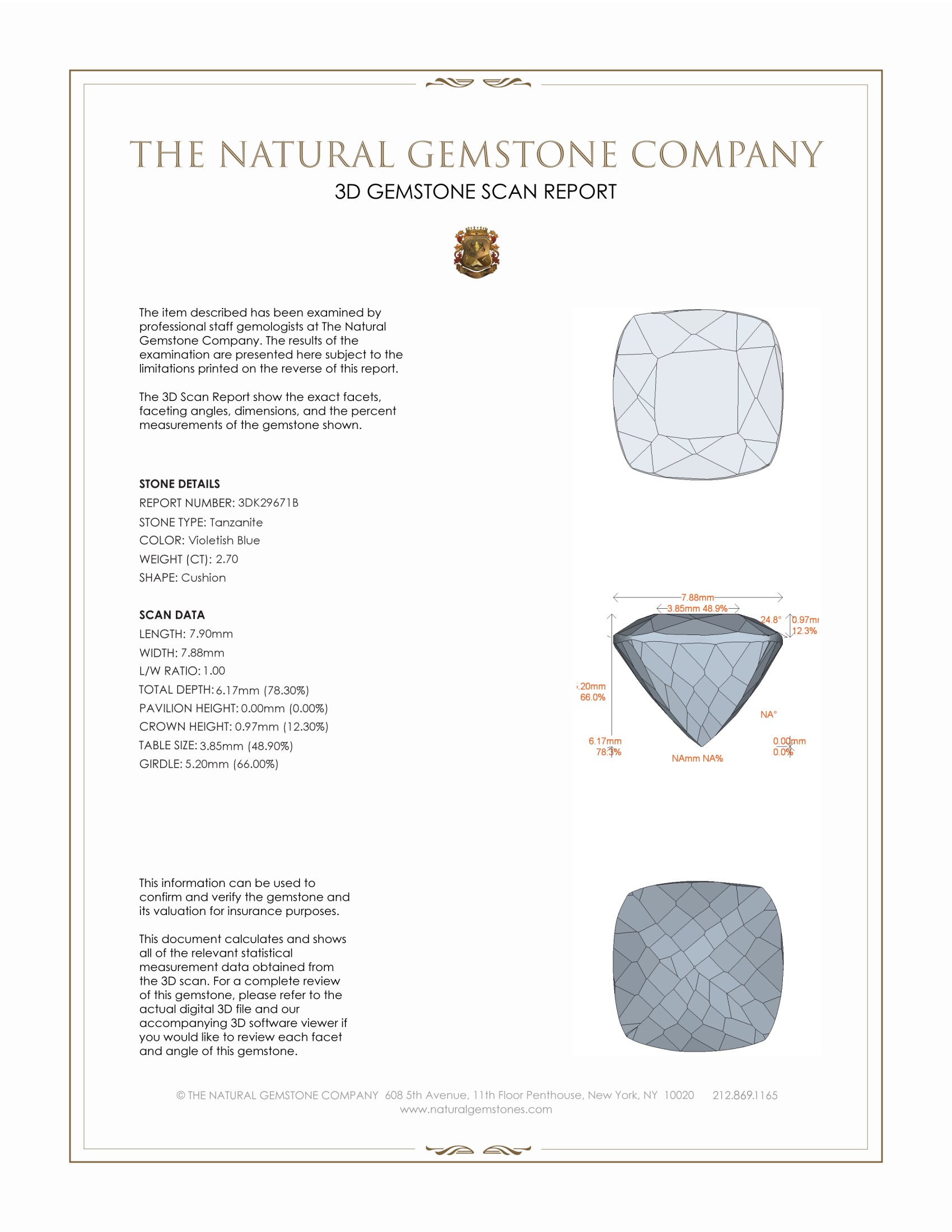
Dimensions (MM): help | Length: 7.9 Width: 7.88 Height: 6.17 |
Weight: | 2.70 Ct. |
Color: help | Violetish Blue |
Color intensity: help | Vivid |
Clarity: help | Very Very Slightly Included |
Shape: help | Cushion |
Cut: | Mixed Brilliant Cut |
Cutting style: | Faceted |
Enhancements: help | Heat Treated |
Origin: help | Tanzania |
Per carat price: help | $400 |
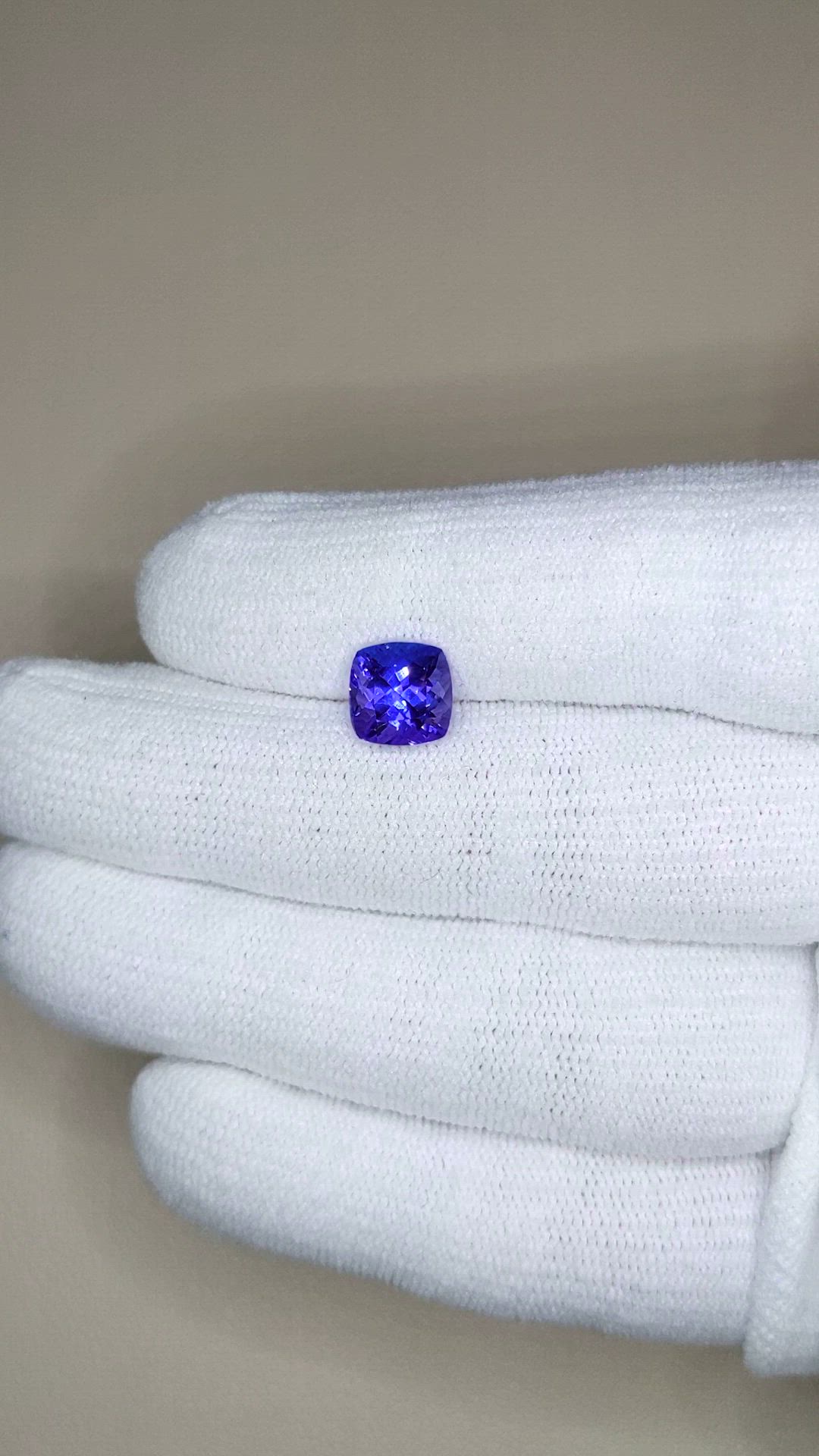
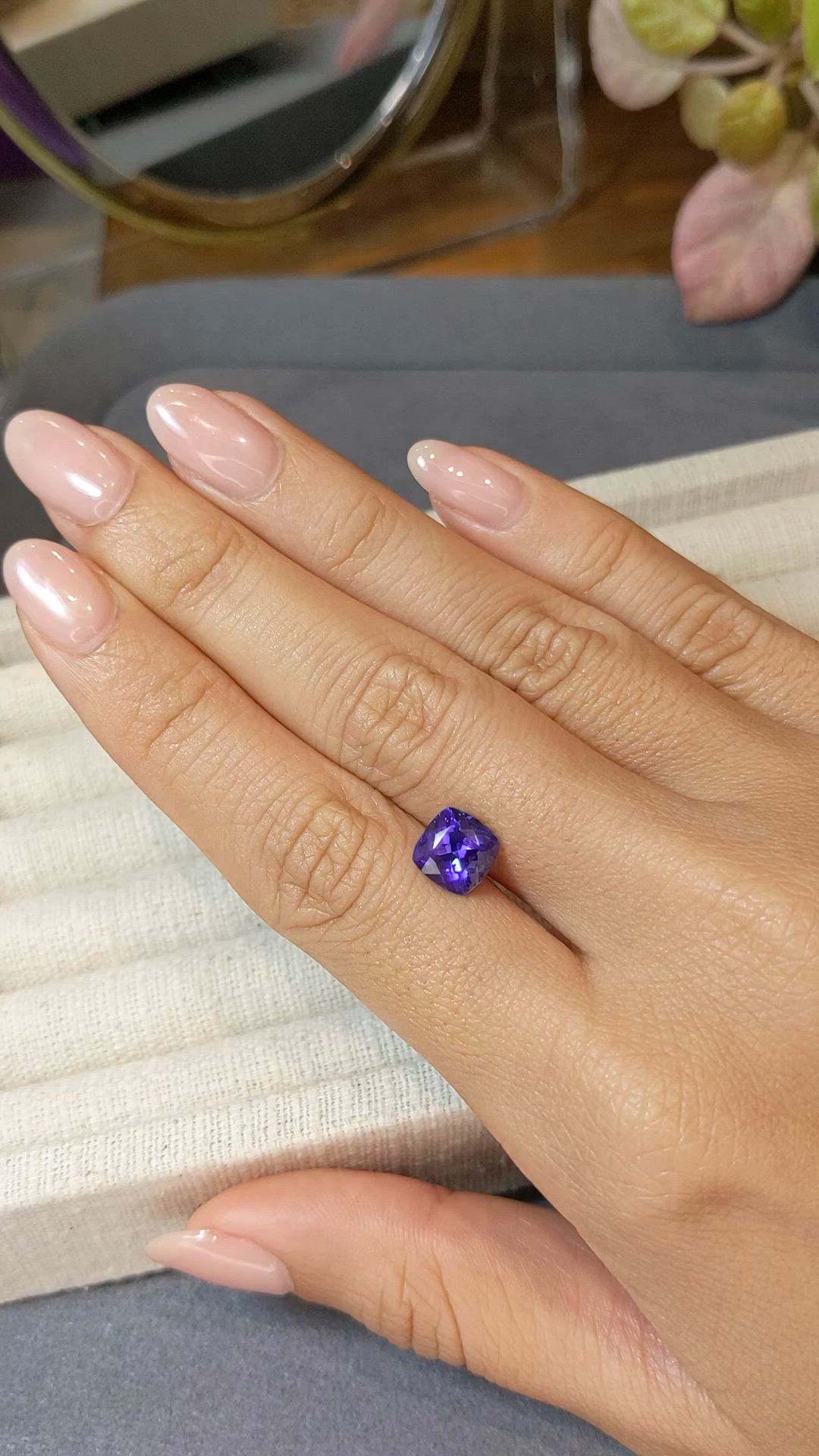
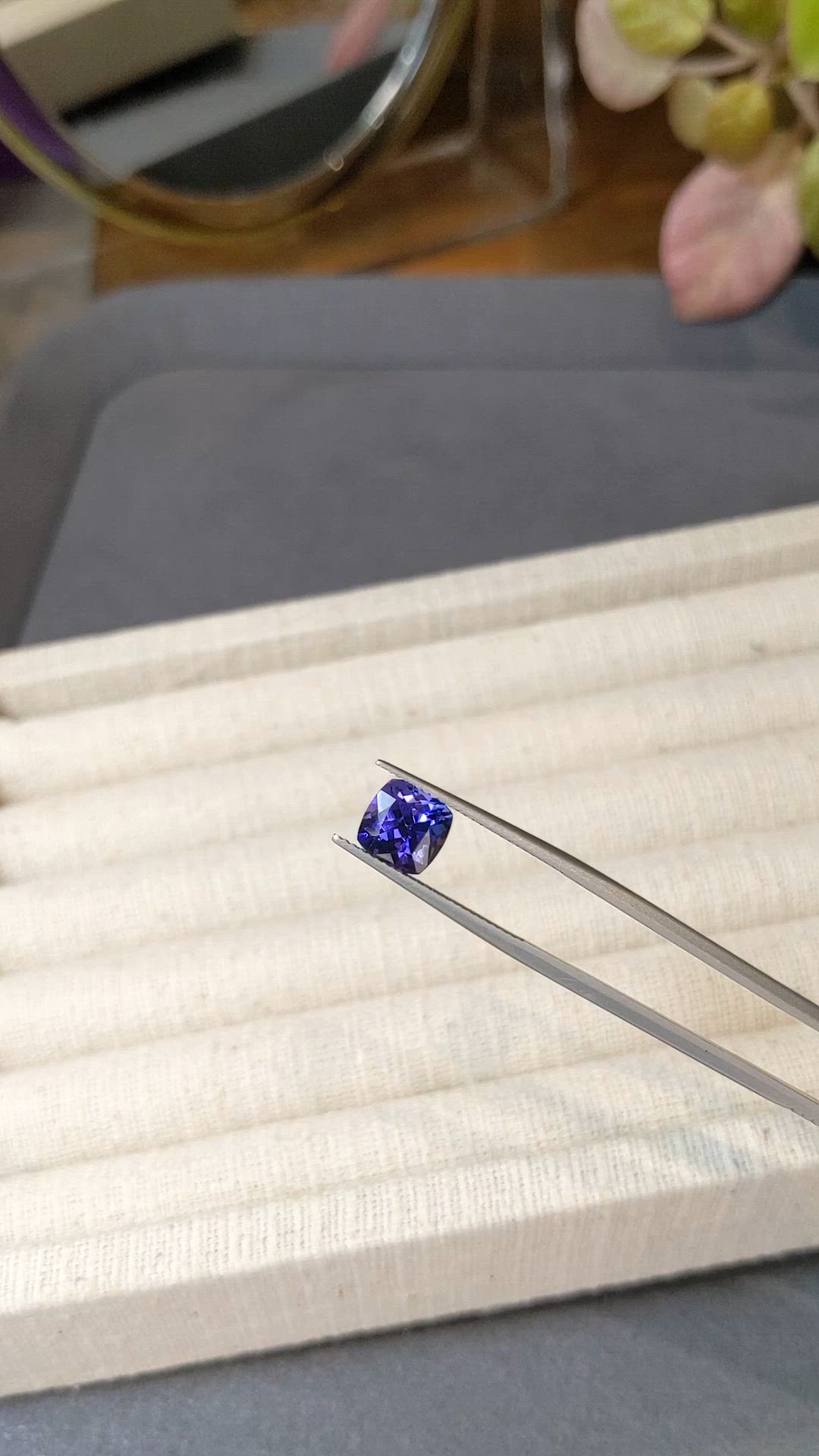
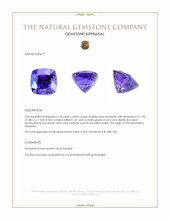
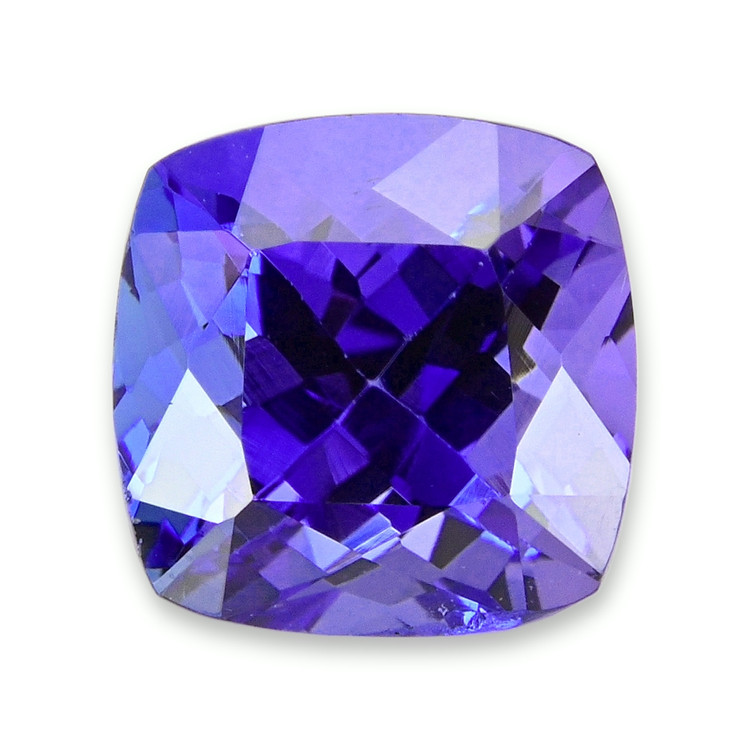
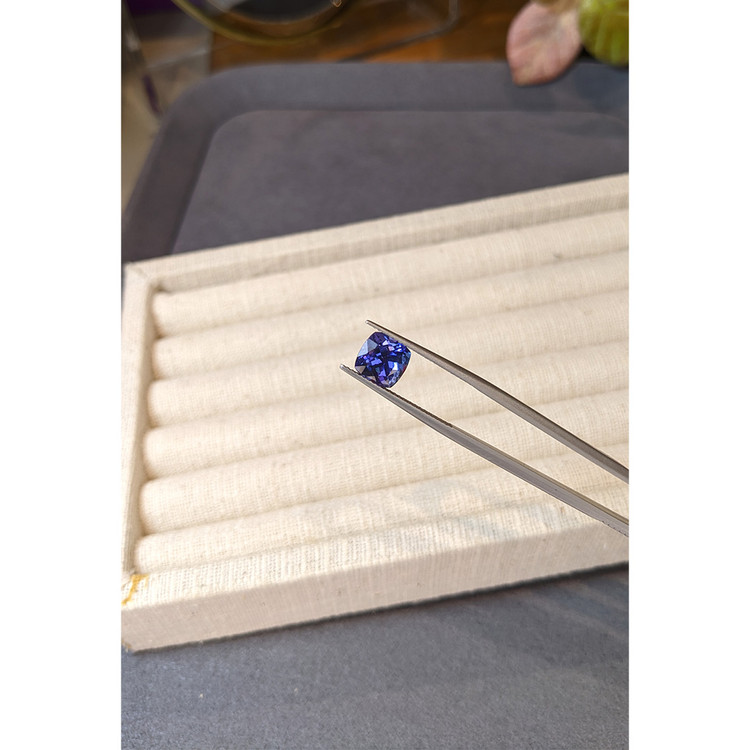
One transparent 2.70 carat cushion shape tanzanite with dimensions 7.90 by 7.88 by 6.17 millimeters, presents a vivid violetish blue hue that is immediately striking to the trained eye, The cutting style is faceted, executed in a mixed brilliant configuration, and the gem originates from Tanzania. The weight and proportions deliver an ideal table to depth ratio for a cushion outline, and the slight squareness of the girdle profile enhances a modern yet classic silhouette. Clarity is graded as very very slightly included, evaluated at eye level, and polish is assessed as excellent, producing crisp facet junctions and minimal surface disturbance. Enhancement by heat treatment is disclosed, applied to stabilize and intensify the vanadium induced color, and the overall result is a stable, wearable loose gemstone that balances visual intensity with structural integrity, The Natural Gemstone Company provides this tanzanite with full disclosure of origin and enhancement history.
The mixed brilliant cut is executed to optimize both color and light return, with a generous crown that presents broad facets to the observer, and a pavilion articulated with a series of kite and chevron facets that channel light back through the crown for maximum scintillation. The crown angle and pavilion depth work in concert to emphasize the stone core violet tones, while allowing the blue modal component to flash at certain viewing angles, a characteristic apparent in high quality tanzanite due to its strong pleochroism. Facet junctions are meticulously polished to promote sharp contrast between light and dark areas of the design, and the girdle maintains even thickness to facilitate secure setting without sacrificing durability. The mixed brilliant approach also reduces windowing in the center, preserving color saturation across the face, and ensures that the pavilion geometry creates lively pinfire and broad flash scintillation under directional lighting.
The internal character of this tanzanite is what gives it an unmistakable signature, a combination of delicate needle like silk, miniscule negative crystal cavities, and oriented growth zoning that together produce a subtly textured internal landscape. These needle like features are fine and often oriented along the crystallographic axis, appearing as silky filaments under low magnification, and they interact with the facet pattern to produce a faint starburst of reflected light when viewed at oblique angles. The negative crystals occur as tiny, well healed cavities that catch light at specific facets, contributing to a pinfire pattern that is repeatable from certain vantage points, a diagnostic trait that experienced gemologists use to confirm natural origin. Growth zoning, expressed as faint color banding visible with oblique lighting, maps the thermal history of the crystal and complements the mixed brilliant cut by creating zones of slightly different saturation that animate the face as the gem moves. Despite these internal characteristics the stone maintains a very very slightly included appearance at eye level, meaning these features are primarily visible under magnification, and they add unique fingerprint like identifiers without compromising optical performance.
From a practical and curatorial standpoint the stone benefits from the heat treatment it has undergone, a standard and permanent enhancement for tanzanite that reduces brownish tones and stabilizes the violetish blue palette, Heat treatment is performed under controlled conditions to avoid introducing stress fractures, and the end result is a gem that exhibits both depth of color and consistent pleochroic response. For setting recommendations, a bezel or four prong mounting with a low profile gallery will preserve light entry while protecting facet edges, and a white metal mounting will maximize the apparent blue tone, while a warm metal mounting can emphasize the violet component for contrast. The inclusion signature described above makes the gem particularly suitable for buyers who appreciate provenance and natural identifiers, as these minute internal markers are akin to a laboratory record that accompanies the stone through its life in jewelry, The Natural Gemstone Company stands behind the descriptive and technical details of this tanzanite, and we provide optional magnified imagery and certification upon request to document the inclusion pattern, the cut proportions, and the treatment history.


