
- Stone14
- Reports3




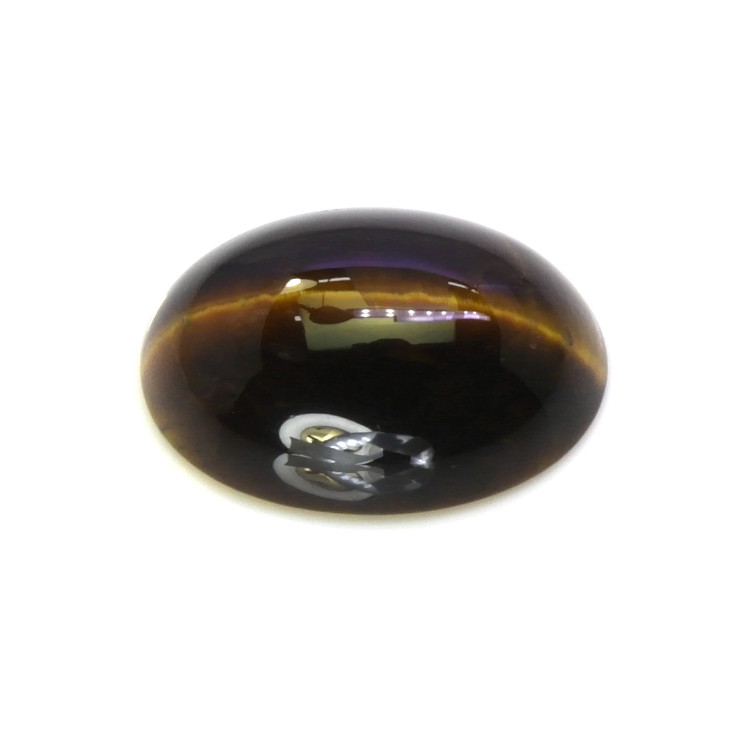
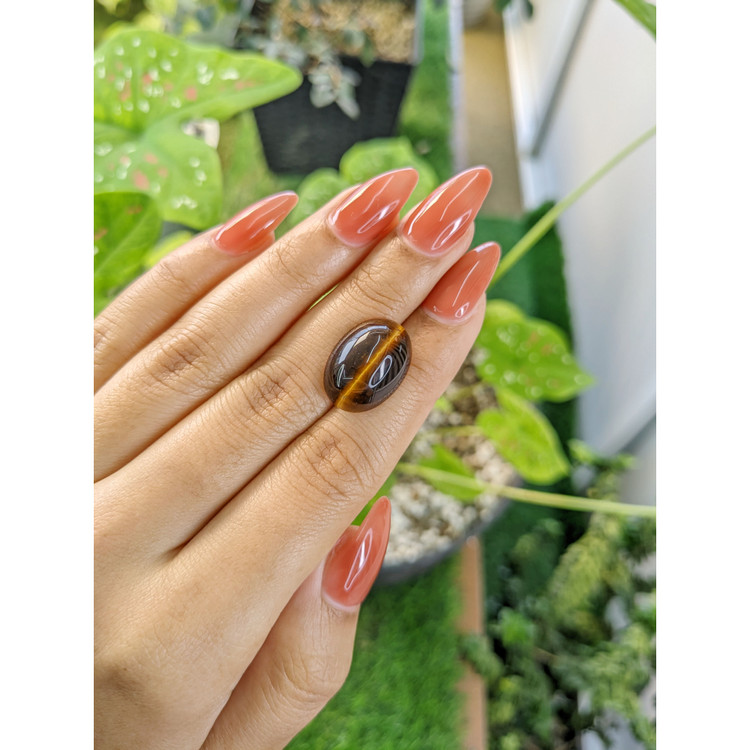
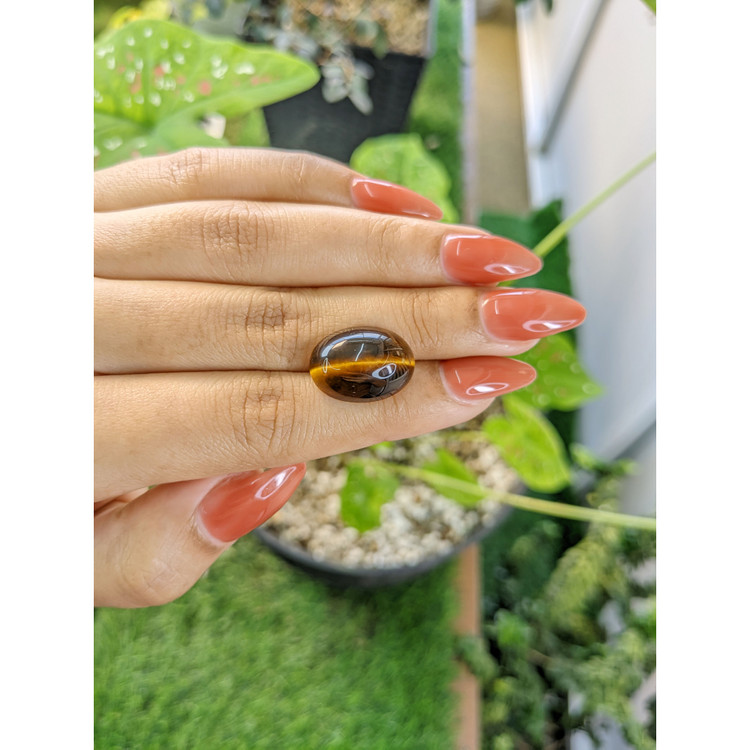
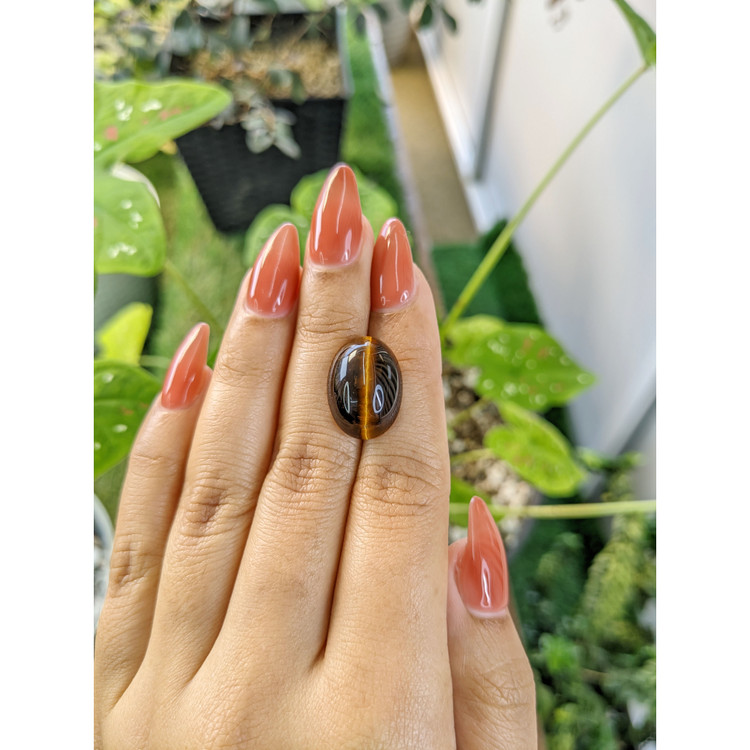


10.74 Ct. Cabochon Tiger's Eye from South Africa
This loose stone is available to ship now
Item ID: | K12629 |
|---|---|
Dimensions (MM): help | Length: 18.09 Width: 13.09 Height: 6.6 |
Weight: | 10.74 Ct. |
Color: help | Golden Brown |
Color intensity: help | N/A |
Clarity: help | Not Applicable |
Shape: help | Oval |
Cut: | Cabochon |
Cutting style: | Cabochon |
Enhancements: help | No Enhancement |
Origin: help | South Africa |
Per carat price: help | $6 |
This 10.74 carat oval golden brown tiger eye from South Africa, offered by The Natural Gemstone Company, is presented as an opaque cabochon with dimensions of 18.09 x 13.09 x 6.60 mm. The piece is a traditional domed cabochon, oval outline, with a well centered apex and symmetrical profile that follows classical cabochon geometry. The weight to size ratio is consistent with dense chatoyant quartz material, and the measurement data indicate a substantial depth of 6.60 mm that preserves the internal fiber parallelism responsible for the tiger eye effect. The polish on the dome is graded excellent, producing broad specular reflections across the surface, and no enhancements have been applied to the material, preserving its natural appearance and structural integrity.
The cutting style is a high domed cabochon cut executed to emphasize the chatoyant band, with the fiber alignment oriented parallel to the long axis of the oval to produce a single, strong eye when viewed under directional light. The dome height has been selected to balance mass and optical performance, creating a pleasing dome curvature that produces a crisp band without excessive windowing at the sides. Symmetry of the outline is controlled to within tight tolerances so that the band remains centered as the stone is rotated. The surface exhibits an excellent polish, free from polishing lines and with only minimal lap residue under high magnification, indicating that the final lapping stages were carefully executed. Edge finishing flows smoothly into the base, and the stone sits flat on a plane surface when inspected, confirming a properly leveled pavilion or base for secure setting.
Optically the material displays the hallmark silky chatoyancy of tiger eye, with a warm golden brown main body color and a distinct reflective band that shifts with the angle of incident light. Although the color intensity field is recorded as n a in the dataset, visual assessment places the tone in the medium to medium dark range with moderate saturation, producing a classic golden brown appearance. The band itself exhibits higher reflectivity and appears slightly warmer in hue than the surrounding body color, creating a measurable contrast that enhances the perceived depth. Internal structure includes the parallel fibrous inclusions typical of pseudomorphous quartz after amphibole, oriented to produce a single linear eye. No fractures or cleavage planes are evident that would compromise toughness, and no dye or resin treatments were detected, confirming the untreated status of the piece.
From a lapidary and setting perspective, the dimensions and dome profile recommend specific mounting strategies to maximize optical effect and mechanical security. For jewelry applications that prioritize chatoyancy, orient the long axis of the oval parallel to the expected viewing orientation so the eye runs across the face of the piece. A low to medium height bezel setting will protect the dome and maintain optical performance, while allowing sufficient light to sweep the band. For rings that will receive frequent impact, a recessed bezel combined with a strong seat at the base will reduce risk of edge chipping. The 6.60 mm thickness provides good material mass for deep settings, and the stone can be securely held with conventional bezel or prong systems designed for cabochon shapes, noting that the smooth base provides reliable adhesion surface if additional securing is required in mixed metal designs.
As a sourced and authenticated specimen from South Africa, this tiger eye exemplifies natural formation and careful cutting, and it is offered by The Natural Gemstone Company with full disclosure of weight, dimensions, cut style, polish grade, enhancement status, and origin. Care recommendations include routine cleaning with warm water and mild detergent, avoiding ultrasonic cleaners and harsh chemicals that could affect surface polish over time. When storing, protect the dome from hard contact with other stones to preserve the excellent polish. For commissioning custom settings or requesting additional imagery or viewing under directional light to assess the chatoyancy, contact The Natural Gemstone Company for further technical data and handling guidance, and for shipping and certification options.


