
- Stone12
- Reports2
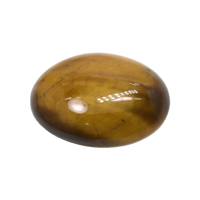
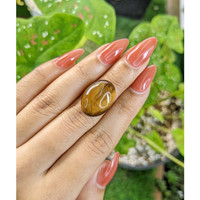
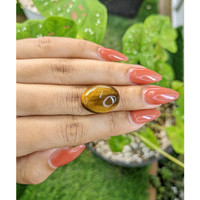
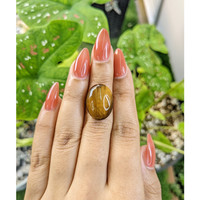


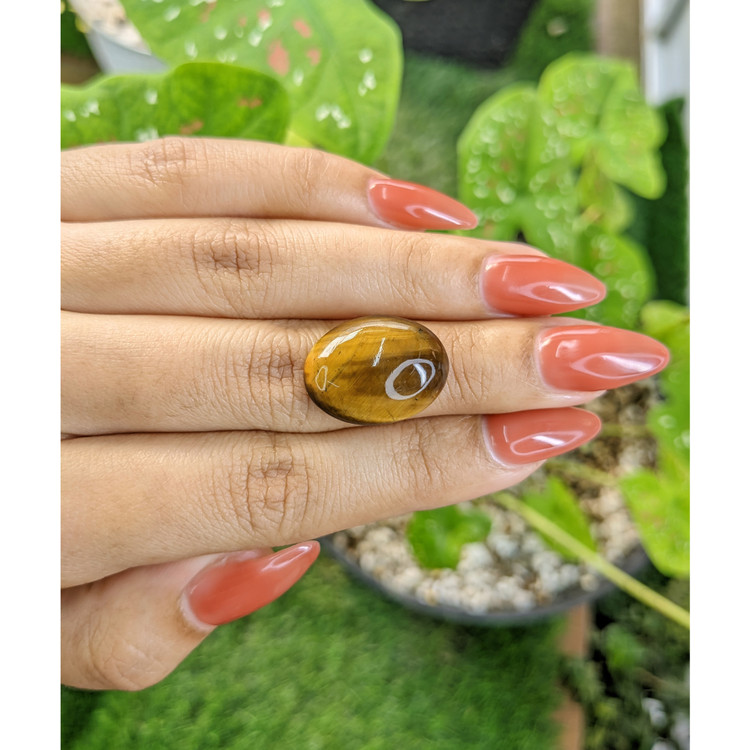
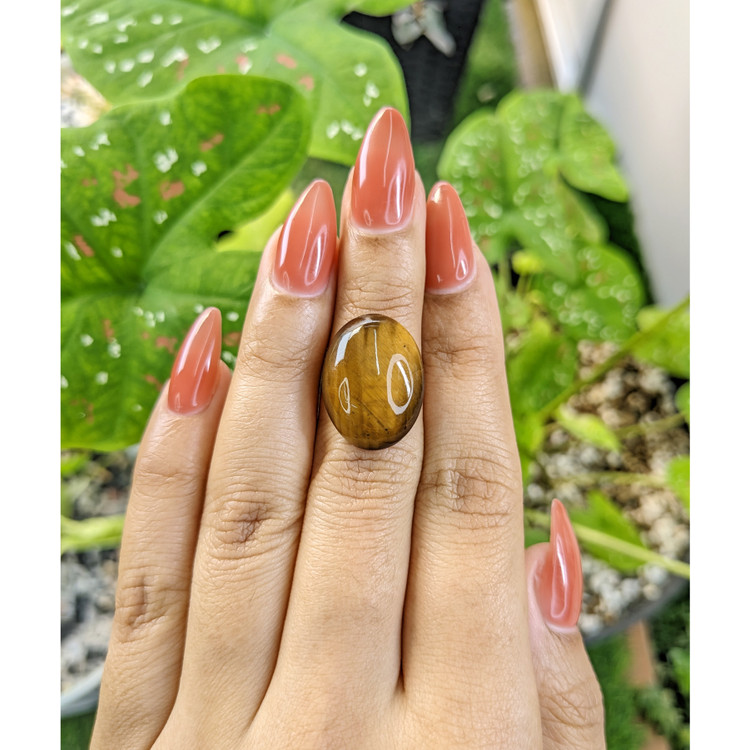
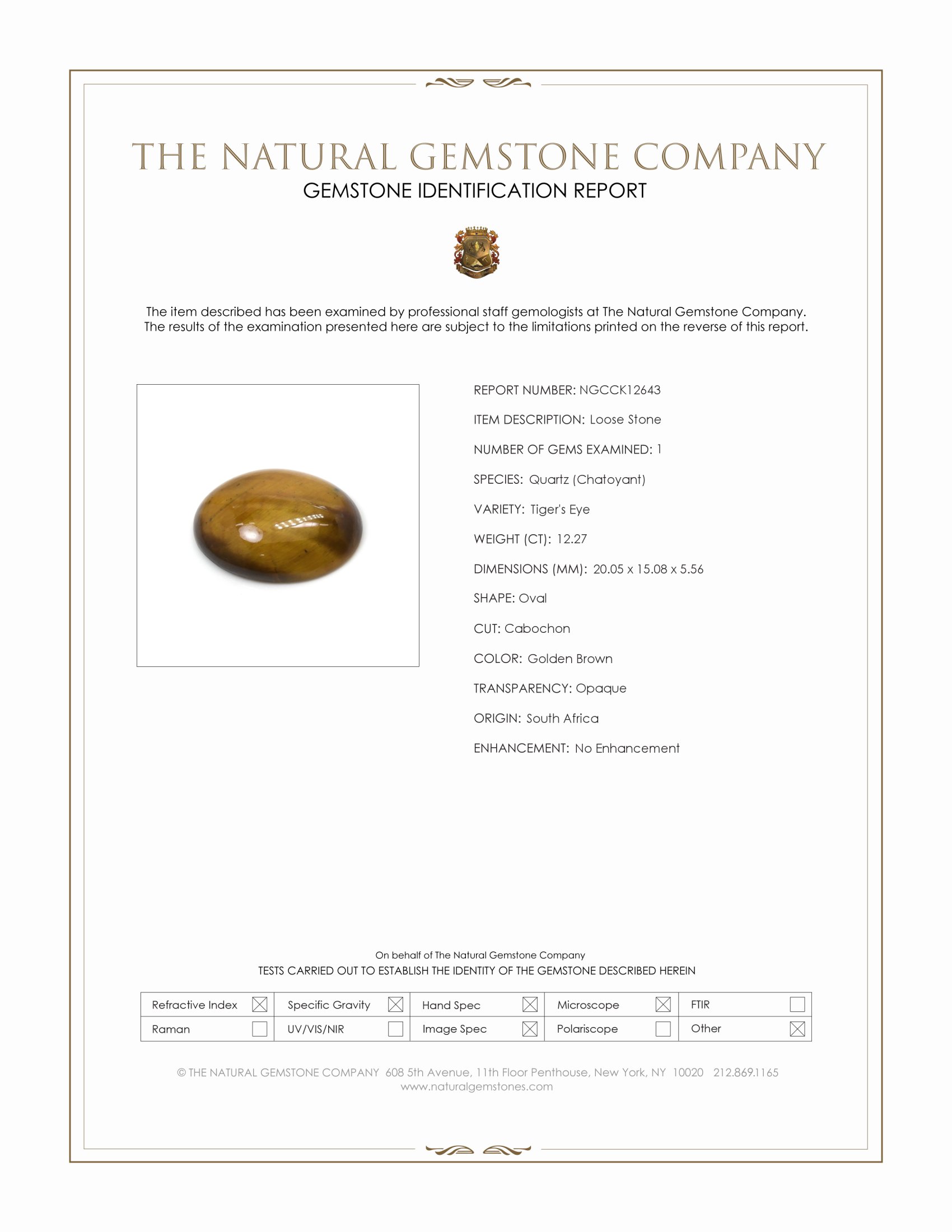
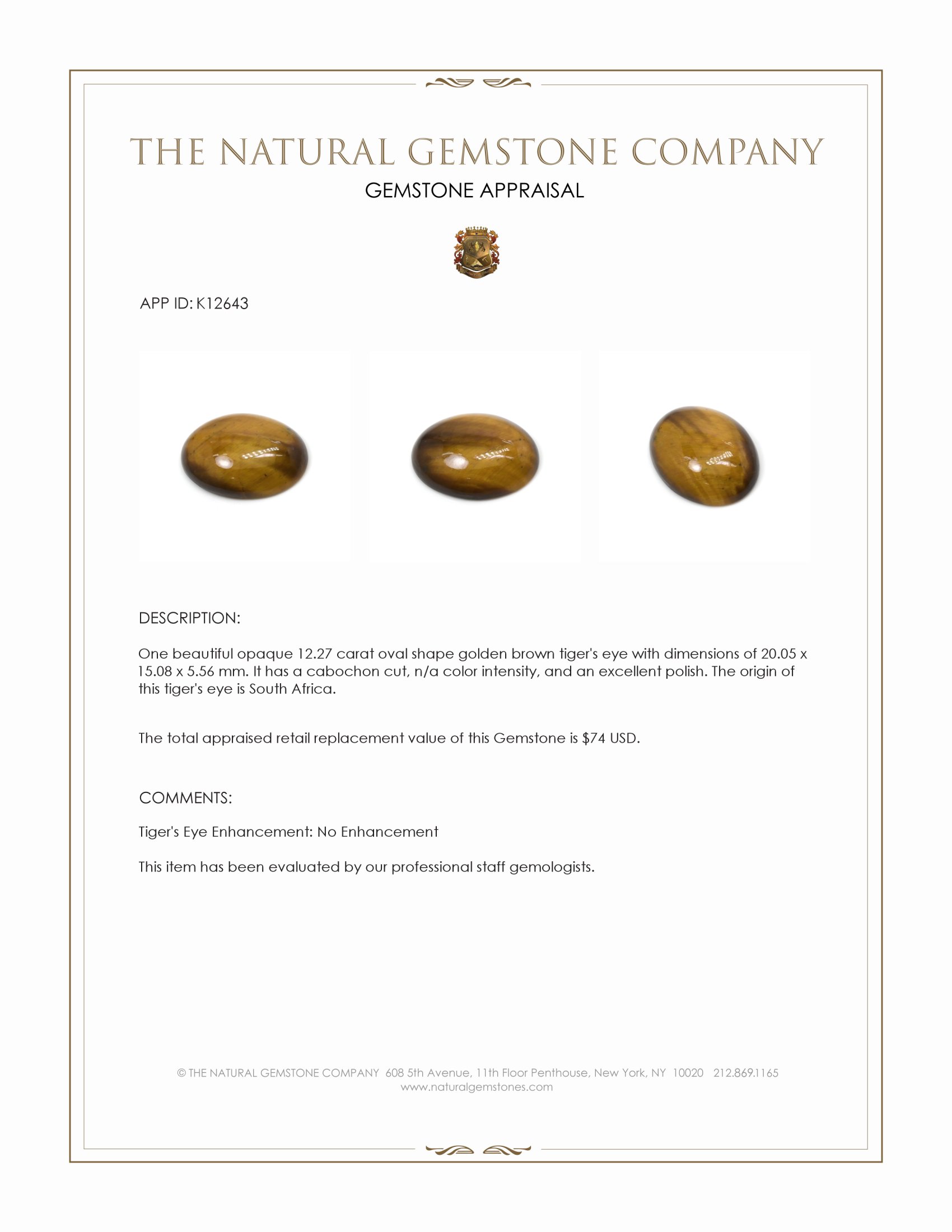
12.27 Ct. Cabochon Tiger's Eye from South Africa
This loose stone is available to ship now
Item ID: | K12643 |
|---|---|
Dimensions (MM): help | Length: 20.05 Width: 15.08 Height: 5.56 |
Weight: | 12.27 Ct. |
Color: help | Golden Brown |
Color intensity: help | N/A |
Clarity: help | Not Applicable |
Shape: help | Oval |
Cut: | Cabochon |
Cutting style: | Cabochon |
Enhancements: help | No Enhancement |
Origin: help | South Africa |
Per carat price: help | $6 |
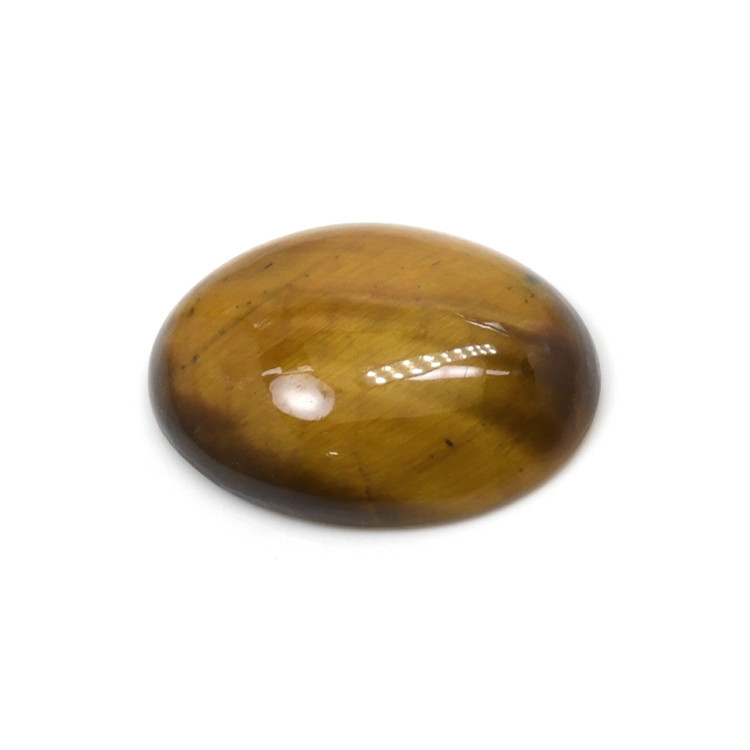
If you have been searching for a single gemstone that combines natural character, everyday durability, and the kind of warm, golden brown chatoyancy that catches the eye and holds it, this tiger's eye is the answer you have been looking for. Many customers come to us wanting an alternative to traditional faceted stones, whether for an engagement ring that feels grounded and unique, a striking pendant that complements both casual and dress wear, or a collector piece that speaks to provenance and authenticity. This 12.27 carat oval tiger's eye meets those needs with poise, presenting a rich golden brown color and a polished cabochon surface that showcases a silky chatoyant band across the dome. Your quest ends with this item, and at The Natural Gemstone Company we take pride in offering gemstones that resolve the search for beauty, practicality, and natural origin in one stone.
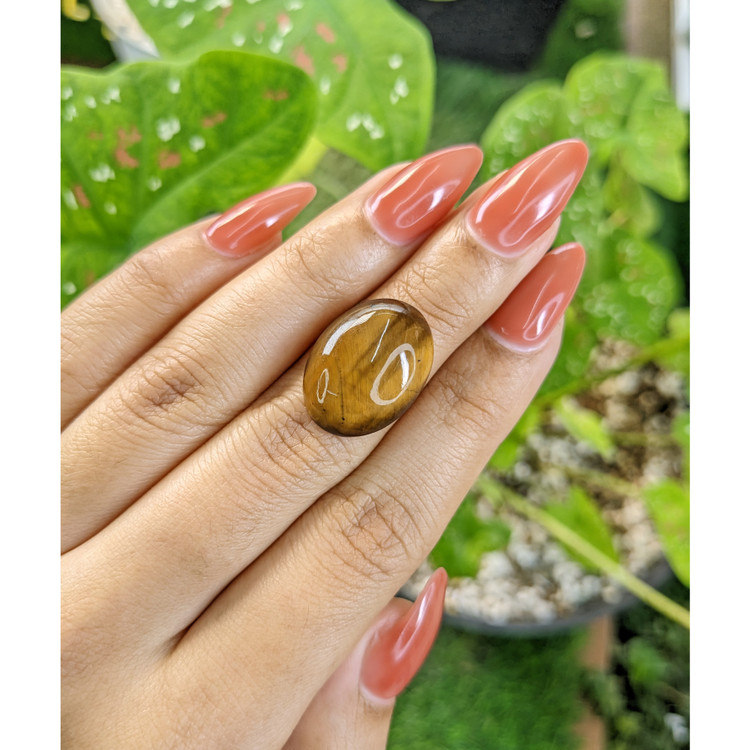
For those who care about specifics, this gem is an opaque, oval shaped tiger's eye weighing 12.27 carats, with precise dimensions of 20.05 x 15.08 x 5.56 mm. The cutting style is cabochon, which is the ideal shape to display the hallmark cat eye effect of tiger's eye, and the polish is excellent so that the silky chatoyancy appears fluid and luminous under changing light. There have been no enhancements to this stone, it is untreated, and it is natural in every sense. The color intensity is not applicable in the same way it is for faceted transparent gems, because tiger's eye is prized for its layered, fibrous luster and banded light reflection rather than for a single saturation grade. Origin is South Africa, a source known for producing tiger's eye with deep honey to golden brown tones and pleasing linear banding. The cabochon height of 5.56 mm gives enough dome to produce a dramatic movement of light without feeling bulky, and the 20.05 x 15.08 mm footprint translates into a striking presence on a ring or pendant, while still being comfortable for regular wear.
Understanding how this stone will perform in jewelry is important, and tiger's eye is a practical choice for everyday pieces. Tiger's eye typically has a hardness around 7 on the Mohs scale, which means it resists scratches better than many softer gems, while still being easier to cut into graceful cabochons than very hard stones. The combination of opacity and a silky surface means the polish is central to its appeal, and the excellent polish on this piece ensures that the cat eye effect will remain vivid as it is worn. For an engagement ring that aims to be unique and meaningful, the warm golden brown tones pair beautifully with yellow gold for a classic look, with rose gold for a modern warm pairing, and even with polished silver or white gold for a striking contrast. In rings, a bezel setting will protect the cabochon edge and enhance the stone's natural glow, while a simple prong or three bead setting can allow more light across the dome for bold visual movement. For pendants and brooches, the oval silhouette reads elegantly on a simple mount, and the size is large enough to become a signature piece for the wearer.
At The Natural Gemstone Company we know that many buyers are seeking more than a pretty stone, they want reassurance that their purchase is authentic, ethically sourced, and suited to their personal vision. This tiger's eye checks those boxes, being a natural, unenhanced gem from South Africa, showing the characteristic chatoyant banding that collectors admire. If you are designing a bespoke engagement ring that steps away from convention, this stone offers a warm, earthy alternative that symbolizes grounding and strength, and it is especially appealing for clients who prefer a tactile, organic aesthetic over high sparkle. For collectors and designers who value provenance, the origin and untreated status add to the piece's narrative. For those drawn to the gem for its cultural and metaphysical associations, many people appreciate tiger's eye for the qualities it has symbolized in various traditions, and its visible bands of light can feel calming and centering to the wearer. If you would like to see how the stone looks in different metals and settings, our team can provide additional high resolution images and mockups so you can imagine the finished piece before committing.
If this tiger's eye aligns with your needs, we are ready to assist with the next steps, and to ensure you feel confident in the choice. Contact The Natural Gemstone Company for detailed pricing, setting recommendations, and bespoke design consultations, and we will help you select the perfect mounting whether you prefer a protective bezel for everyday wear, an artisan style open setting to emphasize the dome, or a custom design that incorporates accent stones and metalwork. We can advise on sizing considerations for ring settings that suit the 20.05 x 15.08 mm oval, and on care instructions to maintain the excellent polish, such as gentle cleaning with a soft cloth and warm soapy water, and avoiding harsh chemicals or ultrasonic cleaners that are not recommended for some chatoyant stones. Your search for a unique, natural, and ready to wear gemstone can end here, and we look forward to guiding you through creating a beautiful piece that showcases this 12.27 carat golden brown tiger's eye to its fullest advantage.


