
- Stone15
- Reports3
-round-goldenbrown-tiger'seye-4.4500-cts-k25462-1.jpg?d=200x200&v=20260602131403)
-round-goldenbrown-tiger'seye-4.4500-cts-k25462-lifestyleimage-1.jpg?d=200x200&v=20260605003832)
-round-goldenbrown-tiger'seye-4.4500-cts-k25462-lifestyleimage-2.jpg?d=200x200&v=20260605003832)
-round-goldenbrown-tiger'seye-4.4500-cts-k25462-lifestyleimage-3.jpg?d=200x200&v=20260605003832)
-round-goldenbrown-tiger'seye-4.4500-cts-k25462-lifestyleimage-4.jpg?d=200x200&v=20260605003832)

-round-goldenbrown-tiger'seye-4.4500-cts-k25462-1.jpg?d=750x750&s=ngc&v=20260602131403)
-round-goldenbrown-tiger'seye-4.4500-cts-k25462-lifestyleimage-1.jpg?d=750x750&s=ngc&v=20260605003832)
-round-goldenbrown-tiger'seye-4.4500-cts-k25462-lifestyleimage-2.jpg?d=750x750&s=ngc&v=20260605003832)
-round-goldenbrown-tiger'seye-4.4500-cts-k25462-lifestyleimage-3.jpg?d=750x750&s=ngc&v=20260605003832)
-round-goldenbrown-tiger'seye-4.4500-cts-k25462-lifestyleimage-4.jpg?d=750x750&s=ngc&v=20260605003832)

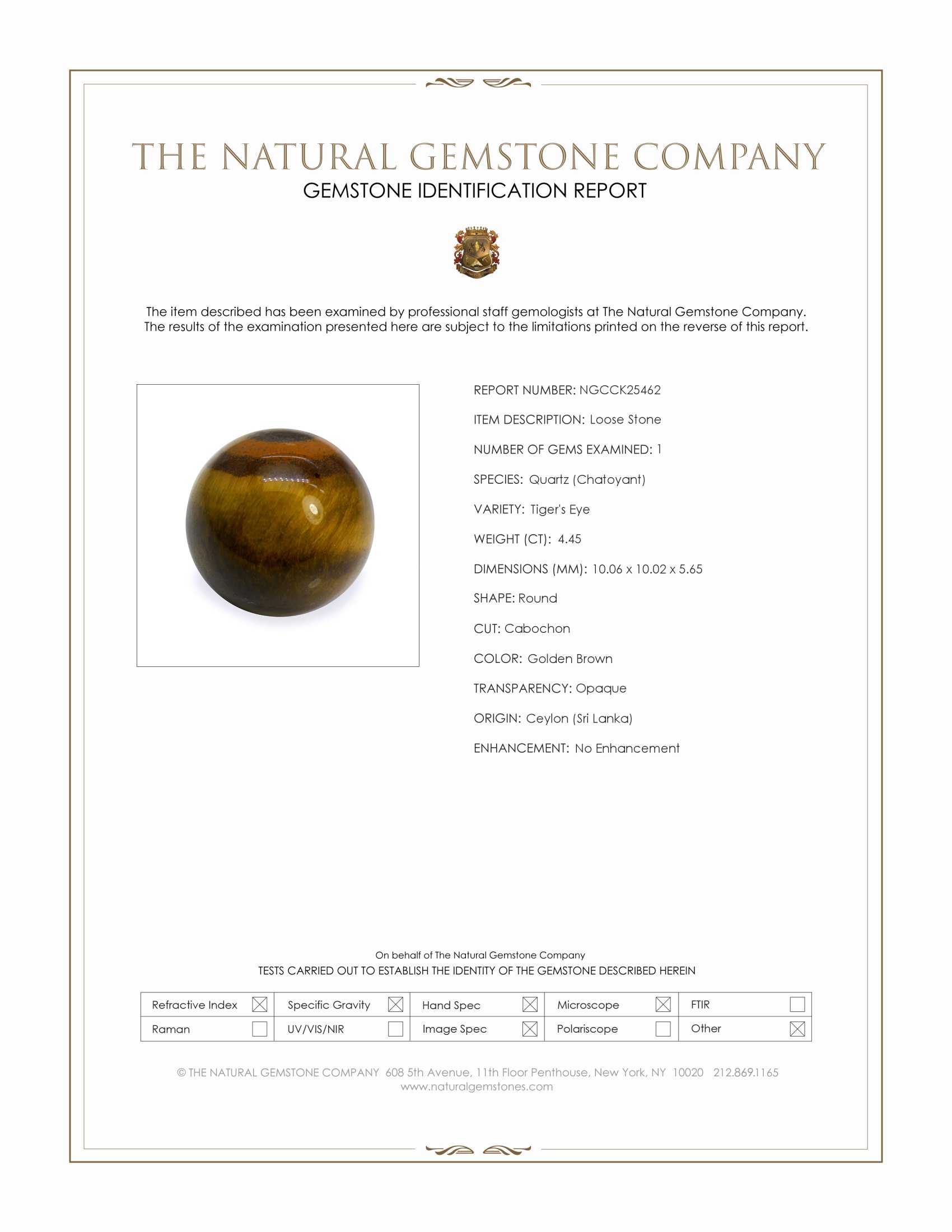
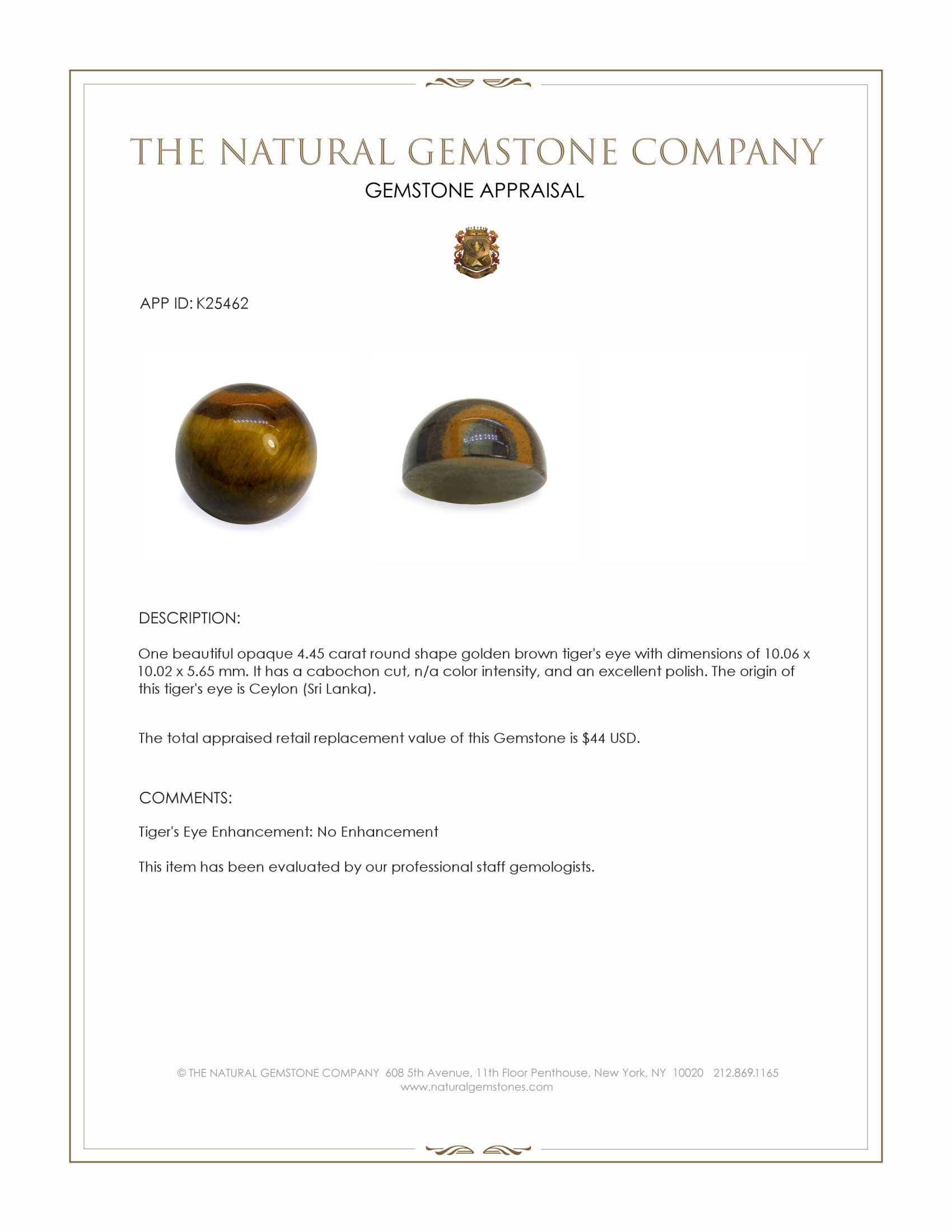
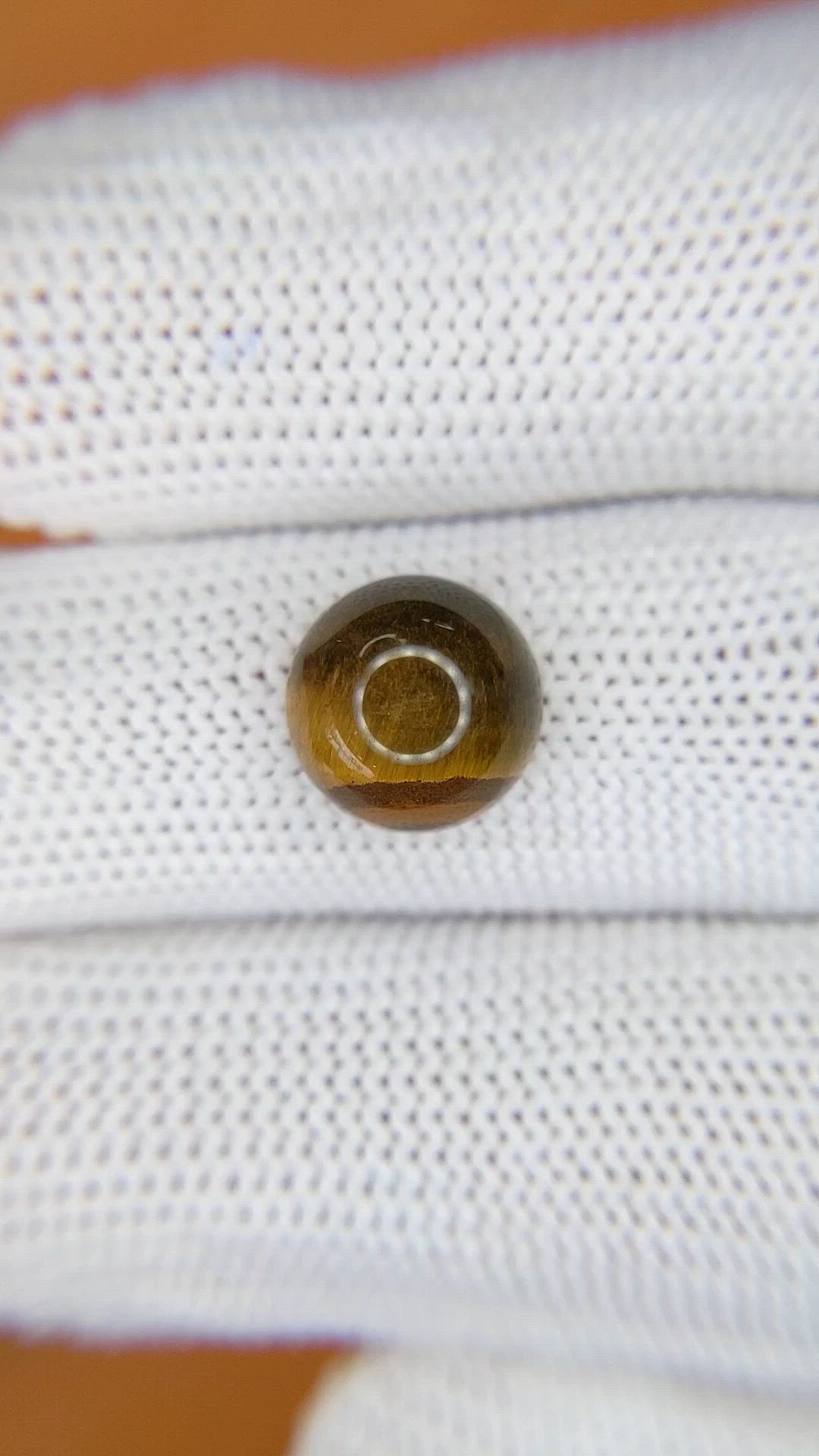
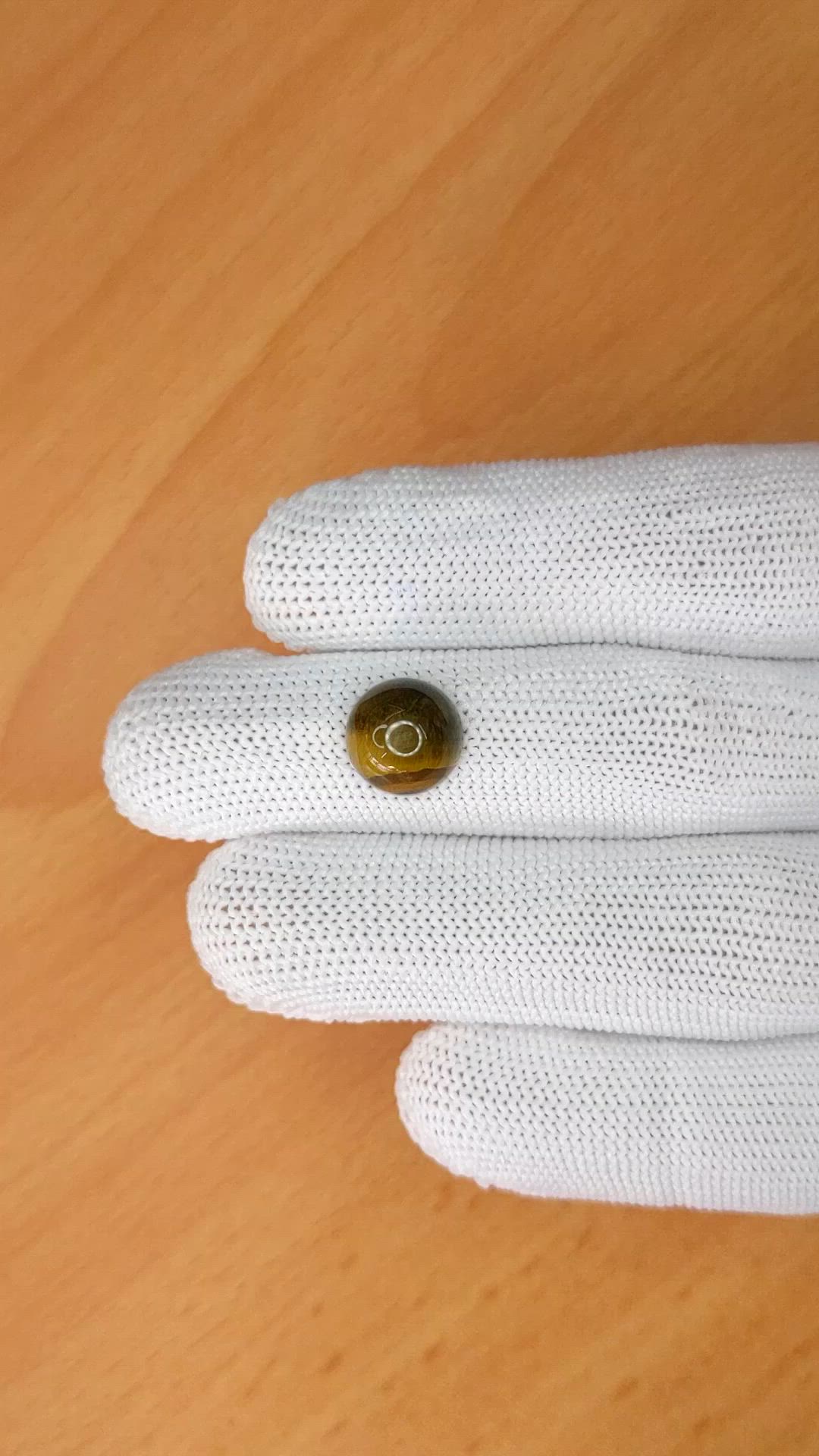
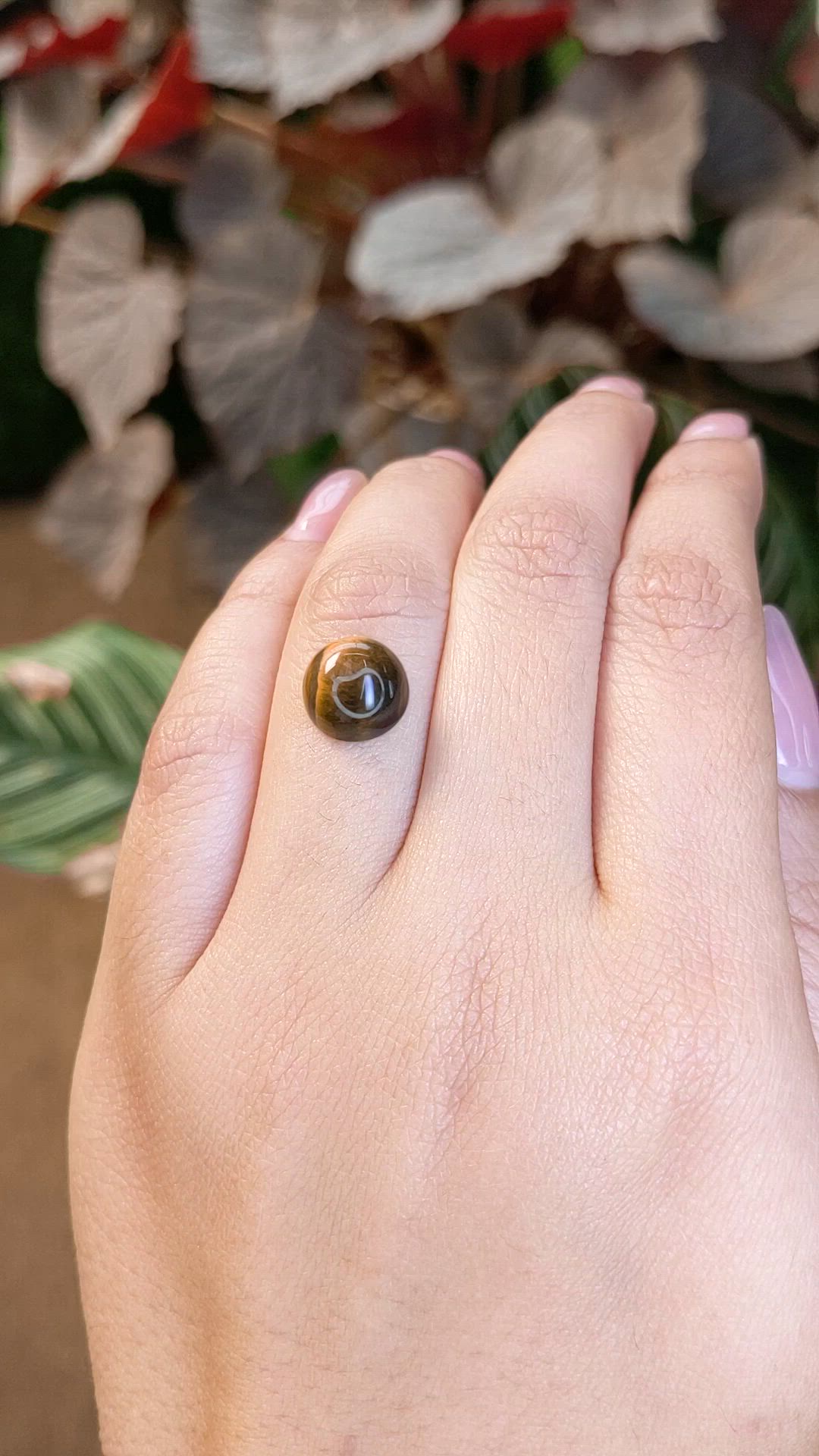
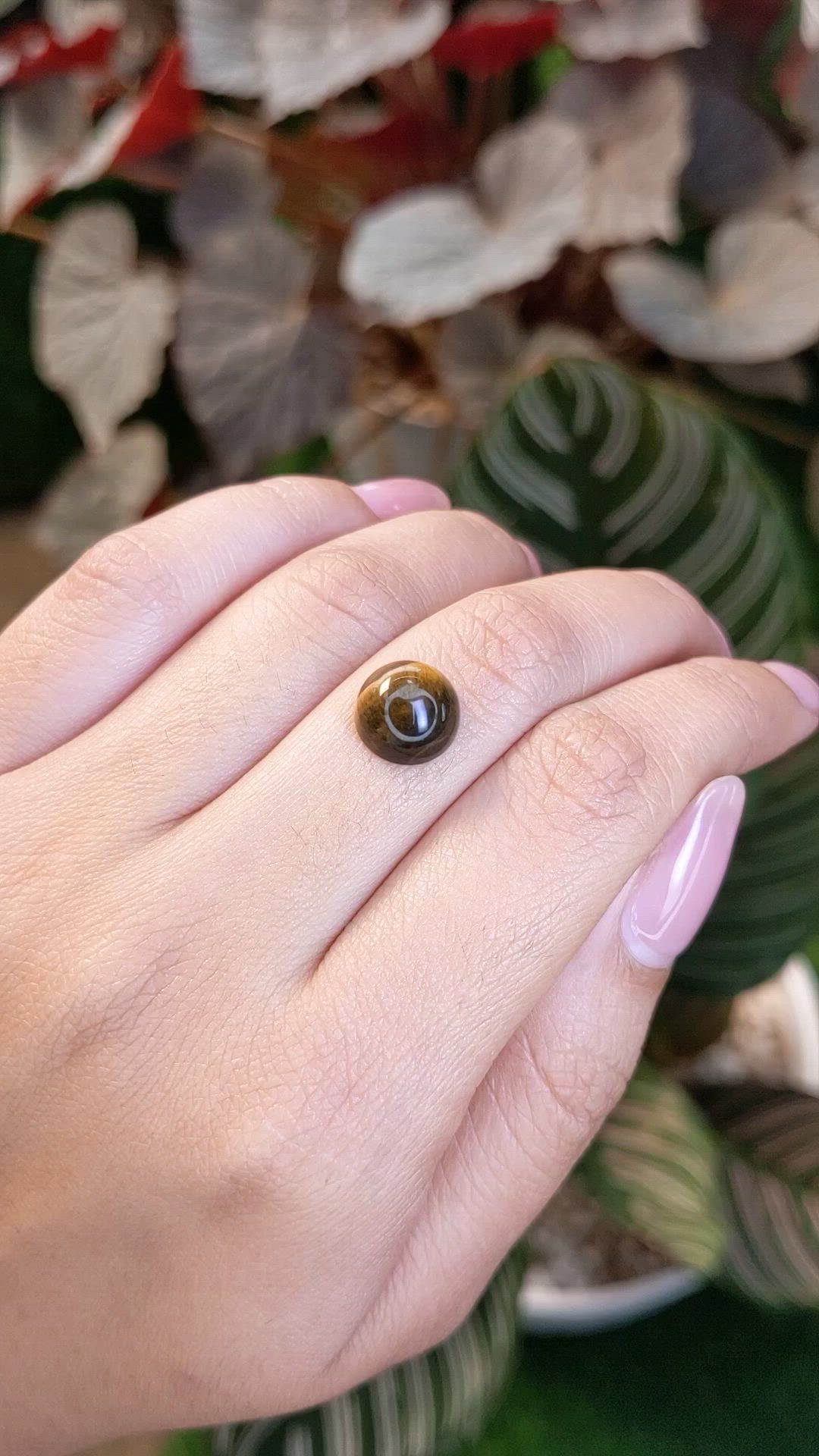
4.45 Ct. Cabochon Tiger's Eye from Ceylon (Sri Lanka)
This loose stone is available to ship now
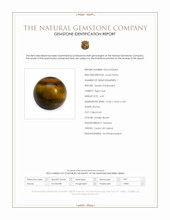
Item ID: | K25462 |
|---|---|
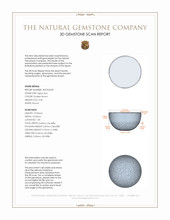
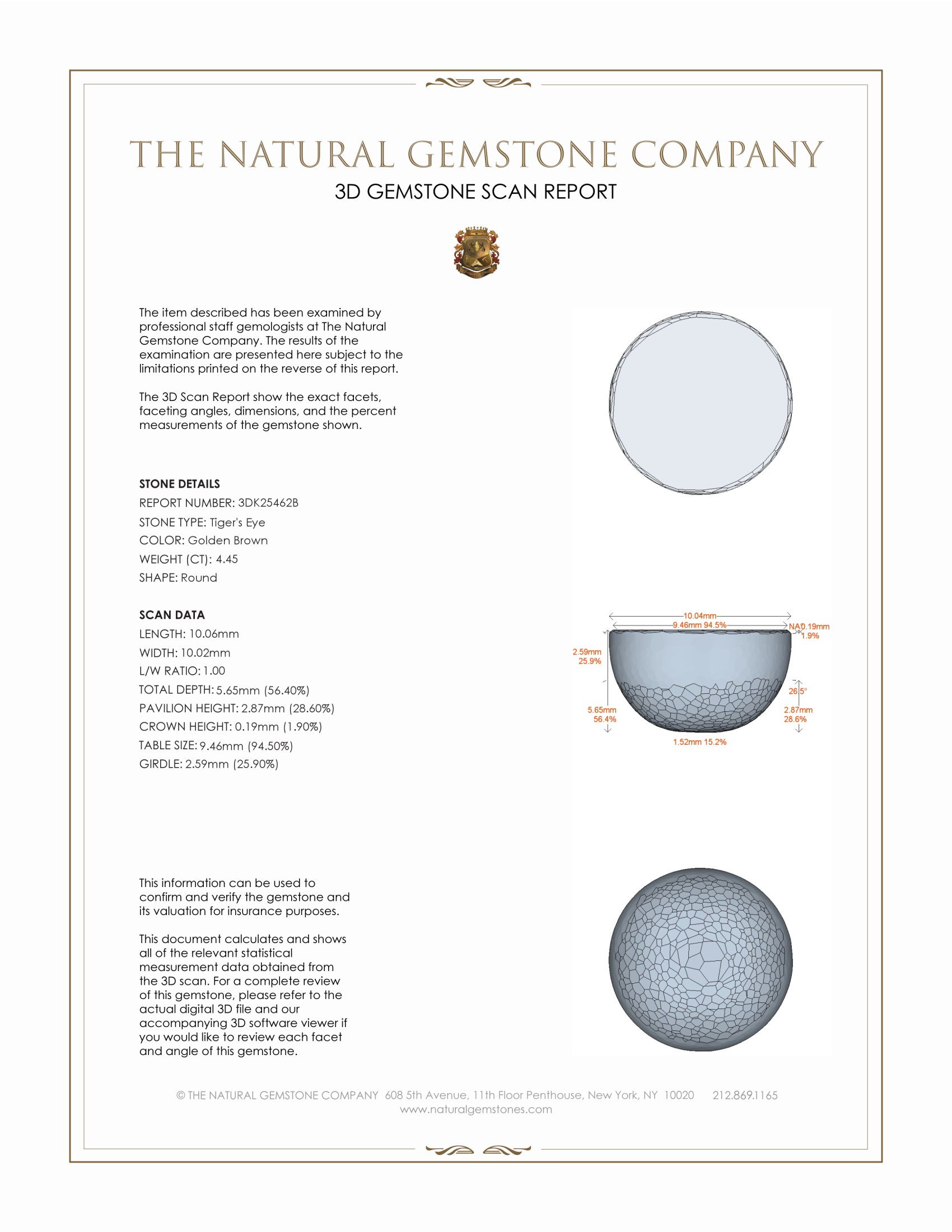
Dimensions (MM): help | Length: 10.06 Width: 10.02 Height: 5.65 |
Weight: | 4.45 Ct. |
Color: help | Golden Brown |
Color intensity: help | N/A |
Clarity: help | Not Applicable |
Shape: help | Round |
Cut: | Cabochon |
Cutting style: | Cabochon |
Enhancements: help | No Enhancement |
Origin: help | Ceylon (Sri Lanka) |
Per carat price: help | $10 |
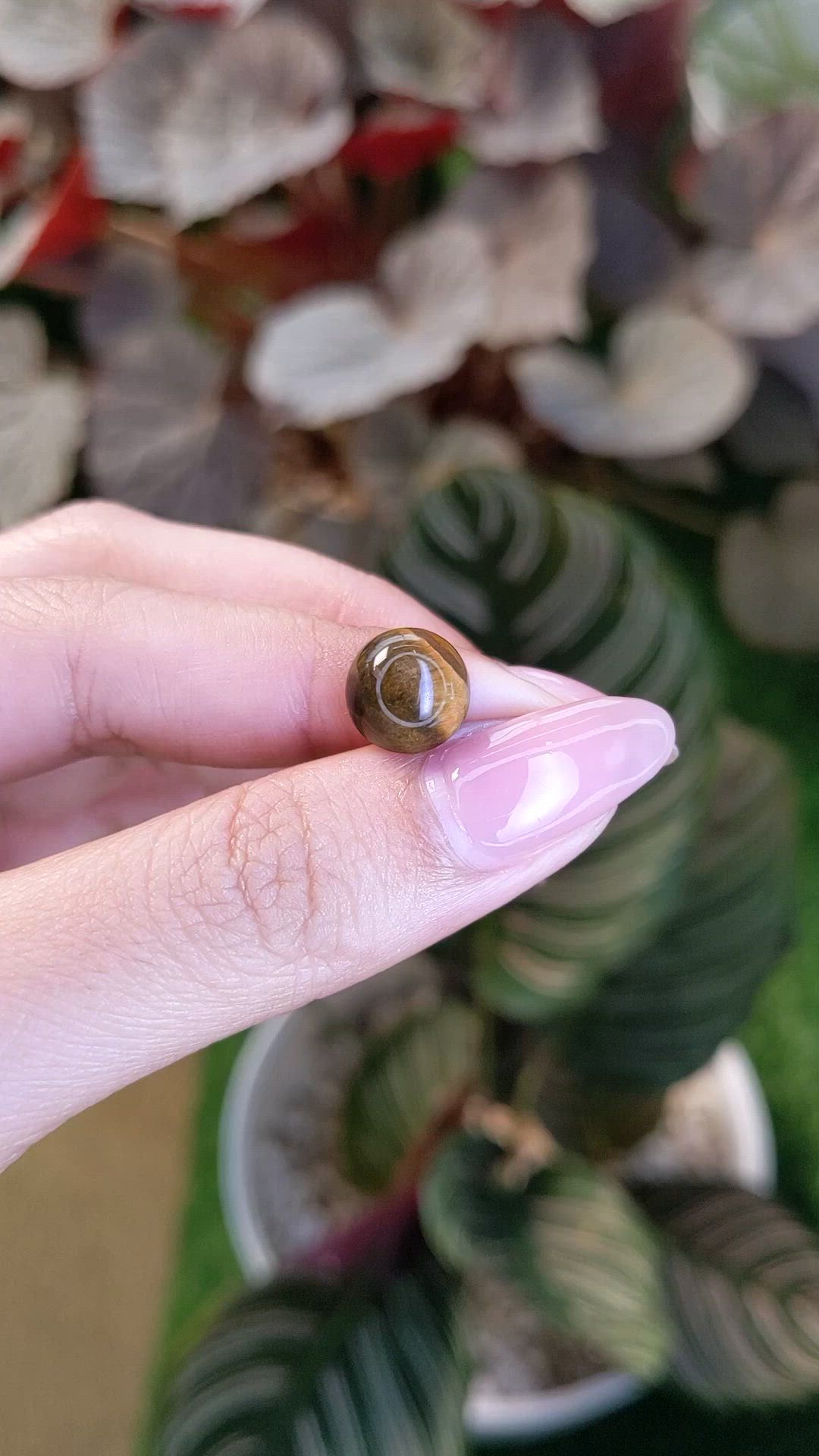
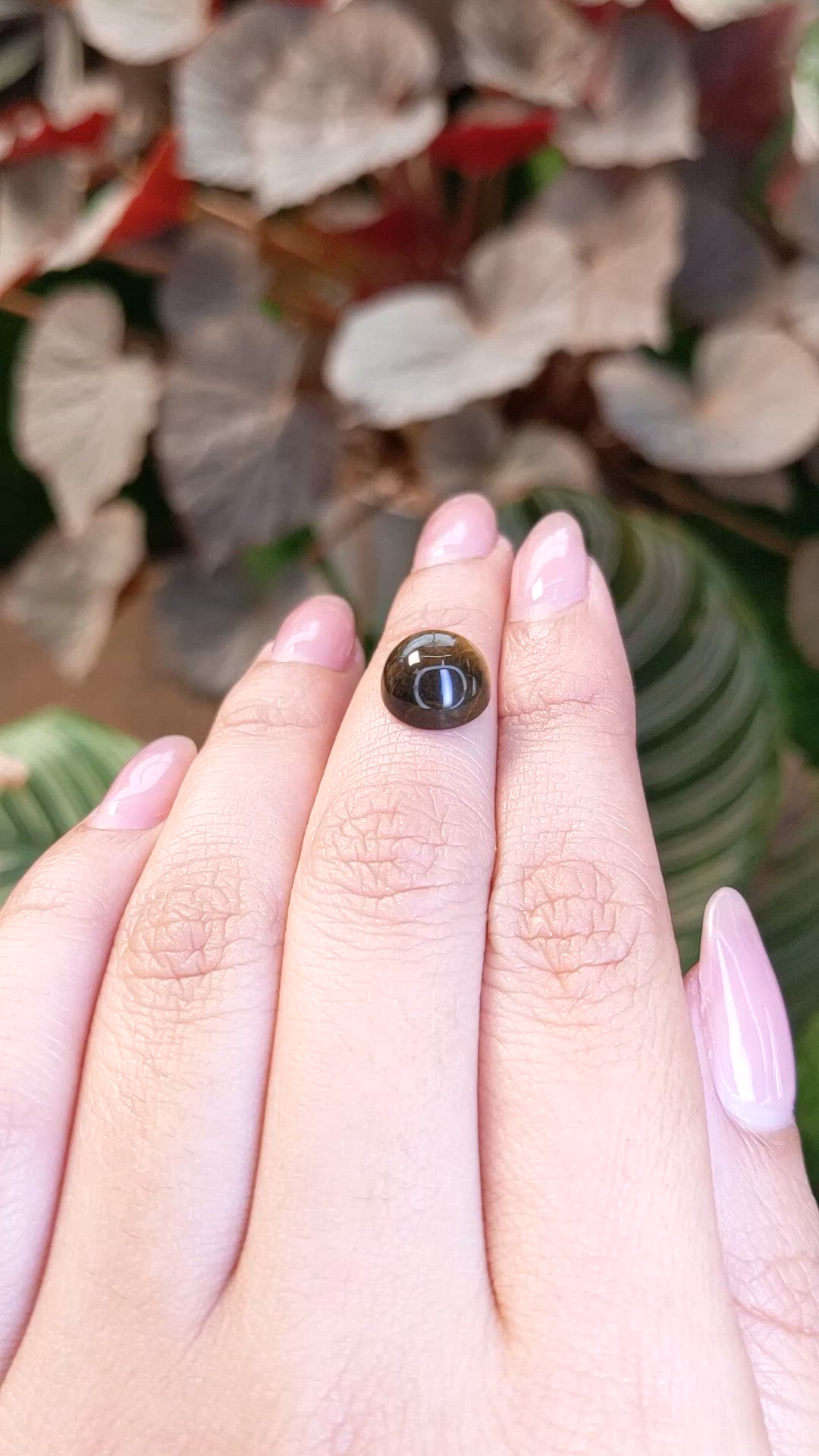
This specimen is a round cabochon tiger's eye weighing 4.45 carats, with precise dimensions of 10.06 by 10.02 by 5.65 mm, presenting a near perfect circular outline and a noticeably high dome. The cutting style is cabochon, the surface is polished to an excellent finish, and there have been no enhancements applied, preserving the natural integrity of the material. The stone is opaque, exhibiting classic golden brown tones native to fine Sri Lankan deposits, with chatoyant banding that reads as a warm golden sheath across a deeper brown ground. The dome height at 5.65 mm relative to the 10.06 mm diameter yields a proportional profile that enhances the single, linear cat s eye effect, while the near symmetry of the plan view ensures a stable visual center when set in jewelry. As a quartz variety with a Mohs hardness near seven, this tiger s eye balances everyday wearability with the silk like optical texture that defines its appeal.
From a lapidary perspective, the optical performance of this gem is generated by a parallel fibrous structure, originally crocidolite fibers partially replaced by silica, producing the distinct silky luster and the sharp, highly directional light band known as chatoyancy. The cabochon technique employed here is optimized to display that band, with the cutting plane oriented perpendicular to the fibrous alignment, and with a dome curvature chosen to concentrate light into a crisp, movable line. The excellent polish reduces surface scattering, maximizing specular reflection while preserving the internal silk, and the absence of enhancements confirms that the chatoyancy and color derive entirely from the stone s natural microstructure. In practical terms, the stone s opacity demands a different set of quality metrics than transparent gems, so evaluation relies on uniformity of the silk, the sharpness and mobility of the eye, surface finish, and the integrity of the girdle and base, all of which are exemplary in this piece.
When compared to historically famous gems, the qualities of this tiger s eye diverge from those prized in transparent, faceted stones, and that divergence defines its unique value. Unlike the Star of India and other star sapphires that display asterism from intersecting needle like inclusions beneath a dome, this tiger s eye produces a single, linear cat s eye due to aligned fibrous replacement, creating a distinct visual language that emphasizes movement and silky sheen rather than brilliance and dispersion. Compared to high value transparent gems such as the Hope Diamond, which are assessed primarily for color saturation, clarity, and faceting brilliance, this tiger s eye is valued for surface luster and internal texture, attributes that cannot be replicated by cutting a transparent gem. Against chrysoberyl cat s eye, which is famed for an exceptionally sharp line and higher hardness, tiger s eye offers a warmer palette and a more pronounced silkiness, and because its optic effect arises from a different mineral replacement process it provides a complementary aesthetic to collectors who appreciate structural variety. Historically, cabochon cut stones with chatoyancy have occupied important roles in decorative and protective jewelry, and a Sri Lankan origin adds provenance, aligning this piece with a long tradition of South Asian gem cutting and trade.
For the discerning buyer and the experienced jewelry designer, this tiger s eye presents clear functional and aesthetic options, and The Natural Gemstone Company recommends treatments to preserve its characteristics rather than alter them. The robust dome and clean girdle make the gem ideal for bezel settings that protect the perimeter while allowing the eye to travel across the surface, and a vertical orientation through the band will maximize chatoyancy in pendants and rings. The dimensions and weight permit comfortable use in substantial rings or statement pendants without the need for additional mounting bulk, and the excellent polish reduces the need for immediate maintenance beyond occasional gentle cleaning to retain surface luster. Collectors seeking material with natural optical phenomena will find this Sri Lankan tiger s eye a compelling study in fiber derived chatoyancy, and its unenhanced state, coherent silk alignment, and precisely executed cabochon cutting represent the type of technical quality that discerning connoisseurs and skilled jewelers recognize and appreciate.


