
- Stone6
- Reports3


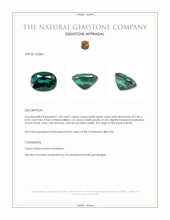



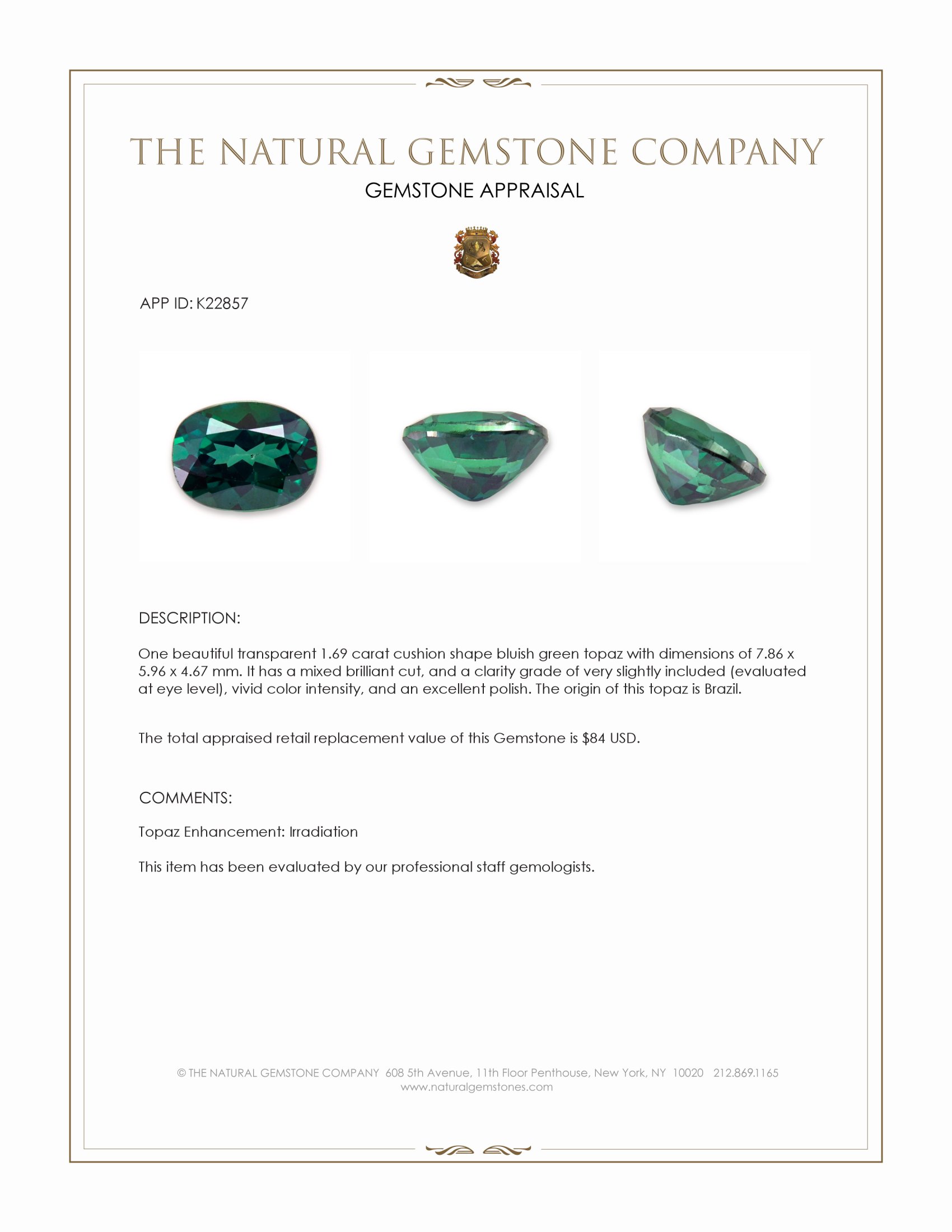
1.69 Ct. Bluish Green Topaz from Brazil
This loose stone ships by May 8
Item ID: | K22857 |
|---|---|
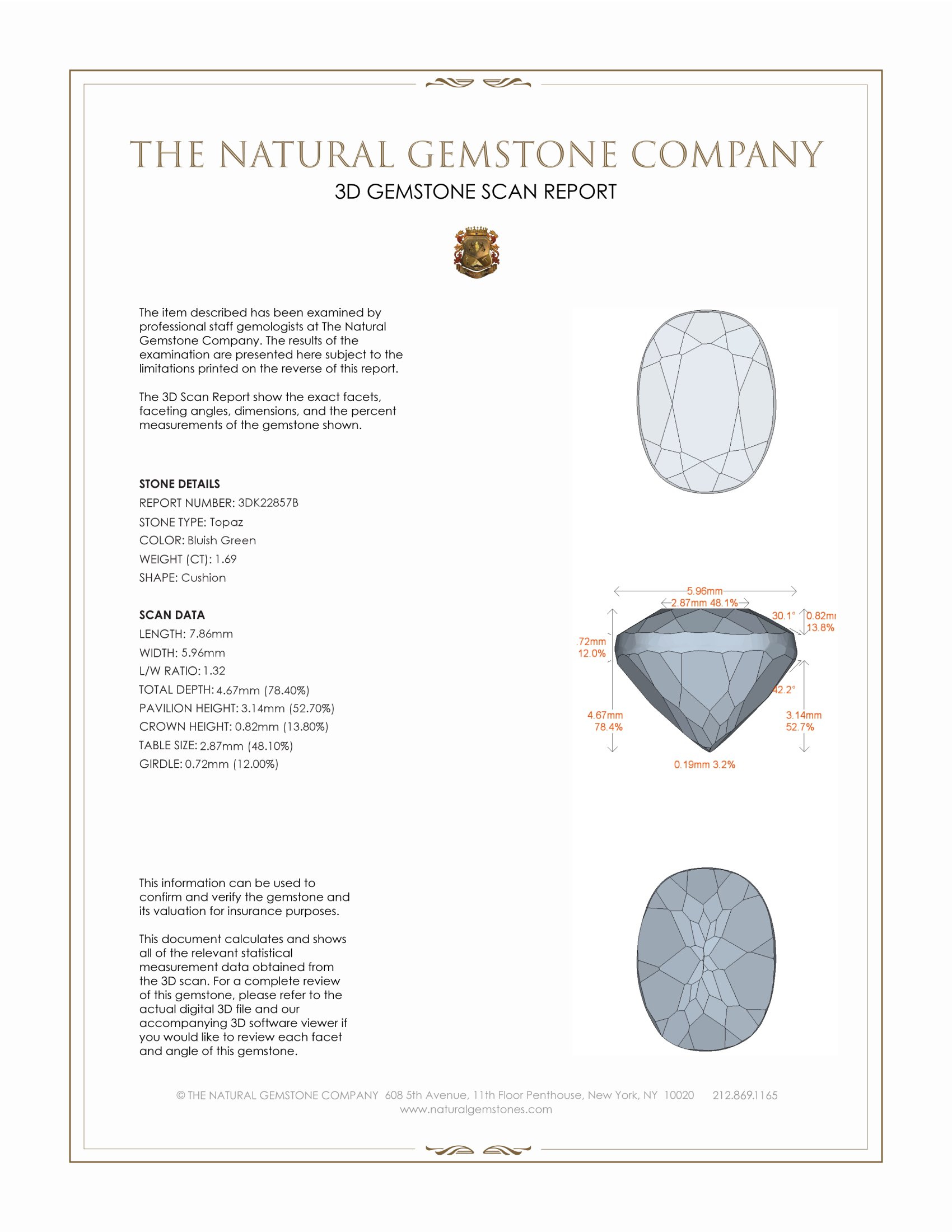
Dimensions (MM): help | Length: 7.86 Width: 5.96 Height: 4.67 |
Weight: | 1.69 Ct. |
Color: help | Bluish Green |
Color intensity: help | Vivid |
Clarity: help | Very Slightly Included |
Shape: help | Cushion |
Cut: | Mixed Brilliant Cut |
Cutting style: | Faceted |
Enhancements: help | Irradiation |
Origin: help | Brazil |
Per carat price: help | $50 |
This transparent bluish green topaz weighs 1.69 carats and presents a refined cushion shape, with precise dimensions of 7.86 by 5.96 by 4.67 mm. The gem is faceted in a mixed brilliant cut that balances table brilliance with pavilion performance, and it exhibits vivid color intensity that reads consistently across different viewing angles. Clarity is graded as very slightly included when evaluated at eye level, a condition that allows the stone to remain visually clean while reflecting the natural character of its formation. The polish is excellent, producing crisp facet junctions and lively light return, and the stone has undergone irradiation as an enhancement to stabilize and enrich its bluish green hue. This specimen originates from Brazil and is offered through The Natural Gemstone Company with clear documentation of its characteristics.
The narrative of how this topaz came into being spans tens of millions of years, embedded in the slow and powerful processes of the Earth. In the geological environments that produced Brazilian topaz, granitic magmas rose deep below the surface and cooled slowly, allowing late stage, volatile rich fluids to concentrate in fractures and cavities. These hydrothermal fluids, charged with silica, fluorine, aluminum and essential aluminum silicate components, interacted with the surrounding pegmatitic host rocks. Over long intervals of cooling and chemical equilibration, crystallization proceeded within these cavities, forming euhedral to subhedral crystals of topaz as conditions of temperature, pressure and fluid composition stabilized. Localized variations in trace element chemistry and exposure to natural radiation from surrounding radioactive minerals contributed to subtle differences in coloration during and after crystal growth. Structural growth zoning and microscopic growth features were captured within the crystal lattice as it accreted layer by layer, and micro inclusions of early trapped fluids, mica flakes, and minute mineral grains recorded the changing chemical environment. Subsequent uplift, erosion, and weathering ultimately liberated these crystals from their host pegmatites, exposing them to surface processes that transported and sometimes rounded them before they were recovered by miners. Each phase of this extended history is preserved in the gem, from its internal growth structures to the slight inclusions that confirm its natural origin, and together they tell a clear geological story of formation deep within the continental crust.
The present appearance of the topaz reflects both its natural history and careful human craftsmanship. The mixed brilliant cut was selected to maximize the gem’s optical performance while respecting the original rough shape, and the excellent polish emphasizes the gem’s internal clarity and vivid color. The clarity description of very slightly included, evaluated at eye level, indicates inclusions that do not interfere with the gem’s overall transparency and brilliance, providing assurance of natural character without compromising beauty. The documented irradiation enhancement was applied to modify and stabilize the color derived from natural trace element activity and geological radiation, a widely accepted and stable treatment for achieving consistent bluish green tones in topaz. Origin from Brazil is significant for its well established pegmatitic localities and for the typical combination of clarity and color seen in material from that region. The Natural Gemstone Company provides this topaz with precise measurements and a complete description of its physical and gemological attributes, supporting informed decisions for mounting and conservation. Given its weight, dimensions, and cut, the stone is well suited to a refined ring or pendant setting where its vivid color and excellent polish can be appreciated, and its documented treatment and origin permit appropriate care and appraisal over time.


