
- Stone13
- Reports3
-oval-white-topaz-3.2300-cts-k18795-1.jpg?d=200x200&v=20251029102550)
-oval-white-topaz-3.2300-cts-k18795-lifestyleimage-1.jpg?d=200x200&v=20251030025602)
-oval-white-topaz-3.2300-cts-k18795-lifestyleimage-2.jpg?d=200x200&v=20251030025602)
-oval-white-topaz-3.2300-cts-k18795-lifestyleimage-3.jpg?d=200x200&v=20251030025602)


-oval-white-topaz-3.2300-cts-k18795-1.jpg?d=750x750&s=ngc&v=20251029102550)
-oval-white-topaz-3.2300-cts-k18795-lifestyleimage-1.jpg?d=750x750&s=ngc&v=20251030025602)
-oval-white-topaz-3.2300-cts-k18795-lifestyleimage-2.jpg?d=750x750&s=ngc&v=20251030025602)
-oval-white-topaz-3.2300-cts-k18795-lifestyleimage-3.jpg?d=750x750&s=ngc&v=20251030025602)


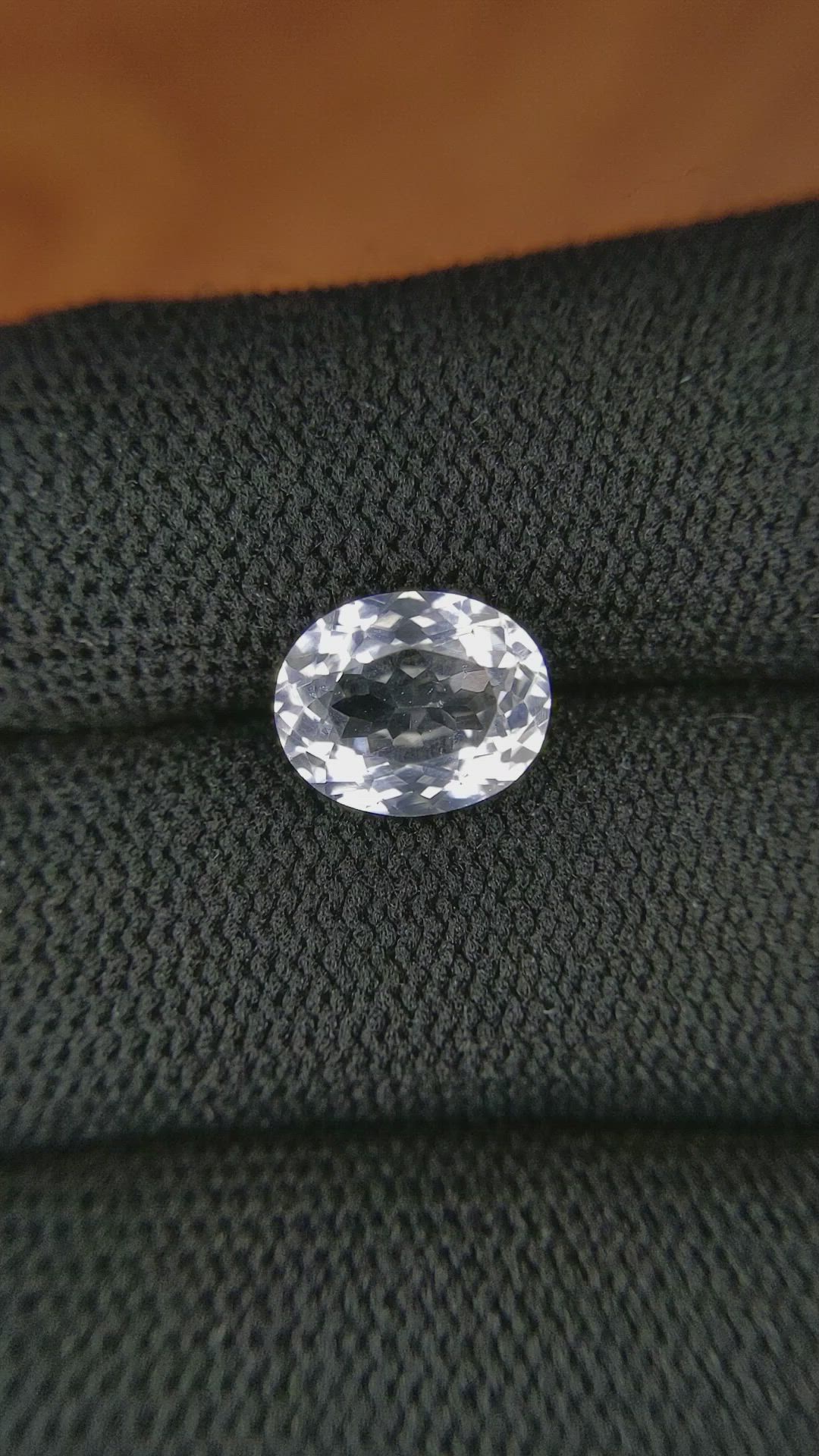
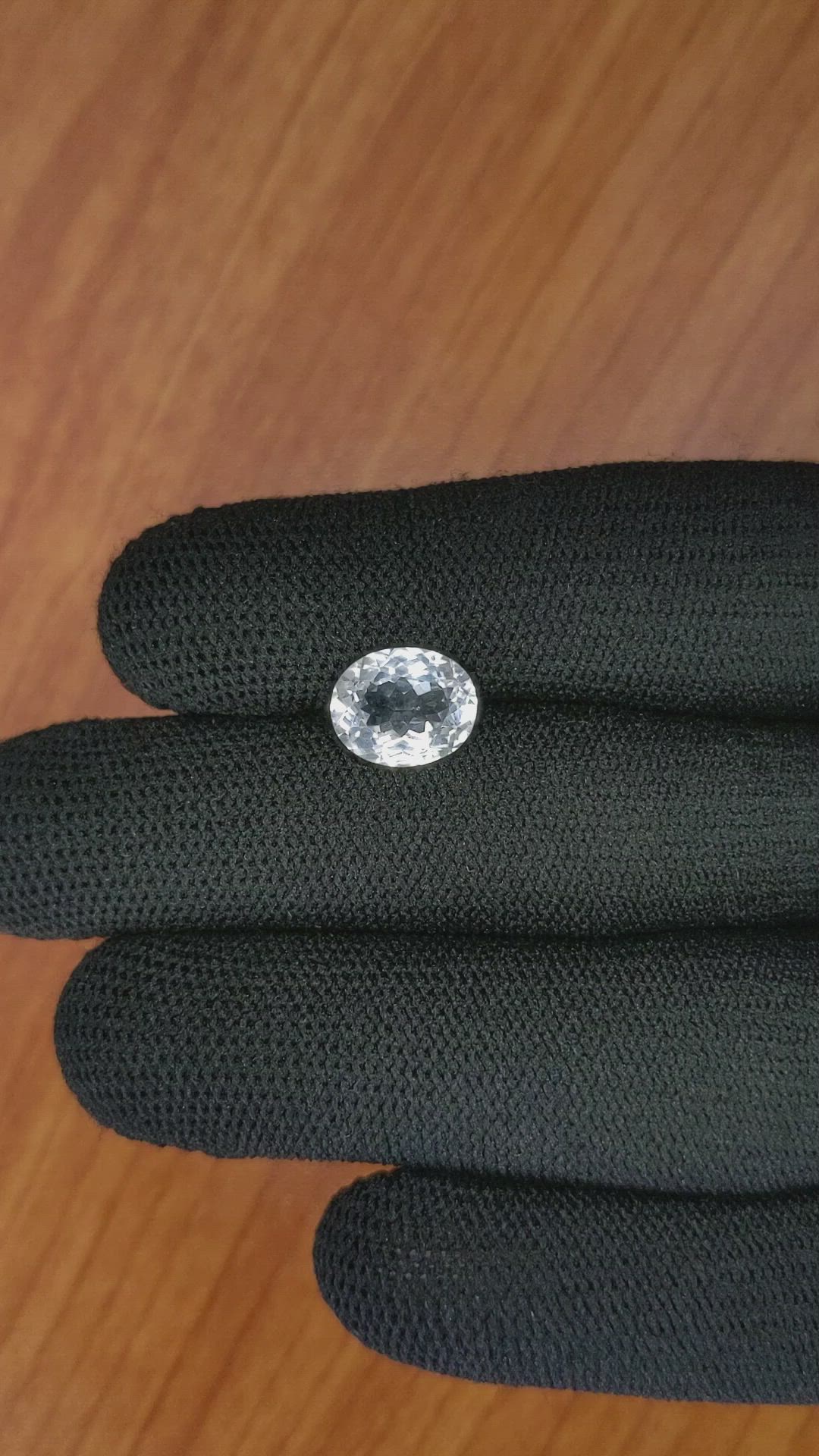
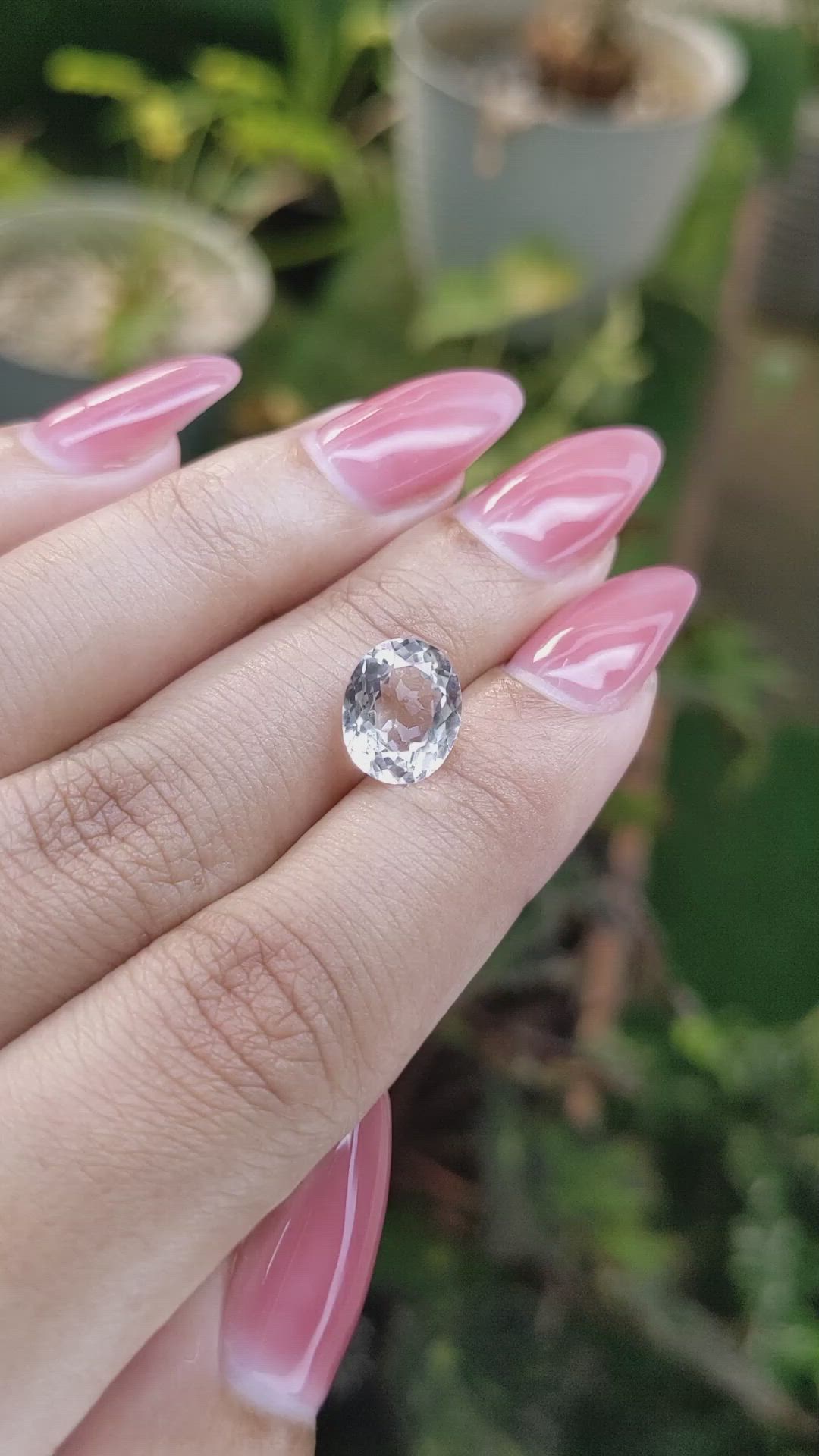
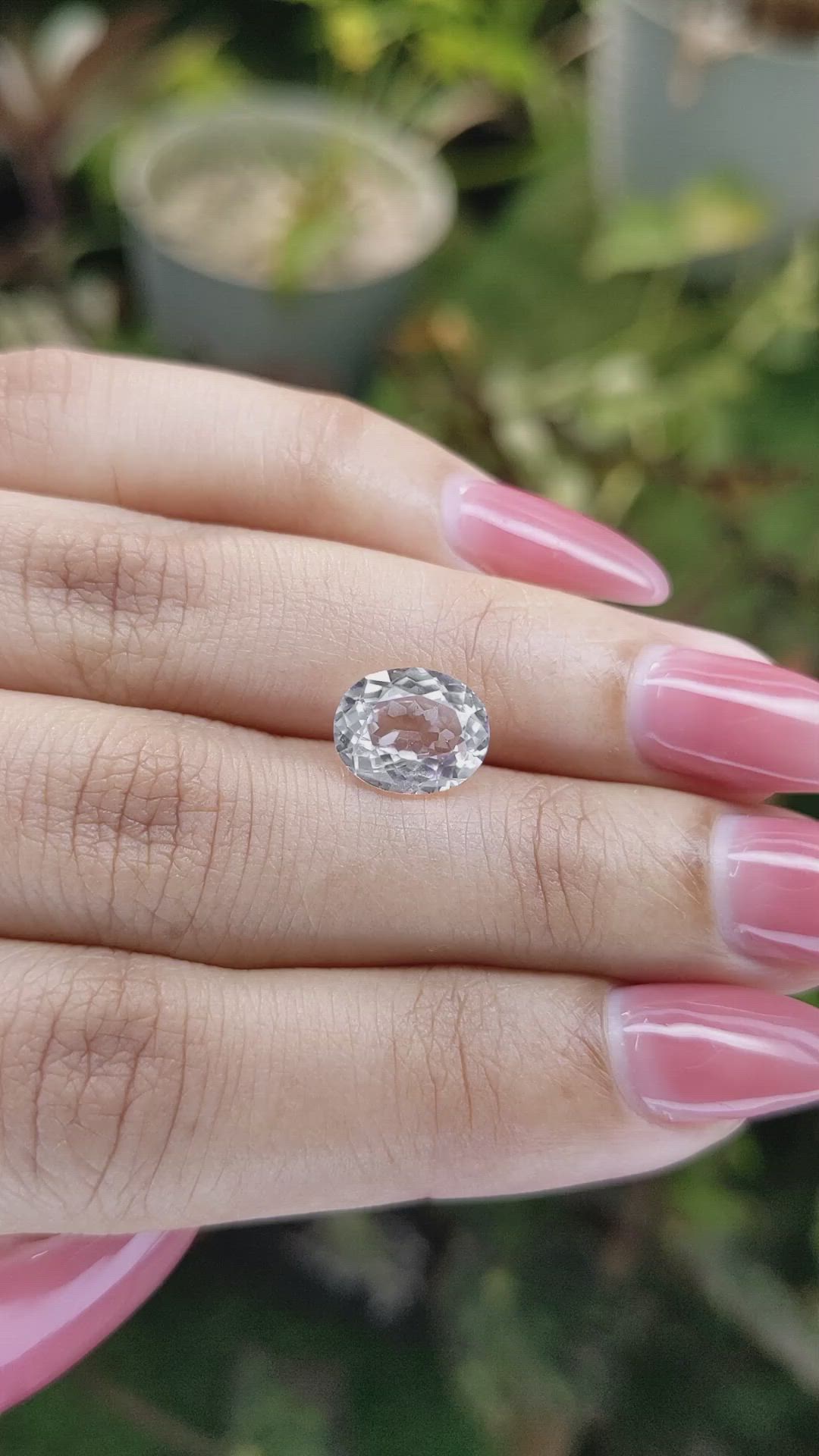
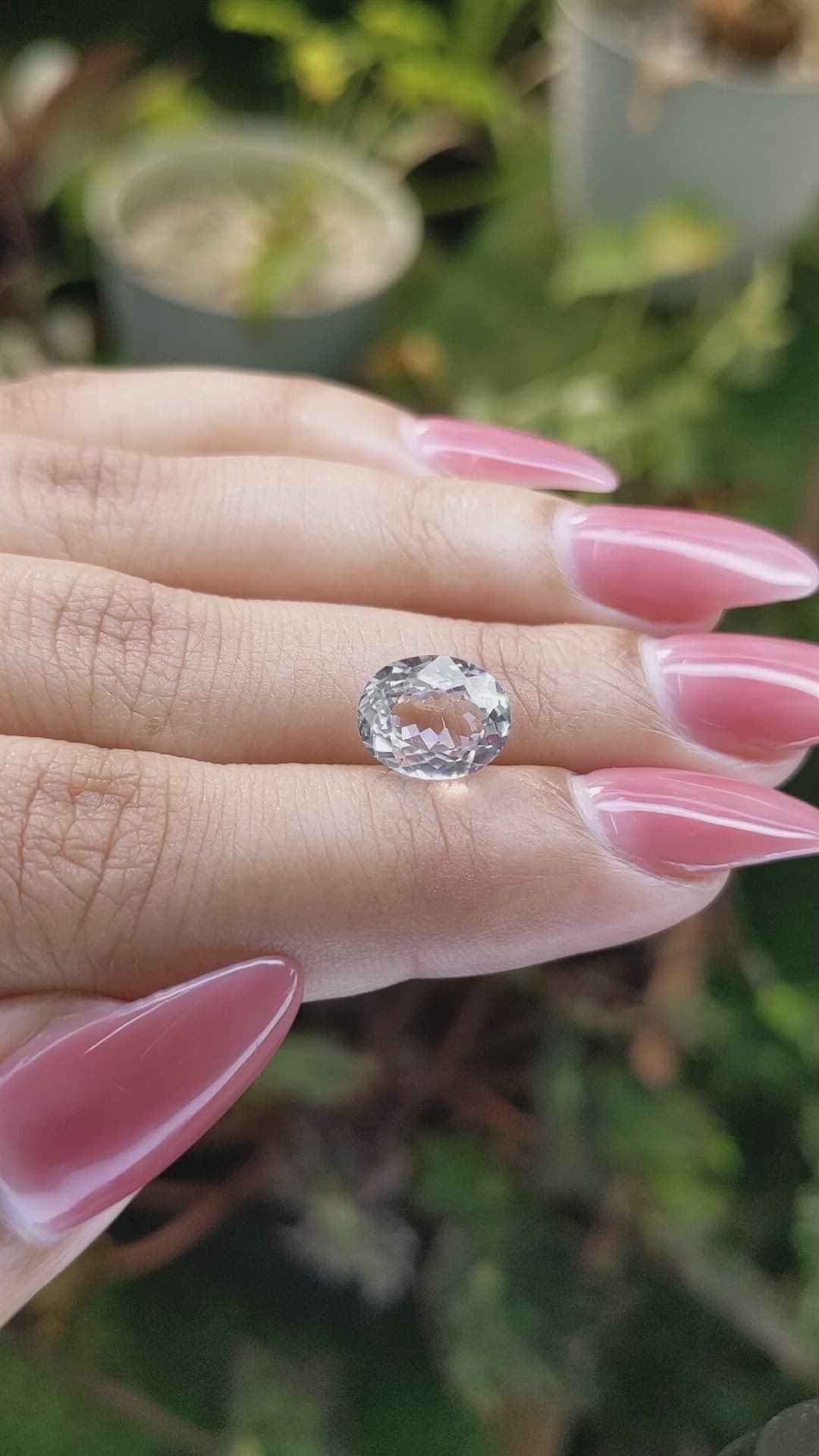
3.23 Ct. White Topaz from Ceylon (Sri Lanka)
This loose stone ships by Sep 2
Item ID: | K18795 |
|---|---|
Dimensions (MM): help | Length: 9.94 Width: 8.1 Height: 5.13 |
Weight: | 3.23 Ct. |
Color: help | White |
Color intensity: help | Near Colorless |
Clarity: help | Eye Clean |
Shape: help | Oval |
Cut: | Mixed Brilliant Cut |
Cutting style: | Faceted |
Enhancements: help | Irradiated |
Origin: help | Ceylon (Sri Lanka) |
Per carat price: help | $30 |
This listing describes one translucent white topaz weighing 3.23 carats, cut to an elegant oval outline with measured dimensions of 9.94 by 8.10 by 5.13 millimeters. The cutter employed a mixed brilliant faceting scheme that combines a brilliant crown with a modified pavilion profile, yielding an optimized balance between scintillation and light return for a stone of this refractive character. Depth is 5.13 millimeters on an average diameter of 9.02 millimeters, giving a depth percent of approximately 56.9 percent, a proportion that supports lively return without excessive windowing or darkness. Color intensity is near colorless, evaluated under standard daylight equivalent lighting, and clarity is graded eye clean based on examination at eye level, meaning that no inclusions are apparent to the unaided eye and the visual face up appearance is clean and luminous. The finish is excellent polish with crisp facet junctions and uniform facet symmetry, and the stone has been intentionally irradiated as an enhancement, a commonly applied treatment that has been stabilized and is resistant to normal wear and household exposure.
The mixed brilliant cut here is executed to exploit the refractive index range of topaz, which generally falls between 1.609 and 1.643, and the low to moderate birefringence characteristic of the species. On the crown you will observe a typical arrangement of star facets and kite facets surrounding a well proportioned table, tuned to generate broad scintillation flashes and to break larger white surfaces into lively scintillation under movement. The pavilion is modified to a combination of main facets and subtle lower pavilion facets that maintain internal reflection paths rather than allowing light to exit through the base, and this planning compensates for the relative lack of dispersion in topaz compared with higher dispersion gem materials. The cutter maintained tight facet alignment and even girdle thickness to ensure predictable optical behavior in a mounting, and the excellent polish preserves facet reflectance so that light coupling into and out of the gemstone is efficient. The overall faceting scheme was chosen to maximize the apparent size and brilliance of a near colorless stone while retaining symmetry and eliminating optical windows.
Although the stone is eye clean, under magnification it presents a characteristic inclusion suite that serves as an unmistakable signature of its crystallographic growth history and provenance. Observed at ten times magnification are narrow two phase fluid inclusions, isolated negative crystal cavities, and minute platelet like inclusions that align parallel to the principal crystallographic directions. These platelets are often oriented in planar growth zones, producing faint graining and occasional lamellar reflections when viewed at oblique angles, features that are particularly common in material from Ceylon. There are also occasional healed fissures that appear as feathery, reflective planes under immersion and magnification, indicating episodes of brittle deformation followed by later recrystallization or sealing. This combination of fine growth layering, aligned platelet inclusions, and rare negative crystals creates a diagnostic internal fingerprint that is consistent with Sri Lankan topaz and that can be used by trained gemmologists to augment origin assessment. Importantly these features are sub loupe or microscopic in scale and do not impact the eye clean appearance or the structural integrity for jewelry use.
The stone has been irradiated as a documented enhancement, a controlled treatment used within the trade to alter and stabilize coloration, and it is presented with full disclosure of this process. Irradiation in topaz is a permanent treatment under normal wear conditions, however clients should avoid extreme thermal shock and strong acids when caring for mounted gems. For design consideration this white topaz pairs beautifully with more diffuse materials such as White Opal, where the crystalline transparency and reflective scintillation of the topaz offer a textural foil to the opal play of color and body tone. For settings we recommend secure four or six prong or bezel style mounting that protects the girdle and minimizes exposure to knocks, while allowing the table and crown facets to interact with ambient light. As representatives of The Natural Gemstone Company we can provide additional technical images, facet maps, and loupe studies upon request, and we welcome inquiries from clients seeking exacting specifications for bespoke settings or matched pairs.


