
- Stone14
- Reports3


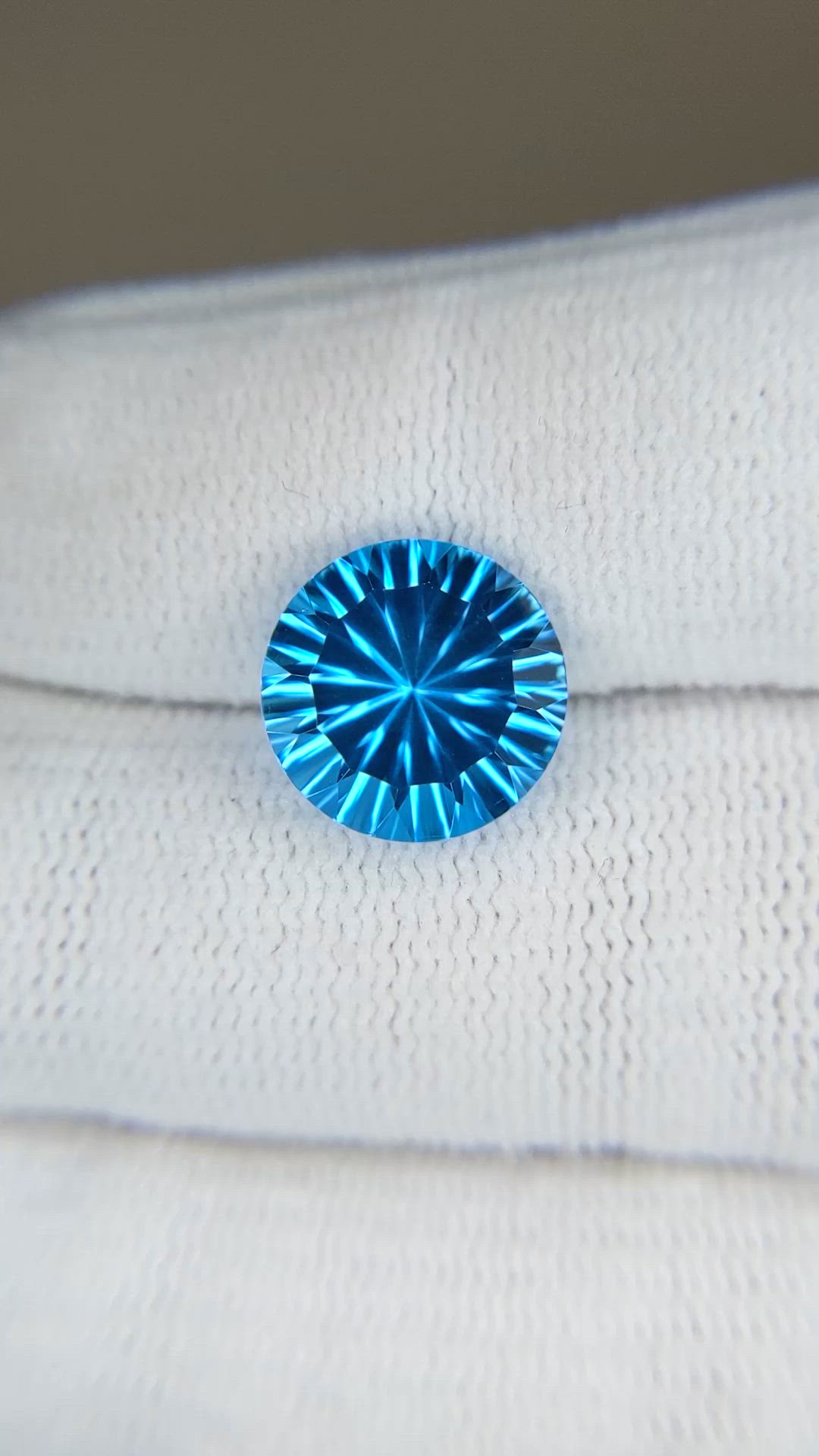
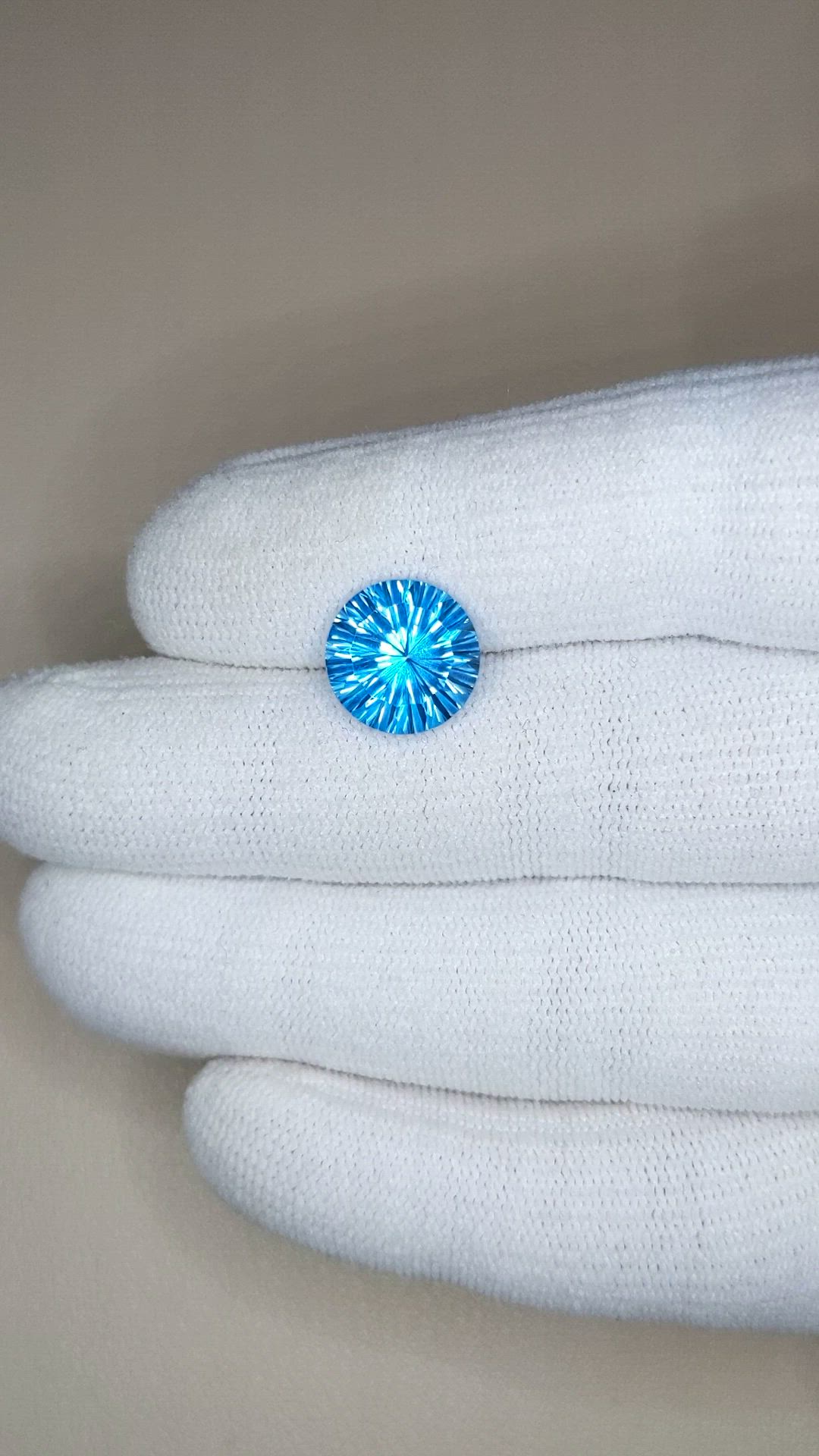
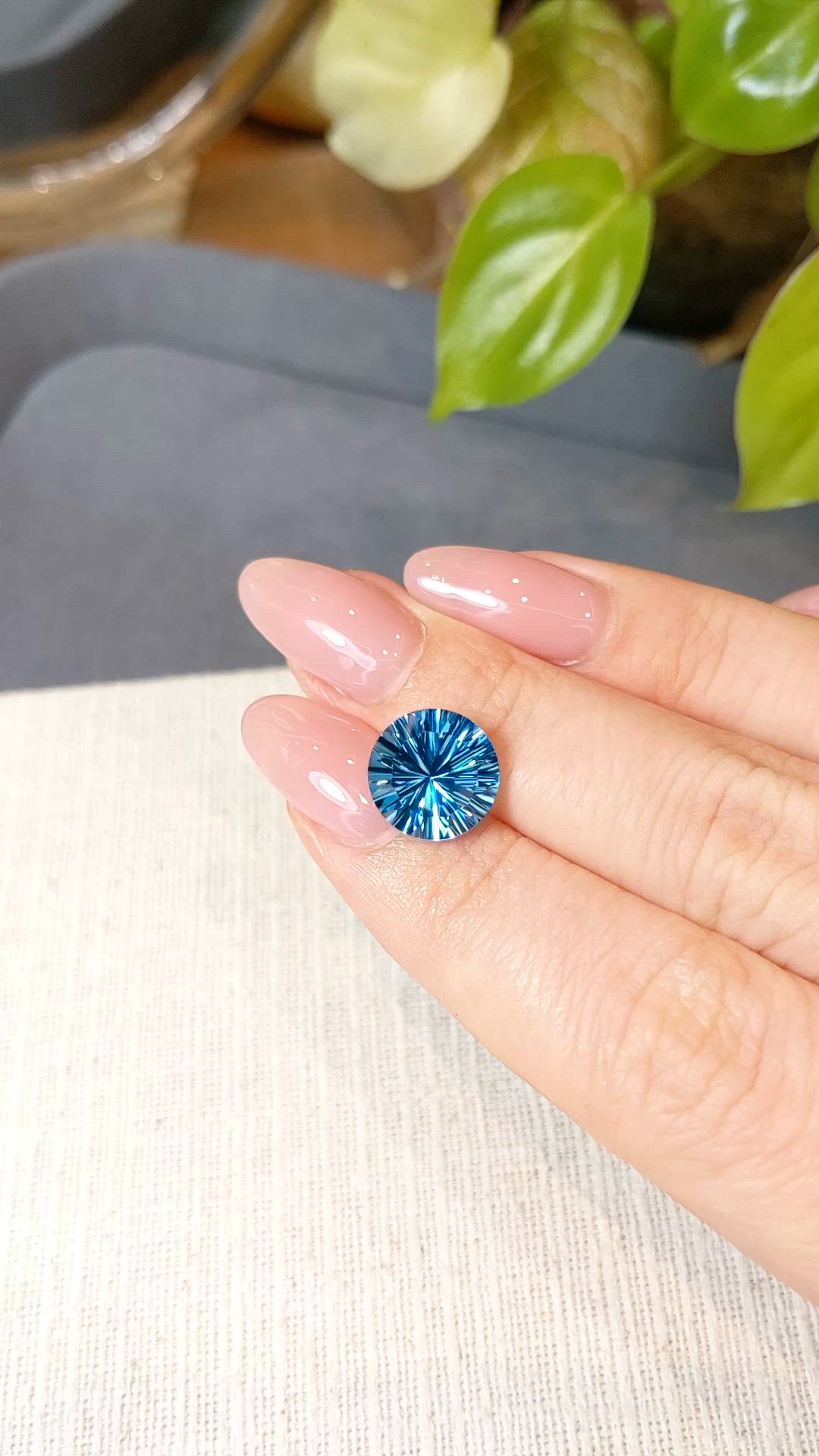
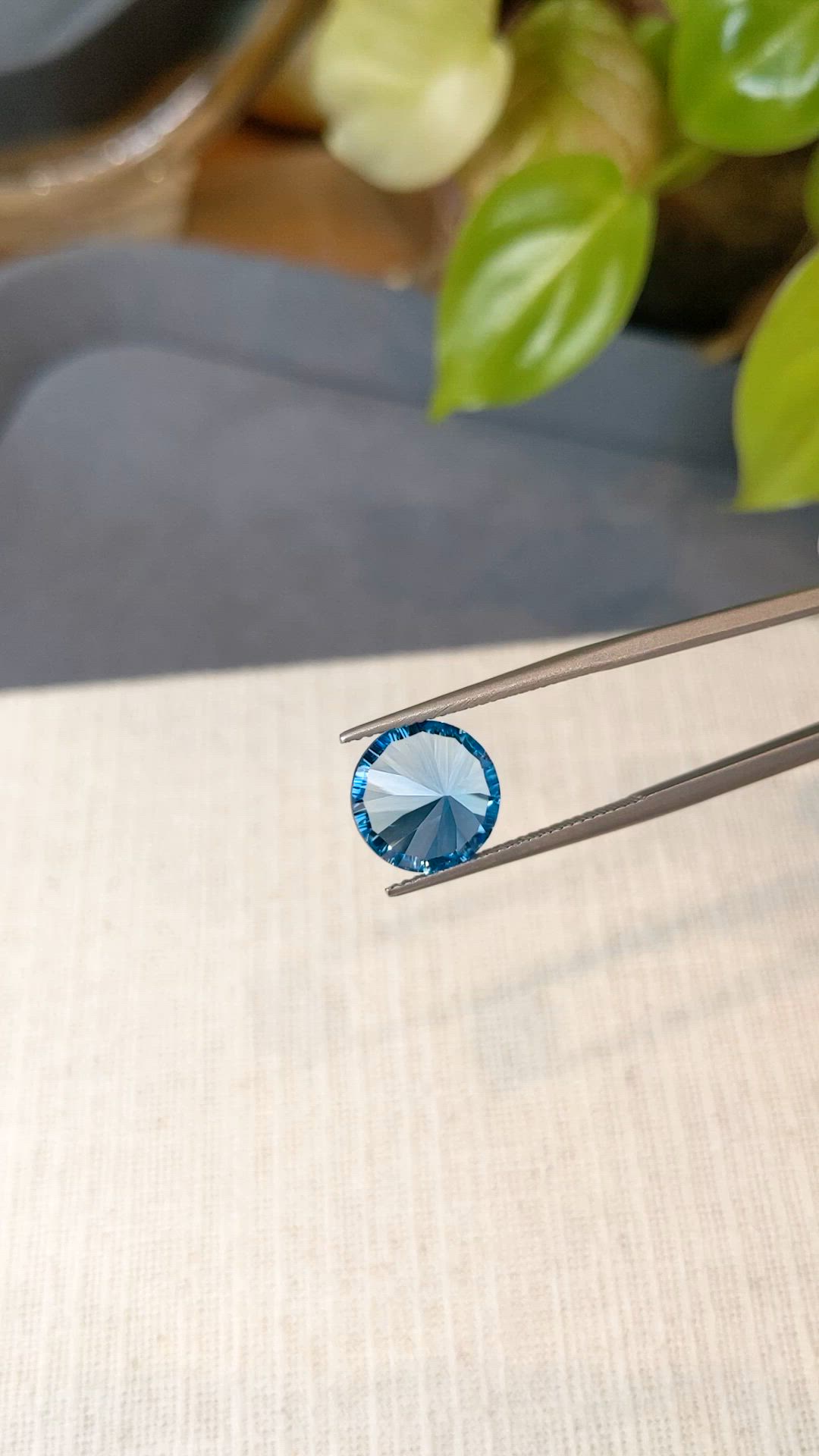
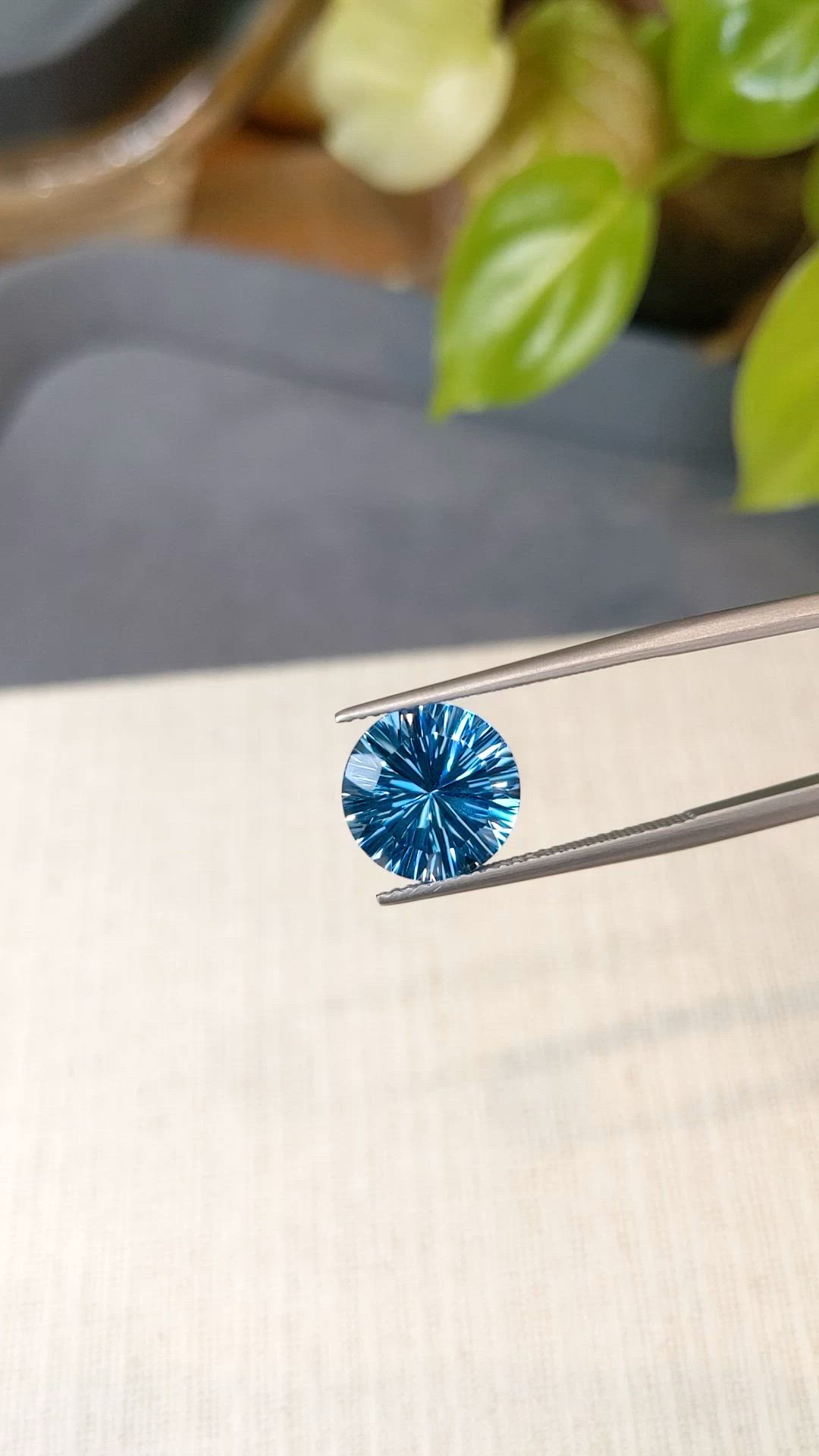




5.44 Ct. Swiss Blue Topaz from Brazil
This loose stone is available to ship now
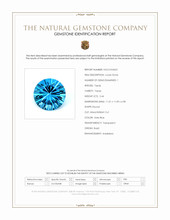
Item ID: | K24621 |
|---|---|
Dimensions (MM): help | Length: 11.01 Width: 11.09 Height: 6.98 |
Weight: | 5.44 Ct. |
Color: help | Swiss Blue |
Color intensity: help | Vivid |
Clarity: help | Very Very Slightly Included |
Shape: help | Round |
Cut: | Mixed Brilliant Cut |
Cutting style: | Faceted |
Enhancements: help | Irradiated |
Origin: help | Brazil |
Per carat price: help | $50 |
This Swiss blue topaz is a precise specimen engineered for both visual impact and technical performance, weighing 5.44 carats with finished dimensions of 11.01 x 11.09 x 6.98 mm. The cutter selected a round outline executed in a mixed brilliant cut, combining a full brilliant crown with a carefully proportioned pavilion that favors weight retention without sacrificing light return. The measured depth is 6.98 mm, which yields a depth ratio of approximately 63.1 percent relative to the mean diameter, a proportion that balances face up color saturation with pavilion volume for strong scintillation. Faceting execution is exacting, with symmetrical facet junctions, crisp facet planes and an excellent polish that minimizes surface diffusion of light, allowing the internal color zoning and facet reflections to remain true and well defined. The girdle presentation has been controlled to maintain secure settings in precision mountings, and the crown crown angles and pavilion angles have been calibrated to maximize the vivid color intensity while preserving a lively, three dimensional brilliance typical of a well executed mixed brilliant profile.
Clarity has been evaluated at eye level as very very slightly included, which in practice means the stone is essentially eye clean and presents no visible distractions to normal unaided observation, while microscopic examination reveals internal features that function as unique identifiers. These internal features typically include fine growth zoning, occasional isolated mineral crystals, and minute two phase inclusions or negative crystals, and on this particular topaz the internal architecture presents as discrete growth banding and very small isolated inclusions when viewed under 10 times magnification. From a gemological perspective these inclusions are not flaws to be erased, but diagnostic markers that attest to natural formation and provenance, analogous to a fingerprint for the crystal. The pattern, orientation and distribution of these features provide corroborative information for origin assessment, and they assist experienced lapidaries and gemologists in matching stones within suites, evaluating cutting strategies, and authenticating natural versus synthetic or treated material. The very very slightly included grade at eye level therefore speaks to a high degree of optical clarity for casual wear, coupled with microscopic complexity that enhances the gemological story of the piece.
Color is a principal attribute of this topaz, described as vivid in intensity and rendered in the classic Swiss blue hue achieved through controlled irradiation enhancement, applied post cutting to develop and stabilize the desirable blue chroma. Irradiation followed by appropriate annealing is a well understood and widely accepted enhancement for topaz, producing a vivid, saturated blue that remains stable under normal wear conditions and light exposure. The color distribution across the table and crown is even, with the mixed brilliant faceting intensifying the perceived depth of tone while preserving lively face up brilliance. Origin is Brazil, and the combination of Brazilian growth characteristics, microscopic inclusion patterns and the post harvest irradiation process yields a stone that is both technically refined and visually commanding. For the discerning buyer who values craftsmanship and gemological integrity, The Natural Gemstone Company offers this topaz as a laboratory documented, discloseable enhancement gem, ideal for precision settings where pavilion depth can be utilized to transmit color into the jewelry design, or as a collector piece where the documented natural inclusions and measured proportions are appreciated.


