
- Pair12
- Reports3
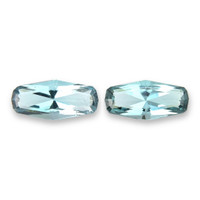


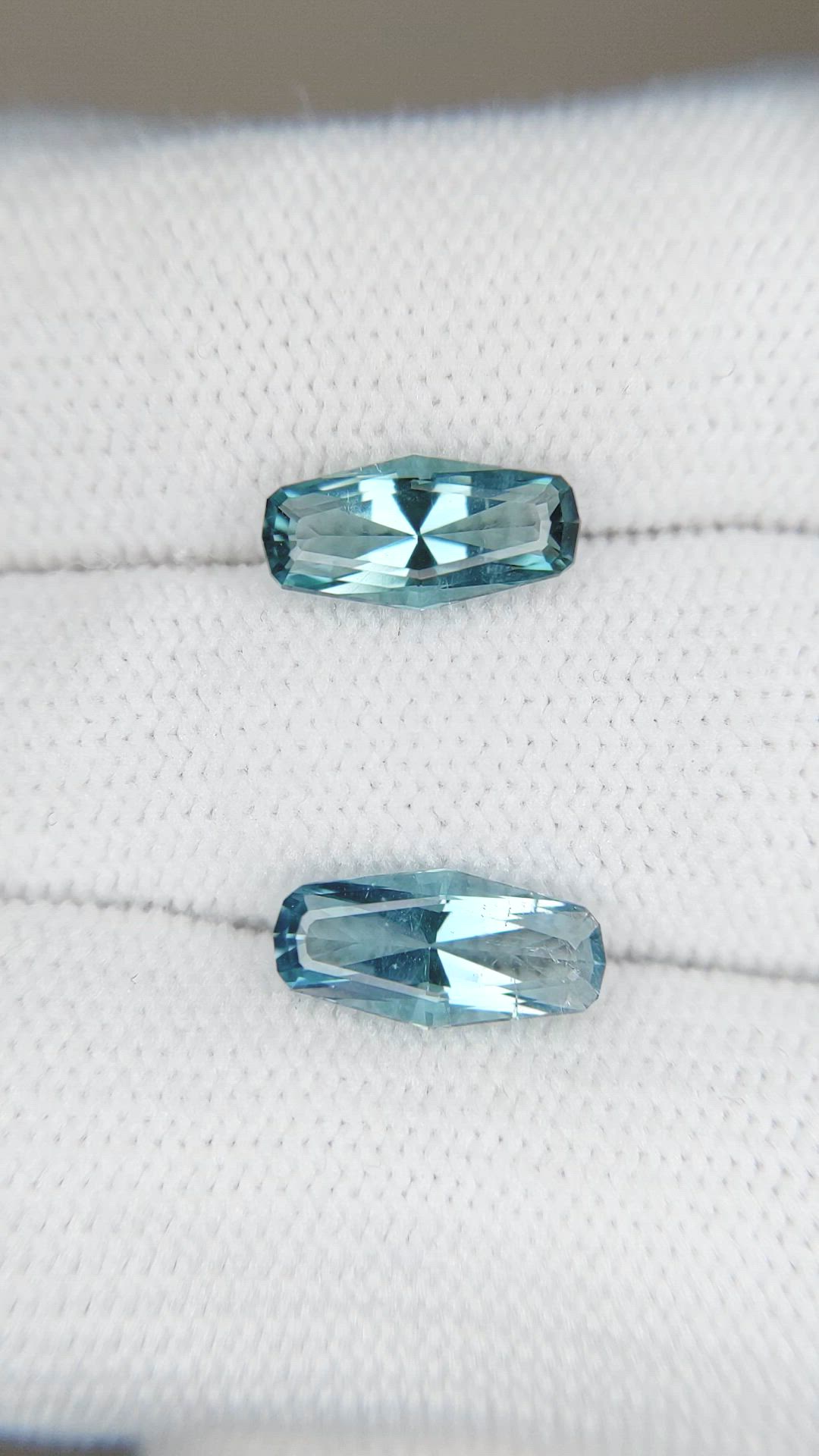
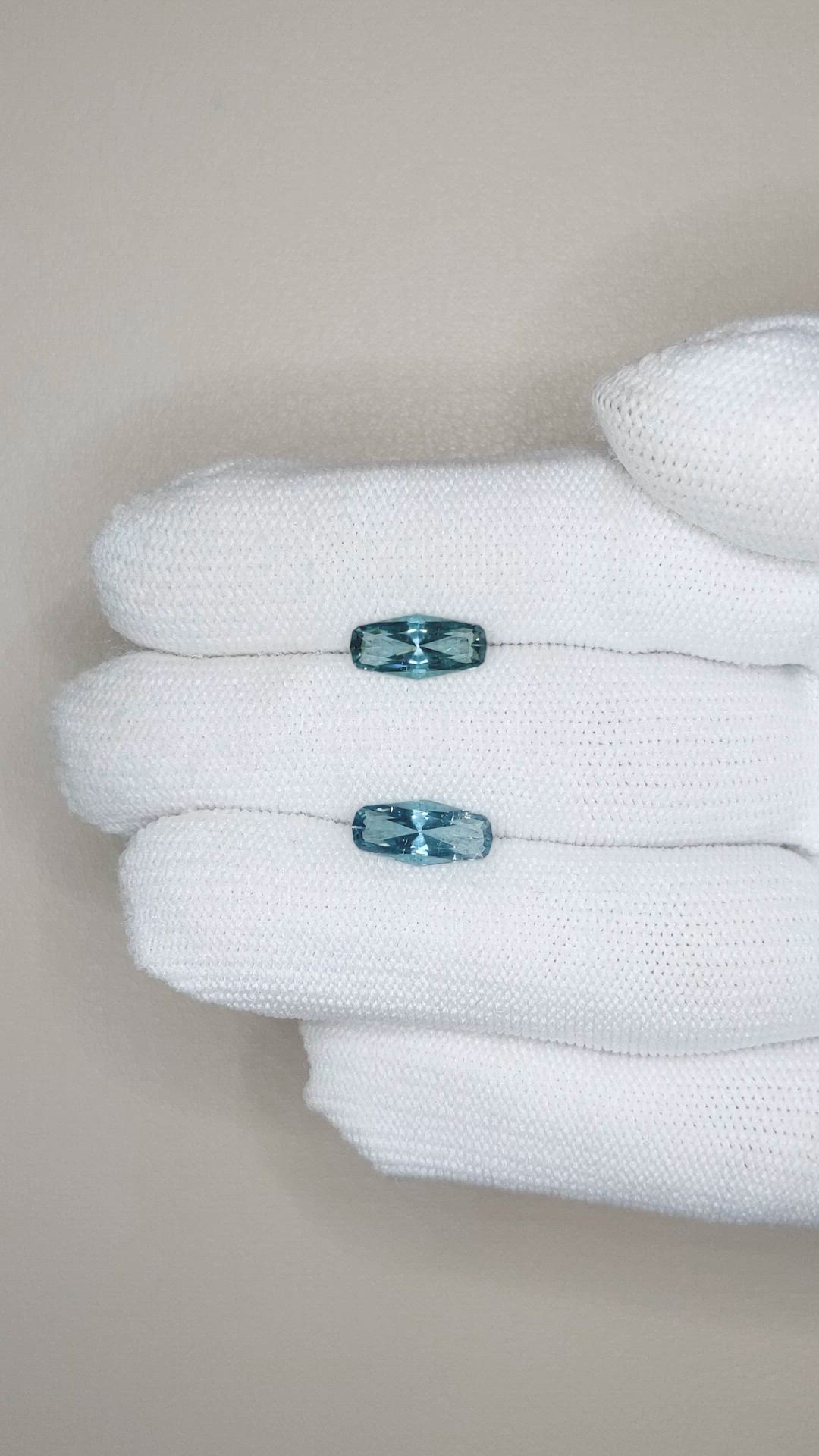
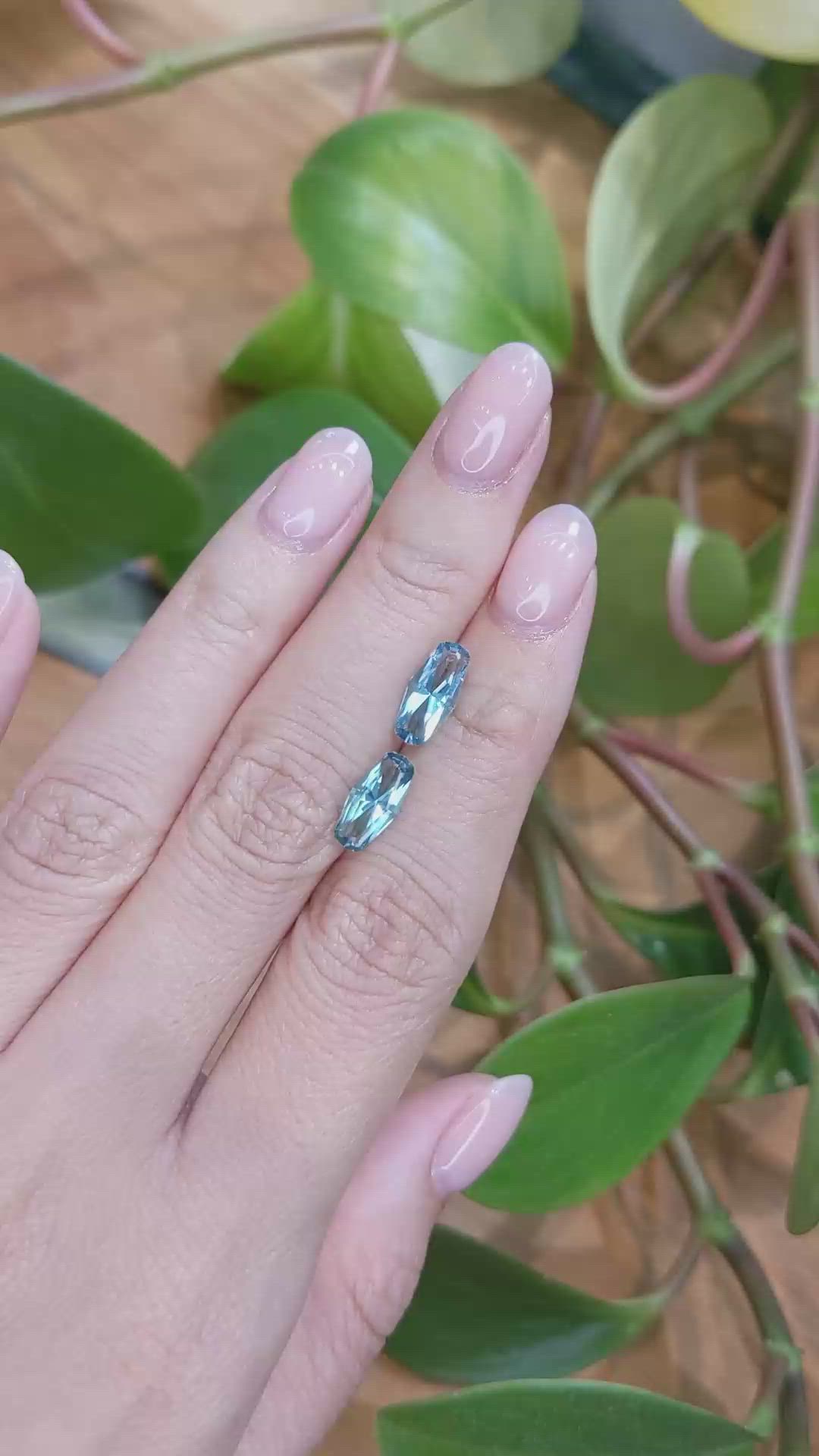
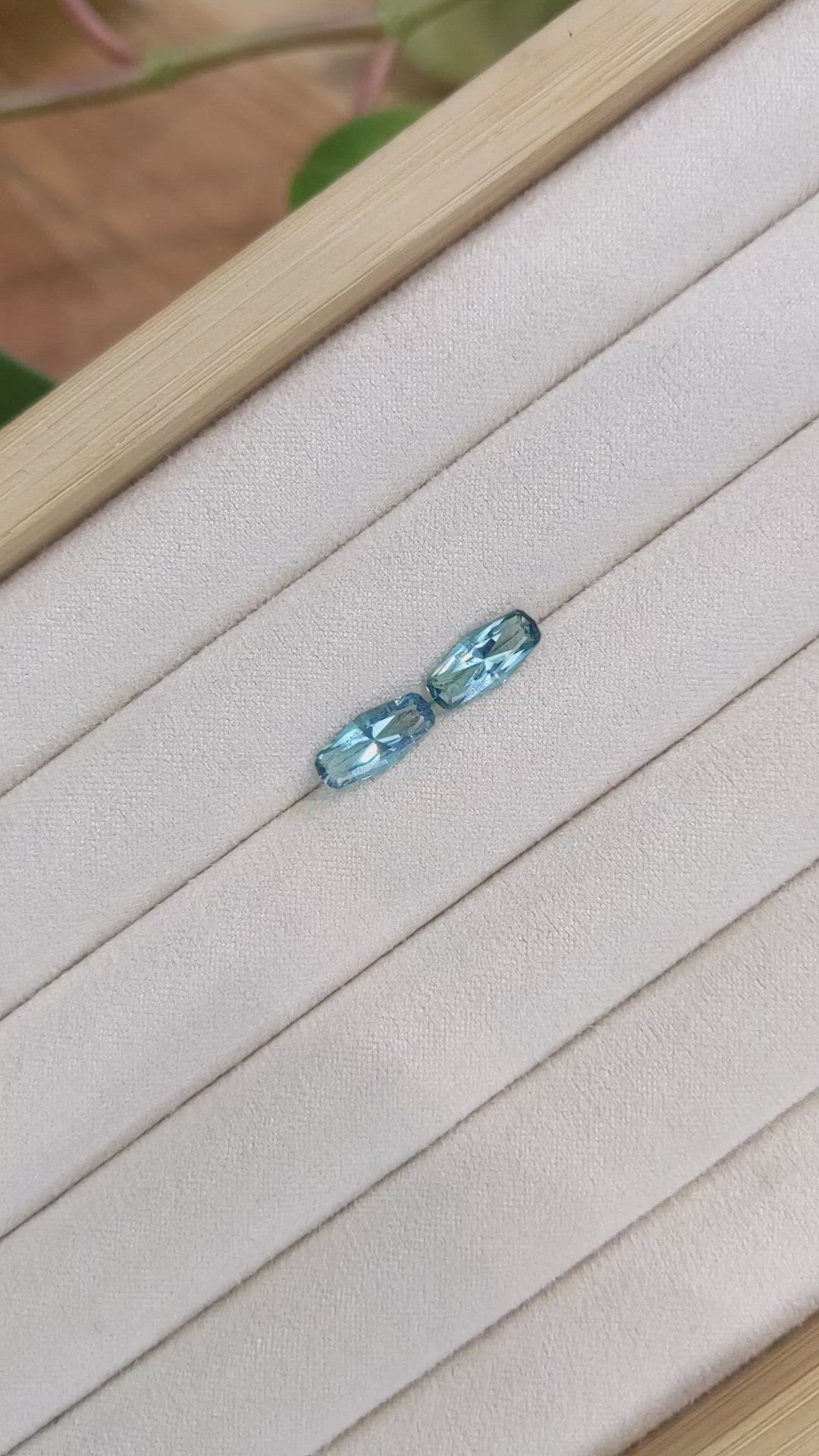

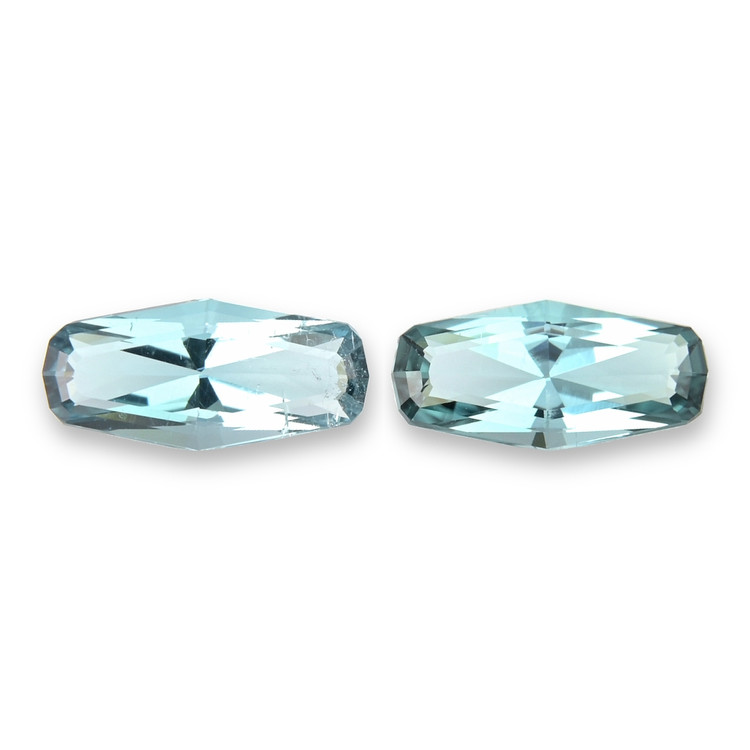


2.69 Ct.Tw.Total Carat Weight Blue Tourmaline Pair from Namibia
This pair of stones ships by Nov 12
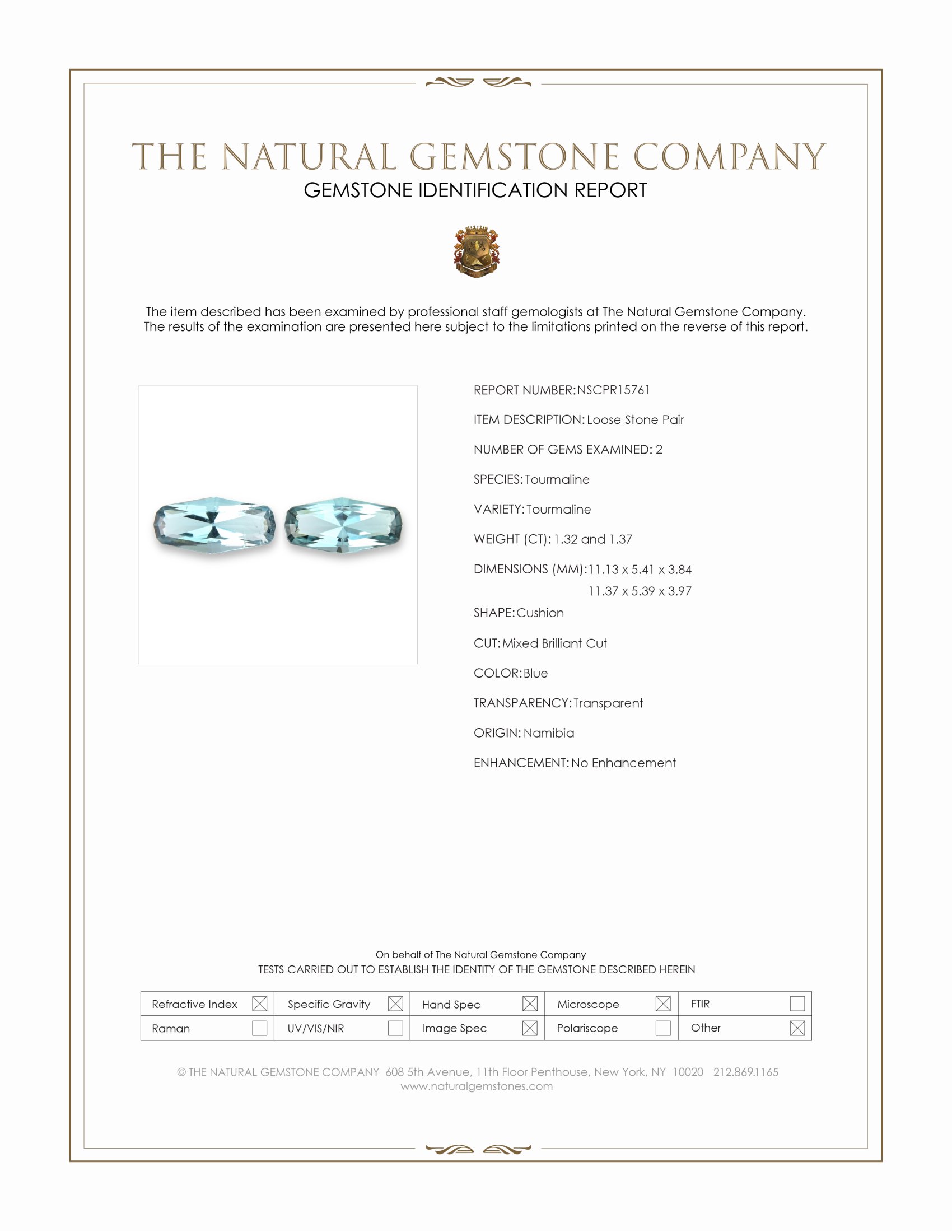
Stone type: | Tourmaline | Tourmaline |
|---|---|---|
Item ID: | PR15761 | PR15761 |
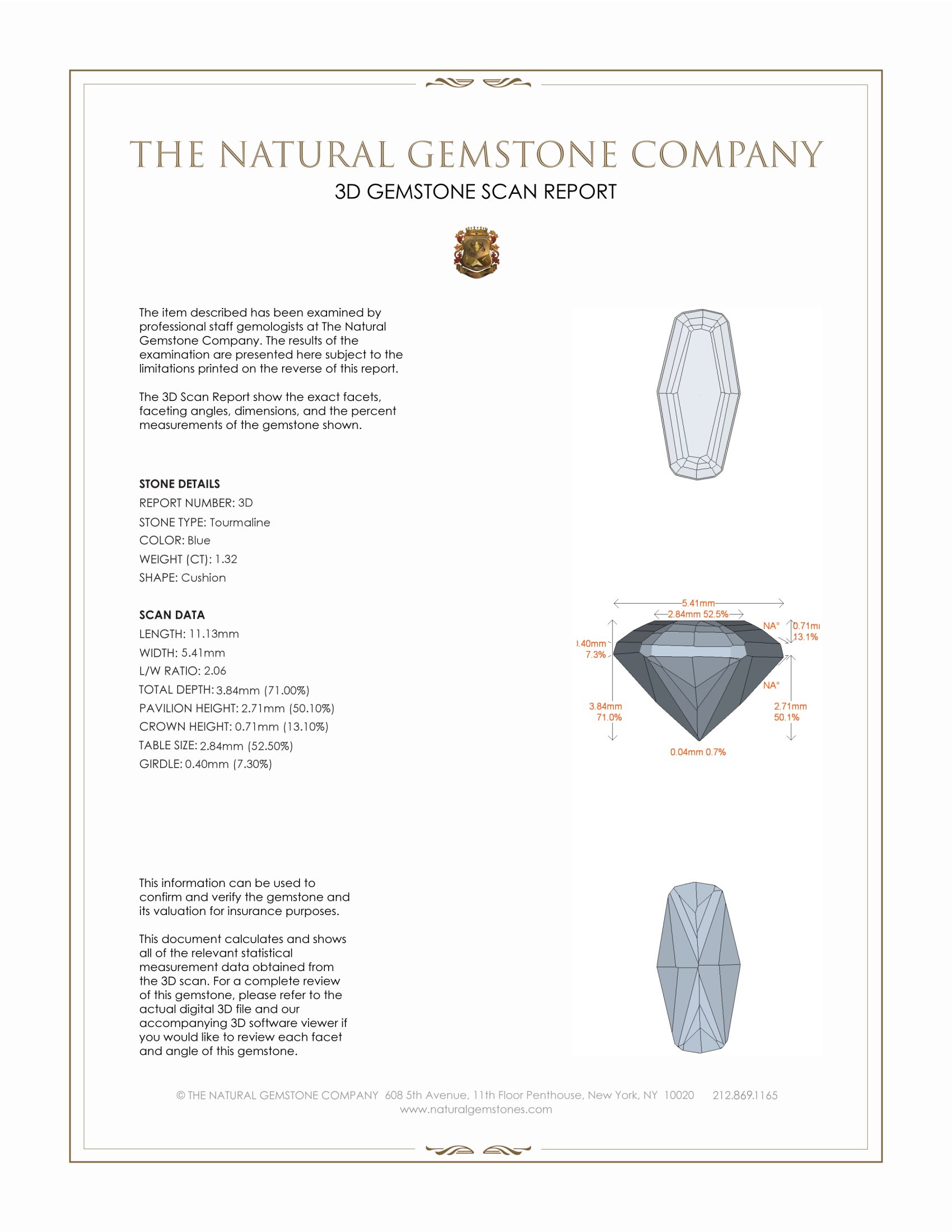
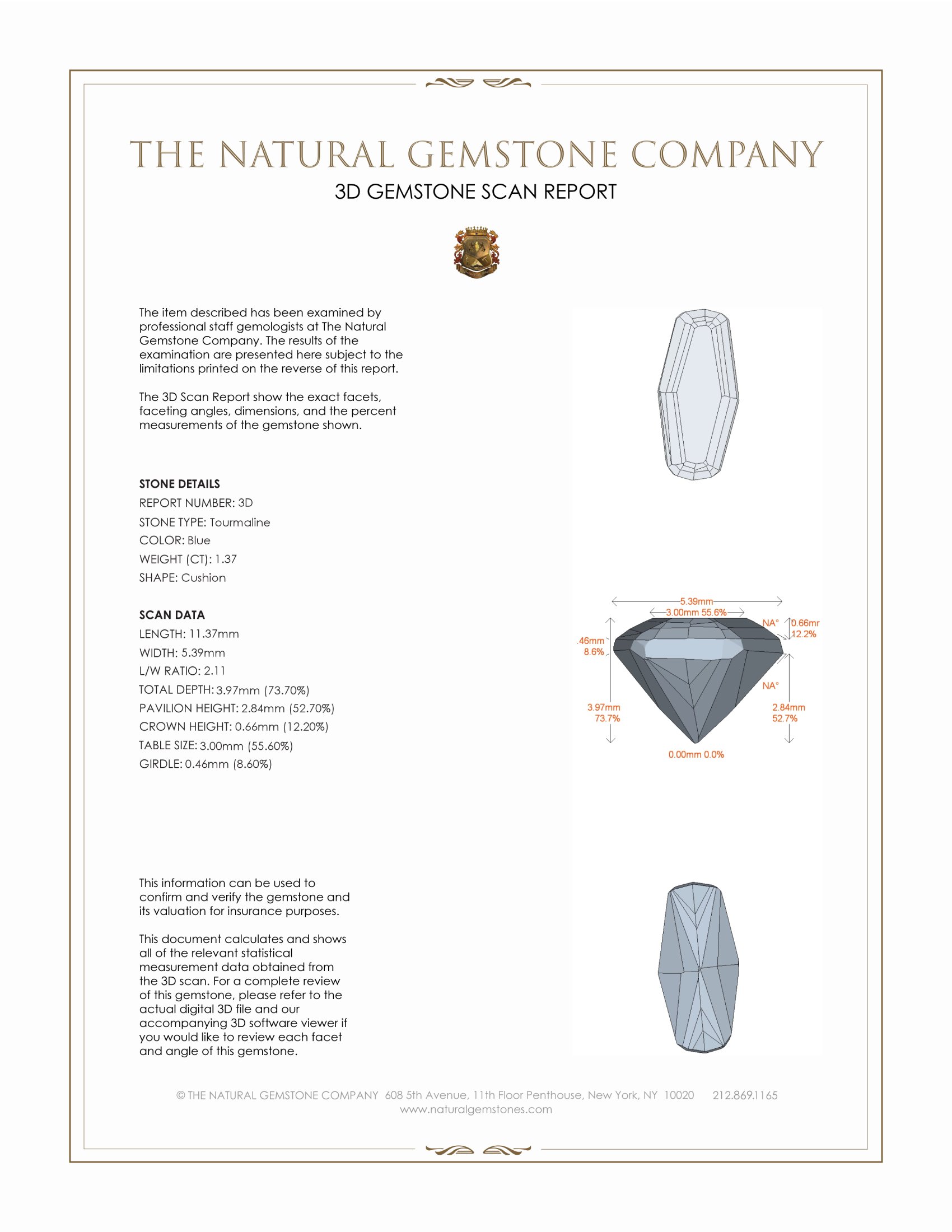
Dimensions (MM): help | Length: 11.13 Width: 5.41 Height: 3.84 | Length: 11.37 Width: 5.39 Height: 3.97 |
Weight: | 1.32 Ct. | 1.37 Ct. |
Color: help | Blue | Blue |
Color intensity: help | Intense | Intense |
Clarity: help | Eye Clean | Eye Clean |
Shape: help | Cushion | Cushion |
Cut: | Mixed Brilliant Cut | Mixed Brilliant Cut |
Cutting style: | Faceted | Faceted |
Enhancements: help | No Enhancement | No Enhancement |
Origin: help | Namibia | Namibia |
Per carat price: help | $535 | $535 |
This pair of cushion shape blue tourmalines presents a highly technical and exacting example of precision lapidary work, each stone measured and weighed to professional standards. The first stone is 1.32 carats with dimensions 11.13 x 5.41 x 3.84 mm, the second is 1.37 carats with dimensions 11.37 x 5.39 x 3.97 mm. Both stones are faceted in a mixed brilliant cut, a cutting style that combines a brilliant facet scheme on the crown with a modified pavilion faceting pattern to optimize both scintillation and return of blue hue. The elongated cushion outline with gently rounded corners and uniform girdles allows for secure setting options and predictable light behavior. Clarity evaluated at eye level is eye clean, indicating absence of inclusions visible to the unaided eye under standard daylight viewing, while the excellent polish results in crisp facet junctions and uninterrupted window free surfaces. These technical parameters together yield a pair that is well matched for symmetric jewelry applications, particularly matched earring pairs, paired ring and pendant combinations, or as a complementary duo in bespoke multi stone settings.
The mixed brilliant cut of these tourmalines is executed to a high standard of lapidary craftsmanship, evidenced by consistent facet alignment, precise symmetry and tight facet junctions. On the crown the brilliant facet arrangement is calibrated to a table size and crown height ratio that enhances sparkle without compromising color saturation. The pavilion displays carefully designed facet angles and facet counts that minimize light leakage while preserving the tourmaline s characteristic lower dispersion. The result is strong scintillation and a lively play of light across the surface even at modest movement. The polish grade of excellent is apparent in the mirror like facet planes and in the absence of polish lines or surface graining, which is essential for maximizing both luster and apparent color depth. Girdle thickness is controlled to allow secure bezel or prong settings while minimizing excess weight loss, and culet management has been balanced to avoid windowing and to preserve the integrity of the mixed brilliant proportions.
Color technicalities are central to the appeal of these blue tourmalines, and the stones are described as possessing intense color intensity, a term denoting vivid saturation with a medium to medium deep tone that remains transparent and lively. The blue hue exhibits a precise chromatic balance typical of fine Namibian sources, with even color distribution across the table and minimal zoning at face up orientation. Because the cut has been planned to maintain saturation, the crown facet arrangement avoids excessive light leakage that would otherwise lighten the perceived tone. When examined under neutral daylight and controlled lighting, both stones show congruent hue and saturation, facilitating their use as a matched pair. The origin of these tourmalines is Namibia, a provenance that often yields blue tones with clarity and stable color, and that can be an important factor for collectors and designers seeking geographic specificity in their materials. No thermal or chemical enhancements have been applied, maintaining the natural state of the material and preserving the original chromophore balance.
Inclusions in these two tourmalines are presented not as defects but as internal signatures that authenticate each stone and contribute to its character, each inclusion behaving as a fingerprint that can be used for identification and provenance studies. Microscopic inspection reveals naturally occurring internal features such as fine oriented growth tubes and occasional minute two phase inclusions, along with wispy planar growth zoning that aligns with crystal habit, these features are microscopic and do not detract from the eye clean assessment. Such internal structures provide insight into the growth environment and thermal history of the host crystal, and they are valuable to gemologists for establishing natural origin and for distinguishing unheated material from treated or synthetic counterparts. The absence of enhancements further supports the presence of diagnostic inclusions that remain unaltered. For purchasers seeking documentation, these stones are well suited for professional gemological reporting, and The Natural Gemstone Company can assist with lab submission guidance and with technical descriptions for inclusion in appraisal or certificate reports. This pair offers a combination of precise cutting, reliable physical proportions, intense natural color and characteristic internal features, making them a technically refined choice for connoisseurs and skilled jewelers alike.


