
- Stone14
- Reports3
-round-brown-tourmaline-2.9900-cts-k22793-1.jpg?d=200x200&v=20260316000022)
-round-brown-tourmaline-2.9900-cts-k22793-lifestyleimage-1.jpg?d=200x200&v=20260319005729)
-round-brown-tourmaline-2.9900-cts-k22793-lifestyleimage-2.jpg?d=200x200&v=20260319005730)
-round-brown-tourmaline-2.9900-cts-k22793-lifestyleimage-3.jpg?d=200x200&v=20260319005730)


-round-brown-tourmaline-2.9900-cts-k22793-1.jpg?d=750x750&s=ngc&v=20260316000022)
-round-brown-tourmaline-2.9900-cts-k22793-lifestyleimage-1.jpg?d=750x750&s=ngc&v=20260319005729)
-round-brown-tourmaline-2.9900-cts-k22793-lifestyleimage-2.jpg?d=750x750&s=ngc&v=20260319005730)
-round-brown-tourmaline-2.9900-cts-k22793-lifestyleimage-3.jpg?d=750x750&s=ngc&v=20260319005730)


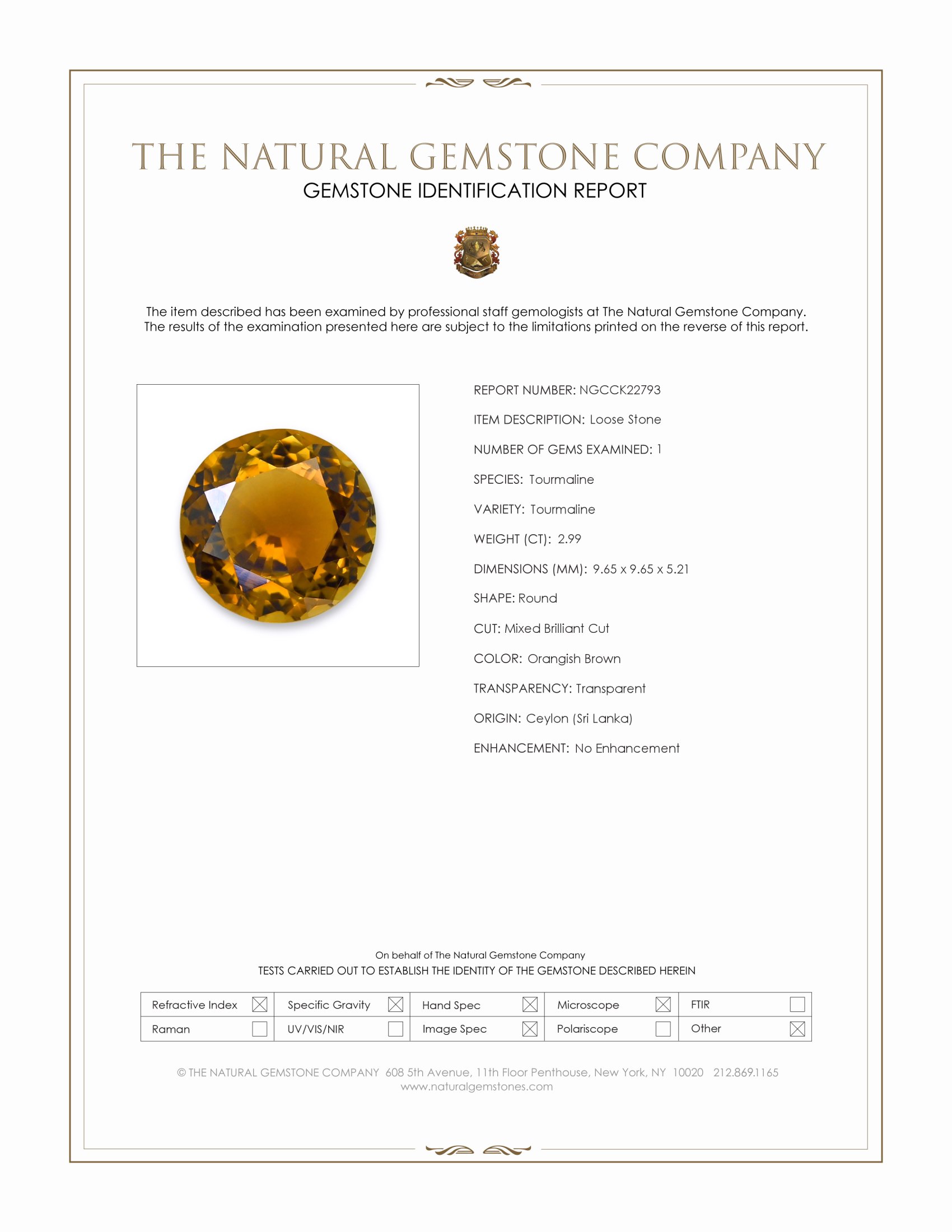
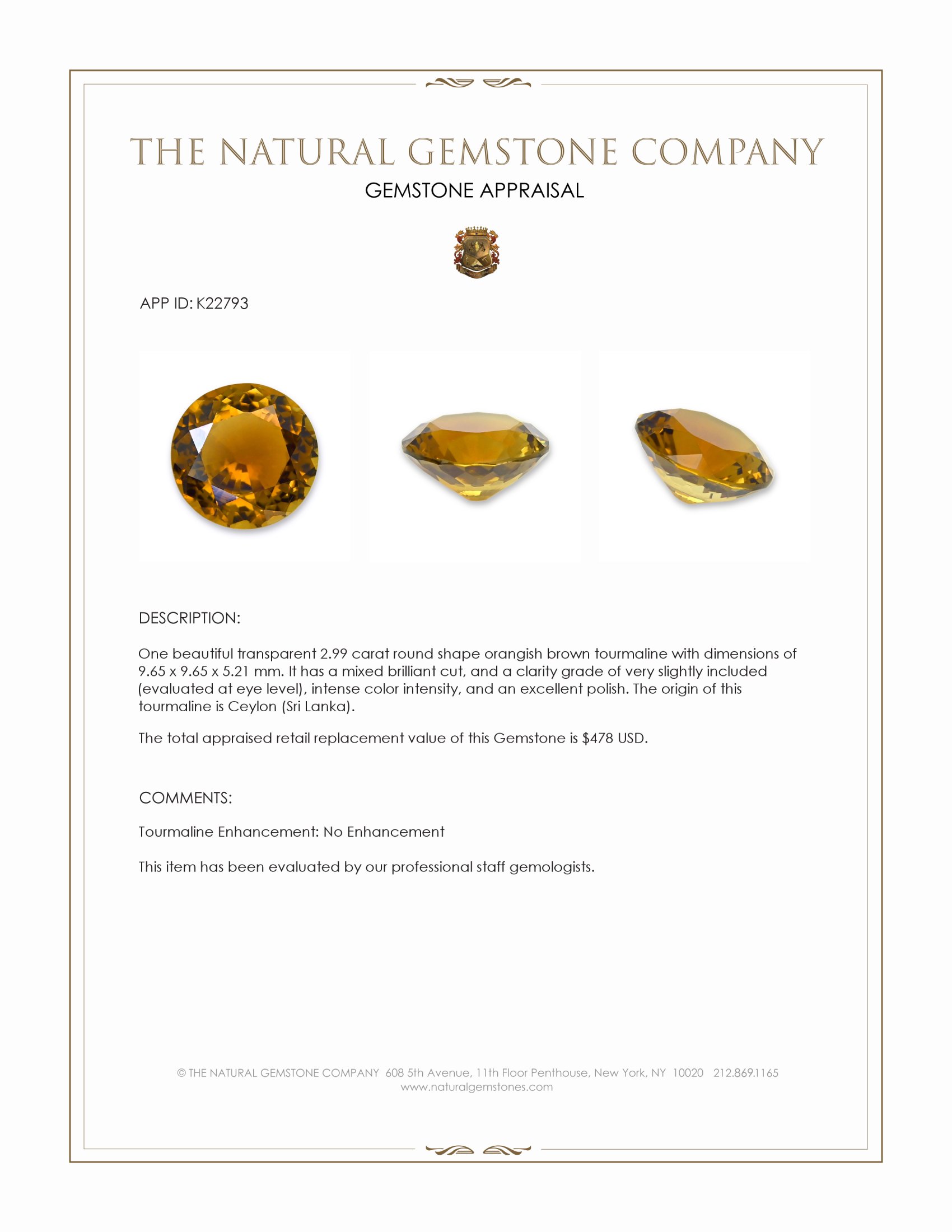
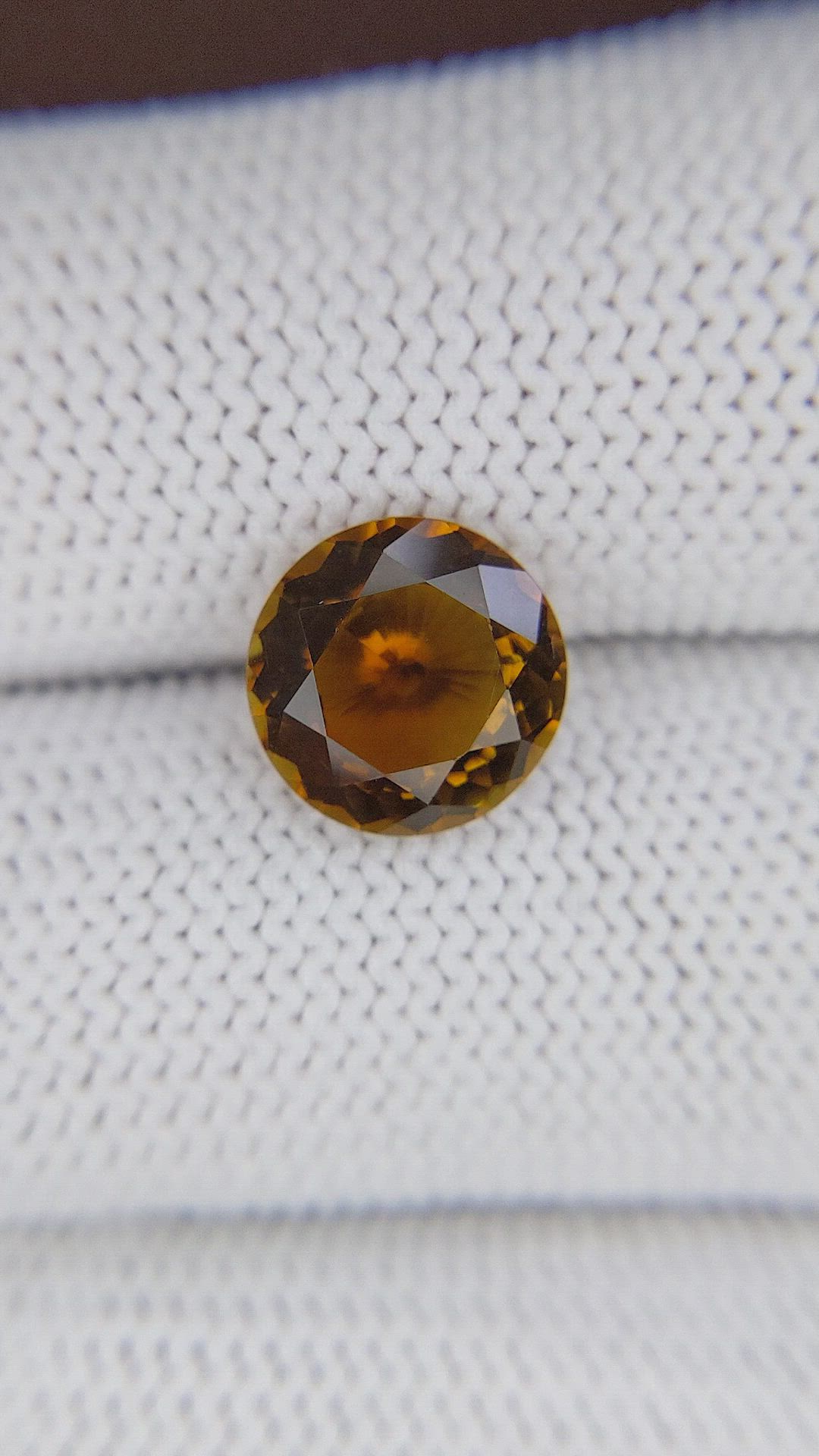
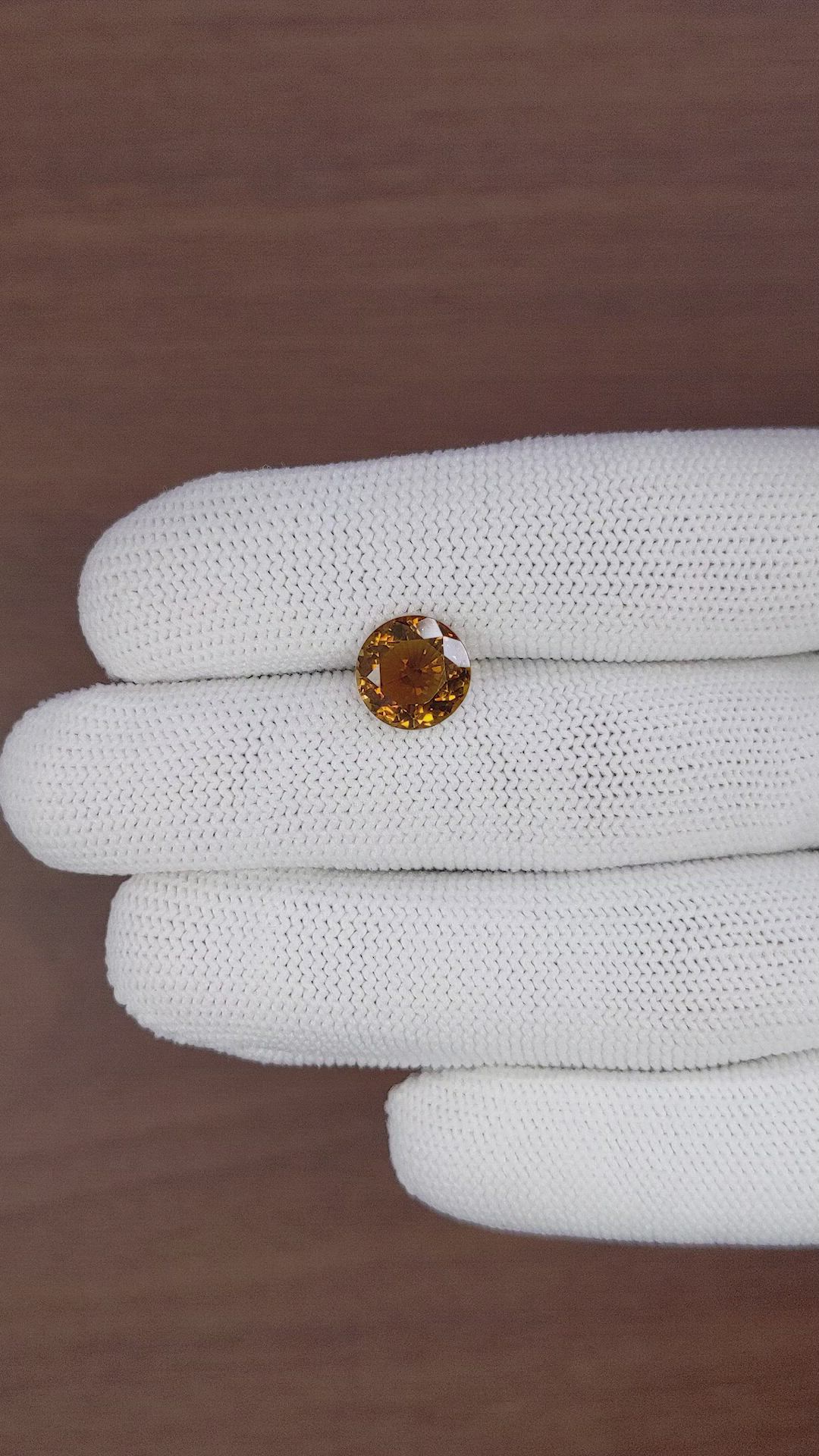
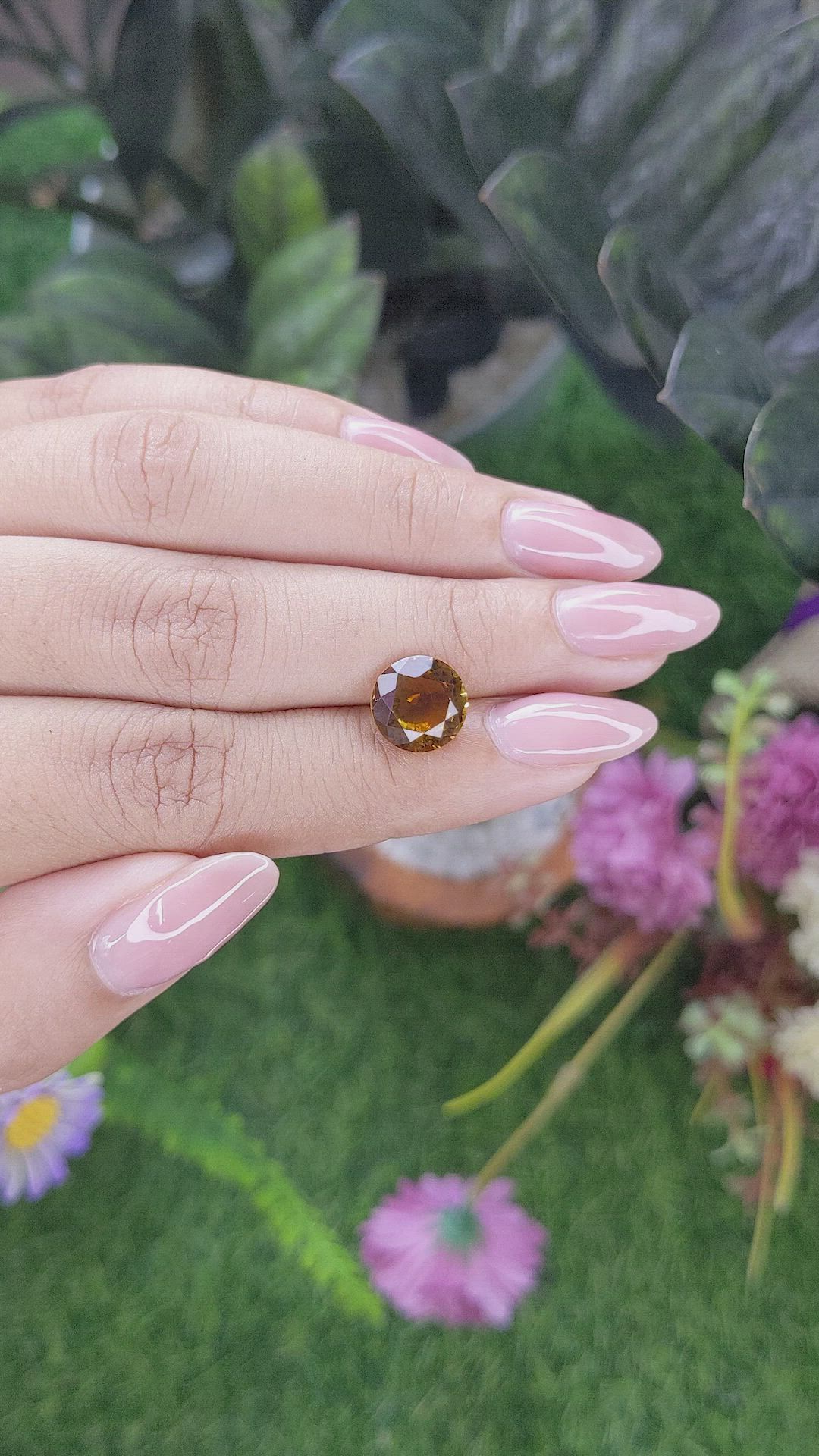
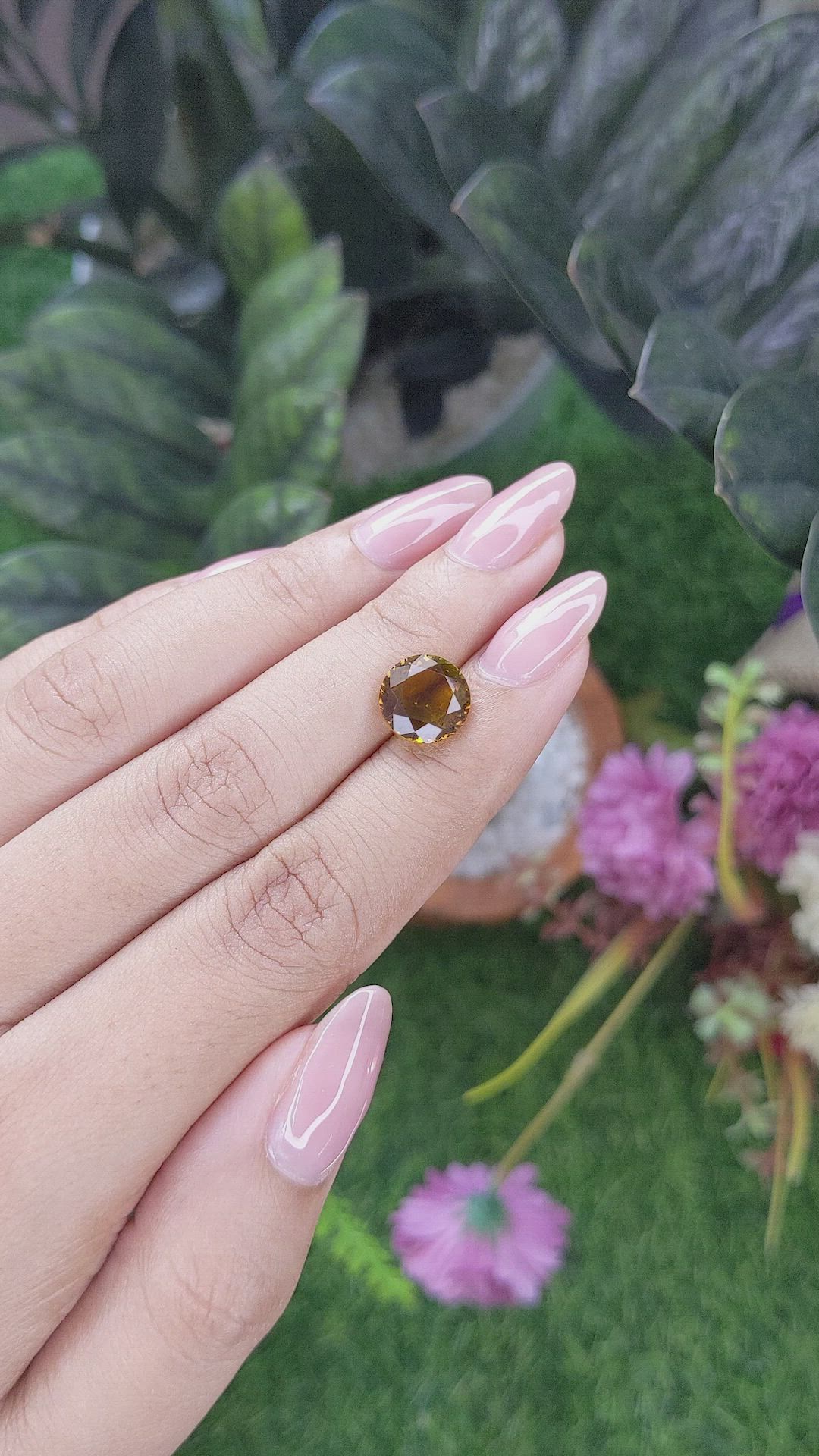
2.99 Ct. Orangish Brown Tourmaline from Ceylon (Sri Lanka)
This loose stone ships by Nov 10
Item ID: | K22793 |
|---|---|
Dimensions (MM): help | Length: 9.65 Width: 9.65 Height: 5.21 |
Weight: | 2.99 Ct. |
Color: help | Orangish Brown |
Color intensity: help | Intense |
Clarity: help | Very Slightly Included |
Shape: help | Round |
Cut: | Mixed Brilliant Cut |
Cutting style: | Faceted |
Enhancements: help | No Enhancement |
Origin: help | Ceylon (Sri Lanka) |
Per carat price: help | $160 |
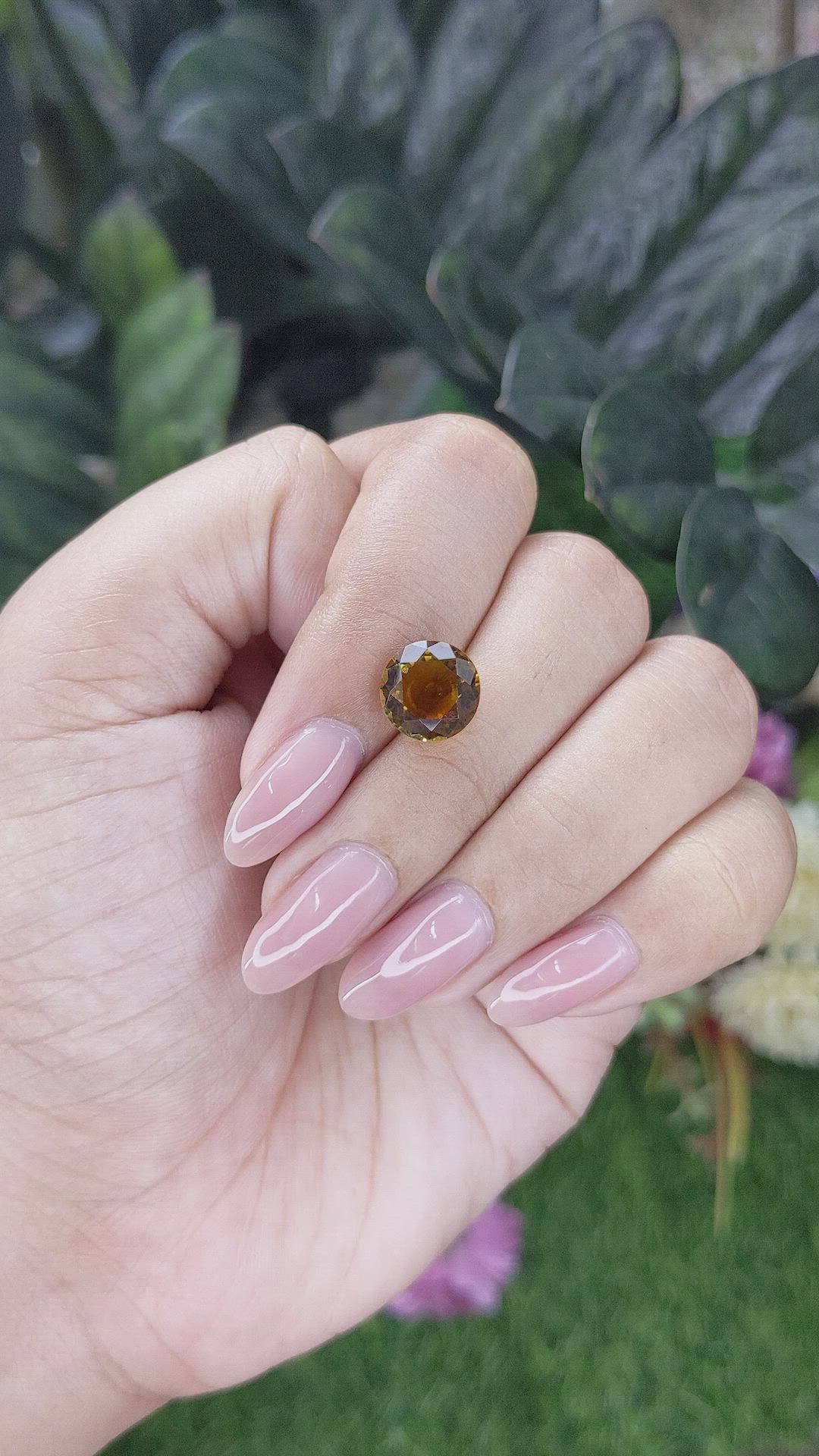
This specimen is a transparent 2.99 carat round orangish brown tourmaline, measuring 9.65 by 9.65 by 5.21 millimeters, presented in a mixed brilliant cut. The proportions yield a measured depth of approximately fifty four percent, which in this instance provides an optimal balance between light return and color saturation. Clarity has been evaluated at eye level as very slightly included, indicating minor internal characteristics that do not materially interfere with face up transparency or light performance. Color intensity is classified as intense, the polish is excellent, and there has been no enhancement, which preserves the natural lattice and color distribution typical of Ceylon tourmaline. The origin is Ceylon Sri Lanka, and The Natural Gemstone Company offers this gem with full provenance documentation and a careful visual grading description to support informed evaluation.
From a cutting and optical performance standpoint the mixed brilliant cut is engineered to combine the scintillation of brilliant faceting on the crown with controlled pavilion faceting that refracts and concentrates color. The shallow to moderate overall depth, at approximately fifty four percent, reduces the risk of windowing while allowing stronger face up saturation, which is especially desirable for warm tones such as orangish brown. The crown exhibits a series of kite and star facets that disperse light into fine scintillation, while the pavilion facets are stepped and angled to reinforce color concentration rather than maximize fire, which would dilute the perceived hue. Tourmaline commonly displays pleochroism, and this piece shows directional variation with warmer orange flashes along one optical axis and deeper brown undertones along the perpendicular axis. That pleochroic behavior is valuable to lapidaries and designers because it permits deliberate orientation in a mounting to emphasize either orange vibrancy or brown depth depending on aesthetic intent.
When comparing hue and tone to gemstones from other famous sources the distinction is clear. Classic Brazilian elbaite from Paraiba and recently discovered Brazilian pockets are known for saturated neon blues and greens derived from copper, which occupy a cool chromatic range and therefore read as luminous rather than earthy. This orangish brown Ceylon tourmaline contrasts strongly, offering a warm, resinous presence rather than the electric coolness of Paraiba materials. Tourmalines from Madagascar and Tanzania that are categorized as dravite tend to lean toward deep brown to brownish yellow tones, often with less transparency and a more muted tone, whereas our specimen maintains high transparency and an intense chroma, which makes the color appear fresher and more jewel like face up. Afghan and Pakistani tourmalines, particularly rubellites and orangey rubellites, deliver vivid red to pink red hues that are closer to the red end of the spectrum, and they usually present a higher saturation in red wavelengths. By contrast this Ceylon piece sits squarely in the orange brown sector, with orange dominant over brown in brighter lighting and brown accentuating in richer, deeper illuminants. Compared to Ceylon sapphires and spinels, which are often prized for their clean, medium to light tones and velvety cornflower or pigeon blood hues, the tourmaline’s tone is darker and more saturated, giving it an autumnal, earthy character that reads as very different in both temperature and depth.
For the technically minded buyer who values natural provenance and optical complexity this orange brown tourmaline offers a distinct profile. The intense color intensity combined with very slight eye level inclusions and excellent polish means the gem will exhibit lively face up color without sacrificing durability or stability, tourmaline hardness on the Mohs scale near seven to seven and a half is sufficient for everyday jewelry with appropriate settings. The absence of enhancement is significant for collectors and investors, because it preserves original color zoning, inclusion character, and pleochroic responses that can be used to confirm origin and history. In a mounting the gem is well suited to settings that emphasize color depth, such as closed back or partial bezel designs when a deeper tone is desired, or open prong settings when maximizing light return and orange liveliness is intended. The round mixed brilliant shape allows flexible design integration into solitaires, halo contexts, and three stone arrangements, and the measured depth percentage supports a predictable brilliance profile when set table up.
The Natural Gemstone Company presents this Ceylon tourmaline as a technically transparent and naturally intense example of orangish brown tourmaline, with clear documentation of weight, dimensions, cut style, clarity and enhancement status to aid appraisal and design decisions. Buyers seeking comparison material will find that it occupies a distinct place between the cool, vivid chromas of Paraiba type tourmalines, the muted brown tones of dravite from Madagascar and Tanzania, and the red leaning saturation of Afghan rubellites. Its pleochroism, mixed brilliant faceting, and absence of enhancement make it a compelling choice for connoisseurs who prioritize natural color chemistry, optical behavior, and cutting craftsmanship. For further technical images, facet maps, and orientation guidance for setting, please contact The Natural Gemstone Company, our gemological specialists will provide full measurement data and viewing recommendations to assist in integration into fine jewelry and calibrated collections.


