
- Stone12
- Reports2


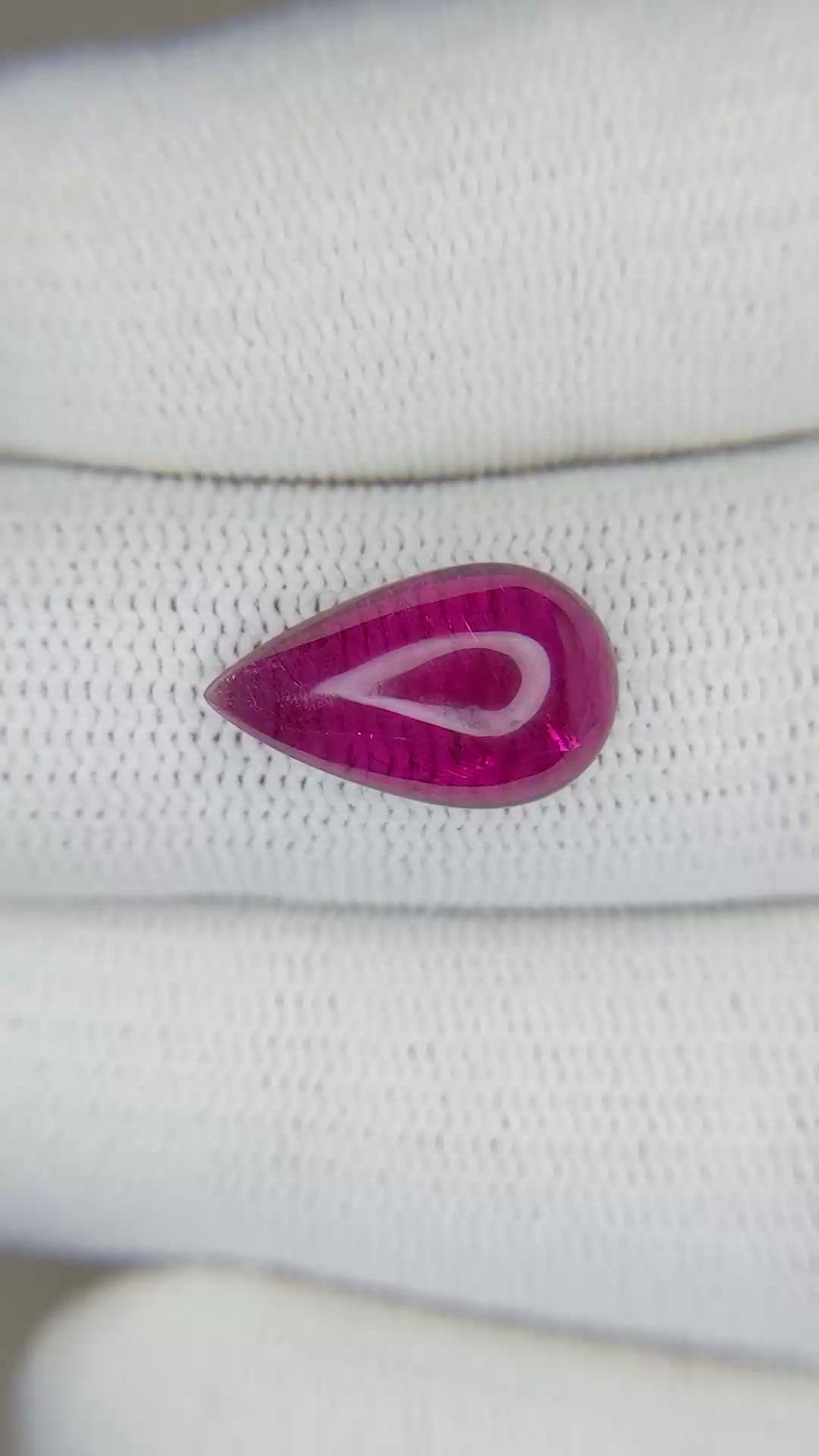
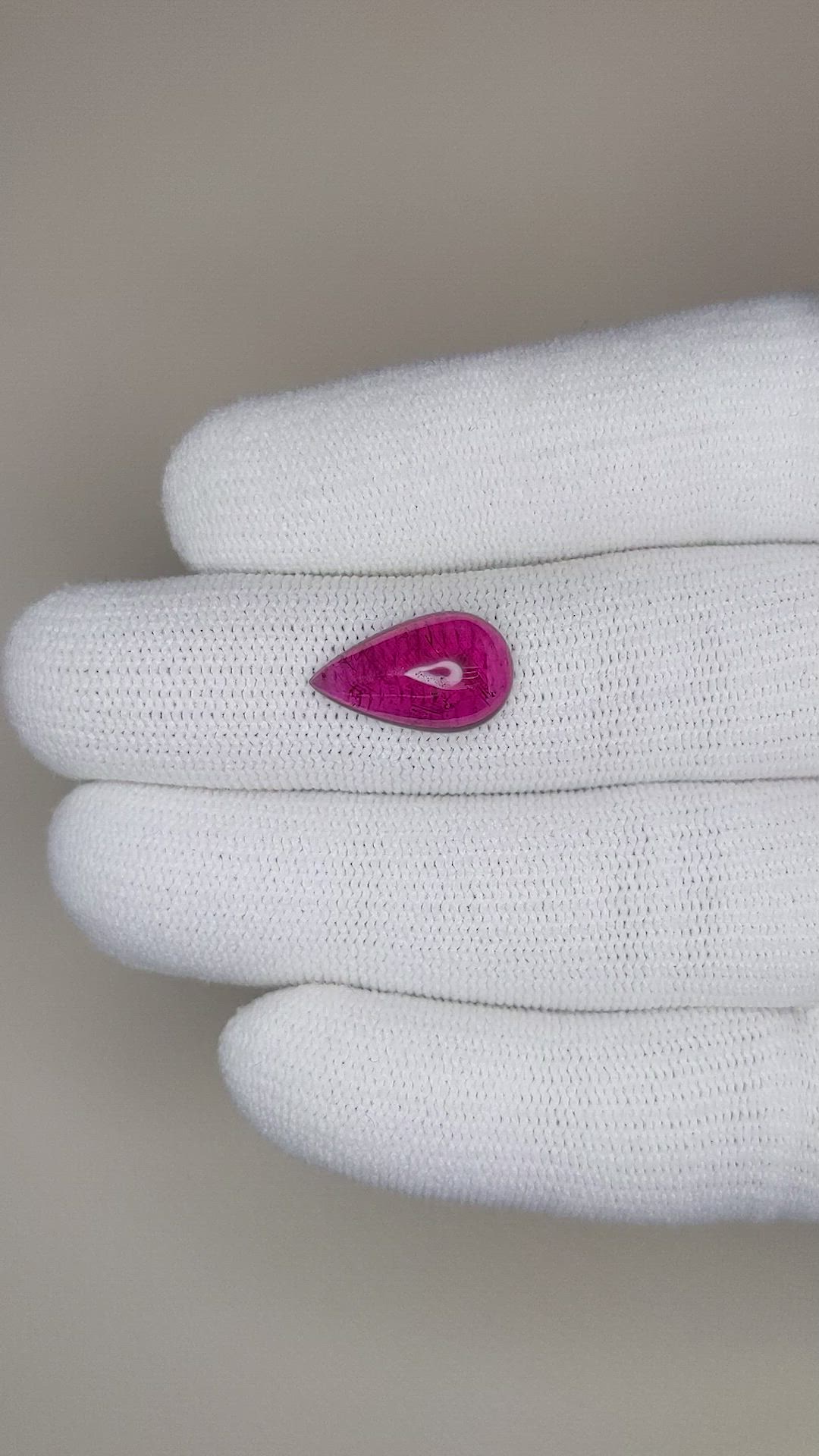
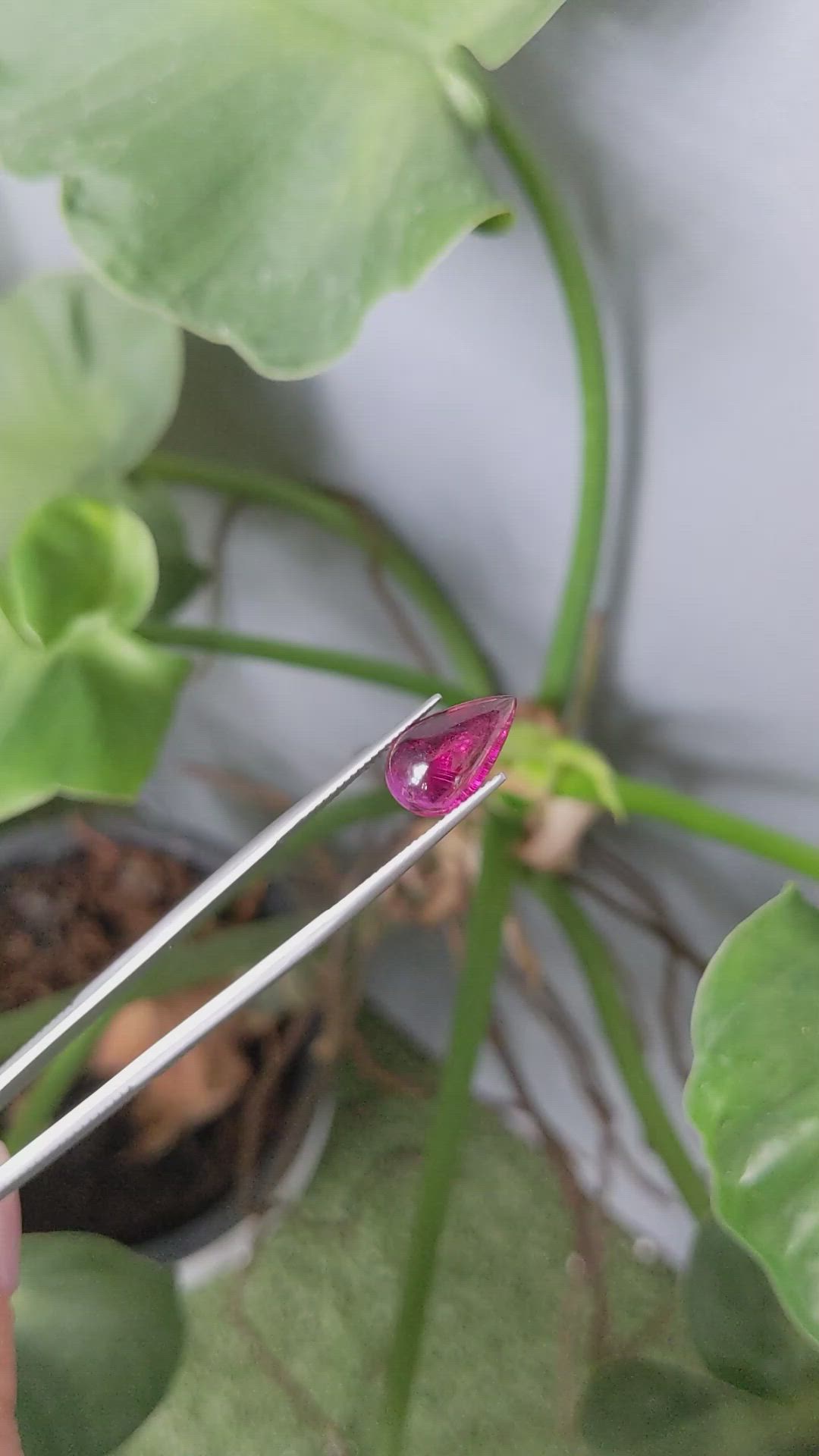
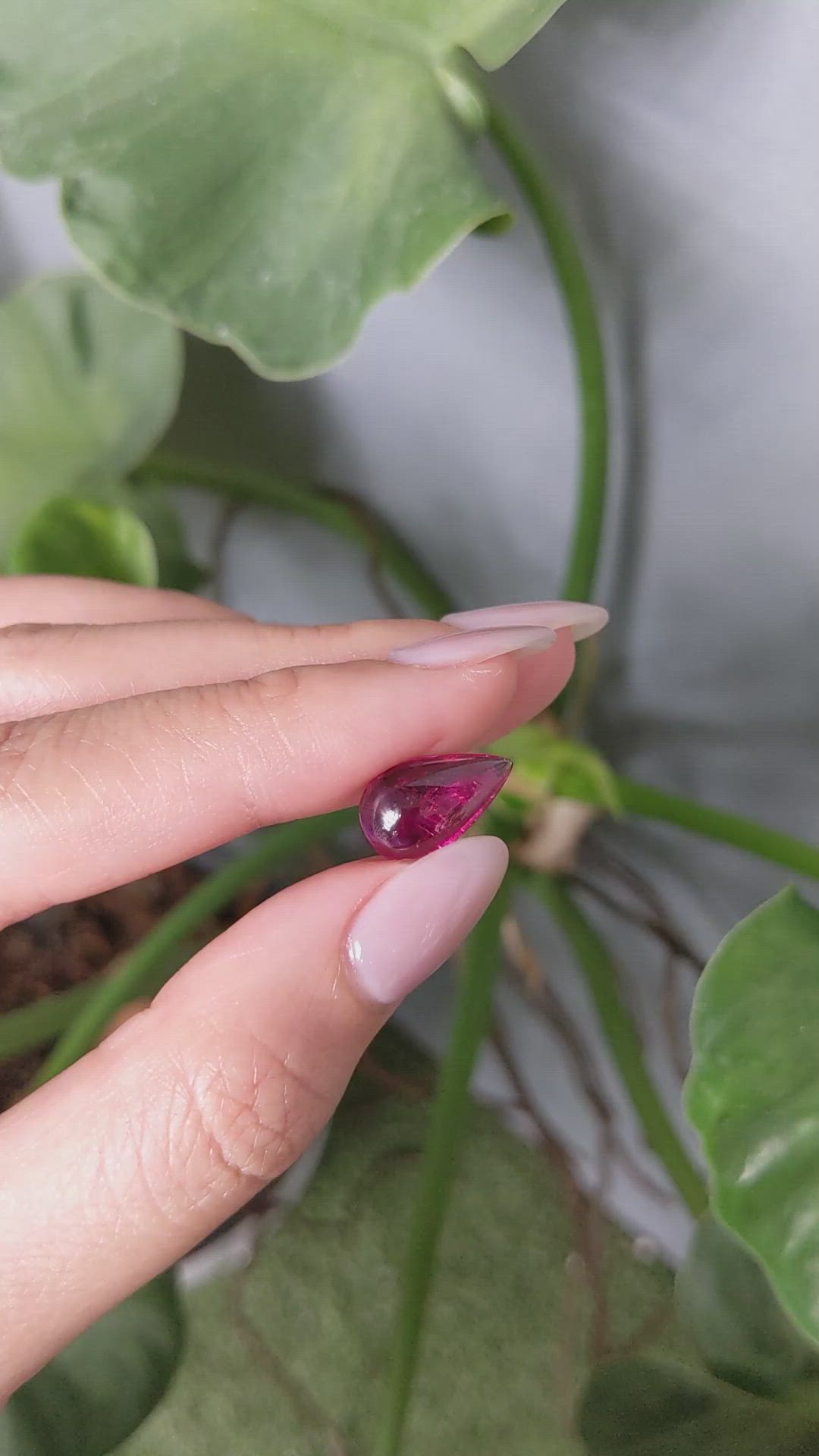
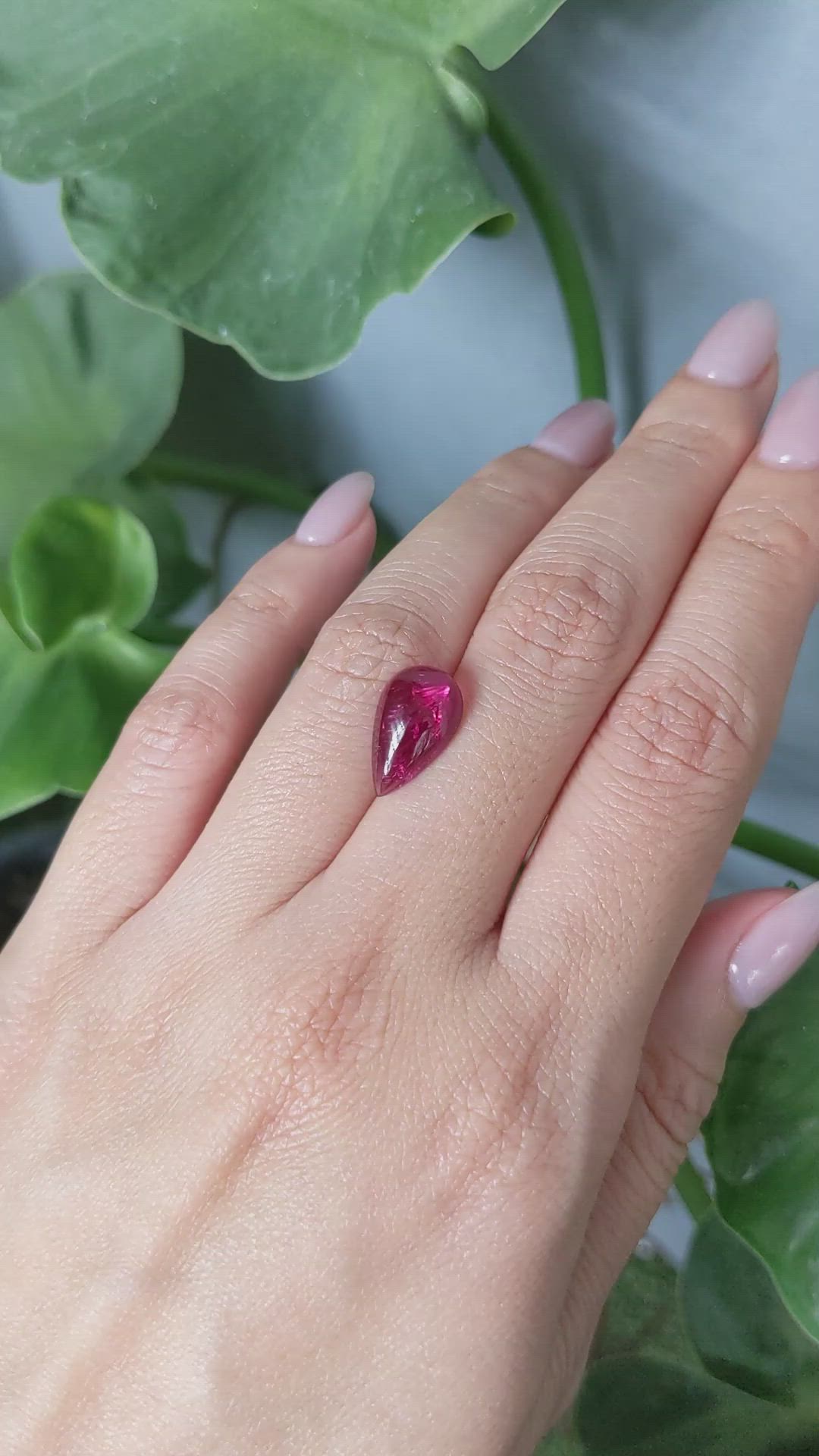


3.75 Ct. Cabochon Tourmaline from Brazil
This loose stone ships by Apr 22
Item ID: | K19630 |
|---|---|
Dimensions (MM): help | Length: 14.2 Width: 8.5 Height: 4.5 |
Weight: | 3.75 Ct. |
Color: help | Pinkish Purple |
Color intensity: help | Vivid |
Clarity: help | Slightly Included |
Shape: help | Pear |
Cut: | Cabochon |
Cutting style: | Cabochon |
Enhancements: help | Heat Treated |
Origin: help | Brazil |
Per carat price: help | $180 |
This 3.75 carat pear shape, pinkish purple tourmaline measures 14.20 x 8.50 x 4.50 mm, and is presented as a translucent cabochon. The piece exhibits a vivid color intensity with a pink to purple hue, and the tone sits in a medium range that allows both saturation and light transmission. Clarity is graded slightly included, evaluated at eye level, and the polish is excellent, producing a clean, even surface sheen. The stone has been heat treated, a common enhancement to stabilize and intensify color, and its recorded origin is Brazil. These characteristics make it suitable for settings that benefit from soft, continuous color, where the cabochon form emphasizes the tourmaline’s internal glow rather than faceted brilliance.
In comparison to other well known gemstone sources, this tourmaline’s pinkish purple hue and medium tone are distinct from Paraíba tourmalines from the Paraíba region of Brazil, which are noted for an electric blue to green hue driven by copper and a high intensity that reads as neon, rather than pink or purple. Against classic rubellite material from Mozambique and Madagascar, which often leans toward strong pink red with a higher red component and sometimes deeper tone, this stone maintains a clearer purple bias and less overt red saturation. Compared to tanzanite from the Merelani region of Tanzania, which typically presents a trichroic violet blue to velvety blue violet, this tourmaline is warmer with a more pink oriented hue, and its medium tone gives it a different presence, less deep and more luminous in transmitted light.
When placed alongside historical stones such as Kashmir sapphires or Burmese rubies, the differences are also evident, Kashmir sapphires carrying a velvety deep blue tone, and Burmese rubies showing a strong, saturated pigeon blood red, neither of which overlap with the pinkish purple identity of this tourmaline. Within the broader context of Brazilian tourmalines, this example reflects the diversity of Minas Gerais and adjacent deposits, where pinks and purplish pinks occur with good clarity and vivid color. The Natural Gemstone Company provides this piece with full disclosure of treatment and origin, allowing informed evaluation based on hue, tone, clarity, and cut.


