
- Stone12
- Reports3


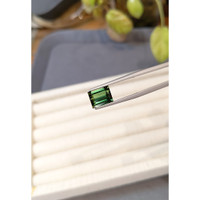
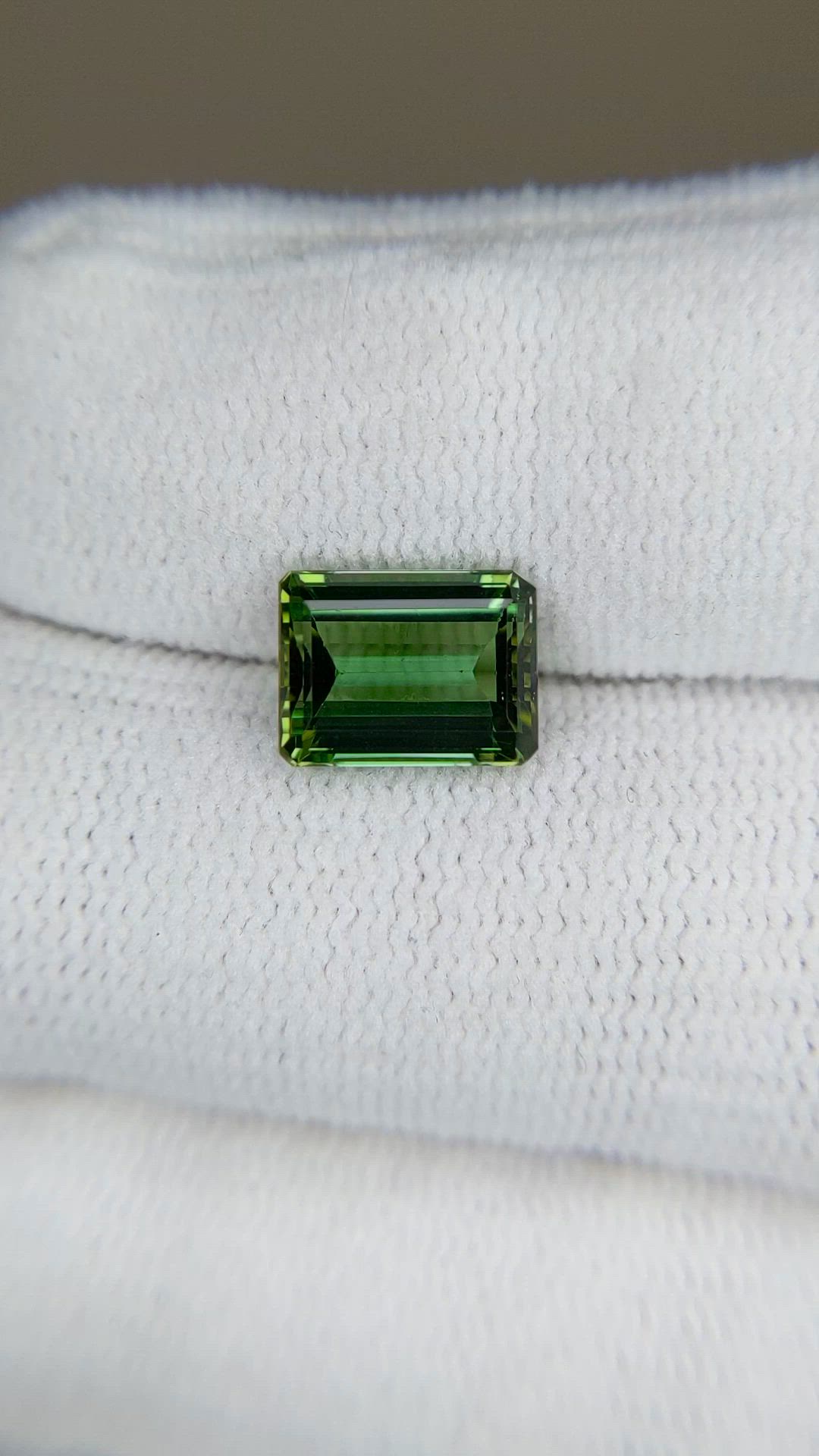
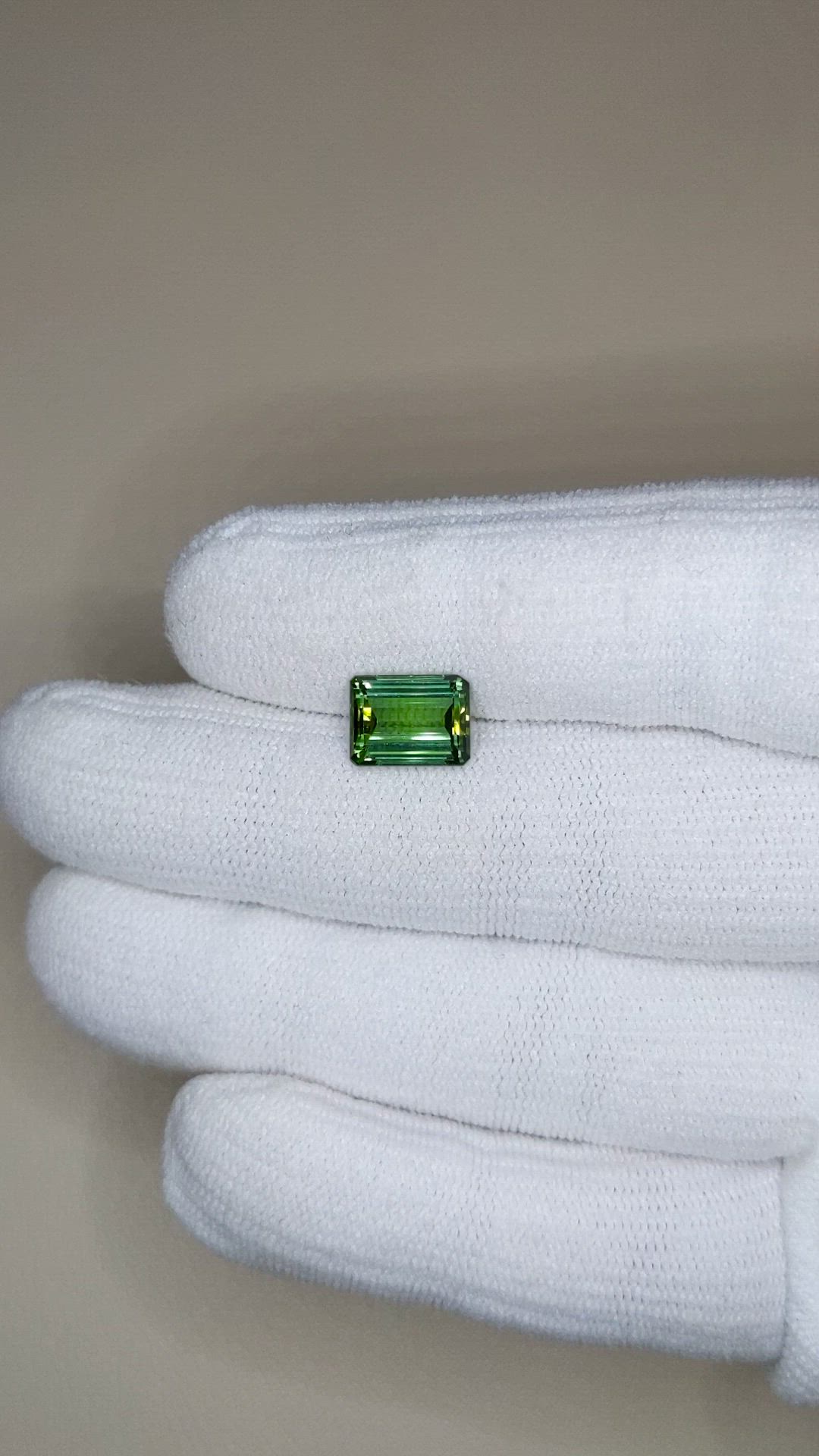
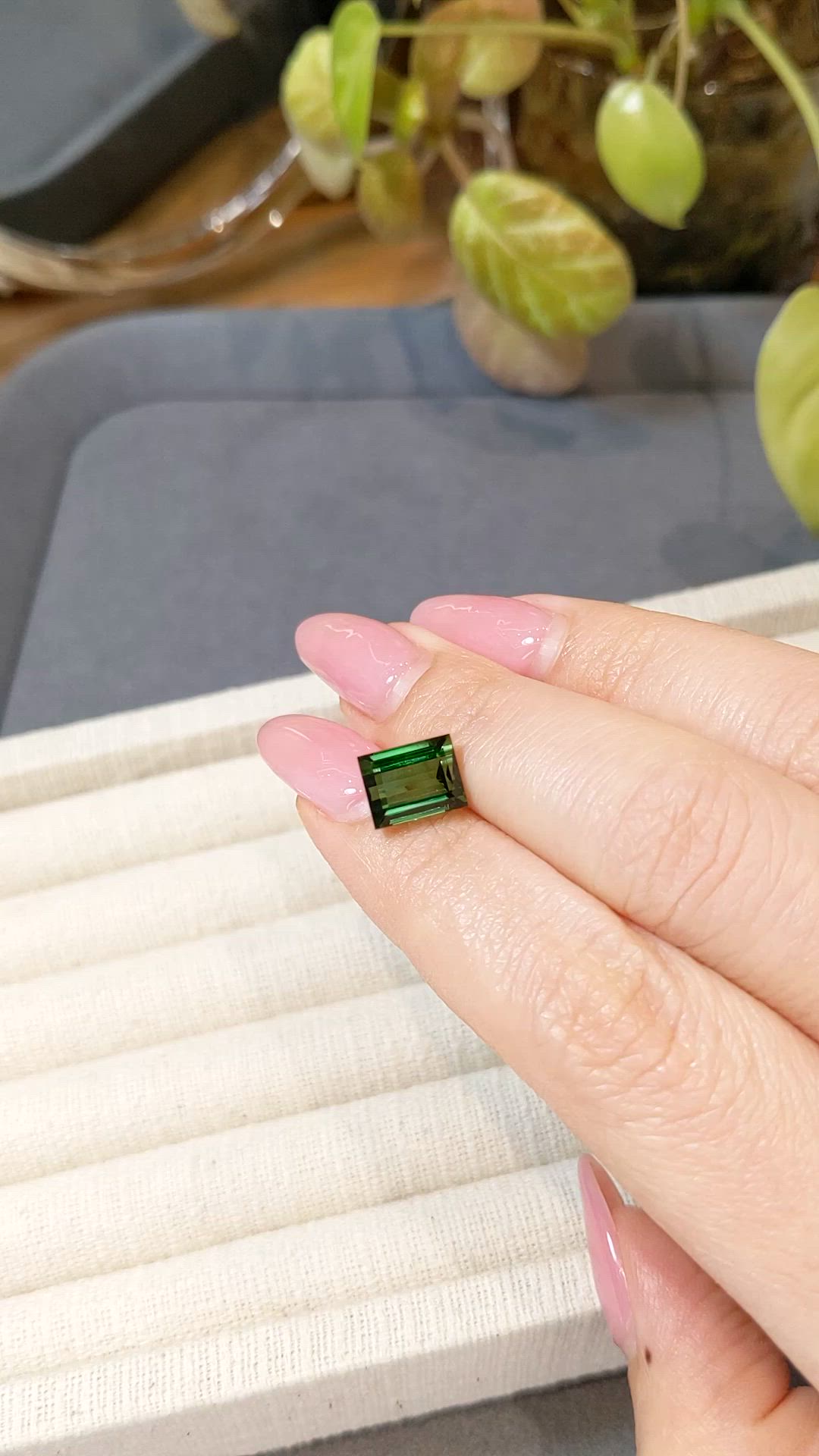
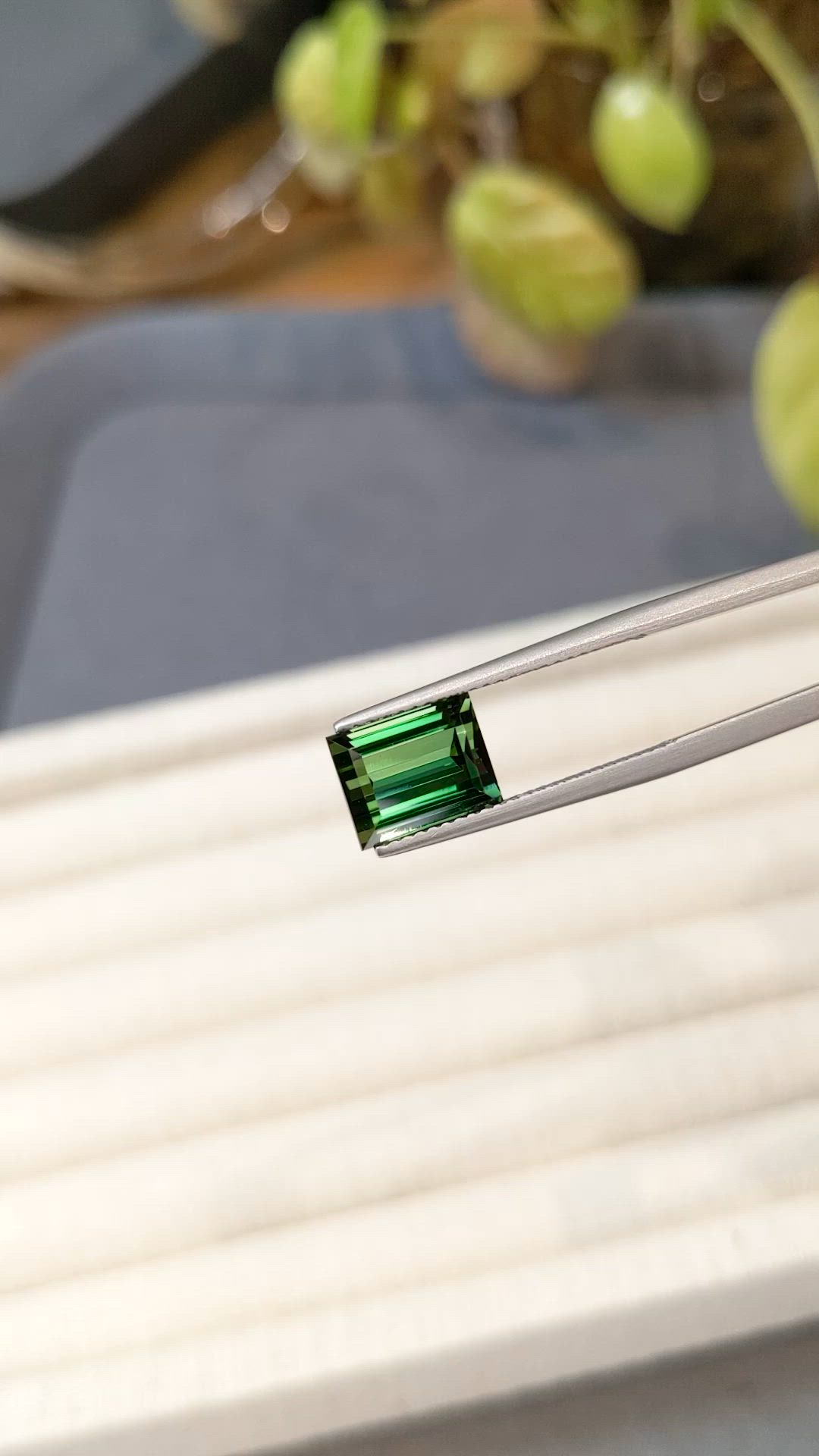


3.93 Ct. Green Tourmaline from Brazil
This loose stone is available to ship now
Item ID: | K29022 |
|---|---|
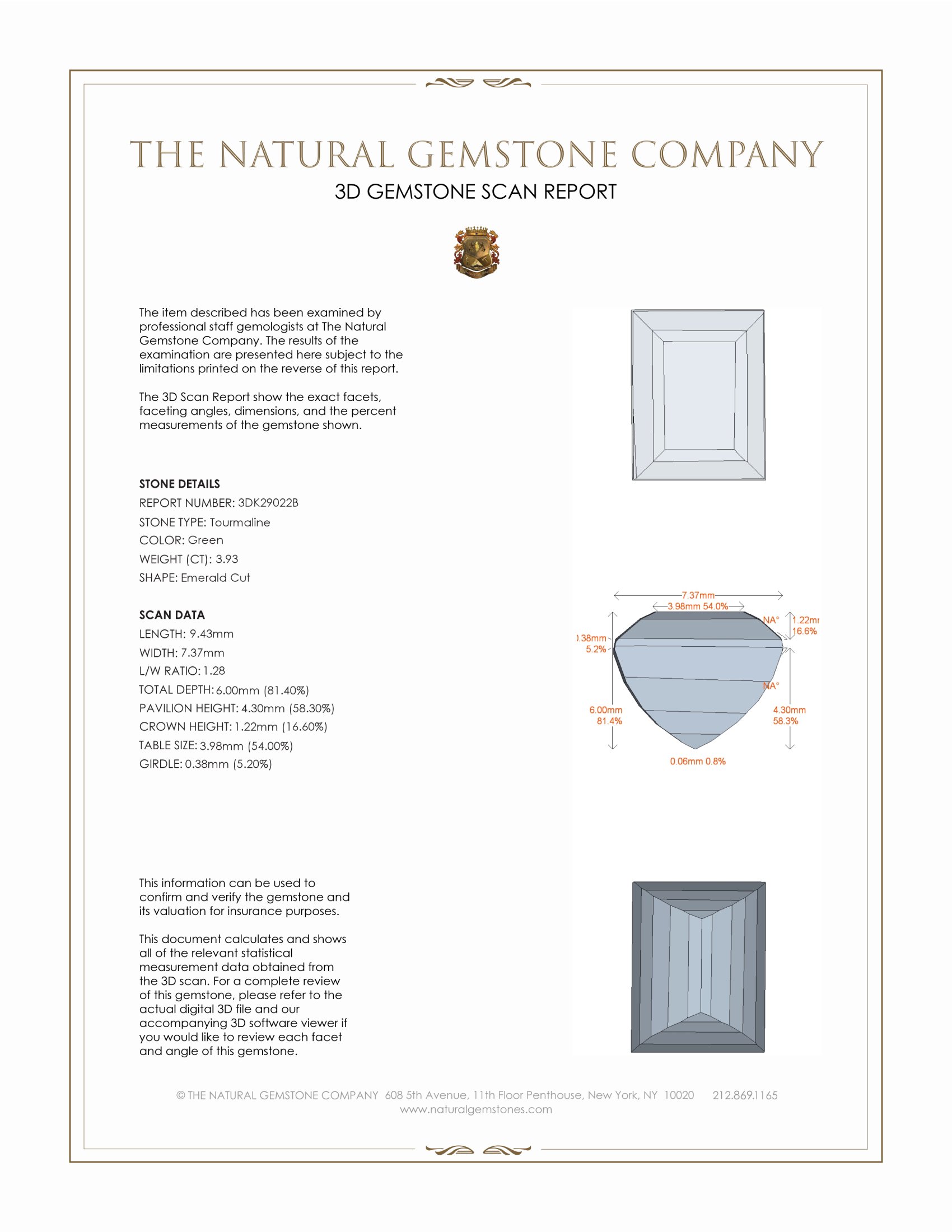
Dimensions (MM): help | Length: 9.43 Width: 7.37 Height: 6 |
Weight: | 3.93 Ct. |
Color: help | Green |
Color intensity: help | Intense |
Clarity: help | Very Very Slightly Included |
Shape: help | Emerald Cut |
Cut: | Emerald Cut |
Cutting style: | Faceted |
Enhancements: help | Heat Treated |
Origin: help | Brazil |
Per carat price: help | $760 |
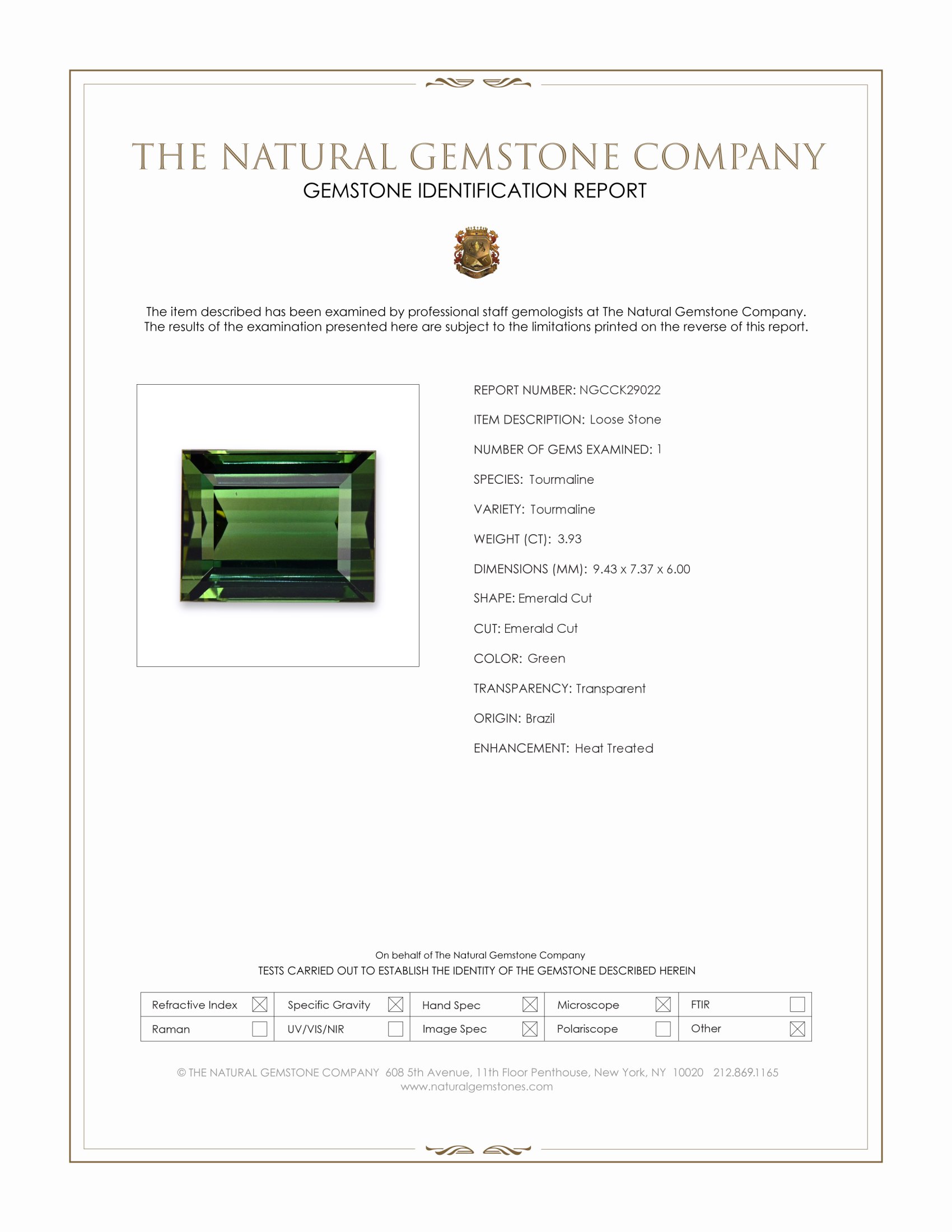
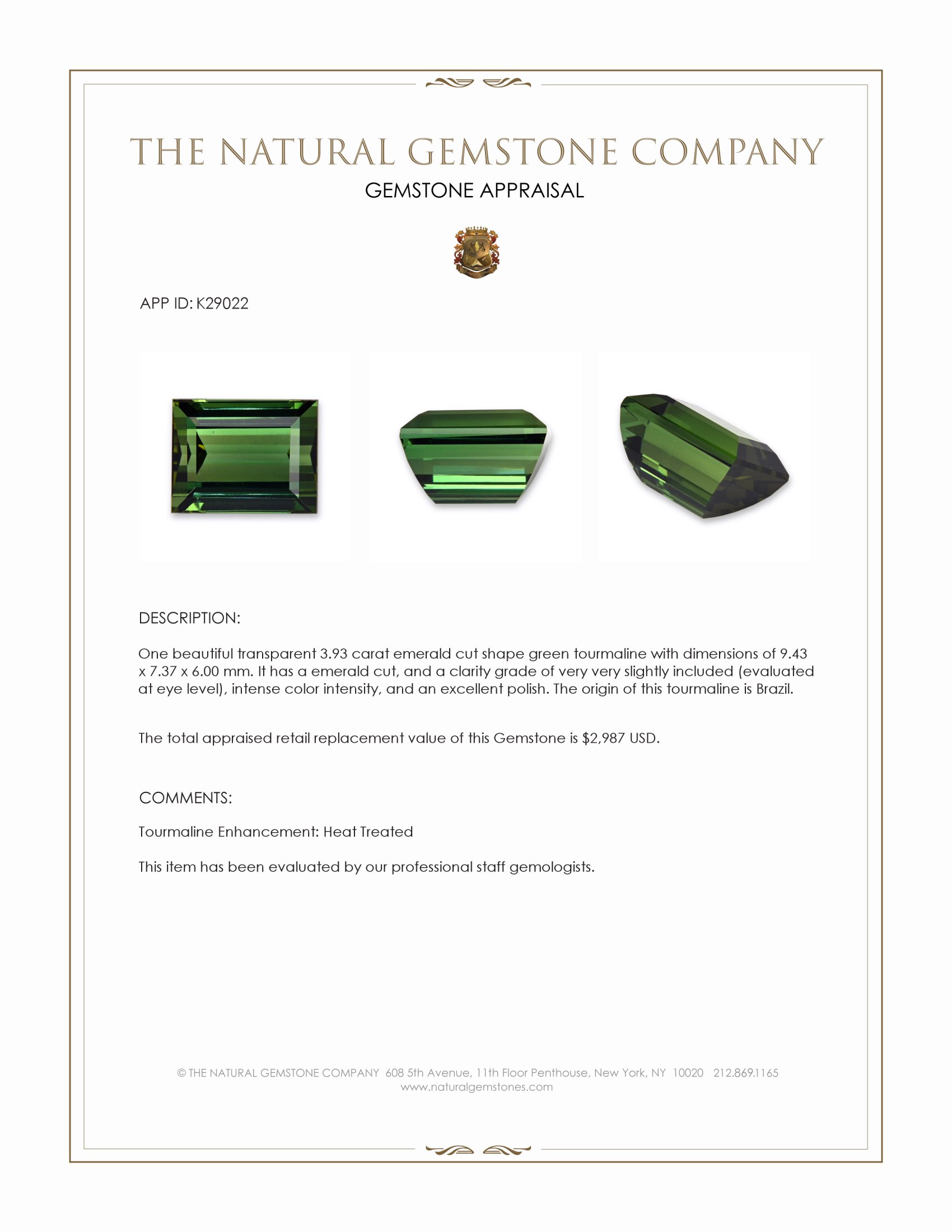
One transparent, emerald cut green tourmaline, weighing 3.93 carat, is presented with precise measurements, measuring 9.43 by 7.37 by 6.00 millimeters. The cutting style is faceted, executed as a classic emerald cut with step facets that emphasize clarity and deliver broad, even color planes. Clarity is graded as very very slightly included, evaluated at eye level, which results in a clean face up appearance and minimal distraction from the stone surface. Color intensity is assessed as intense, and polish is excellent, producing crisp facet junctions and a reflective, controlled luster. The material has been heat treated to stabilize and enhance the green hue, and the stated provenance is Brazil. This description is provided by The Natural Gemstone Company, and it is grounded in objective gemological attributes rather than subjective embellishment.
The hue of this tourmaline reads as a rich, forest to bottle green, with a subtle cool undertone that leans slightly toward bluish green in certain lighting. Tone sits in the medium deep to deep range, delivering depth without becoming overly dark or opaque. Intense saturation allows the emerald cut to display broad flashes of pure green across the table, while step faceting contains the color within elegant, linear planes. The very very slight inclusions do not interfere with light performance at normal viewing distance, and the excellent polish contributes to a crisp window through which the color presents consistently. The heat treatment applied to this Brazilian specimen has enhanced its saturation and uniformity, producing a stable and market appropriate appearance for use in fine jewelry.
When compared to renowned green gemstones from other localities, this tourmaline occupies a distinct position in hue and tone. Colombian emeralds are often characterized by a vivid, bluish green with exceptional saturation and a lively, penetrating brilliance, a result of their particular chromium and vanadium chemistry, and by comparison this Brazilian tourmaline is deeper and more neutral, with less of the watery brilliance typical of top Colombian stones. Tsavorite garnets from East Africa present a brighter, grassier green with a lighter tone and extremely high saturation, making them appear more vivid and lively than this tourmaline, which reads as more restrained and forest like. Chrome tourmalines from Tanzania and Kenya can approach a pure, saturated green that rivals emeralds in intensity, often with a chromium influence that produces a slightly different spectral response, and compared to those examples the Brazilian tourmaline has a warmer, less overtly chromic character, with a slightly olive influence at the shoulders.
Further comparisons reinforce the Brazilian origin profile for this piece. Paraiba type tourmalines from Brazilian localities display electric blue to neon blue green tones due to copper content, a hue family that is separate from the deep forest green of this stone. Demantoid garnets, notably those from Russia, typically carry a green with a yellowish bias and exceptional dispersion, resulting in an altogether different visual effect than the even, stable green of this tourmaline. The overall combination of transparent clarity, emerald cut proportions, intense yet balanced color, and a medium deep tone is consistent with high quality Brazilian green tourmaline material, and these attributes make the stone well suited to settings that benefit from broad color planes and clarity, such as solitaire rings or channel set panels. The Natural Gemstone Company provides this objective assessment to assist in matching the gem to design and setting preferences, and to outline care considerations given the heat treatment. Routine maintenance includes avoiding harsh chemical exposure and ultrasonic cleaning in the presence of significant inclusions, and professional inspection is recommended prior to prolonged wear.


